
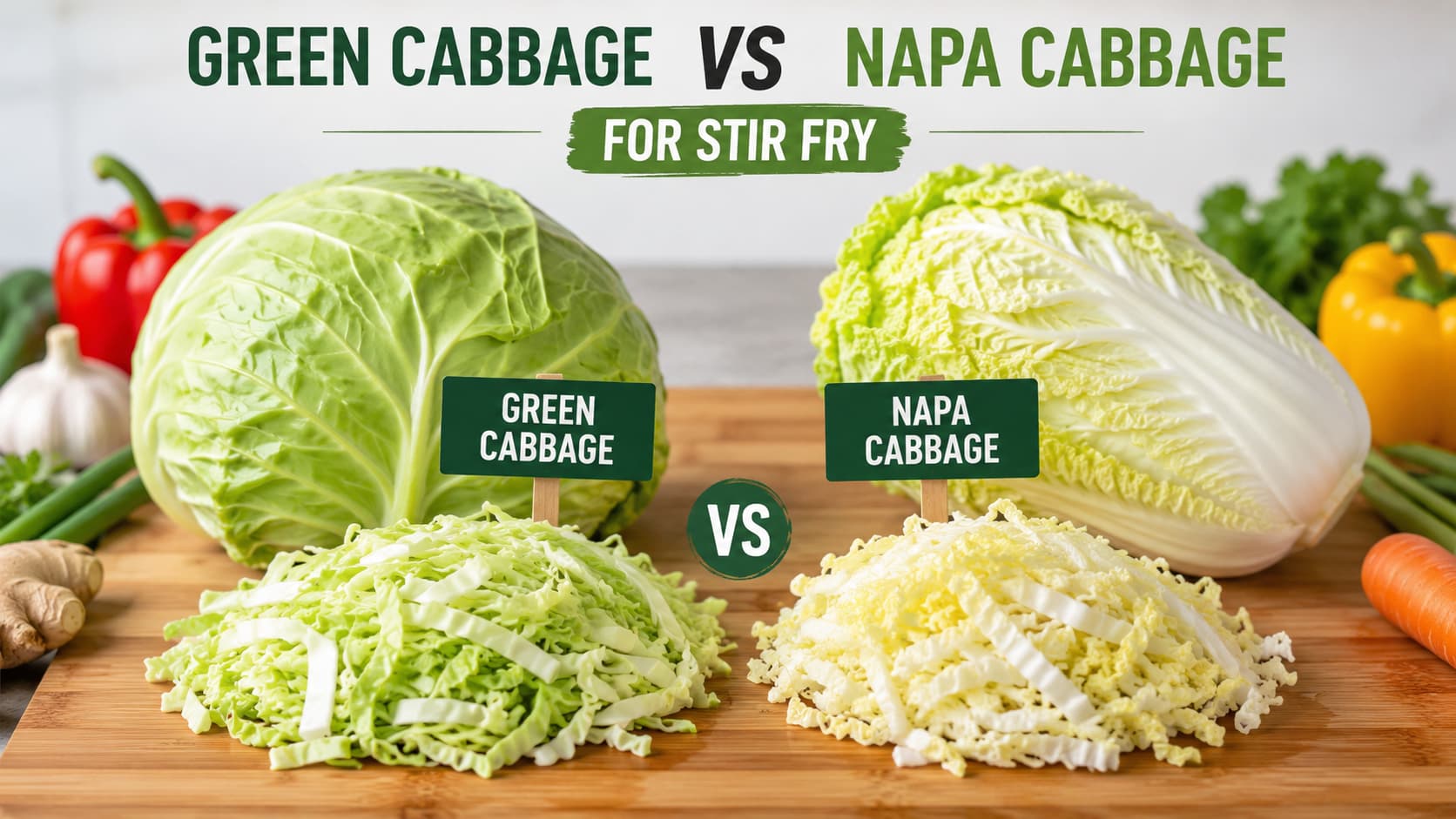
Green Cabbage vs. Napa Cabbage for Stir Fry
Green Cabbage vs. Napa Cabbage for Stir Fry: Which One Is Better?
When deciding between green cabbage vs napa cabbage for stir fry, many home cooks wonder which variety delivers the best flavor, texture, and overall results. While both cabbages work well in a hot wok, they behave quite differently during cooking. Understanding these differences can help you choose the right cabbage for your favorite chicken stir fry or vegetable stir fry recipe.
Green cabbage is known for its firm texture, crisp bite, and ability to hold up under high heat. Napa cabbage, on the other hand, has tender leaves, a mild sweetness, and cooks much more quickly. Depending on the style of stir fry you want to prepare, one variety may be a better fit than the other.
This guide compares green cabbage vs napa cabbage in terms of texture, flavor, cooking time, nutrition, and the best ways to use each one. By the end, you’ll know exactly which cabbage belongs in your next stir fry.
Quick Answer
Green cabbage vs napa cabbage comes down to texture and cooking style. Green cabbage stays crisp and crunchy even after several minutes of high-heat cooking, making it ideal for hearty stir fries. Napa cabbage is softer, sweeter, and cooks much faster, making it perfect for light, delicate stir fries with tender vegetables and sauces.
- Choose green cabbage if you want maximum crunch and durability.
- Choose napa cabbage if you prefer tender, juicy vegetables with a mild flavor.
- Both varieties pair well with chicken, beef, pork, shrimp, tofu, garlic, ginger, and Asian-inspired sauces.
Table of Contents
Key Differences Between Green Cabbage and Napa Cabbage
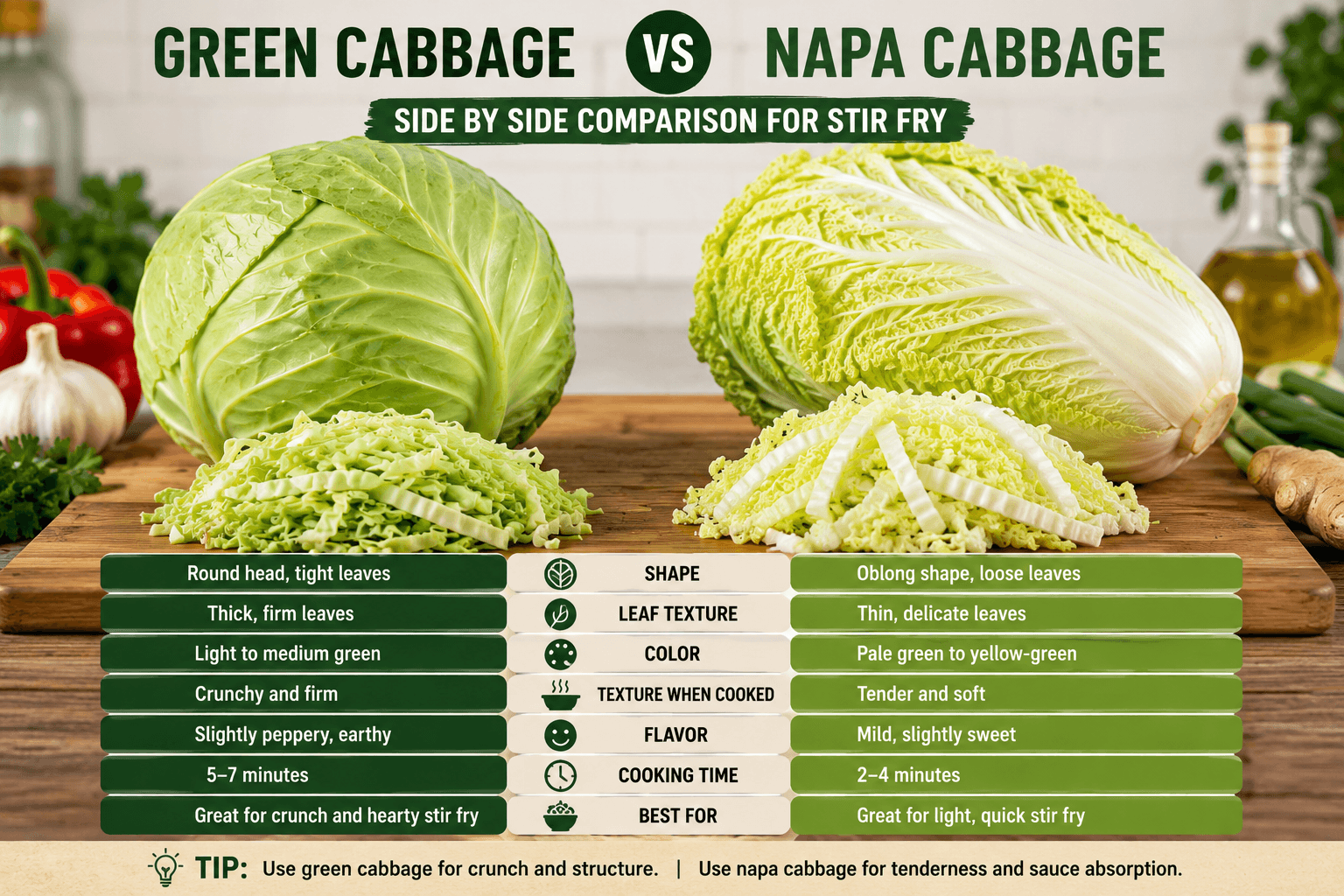
Although both vegetables belong to the cabbage family, they look, taste, and cook differently. Understanding these characteristics makes it much easier to select the right cabbage for your recipe.
| Feature | Green Cabbage | Napa Cabbage |
|---|---|---|
| Texture | Firm and crunchy | Soft and tender |
| Flavor | Slightly peppery and earthy | Mild and naturally sweet |
| Cooking Time | 5–7 minutes | 2–4 minutes |
| Leaves | Dense and tightly packed | Loose and delicate |
| Best For | Crunchy stir fries | Light Asian stir fries |
Because of its dense structure, green cabbage maintains its shape even after prolonged cooking. Napa cabbage contains more moisture, so it softens rapidly and absorbs sauces exceptionally well.
Kitchen Tip: If you’re preparing a mixed vegetable stir fry, slice both varieties into similar-sized strips so they cook evenly with the rest of your vegetables.
If you’re new to preparing cabbage, our guide on how to prepare cabbage for stir fry explains the best slicing techniques for both varieties. Pairing either cabbage with fresh vegetables from our best vegetables for chicken stir fry guide can also help you build a colorful, well-balanced meal.
Green Cabbage vs. Napa Cabbage: Texture Comparison
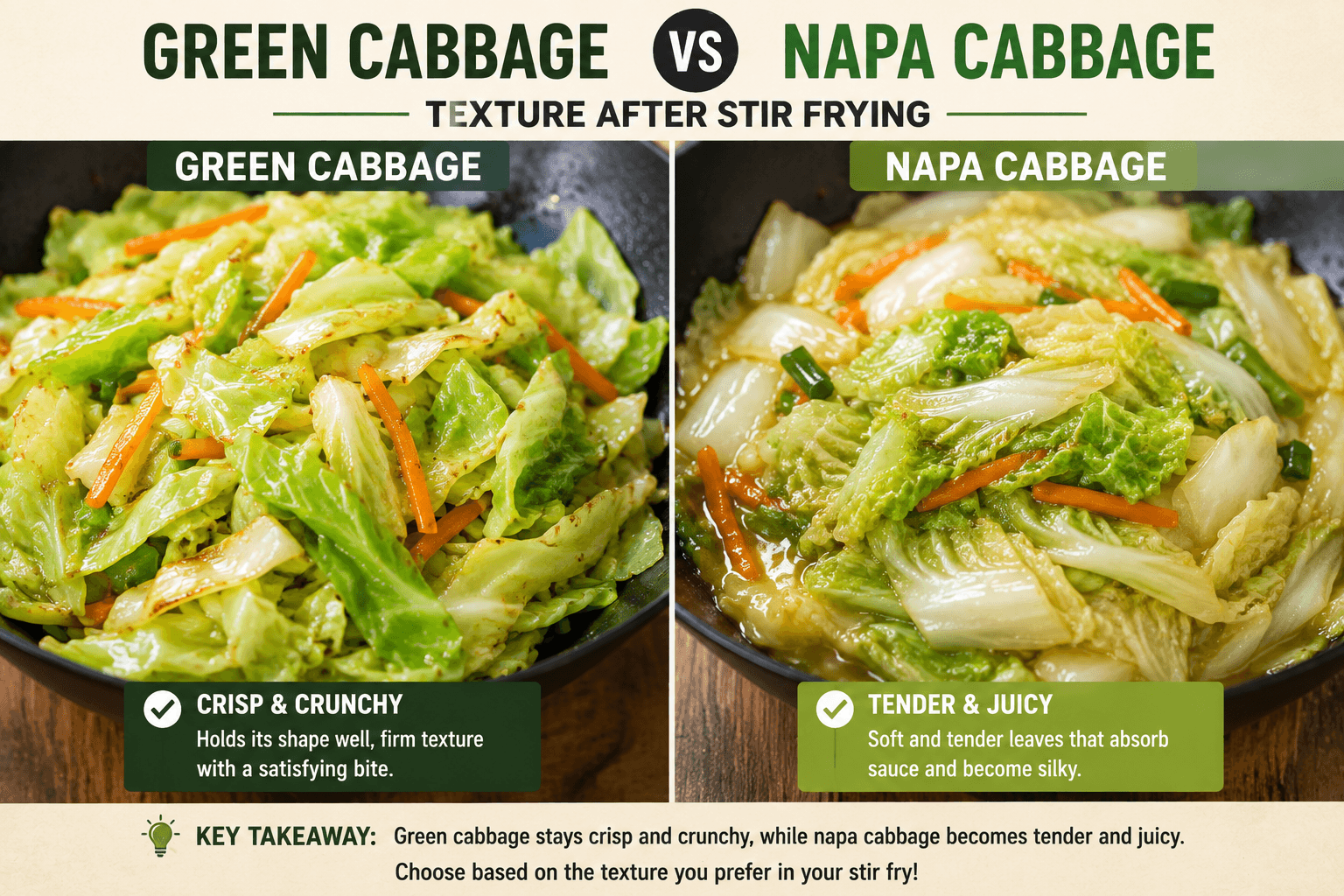
One of the biggest differences in green cabbage vs napa cabbage is texture. Since stir fry is cooked over high heat in a short amount of time, the way each cabbage responds to cooking has a major impact on the final dish.
Green cabbage has thick, tightly packed leaves with sturdy stems. Even after several minutes in a hot wok, it keeps much of its crisp texture. This makes it an excellent choice for recipes where you want vegetables to stay crunchy instead of becoming soft.
Napa cabbage has long, delicate leaves with thin white stems. It contains more natural moisture than green cabbage, so it wilts quickly once it hits the heat. Instead of staying crisp, it develops a silky, tender texture that blends beautifully with stir fry sauces.
If you enjoy vegetables with plenty of bite, green cabbage is usually the better option. If you prefer vegetables that become soft and juicy while soaking up flavorful sauces, napa cabbage is hard to beat.
| Texture Characteristic | Green Cabbage | Napa Cabbage |
|---|---|---|
| Crunch After Cooking | Excellent | Light |
| Tenderness | Moderate | Very Tender |
| Sauce Absorption | Good | Excellent |
| Moisture Content | Lower | Higher |
| Best Texture Style | Crisp-Tender | Soft and Silky |
Chef’s Secret: For the best texture, cook cabbage over high heat instead of medium heat. High heat quickly caramelizes the outside while keeping the inside crisp. Overcooking either variety causes unnecessary moisture loss and reduces flavor.
Flavor Differences
Flavor is another important factor when comparing green cabbage vs napa cabbage. Although both belong to the same vegetable family, they taste noticeably different once cooked.
Green cabbage has a slightly earthy, peppery flavor with mild sweetness that becomes more pronounced as it caramelizes. Because of its stronger flavor, it pairs well with bold ingredients like garlic, soy sauce, ginger, sesame oil, chili paste, and black pepper.
Napa cabbage has a much milder taste. Its leaves are naturally sweet with very little bitterness, making it popular in many Chinese, Korean, and Japanese stir fry dishes. Since its flavor is delicate, it complements lighter sauces without overpowering the other ingredients.
Neither cabbage is objectively better—the right choice depends on the flavor profile you’re trying to create.
- Choose green cabbage for bold, savory stir fries with lots of garlic, ginger, or spicy sauces.
- Choose napa cabbage for lighter dishes where you want the sauce and protein to remain the main focus.
- Mixing both varieties can provide a balance of crunch, sweetness, and tenderness.
Pro Tip: A small splash of rice vinegar or fresh lime juice added at the end of cooking brightens the flavor of both green cabbage and napa cabbage without masking their natural taste.
If you’re planning a complete meal, our best vegetable combinations for chicken stir fry guide can help you choose vegetables that pair perfectly with either cabbage variety. For a complete main dish, try our Chicken Cabbage Stir Fry, which works well with both green cabbage and napa cabbage depending on your preferred texture.
How Green Cabbage and Napa Cabbage Perform in Stir Fry
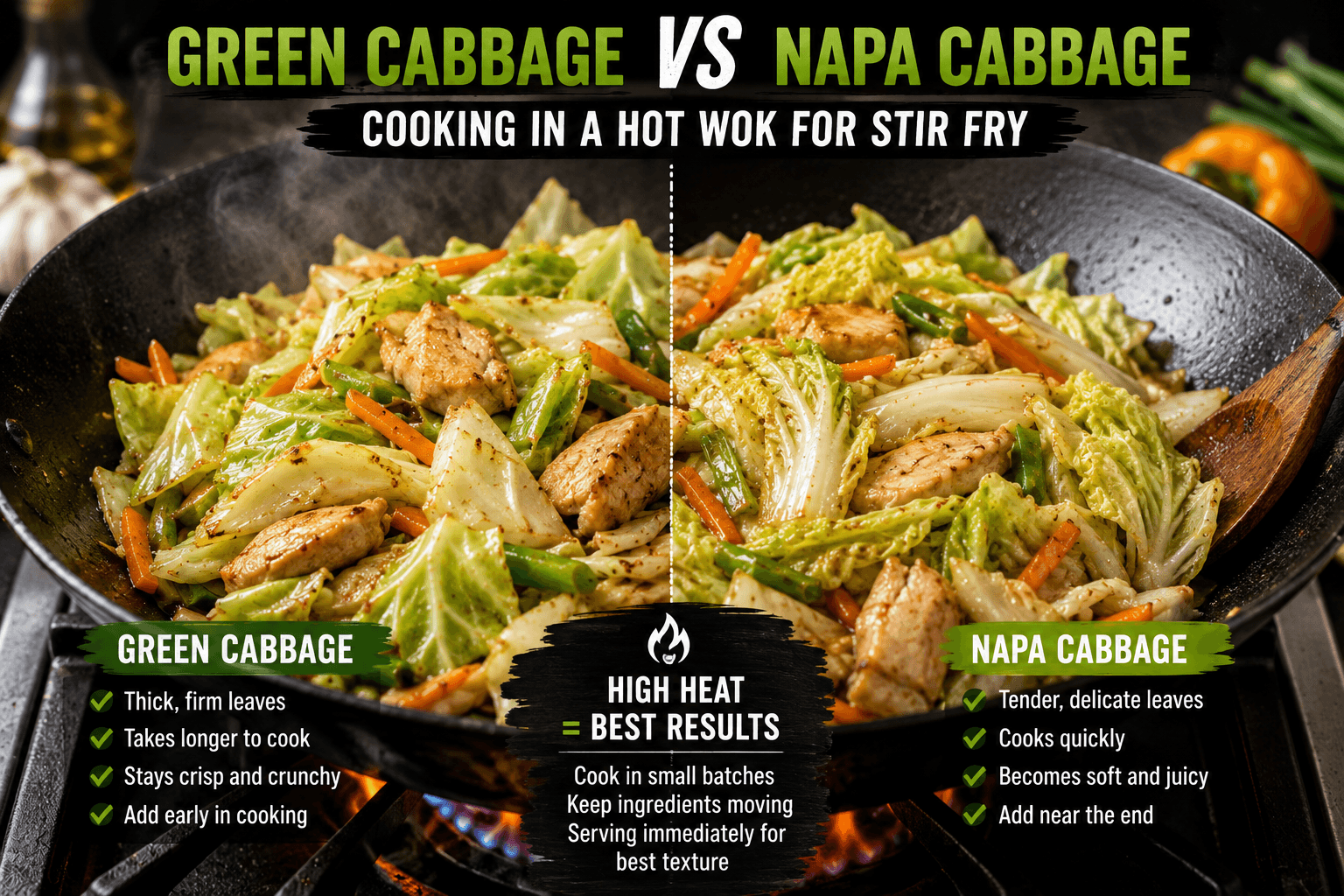
When comparing green cabbage vs napa cabbage, cooking performance is just as important as flavor and texture. Although both vegetables are excellent for stir fry, they require slightly different cooking techniques to achieve the best results.
Green cabbage is extremely forgiving. Its thick leaves and dense structure allow it to withstand high temperatures without becoming mushy. This makes it an ideal choice for beginners because it gives you a larger window before overcooking occurs.
Napa cabbage is much more delicate. Its leafy tops cook in just a minute or two, while the thicker white stems need slightly longer. To prevent the leaves from becoming overly soft, many experienced cooks add the stems first and the leafy portions near the end of cooking.
Understanding these differences helps you maximize flavor, preserve texture, and create a stir fry that looks as good as it tastes.
| Cooking Factor | Green Cabbage | Napa Cabbage |
|---|---|---|
| Ideal Heat | High | High |
| Average Cooking Time | 5–7 minutes | 2–4 minutes |
| Handles Overcooking | Better | Poorly |
| Releases Moisture | Moderate | High |
| Best Added | Early in cooking | Near the end |
Kitchen Secret: If you’re using napa cabbage, keep your wok very hot and avoid overcrowding the pan. Cooking in small batches helps moisture evaporate quickly, preventing a watery stir fry.
Which Cabbage Works Best with Different Proteins?
Both varieties pair well with many proteins, but each brings out different qualities in a dish.
- Chicken: Green cabbage provides a satisfying crunch, while napa cabbage creates a lighter, juicier meal.
- Beef: Green cabbage complements rich beef flavors and holds its texture during longer cooking.
- Pork: Napa cabbage’s natural sweetness balances savory pork beautifully.
- Shrimp: Napa cabbage cooks quickly alongside shrimp, preventing either ingredient from overcooking.
- Tofu: Both work well, although napa cabbage absorbs sauces exceptionally well, making every bite more flavorful.
If you’re looking for inspiration, our Classic Chicken Stir Fry and Healthy Chicken Stir Fry can easily be adapted using either cabbage variety.
Nutrition Comparison
Nutrition is another area where the comparison of green cabbage vs napa cabbage becomes interesting. Both are low in calories, naturally fat-free, and packed with vitamins, minerals, antioxidants, and fiber that support a healthy diet.
Green cabbage generally contains slightly more fiber, making it a filling option for hearty meals. Napa cabbage, meanwhile, is lower in calories and provides a little more vitamin A because of its darker leafy sections.
| Nutrient (Per 100 g) | Green Cabbage | Napa Cabbage |
|---|---|---|
| Calories | 25 | 16 |
| Fiber | 2.5 g | 1.2 g |
| Vitamin C | High | High |
| Vitamin A | Moderate | Higher |
| Water Content | Lower | Higher |
From a health perspective, there is no wrong choice. Both varieties are nutrient-dense vegetables that fit well into balanced eating patterns. The best option often comes down to the texture and flavor you enjoy most rather than nutritional differences alone.
Healthy Choice: To preserve vitamins and maintain crisp texture, stir fry cabbage just until it’s crisp-tender instead of cooking it until completely soft.
Which Cabbage Is Better for Stir Fry?
After comparing green cabbage vs napa cabbage in terms of texture, flavor, cooking performance, and nutrition, the answer depends on the type of stir fry you want to make. There isn’t a single winner because each variety excels in different situations.
If you enjoy stir fries with plenty of crunch, green cabbage is usually the better option. Its firm leaves stay crisp even after several minutes over high heat, making it perfect for hearty meals with chicken, beef, pork, or a variety of vegetables.
If you prefer a lighter stir fry with tender vegetables that soak up sauces, napa cabbage is an excellent choice. Its naturally sweet flavor and delicate leaves create a softer texture that pairs especially well with Asian-inspired sauces.
| If You Want… | Choose Green Cabbage | Choose Napa Cabbage |
|---|---|---|
| Maximum crunch | ✔ | |
| Tender texture | ✔ | |
| Longer cooking time | ✔ | |
| Fast weeknight meals | ✔ | |
| Strong vegetable flavor | ✔ | |
| Light, delicate flavor | ✔ |
Many home cooks even combine both types of cabbage in the same stir fry. The green cabbage provides crunch, while the napa cabbage adds tenderness and absorbs the sauce. This combination creates a balanced texture that many restaurants use in their stir-fried dishes.
Chef’s Secret: Use about two-thirds green cabbage and one-third napa cabbage for a stir fry that delivers both crisp texture and juicy tenderness without becoming watery.

Common Mistakes When Cooking Cabbage for Stir Fry
Even when you choose the right cabbage, a few common mistakes can reduce the quality of your stir fry. Avoiding these problems will help you achieve restaurant-style results every time.
1. Overcrowding the Wok
Adding too many vegetables at once lowers the temperature of the pan. Instead of stir frying, the cabbage begins to steam, causing it to lose its crisp texture.
Warning: Cook in batches if necessary. A hot wok is one of the most important factors in creating flavorful stir fry with crisp vegetables.
2. Adding Napa Cabbage Too Early
Napa cabbage cooks much faster than green cabbage. If it’s added at the beginning, the leaves may become overly soft before the rest of the ingredients finish cooking.
3. Cutting Uneven Pieces
Large chunks cook more slowly than thin strips. Uneven pieces lead to inconsistent texture, with some sections undercooked while others become mushy.
4. Not Drying the Cabbage
After washing cabbage, remove as much surface moisture as possible. Excess water cools the pan and prevents proper browning.
5. Using Low Heat
Authentic stir fry depends on high heat. Cooking over medium or low heat allows vegetables to release moisture instead of caramelizing.
- Preheat your wok before adding oil.
- Use oils with a high smoke point.
- Keep ingredients moving continuously.
- Add sauces during the final minute of cooking.
- Serve immediately for the best texture.
For more helpful techniques, visit our guides on common vegetable stir fry mistakes, the correct order to add vegetables to stir fry, and the ultimate stir fry vegetable preparation guide. If you’re experimenting with frozen produce, our fresh vs. frozen vegetables for stir fry comparison can help you choose the best option for your next meal.
How to Store Green Cabbage and Napa Cabbage
Proper storage helps maintain the freshness, texture, and flavor of both cabbage varieties. Although green cabbage vs napa cabbage differs in moisture content and shelf life, both can stay fresh for several days when stored correctly.
Green cabbage has tightly packed leaves that naturally protect the interior, allowing it to last longer in the refrigerator. Napa cabbage contains more water and has delicate leaves, so it typically has a shorter storage life.
| Storage Method | Green Cabbage | Napa Cabbage |
|---|---|---|
| Whole in Refrigerator | 2–3 weeks | 5–7 days |
| Cut and Refrigerated | 3–5 days | 2–4 days |
| Frozen (Blanched) | 8–12 months | 8–10 months |
| Best Storage Container | Airtight container or produce bag | Airtight container or produce bag |
Storage Tip: Wrap leftover cabbage in a paper towel before placing it inside an airtight container. The paper towel absorbs excess moisture and helps keep the cabbage crisp for a longer period.
If you’ve already sliced your cabbage for meal prep, refrigerate it immediately and use it within a few days for the best texture. Avoid storing cut cabbage at room temperature, as it quickly loses moisture and freshness.

Pros and Cons of Green Cabbage vs. Napa Cabbage
Both cabbage varieties have strengths and weaknesses. Comparing them side by side makes it easier to decide which one best fits your cooking style.
Green Cabbage Pros
- Excellent crunchy texture.
- Holds up well during high-heat cooking.
- Long refrigerator shelf life.
- Affordable and widely available.
- Great for meal prep.
Green Cabbage Cons
- Takes longer to cook.
- Slightly stronger flavor.
- Doesn’t absorb sauces as quickly.
Napa Cabbage Pros
- Tender texture.
- Mild, naturally sweet flavor.
- Absorbs stir fry sauces extremely well.
- Cooks quickly.
- Perfect for lighter Asian dishes.
Napa Cabbage Cons
- Shorter shelf life.
- Can become soft if overcooked.
- Releases more moisture during cooking.
Final Verdict: Green Cabbage vs. Napa Cabbage for Stir Fry
When it comes to green cabbage vs napa cabbage, there is no universal winner. The best choice depends on your personal preferences and the type of stir fry you’re preparing.
Choose green cabbage when you want crisp vegetables, bold texture, and a cabbage that stands up to high heat. Choose napa cabbage when you want tender vegetables, faster cooking, and leaves that soak up every bit of flavorful sauce.
If you’re still undecided, try using both together. Combining green cabbage and napa cabbage creates a stir fry with an excellent balance of crunch, tenderness, and natural sweetness that works beautifully with chicken, beef, shrimp, tofu, and your favorite vegetables.
Experiment with both varieties to discover which one best suits your family’s favorite stir fry recipes. Either choice can become the foundation for healthy, flavorful meals packed with vegetables and fresh ingredients.

Frequently Asked Questions
Is green cabbage or napa cabbage better for stir fry?
When comparing green cabbage vs napa cabbage, neither is universally better. Green cabbage is ideal for a crisp, crunchy stir fry, while napa cabbage is best for a softer, more delicate texture that absorbs sauces quickly.
Can I use both green cabbage and napa cabbage together?
Yes. Combining both varieties gives you the best of both worlds. Green cabbage adds crunch, while napa cabbage contributes tenderness and sweetness, creating a balanced stir fry.
Does napa cabbage cook faster than green cabbage?
Yes. Napa cabbage has thinner leaves and a higher water content, so it usually cooks in 2–4 minutes. Green cabbage generally requires 5–7 minutes to become crisp-tender.
Which cabbage absorbs stir fry sauce better?
Napa cabbage absorbs sauces more readily because of its tender leaves and higher moisture content. Green cabbage absorbs flavor more slowly but maintains a firmer texture.
Which cabbage is healthier?
Both are highly nutritious. Green cabbage provides slightly more fiber, while napa cabbage contains fewer calories and a bit more vitamin A. Either is an excellent addition to a healthy stir fry.
Can I substitute napa cabbage for green cabbage in stir fry recipes?
Absolutely. Just remember to reduce the cooking time because napa cabbage softens much faster than green cabbage.
References
Final Thoughts
The comparison of green cabbage vs napa cabbage ultimately comes down to your preferred texture, flavor, and cooking style. Green cabbage delivers a hearty crunch and stands up well to high heat, making it perfect for robust stir fries. Napa cabbage offers a tender bite, natural sweetness, and excellent sauce absorption for lighter dishes.
Whichever variety you choose, proper preparation, high-heat cooking, and fresh ingredients will help you create a delicious stir fry at home. Don’t hesitate to experiment with both—or even combine them—to find your favorite balance of flavor and texture.
🍽️ You Might Also Like


📧 Save This Recipe For Later
Enter your email and we will send this recipe directly to your inbox.