
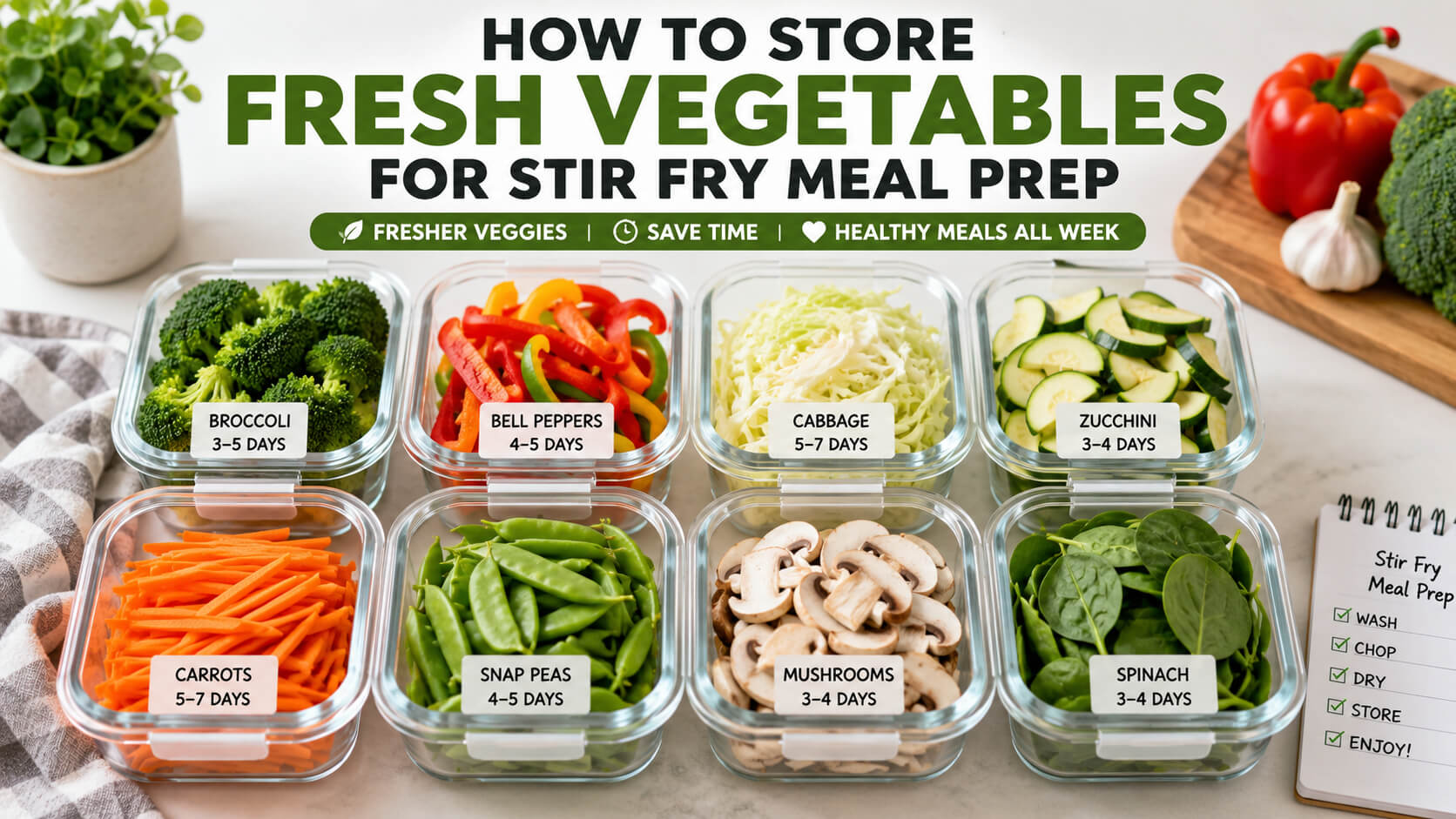
How to Store Fresh Vegetables for Stir Fry Meal Prep
How to Store Fresh Vegetables for Stir Fry Meal Prep
If you want faster weeknight dinners without sacrificing flavor or texture, learning how to store vegetables for stir fry meal prep is one of the most valuable kitchen skills you can develop. Proper storage keeps vegetables crisp, colorful, and ready to cook, helping you save time while reducing food waste.
Many people wash, cut, and refrigerate vegetables only to discover they become soggy, dry, or lose their fresh taste within a day or two. The good news is that these problems are usually caused by incorrect storage methods rather than the vegetables themselves.
Whether you’re preparing meals for a busy workweek or simply want ingredients ready for quick dinners, understanding the best way to store vegetables for stir fry meal prep ensures every stir fry tastes fresh and delicious. Different vegetables have different storage needs, and using the right containers, moisture control, and refrigeration techniques makes a noticeable difference.
In this guide, you’ll learn how to prepare vegetables before storing them, which vegetables can be cut ahead of time, how long they stay fresh, and the common mistakes that shorten their shelf life. You’ll also discover practical storage tips used by experienced home cooks to keep vegetables in peak condition for multiple days.
Quick Answer
The best way to store vegetables for stir fry meal prep is to wash only when necessary, dry vegetables completely, cut them into uniform pieces, and store them in airtight containers lined with paper towels to absorb excess moisture. Keep the containers refrigerated at 34°F–40°F (1°C–4°C), separate vegetables based on their moisture levels, and use most pre-cut vegetables within 3–5 days for the best flavor, texture, and food safety.
Table of Contents
Why Proper Vegetable Storage Matters
Fresh vegetables naturally contain large amounts of water. Once they are washed or cut, they begin losing moisture while also becoming more vulnerable to bacteria and spoilage. That’s why learning how to store vegetables for stir fry meal prep correctly is just as important as selecting high-quality produce.
Good storage practices preserve three things every great stir fry depends on:
- Crisp texture
- Bright natural color
- Fresh flavor
Vegetables that remain crisp cook more evenly over high heat. Instead of steaming in the wok, they quickly caramelize while maintaining their natural bite, creating the restaurant-quality texture that makes stir fry so enjoyable.
Proper storage also makes weekly meal prep significantly easier. Instead of washing and chopping vegetables every evening, you can complete the work once and have ingredients ready whenever you need them. This reduces cooking time, encourages healthier eating, and minimizes unnecessary cleanup.
Tip: Prepare vegetables shortly after grocery shopping while they’re at peak freshness. Starting with fresh produce gives you several more days of high-quality storage compared to waiting until vegetables have already begun to soften.
Another major benefit of learning how to store vegetables for stir fry meal prep is reducing food waste. Vegetables that are organized and visible inside clear containers are much more likely to be used before they spoil, helping you save money while making healthy meals more convenient.
How to Prepare Vegetables Before Storage
The quality of your stir fry begins long before the wok is heated. Taking a few extra minutes to prepare vegetables correctly helps you store vegetables for stir fry meal prep more effectively while preserving their flavor, texture, and nutritional value.
Before cutting anything, inspect each vegetable carefully. Remove bruised leaves, damaged stems, or soft spots since these areas spoil much faster and can shorten the shelf life of the entire batch.
Once you’ve selected fresh produce, decide whether each vegetable should be washed before storage. Some vegetables, such as broccoli, carrots, and bell peppers, can be washed ahead of time as long as they are dried thoroughly. Others, like mushrooms, stay fresher when cleaned just before cooking.
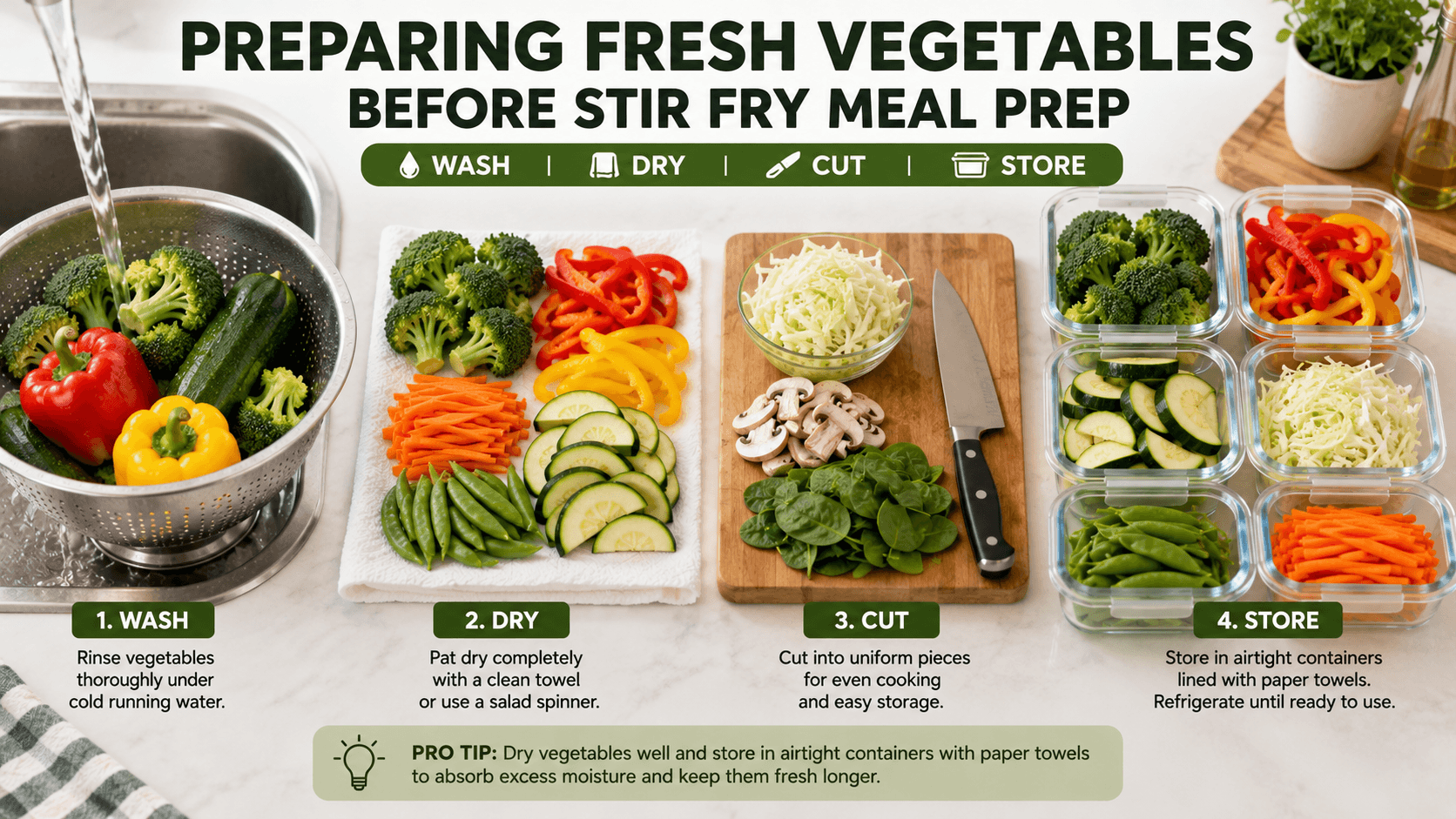
Dry Vegetables Completely
One of the biggest mistakes people make when they store vegetables for stir fry meal prep is putting damp vegetables directly into containers. Excess moisture creates the perfect environment for mold and bacteria while causing leafy vegetables to wilt and firm vegetables to soften.
After washing, spread vegetables on clean kitchen towels or paper towels. Allow them to air dry for several minutes before gently patting away any remaining moisture. A salad spinner is especially useful for leafy greens because it removes water quickly without damaging delicate leaves.
Kitchen Secret: Even a small amount of trapped moisture can shorten storage life by several days. Professional meal preppers always make sure vegetables are completely dry before sealing containers.
Cut Vegetables into Uniform Pieces
Uniform cutting improves both storage and cooking. Similar-sized pieces cool evenly in the refrigerator and cook consistently during stir frying.
For example:
- Slice bell peppers into even strips.
- Cut broccoli into bite-sized florets.
- Slice carrots into thin rounds or matchsticks.
- Trim snap peas evenly.
- Cut zucchini into similar-sized half moons or sticks.
If you’d like more preparation techniques, read our guides on how to prep broccoli for stir fry, how to cut bell peppers for stir fry, how to prepare cabbage for stir fry, and how to cut zucchini for stir fry.
Group Vegetables by Moisture Level
Not every vegetable releases moisture at the same rate. Storing vegetables with similar moisture levels together helps maintain freshness for longer.
| Moisture Level | Vegetables | Best Storage Method |
|---|---|---|
| Low Moisture | Carrots, broccoli, cauliflower | Airtight container with paper towel |
| Medium Moisture | Bell peppers, cabbage, green beans | Sealed container with light ventilation |
| High Moisture | Zucchini, mushrooms, spinach | Separate container with moisture-absorbing paper towel |
Grouping vegetables this way is one of the easiest ways to store vegetables for stir fry meal prep without ending up with soggy or wilted ingredients after only a couple of days.
Warning: Never store mushrooms in sealed plastic bags. They trap moisture quickly and become slimy. Paper bags or breathable containers work much better.
With your vegetables properly cleaned, dried, and organized, the next step is choosing the right storage containers. The container you use plays a major role in keeping vegetables crisp and fresh throughout the week.
Choose the Best Containers to Store Vegetables for Stir Fry Meal Prep
After your vegetables are properly prepared, selecting the right storage container becomes the next key step. The best container helps regulate moisture, prevents vegetables from drying out, and protects them from absorbing odors inside the refrigerator. If your goal is to store vegetables for stir fry meal prep successfully, investing in quality storage containers is well worth it.
Not all containers perform the same. Some trap too much moisture, while others allow vegetables to dry out too quickly. Finding the right balance helps vegetables stay crisp and ready for cooking throughout the week.
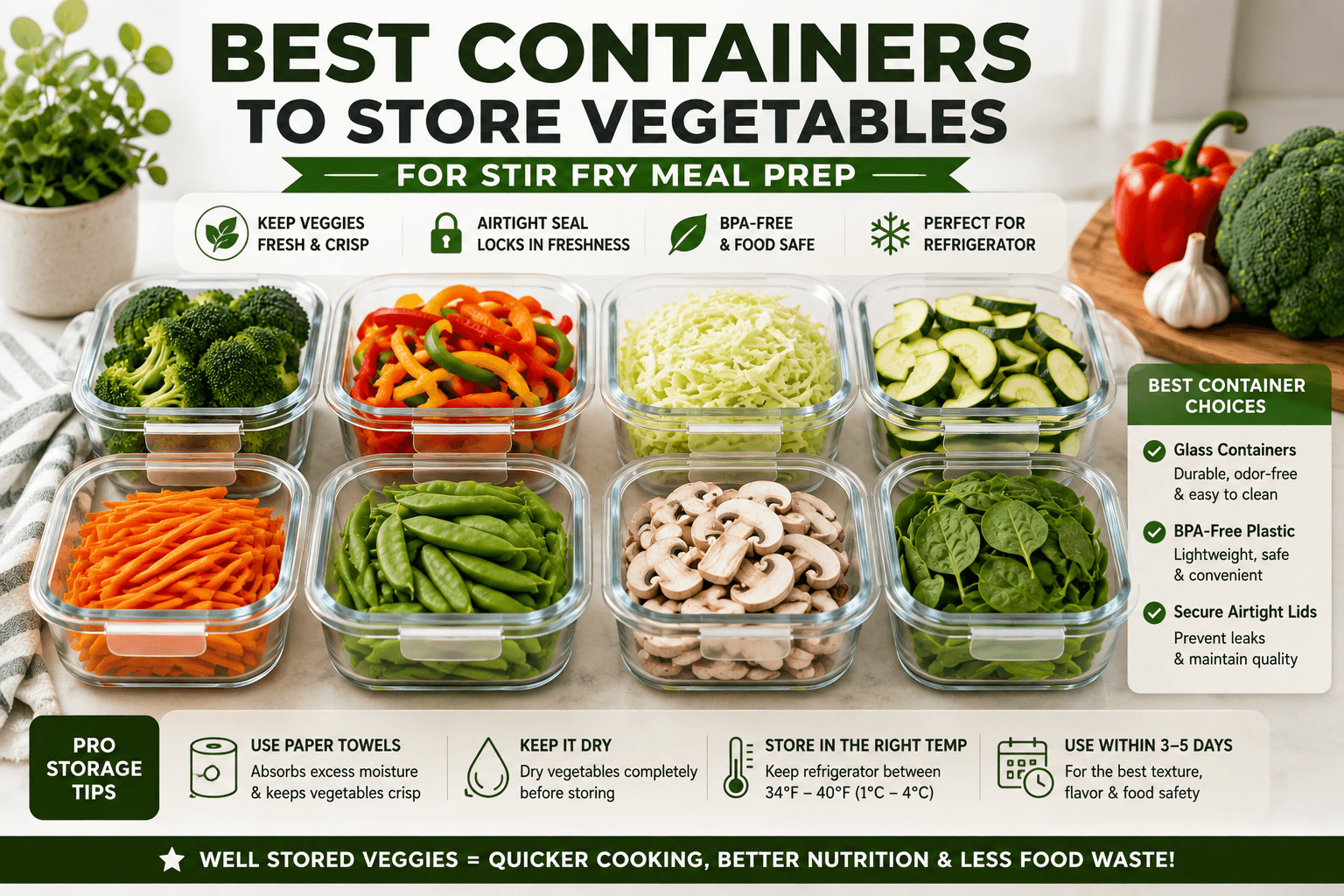
Glass Containers
Glass containers are one of the best options for stir fry meal prep. They do not absorb food odors, resist stains, and maintain a consistent temperature inside the refrigerator. Clear glass also allows you to quickly see what vegetables are available, reducing forgotten produce and unnecessary food waste.
For most home cooks, glass meal prep containers with airtight lids provide an excellent long-term solution for store vegetables for stir fry meal prep.
BPA-Free Plastic Containers
High-quality BPA-free plastic containers are lightweight and convenient, especially if you’re preparing lunches for work or transporting ingredients. Look for containers with secure, leak-resistant lids that seal tightly without trapping excessive moisture.
Avoid using thin disposable containers repeatedly, as they often crack easily and provide poor moisture control.
Tip: Choose clear containers whenever possible. Being able to see your vegetables encourages you to use them before they lose quality.
Use Paper Towels to Control Moisture
One of the simplest professional meal prep tricks is placing a clean paper towel inside each container. The paper towel absorbs excess moisture released by vegetables during refrigeration, helping maintain crisp texture.
Replace the paper towel if it becomes damp after several days. This small habit significantly extends freshness when you store vegetables for stir fry meal prep.
Separate Vegetables That Ripen Quickly
Certain fruits and vegetables naturally release ethylene gas, which speeds up ripening and spoilage. While most stir fry vegetables are unaffected, storing vegetables beside produce like apples, bananas, avocados, or tomatoes may shorten their shelf life.
Keep stir fry vegetables in their own designated refrigerator drawer or storage section whenever possible.
| Container Type | Advantages | Best For |
|---|---|---|
| Glass Airtight Container | Excellent freshness, odor resistant, durable | Weekly meal prep |
| BPA-Free Plastic Container | Lightweight and portable | Lunch meal prep |
| Reusable Produce Container | Built-in airflow and moisture control | Leafy greens and herbs |
| Paper Storage Bag | Allows airflow | Mushrooms |
Organize Vegetables by Cooking Time
Another helpful strategy when you store vegetables for stir fry meal prep is organizing containers based on cooking time. Place vegetables that require longer cooking together, such as carrots and broccoli, while grouping quick-cooking vegetables like zucchini, spinach, and bell peppers separately.
This organization makes cooking much faster because you can simply grab the correct container as each stage of the stir fry progresses.
Kitchen Secret: Professional kitchens often label containers with the preparation date. Adding a simple date label helps you rotate vegetables properly and always use the oldest batch first.
Using the right storage containers, controlling moisture, and organizing vegetables by their cooking characteristics can easily add several extra days of freshness. In the next section, we’ll look at exactly how long different stir fry vegetables stay fresh in the refrigerator and when it’s time to replace them.
How Long Different Vegetables Stay Fresh for Stir Fry Meal Prep
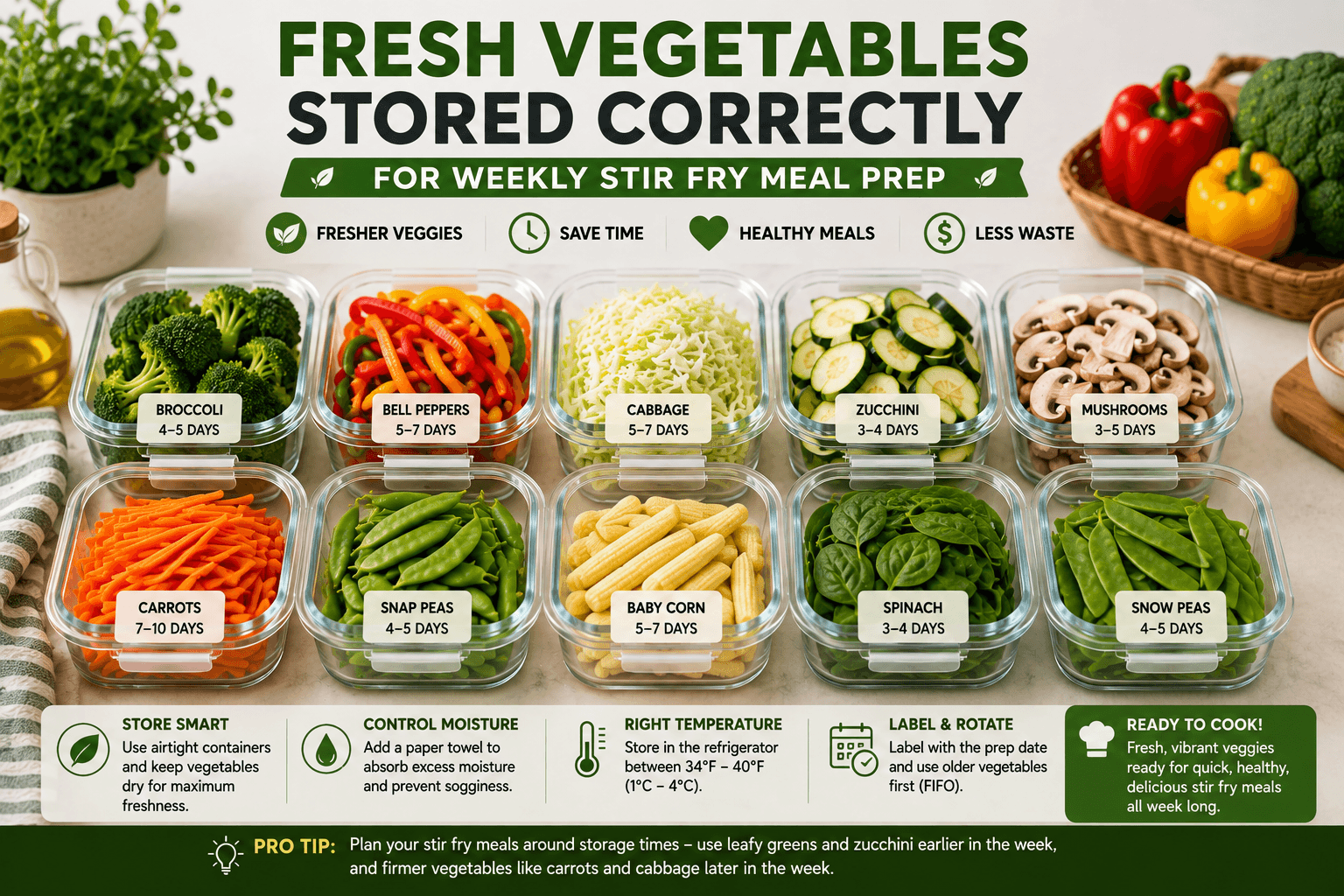
Even when you store vegetables for stir fry meal prep correctly, every vegetable has a different refrigerator life. Some vegetables remain crisp for nearly a week, while others should be used within just a few days. Knowing these storage times helps you plan meals more efficiently and avoid wasting fresh produce.
The freshness of your vegetables also depends on their quality when purchased. Always start with firm, brightly colored vegetables that show no signs of bruising, mold, or excessive softness. Proper refrigeration simply preserves quality—it cannot restore vegetables that were already beginning to spoil.
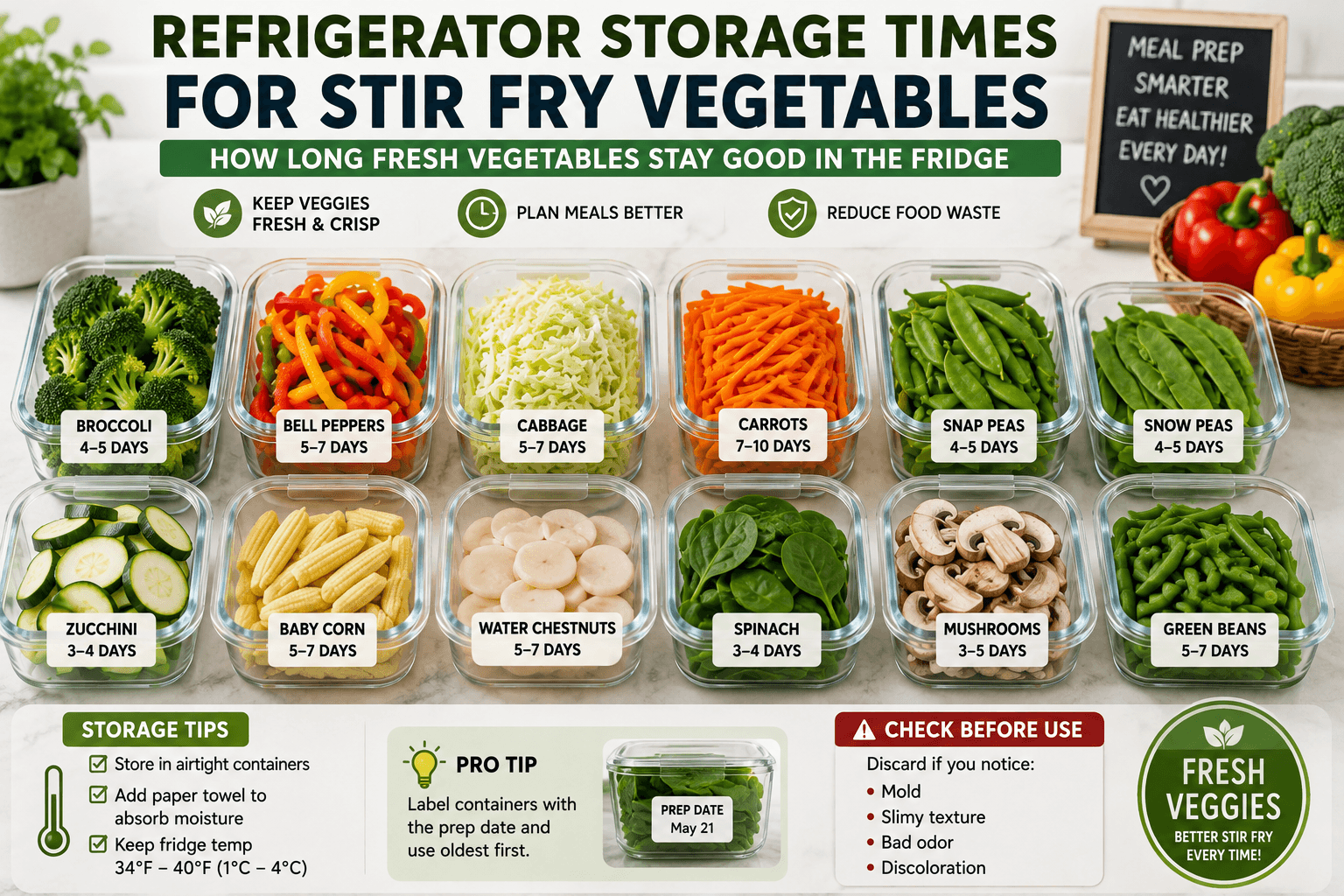
Recommended Refrigerator Storage Times
The following chart provides general guidelines for how long you can safely store vegetables for stir fry meal prep while maintaining the best texture and flavor.
| Vegetable | Storage Time | Best Storage Method |
|---|---|---|
| Broccoli | 4–5 days | Airtight container with paper towel |
| Bell Peppers | 5–7 days | Dry airtight container |
| Carrots | 7–10 days | Sealed container |
| Cabbage | 5–7 days | Airtight container |
| Snap Peas | 4–5 days | Container with paper towel |
| Snow Peas | 4–5 days | Dry airtight container |
| Zucchini | 3–4 days | Container lined with paper towel |
| Baby Corn | 5–7 days | Sealed container |
| Water Chestnuts | 5–7 days | Airtight container |
| Spinach | 3–4 days | Produce container with moisture control |
| Mushrooms | 3–5 days | Paper bag |
These storage times provide the best balance between freshness, food safety, and flavor. If you’re preparing vegetables for multiple meals, organize your containers so that vegetables with shorter shelf lives are used first.
Tip: Write the preparation date on every container using removable labels or masking tape. This simple habit makes it easy to rotate vegetables and prevents accidentally keeping them too long.
Signs Your Vegetables Are No Longer Fresh
Before cooking, always inspect your vegetables. Even if they’re still within the recommended storage time, improper handling or fluctuating refrigerator temperatures can shorten their freshness.
Discard vegetables if you notice any of the following:
- Strong sour or unpleasant odors.
- Visible mold growth.
- Excessive slime or sticky surfaces.
- Severe discoloration.
- Soft, mushy texture.
- Large amounts of liquid collecting inside the container.
If only a single leaf or small section is damaged, you may be able to remove it. However, if the spoilage has spread throughout the container, it’s safest to discard the entire batch.
Warning: Never taste vegetables to determine whether they’re still safe to eat. If they show signs of spoilage, throw them away immediately.
Plan Your Weekly Meal Prep Around Freshness
One of the easiest ways to store vegetables for stir fry meal prep successfully is by planning meals according to storage life. Cook spinach, zucchini, mushrooms, and snow peas early in the week, while saving carrots, cabbage, bell peppers, and broccoli for later meals since they maintain their quality longer.
If you’re looking for recipe inspiration, these meals make excellent use of prepped vegetables:
- Chicken Veggie Stir Fry
- Healthy Chicken Stir Fry
- Chicken Broccoli Stir Fry
- Chicken Bell Pepper Stir Fry
By understanding how long each vegetable stays fresh, you’ll reduce waste, save money, and always have high-quality ingredients ready for quick, delicious stir fry dinners.
Common Mistakes When You Store Vegetables for Stir Fry Meal Prep
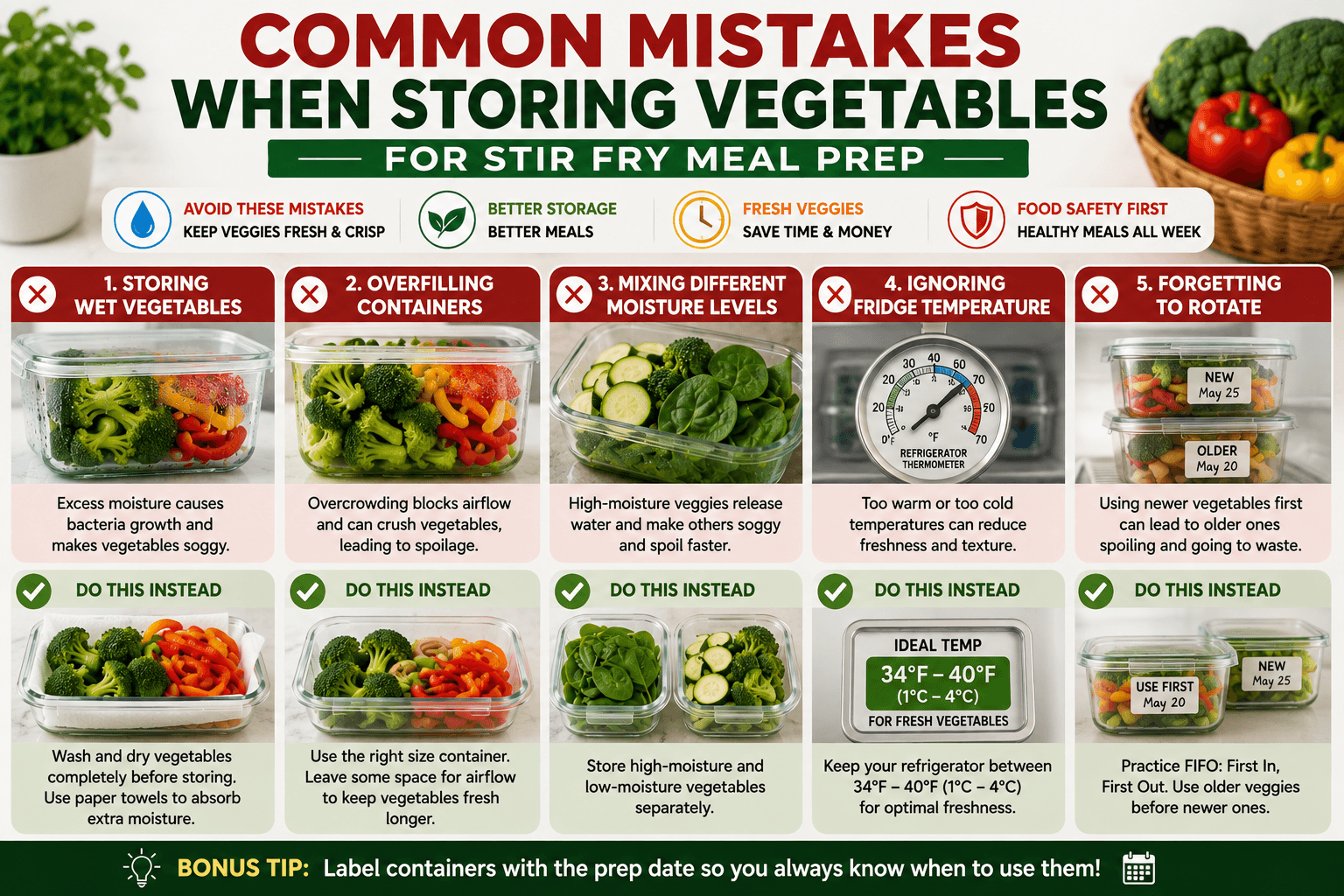
Even with the best intentions, a few simple mistakes can shorten the life of fresh vegetables. If you’ve ever opened a meal prep container to find soggy broccoli, wilted spinach, or slimy zucchini, chances are one of these common storage errors was the cause. Avoiding these mistakes will help you store vegetables for stir fry meal prep more effectively and keep your ingredients fresh for every meal.
1. Storing Wet Vegetables
Moisture is the biggest enemy of fresh produce. Many people wash vegetables and immediately place them into airtight containers without allowing them to dry completely.
Trapped moisture encourages bacteria and mold growth while causing vegetables to soften much sooner than expected. Whether you’re storing broccoli, bell peppers, cabbage, or carrots, always dry them thoroughly before refrigerating.
Warning: Never seal dripping wet vegetables inside airtight containers. Even small amounts of excess water can reduce freshness by several days.
2. Overfilling Storage Containers
Packing too many vegetables into one container reduces airflow and causes delicate vegetables to become crushed. This leads to bruising, excess moisture, and uneven cooling inside the refrigerator.
Instead, divide vegetables into multiple containers if necessary. Leaving a little extra space allows cold air to circulate more evenly and helps store vegetables for stir fry meal prep without damaging their texture.
3. Mixing Vegetables With Different Moisture Levels
High-moisture vegetables naturally release more water than firmer vegetables. If they’re stored together, the extra moisture can quickly make everything inside the container soggy.
For example:
- Store spinach separately from carrots.
- Keep mushrooms away from bell peppers.
- Separate zucchini from broccoli whenever possible.
- Use individual containers for leafy greens.
Kitchen Secret: Professional meal preppers organize vegetables by both moisture level and cooking time. This keeps ingredients fresher and makes stir fry cooking much faster.
4. Ignoring Refrigerator Temperature
Your refrigerator should maintain a temperature between 34°F and 40°F (1°C–4°C). Temperatures above this range allow vegetables to spoil more quickly, while freezing temperatures can damage delicate produce like bell peppers and zucchini.
If possible, use an inexpensive refrigerator thermometer to verify that your appliance stays within the safe range throughout the day.
| Storage Mistake | Result | Better Solution |
|---|---|---|
| Putting away wet vegetables | Slimy produce | Dry completely before storing |
| Overcrowding containers | Bruising and poor airflow | Use multiple containers |
| Mixing high and low moisture vegetables | Soggy texture | Store separately |
| No paper towel inside container | Moisture buildup | Add clean paper towel |
| Keeping vegetables too long | Loss of flavor and quality | Label containers with preparation date |
5. Forgetting to Rotate Your Meal Prep
Meal prep works best when older vegetables are used first. Place newly prepared vegetables behind older containers so you’re always using the oldest batch before preparing more.
This “first in, first out” approach is commonly used in professional kitchens because it minimizes waste and ensures every stir fry uses the freshest possible ingredients.
Tip: Spend one minute checking your meal prep containers each day. Remove any vegetables beginning to spoil before they affect the rest of your ingredients.
Putting Your Meal Prep Into Action
Once you’ve mastered how to store vegetables for stir fry meal prep, preparing healthy dinners becomes much easier. You’ll spend less time chopping vegetables after work and more time enjoying fresh homemade meals.
Prepared vegetables can be used in a variety of quick recipes throughout the week, including:
- Chicken Cabbage Stir Fry
- Chicken Zucchini Stir Fry
- Chicken Spinach Stir Fry
- Classic Chicken Stir Fry
Combining proper storage techniques with a weekly meal plan saves time, reduces grocery waste, and ensures you’re always just a few minutes away from a fresh, flavorful stir fry.
Storage and Food Safety Tips
Proper food safety is just as important as keeping vegetables fresh. Always refrigerate prepared vegetables within two hours of washing and cutting them. Store containers in the main refrigerator compartment rather than the door, where temperatures fluctuate more often.
Keep your refrigerator between 34°F and 40°F (1°C–4°C) and check vegetables before every use. If you notice mold, slime, an unpleasant odor, or significant discoloration, discard the vegetables immediately.
For the highest quality stir fry, use most pre-cut vegetables within 3–5 days, although firmer vegetables like carrots and cabbage may last slightly longer when stored correctly.
Frequently Asked Questions
Can I wash vegetables before storing them for stir fry meal prep?
Yes. Most vegetables can be washed before meal prep, but they must be dried completely before being placed in airtight containers. Excess moisture is the leading cause of soggy vegetables.
What is the best container to store vegetables for stir fry meal prep?
Glass airtight containers are generally the best choice because they resist odors, maintain freshness, and make it easy to see your prepared vegetables. BPA-free plastic containers also work well for meal prep.
How long can I store vegetables for stir fry meal prep?
Most prepared vegetables stay fresh for 3–5 days in the refrigerator. Firmer vegetables such as carrots, cabbage, and bell peppers may remain fresh for up to a week when stored properly.
Should different vegetables be stored together?
It’s usually better to separate vegetables based on their moisture levels. High-moisture vegetables like spinach and zucchini release more water and can reduce the freshness of firmer vegetables stored in the same container.
Can I freeze prepared stir fry vegetables?
Yes. Many vegetables such as broccoli, carrots, bell peppers, and snap peas freeze well. For the best texture, blanch vegetables before freezing and store them in freezer-safe bags or containers.
Why do my vegetables become soggy after meal prep?
Soggy vegetables are usually caused by excess moisture, overcrowded containers, or storing vegetables with different moisture levels together. Dry vegetables thoroughly and use paper towels inside containers to absorb condensation.
References
Final Thoughts
Learning how to store vegetables for stir fry meal prep is one of the easiest ways to make healthy cooking faster, easier, and more enjoyable. By choosing fresh produce, drying vegetables thoroughly, using airtight containers, controlling moisture with paper towels, and storing vegetables according to their moisture levels, you’ll enjoy crisp, flavorful ingredients throughout the week.
These simple habits reduce food waste, save time during busy evenings, and help every homemade stir fry taste fresher. Whether you’re preparing vegetables for one dinner or an entire week’s worth of meals, proper storage ensures your ingredients stay ready whenever you need them.
🍽️ You Might Also Like


📧 Save This Recipe For Later
Enter your email and we will send this recipe directly to your inbox.