
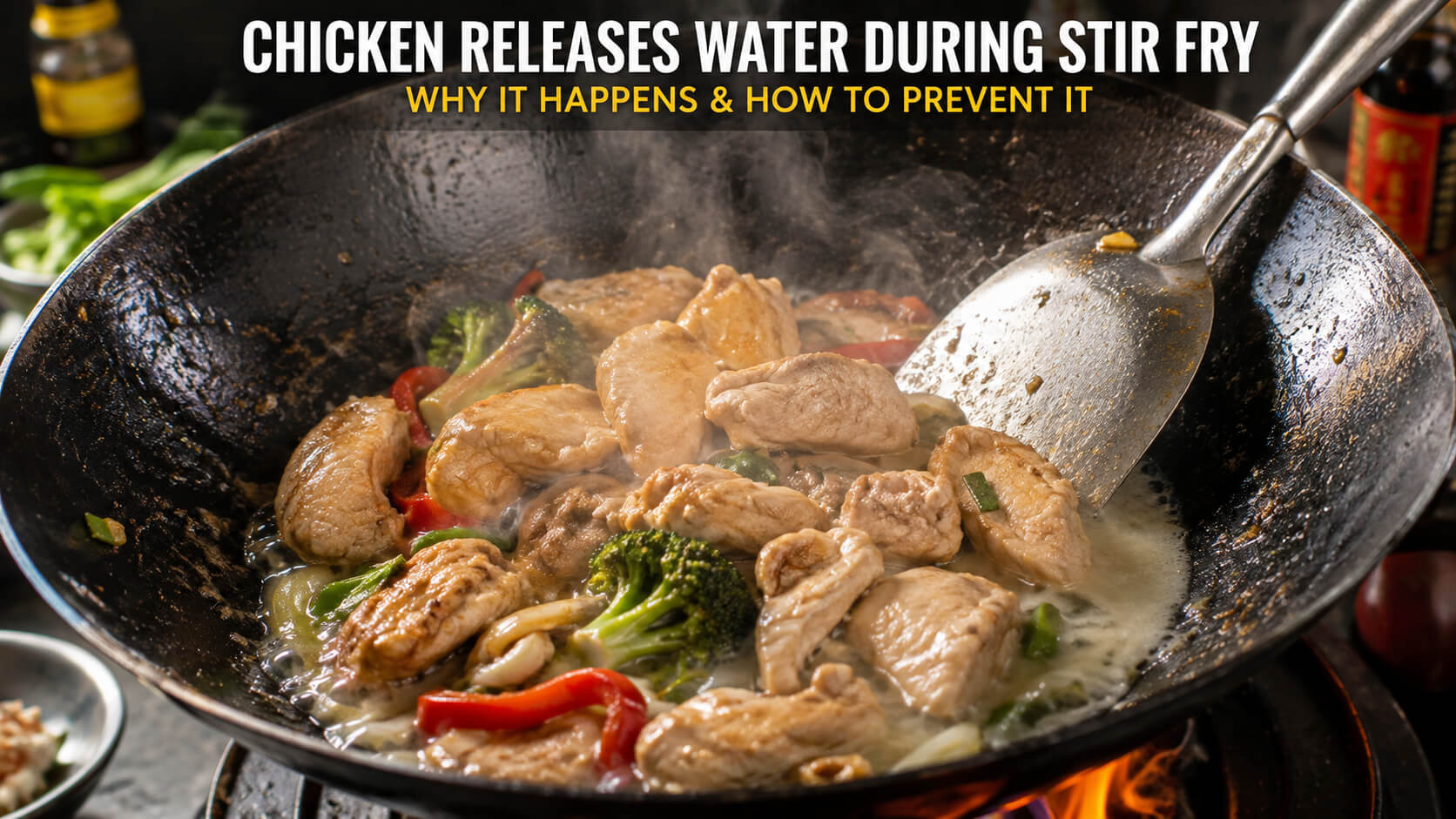
Why Does Chicken Release Water During Stir Fry?
Why Does Chicken Release Water During Stir Fry?
Have you ever added chicken to a hot pan expecting a beautifully browned stir fry, only to watch it fill with liquid instead? If you’ve experienced this, you’re not alone. One of the most common frustrations home cooks face is that chicken releases water stir fry instead of searing properly.
When excess moisture collects in the pan, the chicken begins to steam rather than brown. The result is pale, rubbery meat, watery sauce, and vegetables that lose their crisp texture. Fortunately, this problem isn’t caused by a single mistake. Several factors—including the type of chicken, pan temperature, overcrowding, preparation methods, and cooking technique—can all contribute.
Understanding why chicken releases water stir fry situations happen is the first step toward fixing them. Once you know the science behind moisture loss, you can make small adjustments that dramatically improve texture, flavor, and browning.
In this guide, you’ll learn why chicken releases moisture during stir frying, what causes excessive liquid in the pan, and the practical techniques professional chefs use to keep chicken juicy while still achieving the rich golden-brown sear that makes stir fry so delicious.
Quick Answer
Chicken releases water during stir fry because moisture inside the meat escapes as it heats, and excess surface moisture evaporates into the pan. The problem becomes worse when the pan isn’t hot enough, too much chicken is cooked at once, or the chicken wasn’t properly dried before cooking. To prevent chicken releases water stir fry problems, pat the chicken dry, preheat the pan until very hot, cook in small batches, and avoid moving the chicken too soon so it can develop a proper sear.
Table of Contents
Why Does Chicken Release Water During Stir Fry?
Raw chicken naturally contains a significant amount of water. In fact, fresh chicken is made up of roughly 70 to 75 percent water. As heat reaches the meat, muscle fibers begin to contract, squeezing moisture toward the surface. This process is completely normal and happens regardless of the cooking method.
However, when chicken releases water stir fry becomes excessive, it usually means something in the cooking process is preventing the moisture from evaporating quickly enough. Instead of instantly turning into steam, the liquid collects in the pan, surrounding the chicken and causing it to simmer rather than sear.
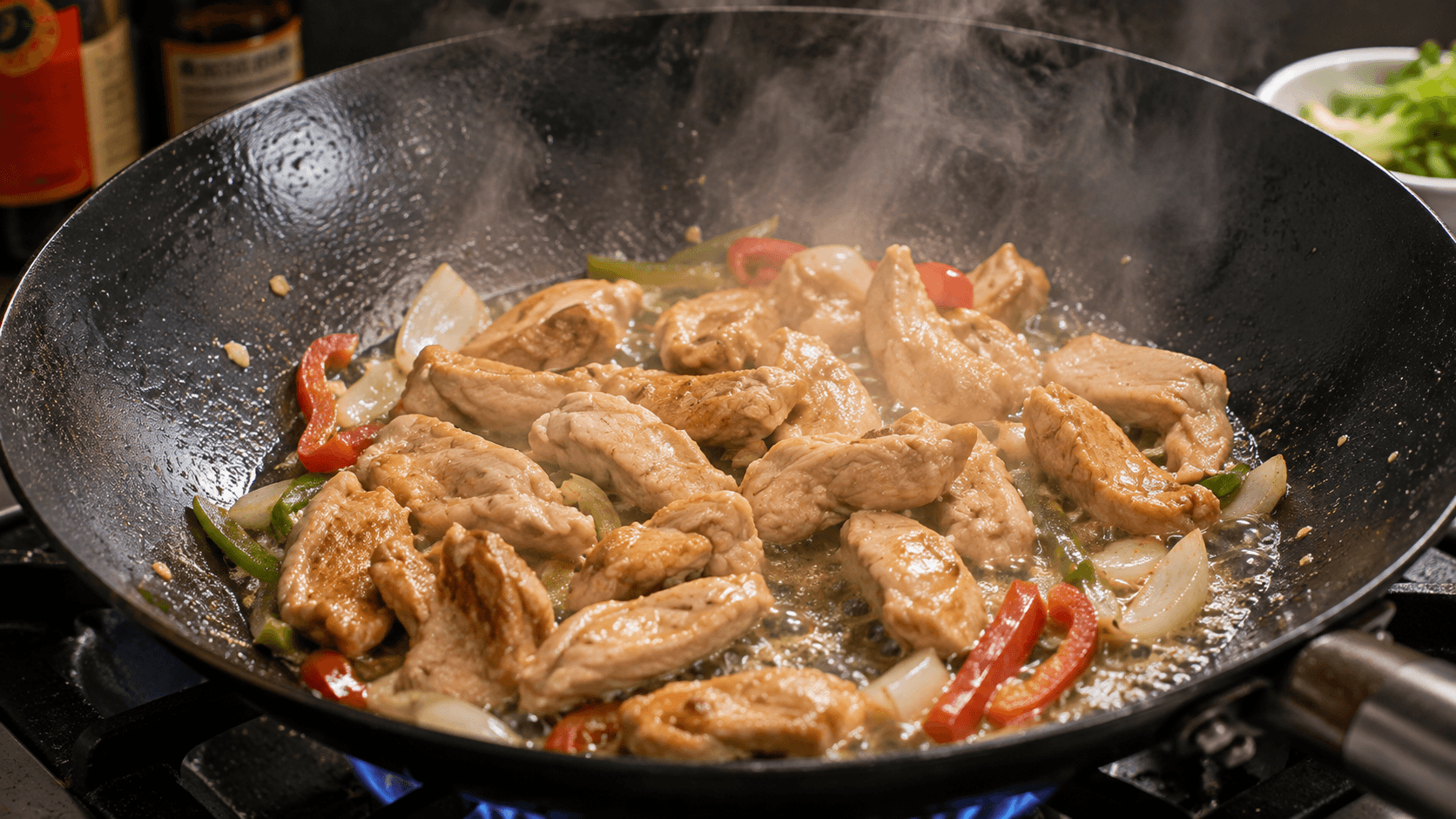
A properly heated wok or skillet evaporates small amounts of moisture almost immediately. The chicken develops a flavorful golden crust through the Maillard reaction while remaining juicy inside. If the pan temperature drops because it’s overcrowded or not hot enough, evaporation slows dramatically and water begins pooling.
Kitchen Tip: A sizzling sound is a good sign. If your chicken quietly bubbles in liquid instead of sizzling, the pan likely isn’t hot enough or contains too much chicken.
The Science Behind Moisture Loss During Stir Fry
To understand why chicken releases water stir fry occurs, it helps to know what happens inside the meat during cooking.
Chicken muscle fibers are packed with proteins that naturally hold water. As the temperature increases, these proteins tighten and contract. This contraction pushes moisture outward, where it either evaporates or collects in the cooking pan.
If the cooking surface stays extremely hot, the escaping moisture quickly turns into steam while the chicken begins browning. But if heat is insufficient, evaporation slows and the liquid remains in the pan.
| Cooking Stage | What Happens | Effect on Chicken |
|---|---|---|
| Raw chicken enters hot pan | Surface moisture begins evaporating | Good searing starts |
| Proteins contract | Internal moisture moves outward | Natural water release |
| Pan stays very hot | Water instantly evaporates | Golden brown crust forms |
| Pan temperature drops | Water collects in pan | Chicken steams instead of browning |
This explains why professional restaurants often achieve beautifully browned chicken even though the meat contains the same amount of natural moisture. Their extremely hot woks evaporate water almost instantly.
Chef’s Secret: Restaurants don’t remove all the moisture from chicken—they simply cook hot enough that the moisture evaporates before it has time to pool in the pan.
The Most Common Reasons Chicken Releases Too Much Water
Although some moisture loss is unavoidable, excessive liquid usually points to one or more preventable issues. Identifying the cause is the fastest way to improve your stir fry.
1. The Chicken Wasn’t Patted Dry
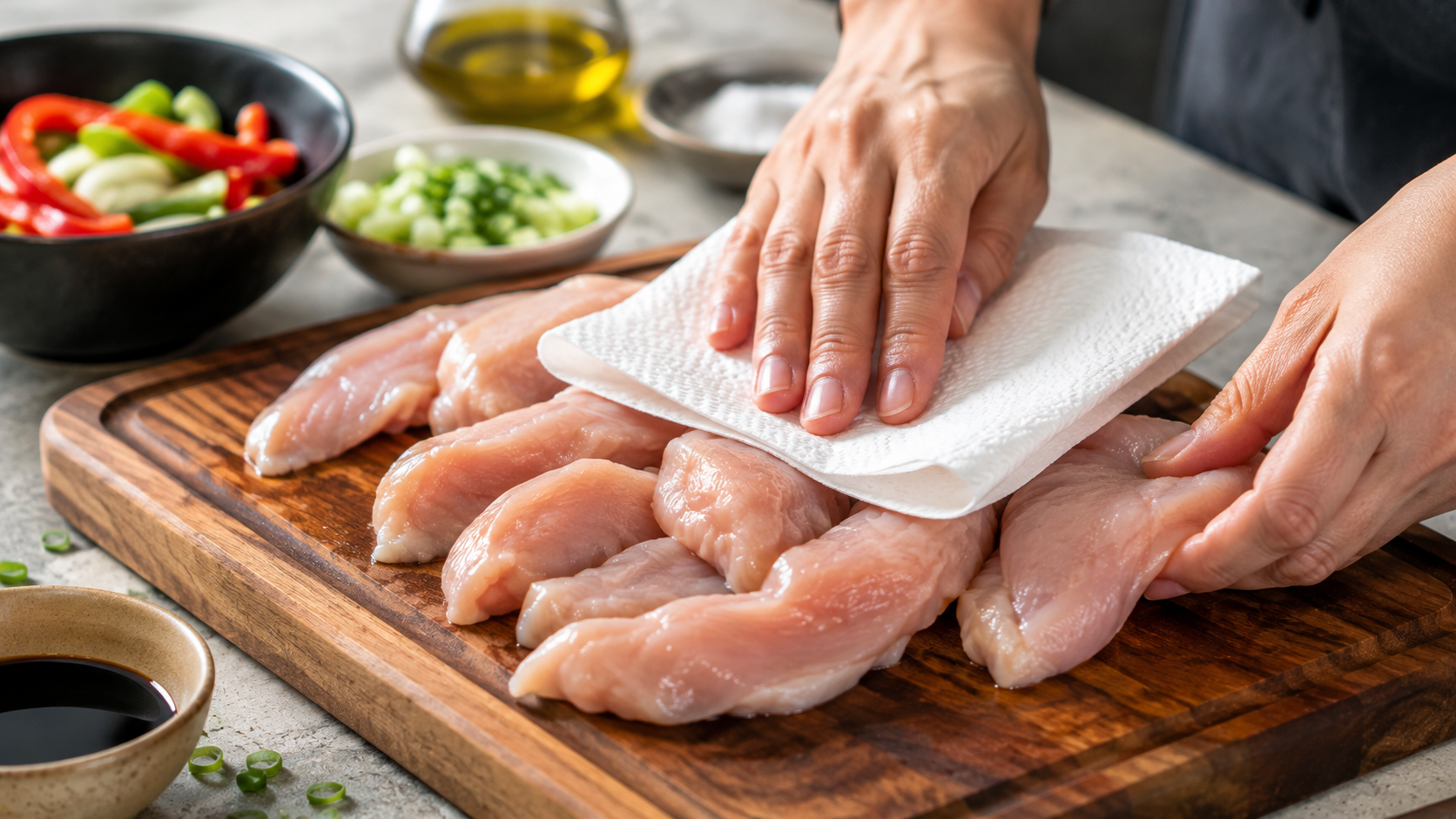
Surface moisture is one of the biggest reasons chicken releases water stir fry problems occur. Fresh chicken often contains water from packaging or natural juices. When this extra moisture hits the pan, it cools the cooking surface and delays browning.
Before seasoning or marinating, always pat the chicken thoroughly dry with paper towels. Even removing a small amount of surface moisture can noticeably improve browning.
2. The Pan Wasn’t Hot Enough
A cool skillet is one of the fastest ways to turn a stir fry into a watery mess. Stir frying depends on intense heat. If the pan hasn’t fully preheated, moisture collects faster than it evaporates.
Heat your wok or skillet until it’s very hot before adding oil. Once the oil begins to shimmer, add the chicken immediately.
Warning: Never add chicken to a cold pan and expect proper browning. The chicken will slowly release moisture long before it starts to sear.
3. The Pan Was Overcrowded
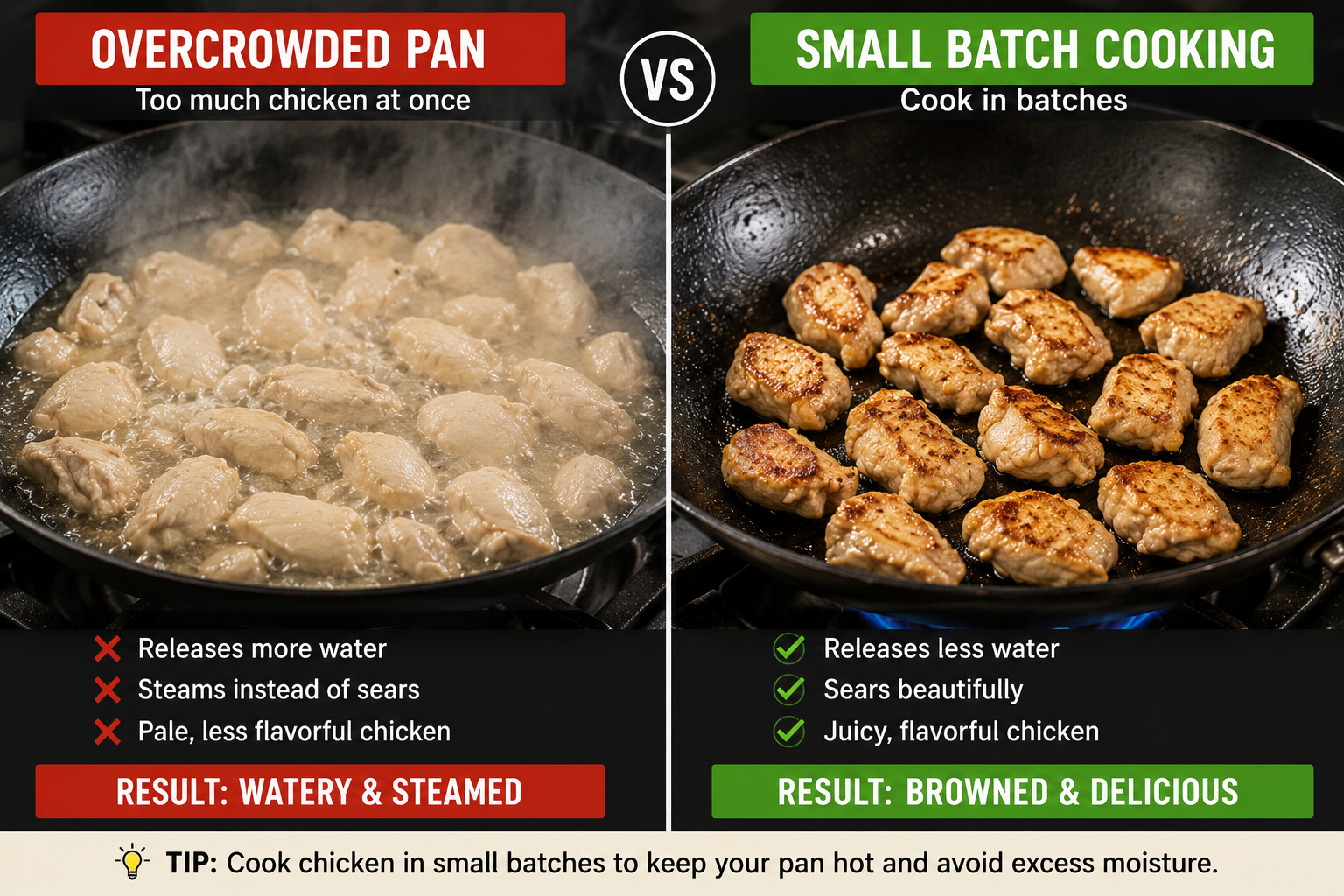
Perhaps the most common reason chicken releases water stir fry happens is overcrowding. Every piece of chicken releases moisture as it cooks. When too many pieces are packed together, the combined moisture overwhelms the pan’s ability to evaporate it.
Instead of frying, the chicken effectively boils in its own juices.
Professional chefs solve this by cooking in batches. Although it takes a few extra minutes, the improvement in flavor and texture is worth it.
| Cooking Method | Result |
|---|---|
| Single crowded batch | Steamed chicken with excess liquid |
| Two or three smaller batches | Golden brown chicken with better flavor |
How to Prevent Chicken from Releasing Too Much Water During Stir Fry
Now that you understand why chicken releases water stir fry situations happen, let’s focus on preventing them. Most home cooks don’t need expensive equipment or restaurant-grade burners to improve their results. A few simple preparation and cooking techniques can make a dramatic difference.
The goal isn’t to stop chicken from releasing moisture completely—that’s impossible. Instead, you want the moisture to evaporate quickly so the chicken develops a flavorful brown crust instead of simmering in its own juices.
1. Pat the Chicken Completely Dry
The easiest improvement you can make starts before cooking. Removing excess surface moisture allows the chicken to sear immediately instead of steaming.
Use several paper towels to dry every piece of chicken before seasoning or marinating. Even chicken labeled “air chilled” can have enough surface moisture to affect browning.
Best Practice: Dry the chicken immediately before seasoning. If it sits for too long afterward, moisture can return to the surface.
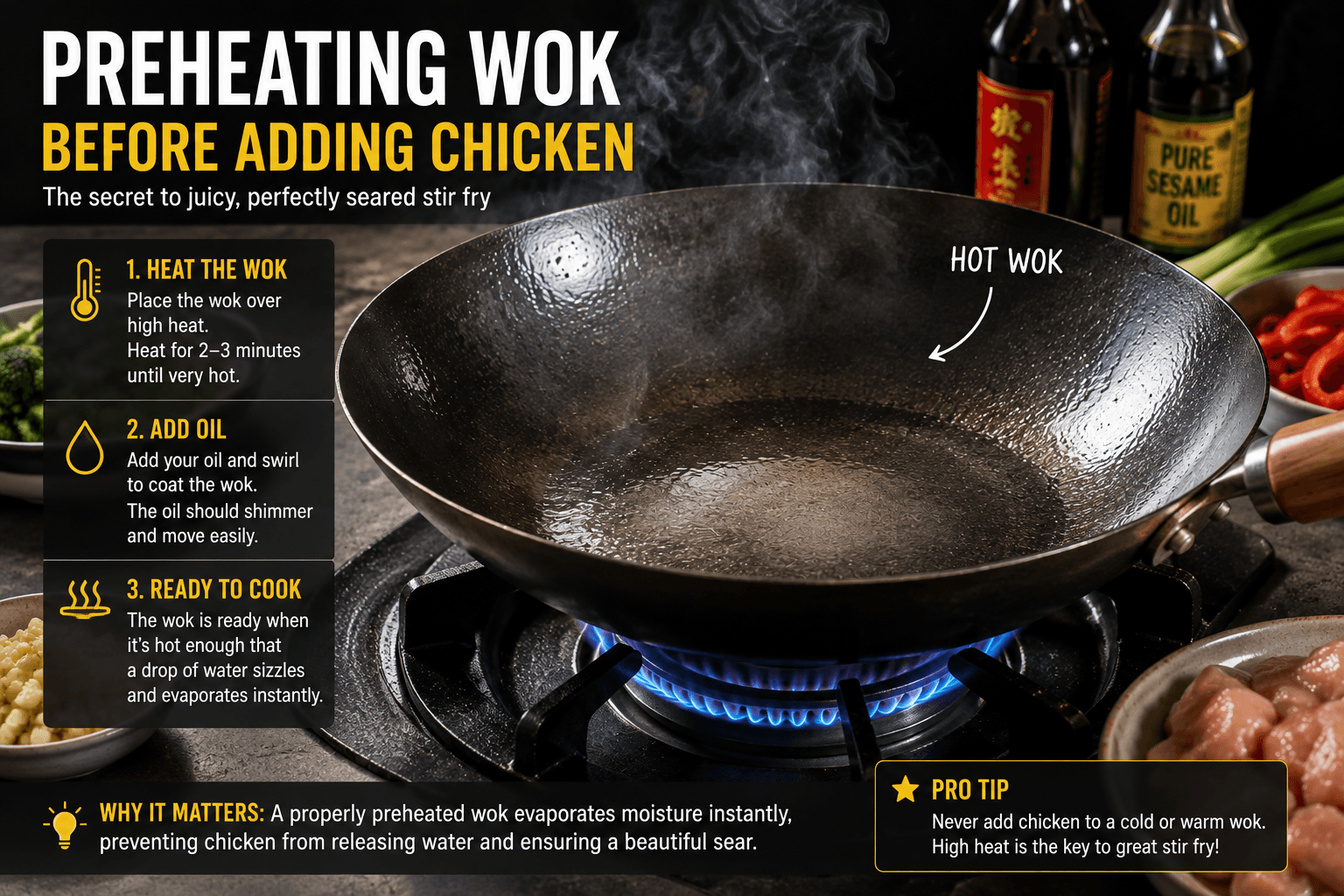
2. Preheat the Pan Properly
A properly heated pan is essential for successful stir frying. Whether you’re using a carbon steel wok, stainless steel skillet, or cast iron pan, let it heat thoroughly before adding oil.
The oil should shimmer but not smoke heavily. Once the oil is ready, add the chicken immediately.
This rapid contact with high heat helps the outside brown quickly while reducing the chance that chicken releases water stir fry problems will occur.
3. Cook in Small Batches
Trying to save time by cooking all the chicken at once usually has the opposite effect. The pan temperature drops quickly, moisture accumulates, and the chicken takes longer to brown.
Instead, divide large amounts of chicken into two or three smaller batches. Leave a little space between each piece so steam can escape.
This technique keeps the cooking surface hot and helps moisture evaporate rapidly.
| Amount of Chicken | Recommended Method | Expected Result |
|---|---|---|
| 1 pound or less | Single batch in large skillet | Good browning |
| 1½–2 pounds | Cook in two batches | Even searing |
| Over 2 pounds | Cook in three batches | Maximum browning with minimal moisture |
4. Don’t Move the Chicken Too Soon
One of the biggest mistakes home cooks make is constantly stirring the chicken.
After placing the chicken into the hot pan, allow it to cook undisturbed for about one to two minutes. This gives the proteins time to brown and naturally release from the cooking surface.
If you stir too early, the chicken never develops a crust and continues releasing moisture into the pan.
Chef’s Secret: Let the chicken “earn its crust.” When it’s properly browned, it naturally releases from the pan with very little sticking.
Does Frozen Chicken Release More Water?
Yes. Frozen chicken usually releases more liquid during cooking than properly thawed chicken.
During freezing, tiny ice crystals form inside the muscle fibers. As the chicken thaws, those crystals damage some of the cells, allowing additional moisture to escape during cooking.
If frozen chicken isn’t thawed completely, melting ice adds even more water to the pan.
| Chicken Type | Water Released | Best Choice for Stir Fry |
|---|---|---|
| Fresh chicken | Lowest | Excellent |
| Fully thawed frozen chicken | Moderate | Very Good |
| Partially frozen chicken | High | Not Recommended |
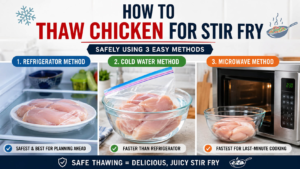
If using frozen chicken, thaw it completely in the refrigerator and pat it dry thoroughly before cooking.
Does Marinating Cause Chicken to Release More Water?
Not necessarily. A well-balanced marinade can actually improve texture and help chicken retain moisture while cooking.
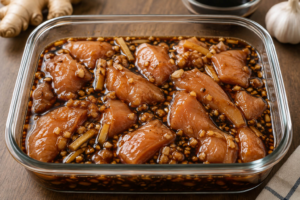
However, marinades containing excessive liquid can contribute to pooling if the chicken is transferred directly from the bowl into the pan.
Before stir frying, gently shake off excess marinade so only a thin coating remains.
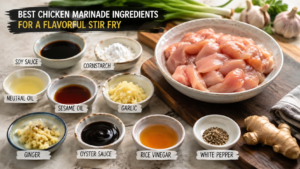
If you’re using a velveting technique with cornstarch, the coating also helps protect the meat from drying out while promoting better browning.
Helpful Tip: Thick marinades work better for stir fry than very watery marinades because they cling to the chicken without flooding the pan.
Choosing the Right Pan Makes a Difference
The cooking surface plays a major role in whether chicken releases water stir fry becomes a problem.
Thin nonstick pans often lose heat quickly when cold chicken is added. Heavy carbon steel, cast iron, and quality stainless steel pans retain heat much better, allowing moisture to evaporate faster.
| Cookware | Heat Retention | Best for Stir Fry? |
|---|---|---|
| Carbon Steel Wok | Excellent | ★★★★★ |
| Cast Iron Skillet | Excellent | ★★★★★ |
| Heavy Stainless Steel | Very Good | ★★★★☆ |
| Thin Nonstick Pan | Fair | ★★☆☆☆ |
If you regularly cook stir fry, investing in a quality carbon steel wok is one of the easiest ways to improve browning.
Why Store-Bought Chicken Sometimes Releases More Water
Not all chicken is processed the same way.
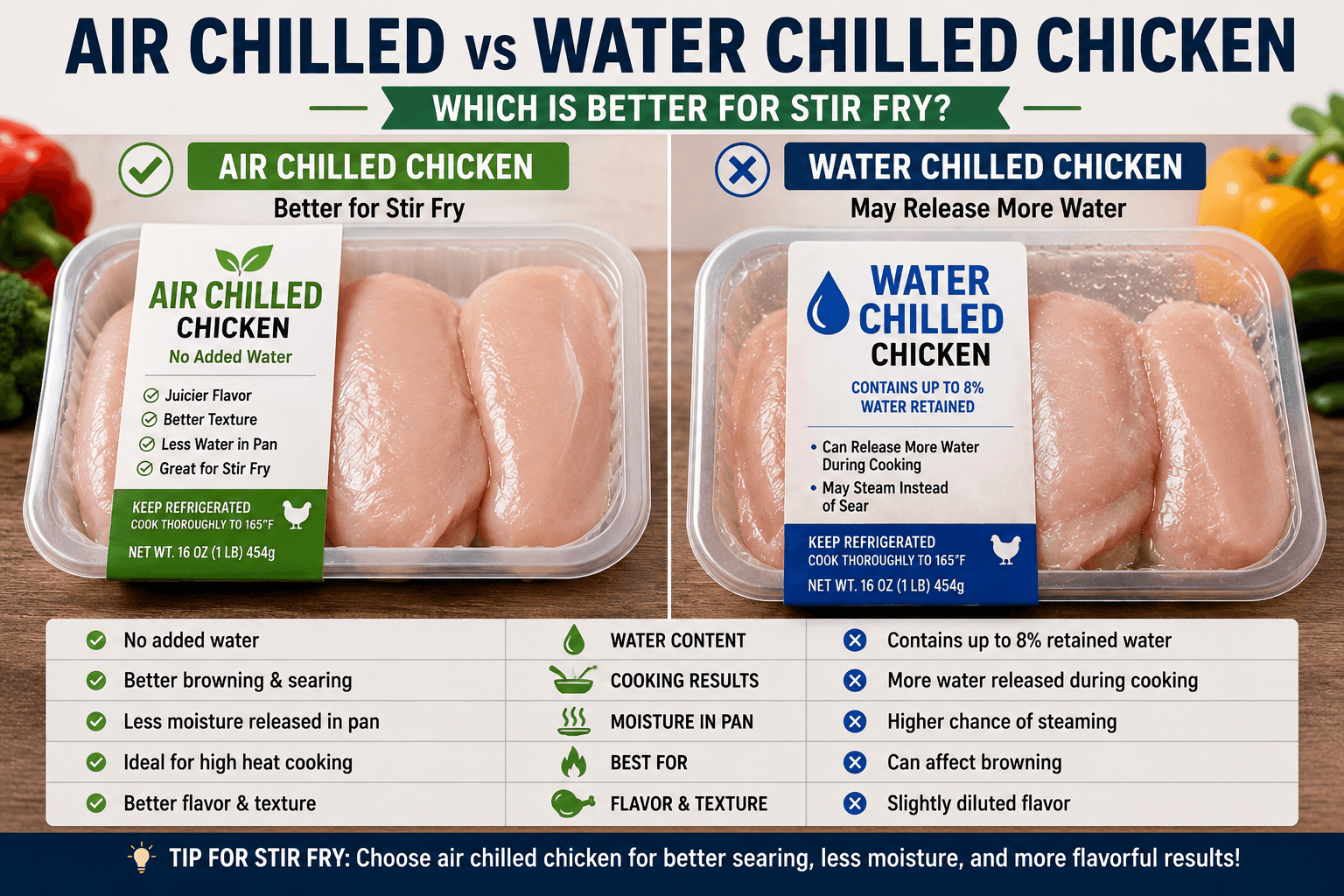
Some commercially packaged chicken is labeled as containing a solution of water, salt, or other ingredients to improve tenderness and shelf life. These products naturally release more liquid during cooking.
Air-chilled chicken, on the other hand, generally contains less retained moisture because it isn’t cooled in large water baths during processing.
Reading product labels can help you choose chicken that’s better suited for stir frying.
Common Mistakes That Cause Chicken to Release Too Much Water
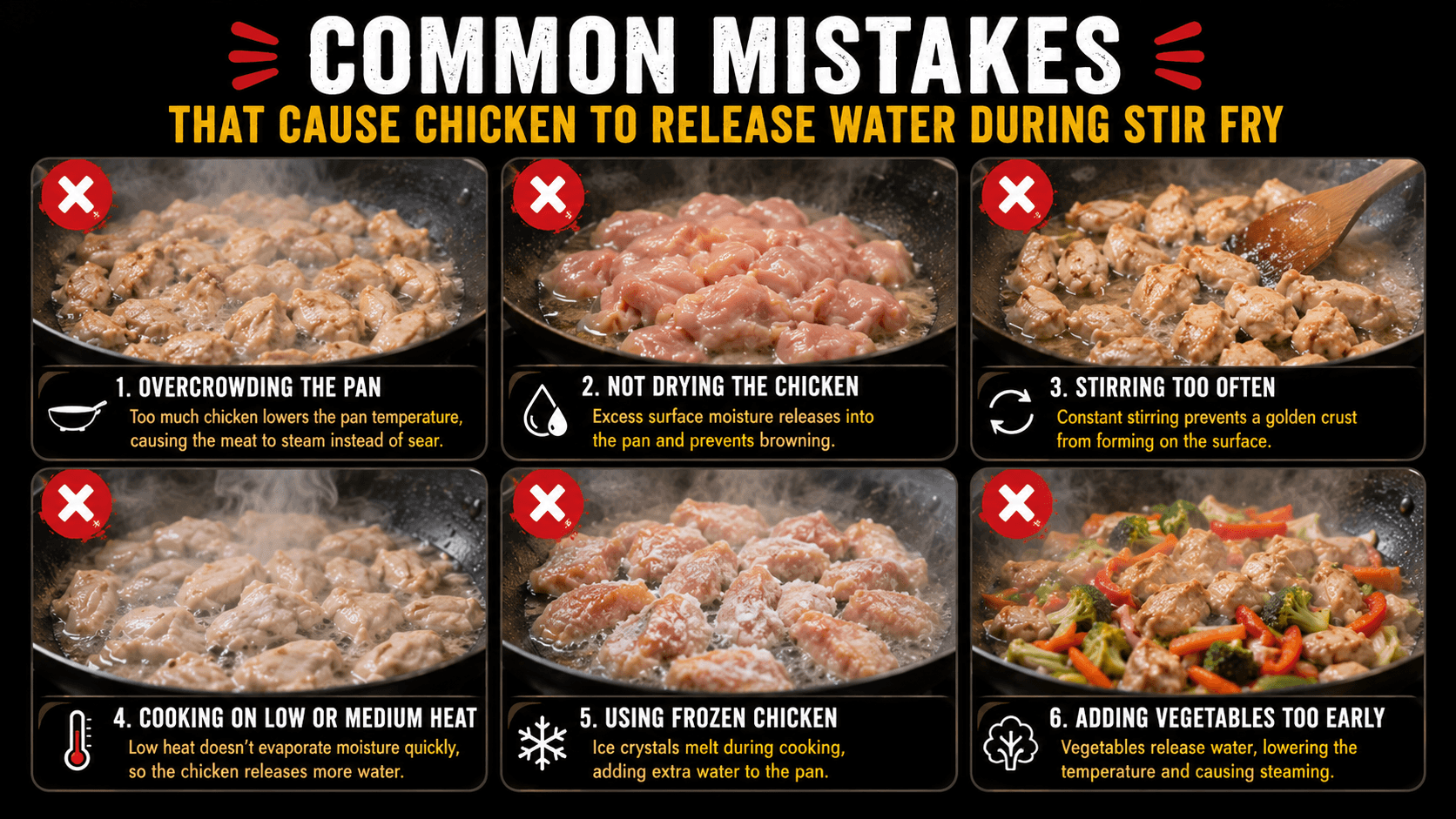
Even experienced home cooks occasionally end up with watery stir fry. In most cases, the problem isn’t the chicken itself—it’s one or more cooking habits that reduce pan temperature or trap steam. Avoiding these mistakes will help ensure chicken releases water stir fry becomes a problem of the past.
Cooking Straight from the Refrigerator
Very cold chicken dramatically lowers the temperature of your wok or skillet the moment it touches the cooking surface. While you should never leave raw chicken at room temperature for extended periods, allowing it to sit for about 10–15 minutes while you prepare vegetables can slightly reduce the temperature difference and improve browning.
Food Safety Reminder: Never leave raw chicken at room temperature for more than 2 hours (or 1 hour if the temperature is above 90°F).
Using Too Much Oil
Oil helps transfer heat, but excessive oil can reduce direct contact between the chicken and the cooking surface. A thin coating is usually all you need for stir frying.
Adding Vegetables Too Early
Many vegetables naturally release water as they cook. If they’re added before the chicken has browned, both ingredients release moisture simultaneously, making it even harder to achieve a proper sear.
For best results, brown the chicken first, remove it if necessary, cook the vegetables separately, then combine everything at the end.
Constant Stirring
Stir frying doesn’t mean stirring every second. Giving the chicken time to develop a crust before tossing it helps moisture evaporate quickly and improves flavor.
Best Practices
- Pat chicken completely dry.
- Use a very hot wok or skillet.
- Cook in small batches.
- Allow the chicken to brown before stirring.
- Use heavy cookware that retains heat.
- Shake off excess marinade before cooking.
Avoid These Mistakes
- Adding chicken to a cold pan.
- Overcrowding the cooking surface.
- Using partially frozen chicken.
- Adding vegetables too early.
- Moving the chicken constantly.
- Skipping the step of drying the chicken.
Quick Checklist for Better Stir Fry Chicken
Use this simple checklist every time you cook to prevent excess moisture and improve browning.
| Step | Done? |
|---|---|
| Pat the chicken completely dry. | ✓ |
| Preheat the pan until very hot. | ✓ |
| Add only enough oil to coat the pan. | ✓ |
| Cook chicken in small batches. | ✓ |
| Leave space between the pieces. | ✓ |
| Don’t stir immediately. | ✓ |
| Add vegetables after the chicken browns. | ✓ |
| Finish with sauce at the end. | ✓ |
Storage & Leftovers
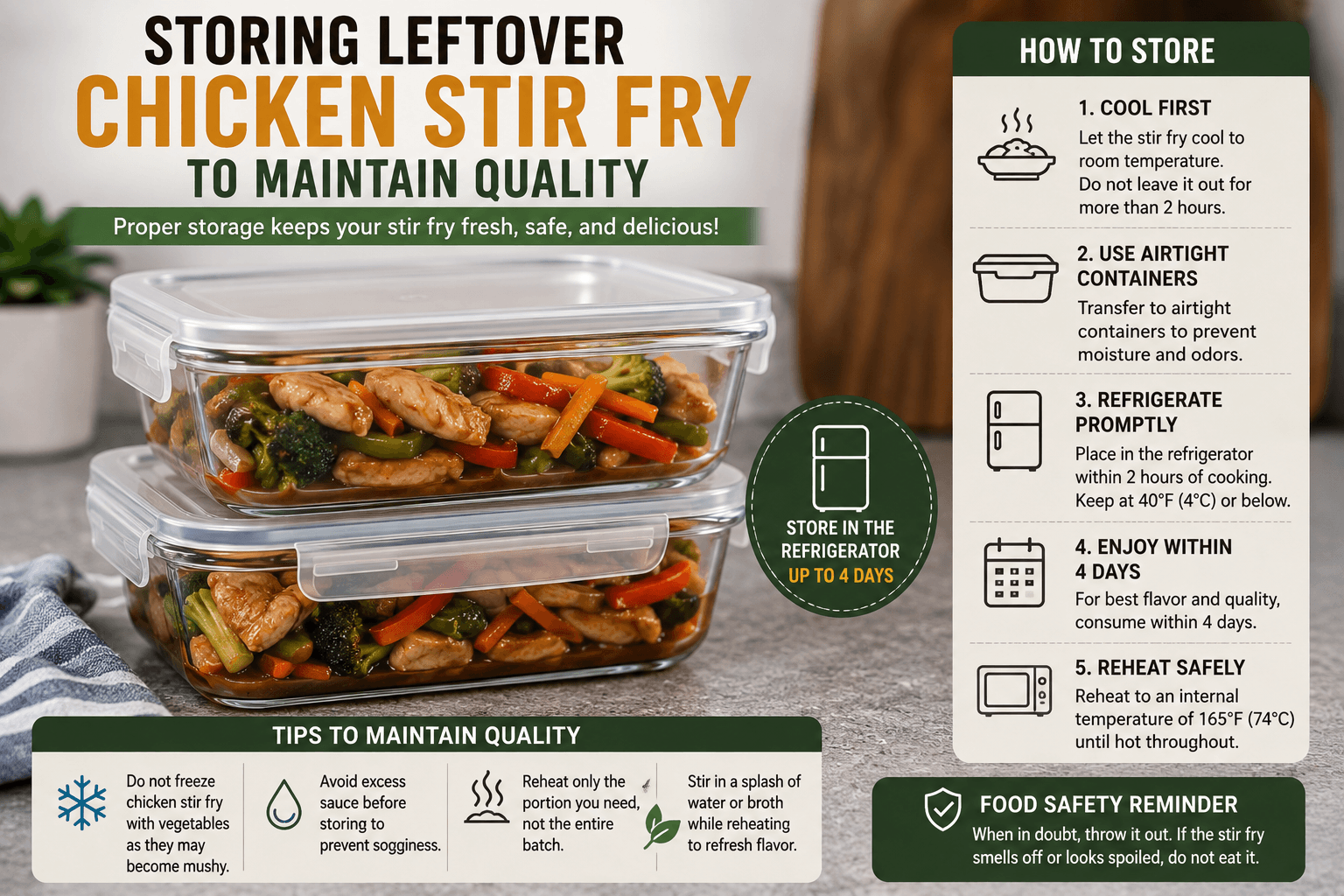
If your stir fry ends up slightly watery, don’t throw it away. Allow it to cool completely, then store it in an airtight container in the refrigerator for up to 4 days.
When reheating, use a hot skillet instead of the microwave whenever possible. Reheating over medium-high heat allows excess moisture to evaporate, improving the texture of the chicken and vegetables.
For longer storage, freeze cooked stir fry for up to 3 months. Thaw overnight in the refrigerator before reheating.
Frequently Asked Questions
Is it normal that chicken releases water during stir fry?
Yes. Chicken naturally contains a large amount of water. Some moisture release is expected during cooking. Problems occur only when excess liquid collects in the pan instead of evaporating.
Why does restaurant stir fry chicken stay browned?
Restaurants use extremely hot woks that evaporate moisture almost instantly. They also cook small batches and avoid overcrowding, preventing the chicken from steaming.
Should I drain the liquid from the pan?
If only a small amount of liquid appears, continue cooking over high heat until it evaporates. If the pan becomes flooded, carefully remove the chicken, discard the excess liquid if necessary, reheat the pan, and continue cooking.
Does cornstarch help prevent chicken from releasing water?
A light cornstarch coating used in velveting doesn’t stop moisture release entirely, but it helps protect the chicken, improves browning, and creates a silky texture.
What’s the best cut of chicken for stir fry?
Chicken thighs generally stay juicier because they contain slightly more fat, while properly prepared chicken breasts also produce excellent results when cooked over high heat.
Can I fix watery stir fry after it happens?
Yes. Remove the chicken if necessary, allow the excess liquid to evaporate over high heat, then return the chicken to the pan and finish cooking with the sauce.
References
Final Thoughts
If chicken releases water stir fry has been ruining your meals, the solution is usually simpler than you think. Most excess moisture comes from surface water, insufficient heat, overcrowding, or poor preparation—not from the chicken itself.
By drying the chicken thoroughly, preheating your pan, cooking in smaller batches, and allowing the meat to brown before stirring, you’ll consistently create flavorful stir fry with tender, juicy chicken and a beautifully caramelized exterior instead of a watery pan.
Mastering these simple techniques will improve not only chicken stir fry but also many other high-heat cooking methods, helping you achieve restaurant-quality results at home.
🍽️ You Might Also Like
📧 Save This Recipe For Later
Enter your email and we will send this recipe directly to your inbox.