
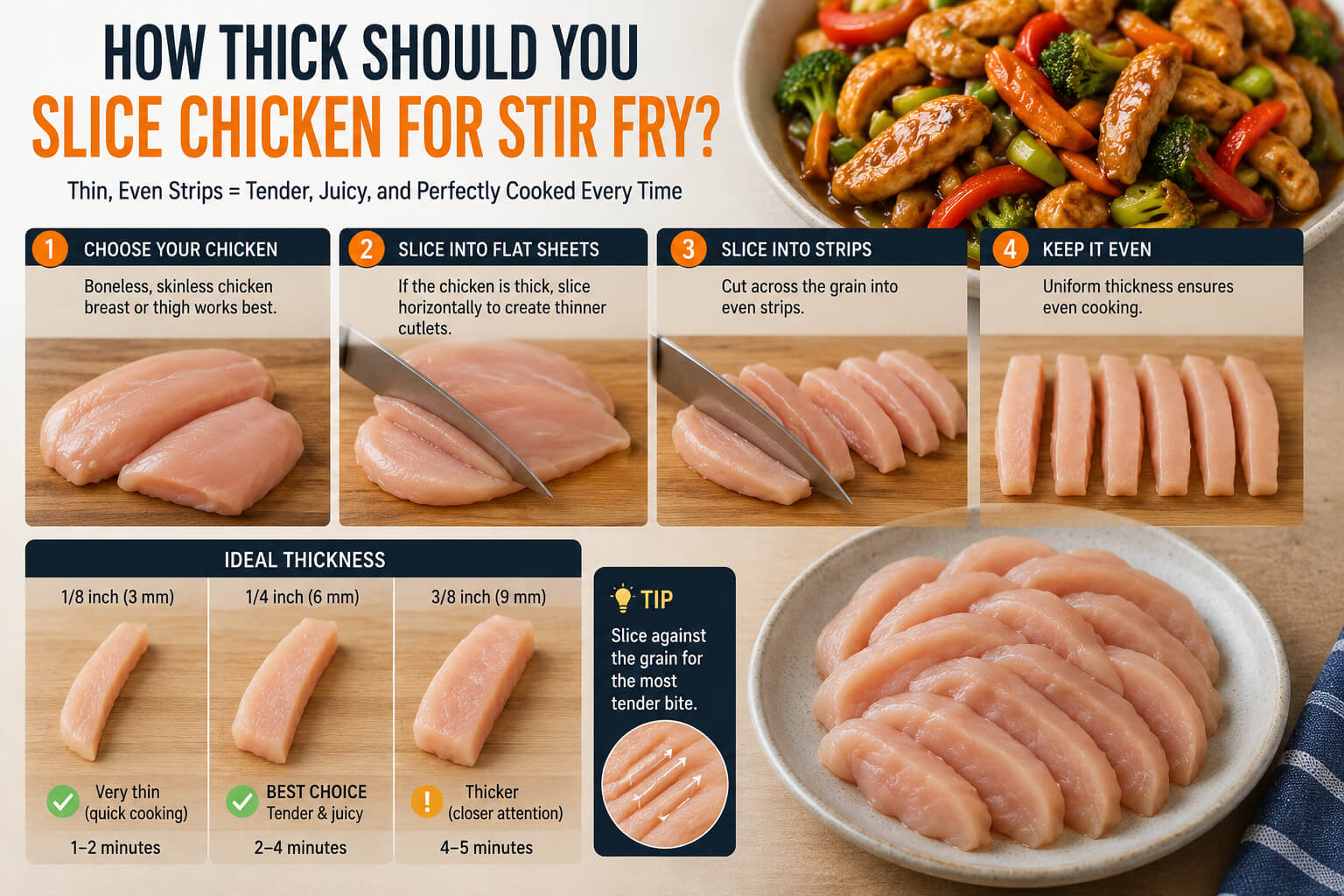
How Thick Should You Slice Chicken for Stir Fry?
How Thick Should You Slice Chicken for Stir Fry?
If you’ve ever wondered why restaurant stir fry chicken is incredibly tender while homemade versions often turn out dry, chewy, or unevenly cooked, the answer usually starts with one simple technique: how you slice chicken for stir fry. The thickness, direction, and consistency of every slice determine how quickly the chicken cooks, how much marinade it absorbs, and whether it stays juicy over high heat.
Many home cooks focus on sauces, seasonings, or expensive cookware, yet overlook the importance of properly preparing the chicken. Even the best marinade can’t fully compensate for pieces that are cut too thick or sliced with the grain. Learning the correct slicing method is one of the easiest ways to improve every chicken stir fry you make.
In this guide, you’ll learn the ideal thickness for different cuts of chicken, why slice direction matters, common mistakes to avoid, and professional techniques that help create tender, flavorful stir fry every time.
Quick Answer
The best way to slice chicken for stir fry is into strips about 1/4 inch (6 mm) thick. Slice the chicken against the grain whenever possible to shorten the muscle fibers, making each bite more tender. Keep every piece a similar size so they cook evenly in just a few minutes over high heat. Slightly chilling the chicken before cutting also makes it easier to produce clean, even slices.
Table of Contents
Why Chicken Slice Thickness Matters
When you slice chicken for stir fry, you’re doing much more than changing its appearance. The thickness of each piece directly affects cooking speed, moisture retention, tenderness, and even how well sauces coat the meat.
Stir frying relies on extremely high heat and very short cooking times. Thin pieces of chicken cook rapidly, allowing the exterior to brown while the interior remains juicy. Thick pieces require more time, increasing the risk of overcooking the outside before the center reaches a safe temperature.
Uniform thickness is equally important. If one piece is twice as thick as another, one will dry out while the other may still be undercooked. Professional chefs pay close attention to consistency because even cooking creates better texture and flavor.
Another advantage of properly sliced chicken is improved marinade absorption. Thin strips expose more surface area, allowing seasonings, soy sauce, aromatics, and velveting mixtures to coat the meat evenly. This creates richer flavor in every bite.
Tip: Consistency matters more than perfection. Every strip doesn’t have to be identical, but keeping them close to the same thickness helps them finish cooking at nearly the same time.
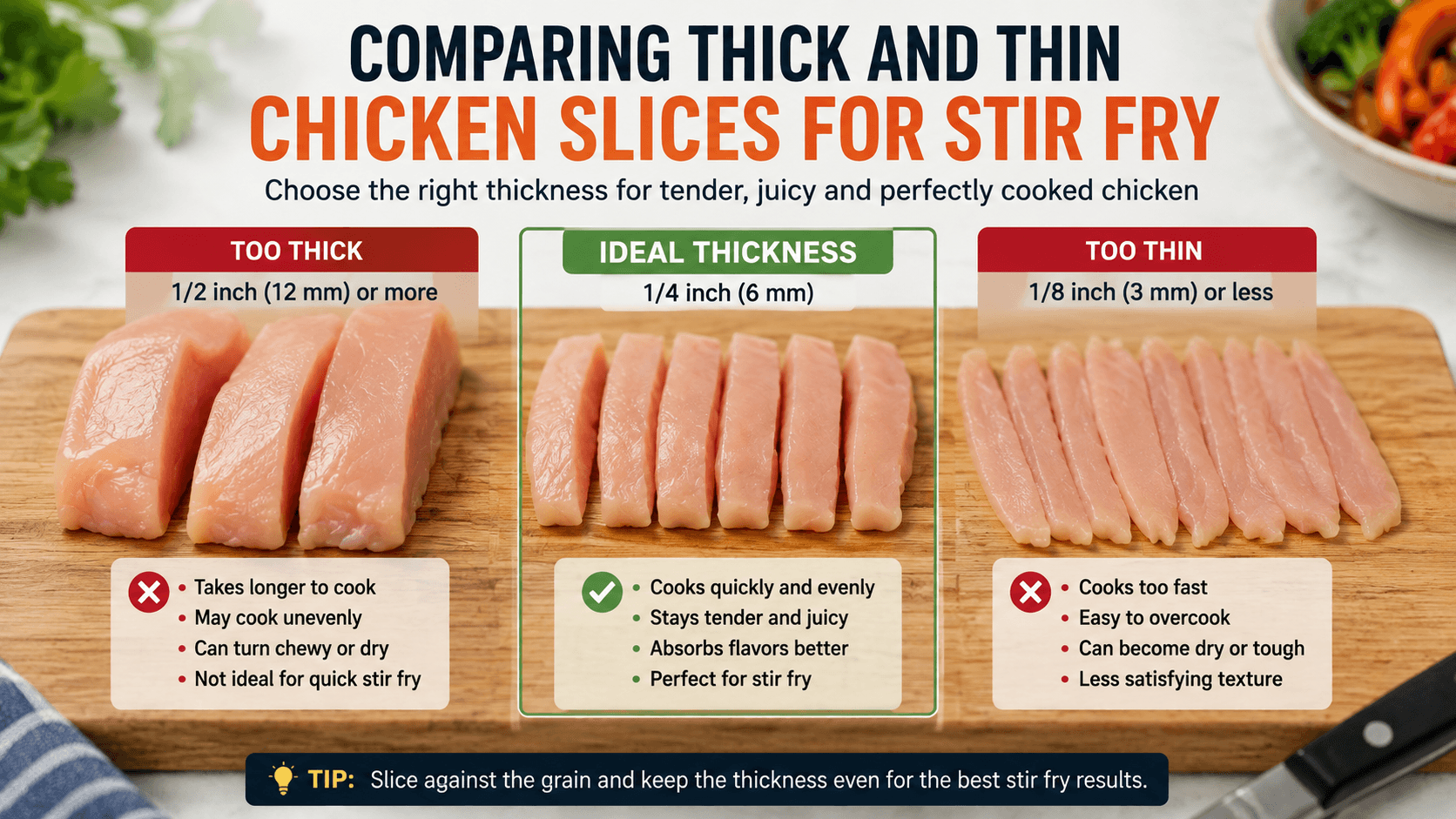
What Is the Ideal Thickness to Slice Chicken for Stir Fry?
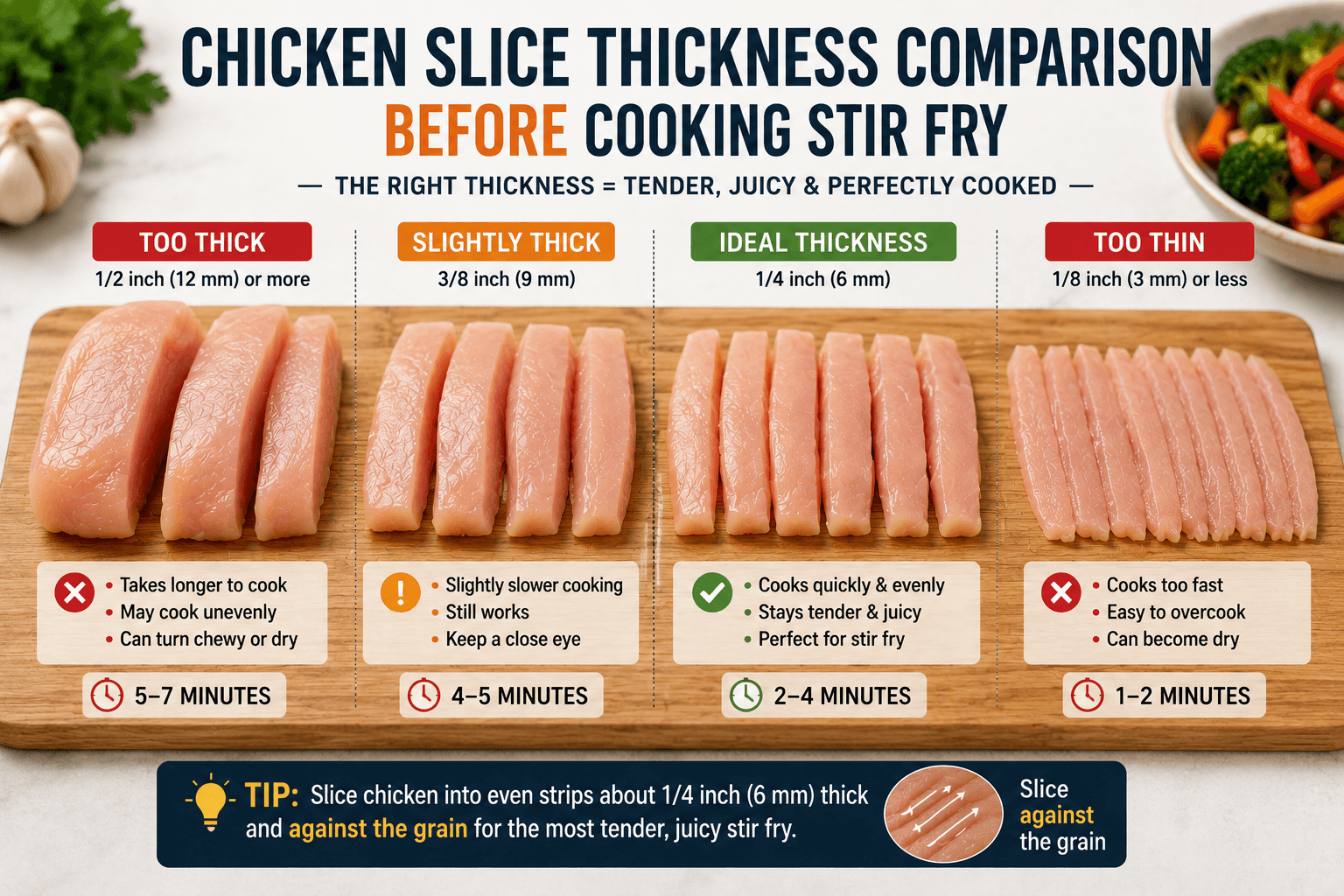
The ideal thickness to slice chicken for stir fry is approximately 1/4 inch (6 millimeters). This size offers the best balance between tenderness, moisture retention, and quick cooking.
Pieces thinner than this can overcook in seconds, especially in a very hot wok. Extremely thin slices are sometimes used for specialty Asian dishes, but they require precise timing.
Pieces thicker than about 3/8 inch usually need longer cooking times, making them less suitable for classic stir fry techniques. The longer they stay over high heat, the greater the chance they’ll lose moisture and become chewy.
| Slice Thickness | Cooking Result | Recommended? |
|---|---|---|
| 1/8 inch (3 mm) | Very fast cooking but easy to overcook | Sometimes |
| 1/4 inch (6 mm) | Juicy, tender, evenly cooked | ★★★★★ Best Choice |
| 3/8 inch (9 mm) | Slightly slower cooking | Acceptable |
| 1/2 inch (12 mm) or thicker | Uneven cooking and tougher texture | Not Recommended |
These measurements don’t need to be exact with a ruler. Instead, focus on producing evenly sized strips that are thin enough to cook quickly but thick enough to stay juicy.
Does the Best Thickness Change for Chicken Breast and Chicken Thigh?
Both chicken breast and chicken thigh work well in stir fry, but their natural texture influences how you should slice chicken for stir fry.
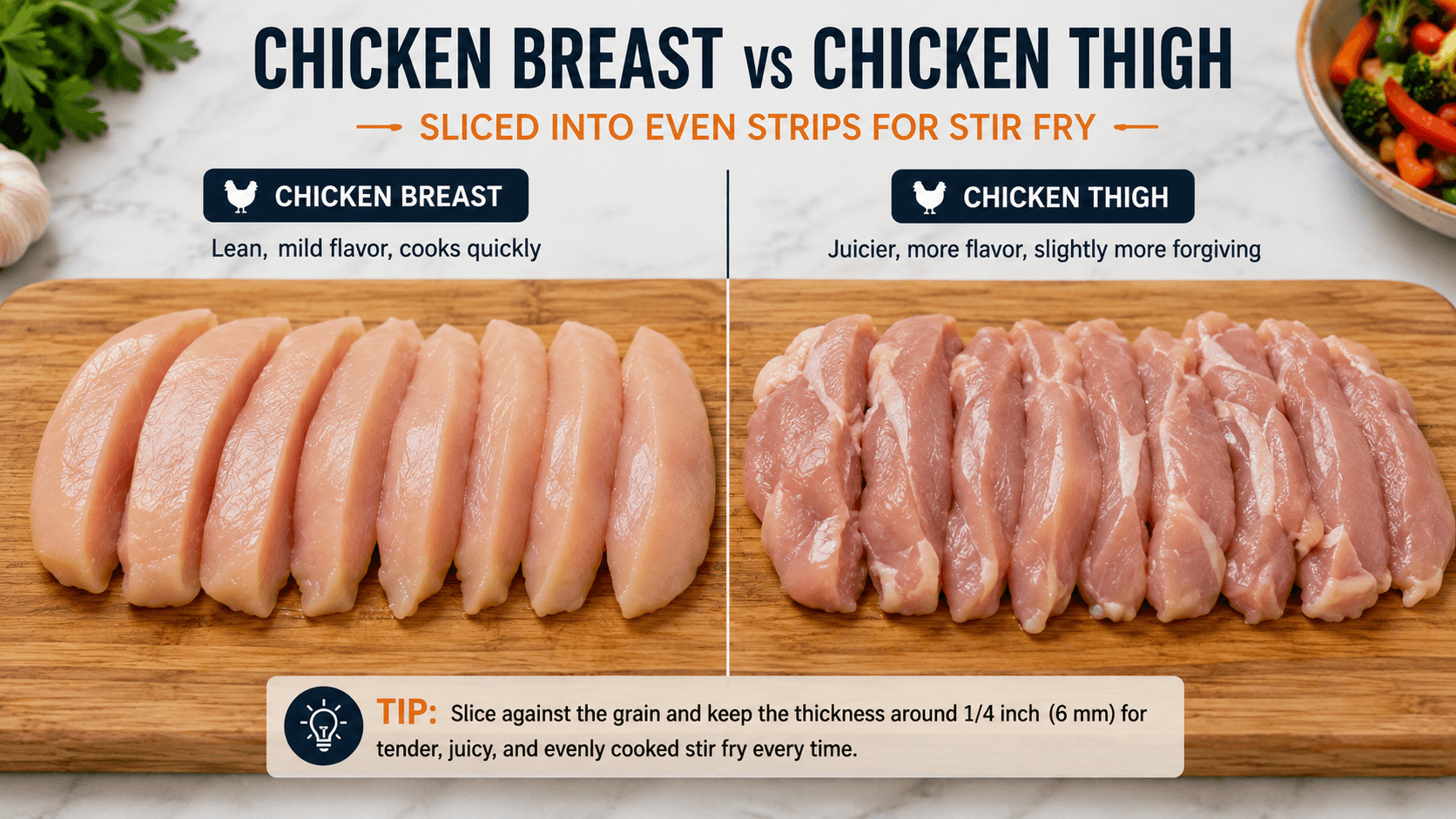
Chicken Breast
Chicken breast is lean and contains very little fat. Because it dries out faster than thigh meat, keeping slices around 1/4 inch thick helps preserve moisture during quick cooking.
Many cooks also lightly freeze the breast for 20 to 30 minutes before slicing. Firmer meat produces smoother cuts and improves consistency.
Chicken Thigh
Chicken thighs contain more fat and connective tissue, making them naturally forgiving during high-heat cooking. Even if the slices are slightly thicker, thighs usually remain juicy.
However, keeping the pieces close to the same size still improves cooking consistency and presentation.
Chicken Breast
- Lean protein
- Absorbs marinades quickly
- Cooks very fast
- Ideal for lighter stir fry recipes
Chicken Thigh
- Higher fat content
- Extremely juicy
- Harder to overcook
- Rich flavor
If you’re unsure which cut to choose, our guide comparing chicken breast vs. chicken thigh for stir fry explains the advantages of each option in greater detail.
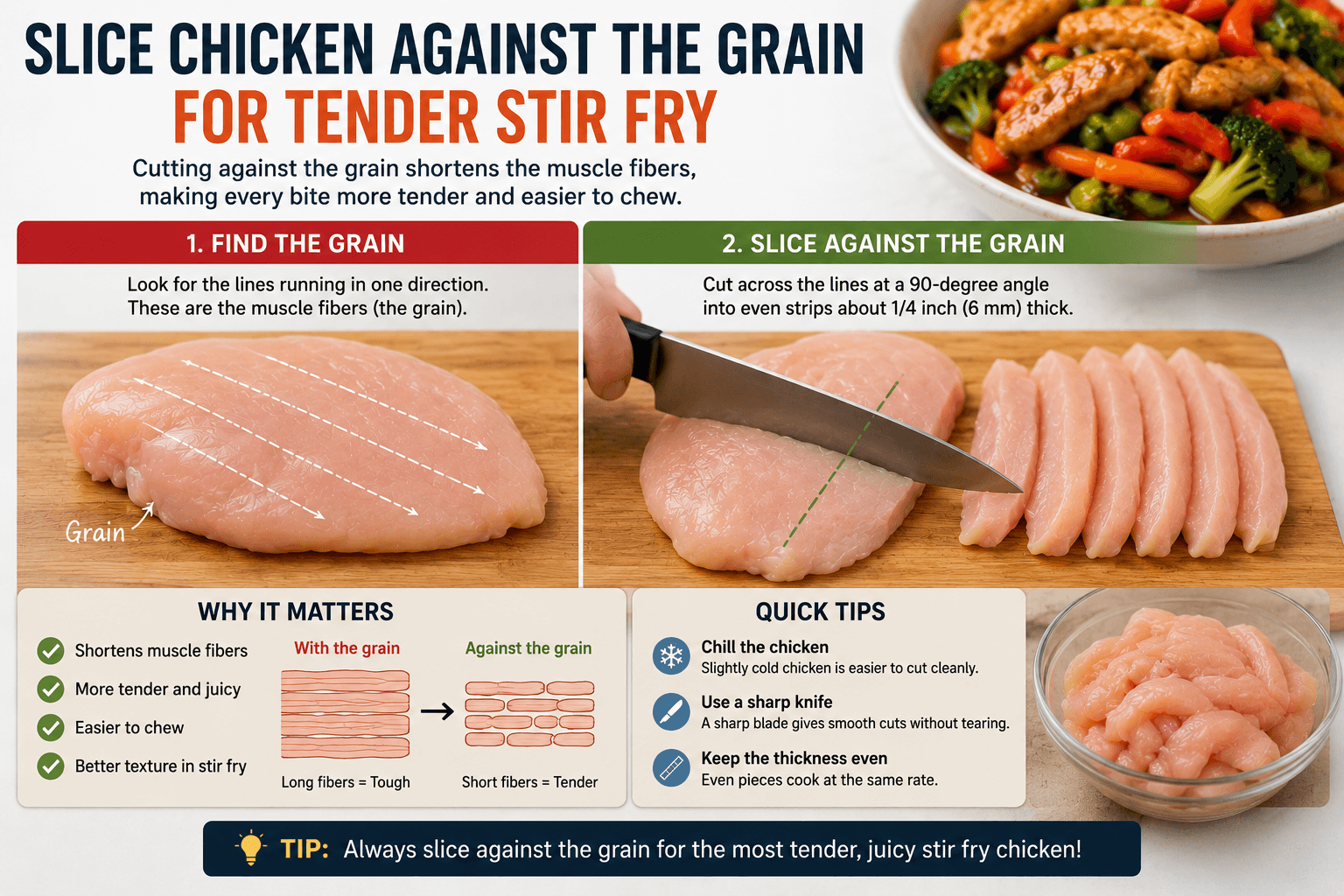
Why Should You Slice Chicken Against the Grain?
One of the biggest secrets professional chefs use when they slice chicken for stir fry is cutting against the grain.
The “grain” refers to the direction the muscle fibers run through the meat. Long muscle fibers require more chewing, while shorter fibers feel significantly more tender.
When you cut against the grain, every slice shortens these fibers, reducing toughness without changing the meat itself.
This simple adjustment often makes homemade stir fry taste much closer to restaurant-quality meals.
How to Find the Grain
Before slicing, examine the chicken carefully. You’ll notice faint lines running across the meat. These lines indicate the direction of the muscle fibers.
Rotate the chicken so your knife cuts across these lines instead of following them.
Kitchen Secret: Professional Chinese restaurants almost always combine slicing against the grain with a velveting technique. This combination creates the exceptionally tender texture found in high-quality stir fry dishes.
If you’d like to master that technique, read our complete guide on how to velvet chicken for stir fry before cooking.
Even without velveting, properly slicing against the grain dramatically improves tenderness, especially when using lean chicken breast.
How to Slice Chicken for Stir Fry Step by Step
Once you understand the ideal thickness, the next step is learning the proper cutting technique. Professional cooks don’t rely on guesswork—they follow a simple process that produces uniform pieces every time. Whether you’re using chicken breast or thighs, these steps will help you slice chicken for stir fry safely, quickly, and consistently.
Step 1: Start with Cold Chicken
Cold chicken is much easier to handle than meat that’s close to room temperature. Refrigerated chicken feels firmer, making it easier to control your knife and produce even slices.
If the chicken is particularly soft, place it in the freezer for 15 to 30 minutes. It should become slightly firm but never frozen solid. This small trick makes a noticeable difference, especially when cutting boneless skinless chicken breasts.
Tip: Slightly chilled chicken allows the knife to glide smoothly through the meat, producing cleaner cuts with less tearing.
Step 2: Trim Excess Fat and Connective Tissue
Before you slice chicken for stir fry, inspect the meat for excess fat, loose skin, cartilage, or tough connective tissue. Removing these sections creates cleaner strips that cook more evenly and improves the finished texture of the dish.
Chicken thighs naturally contain more fat than breasts, but only remove the larger pieces. A small amount of fat helps keep thigh meat juicy during stir frying.
Step 3: Identify the Grain
Take a moment to examine the direction of the muscle fibers. You’ll notice fine lines running across the surface of the chicken. These lines represent the grain.
Position the chicken so your knife cuts across these fibers rather than following them. Cutting against the grain shortens the muscle fibers, resulting in significantly more tender chicken.
Step 4: Use a Sharp Chef’s Knife
A sharp knife is one of the most overlooked tools for preparing stir fry. A dull blade crushes the meat instead of slicing through it cleanly, creating ragged edges and uneven pieces.
Use long, smooth strokes rather than sawing back and forth. Let the knife do the work instead of forcing it through the meat.
A standard 8-inch chef’s knife works well for most home kitchens, although a santoku knife is also an excellent choice.
Step 5: Cut Even Strips About 1/4 Inch Thick
As you slice chicken for stir fry, aim for strips that are approximately 1/4 inch (6 mm) thick. Try to keep every piece similar in size so they’ll cook at the same rate.
The exact length isn’t as important as the thickness. Longer strips are common in restaurant-style stir fries, while shorter pieces may be easier for family meals or meal prep.
| Cutting Tip | Why It Helps |
|---|---|
| Use chilled chicken | Produces smoother, more even slices |
| Cut against the grain | Creates noticeably more tender chicken |
| Slice 1/4 inch thick | Balances quick cooking with moisture retention |
| Keep pieces uniform | Ensures even cooking |
| Use a sharp knife | Prevents tearing and improves presentation |
Should You Slice Chicken Before or After Marinating?
For almost every stir fry recipe, it’s best to slice chicken for stir fry before marinating.
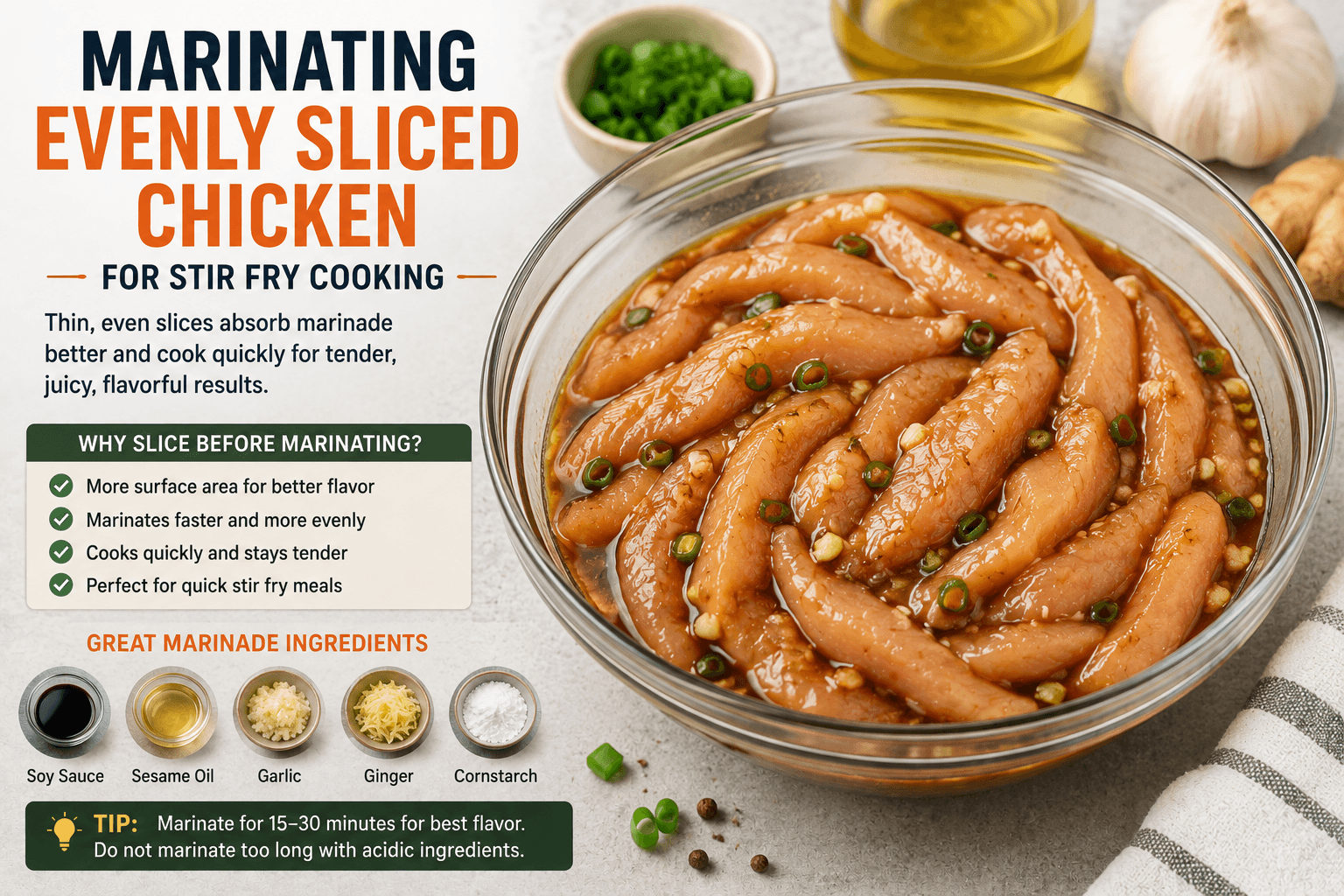
Thin strips expose much more surface area than whole chicken breasts or thighs. This allows soy sauce, sesame oil, garlic, ginger, and other seasonings to coat every piece evenly.
Marinating after slicing also shortens the required marinating time because the flavors penetrate the meat more quickly.
For most stir fry recipes, marinating for 15 to 30 minutes is enough. If you’re using a velveting marinade with cornstarch and baking soda (where appropriate), the chicken will become even more tender during cooking.
Kitchen Secret: Restaurants almost always slice the chicken first, then velvet or marinate it. This combination delivers maximum tenderness and flavor in a very short cooking time.
For more details, read our guide on how to marinate chicken for stir fry.
Common Mistakes When You Slice Chicken for Stir Fry
Even experienced home cooks occasionally make cutting mistakes that affect the final texture of their stir fry. Fortunately, they’re easy to avoid once you know what to look for.
Cutting Pieces That Are Too Thick
Large chunks take much longer to cook than vegetables, making it difficult to finish everything at the same time. By the time the chicken is fully cooked, the vegetables may already be soft and overdone.
Ignoring the Grain
Many people simply slice in whatever direction feels easiest. Unfortunately, cutting with the grain produces long muscle fibers that remain chewy after cooking.
Always take a few seconds to identify the grain before making the first cut.
Using Warm Chicken
Soft chicken moves around on the cutting board, making it difficult to create consistent slices. Chilled meat gives you much greater control and improves safety.
Using a Dull Knife
A dull knife increases the risk of slipping and creates rough, uneven cuts. Keeping your knife sharp not only improves results but also makes cutting safer.
Making Uneven Pieces
Uniformity is essential. If half your chicken strips are thin and the rest are thick, they’ll cook at different speeds. Some pieces will become dry before others finish cooking.
Warning: Never wash raw chicken before slicing it. Washing poultry can spread bacteria through water droplets around your sink and countertops. Instead, cook the chicken thoroughly to a safe internal temperature of 165°F (74°C).
How Different Slice Shapes Affect Stir Fry
Although thin strips are the classic choice, they’re not the only option when you slice chicken for stir fry. Different shapes create slightly different textures and presentations.
| Shape | Best For | Cooking Speed |
|---|---|---|
| Thin strips | Classic stir fry | Very Fast |
| Small cubes | Rice bowls | Fast |
| Diagonal slices | Restaurant presentation | Fast |
| Thin bite-sized pieces | Meal prep | Fast |
For most home cooks, thin strips remain the easiest and most reliable option because they cook evenly and pair well with nearly every stir fry vegetable.
If you’re planning to make recipes like Chicken Broccoli Stir Fry, Chicken Bell Pepper Stir Fry, or Healthy Chicken Stir Fry, evenly sliced strips will produce the best texture and presentation.
Can You Slice Frozen Chicken for Stir Fry?
Technically, yes—but only if the chicken is partially thawed.
Completely frozen chicken is extremely difficult to cut safely and can cause your knife to slip. Instead, thaw the chicken in the refrigerator until it’s firm but no longer frozen solid.
This partially thawed stage is actually one of the easiest times to slice chicken for stir fry because the meat holds its shape well without becoming soft.
Never leave chicken on the countertop to thaw. Slow refrigerator thawing is the safest method and helps preserve the quality of the meat.
Our guide on how to cut chicken for stir fry covers additional cutting techniques for different situations.
How Slice Thickness Affects Cooking Time
One of the biggest reasons to carefully slice chicken for stir fry is to control cooking time. Stir frying is designed to cook food quickly over high heat, so even small differences in thickness can significantly change the final result.
Thin, evenly cut strips reach a safe internal temperature much faster than thick chunks. This allows the chicken and vegetables to finish cooking at nearly the same time, preserving the crisp texture of vegetables while keeping the chicken tender and juicy.
When the chicken pieces are too thick, you’ll often find yourself waiting for the center to cook while the outside becomes dry. Meanwhile, vegetables such as broccoli, bell peppers, zucchini, or mushrooms may become soft and overcooked.
Uniform slices eliminate this problem by allowing every piece of chicken to cook at approximately the same speed.
| Chicken Thickness | Approximate Cooking Time* | Result |
|---|---|---|
| 1/8 inch (3 mm) | 1–2 minutes | Very fast but easy to overcook |
| 1/4 inch (6 mm) | 2–4 minutes | Ideal balance of tenderness and moisture |
| 3/8 inch (9 mm) | 4–5 minutes | Still works but requires closer attention |
| 1/2 inch (12 mm) or thicker | 5–7 minutes | Greater risk of uneven cooking |
*Cooking times vary depending on the heat level, pan size, batch size, and the type of chicken used.
Tip: Cook chicken in a single layer whenever possible. Overcrowding the pan lowers the temperature, causing the meat to steam instead of sear.
Food Safety Tips When Preparing Chicken for Stir Fry
Safe food handling is just as important as learning how to slice chicken for stir fry. Following a few basic practices reduces the risk of foodborne illness and helps keep your kitchen clean.
- Wash your hands before and after handling raw chicken.
- Use a separate cutting board for raw poultry whenever possible.
- Clean knives, cutting boards, and countertops with hot, soapy water after use.
- Avoid cross-contamination by keeping raw chicken away from ready-to-eat foods.
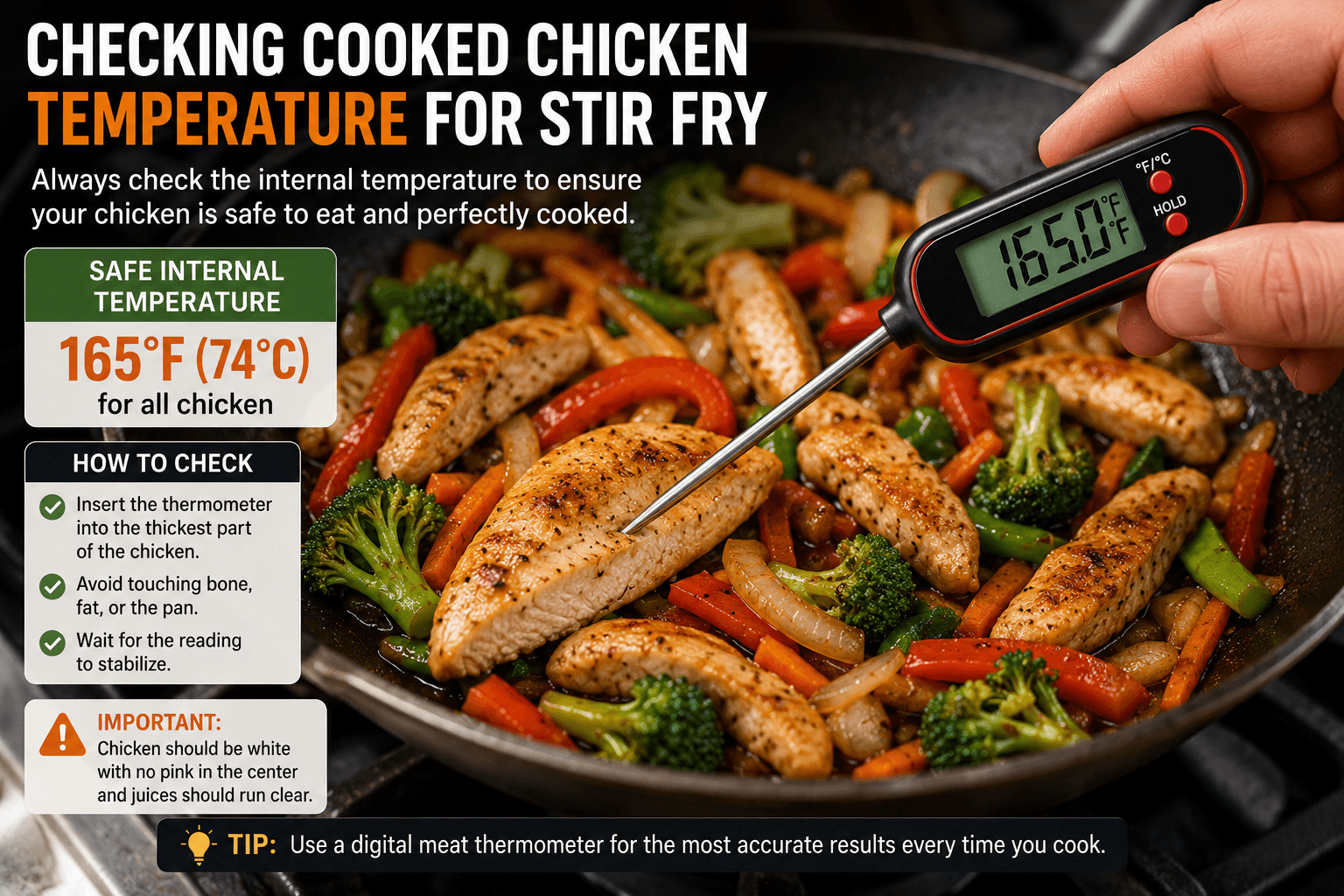
- Cook chicken until the thickest piece reaches an internal temperature of 165°F (74°C).
- Use a digital meat thermometer if you’re unsure whether the chicken is fully cooked.
Warning: Chicken that looks white on the outside isn’t always fully cooked inside. Always verify doneness with a food thermometer instead of relying on appearance alone.
Can You Slice Chicken Ahead of Time?
Yes. In fact, preparing chicken in advance is an excellent way to make weeknight dinners faster and less stressful.
Once you slice chicken for stir fry, you can immediately marinate it or store it in an airtight container in the refrigerator until you’re ready to cook. Preparing the chicken ahead of time allows flavors to develop while reducing prep work during dinner.
Storage Tip: Store sliced raw chicken in an airtight container in the refrigerator for up to 1–2 days. If you won’t use it within that time, freeze it immediately for the best quality.
For meal prep, divide sliced chicken into recipe-sized portions before freezing. This makes it easier to thaw only what you need while maintaining freshness.
Best Recipes to Use Your Perfectly Sliced Chicken
Now that you know how to slice chicken for stir fry, you’re ready to use your new skills in a variety of recipes. Thin, evenly sliced chicken works beautifully with almost any vegetable combination and stir fry sauce.
Some of our favorite recipes include:
- Classic Chicken Stir Fry
- Chicken Bell Pepper Stir Fry
- Chicken Cabbage Stir Fry
- Chicken Zucchini Stir Fry
- Chicken Mushroom Stir Fry
- Garlic Chicken Stir Fry
Each recipe benefits from the same preparation techniques covered in this guide, giving you consistently juicy, flavorful chicken regardless of the vegetables or sauce you choose.
Final Thoughts
Learning how to slice chicken for stir fry is one of the simplest upgrades you can make in your kitchen. Thin, even slices cook quickly, absorb marinades more effectively, and stay noticeably more tender than thick or uneven pieces.
Remember the key principles:
- Slice chicken about 1/4 inch (6 mm) thick.
- Always cut against the grain whenever possible.
- Keep every piece as uniform as possible.
- Use slightly chilled chicken for easier slicing.
- Cook over high heat without overcrowding the pan.
Master these fundamentals, and every stir fry you prepare will have better texture, more even cooking, and restaurant-quality results.
Frequently Asked Questions
How thick should you slice chicken for stir fry?
The ideal thickness is about 1/4 inch (6 mm). This allows the chicken to cook quickly while staying tender and juicy.
Should I slice chicken with or against the grain?
Always slice against the grain whenever possible. This shortens the muscle fibers and creates a much more tender bite.
Can I marinate chicken after slicing it?
Yes. Slicing first actually improves marinade absorption because more surface area is exposed to the seasoning.
Should chicken be cold before slicing?
Yes. Slightly chilled chicken is firmer and much easier to cut into even strips.
Can I prepare sliced chicken a day ahead?
Absolutely. Store sliced chicken in an airtight container in the refrigerator for up to two days before cooking.
Why is my stir fry chicken chewy?
Chewy chicken is often caused by slicing with the grain, cutting pieces too thick, or overcooking the meat. Using the correct slicing technique helps prevent all three problems.
References
🍽️ You Might Also Like




📧 Save This Recipe For Later
Enter your email and we will send this recipe directly to your inbox.