Can You Cook Raw Chicken and Vegetables Together?
Can You Cook Raw Chicken and Vegetables Together?
Many home cooks wonder whether it’s safe to cook raw chicken and vegetables together. The short answer is yes—but only when you follow proper food safety practices. Cooking chicken and vegetables in the same pan is common in stir fries, sheet pan dinners, soups, stews, and one-pan meals. However, timing, temperature, and preventing cross-contamination are essential to ensure your meal is both delicious and safe.
Raw chicken naturally carries bacteria such as Salmonella and Campylobacter. These bacteria are destroyed when chicken reaches the proper internal temperature, but they can spread to vegetables before cooking if you aren’t careful. Understanding how to safely combine these ingredients helps you prepare flavorful meals while reducing food safety risks.
In this guide, you’ll learn when it’s safe to cook raw chicken and vegetables together, common mistakes to avoid, the best cooking methods, and practical tips that professional cooks use to prepare perfectly cooked chicken and crisp, flavorful vegetables every time.
Quick Answer
Yes, you can cook raw chicken and vegetables together as long as the chicken reaches an internal temperature of 165°F (74°C). Use a cooking method that allows the chicken to cook thoroughly without overcooking the vegetables. Avoid cross-contamination by using clean utensils, washing your hands after handling raw chicken, and keeping raw chicken juices away from ready-to-eat foods.
- Cook chicken to 165°F (74°C).
- Use medium-high to high heat for even cooking.
- Add vegetables at the correct stage so they don’t become mushy.
- Avoid overcrowding the pan.
- Use a food thermometer for accuracy.
Table of Contents
Is It Safe to Cook Raw Chicken and Vegetables Together?
Yes. It is completely safe to cook raw chicken and vegetables together when they’re cooked in the same pan, skillet, wok, baking tray, or pot until the chicken reaches a safe internal temperature of 165°F (74°C).
The key concern isn’t cooking them together—it’s making sure harmful bacteria from raw chicken are destroyed during cooking. Once the chicken is fully cooked, the vegetables cooking alongside it are also safe because they have been exposed to the same cooking temperatures.
This is why popular dishes like chicken stir fry, chicken fajitas, sheet pan dinners, casseroles, and chicken vegetable soups are considered safe when prepared correctly.
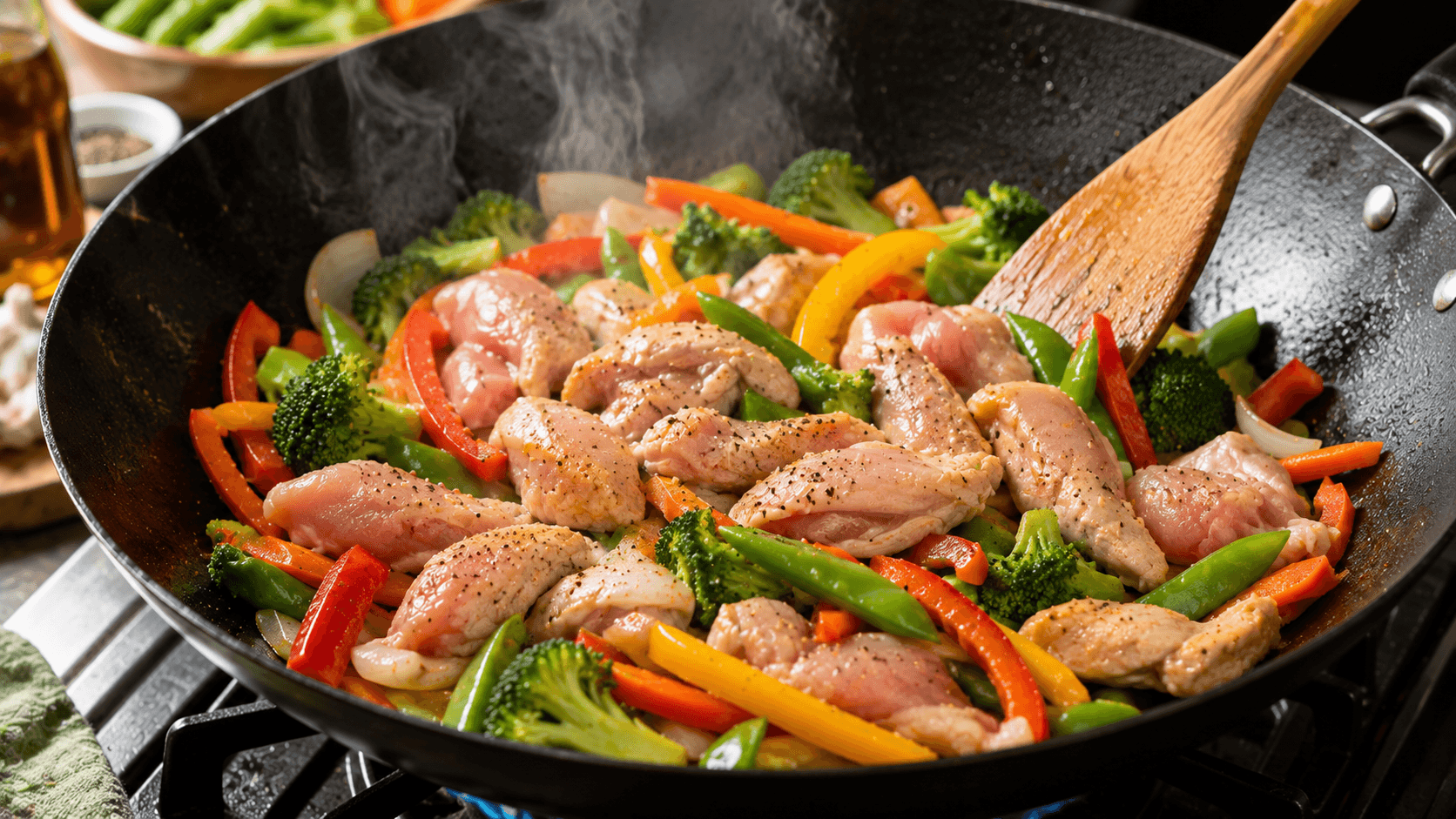
Kitchen Tip: If you’re making stir fry, cook chicken until it’s almost done before adding quick-cooking vegetables like zucchini, broccoli, mushrooms, bell peppers, or cabbage. This helps both ingredients finish cooking at the same time.
Why Proper Cooking Matters
Raw chicken is one of the most common sources of foodborne bacteria. While these bacteria are invisible, they can survive on raw meat, juices, cutting boards, knives, and countertops if proper hygiene isn’t followed.
Fortunately, heat is highly effective at destroying these harmful microorganisms. Once chicken reaches an internal temperature of 165°F (74°C), disease-causing bacteria are rapidly eliminated, making both the chicken and the vegetables safe to eat.
Problems occur when chicken is only partially cooked or when raw chicken juices contaminate foods that won’t be cooked, such as salads or fresh fruit.
| Safe Practice | Why It Matters |
|---|---|
| Cook chicken to 165°F | Destroys harmful bacteria. |
| Use separate cutting boards | Prevents cross-contamination. |
| Wash hands after handling raw chicken | Reduces bacterial spread. |
| Add vegetables at the right time | Prevents overcooking while chicken finishes safely. |
| Avoid overcrowding the pan | Promotes even cooking and proper browning. |
Can Raw Chicken Touch Vegetables Before Cooking?
Technically, yes—if both will be thoroughly cooked immediately afterward. For example, placing raw chicken on top of vegetables in a sheet pan dinner is perfectly safe because everything cooks together.
However, if those vegetables will be eaten raw or only lightly cooked, they should never come into contact with raw chicken or its juices. This is one of the most common causes of cross-contamination in home kitchens.
Important: Never reuse marinades, plates, or utensils that touched raw chicken unless they’ve been washed with hot, soapy water. Using contaminated tools on cooked food can reintroduce harmful bacteria even after the chicken has been fully cooked.
When preparing stir fry meals, many professional cooks keep raw chicken separate until it’s ready to enter the hot pan. This simple habit greatly reduces the risk of spreading bacteria around your kitchen while keeping meal preparation organized and efficient.
Best Ways to Cook Raw Chicken and Vegetables Together
The safest and most successful way to cook raw chicken and vegetables together depends on the cooking method you choose. The goal is simple: cook the chicken completely while keeping the vegetables tender, flavorful, and not overcooked.
Professional cooks don’t usually throw everything into the pan at the same time. Instead, they use timing to ensure each ingredient finishes cooking perfectly. This technique creates juicy chicken, vibrant vegetables, and better overall texture.
1. Stir Fry (Best Method)
Stir frying is one of the quickest and healthiest ways to cook chicken and vegetables together. Because the food cooks over high heat, the chicken browns quickly while vegetables remain crisp and colorful.
For the best results:
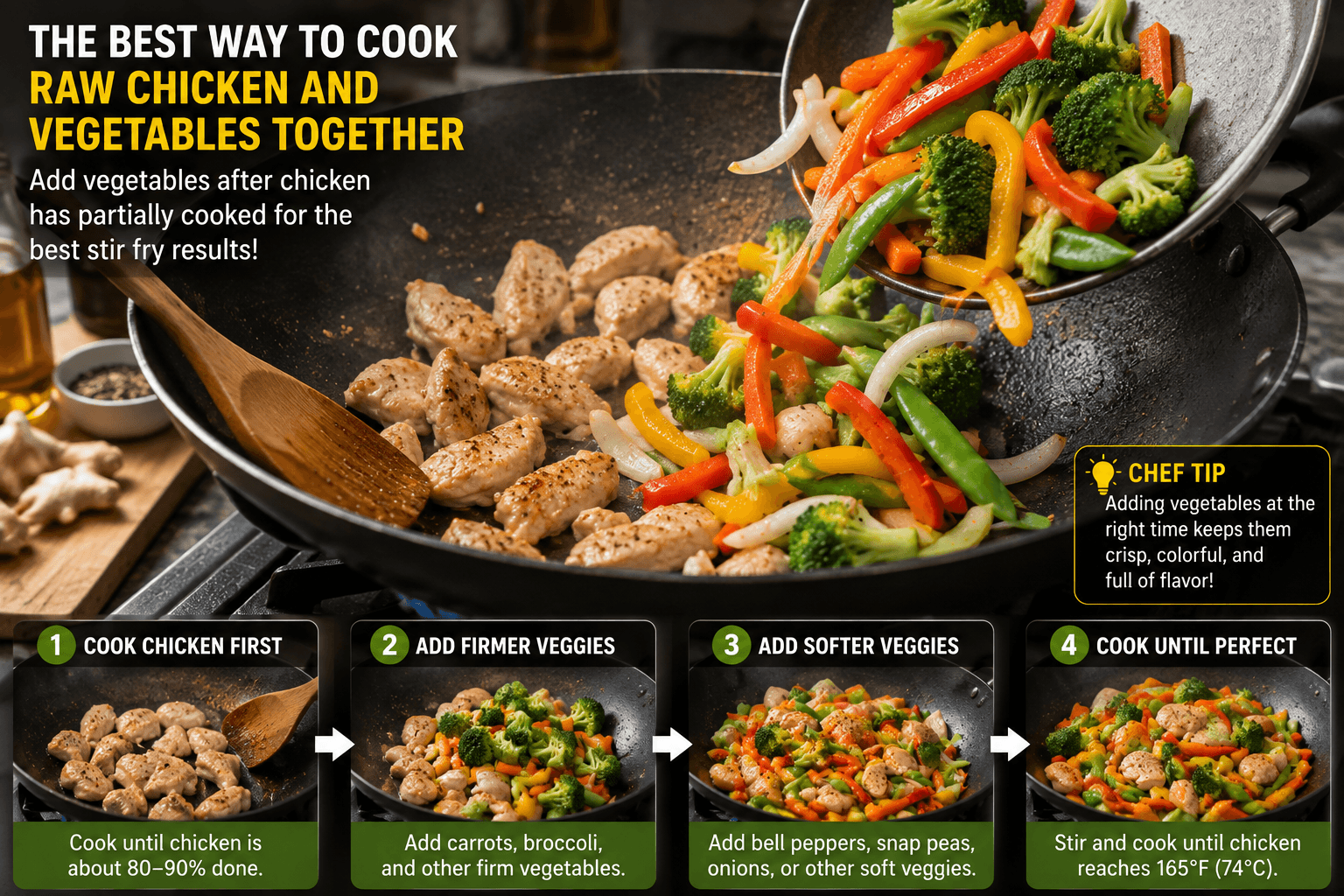
- Preheat the wok or skillet until it’s hot.
- Add a small amount of oil.
- Cook the chicken first until it’s about 80–90% done.
- Add firm vegetables such as carrots or broccoli.
- Add softer vegetables like mushrooms, zucchini, and bell peppers near the end.
- Finish cooking until the chicken reaches 165°F (74°C).
Chef’s Secret: Cooking chicken first develops better browning through the Maillard reaction. Once the chicken is nearly cooked, adding vegetables prevents them from releasing excess moisture that can steam the chicken instead of browning it.
If you’re looking for recipe inspiration, try our Classic Chicken Stir Fry or our Healthy Chicken Stir Fry, both of which use this professional cooking method.
2. Sheet Pan Dinners
Sheet pan meals are another excellent option. Place seasoned chicken and vegetables on the same baking tray, making sure everything is arranged in a single layer.
Because larger chicken pieces usually take longer than vegetables, choose vegetables that roast well, including:
- Broccoli
- Cauliflower
- Carrots
- Brussels sprouts
- Sweet potatoes
- Bell peppers
- Onions
If using delicate vegetables like zucchini or mushrooms, consider adding them during the final 10–15 minutes of roasting.
3. Soups and Stews
Cooking raw chicken and vegetables together in soups is naturally safe because everything simmers well above the temperature needed to destroy harmful bacteria.
This method works especially well with:
- Chicken noodle soup
- Vegetable soup
- Chicken stew
- Asian noodle soups
As long as the chicken reaches the proper internal temperature, both the meat and vegetables are perfectly safe to eat.
| Cooking Method | Safety | Texture Quality | Recommended? |
|---|---|---|---|
| Stir Fry | Excellent | Excellent | ★★★★★ |
| Sheet Pan | Excellent | Very Good | ★★★★★ |
| Soup or Stew | Excellent | Good | ★★★★☆ |
| Slow Cooker | Excellent | Very Good | ★★★★☆ |
Should You Cook the Chicken or Vegetables First?
For most recipes, especially stir fries, cooking the chicken first produces the best results.
Chicken releases moisture as it cooks. If vegetables are added too early, they also begin releasing water. Combined, this moisture lowers the pan temperature, making it difficult to brown the chicken properly.
Professional chefs often follow this sequence:
- Sear the chicken.
- Remove it briefly if necessary.
- Cook vegetables.
- Return chicken.
- Add sauce.
- Cook everything together for the final few minutes.
This method creates juicy chicken while preventing vegetables from becoming soft or watery.
Advantages
- Safer food preparation.
- Better chicken browning.
- Crisper vegetables.
- More flavorful finished dish.
- Better sauce consistency.
Disadvantages
- Requires slightly more attention.
- May involve removing chicken briefly from the pan.
- Timing takes a little practice.
Which Vegetables Cook Well with Raw Chicken?
Nearly any vegetable can be cooked safely alongside raw chicken, but cooking times vary considerably.
Dense vegetables require a longer cooking time, while delicate vegetables cook quickly and should be added later.
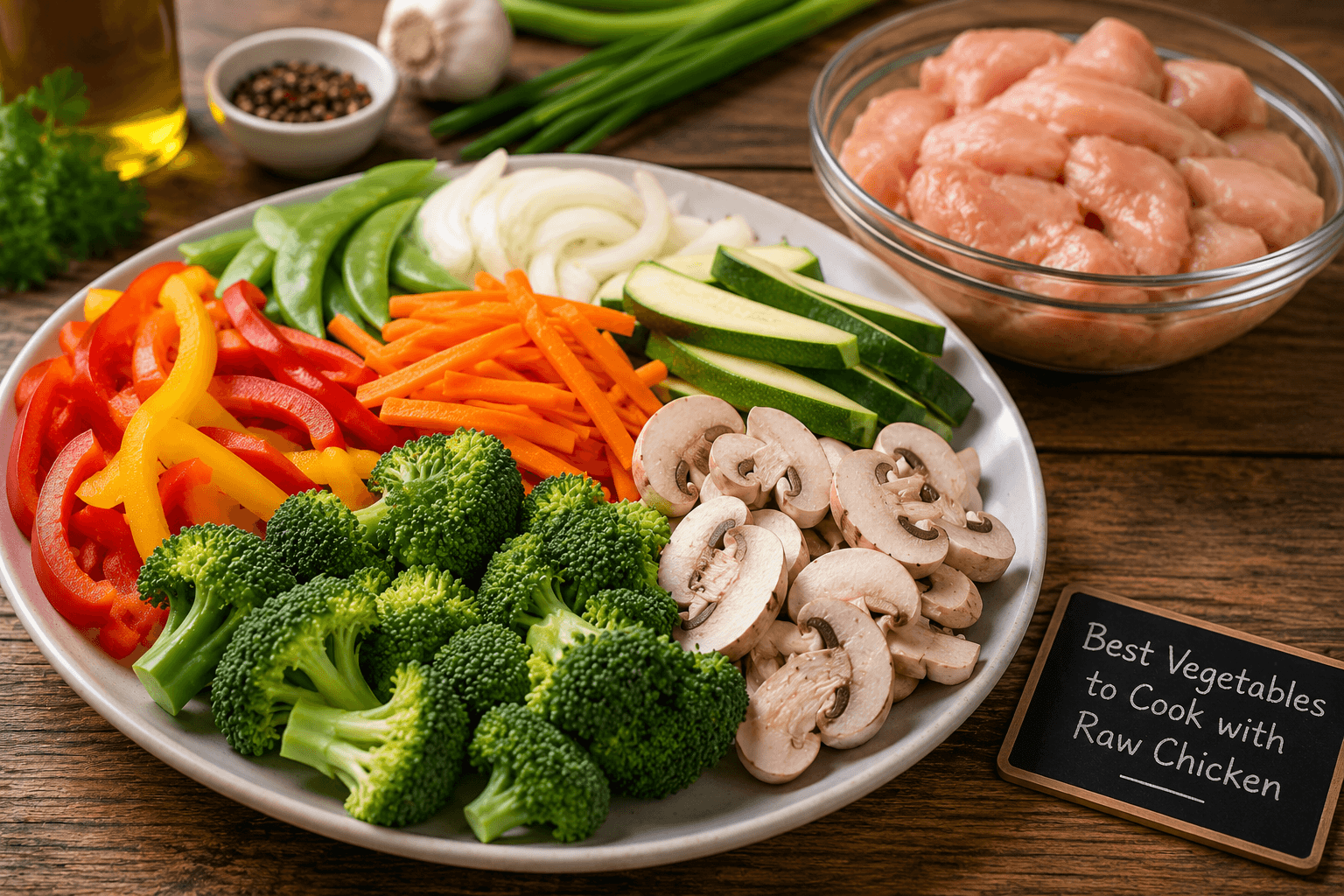
| Vegetable | Cooking Time | When to Add |
|---|---|---|
| Carrots | Long | Early |
| Broccoli | Medium | After chicken starts cooking |
| Bell peppers | Short | Near the end |
| Mushrooms | Short | Near the end |
| Zucchini | Very short | Last few minutes |
| Cabbage | Medium | Middle of cooking |
Need recipe ideas? These recipes show how to match vegetable cooking times with chicken perfectly:
- Chicken Broccoli Stir Fry
- Chicken Bell Pepper Stir Fry
- Chicken Cabbage Stir Fry
- Chicken Mushroom Stir Fry
- Chicken Zucchini Stir Fry
- Chicken Veggie Stir Fry
Matching vegetables with similar cooking times helps everything finish at the same moment, giving you juicy chicken and vegetables that still have great texture instead of becoming soggy or overcooked.
“`Common Mistakes When You Cook Raw Chicken and Vegetables Together
Even though it’s perfectly safe to cook raw chicken and vegetables together, several common mistakes can reduce food safety or leave you with dry chicken and soggy vegetables. Avoiding these problems will improve both the taste and quality of your meal.
Adding Everything to the Pan at the Same Time
One of the biggest mistakes is placing raw chicken and every vegetable into a cold pan together. Chicken needs time to brown and develop flavor, while many vegetables cook much faster.
When everything is added at once, the vegetables release moisture almost immediately. Instead of browning, the chicken begins steaming, resulting in pale meat and soft vegetables.
Avoid this mistake: Heat the pan first, cook the chicken until it’s nearly done, then add vegetables according to their cooking time. This simple change dramatically improves flavor and texture.
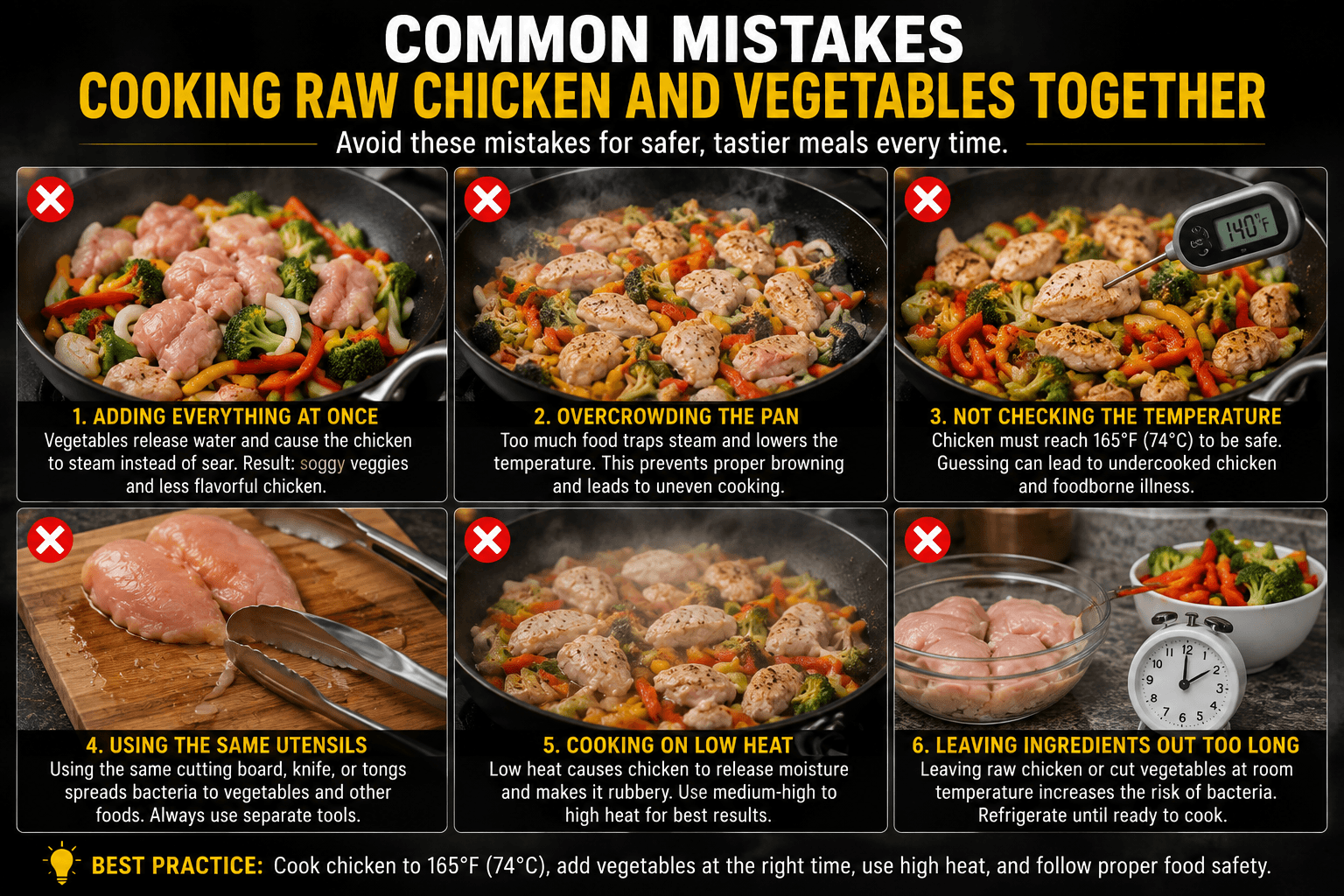
Overcrowding the Pan
Another frequent mistake is cooking too much food at once. When the pan is crowded, steam becomes trapped between the ingredients. Instead of searing, everything cooks in its own moisture.
If you’re preparing a large batch, cook the chicken in two smaller batches before combining it with the vegetables.
Not Checking the Chicken Temperature
Color alone isn’t always a reliable indicator of doneness. Chicken may appear fully cooked while still being below the safe internal temperature.
The most accurate method is using an instant-read food thermometer. Insert it into the thickest part of the chicken, avoiding bones, and confirm it has reached 165°F (74°C).
Using the Same Utensils
Tongs, forks, knives, and cutting boards that touch raw chicken should never be used on cooked food unless they’ve been thoroughly washed.
This is one of the easiest ways to accidentally reintroduce bacteria after cooking.
Easy habit: Keep one pair of tongs for raw chicken and another clean pair for serving the finished meal.
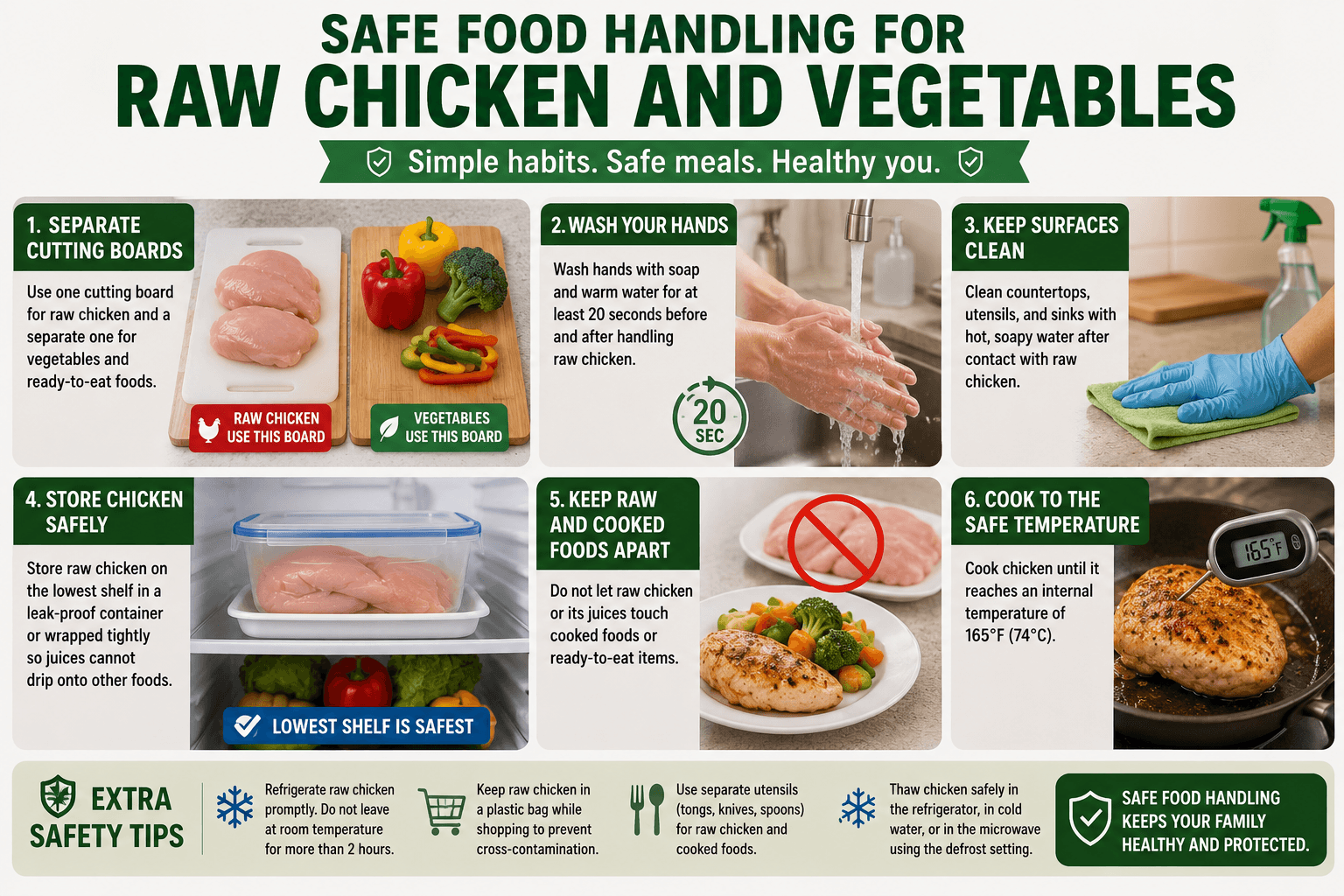
Essential Food Safety Tips
Food safety starts before cooking begins. Following a few simple habits significantly lowers the risk of foodborne illness while helping your meals taste better.
Wash Your Hands Frequently
Wash your hands with warm water and soap for at least 20 seconds before and after handling raw chicken.
Use Separate Cutting Boards
Many home cooks use one cutting board for everything. A better approach is keeping one board specifically for raw meat and another for vegetables, herbs, and ready-to-eat foods.
Clean Kitchen Surfaces Immediately
Raw chicken juices can spread farther than many people realize. Wipe down countertops, sinks, knives, and utensils with hot, soapy water after preparing chicken.
Refrigerate Ingredients Promptly
Don’t leave raw chicken or cut vegetables sitting at room temperature for extended periods. Refrigerate them until you’re ready to cook.
Storage Tip: Store raw chicken on the lowest shelf of your refrigerator in a leak-proof container so juices cannot drip onto fruits, vegetables, or other ready-to-eat foods.
Expert Tips for Better Chicken and Vegetable Meals
Professional kitchens rely on a few simple techniques that consistently produce better results. These tips improve both flavor and food safety.
- Slice chicken into evenly sized pieces for faster, more even cooking.
- Pat chicken dry before cooking to encourage better browning.
- Preheat the pan before adding oil.
- Cook over medium-high or high heat for stir fries.
- Season vegetables separately if needed.
- Add sauces during the final minutes to prevent burning.
- Allow cooked chicken to rest briefly before serving if using larger pieces.
If you’re new to stir frying, our guides on how long to cook chicken stir fry and how to tell when chicken is cooked explain the process in more detail.
Can You Meal Prep Raw Chicken and Vegetables Together?
Yes, but proper storage is essential.
You can portion raw chicken and vegetables into airtight containers for future cooking. Store them in the refrigerator if you’ll cook them within one to two days. For longer storage, freeze the prepared meal packs.
When ready to cook, thaw frozen meal prep containers safely in the refrigerator before cooking.
For additional guidance, see our articles on storing raw chicken for meal prep and how to thaw chicken for stir fry.
Final Checklist Before Cooking
| Checklist | Done? |
|---|---|
| Chicken stored safely before cooking | ✓ |
| Separate cutting board used | ✓ |
| Hands washed after handling raw chicken | ✓ |
| Pan fully preheated | ✓ |
| Chicken cooked to 165°F (74°C) | ✓ |
| Clean serving utensils used | ✓ |
Following this checklist each time you cook raw chicken and vegetables together helps ensure your meals are safe, flavorful, and consistently successful.
Frequently Asked Questions
Can you cook raw chicken and vegetables together in the same pan?
Yes. You can safely cook raw chicken and vegetables together in the same pan as long as the chicken reaches an internal temperature of 165°F (74°C). Cooking them together is common in stir fries, sheet pan dinners, soups, and casseroles.
Can raw chicken touch vegetables before cooking?
Yes, if both the chicken and vegetables will be cooked immediately afterward. However, vegetables that will be eaten raw should never come into contact with raw chicken or its juices because of the risk of cross-contamination.
Should I cook the chicken before adding the vegetables?
For most recipes, yes. Cooking the chicken first gives it time to brown while preventing vegetables from becoming overcooked. Add firm vegetables first, followed by quick-cooking vegetables during the final few minutes.
Is it safe to bake raw chicken and vegetables together?
Absolutely. Baking chicken and vegetables on the same sheet pan is safe as long as the chicken reaches 165°F (74°C). Choose vegetables with similar cooking times or add delicate vegetables later in the cooking process.
How do I know the chicken is fully cooked?
The safest method is using an instant-read food thermometer. Insert it into the thickest part of the chicken. Once it reads 165°F (74°C), the chicken is safe to eat.
Can I meal prep raw chicken and vegetables together?
Yes. You can portion raw chicken and vegetables into airtight containers and refrigerate them for up to two days or freeze them for longer storage. Always thaw frozen meal prep safely in the refrigerator before cooking.
References
Final Thoughts
So, can you cook raw chicken and vegetables together? Yes—you can, and it’s one of the easiest ways to prepare healthy, flavorful meals. The key is following safe food handling practices, cooking the chicken to an internal temperature of 165°F (74°C), and adding vegetables at the right time for the best texture.
Whether you’re making a quick stir fry, roasting a sheet pan dinner, or simmering a comforting soup, combining chicken and vegetables in the same dish is both safe and convenient when done correctly. Paying attention to timing, avoiding cross-contamination, and using a food thermometer will help you prepare consistently delicious meals with confidence.
🍽️ You Might Also Like
📧 Save This Recipe For Later
Enter your email and we will send this recipe directly to your inbox.