
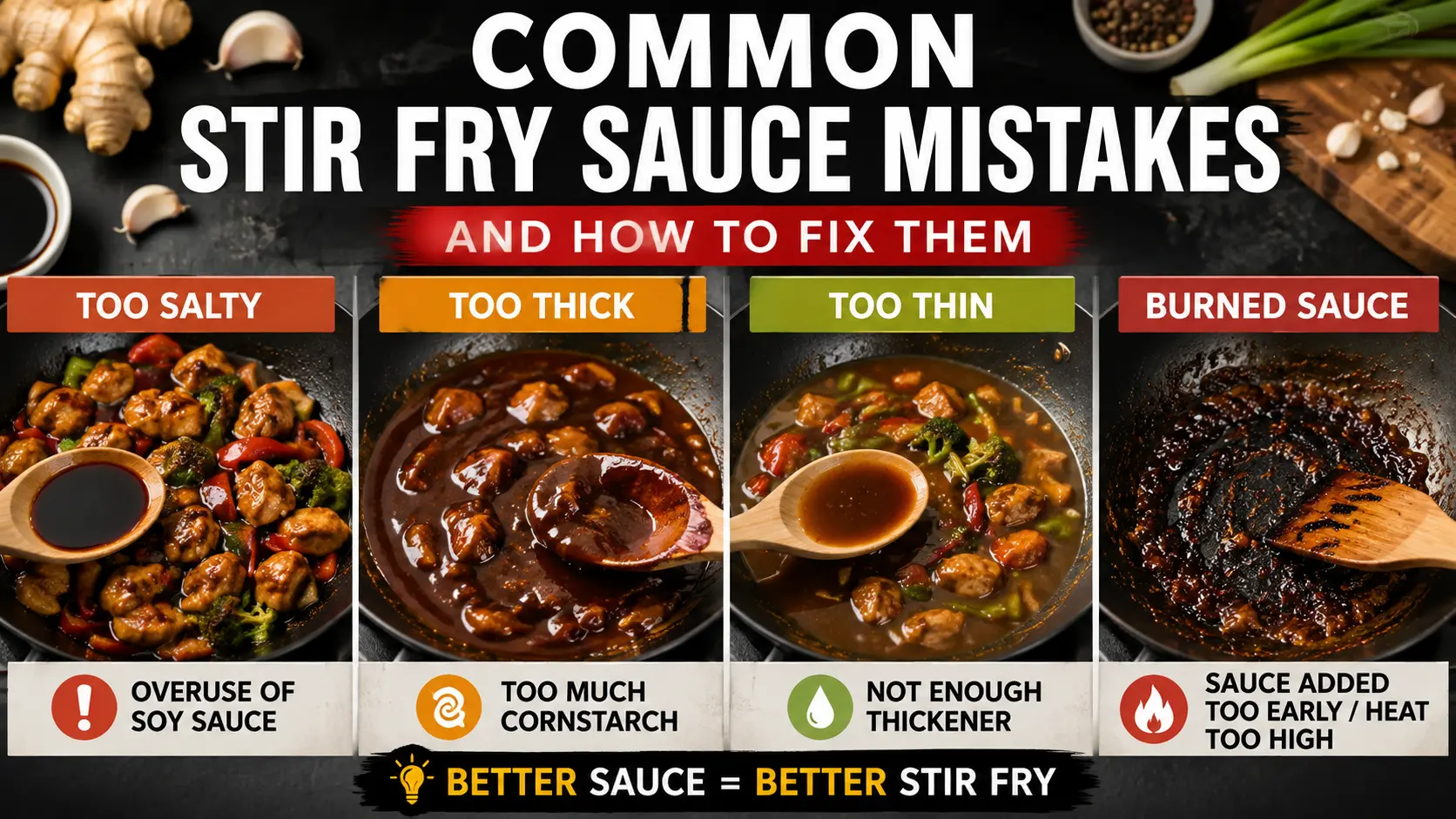
Common Stir Fry Sauce Mistakes (And How to Fix Them)
Common Stir Fry Sauce Mistakes (And How to Fix Them)
A great stir fry can quickly turn disappointing if the sauce isn’t balanced. Even perfectly cooked chicken and crisp vegetables can’t make up for a sauce that’s overly salty, watery, too sweet, or lacking flavor. Fortunately, most stir fry sauce mistakes are surprisingly easy to fix once you understand what caused them.
Whether you’re making a quick weeknight dinner or preparing a homemade sauce from scratch, learning to recognize common problems will help you create consistently delicious meals. Small adjustments to ingredients, cooking temperature, timing, or thickening methods often make the difference between an average stir fry and one that tastes like it came from your favorite restaurant.
This guide explains the most common stir fry sauce mistakes, why they happen, and exactly how to fix or prevent them. By the end, you’ll have the confidence to troubleshoot almost any stir fry sauce problem before it reaches the dinner table.
Quick Answer
The most common stir fry sauce mistakes include using too much soy sauce, adding too much cornstarch, forgetting to balance sweet and acidic flavors, cooking the sauce at the wrong temperature, and adding the sauce too early. Most problems can be corrected by adjusting liquid, seasoning, sweetness, acidity, or thickener before serving. Understanding these simple fixes helps you make flavorful, glossy, and perfectly balanced stir fry sauce every time.
Table of Contents
Why Stir Fry Sauce Mistakes Happen
Most people assume that making stir fry sauce is simply a matter of mixing soy sauce, garlic, ginger, and a thickener together. While the ingredient list is simple, the balance between those ingredients is what determines whether your sauce tastes rich and savory or flat and unpleasant.
One of the biggest reasons for stir fry sauce mistakes is that each ingredient performs a specific job. Soy sauce adds saltiness and umami. Sugar balances bitterness and salt. Vinegar or citrus brightens the flavor. Cornstarch creates a silky texture. If one ingredient is out of proportion, the entire sauce becomes unbalanced.
Cooking technique is another common cause of problems. Stir fry is designed to cook quickly over high heat. If the sauce is poured into the pan too early, it may burn before the vegetables finish cooking. If it’s added too late, the flavors don’t have enough time to coat the ingredients evenly.
The quality of ingredients also matters. Different brands of soy sauce vary in salt content, while bottled stir fry sauces often contain more sugar and sodium than homemade versions. Measuring ingredients instead of guessing greatly improves consistency.
Tip: Before pouring your sauce into the wok, taste it. The flavor should seem slightly stronger than you want because it will mellow once it coats the chicken, vegetables, and noodles or rice.
If you’re still learning how each ingredient affects flavor, it also helps to understand the fundamentals of sauce balance. Our guide on balancing sweet, salty, sour, and umami in stir fry sauce explains how professional cooks create sauces with depth instead of overpowering flavors.
Once you know why these issues happen, fixing them becomes much easier. In the next section, we’ll break down the most common stir fry sauce mistakes one by one and show you exactly how to avoid them before they ruin your meal.
The Most Common Stir Fry Sauce Mistakes
Understanding the most common stir fry sauce mistakes helps you identify problems quickly and fix them before serving. While dozens of small errors can affect the final result, most issues fall into a handful of categories involving flavor, texture, timing, and heat control.
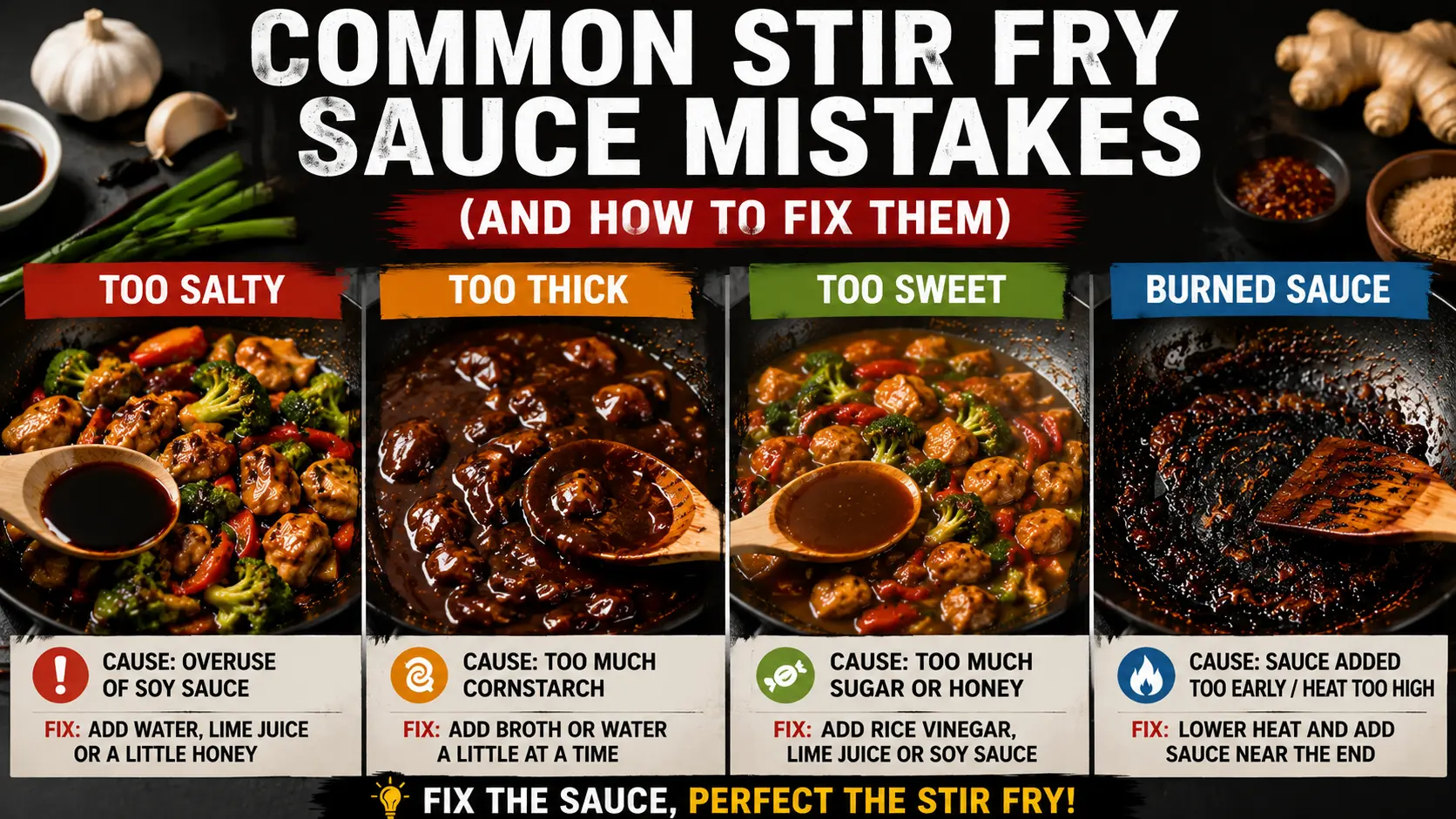
Mistake #1: Using Too Much Soy Sauce
The easiest way to ruin a homemade sauce is by adding excessive soy sauce. Because soy sauce delivers both saltiness and umami, it’s tempting to use more for extra flavor. Unfortunately, too much quickly overwhelms the dish, making every bite taste salty instead of balanced.
This is one of the most frequent stir fry sauce mistakes because different soy sauce brands vary significantly in sodium content. A recipe developed with low-sodium soy sauce may become overly salty if prepared with regular soy sauce.
If your sauce tastes too salty, don’t panic. Add a small amount of water or unsalted chicken broth to dilute the saltiness. A teaspoon of honey or brown sugar can also soften the sharp salty edge without making the sauce noticeably sweet.
Warning: Avoid adding more soy sauce after the sauce begins reducing. As moisture evaporates, the salt becomes even more concentrated.
Mistake #2: Adding Too Much Cornstarch
Cornstarch creates the glossy texture people expect from stir fry, but too much produces a sticky, gummy, almost gelatin-like sauce. Instead of lightly coating the food, the sauce clumps together and feels heavy.
Many beginners believe extra cornstarch creates a richer sauce, but this is one of the easiest stir fry sauce mistakes to avoid. In most recipes, only a small amount is needed because the sauce thickens rapidly once heated.
If your sauce becomes overly thick, whisk in small amounts of water, broth, or stock while stirring continuously over medium heat. The consistency should loosen within a minute.
If thickening sauces has always been challenging, our detailed guide on making the perfect cornstarch slurry explains the correct ratio and mixing technique.
Mistake #3: Forgetting Flavor Balance
A good stir fry sauce isn’t just salty. It combines sweetness, acidity, savory depth, and aromatic ingredients into one balanced mixture. When one of these components is missing, the sauce often tastes flat or one-dimensional.
For example, using soy sauce without a touch of sweetness can create a harsh flavor. On the other hand, too much honey or brown sugar may overpower the garlic and ginger.
Professional cooks constantly taste and adjust their sauces during preparation instead of relying entirely on measurements.
Kitchen Secret: Think of stir fry sauce like a balancing scale. Small adjustments usually produce better results than large corrections at the end of cooking.
Mistake #4: Adding the Sauce Too Early
Timing plays a major role in successful stir frying. Pouring the sauce into the wok before the vegetables and protein are nearly finished often causes the sugars to burn. Instead of creating a glossy coating, the sauce becomes dark, bitter, and sticky.
This is one of the most overlooked stir fry sauce mistakes because many home cooks assume the sauce should cook as long as the vegetables. In reality, most sauces only need one to three minutes to thicken and coat the ingredients.
Wait until the chicken is fully cooked and the vegetables are almost tender before adding the prepared sauce. Toss everything continuously until the sauce lightly clings to every ingredient.
You can see this timing in action in our Chicken Stir Fry recipe, where the sauce is added during the final stage of cooking for the best texture and flavor.
How to Fix Common Stir Fry Sauce Problems
Even experienced home cooks occasionally make stir fry sauce mistakes. The good news is that most problems can be corrected in just a few minutes without starting over. Knowing how to diagnose the issue and make small adjustments will save your meal and improve your confidence in the kitchen.
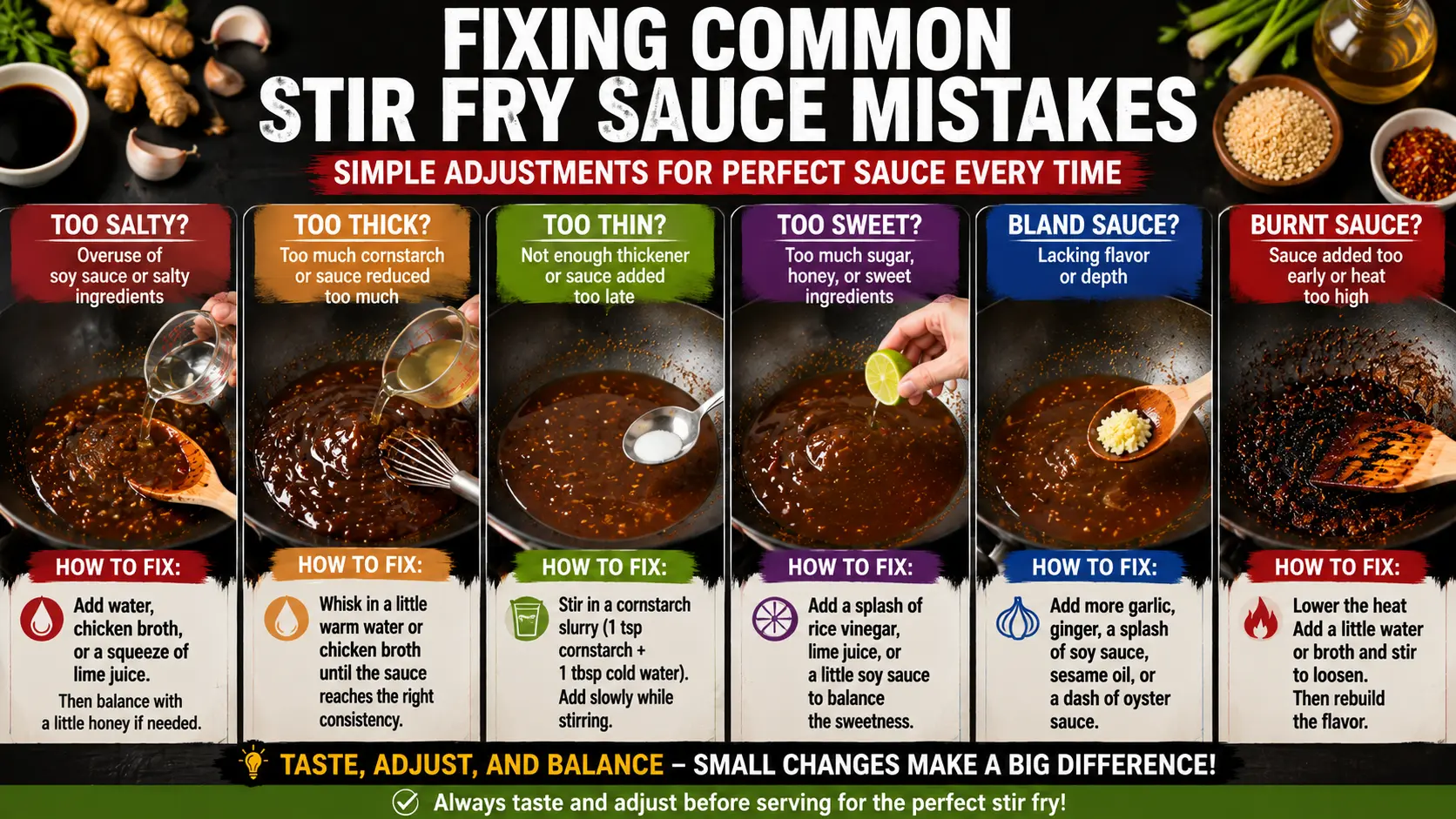
How to Fix a Sauce That’s Too Salty
A salty sauce is one of the most common stir fry sauce mistakes. Since soy sauce is naturally high in sodium, even an extra tablespoon can noticeably change the flavor.
Instead of adding more sugar immediately, first dilute the sauce with a small amount of water or unsalted chicken broth. Stir well, taste again, and repeat only if necessary. Once the saltiness is under control, add a small drizzle of honey or brown sugar to restore balance if needed.
If you’re cooking a large batch, adding extra vegetables or cooked chicken can also spread the salt across more ingredients, making the dish taste much more balanced.
How to Fix a Sauce That’s Too Thin
If your sauce looks watery and slides off the food instead of coating it, the thickener probably wasn’t mixed correctly or there wasn’t enough cornstarch.
Mix equal parts cornstarch and cold water to create a smooth slurry before slowly pouring it into the simmering sauce while stirring continuously. Never add dry cornstarch directly into the pan because it forms stubborn lumps.
Tip: Add only a small amount of slurry at a time. The sauce continues thickening for a minute or two after heating, so it’s easier to add more than to thin an overly thick sauce.
If you prefer not to use cornstarch, check out our guide on how to thicken stir fry sauce without cornstarch for several effective alternatives.
How to Fix a Sauce That’s Too Thick
Another frequent stir fry sauce mistakes is adding too much thickener. The result is a heavy sauce that feels sticky rather than silky.
Fortunately, this is usually one of the easiest problems to fix. Gradually whisk in warm chicken broth, vegetable broth, or water while stirring over medium heat. Add only a tablespoon or two at a time until the sauce reaches a smooth, glossy consistency.
If your sauce repeatedly becomes too thick, you may also find our article on why stir fry sauce becomes too thick helpful for preventing the issue altogether.
How to Fix a Sauce That’s Too Sweet
Honey, brown sugar, maple syrup, and other sweeteners balance salty ingredients, but too much creates an overly sugary sauce that masks the garlic, ginger, and soy sauce.
Reduce the sweetness by adding a splash of rice vinegar, fresh lime juice, or a little extra low-sodium soy sauce. The acidity helps brighten the flavor while restoring balance.
This adjustment works especially well for homemade sauces used in dishes like Honey Garlic Chicken Stir Fry, where sweetness is meant to complement—not dominate—the other ingredients.
How to Fix a Bland Stir Fry Sauce
Sometimes the sauce isn’t salty, sweet, or thick—it simply lacks flavor. This usually happens when there isn’t enough umami or aromatic ingredients.
Try adding freshly minced garlic, grated ginger, a splash of toasted sesame oil, or a small amount of oyster sauce if your recipe allows. These ingredients add depth without dramatically changing the sauce’s overall balance.
Kitchen Secret: Professional cooks rarely make large adjustments all at once. Instead, they taste after every small addition. This gradual approach prevents one correction from creating another problem.
By learning these simple troubleshooting techniques, you’ll be able to recover from nearly all stir fry sauce mistakes and consistently produce sauces that are rich, glossy, and packed with balanced flavor.
How to Prevent Stir Fry Sauce Mistakes Before You Start
While it’s helpful to know how to fix problems, preventing stir fry sauce mistakes from happening in the first place is even better. A few simple preparation habits can dramatically improve the consistency, flavor, and texture of every homemade stir fry sauce.
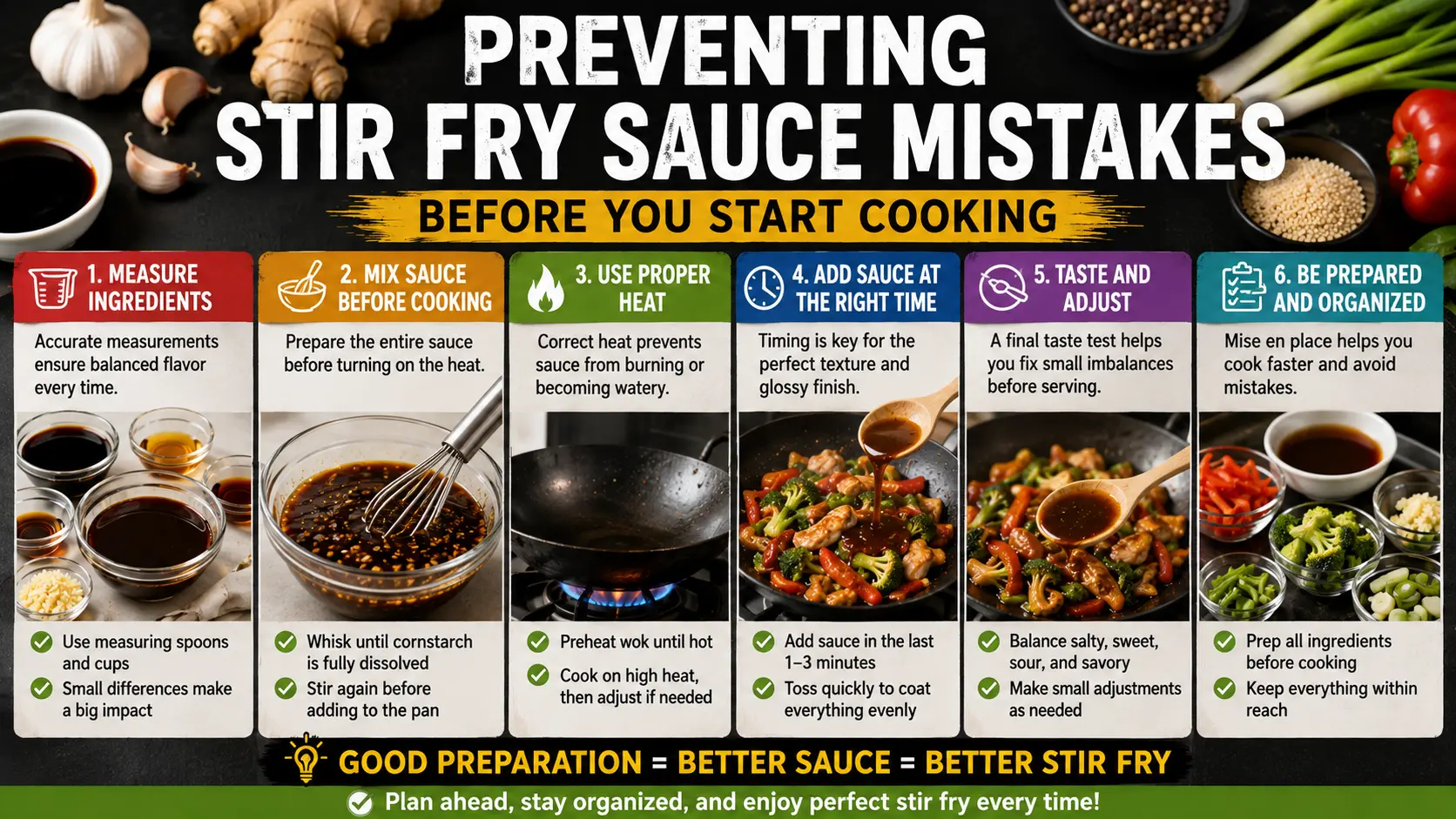
Measure Ingredients Instead of Guessing
Many stir fry sauce mistakes happen simply because ingredients are estimated rather than measured. An extra splash of soy sauce or an additional teaspoon of cornstarch may seem insignificant, but these small differences can completely change the finished sauce.
Using measuring spoons and cups ensures your sauce remains balanced every time you make it. Once you’ve mastered a recipe, you can confidently adjust it to suit your personal taste.
Mix the Sauce Before Heating the Wok
One of the best habits professional cooks follow is preparing the entire sauce before turning on the stove. Since stir frying happens very quickly, there isn’t enough time to measure ingredients once cooking begins.
Combine the soy sauce, broth, sweetener, vinegar, aromatics, and thickener in a bowl before adding any food to the wok. Stir well so the cornstarch is completely dissolved.
Tip: Give the sauce one final stir immediately before pouring it into the pan. Cornstarch naturally settles at the bottom after sitting for a few minutes.
Cook Over Proper Heat
Heat management plays a major role in avoiding stir fry sauce mistakes. If the pan isn’t hot enough, the ingredients release excess moisture, leaving the sauce watery instead of glossy. If the heat is too high after adding the sauce, the sugars may burn before the sauce has a chance to coat the food.
Preheat the wok until it’s hot before adding oil, then cook the chicken and vegetables quickly. Once they’re nearly finished, reduce the heat slightly if necessary before pouring in the prepared sauce.
Add the Sauce at the Right Time
Timing is just as important as the ingredients themselves. Adding the sauce too early often causes it to overcook, while adding it too late prevents it from properly coating the food.
A good rule is to wait until the protein is fully cooked and the vegetables are crisp-tender. Pour in the sauce during the final one to three minutes of cooking and toss continuously until everything is evenly coated.
You can see this technique used in our Chicken Veggie Stir Fry and Chicken Broccoli Stir Fry recipes, where the sauce is always added near the end for the best results.
Taste Before Serving
One final taste test can prevent many common stir fry sauce mistakes. Before serving, sample a small spoonful of the sauce together with a piece of chicken or vegetable. This gives you a much more accurate picture of the overall flavor than tasting the sauce by itself.
If necessary, make small adjustments. A few drops of rice vinegar can brighten the flavor, a teaspoon of honey can soften excessive saltiness, and a splash of broth can loosen a sauce that has thickened too much while resting.
Kitchen Secret: Great stir fry sauce is built through small adjustments—not large corrections. Taste, adjust, stir, and taste again until every flavor works together.
Developing these simple habits will help you avoid most stir fry sauce mistakes before they happen, making every homemade stir fry more flavorful, consistent, and enjoyable.
Expert Tips for Perfect Stir Fry Sauce Every Time
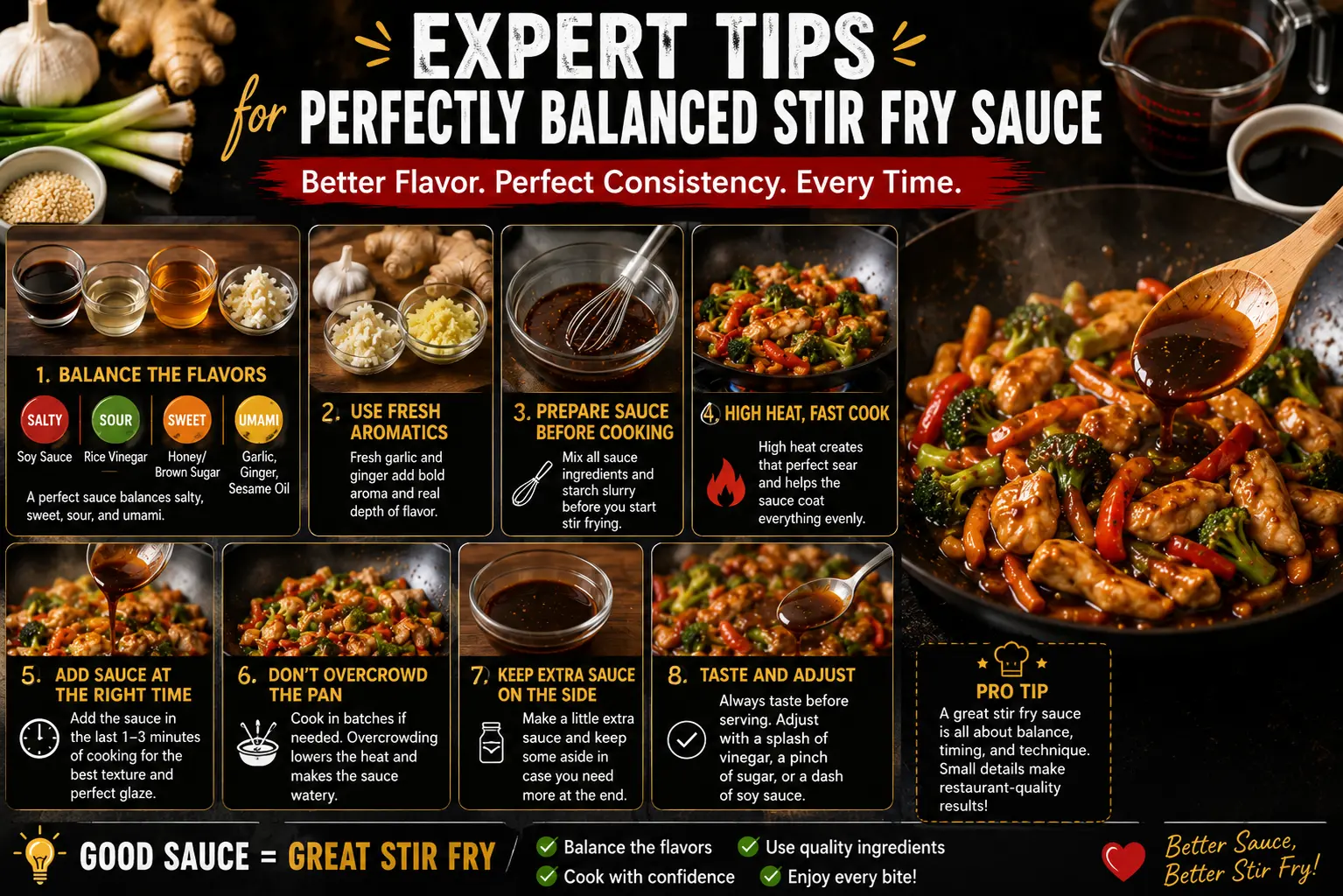
Once you’ve learned how to avoid common stir fry sauce mistakes, a few professional techniques can take your homemade sauce to the next level. These small habits are commonly used in restaurant kitchens because they create better flavor, texture, and consistency without adding extra work.
Build Flavor in Layers
One of the biggest differences between homemade and restaurant-quality stir fry sauce is how the flavors are developed. Instead of relying on one dominant ingredient, combine salty, sweet, sour, and umami components in balanced amounts.
For example, soy sauce provides saltiness, garlic and ginger add aroma, honey or brown sugar contributes sweetness, while rice vinegar brightens the overall flavor. Each ingredient supports the others instead of overpowering them.
If you’re unsure how these flavors work together, our guide on balancing sweet, salty, sour, and umami in stir fry sauce explains the process in greater detail.
Use Fresh Aromatics Whenever Possible
Fresh garlic and ginger deliver a brighter, cleaner flavor than powdered alternatives. While dried seasonings are convenient, freshly minced aromatics release natural oils that make the sauce taste noticeably fresher.
This simple upgrade helps eliminate one of the more subtle stir fry sauce mistakes—a sauce that tastes flat even though the measurements are correct.
Tip: Mince garlic and grate ginger just before cooking. Freshly prepared aromatics lose some of their intensity if they sit for long periods.
Don’t Overcrowd the Pan
Although overcrowding mainly affects the chicken and vegetables, it also impacts the sauce. Too much food lowers the pan temperature, causing ingredients to release moisture instead of searing. The extra liquid dilutes the sauce and prevents it from forming a glossy coating.
If you’re preparing a large meal, cook in two batches. This keeps the wok hot enough for proper caramelization and allows the sauce to cling evenly to every ingredient.
Keep Extra Sauce on the Side
Another professional technique is to prepare slightly more sauce than you think you’ll need. Reserve a small portion before it touches raw meat, then use it only if the finished stir fry needs additional flavor or moisture.
This approach helps prevent several stir fry sauce mistakes, including over-reducing the sauce or accidentally making it too thick during cooking.
Practice With One Base Recipe
Rather than trying a completely different sauce every time you cook, master one dependable base recipe first. Once you understand how each ingredient affects flavor and texture, you can confidently create variations such as garlic, honey garlic, spicy, or teriyaki sauces.
For inspiration, explore our collection of homemade stir fry sauce variations. Each version builds on the same core techniques while introducing different flavor profiles.
Kitchen Secret: Restaurant chefs rarely rely on complicated recipes. Instead, they use a reliable base sauce and make small adjustments depending on the protein, vegetables, and desired flavor profile.
If you’re looking for practical ways to use these techniques, try them with recipes like Garlic Chicken Stir Fry, Spicy Chicken Stir Fry, or Healthy Chicken Stir Fry. Applying these expert habits consistently will help you avoid future stir fry sauce mistakes and produce flavorful, glossy sauces every time you cook.
Storage and Food Safety
Even after you’ve learned how to avoid stir fry sauce mistakes, proper storage is essential for maintaining flavor, texture, and food safety. Homemade stir fry sauce contains fresh ingredients such as garlic, ginger, soy sauce, and sometimes chicken broth, so it should always be stored correctly.
How to Store Homemade Stir Fry Sauce
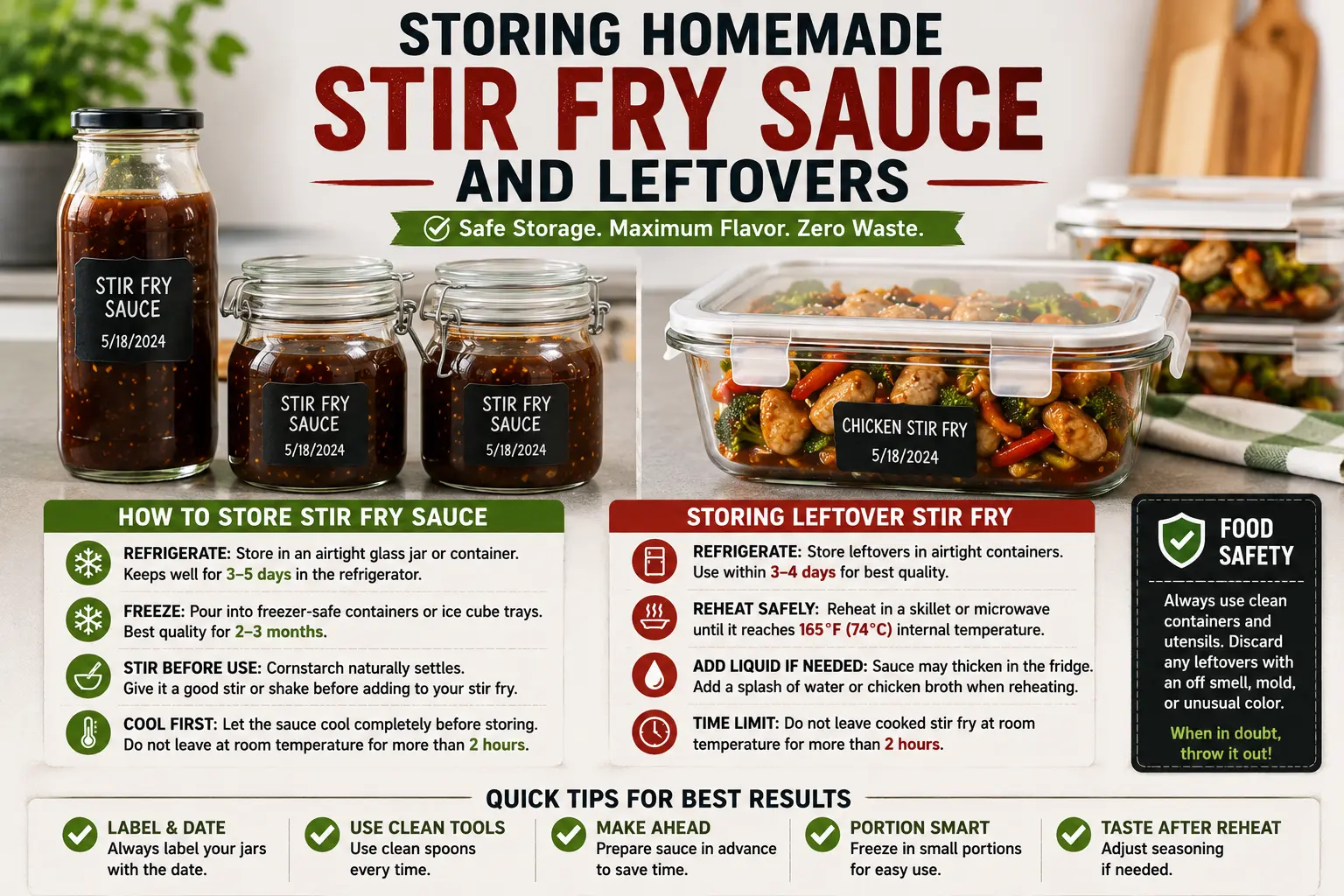
Transfer freshly prepared sauce to a clean, airtight glass jar or food-safe container as soon as it has cooled. Refrigerate it promptly instead of leaving it at room temperature for extended periods.
Storage Tip: Homemade stir fry sauce generally keeps well in the refrigerator for 3–5 days. Always label the container with the preparation date so you know when to use it.
Before using refrigerated sauce, give it a good stir or shake. Cornstarch naturally settles at the bottom during storage, which is completely normal.
Can You Freeze Stir Fry Sauce?
Yes. Most homemade sauces freeze very well, especially those without dairy ingredients. Pour the cooled sauce into freezer-safe containers or portion it into ice cube trays for convenient single-serving amounts.
Frozen stir fry sauce maintains its best quality for about 2–3 months. Thaw overnight in the refrigerator before reheating and stir thoroughly to restore a smooth consistency.
Storing Leftover Stir Fry
If you’ve already combined the sauce with cooked chicken and vegetables, refrigerate leftovers within two hours of cooking. Store them in airtight containers and enjoy them within 3–4 days for the best quality.
Reheat leftovers in a skillet over medium heat until they reach an internal temperature of 165°F (74°C). If the sauce thickens during refrigeration, add a splash of water or low-sodium chicken broth while reheating to loosen the consistency.
Food Safety: Never leave cooked stir fry or homemade sauce at room temperature for more than two hours. Discard any leftovers with an unusual odor, mold, or signs of spoilage.
References
Frequently Asked Questions
Why is my stir fry sauce too salty?
One of the most common stir fry sauce mistakes is using too much soy sauce. Dilute the sauce with water or unsalted broth, then rebalance the flavor with a small amount of honey or brown sugar if needed.
Why didn’t my stir fry sauce thicken?
The cornstarch slurry may have been too weak or added incorrectly. Always mix cornstarch with cold water before stirring it into a simmering sauce.
Can I fix stir fry sauce after it’s already cooked?
Yes. Most stir fry sauce mistakes can be corrected by adjusting the seasoning, adding more liquid, balancing sweetness and acidity, or using a small amount of additional slurry if the sauce is too thin.
How can I make stir fry sauce taste more like a restaurant?
Use fresh garlic and ginger, balance salty, sweet, sour, and umami flavors, cook over high heat, and add the sauce during the final minutes of cooking.
Can homemade stir fry sauce be made ahead of time?
Absolutely. Homemade stir fry sauce can be prepared several days in advance and stored in the refrigerator in an airtight container, making weeknight cooking faster and easier.
What is the biggest stir fry sauce mistake beginners make?
The biggest stir fry sauce mistakes are overusing soy sauce, adding too much cornstarch, and pouring the sauce into the pan too early, which can lead to burning or an unbalanced flavor.
Final Thoughts
Making delicious homemade stir fry sauce doesn’t require complicated ingredients or professional training. Most stir fry sauce mistakes happen because of small issues with ingredient balance, timing, or cooking technique—and they’re usually easy to fix once you know what to look for.
By measuring ingredients carefully, preparing your sauce before cooking, adding it at the right time, and making small adjustments as needed, you’ll consistently create sauces that are rich, glossy, and full of balanced flavor. With a little practice, troubleshooting becomes second nature, allowing you to enjoy restaurant-quality stir fry meals at home.
🍽️ You Might Also Like



📧 Save This Recipe For Later
Enter your email and we will send this recipe directly to your inbox.