
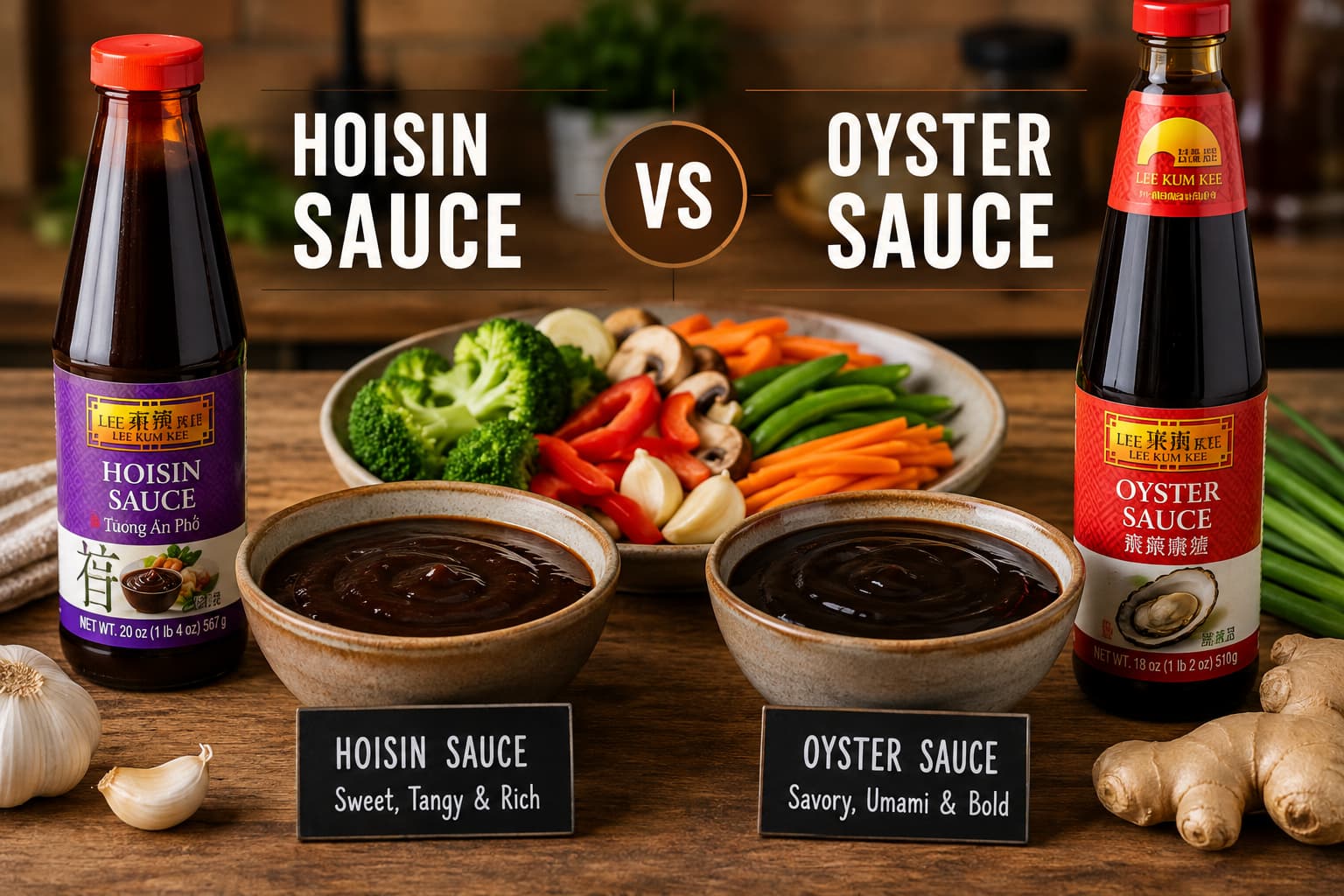
Hoisin Sauce vs. Oyster Sauce (Key Differences)
Hoisin Sauce vs. Oyster Sauce (Key Differences)
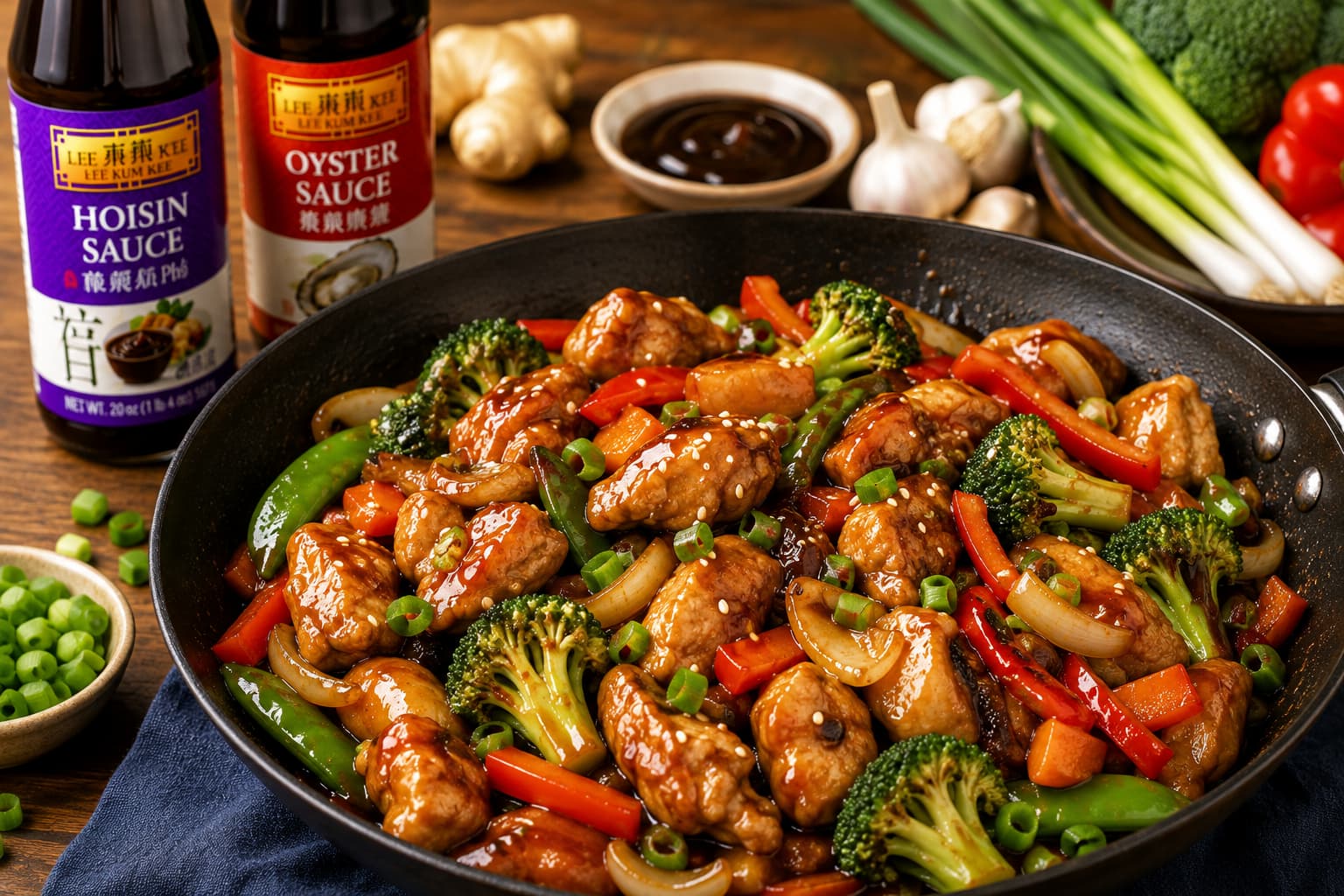
Walk through the Asian food aisle of almost any grocery store, and you’ll likely find both hoisin sauce and oyster sauce sitting side by side. Their dark color and thick consistency make them look similar, leading many home cooks to wonder whether they can be used interchangeably. However, these two popular sauces have distinct ingredients, flavors, and cooking purposes that can dramatically affect the outcome of your meal.
Understanding hoisin sauce vs oyster sauce is important if you want to create balanced, flavorful stir-fries, marinades, noodle dishes, or dipping sauces. Choosing the wrong sauce can make a recipe much sweeter, saltier, or richer than intended. Learning when to use each one will help you cook with greater confidence and achieve more authentic results.
Hoisin sauce is famous for its sweet, tangy flavor and is commonly used as a glaze, dipping sauce, or marinade. Oyster sauce, on the other hand, is prized for its deep savory taste and natural umami, making it a staple ingredient in countless stir-fry recipes. While both sauces can complement similar dishes, they play very different roles in building flavor.
In this comparison guide, you’ll discover the key differences between hoisin sauce and oyster sauce, including their ingredients, taste, texture, nutritional value, cooking applications, and whether one can replace the other. By the end, you’ll know exactly which sauce works best for your favorite recipes.
Quick Answer
Hoisin sauce vs oyster sauce: Hoisin sauce is a sweet, thick condiment made mainly from fermented soybeans, sugar, vinegar, garlic, and spices. Oyster sauce is a savory, umami-rich sauce traditionally made with oyster extract, soy sauce, and seasonings. Hoisin sauce is best for marinades, glazes, barbecue dishes, and dipping sauces, while oyster sauce is the preferred choice for stir-fries, vegetables, noodles, and savory meat dishes.
Table of Contents
What Is Hoisin Sauce?
Hoisin sauce is a thick, flavorful condiment that originated in Chinese cuisine. Although the word “hoisin” is associated with seafood, the sauce itself typically contains no oysters or fish. Instead, it’s made from fermented soybeans, sugar, garlic, vinegar, chili peppers, and a blend of seasonings that create its signature sweet and savory taste.
One of the most important things to understand when comparing hoisin sauce vs oyster sauce is that hoisin sauce is designed to add sweetness and complexity rather than simply enhance savory flavors. Its rich texture and high sugar content make it an excellent glaze because it caramelizes beautifully when exposed to high heat.
Home cooks often use hoisin sauce in barbecue-style recipes, lettuce wraps, roasted meats, noodle dishes, and as a dipping sauce for spring rolls or dumplings. A small amount goes a long way, adding layers of sweetness, mild tanginess, and aromatic spices without overwhelming the other ingredients.
Tip: Hoisin sauce works best when balanced with salty or savory ingredients such as soy sauce, garlic, fresh ginger, or oyster sauce. Combining flavors instead of relying on hoisin alone creates a more balanced stir-fry sauce.
If you’re looking for practical ways to use these sauces, our Chicken Stir Fry recipe is a great starting point. You can also explore recipes like Garlic Chicken Stir Fry or Honey Garlic Chicken Stir Fry to see how different sauces create unique flavor profiles while keeping the dish balanced.
What Is Oyster Sauce?
Oyster sauce is a thick, dark brown condiment that originated in southern China and has become a staple ingredient in many Asian kitchens. Unlike hoisin sauce, oyster sauce is traditionally made by simmering oysters until their natural juices become concentrated. Modern commercial versions often combine oyster extract with soy sauce, sugar, salt, and starch to create a smooth, glossy sauce that’s rich in savory flavor.
When comparing hoisin sauce vs oyster sauce, oyster sauce stands out because of its deep umami taste. Instead of adding sweetness, it enhances the natural flavors of meat, seafood, mushrooms, and vegetables. Even a small amount can make a stir-fry taste richer and more balanced without overpowering the other ingredients.
Although oyster sauce contains a small amount of sugar, its overall flavor is primarily savory with subtle hints of sweetness. This makes it one of the most versatile sauces for everyday cooking, especially when preparing chicken, beef, shrimp, broccoli, bok choy, mushrooms, and noodle dishes.
Many professional chefs consider oyster sauce one of the essential building blocks of a great stir-fry because it coats ingredients evenly while adding color, body, and depth of flavor.
Kitchen Secret: Oyster sauce is most effective when added during the final minutes of cooking. High heat for an extended period can reduce some of its delicate flavor, so adding it near the end helps preserve its rich umami taste.
If you’re curious about why this ingredient is so important, read our guide on What Does Oyster Sauce Do in Stir Fry?, where we explain how it improves flavor, texture, and appearance.
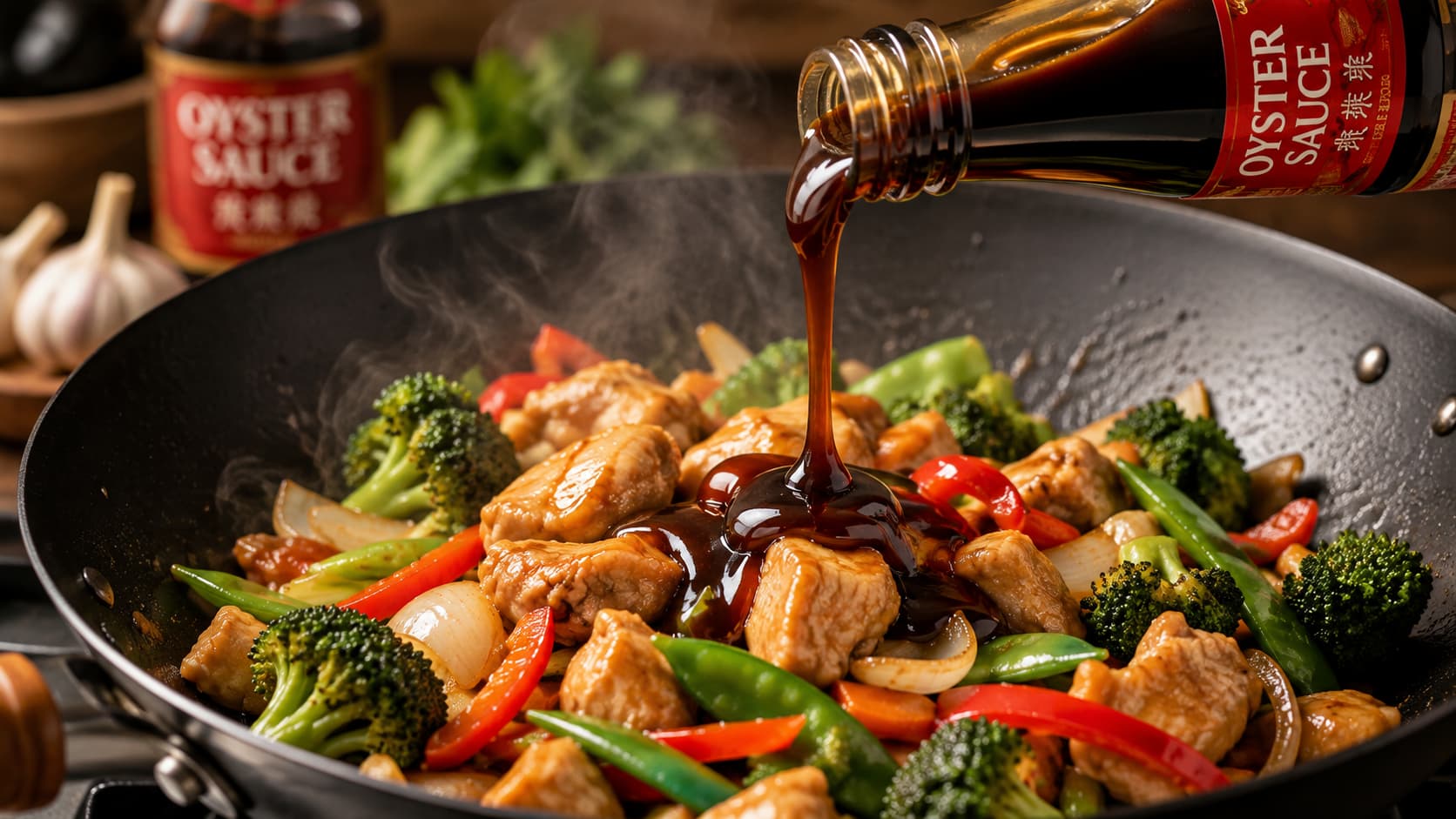
Key Differences Between Hoisin Sauce and Oyster Sauce
Although these sauces may appear similar at first glance, they have several important differences that affect how they’re used in cooking. Understanding these differences will help you choose the right sauce for every recipe.
| Feature | Hoisin Sauce | Oyster Sauce |
|---|---|---|
| Main Flavor | Sweet, tangy, slightly spicy | Savory, rich umami with mild sweetness |
| Main Ingredients | Fermented soybeans, sugar, vinegar, garlic, spices | Oyster extract, soy sauce, sugar, seasonings |
| Texture | Very thick and sticky | Smooth, glossy, medium-thick |
| Best Uses | Marinades, glazes, dipping sauces | Stir-fries, vegetables, noodles, meat dishes |
| Sweetness | High | Low to moderate |
| Umami Level | Moderate | Very high |
The biggest takeaway in the hoisin sauce vs oyster sauce comparison is that each sauce serves a different purpose. Hoisin sauce contributes sweetness and complexity, while oyster sauce enhances savory flavors and creates the signature restaurant-style taste found in many stir-fry dishes.
Rather than choosing one over the other, many recipes actually benefit from using both together. Oyster sauce builds the savory foundation, while a small amount of hoisin sauce adds sweetness and balance.
For more ideas on creating flavorful sauces, explore our Ultimate Chicken Stir Fry Sauce Guide, where you’ll learn how different sauces work together to create perfectly balanced homemade stir-fries.
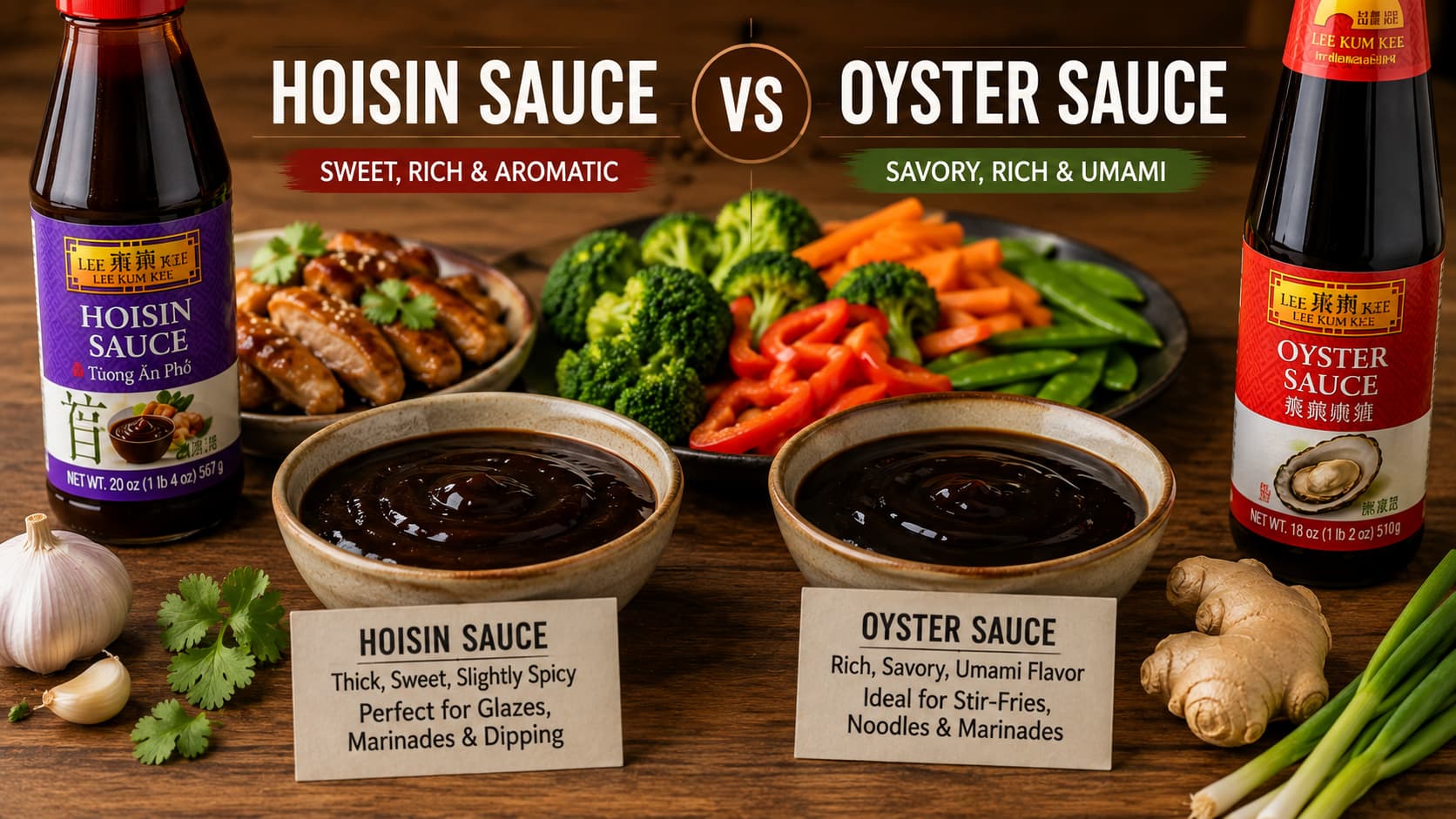
Flavor Comparison: Hoisin Sauce vs Oyster Sauce
Flavor is the biggest factor when deciding between hoisin sauce vs oyster sauce. Although both sauces add depth to Asian-inspired dishes, they create very different eating experiences. Choosing the right one depends on whether your recipe needs sweetness, savory richness, or a balance of both.
Hoisin Sauce Flavor
Hoisin sauce has a bold, sweet flavor with notes of garlic, fermented soybeans, vinegar, and warm spices. Depending on the brand, you may also notice a slight smokiness or mild heat from chili peppers. Because of its higher sugar content, hoisin sauce creates a glossy coating that caramelizes beautifully when cooked.
This sweet profile makes hoisin sauce ideal for barbecue-style recipes, glazes, dipping sauces, and marinades. It can also add complexity to noodle dishes and lettuce wraps, but using too much may overpower delicate ingredients.
Oyster Sauce Flavor
Oyster sauce is much more savory than sweet. Its concentrated oyster extract provides a rich umami flavor that enhances the natural taste of meat and vegetables instead of covering them up. While it contains a small amount of sugar, the sweetness is subtle and mainly balances the sauce’s salty, savory character.
This is why oyster sauce is considered a staple ingredient in classic chicken, beef, shrimp, and vegetable stir-fries. It blends easily with soy sauce, sesame oil, garlic, and ginger to create the signature flavor found in many restaurant dishes.
Tip: If you want a rich, savory stir-fry, oyster sauce should be your primary sauce. If you prefer a sweeter finish, add a small spoonful of hoisin sauce instead of replacing the oyster sauce completely.
Ingredients and Nutritional Differences
Another important part of the hoisin sauce vs oyster sauce comparison is understanding what goes into each bottle. Reading the ingredient label helps you choose the right sauce based on your dietary preferences and cooking goals.
| Category | Hoisin Sauce | Oyster Sauce |
|---|---|---|
| Primary Base | Fermented soybeans | Oyster extract |
| Sugar Content | Higher | Lower |
| Saltiness | Moderate | Moderate to High |
| Umami Flavor | Medium | Very High |
| Vegetarian-Friendly | Usually Yes | No (unless labeled vegetarian) |
| Typical Use | Glazes and marinades | Stir-fries and savory sauces |
Because hoisin sauce contains more sugar, it generally has slightly more carbohydrates than oyster sauce. Oyster sauce, meanwhile, tends to contain more sodium, so it’s worth checking nutrition labels if you’re monitoring your salt intake.
Vegetarians and vegans should also pay attention to ingredient lists. Traditional oyster sauce contains real oyster extract, although many grocery stores now offer mushroom-based vegetarian alternatives that provide a similar umami flavor.
Warning: Don’t assume every dark Asian sauce tastes the same. Using hoisin sauce instead of oyster sauce in a stir-fry can make the dish much sweeter than intended, while replacing hoisin with oyster sauce may remove the sweetness that balances barbecue-style recipes.
If you don’t have oyster sauce available, our guides on Best Soy Sauce Substitutes for Stir Fry and Can You Make Stir Fry Without Soy Sauce? explain several practical alternatives for creating delicious homemade stir-fry sauces.
Best Uses for Hoisin Sauce and Oyster Sauce
Understanding how each sauce is used is one of the easiest ways to decide between hoisin sauce vs oyster sauce. While both sauces can appear in similar recipes, they perform different jobs. Hoisin sauce adds sweetness and bold flavor, whereas oyster sauce enhances savory ingredients with deep umami richness.
When to Use Hoisin Sauce
Hoisin sauce works best when you want a sweet and flavorful glaze or dipping sauce. Its thick consistency helps it coat ingredients evenly, making it ideal for grilled meats and roasted vegetables.
- Marinades for chicken, pork, and beef
- Glazes for roasted or grilled meats
- Dipping sauce for spring rolls and dumplings
- Lettuce wraps
- Barbecue-inspired dishes
- Noodle bowls with a touch of sweetness
Because hoisin sauce contains more sugar than oyster sauce, it caramelizes during cooking and creates an attractive glossy finish.
When to Use Oyster Sauce
Oyster sauce is the better choice whenever you want to build savory flavor without making the dish overly sweet. It blends naturally with soy sauce, sesame oil, garlic, ginger, and cooking wine, making it one of the most versatile ingredients in Asian cooking.
- Chicken stir-fries
- Beef and broccoli
- Shrimp stir-fries
- Mixed vegetable dishes
- Fried noodles
- Fried rice
- Mushroom recipes
If you’re looking for inspiration, try our Chicken Broccoli Stir Fry, Chicken Mushroom Stir Fry, or Chicken Veggie Stir Fry. Oyster sauce helps create the rich, restaurant-style flavor these dishes are known for.
Kitchen Secret: Many restaurant chefs don’t choose between hoisin sauce and oyster sauce—they use both. Oyster sauce forms the savory base, while a small amount of hoisin sauce adds sweetness and complexity without overpowering the dish.
Can You Substitute One for the Other?
A common question in the hoisin sauce vs oyster sauce debate is whether one sauce can replace the other. The short answer is yes—but only in certain situations, and the results won’t be identical.
If a recipe calls for oyster sauce and you only have hoisin sauce, you can use it in a pinch. However, expect the finished dish to taste noticeably sweeter and less savory. To improve the balance, mix the hoisin sauce with a little soy sauce before adding it to your recipe.
Likewise, if you’re replacing hoisin sauce with oyster sauce, you’ll lose much of the sweetness that hoisin provides. Adding a small amount of brown sugar or honey can help recreate a similar flavor profile.
| If Your Recipe Calls For | Possible Substitute | Recommended Adjustment |
|---|---|---|
| Oyster Sauce | Hoisin Sauce | Add a splash of soy sauce to reduce sweetness. |
| Hoisin Sauce | Oyster Sauce | Add a little honey or brown sugar for balance. |
| Neither Sauce Available | Soy Sauce + Brown Sugar + Sesame Oil | Creates a simple homemade alternative. |
Warning: Substituting one sauce for the other changes the overall flavor of the recipe. While these swaps can work in an emergency, using the original ingredient will almost always produce the best results.
If you’re interested in making your own sauce combinations, check out our Best Homemade Stir Fry Sauce Variations and learn how to avoid common seasoning mistakes with our guide to Common Stir Fry Sauce Mistakes.
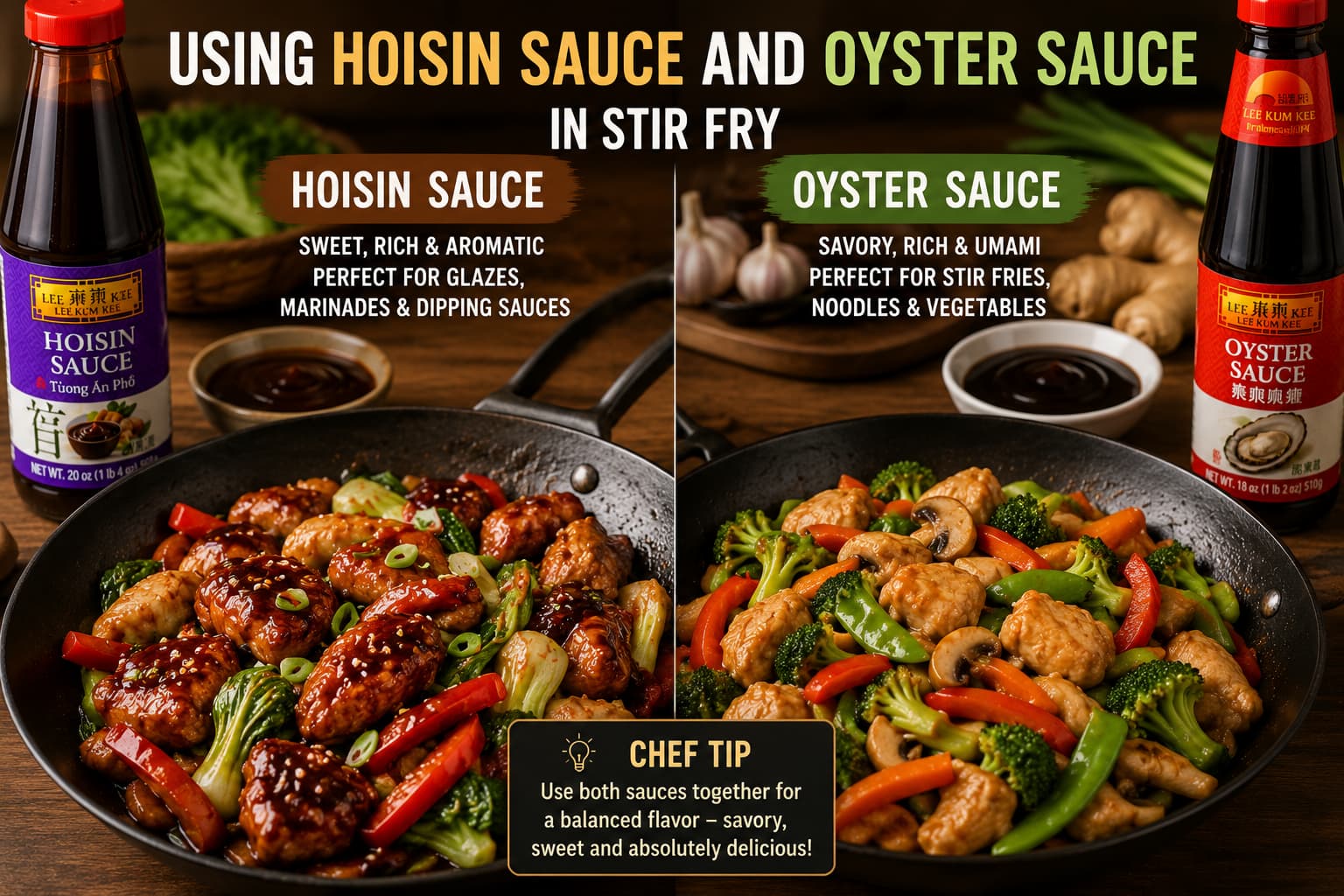
Best Uses for Hoisin Sauce and Oyster Sauce
Understanding how each sauce is used is one of the easiest ways to decide between hoisin sauce vs oyster sauce. While both sauces can appear in similar recipes, they perform different jobs. Hoisin sauce adds sweetness and bold flavor, whereas oyster sauce enhances savory ingredients with deep umami richness.
When to Use Hoisin Sauce
Hoisin sauce works best when you want a sweet and flavorful glaze or dipping sauce. Its thick consistency helps it coat ingredients evenly, making it ideal for grilled meats and roasted vegetables.
- Marinades for chicken, pork, and beef
- Glazes for roasted or grilled meats
- Dipping sauce for spring rolls and dumplings
- Lettuce wraps
- Barbecue-inspired dishes
- Noodle bowls with a touch of sweetness
Because hoisin sauce contains more sugar than oyster sauce, it caramelizes during cooking and creates an attractive glossy finish.
When to Use Oyster Sauce
Oyster sauce is the better choice whenever you want to build savory flavor without making the dish overly sweet. It blends naturally with soy sauce, sesame oil, garlic, ginger, and cooking wine, making it one of the most versatile ingredients in Asian cooking.
- Chicken stir-fries
- Beef and broccoli
- Shrimp stir-fries
- Mixed vegetable dishes
- Fried noodles
- Fried rice
- Mushroom recipes
If you’re looking for inspiration, try our Chicken Broccoli Stir Fry, Chicken Mushroom Stir Fry, or Chicken Veggie Stir Fry. Oyster sauce helps create the rich, restaurant-style flavor these dishes are known for.
Kitchen Secret: Many restaurant chefs don’t choose between hoisin sauce and oyster sauce—they use both. Oyster sauce forms the savory base, while a small amount of hoisin sauce adds sweetness and complexity without overpowering the dish.
Can You Substitute One for the Other?
A common question in the hoisin sauce vs oyster sauce debate is whether one sauce can replace the other. The short answer is yes—but only in certain situations, and the results won’t be identical.
If a recipe calls for oyster sauce and you only have hoisin sauce, you can use it in a pinch. However, expect the finished dish to taste noticeably sweeter and less savory. To improve the balance, mix the hoisin sauce with a little soy sauce before adding it to your recipe.
Likewise, if you’re replacing hoisin sauce with oyster sauce, you’ll lose much of the sweetness that hoisin provides. Adding a small amount of brown sugar or honey can help recreate a similar flavor profile.
| If Your Recipe Calls For | Possible Substitute | Recommended Adjustment |
|---|---|---|
| Oyster Sauce | Hoisin Sauce | Add a splash of soy sauce to reduce sweetness. |
| Hoisin Sauce | Oyster Sauce | Add a little honey or brown sugar for balance. |
| Neither Sauce Available | Soy Sauce + Brown Sugar + Sesame Oil | Creates a simple homemade alternative. |
Warning: Substituting one sauce for the other changes the overall flavor of the recipe. While these swaps can work in an emergency, using the original ingredient will almost always produce the best results.
If you’re interested in making your own sauce combinations, check out our Best Homemade Stir Fry Sauce Variations and learn how to avoid common seasoning mistakes with our guide to Common Stir Fry Sauce Mistakes.
References
Frequently Asked Questions
Can I use hoisin sauce instead of oyster sauce in stir-fry?
Yes, but the flavor will be much sweeter. If you substitute hoisin sauce for oyster sauce, consider adding a splash of soy sauce to increase the savory flavor and reduce the overall sweetness.
Is oyster sauce healthier than hoisin sauce?
Neither sauce is necessarily healthier than the other. Hoisin sauce generally contains more sugar, while oyster sauce often contains more sodium. Reading the nutrition label is the best way to compare specific brands.
Does hoisin sauce contain oysters?
No. Despite its name, traditional hoisin sauce is made from fermented soybeans, sugar, vinegar, garlic, and seasonings. It normally does not contain oyster extract.
Can vegetarians eat oyster sauce?
Traditional oyster sauce contains oyster extract and is not vegetarian. However, many brands produce vegetarian versions made with mushrooms that offer a similar umami flavor.
Which sauce is better for chicken stir-fry?
For most chicken stir-fry recipes, oyster sauce is the preferred choice because it creates a rich, savory flavor. Hoisin sauce can be added in small amounts if you want a slightly sweeter sauce.
Can I combine hoisin sauce and oyster sauce?
Absolutely. Many homemade and restaurant recipes use both sauces together. Oyster sauce provides savory depth, while hoisin sauce adds sweetness and complexity for a well-balanced stir-fry sauce.
Final Thoughts
When comparing hoisin sauce vs oyster sauce, there isn’t a single winner because each sauce serves a different purpose. Hoisin sauce is the better choice for sweet marinades, glazes, and dipping sauces, while oyster sauce excels in savory stir-fries, noodle dishes, and vegetable recipes thanks to its rich umami flavor.
If you frequently prepare homemade Asian-inspired meals, keeping both sauces in your refrigerator gives you greater flexibility. Understanding how each ingredient contributes to a recipe allows you to create balanced flavors instead of relying on substitutions that may change the final result.
Whether you’re cooking a quick weeknight dinner or recreating your favorite takeout meal, choosing the right sauce is one of the easiest ways to elevate your cooking. Once you understand the strengths of each condiment, you’ll know exactly when to reach for hoisin sauce, oyster sauce, or a combination of both.
🍽️ You Might Also Like


📧 Save This Recipe For Later
Enter your email and we will send this recipe directly to your inbox.