
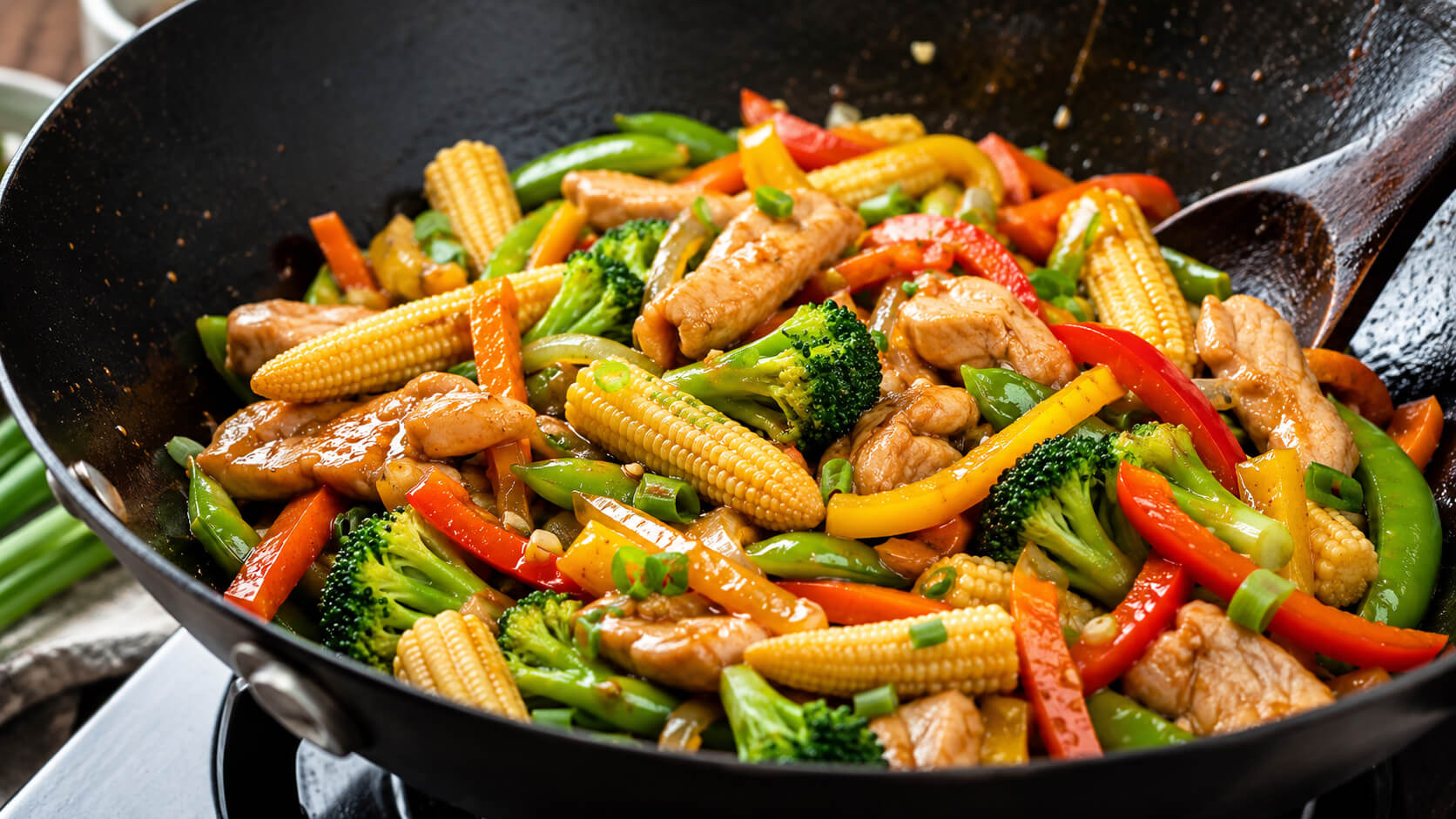
How to Use Baby Corn in Stir Fry
How to Use Baby Corn in Stir Fry
Baby corn is one of the easiest vegetables to add to a stir fry because it cooks quickly, stays crisp-tender, and absorbs sauces beautifully. Whether you’re making a simple vegetable dish or a hearty chicken dinner, learning how to use baby corn in stir fry can instantly improve both the texture and appearance of your meal. Its naturally sweet flavor pairs well with popular stir fry ingredients like broccoli, bell peppers, mushrooms, carrots, snap peas, and chicken.
Another advantage of using baby corn stir fry recipes is their versatility. Fresh, canned, and frozen baby corn all work well when prepared correctly. The key is knowing when to add it to the wok and how long to cook it so it stays crisp without becoming soft or watery.
In this guide, you’ll learn how to choose the best baby corn, prepare it properly, cook it at the right time, avoid common mistakes, and create delicious stir fries with restaurant-quality texture every time.
Quick Answer
Baby corn stir fry works best when baby corn is added after slower-cooking vegetables but before leafy greens. Cook it over high heat for about 2–4 minutes until it’s heated through while remaining crisp-tender. Fresh, canned, and frozen baby corn can all be used successfully when properly prepared.
Table of Contents
Why Baby Corn Is Perfect for Stir Fry
Baby corn is harvested before the ears fully mature, giving it a tender texture and mild sweetness that complements nearly every stir fry ingredient. Unlike mature corn, it doesn’t require long cooking times, making it ideal for quick meals that come together in less than 30 minutes.
One of the biggest reasons cooks love baby corn stir fry dishes is that baby corn holds its shape even over high heat. Instead of turning mushy, it stays pleasantly crisp while soaking up savory sauces like soy sauce, teriyaki, garlic ginger sauce, or oyster sauce.
Because baby corn has a subtle flavor, it blends naturally with proteins such as chicken, shrimp, beef, and tofu. It also pairs exceptionally well with vegetables including broccoli, carrots, mushrooms, bell peppers, snow peas, snap peas, and water chestnuts.
Tip: Slice larger baby corn pieces diagonally before cooking. The increased surface area helps them absorb more sauce while giving your stir fry a professional restaurant-style appearance.
If you’re planning a complete vegetable combination, our guide on Best Vegetable Combinations for Chicken Stir Fry offers excellent pairing ideas that work perfectly with baby corn.
Fresh vs. Canned vs. Frozen Baby Corn
One of the best things about making a baby corn stir fry is that you can use fresh, canned, or frozen baby corn. Each option has its own advantages, and choosing the right one depends on convenience, availability, and the texture you want in your finished dish.
Fresh baby corn provides the best natural sweetness and the crispest texture. It’s commonly available in Asian grocery stores and some supermarkets, especially during the growing season. Fresh baby corn is ideal when you want the highest-quality stir fry with vibrant color and a satisfying crunch.
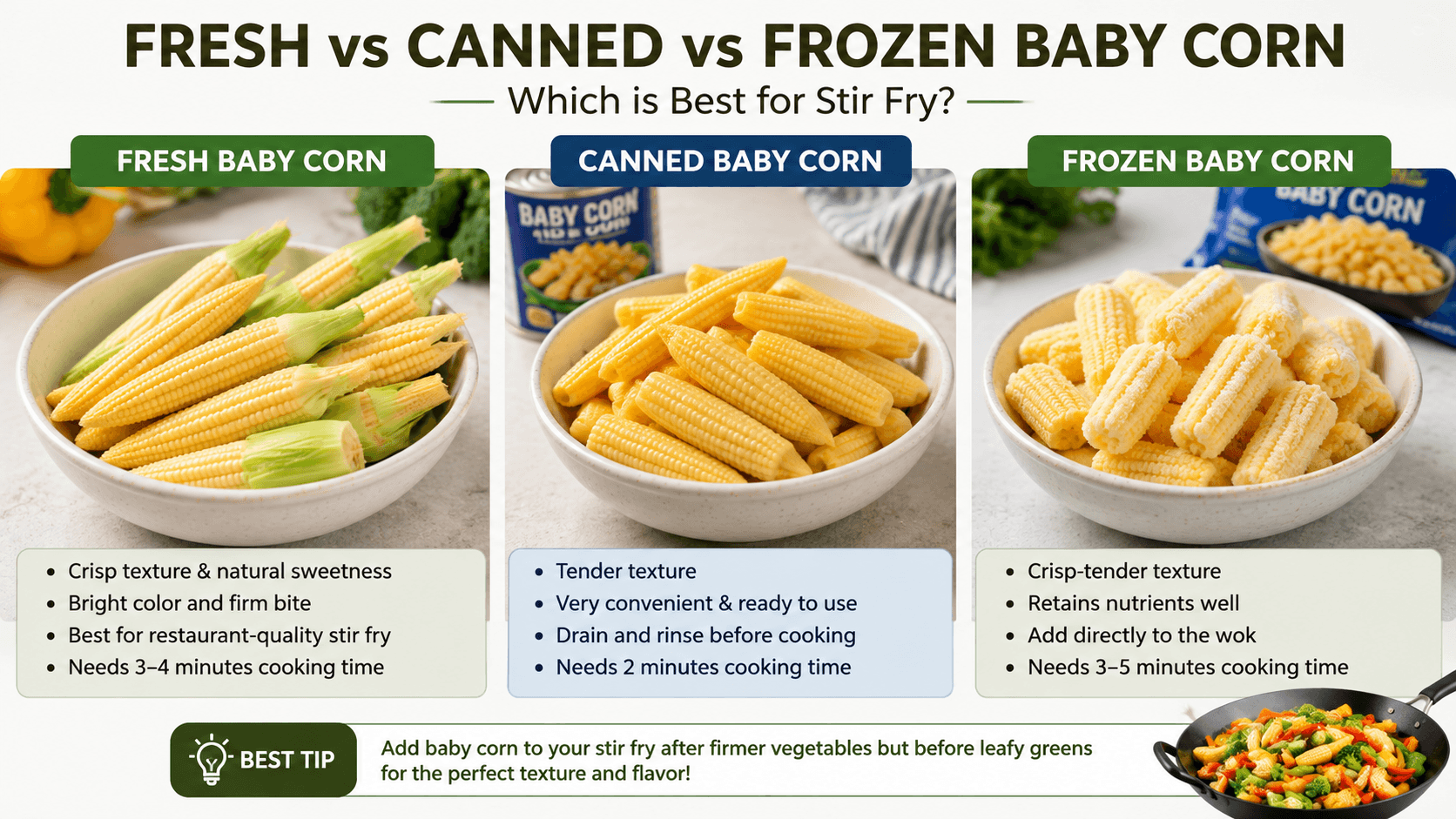
Canned baby corn is the most convenient option and is commonly used in home kitchens. Since it has already been cooked during processing, it only needs to be heated through. Simply drain the liquid and rinse the baby corn under cold water before adding it to your stir fry.
Frozen baby corn is another excellent choice because it retains much of its original texture and nutrients. There’s no need to thaw it completely before cooking. Just add it directly to the hot wok, allowing an extra minute or two for it to heat evenly.
| Type | Texture | Preparation | Best For |
|---|---|---|---|
| Fresh | Crisp and naturally sweet | Wash and trim if needed | Restaurant-quality stir fry |
| Canned | Tender | Drain and rinse | Quick weekday meals |
| Frozen | Crisp-tender | Add directly to the wok | Meal prep and convenience |
No matter which type you choose, the secret to a great baby corn stir fry is avoiding overcooking. Baby corn only needs a few minutes over high heat to develop great flavor while keeping its signature crunch.
Kitchen Secret: If you’re using canned baby corn, pat it dry with paper towels after rinsing. Removing excess moisture helps it brown slightly instead of steaming in the wok.
How to Prepare Baby Corn Before Cooking
Proper preparation makes a noticeable difference in both flavor and texture. Fortunately, preparing baby corn takes only a few minutes.
For Fresh Baby Corn
- Rinse thoroughly under cold running water.
- Trim any tough stem ends.
- Leave small pieces whole.
- Slice larger pieces diagonally for faster cooking.
For Canned Baby Corn
- Drain completely.
- Rinse to remove excess brine.
- Pat dry before adding to the wok.
For Frozen Baby Corn
- No thawing is required.
- Separate any frozen pieces.
- Add directly to the hot wok.
If you’re preparing several vegetables together, it’s helpful to cut everything into similar bite-sized pieces. Uniform sizes help vegetables cook evenly, preventing some ingredients from becoming overcooked while others remain underdone.
For additional preparation techniques, read our complete guide to The Ultimate Stir Fry Vegetable Preparation Guide, which explains how to prep every common stir fry vegetable for the best results.
How to Cook Baby Corn in Stir Fry
Knowing exactly when to add baby corn is one of the most important steps for making a delicious baby corn stir fry. Since baby corn cooks much faster than dense vegetables like carrots but slower than leafy greens, adding it at the right stage ensures every ingredient finishes cooking at the same time.
Always start with a hot wok or large skillet. A high cooking temperature quickly sears the vegetables, locks in moisture, and creates the slightly smoky flavor that makes stir fry taste like it’s from your favorite Asian restaurant.
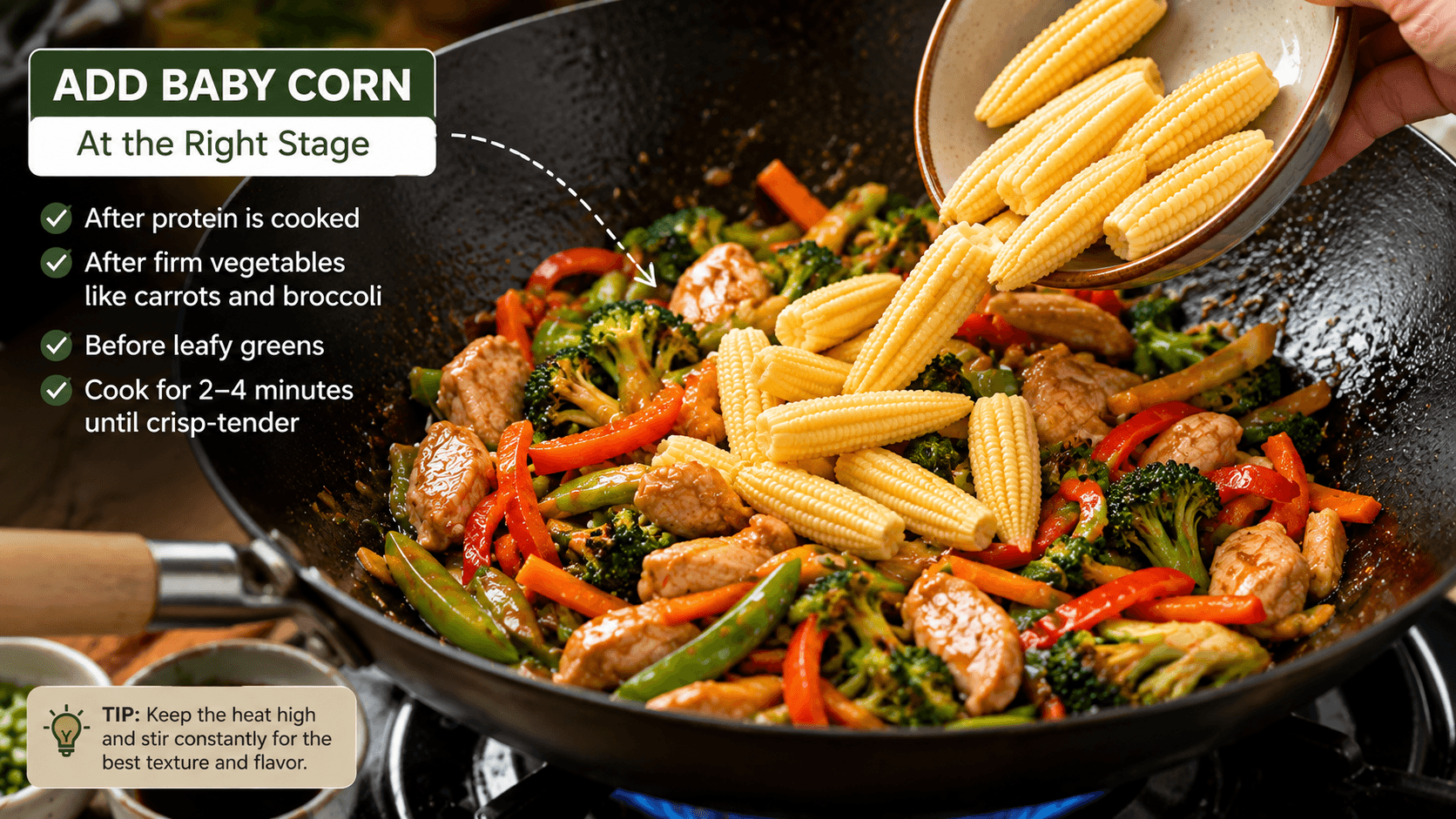
The Best Order to Add Baby Corn
- Heat the wok until it’s very hot.
- Add cooking oil with a high smoke point.
- Cook the chicken, beef, shrimp, tofu, or other protein first.
- Add firm vegetables such as carrots and broccoli.
- Add baby corn, mushrooms, bell peppers, or snap peas.
- Pour in the stir fry sauce.
- Add leafy greens like spinach or bok choy last.
- Toss everything together for about one minute before serving.
This cooking order keeps every ingredient crisp and flavorful while preventing delicate vegetables from becoming overcooked.
Tip: Stir constantly after adding the baby corn. Continuous movement helps it cook evenly while coating every piece with sauce.
How Long Should Baby Corn Cook?
Cooking time depends on the type of baby corn you’re using.
| Baby Corn Type | Recommended Cooking Time | Result |
|---|---|---|
| Fresh | 3–4 minutes | Crisp-tender with natural sweetness |
| Canned | 2 minutes | Heated through without becoming soft |
| Frozen | 3–5 minutes | Tender with a slight crunch |
A properly cooked baby corn stir fry should have vegetables that are bright, slightly crisp, and coated in sauce rather than swimming in liquid.
If you’re cooking with chicken, our Chicken Stir Fry recipe demonstrates how to balance protein and vegetables for a quick weeknight dinner. You can also use baby corn in recipes like Chicken Broccoli Stir Fry or Chicken Bell Pepper Stir Fry for extra crunch and sweetness.
Kitchen Secret: Add the stir fry sauce only after the vegetables are nearly cooked. This prevents the sauce from reducing too early and helps the baby corn absorb more flavor without becoming soggy.
Best Vegetables to Pair with Baby Corn
Baby corn has a mild, slightly sweet flavor that pairs well with a wide variety of vegetables. Combining vegetables with different colors and textures makes your stir fry more appealing while adding nutritional variety.
Some of the best vegetables for a baby corn stir fry include:
- Broccoli
- Bell peppers
- Carrots
- Snow peas
- Snap peas
- Mushrooms
- Bok choy
- Water chestnuts
- Baby corn
- Onions
Mixing crisp vegetables like baby corn with tender vegetables such as mushrooms creates a balanced texture in every bite. Colorful combinations also make homemade stir fry look fresher and more appetizing.
Need more ideas? Explore our guides on Best Vegetables for Chicken Stir Fry and How to Cook Water Chestnuts for Maximum Crunch to discover additional vegetables that work perfectly alongside baby corn.
Common Mistakes to Avoid When Cooking Baby Corn Stir Fry
Even though baby corn stir fry is simple to prepare, a few common mistakes can affect the final texture and flavor. Fortunately, they’re easy to avoid once you understand how baby corn behaves during high-heat cooking.
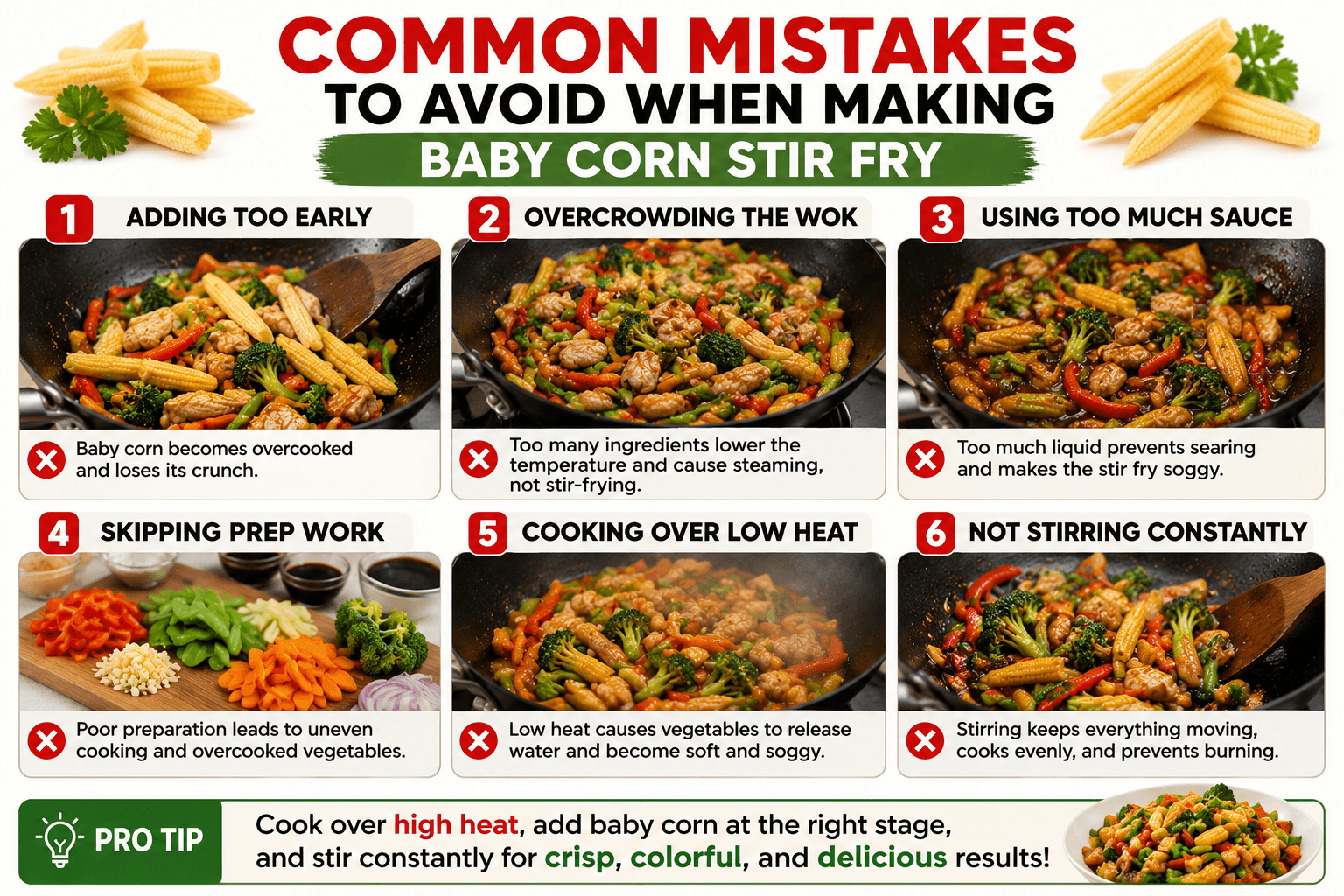
1. Adding Baby Corn Too Early
Baby corn cooks much faster than dense vegetables like carrots or broccoli stems. If you add it at the beginning of the cooking process, it may become overly soft and lose its pleasant crunch.
Instead, add baby corn after firm vegetables have partially cooked but before delicate vegetables such as spinach or bok choy.
2. Overcrowding the Wok
Adding too many ingredients at once lowers the temperature of the wok. Instead of stir-frying, the vegetables begin to steam, resulting in excess moisture and a softer texture.
Warning: Cook large batches in two rounds if necessary. A hot wok is one of the biggest secrets to achieving restaurant-style baby corn stir fry.
3. Using Too Much Sauce
It’s tempting to add extra sauce, but too much liquid prevents vegetables from searing properly. Baby corn should be lightly coated—not swimming in sauce.
Start with a small amount of sauce and add more only if needed after tossing all the ingredients together.
4. Skipping the Prep Work
Stir frying happens quickly. If your vegetables aren’t washed, cut, and ready before you start cooking, some ingredients may overcook while you’re still preparing the others.
Professional chefs call this mise en place, meaning everything is prepared before the heat is turned on.
5. Cooking Over Low Heat
Low heat causes vegetables to release moisture slowly, leading to soggy results. High heat creates quick searing while preserving the crisp texture that makes stir fry so enjoyable.
Kitchen Secret: Allow your wok to heat for a minute or two before adding oil. A properly heated wok helps prevent sticking and gives vegetables a light sear without overcooking them.
Can You Meal Prep Baby Corn Stir Fry?
Yes. A baby corn stir fry is an excellent option for meal prep because baby corn keeps its texture better than many other vegetables. While leafy greens can become soft after refrigeration, baby corn remains pleasantly firm when stored correctly.
For the best results, slightly undercook the vegetables if you know you’ll be reheating them later. This helps maintain their texture after warming.
Meal Prep Tips
- Cool the stir fry before storing.
- Divide into individual meal prep containers.
- Store sauce separately if possible.
- Reheat quickly over medium-high heat instead of prolonged microwaving.
- Add fresh herbs or green onions after reheating for a fresher taste.
Meal prepping also makes it easier to enjoy healthy lunches throughout the week without sacrificing flavor or texture.
Tip: If you’re preparing several stir fry recipes for the week, cook the vegetables until they’re just crisp-tender. They’ll finish cooking when reheated, preventing them from becoming overly soft.
If you’re looking for healthy meal ideas, our Healthy Chicken Stir Fry offers a balanced combination of lean protein and colorful vegetables that pairs perfectly with baby corn.
Fresh vs. Frozen Vegetables in Baby Corn Stir Fry
Many home cooks wonder whether fresh or frozen vegetables produce a better baby corn stir fry. The answer depends on convenience, seasonality, and personal preference.
Fresh vegetables generally deliver the brightest flavors and crispest textures, while frozen vegetables offer excellent convenience and are available year-round. Both can produce delicious results when cooked over high heat without overcrowding the wok.
For a detailed comparison, visit our guide on Fresh vs. Frozen Vegetables for Stir Fry, where we explain the pros, cons, and best uses for each option.
How to Store and Reheat Baby Corn Stir Fry
One of the great advantages of baby corn stir fry is that leftovers store well when handled properly. Because baby corn retains its texture better than many vegetables, your stir fry can still taste fresh the next day with the right storage methods.
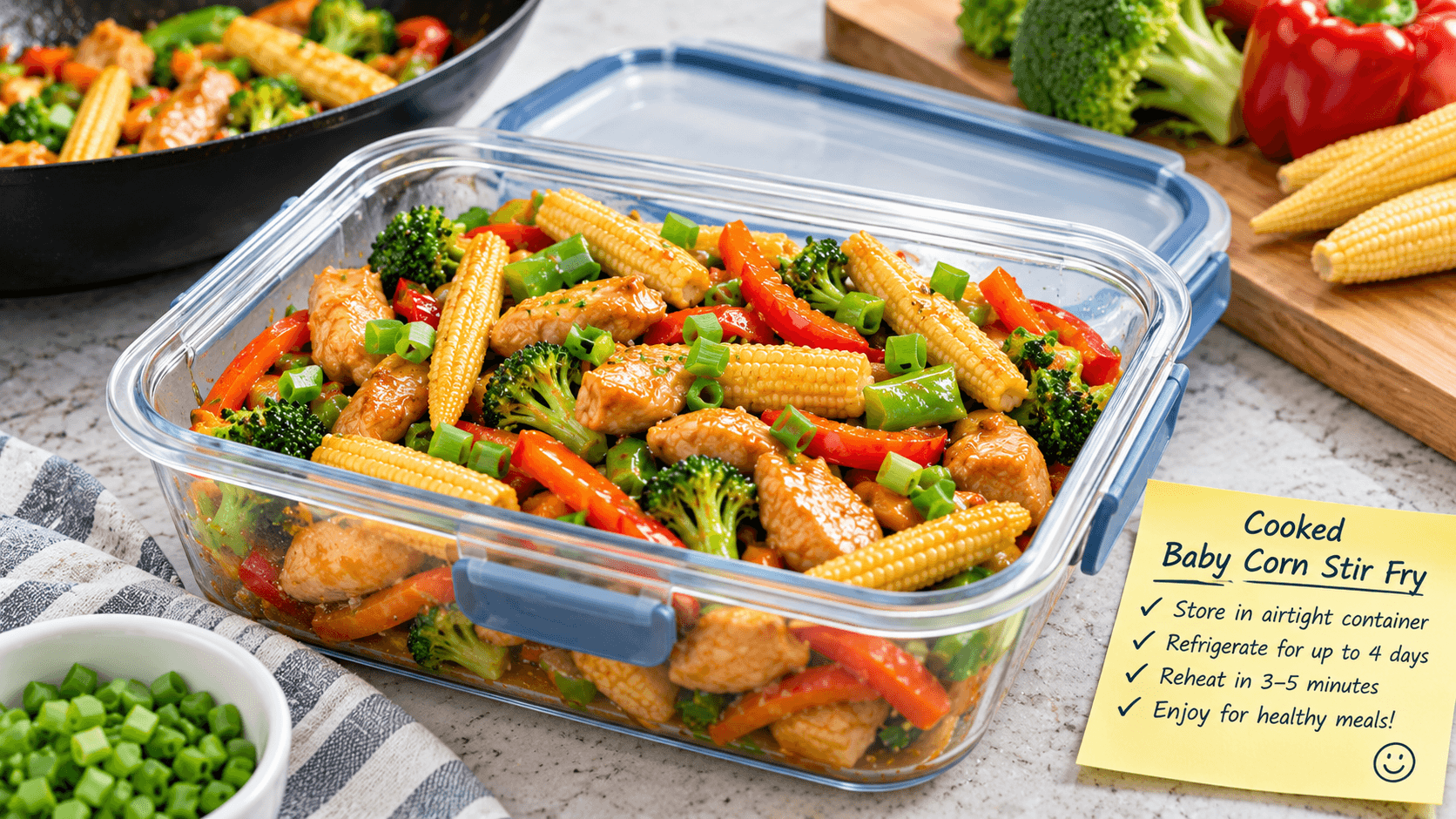
To maintain the best flavor and texture, allow the stir fry to cool for about 20 to 30 minutes after cooking. Once cooled, transfer it to an airtight container and refrigerate promptly. Avoid leaving cooked food at room temperature for more than two hours.
Storage: Refrigerate baby corn stir fry in an airtight container for up to 4 days. For the best quality, consume leftovers within the first 2–3 days.
Can You Freeze Baby Corn Stir Fry?
Yes, although freezing may slightly soften some vegetables after thawing. Baby corn freezes relatively well compared to leafy greens because it has a naturally firm texture.
- Cool the stir fry completely.
- Store it in freezer-safe containers or freezer bags.
- Remove as much air as possible before sealing.
- Freeze for up to 2 months for the best quality.
When ready to eat, thaw overnight in the refrigerator before reheating.
Best Ways to Reheat
The reheating method can make a noticeable difference in texture.
| Method | Time | Best For |
|---|---|---|
| Wok or Skillet | 3–5 minutes | Best texture and flavor |
| Microwave | 1–2 minutes | Quick meals |
| Air Fryer | 3–4 minutes | Lightly crisp vegetables |
Reheating over medium-high heat in a skillet or wok is usually the best option because it quickly warms the vegetables without making them soggy.
Tip: Add a teaspoon of water or a splash of stir fry sauce while reheating if the vegetables seem dry. This helps restore moisture without overcooking the baby corn.
Expert Tips for the Best Baby Corn Stir Fry
If you want restaurant-quality results every time, keep these expert techniques in mind. Small adjustments can make a big difference in the final texture, flavor, and appearance of your baby corn stir fry.
- Use a wok or large skillet that heats evenly.
- Cook over high heat whenever possible.
- Prepare every ingredient before turning on the stove.
- Cut vegetables into similar-sized pieces.
- Don’t overcrowd the pan.
- Add sauce near the end of cooking.
- Serve immediately while vegetables are still crisp.
- Garnish with sesame seeds or sliced green onions for extra flavor.
Kitchen Secret: A small drizzle of toasted sesame oil after cooking—not during cooking—adds a rich aroma without burning the oil or overpowering the vegetables.
Baby corn is also incredibly versatile. It pairs beautifully with garlic, fresh ginger, onions, mushrooms, broccoli, bell peppers, carrots, snap peas, snow peas, water chestnuts, and a wide variety of proteins.
If you’re looking for additional recipe inspiration, these Smart Kitchen Home recipes all work wonderfully with baby corn:
As you become more comfortable making baby corn stir fry, you’ll find it’s one of the easiest vegetables to customize. Whether you’re preparing a quick weeknight dinner or meal prepping for the week ahead, baby corn adds color, crunch, and mild sweetness that complements almost any stir fry combination.
Frequently Asked Questions
Can you eat baby corn straight from the can?
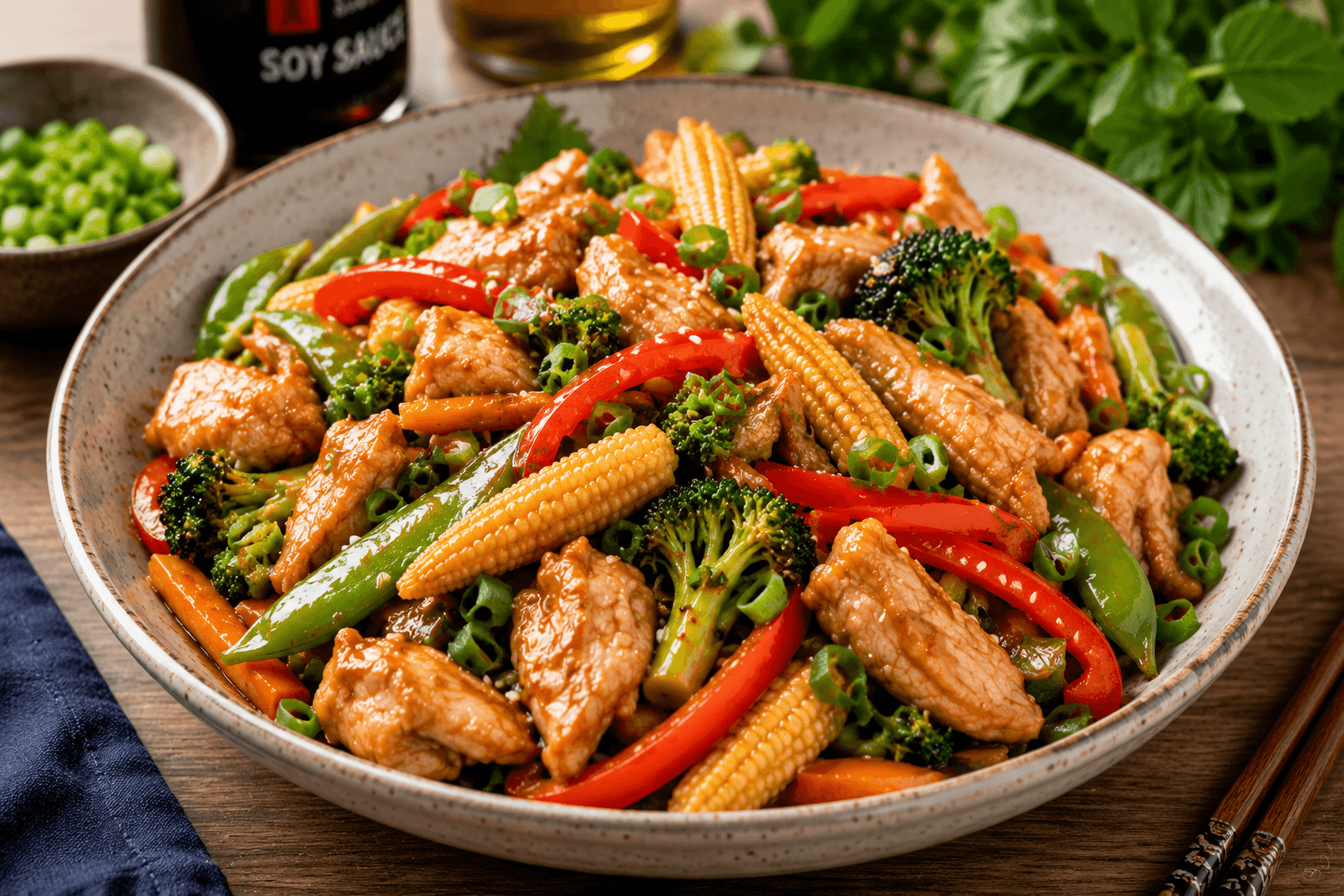
Yes. Canned baby corn is already cooked during processing, so it is safe to eat without additional cooking. However, for the best baby corn stir fry, rinse and drain it first, then heat it in the wok for about 2 minutes to improve its flavor and texture.
Do I need to boil baby corn before stir frying?
No. Fresh baby corn cooks quickly over high heat and does not need to be boiled first. Simply wash it, trim the ends if necessary, and add it directly to your stir fry.
How long should baby corn cook in a stir fry?
Fresh baby corn usually needs 3–4 minutes, canned baby corn about 2 minutes, and frozen baby corn approximately 3–5 minutes. The goal is to keep it crisp-tender rather than soft.
What vegetables go well with baby corn?
Baby corn pairs well with broccoli, carrots, bell peppers, mushrooms, snow peas, snap peas, bok choy, onions, water chestnuts, and zucchini. These vegetables create a colorful and balanced stir fry with a variety of textures.
Can I use baby corn in chicken stir fry?
Absolutely. Baby corn stir fry is one of the best additions to chicken stir fry because it stays crisp while absorbing the flavors of the sauce. It also complements lean chicken breast and chicken thighs equally well.
Can I make baby corn stir fry ahead of time?
Yes. Store cooked baby corn stir fry in an airtight container in the refrigerator for up to 4 days. Reheat it quickly in a hot skillet or wok to help preserve its texture.
Final Thoughts
Learning how to use baby corn in stir fry is an easy way to elevate your homemade meals. Baby corn cooks quickly, adds a satisfying crunch, and works beautifully with a wide range of vegetables, proteins, and stir fry sauces. Whether you choose fresh, canned, or frozen baby corn, proper preparation and timing will help you achieve crisp-tender results every time.
Remember to cook over high heat, avoid overcrowding the wok, and add baby corn at the right stage of cooking. These simple techniques ensure that your baby corn stir fry remains colorful, flavorful, and perfectly textured. With the tips in this guide, you’ll be able to prepare delicious restaurant-quality stir fries with confidence.
🍽️ You Might Also Like



📧 Save This Recipe For Later
Enter your email and we will send this recipe directly to your inbox.