
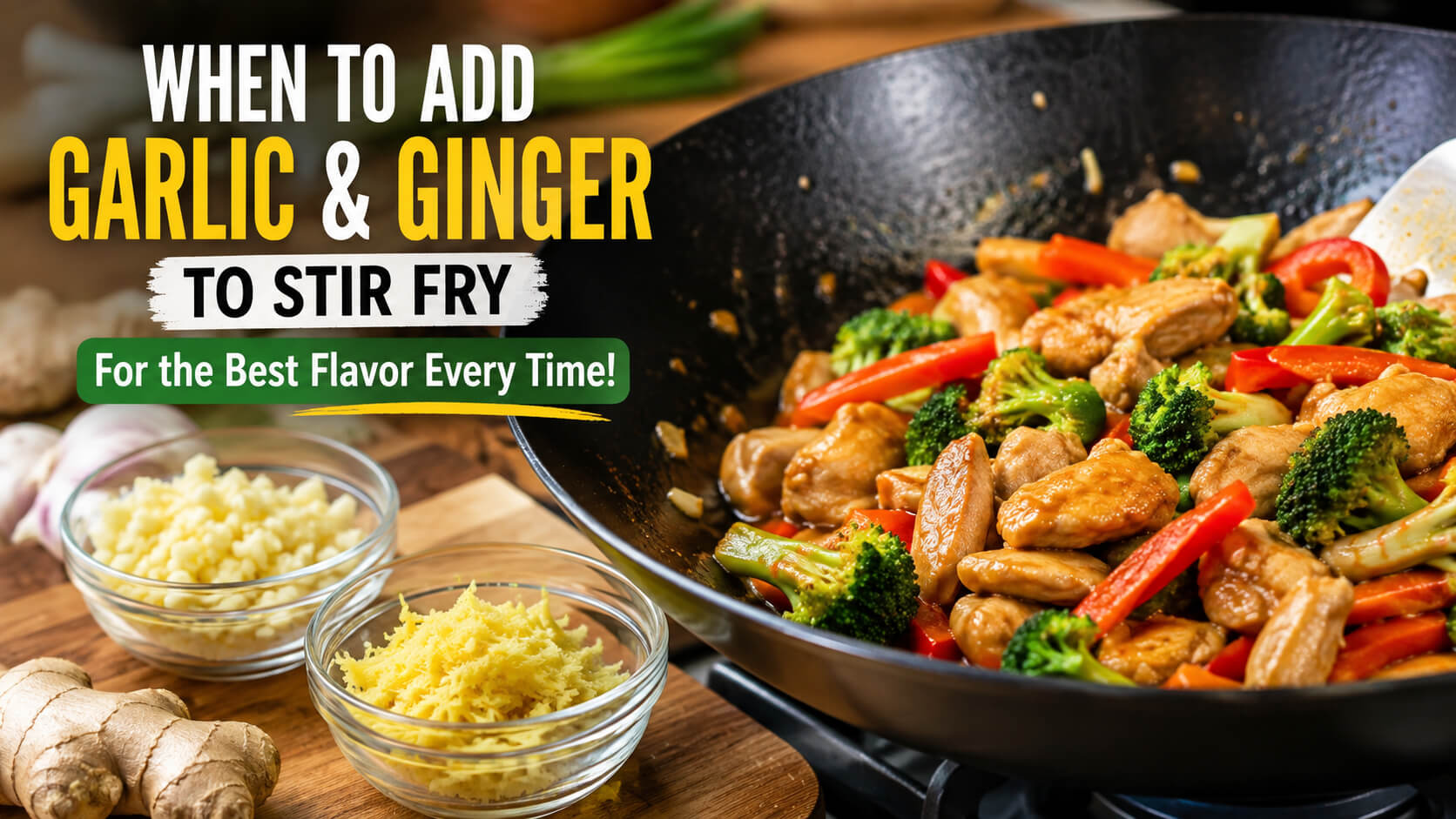
When to Add Garlic and Ginger to Stir Fry
When to Add Garlic and Ginger to Stir Fry
Garlic and ginger are two of the most important ingredients in a great stir fry. They create the savory aroma, fresh flavor, and restaurant-quality taste that make every bite more enjoyable. However, knowing when to add garlic and ginger can make the difference between a perfectly balanced stir fry and one that tastes bitter, burnt, or flat.
Many home cooks add garlic and ginger too early while the wok is extremely hot. Since both ingredients cook very quickly, they can burn within seconds, leaving an unpleasant taste that affects the entire dish. Others add them too late, preventing their flavors from fully infusing the oil and coating the chicken and vegetables.
If you’ve ever wondered when to add garlic and ginger during stir frying, this guide explains the best timing, why it matters, and how to avoid common mistakes. You’ll also learn how professional cooks build layers of flavor using these simple aromatics.
Quick Answer
When to add garlic and ginger to stir fry? Add garlic and ginger after cooking the protein and before adding quick-cooking vegetables or sauce. Reduce the heat slightly, stir them in for about 20–30 seconds until fragrant, then immediately add the next ingredients. This releases their natural oils without burning them, creating a richer and more balanced stir fry.
Table of Contents
Why Timing Matters
The biggest reason timing matters is that garlic and ginger cook much faster than chicken or vegetables. Their small size and natural sugars mean they can go from perfectly fragrant to burnt in less than a minute. Burnt garlic creates a bitter taste, while burnt ginger loses much of its fresh, slightly spicy flavor.
Adding them at the right moment allows their natural oils to infuse into the hot cooking oil. Those flavored oils then coat every piece of chicken and every vegetable, giving the entire dish a deeper, richer taste.
Professional stir fry cooks rarely begin by tossing garlic and ginger into a smoking-hot empty wok. Instead, they carefully control the heat and cooking sequence so the aromatics release their flavor without scorching.
Tip: If your garlic becomes dark brown instead of light golden, it has likely burned. It’s better to start over than continue with bitter garlic.
Timing also depends on the ingredients you’re using. Dense vegetables such as carrots or broccoli require more cooking time than snow peas or spinach. By adding garlic and ginger just before the vegetables that cook quickly, you maximize their aroma while protecting them from excessive heat.
Another benefit of proper timing is improved texture. Fresh garlic should soften slightly while still retaining its aroma. Fresh ginger should become fragrant without turning fibrous or dry. Together, they create the signature flavor found in many Asian-inspired stir fries.
If you’re preparing recipes like Garlic Chicken Stir Fry or Ginger Garlic Chicken Stir Fry, mastering this simple technique can noticeably improve the final result.
The Best Time to Add Garlic and Ginger to Stir Fry
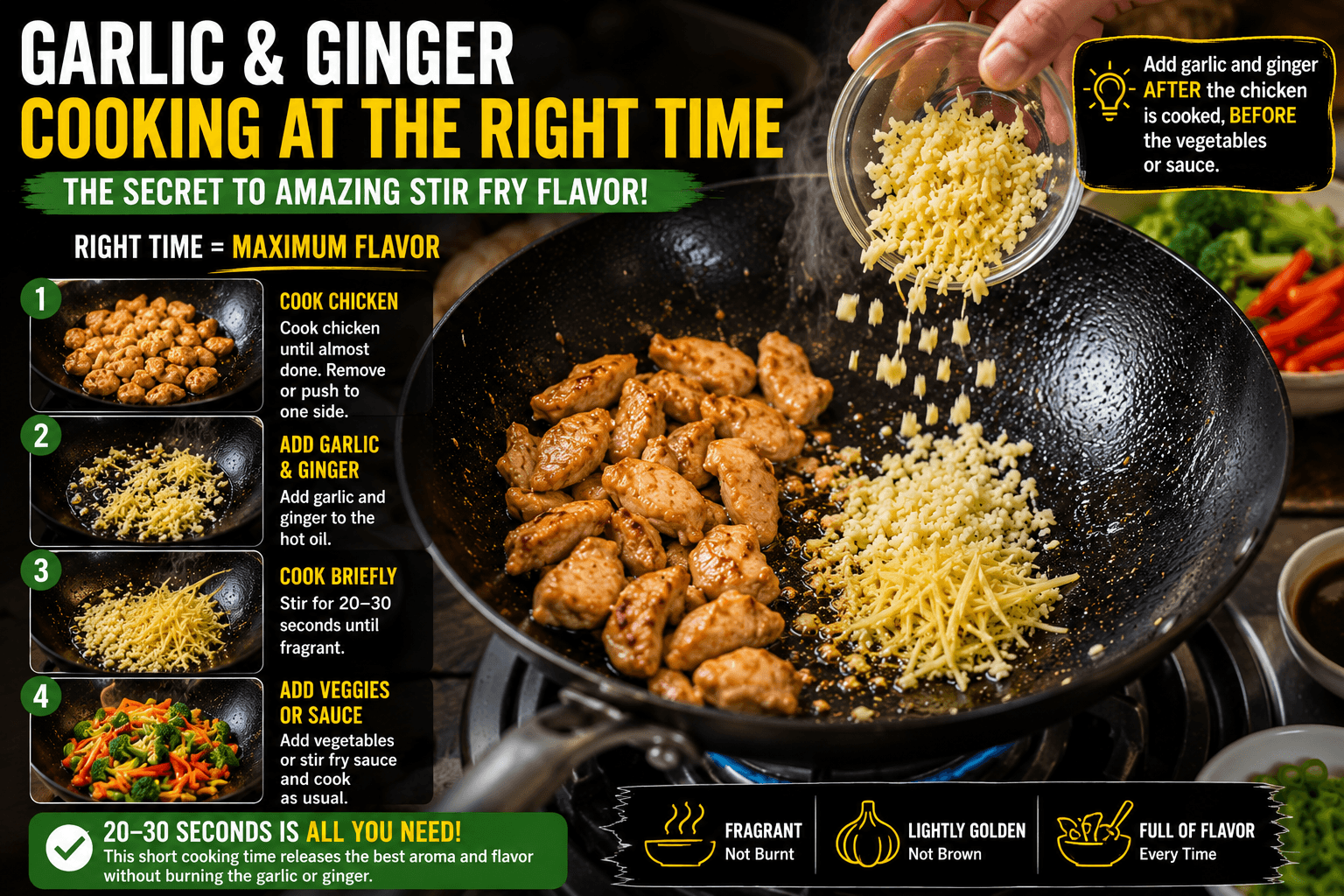
The best answer to when to add garlic and ginger is after the protein has mostly finished cooking and just before adding the faster-cooking vegetables or the stir fry sauce. This timing allows both aromatics to release their essential oils into the hot cooking oil without sitting over high heat long enough to burn.
A common restaurant technique is to cook the chicken first until it is about 90% done, remove it from the wok, then briefly cook the garlic and ginger before returning the chicken. This method keeps the aromatics fresh while allowing them to flavor the entire dish.
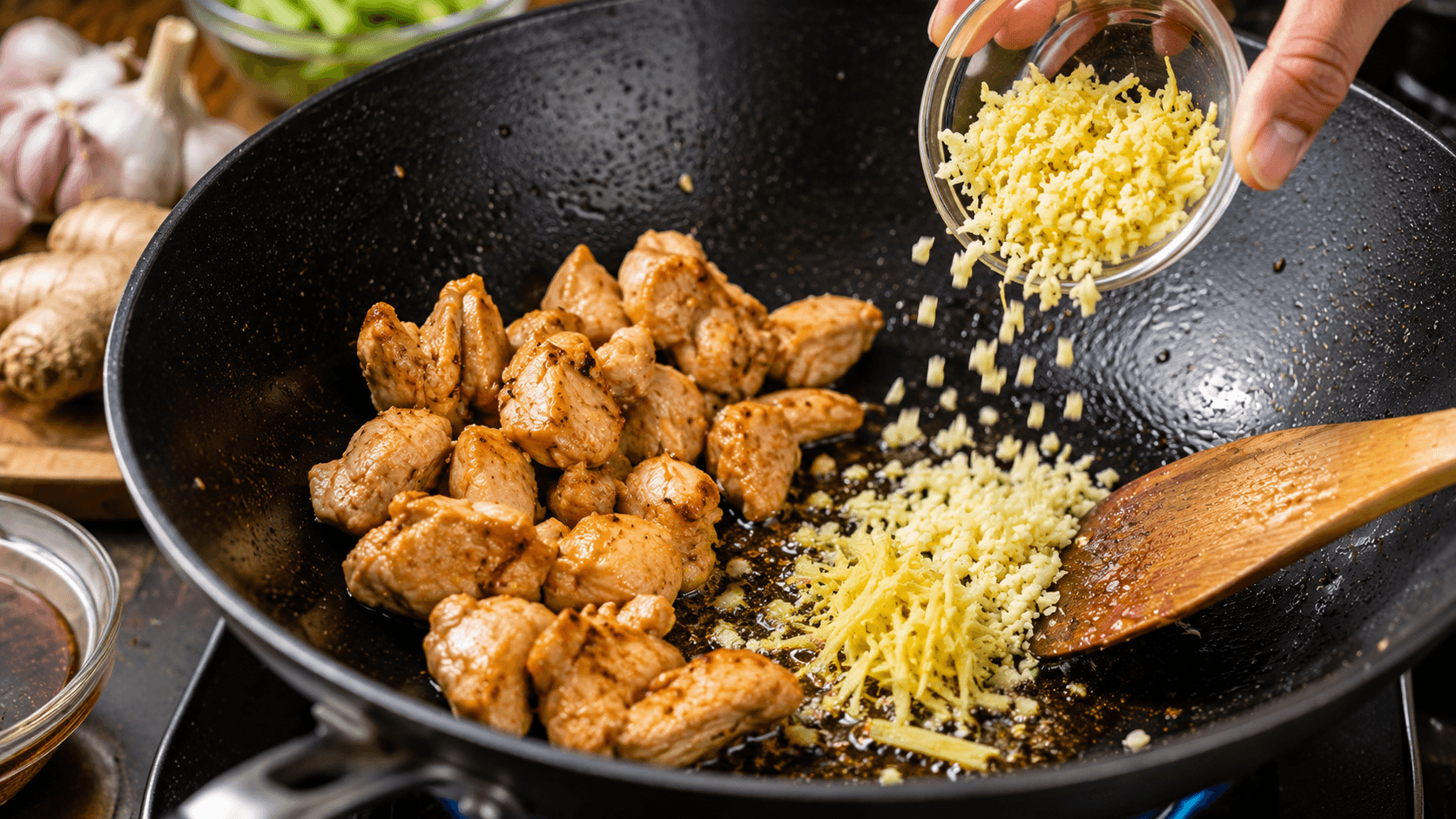
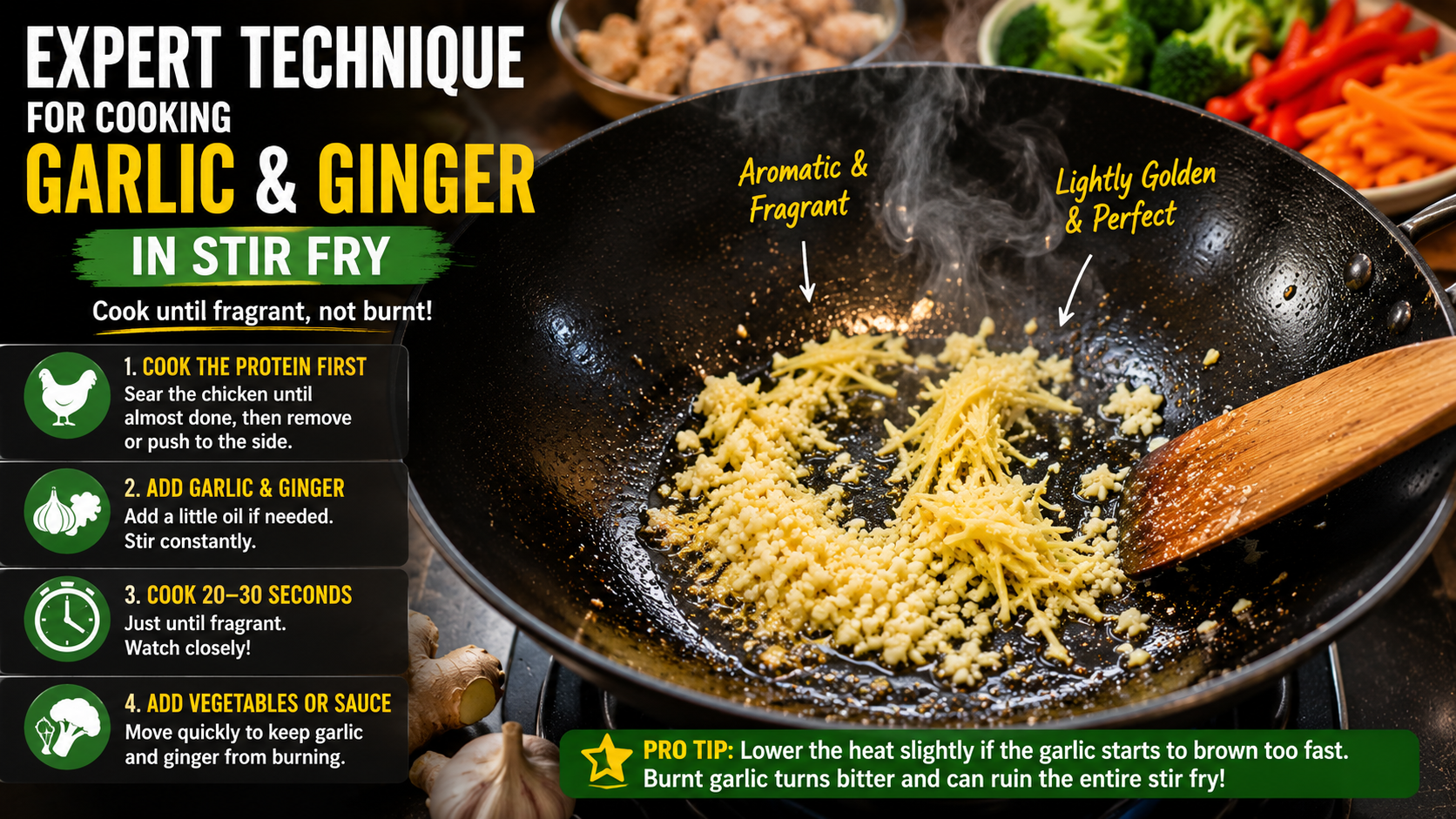
If you’re cooking everything in one pan without removing the chicken, simply push the chicken to one side of the wok. Add a small splash of oil to the empty space, then stir in the minced garlic and ginger for about 20 to 30 seconds before mixing everything together.
Kitchen Secret: Professional chefs often lower the heat slightly before adding garlic and ginger. A slightly lower temperature gives the aromatics enough time to become fragrant without burning, especially when using a carbon steel wok.
Fresh garlic usually cooks a little faster than fresh ginger. Because of this, many cooks add them together only if they are both finely minced. If your ginger pieces are larger than your garlic, add the ginger about 10 seconds earlier to help soften its fibers.
Remember that garlic continues cooking even after additional ingredients are added. As soon as you smell its sweet aroma, it’s time to move on to the next step rather than waiting for it to brown deeply.
| Ingredient | Ideal Cooking Time | Goal |
|---|---|---|
| Fresh Garlic | 20–30 seconds | Fragrant, lightly golden |
| Fresh Ginger | 20–40 seconds | Aromatic and slightly softened |
| Garlic + Ginger Together | 20–30 seconds | Release flavor before vegetables or sauce |
Recipes such as Chicken Stir Fry and Chicken Broccoli Stir Fry benefit greatly from this timing because both rely on balanced garlic and ginger flavor rather than overpowering spices.
The Correct Order to Add Ingredients in a Stir Fry
One reason home stir fries don’t taste like restaurant versions is the cooking order. Every ingredient has a different cooking time, and following the proper sequence helps preserve texture, color, and flavor.
A basic stir fry follows this order:
- Heat the wok until hot.
- Add cooking oil.
- Cook the chicken or other protein.
- Add garlic and ginger.
- Add firm vegetables.
- Add tender vegetables.
- Pour in the stir fry sauce.
- Return cooked chicken if removed earlier.
- Toss everything together until coated.
- Serve immediately.
This sequence ensures every ingredient cooks only as long as necessary. Garlic and ginger become fragrant, vegetables stay crisp-tender, and the sauce thickens evenly instead of becoming watery.
Tip: Prepare every ingredient before turning on the stove. Stir frying happens quickly, and stopping to chop garlic while food cooks often leads to burned ingredients.
If you’re unsure about vegetable timing, our guide on the correct order to add vegetables to stir fry explains exactly when each type of vegetable should go into the wok.
Likewise, pairing properly timed aromatics with a flavorful homemade sauce creates much better results than adding bottled sauce alone. If you make your own sauce, see our guide to Easy Homemade Stir Fry Sauce for the best flavor combinations.
Common Mistakes When Adding Garlic and Ginger
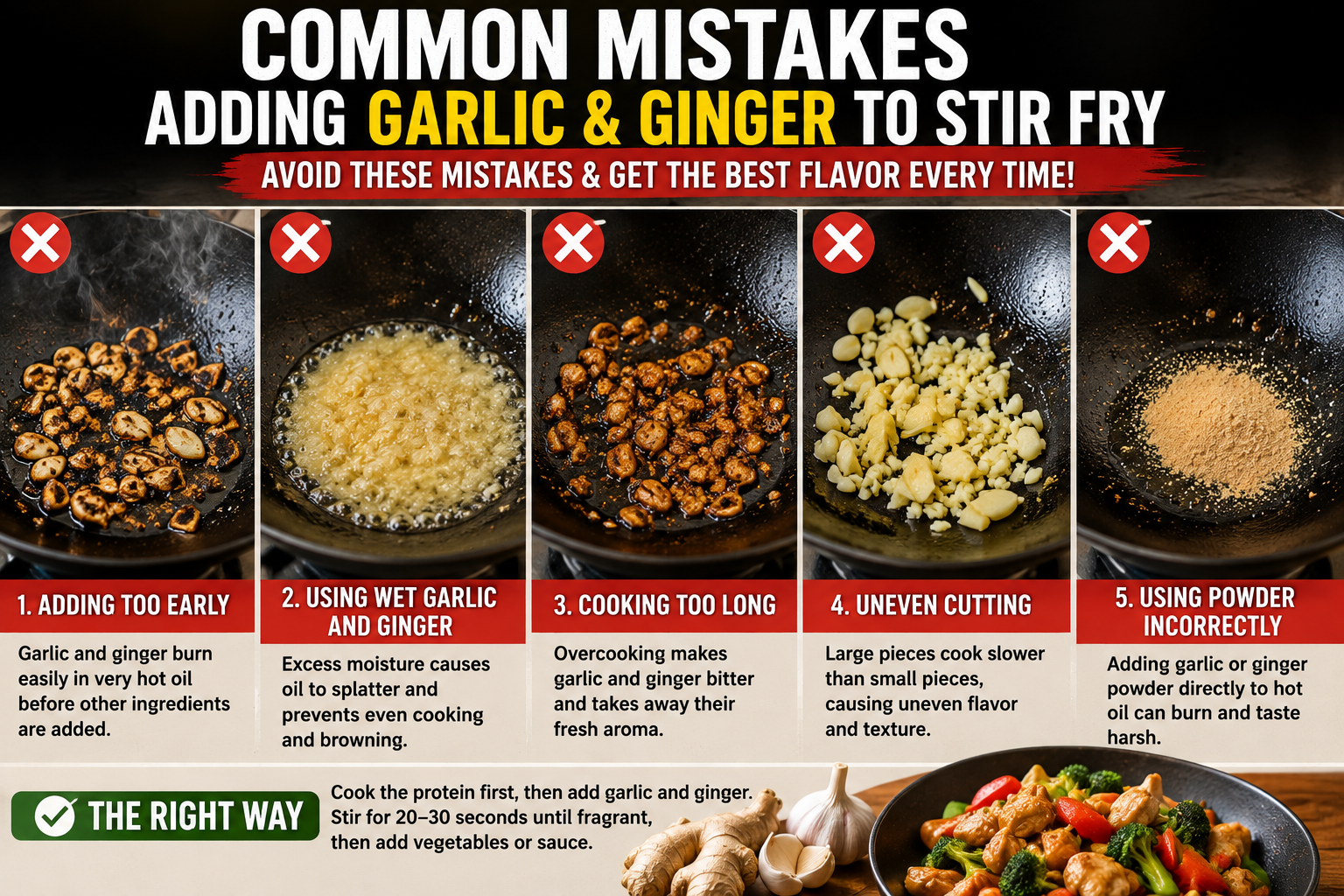
Even experienced home cooks can make small mistakes that affect the flavor of a stir fry. Since garlic and ginger cook so quickly, the timing has to be right. Understanding these common mistakes will help you consistently produce a stir fry with fresh, balanced flavor.
If you’ve been wondering when to add garlic and ginger, avoiding the following mistakes is just as important as learning the correct technique.
Adding Garlic Too Early
The most common mistake is adding garlic to extremely hot oil before anything else. Garlic contains natural sugars that brown very quickly. In a hot wok, finely minced garlic can burn in less than 20 seconds, creating a bitter flavor that spreads throughout the dish.
Instead, cook the chicken first or slightly reduce the heat before adding garlic. This allows it to become fragrant without scorching.
Using Wet Garlic and Ginger
Freshly washed garlic or ginger with excess moisture can cause the hot oil to splatter. Pat them dry before mincing or grating. Dry aromatics also brown more evenly and develop better flavor.
Warning: Never add large amounts of wet garlic or ginger directly into smoking-hot oil. The sudden steam can cause dangerous splattering and uneven cooking.
Cooking Them for Too Long
Garlic and ginger are flavor builders, not main ingredients. Once they become fragrant, it’s time to add the next ingredients. Leaving them alone in the wok for another minute often results in burnt edges and a harsh taste.
Cutting Garlic into Uneven Pieces
Large chunks cook much slower than tiny minced pieces. If some pieces are large while others are finely chopped, the small pieces burn before the larger ones soften.
Learning how to mince garlic for stir fry helps ensure even cooking and better flavor distribution.
Using Powder Instead of Fresh Without Adjusting Timing
Garlic powder and ground ginger behave differently from fresh ingredients. They dissolve into sauces rather than releasing oils into hot cooking oil.
If using dried versions, mix them into your stir fry sauce instead of adding them directly to the wok. Our comparison guides on Fresh Garlic vs. Garlic Powder for Stir Fry and Fresh Ginger vs. Powder for Stir Fry explain when each option works best.
How Garlic and Ginger Improve Stir Fry Flavor
Garlic and ginger do much more than add aroma. Together, they create the flavor foundation found in countless restaurant-quality stir fries.
Garlic contributes a rich, savory sweetness once lightly cooked. Ginger adds brightness with a mild peppery warmth that balances salty sauces and rich proteins.
When added at the correct time, these ingredients infuse the cooking oil with flavor. As the chicken and vegetables continue cooking, they absorb that seasoned oil, resulting in a much deeper and more balanced taste.
| Ingredient | Main Flavor | Best Use |
|---|---|---|
| Fresh Garlic | Savory, slightly sweet | Creates a rich flavor base |
| Fresh Ginger | Fresh, warm, slightly spicy | Adds brightness and aroma |
| Garlic + Ginger | Balanced, complex, aromatic | Classic restaurant-style stir fry flavor |
This combination works especially well with recipes like Honey Garlic Chicken Stir Fry, Chicken Bell Pepper Stir Fry, and Spicy Chicken Stir Fry, where bold aromatics are an important part of the final dish.
Kitchen Secret: Restaurant chefs often grate ginger very finely so it melts into the sauce, while garlic is minced slightly larger to provide tiny bursts of flavor throughout the stir fry.
Expert Tips for Perfect Garlic and Ginger Every Time
Learning when to add garlic and ginger is only part of making an excellent stir fry. Small techniques used by experienced cooks can make these simple ingredients taste even better while preventing common problems like burning or uneven cooking.
Prepare Everything Before Heating the Wok
Stir frying is one of the fastest cooking methods. Once the wok is hot, every ingredient needs to be ready to go. Mince the garlic, grate or finely chop the ginger, prepare the vegetables, mix the sauce, and slice the chicken before turning on the stove.
This preparation, often called mise en place, allows you to focus on cooking instead of rushing to chop ingredients while garlic is burning.
Tip: Place garlic and ginger together in one small bowl so you can add them at exactly the same time.
Use Fresh Ingredients Whenever Possible
Fresh garlic and fresh ginger produce brighter flavors than dried alternatives. Fresh aromatics release natural oils as they cook, giving the stir fry a richer aroma and a cleaner taste.
If fresh ginger isn’t available, frozen grated ginger is usually a better substitute than powdered ginger because it retains much of its natural flavor.
Watch the Aroma Instead of the Clock
Although garlic typically cooks in about 20 to 30 seconds, the best indicator is your sense of smell. As soon as the garlic becomes fragrant and the ginger smells warm and spicy, it’s time to add the vegetables or sauce.
If you wait until the garlic turns dark brown, you’ve likely waited too long.
Adjust the Heat as Needed
A very hot wok is excellent for searing chicken, but it may be too hot for delicate aromatics. After cooking the protein, lowering the heat slightly for a few seconds can give garlic and ginger enough time to cook properly without scorching.
Don’t Overload the Pan
Too many ingredients lower the wok’s temperature, causing garlic and ginger to steam instead of lightly frying. Cooking in smaller batches allows the aromatics to release their flavor more effectively.
Kitchen Secret: Many professional chefs briefly move the wok off the burner while stirring garlic and ginger. The remaining heat is often enough to cook them perfectly without burning.
How Different Types of Garlic and Ginger Affect Cooking Time
Not every form of garlic or ginger behaves the same way. The size of the pieces and whether they’re fresh, frozen, or dried can change the ideal cooking method.
| Type | Best Time to Add | Notes |
|---|---|---|
| Fresh minced garlic | After protein | Most flavorful option |
| Fresh grated ginger | With garlic | Blends smoothly into the sauce |
| Frozen garlic | After protein | Cook a few seconds longer |
| Frozen ginger | After protein | Excellent substitute for fresh |
| Garlic powder | Mixed into sauce | Avoid adding directly to hot oil |
| Ground ginger | Mixed into sauce | Works best in sauce-based recipes |
If you’re using powdered seasonings because fresh ingredients aren’t available, stir them into the sauce before adding it to the wok. This distributes the flavor evenly and prevents the powders from burning.
Fresh aromatics remain the preferred choice for recipes where garlic and ginger are the main flavor components, especially dishes like Ginger Garlic Chicken Stir Fry or Honey Garlic Chicken Stir Fry.
Warning: Jarred minced garlic often contains added preservatives and moisture. It can cook differently from fresh garlic and may not produce the same rich aroma.
How to Know Garlic and Ginger Are Perfectly Cooked
One of the easiest ways to improve your stir fry is learning to recognize when garlic and ginger are perfectly cooked. Instead of relying only on cooking time, use your senses. The appearance, aroma, and texture all indicate when it’s time to add the next ingredients.
If you’re wondering when to add garlic and ginger, it’s equally important to know when they’ve finished cooking. Waiting too long can quickly turn delicious aromatics into burnt, bitter pieces.
Look for a Light Golden Color
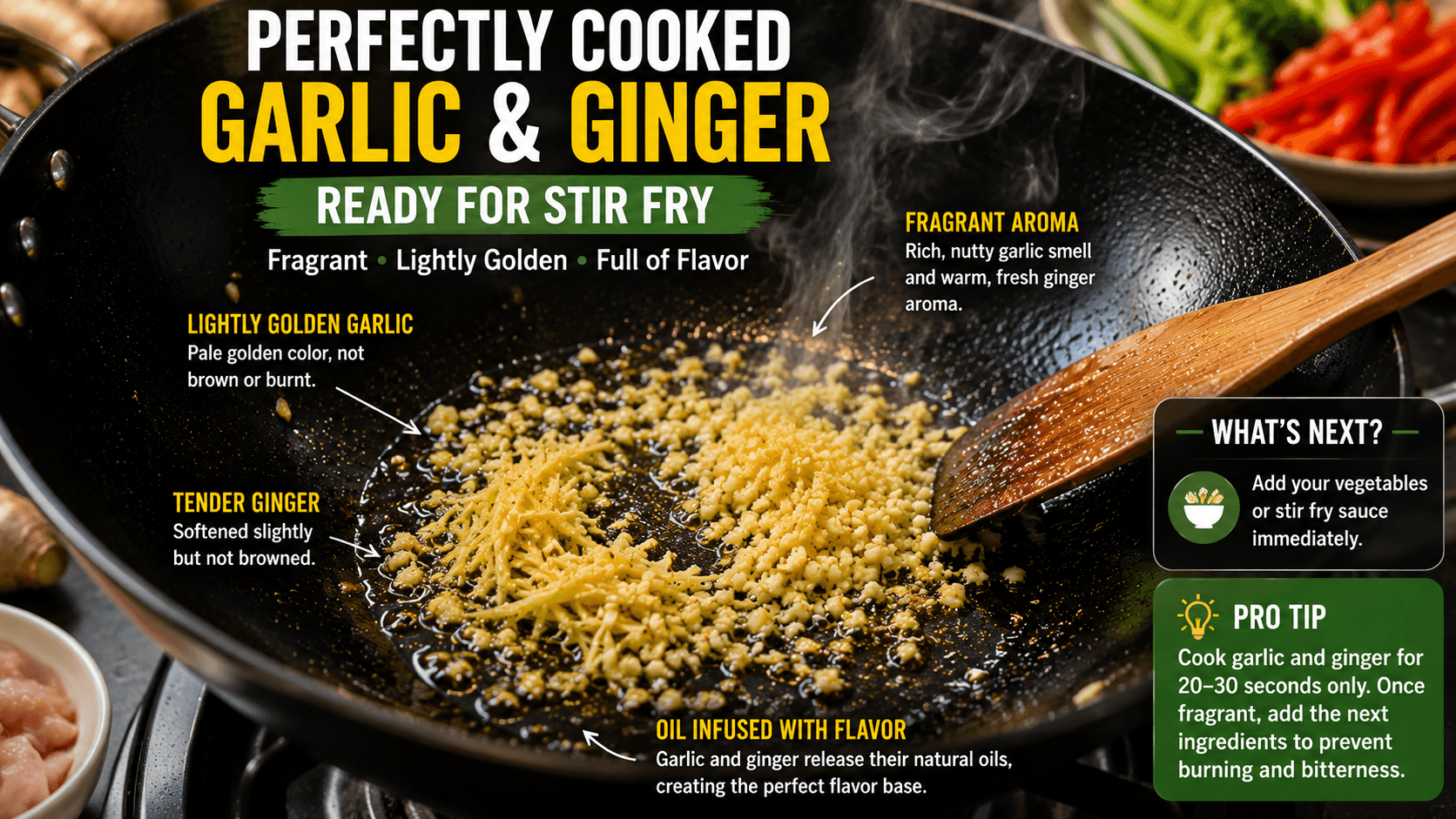
Fresh garlic should remain pale with only a slight golden tint around the edges. Deep golden brown or dark brown garlic has usually cooked too long and will contribute bitterness instead of sweetness.
Fresh ginger changes less in color than garlic. Instead, it becomes slightly softer while maintaining its light yellow appearance.
Pay Attention to the Aroma
The aroma is the best indicator. Properly cooked garlic smells rich, nutty, and slightly sweet. Ginger should smell warm, fresh, and mildly spicy. Once those aromas become noticeable, immediately continue with the vegetables or stir fry sauce.
Tip: If you notice a sharp, smoky smell instead of a pleasant aroma, the garlic is beginning to burn. Quickly add the next ingredients or reduce the heat.
The Oil Should Become Fragrant
Garlic and ginger don’t just season themselves—they flavor the cooking oil. As they cook, their natural oils are released into the wok, creating a flavorful base that coats every piece of chicken and every vegetable added afterward.
Storage Tips for Fresh Garlic and Ginger
Storage: Proper storage keeps garlic and ginger fresh longer and ensures they develop the best flavor in stir fries.
Fresh garlic should be stored in a cool, dry place with good airflow. Avoid refrigerating whole garlic bulbs because excess moisture can encourage sprouting or mold.
Fresh ginger keeps best in the refrigerator inside a loosely sealed bag or airtight container. For longer storage, peel and freeze whole pieces or grated portions for quick use in future stir fries.
If you regularly cook stir fries, preparing small portions of minced garlic and grated ginger in advance can save valuable time during busy weeknights. Freeze individual portions in an ice cube tray, then transfer them to a freezer-safe container.
| Ingredient | Storage Method | Approximate Shelf Life |
|---|---|---|
| Whole Garlic Bulbs | Cool, dry pantry | 3–5 months |
| Minced Garlic | Refrigerator | 2–3 days |
| Fresh Ginger Root | Refrigerator | 3–4 weeks |
| Frozen Ginger | Freezer | Up to 6 months |
Properly stored aromatics not only last longer but also deliver stronger flavor when you’re deciding when to add garlic and ginger during stir frying.
Kitchen Secret: Frozen ginger can be grated directly from the freezer without thawing, making meal preparation even faster while preserving much of its fresh flavor.
For recipes like Chicken Veggie Stir Fry and Chicken Stir Fry, having properly stored garlic and ginger ready to use makes weeknight cooking much easier and more consistent.
Final Thoughts
Knowing when to add garlic and ginger is one of the simplest ways to improve the flavor of any homemade stir fry. Although these ingredients may seem small, they create the aromatic foundation that gives stir fries their signature taste.
The ideal time to add garlic and ginger is after the chicken has nearly finished cooking and just before adding vegetables or stir fry sauce. Cooking them for only 20 to 30 seconds allows their natural oils to infuse the dish without becoming bitter.
By preparing your ingredients in advance, controlling the heat, and following the correct cooking order, you’ll consistently make stir fries that taste fresher, more balanced, and closer to restaurant quality.
Whether you’re preparing a quick weeknight dinner or experimenting with new stir fry recipes, mastering when to add garlic and ginger is a small technique that delivers a big improvement in flavor.
Frequently Asked Questions
Should garlic and ginger be added at the same time?
Yes. If both are finely minced or grated, they can usually be added together after the protein has cooked. They become fragrant within 20 to 30 seconds before vegetables or sauce are added.
Can I add garlic before cooking the chicken?
It’s generally not recommended because garlic burns very quickly in a hot wok. Cooking the chicken first helps protect the garlic from excessive heat.
How long should garlic cook in a stir fry?
Fresh minced garlic usually needs only 20 to 30 seconds. Once it becomes fragrant, immediately continue with the remaining ingredients.
Can I use garlic powder instead of fresh garlic?
Yes, but garlic powder works best when mixed into the stir fry sauce rather than added directly to hot oil.
Does ginger burn as quickly as garlic?
No. Fresh ginger is slightly more forgiving than garlic, but it can still overcook if left in the wok too long. Cooking both together for about 20 to 30 seconds works well for most stir fries.
Why does my garlic taste bitter?
Bitterness usually means the garlic has burned. Reduce the heat slightly and cook it only until fragrant before adding the next ingredients.
References
🍽️ You Might Also Like


📧 Save This Recipe For Later
Enter your email and we will send this recipe directly to your inbox.