
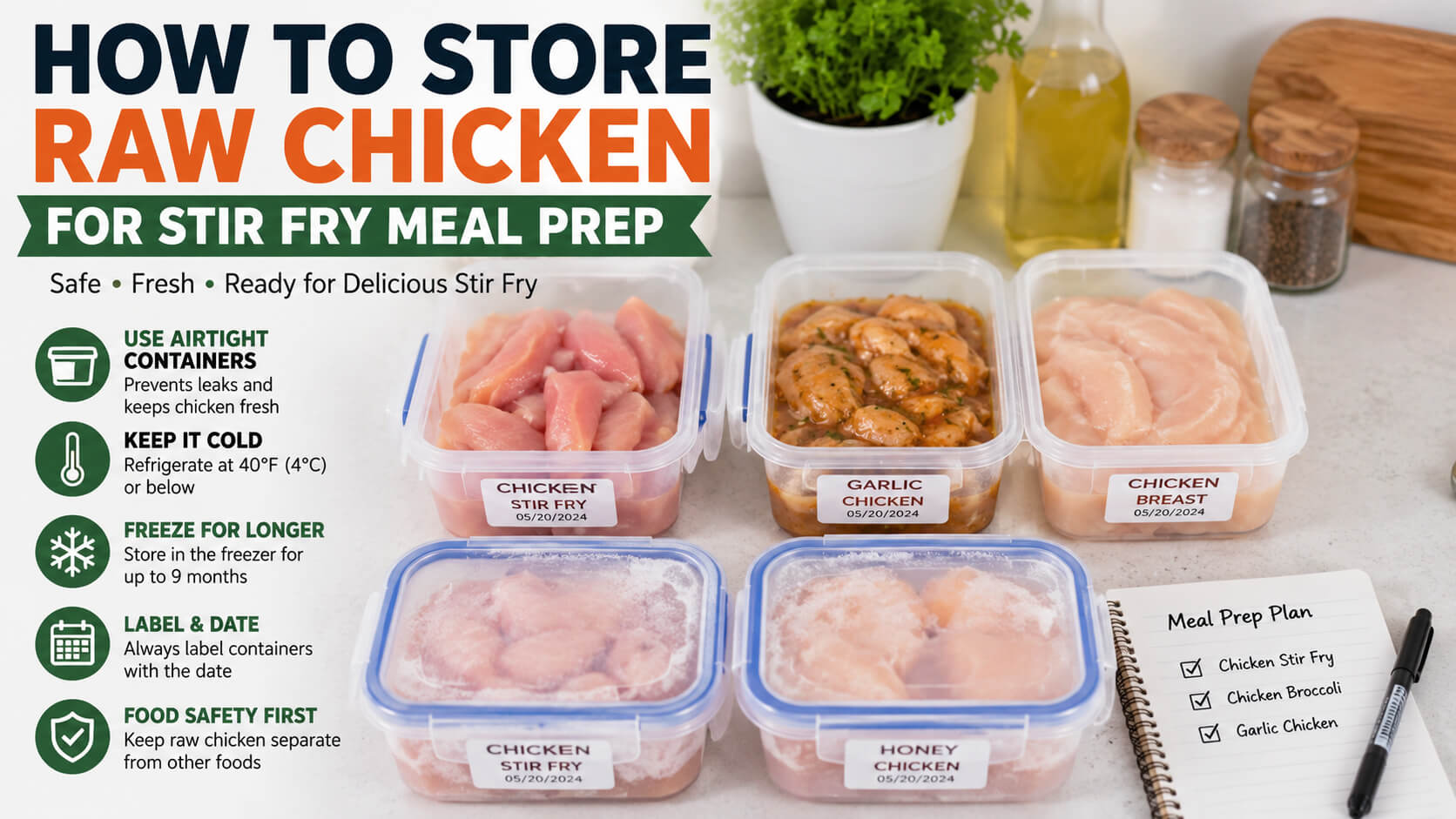
How to Store Raw Chicken for Stir Fry Meal Prep
How to Store Raw Chicken for Stir Fry Meal Prep
Learning how to store raw chicken meal prep correctly is one of the most important steps in preparing safe, flavorful, and convenient stir fry meals. Whether you’re slicing chicken for a busy weeknight dinner or preparing several meals ahead of time, proper storage helps maintain freshness, prevents cross-contamination, and reduces food waste.
Raw chicken is highly perishable, and even small storage mistakes can allow harmful bacteria to multiply quickly. Using the right containers, maintaining safe refrigerator temperatures, labeling your meal prep, and freezing portions correctly all play a major role in keeping your chicken safe until you’re ready to cook.
This guide explains exactly how to store raw chicken for stir fry meal prep, including refrigeration timelines, freezing methods, food safety tips, and common mistakes to avoid. By following these best practices, you’ll always have high-quality chicken ready for quick and delicious homemade stir fry meals.
Quick Answer
To store raw chicken meal prep safely, place freshly cut chicken into airtight containers or freezer-safe bags immediately after preparation. Keep refrigerated at or below 40°F (4°C) for up to 2 days, or freeze for up to 9 months for the best quality. Always label containers with the storage date, keep raw chicken separated from ready-to-eat foods, and thaw safely in the refrigerator before cooking.
Table of Contents
Why Proper Chicken Storage Matters
When preparing ingredients ahead of time, proper storage is just as important as choosing fresh chicken. Safe storage protects both the quality of your ingredients and the health of everyone eating your meals.
Chicken naturally contains moisture and protein that create an ideal environment for bacteria if it isn’t kept cold enough. Refrigerating or freezing chicken promptly slows bacterial growth and helps preserve its texture, flavor, and nutritional value.
Good storage practices also make meal prep easier. Portioning chicken in advance means you can quickly start cooking your favorite stir fry recipes without handling large packages every time you prepare dinner.
Tip: Divide chicken into recipe-sized portions before storing it. You’ll only thaw what you need, reducing waste and preventing repeated temperature changes that can affect quality.
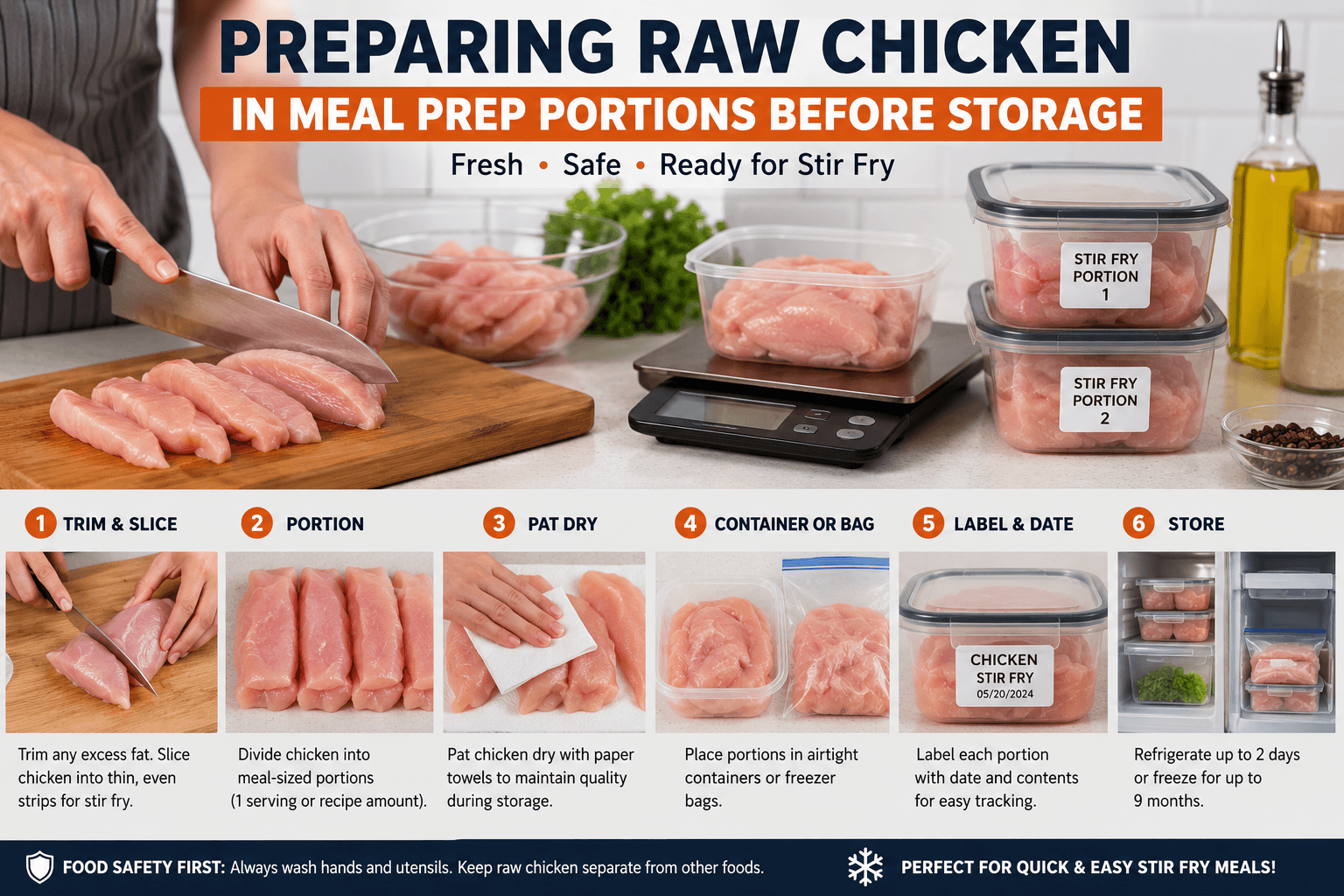
How to Prepare Chicken Before Storage
Preparing chicken properly before refrigerating or freezing makes future cooking faster and safer. Start by washing your hands and sanitizing your cutting board, knife, and work surface. Use a separate cutting board dedicated to raw meat whenever possible.
Trim away excess fat or connective tissue if desired, then slice the chicken into evenly sized strips for stir fry. Uniform pieces freeze more evenly, thaw faster, and cook consistently once you’re ready to prepare your meal.
Pat the chicken dry with paper towels before placing it into storage containers. Removing excess surface moisture helps minimize ice crystals during freezing and keeps the chicken from becoming watery later.
Food Safety: Never leave raw chicken at room temperature for more than two hours, or one hour if the surrounding temperature exceeds 90°F (32°C). Refrigerate or freeze prepared chicken immediately after portioning.
Following these simple preparation steps helps ensure your store raw chicken meal prep routine is both efficient and food-safe while giving you better stir fry results every time.
Choose the Best Containers for Raw Chicken Meal Prep
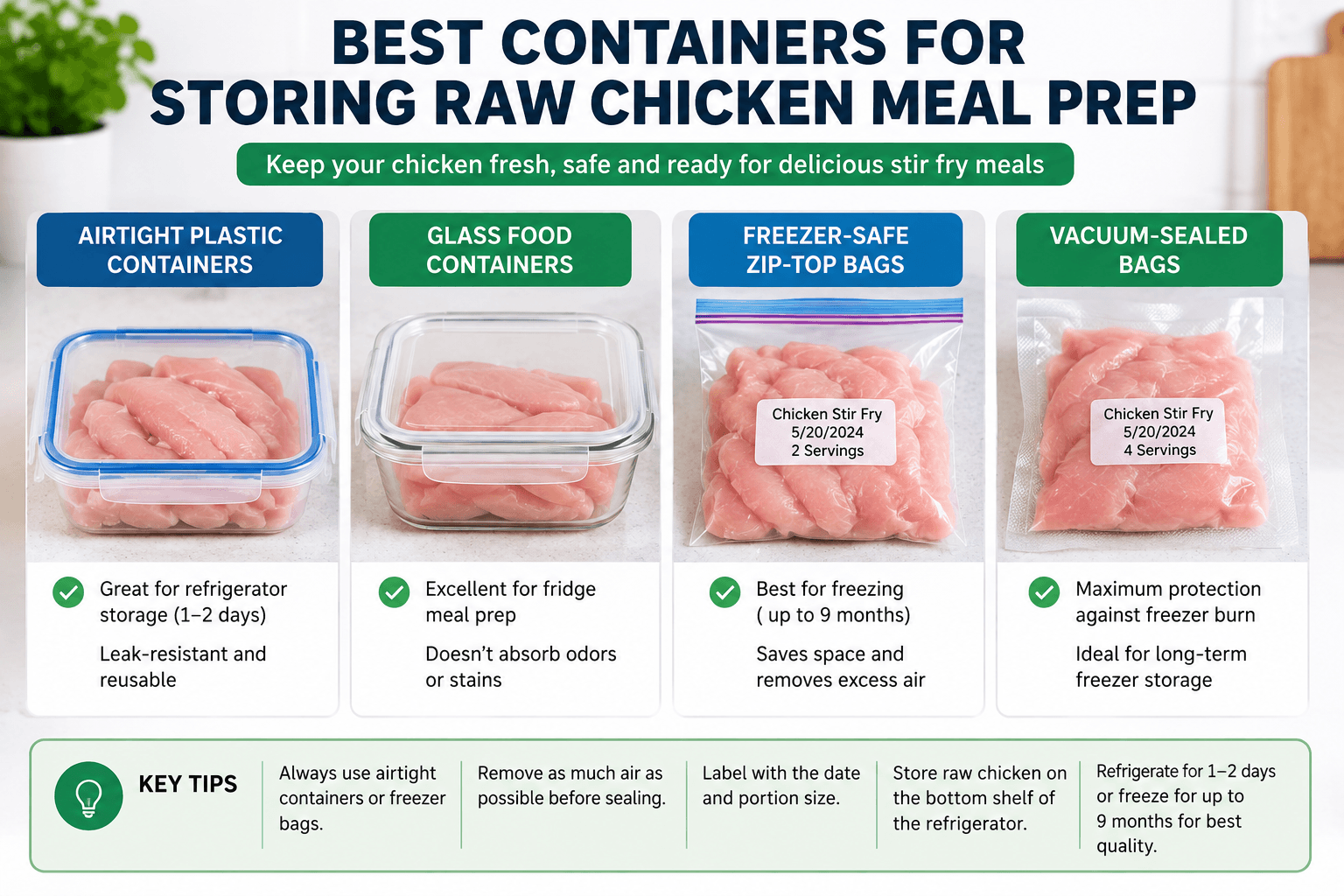
Selecting the right storage container is one of the easiest ways to store raw chicken meal prep safely while preserving freshness. The goal is to keep air, moisture, and bacteria away from the chicken until you’re ready to cook. A high-quality container also helps prevent leaks that could contaminate other foods in your refrigerator.
The best choice depends on how soon you plan to use the chicken. For meal prep within a day or two, airtight food-storage containers work well. If you’re freezing chicken for future stir fry recipes, freezer-safe bags usually save space and reduce freezer burn.
| Storage Option | Best For | Main Advantage |
|---|---|---|
| Airtight plastic containers | Refrigerator storage | Leak-resistant and reusable |
| Glass food containers | Refrigerator meal prep | Easy to clean and doesn’t absorb odors |
| Freezer-safe zip-top bags | Long-term freezing | Saves freezer space |
| Vacuum-sealed bags | Extended freezer storage | Provides maximum protection against freezer burn |
Before sealing any container, remove as much air as possible. Less trapped air means better quality during storage and less chance of freezer burn if the chicken is frozen.
Kitchen Secret: Flatten freezer bags into thin, even layers before freezing. They freeze faster, thaw more evenly, and stack neatly, making meal prep much more organized.
How Long Can Raw Chicken Stay in the Refrigerator?
One of the most common questions about store raw chicken meal prep is how long it remains safe in the refrigerator. According to food safety guidelines, raw chicken should generally be cooked within one to two days after refrigeration.
Keeping your refrigerator at or below 40°F (4°C) is essential. Even a few degrees warmer can allow bacteria to multiply much faster, shortening the safe storage period.
| Storage Method | Recommended Time |
|---|---|
| Refrigerator (40°F / 4°C or below) | 1–2 days |
| Freezer (0°F / -18°C) | Up to 9 months for best quality |
Place raw chicken on the bottom shelf of the refrigerator whenever possible. This prevents juices from dripping onto fruits, vegetables, dairy products, or cooked foods stored underneath.
Tip: Label every container with the preparation date. A simple date label makes it easy to use older meal-prep portions first and reduces unnecessary food waste.
If you’re unsure whether the chicken has been refrigerated too long, it’s always safer to discard it rather than risk foodborne illness. Fresh chicken should have a mild smell, firm texture, and natural pink color.
When preparing multiple stir fry meals for the week, refrigerate only the portions you’ll cook within the next couple of days. Freeze the remaining portions immediately to maintain the highest quality.
Following these storage timelines ensures your meal-prepped chicken stays fresh, safe, and ready whenever you’re craving a quick homemade stir fry.
How to Freeze Raw Chicken for Stir Fry Meal Prep
Freezing is one of the best ways to store raw chicken meal prep if you won’t be cooking it within the next two days. Freezing slows bacterial growth, preserves quality, and lets you prepare multiple stir fry meals weeks or even months in advance.
The key to successful freezing is preparing the chicken properly before it goes into the freezer. Slice the chicken into uniform stir fry strips, divide it into recipe-sized portions, and package each portion separately. This makes thawing faster and prevents you from defrosting more chicken than you need.
Always use freezer-safe bags or airtight freezer containers designed for long-term storage. Standard food storage bags are thinner and provide less protection against freezer burn.
Kitchen Secret: Press out as much air as possible before sealing freezer bags. Less air means fewer ice crystals and better texture when the chicken is thawed.
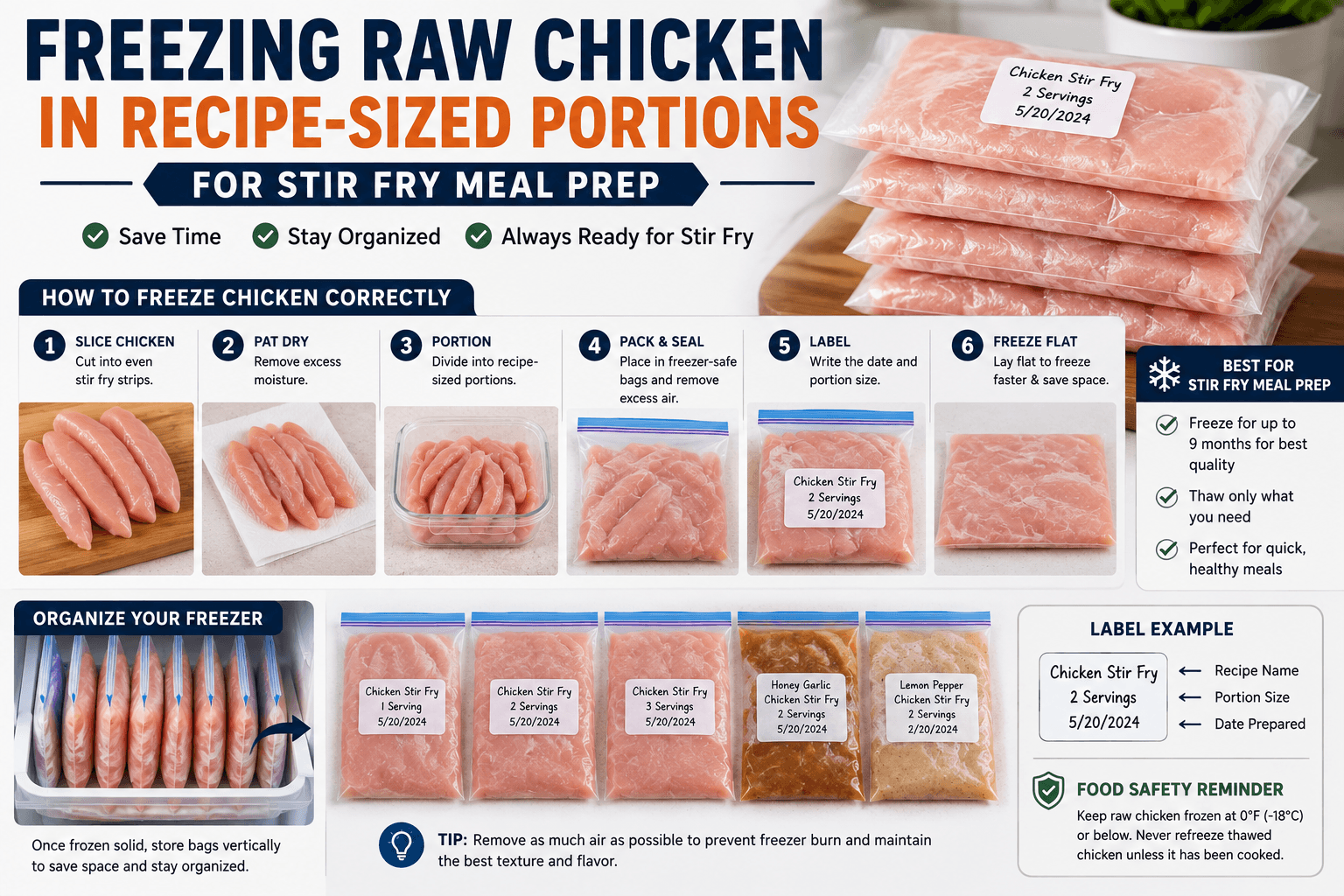
Steps for Freezing Chicken Correctly
- Slice chicken into evenly sized stir fry strips.
- Pat the chicken dry with paper towels.
- Divide into individual meal-sized portions.
- Place each portion into a freezer-safe bag or airtight container.
- Remove excess air before sealing.
- Label with the date and contents.
- Lay bags flat until completely frozen.
Freezing the bags flat not only saves space but also allows the chicken to freeze and thaw more evenly. Once frozen solid, you can stack the bags vertically like files to maximize freezer organization.
For the best flavor and texture, use frozen raw chicken within nine months. Although properly frozen chicken remains safe beyond this period, its quality gradually declines over time.
Tip: Write the portion size on every freezer bag, such as “1 lb Chicken Stir Fry” or “2 Servings.” This makes meal planning much easier.
How to Label and Organize Chicken Meal Prep
Good organization is an often-overlooked part of safely managing store raw chicken meal prep. Labeling containers helps you rotate older portions first, avoid forgotten packages, and reduce unnecessary food waste.
Every label should include at least the preparation date. If you’ve already seasoned or marinated the chicken, include that information as well. This saves time when choosing ingredients for different stir fry recipes.
| Label Information | Why It Matters |
|---|---|
| Preparation date | Tracks freshness |
| Chicken quantity | Makes meal planning easier |
| Seasoning or marinade | Identifies recipe quickly |
| Number of servings | Prevents thawing excess chicken |
Arrange containers using the “first in, first out” method. Place newer packages behind older ones so the oldest chicken gets used first. This simple habit keeps your freezer organized and helps ensure nothing sits forgotten for months.
If you prepare several types of chicken for stir fry, consider using different colored labels or markers to quickly distinguish plain chicken from marinated varieties. This small organizational step can save valuable time during busy weeknights.
Proper labeling, organized storage, and careful rotation all contribute to a safer and more efficient meal prep routine, helping you enjoy fresh, delicious stir fry meals whenever you need them.
Common Mistakes When You Store Raw Chicken Meal Prep
Even experienced home cooks can make small mistakes when they store raw chicken meal prep. While these errors may seem minor, they can reduce the quality of your chicken or increase the risk of foodborne illness. Understanding what to avoid is just as important as knowing the correct storage methods.
Fortunately, most storage mistakes are easy to fix. By following a few simple food safety habits, you can keep your meal-prepped chicken fresh, safe, and ready for delicious stir fry recipes.
Food Safety Warning: If you’re ever unsure whether raw chicken is still safe to cook, it’s better to throw it away. Never taste raw chicken to determine freshness.
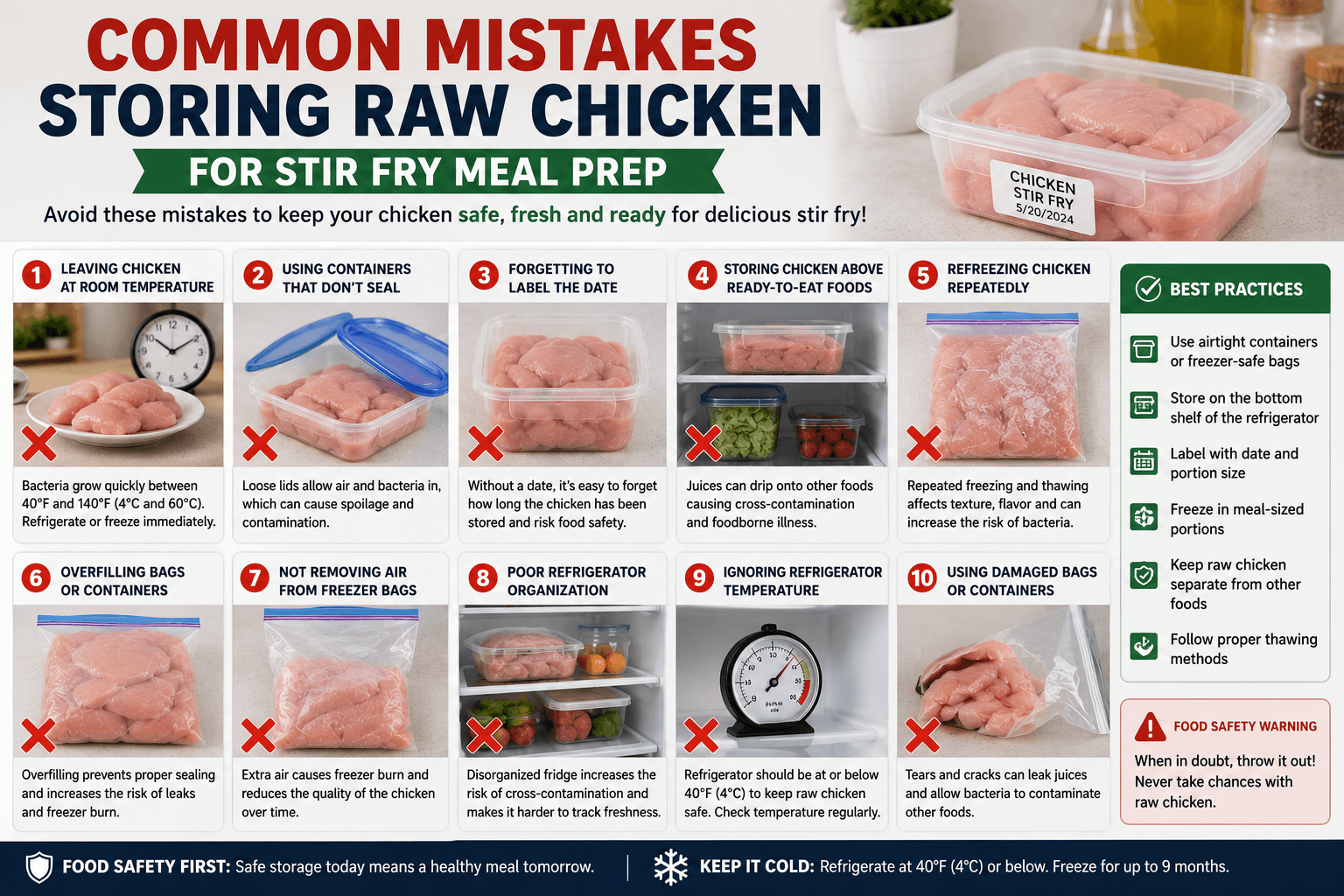
1. Leaving Chicken at Room Temperature Too Long
Raw chicken should never sit on the kitchen counter while you’re preparing other ingredients. Harmful bacteria grow rapidly between 40°F and 140°F (4°C to 60°C), often called the “danger zone.”
As soon as you’ve finished trimming or slicing the chicken, refrigerate or freeze it immediately.
2. Using Containers That Don’t Seal Properly
Loose lids or damaged storage bags allow air and moisture to enter, reducing freshness and increasing the risk of freezer burn. Always inspect containers before using them and replace cracked or worn-out lids.
3. Forgetting to Label the Date
Without a date label, it’s difficult to know how long chicken has been stored. This often leads to unnecessary waste or unsafe guessing. A simple piece of freezer tape and a permanent marker solve this problem.
4. Storing Raw Chicken Above Ready-to-Eat Foods
Chicken juices can drip onto fruits, vegetables, leftovers, or dairy products if stored on higher refrigerator shelves. Always place raw chicken on the bottom shelf inside a leak-proof container.
5. Refreezing Chicken Repeatedly
Repeated freezing and thawing damages the texture of the meat and increases moisture loss. Freeze chicken once, thaw it safely, and cook it before freezing again only if it has already been fully cooked.
Best Storage Habits
- Use airtight containers.
- Store below 40°F (4°C).
- Freeze meal-sized portions.
- Label every package.
- Keep raw chicken separate from other foods.
- Rotate older packages first.
Habits to Avoid
- Leaving chicken on the counter.
- Using damaged containers.
- Overfilling storage bags.
- Ignoring storage dates.
- Storing near ready-to-eat foods.
- Repeated thawing and refreezing.
Keeping Your Refrigerator Safe During Meal Prep
A clean and organized refrigerator is essential whenever you store raw chicken meal prep. Even properly packaged chicken can become a contamination risk if your refrigerator isn’t arranged correctly.
Reserve one section of the refrigerator specifically for raw meat. Ideally, this should be the lowest shelf where accidental drips cannot reach other foods.
Regularly clean refrigerator shelves using hot, soapy water followed by a food-safe disinfectant. If raw chicken juices spill, clean the area immediately before placing other foods nearby.
It’s also a good idea to check your refrigerator temperature with an appliance thermometer. Built-in temperature settings aren’t always accurate, and maintaining a consistent temperature below 40°F (4°C) is one of the most effective ways to slow bacterial growth.
Tip: Store prepared vegetables, sauces, and cooked foods on upper shelves while keeping all raw poultry on the bottom shelf in sealed containers. This simple arrangement greatly reduces the chance of cross-contamination.
Developing these refrigerator habits not only improves food safety but also makes meal prep faster and more organized. You’ll always know where your ingredients are stored, making weeknight stir fry cooking much more efficient.
How to Thaw Chicken Safely After Meal Prep Storage
Knowing how to thaw chicken correctly is just as important as learning how to store raw chicken meal prep. Safe thawing helps preserve the chicken’s texture while preventing harmful bacteria from multiplying before cooking.
The safest method is to thaw frozen chicken slowly in the refrigerator. Although this requires some planning, it keeps the chicken at a safe temperature throughout the thawing process and delivers the best results for stir fry recipes.
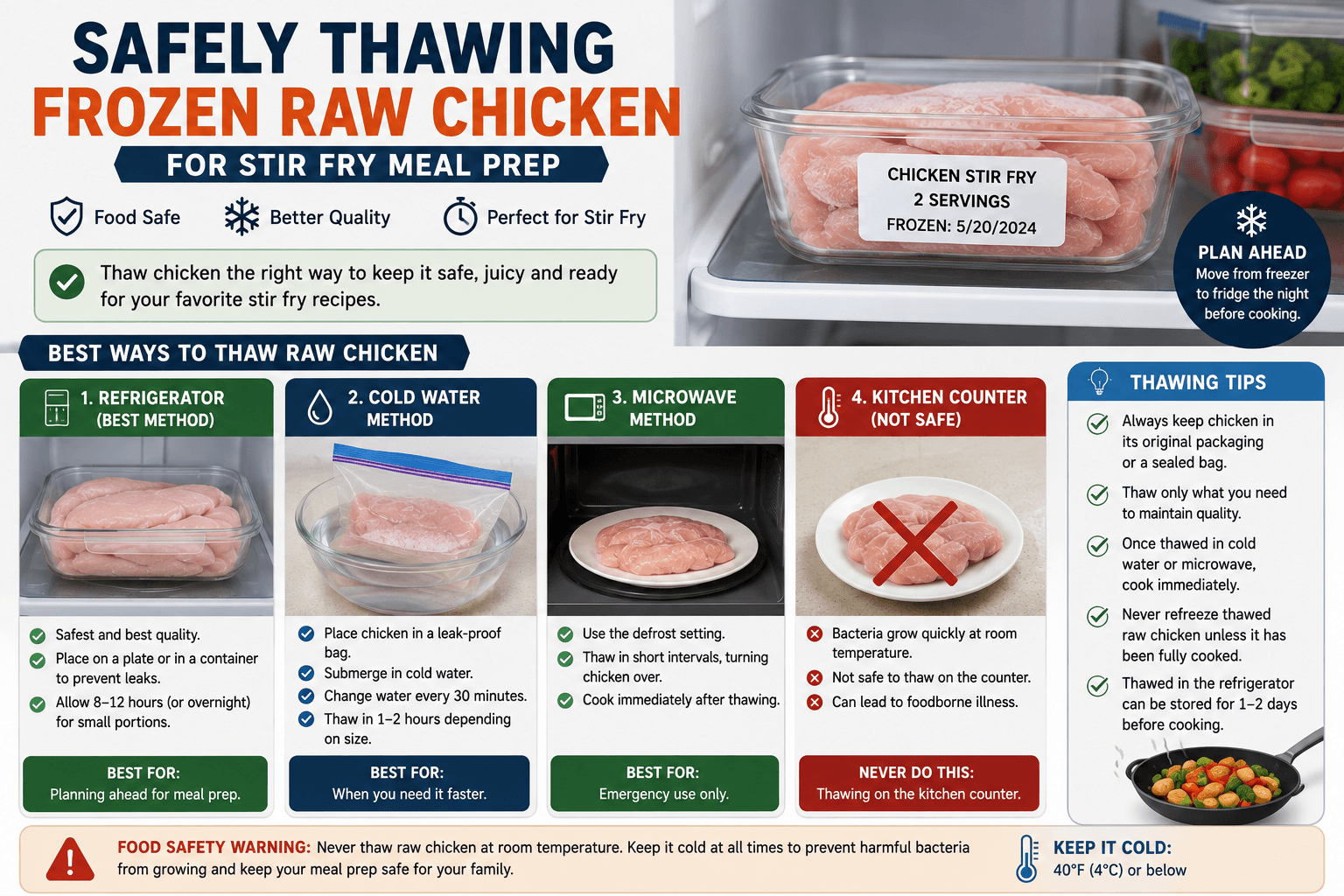
Best Ways to Thaw Raw Chicken
| Thawing Method | Safe? | Best For |
|---|---|---|
| Refrigerator | ✔ Recommended | Best quality and food safety |
| Cold water (sealed bag) | ✔ Yes | Faster thawing when needed |
| Microwave | ✔ Yes* | Emergency use only; cook immediately |
| Kitchen counter | ✘ No | Unsafe due to bacterial growth |
If you’re thawing chicken in cold water, keep it inside a leak-proof bag and change the water every 30 minutes. Once thawed, cook the chicken immediately rather than placing it back into the refrigerator for another day.
Food Safety Warning: Never thaw raw chicken on the countertop. Even if the center remains frozen, the outer layers can quickly reach unsafe temperatures where bacteria multiply rapidly.
Planning ahead allows you to transfer frozen chicken from the freezer to the refrigerator the night before cooking. This simple habit makes weeknight meal prep much easier and safer.
Meal Prep Checklist for Storing Raw Chicken
Following a consistent routine every time you store raw chicken meal prep helps reduce mistakes and ensures every portion stays fresh until you’re ready to cook.
Use this checklist before placing chicken into the refrigerator or freezer.
- ✔ Wash your hands before and after handling raw chicken.
- ✔ Use a separate cutting board for raw poultry.
- ✔ Slice chicken into even stir fry strips.
- ✔ Pat the chicken dry before packaging.
- ✔ Divide into recipe-sized portions.
- ✔ Use airtight containers or freezer-safe bags.
- ✔ Remove as much air as possible before sealing.
- ✔ Label every package with the preparation date.
- ✔ Store raw chicken on the bottom refrigerator shelf.
- ✔ Freeze portions you won’t use within two days.
Kitchen Secret: Keep a permanent marker and freezer labels near your food containers. Labeling takes only a few seconds but prevents confusion weeks later.
Helpful Recipes to Use Your Meal-Prepped Chicken
Once you’ve mastered how to store raw chicken meal prep, you’ll always have fresh chicken ready for quick dinners. Pre-portioned chicken makes weeknight cooking faster because most of the preparation has already been completed.
Try your stored chicken in these SmartKitchenHome favorites:
- Classic Chicken Stir Fry
- Healthy Chicken Stir Fry
- Chicken Broccoli Stir Fry
- Chicken Cabbage Stir Fry
- Chicken Zucchini Stir Fry
- Chicken Spinach Stir Fry
- Chicken Veggie Stir Fry
- Garlic Chicken Stir Fry
Proper meal prep not only saves valuable cooking time but also helps reduce food waste, improves kitchen organization, and makes healthy homemade meals much easier to prepare throughout the week.
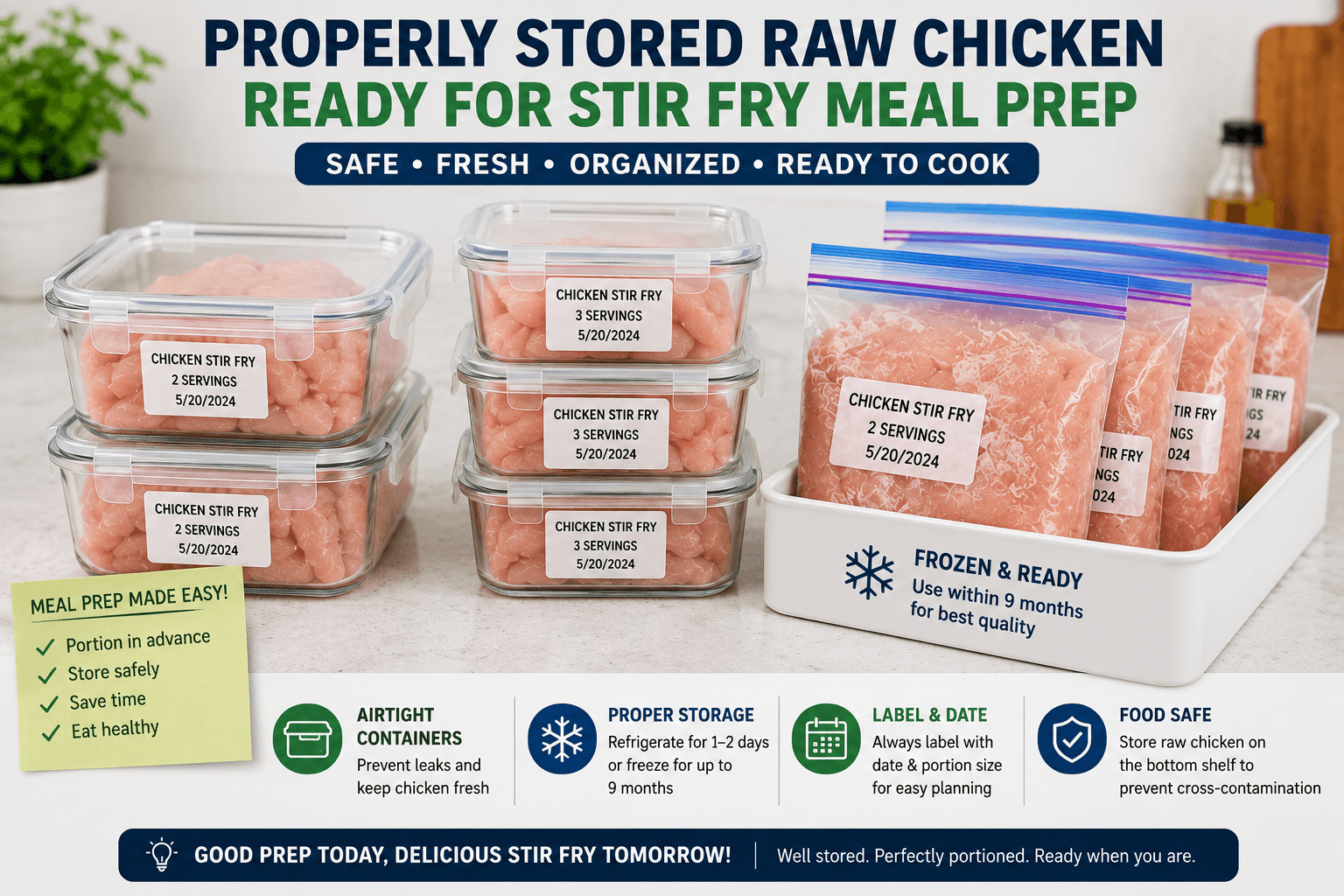
Storage Summary: Refrigerate raw chicken at or below 40°F (4°C) and use it within 1–2 days. For longer storage, freeze meal-sized portions immediately and use them within 9 months for the best quality. Always thaw frozen chicken safely in the refrigerator whenever possible.
Final Thoughts
Learning how to store raw chicken meal prep properly is a simple skill that makes a big difference in both food safety and everyday cooking. By preparing chicken in advance, dividing it into meal-sized portions, and using airtight storage containers, you’ll spend less time in the kitchen while always having fresh ingredients ready for your favorite stir fry recipes.
Remember that safe storage begins the moment you finish preparing the chicken. Refrigerate portions you’ll cook within the next two days, freeze anything you’ll use later, and always keep raw poultry separate from ready-to-eat foods. These small habits help reduce food waste, improve organization, and protect your family from foodborne illness.
Whether you’re meal prepping for busy weekdays or stocking your freezer with ready-to-cook ingredients, following the best practices in this guide will help you confidently store raw chicken meal prep while maintaining excellent quality, flavor, and safety every time.
References
Frequently Asked Questions
Can I store raw chicken meal prep for an entire week in the refrigerator?
No. Raw chicken should generally be refrigerated for only 1–2 days. If you won’t cook it within that time, freeze it immediately to maintain both safety and quality.
What is the best container to store raw chicken meal prep?
Airtight food-storage containers or freezer-safe bags are the best options because they prevent leaks, reduce air exposure, and help preserve freshness.
Should I season chicken before freezing it?
Yes. Light seasoning or marinating before freezing is perfectly safe and can save preparation time later. Always label the container with the marinade or seasoning used.
How can I tell if refrigerated raw chicken has gone bad?
If the chicken develops a sour odor, sticky texture, gray discoloration, or has been refrigerated longer than recommended, discard it immediately.
Can I refreeze thawed raw chicken?
If the chicken was thawed safely in the refrigerator and has remained cold, it can be refrozen. However, repeated freezing may reduce texture and overall quality.
Why should raw chicken be stored on the bottom refrigerator shelf?
Keeping raw chicken on the lowest shelf prevents juices from dripping onto ready-to-eat foods, reducing the risk of cross-contamination.
🍽️ You Might Also Like
📧 Save This Recipe For Later
Enter your email and we will send this recipe directly to your inbox.