
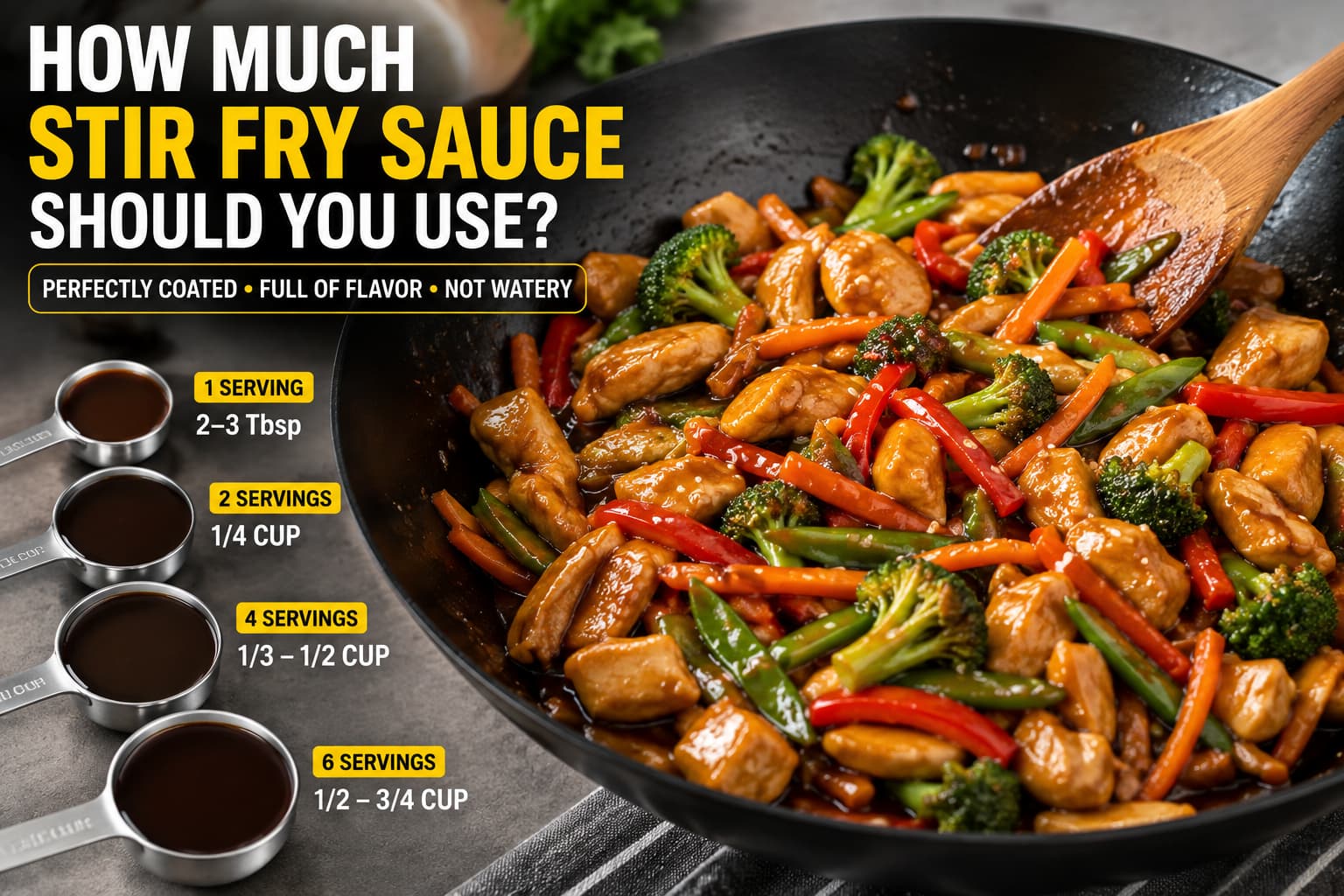
How Much Stir Fry Sauce Should You Use?
How Much Stir Fry Sauce Should You Use?
If you’ve ever wondered how much stir fry sauce to use, you’re not alone. Adding too little sauce can leave your chicken and vegetables dry and lacking flavor, while adding too much can create a watery, overly salty stir fry that masks the fresh taste of your ingredients. Finding the right balance is one of the simplest ways to make homemade stir fry taste as good as your favorite takeout.
The ideal amount depends on the quantity of protein, vegetables, and whether you’re serving the dish with rice or noodles. A properly measured sauce lightly coats every ingredient, creating a glossy finish instead of pooling at the bottom of the pan. Once you understand the basic ratio, you can easily adjust it for different recipes, vegetables, and serving sizes.
In this guide, you’ll learn exactly how much stir fry sauce to use, why the amount matters, and how to make simple adjustments so every stir fry comes out perfectly balanced.
Quick Answer
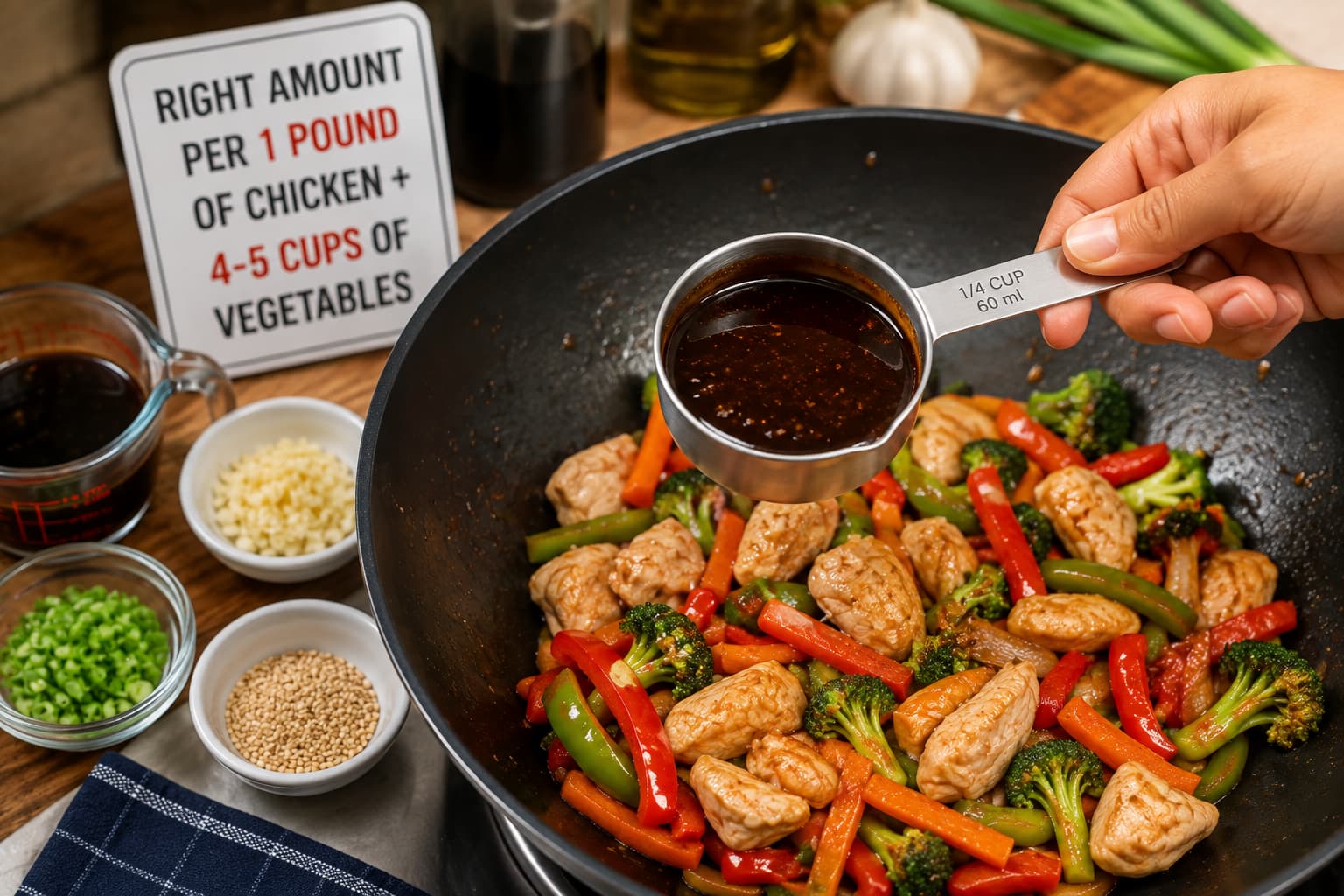
For most homemade stir fry recipes, use approximately ¼ to ⅓ cup of stir fry sauce per pound of chicken and 4–5 cups of vegetables. This amount provides enough sauce to coat every ingredient without making the dish soggy or overly salty.
- 1 serving: 2–3 tablespoons of sauce
- 2 servings: ¼ cup of sauce
- 4 servings: ⅓–½ cup of sauce
- Large family meals: ½–¾ cup of sauce, depending on the amount of vegetables and noodles
If your stir fry includes rice or noodles, you may want to increase the sauce slightly so everything stays flavorful.
Table of Contents
Why the Amount of Stir Fry Sauce Matters
Many people focus on choosing the perfect sauce but overlook how much they actually need. Even an excellent homemade sauce can produce disappointing results if the quantity isn’t right. Understanding how much stir fry sauce to use helps create the ideal balance between flavor, texture, and appearance.
Stir fry cooking happens quickly over high heat. As the sauce cooks, some of its moisture evaporates while the remaining liquid thickens and clings to the chicken and vegetables. Starting with the correct amount ensures there’s enough sauce to coat every bite without flooding the pan.
Too much sauce can cause vegetables to steam instead of fry, reducing the slightly crisp texture that makes stir fry so enjoyable. Excess sauce may also dilute the flavors of garlic, ginger, sesame oil, and other seasonings. On the other hand, using too little sauce often leaves parts of the dish dry and unevenly seasoned.
Tip: Think of stir fry sauce as a light coating rather than a soup. Every piece of chicken and every vegetable should have a glossy finish, but there shouldn’t be a pool of sauce left in the wok or skillet after cooking.
The right amount of sauce also makes it easier to control sodium levels. Instead of relying on extra soy sauce at the table, measuring your sauce correctly creates balanced flavor from the beginning.
If you’re making one of our popular recipes like Chicken Stir Fry or Chicken Broccoli Stir Fry, using the proper sauce ratio helps achieve restaurant-quality results without overpowering the fresh ingredients.
The Best Stir Fry Sauce Ratio for Every Serving Size
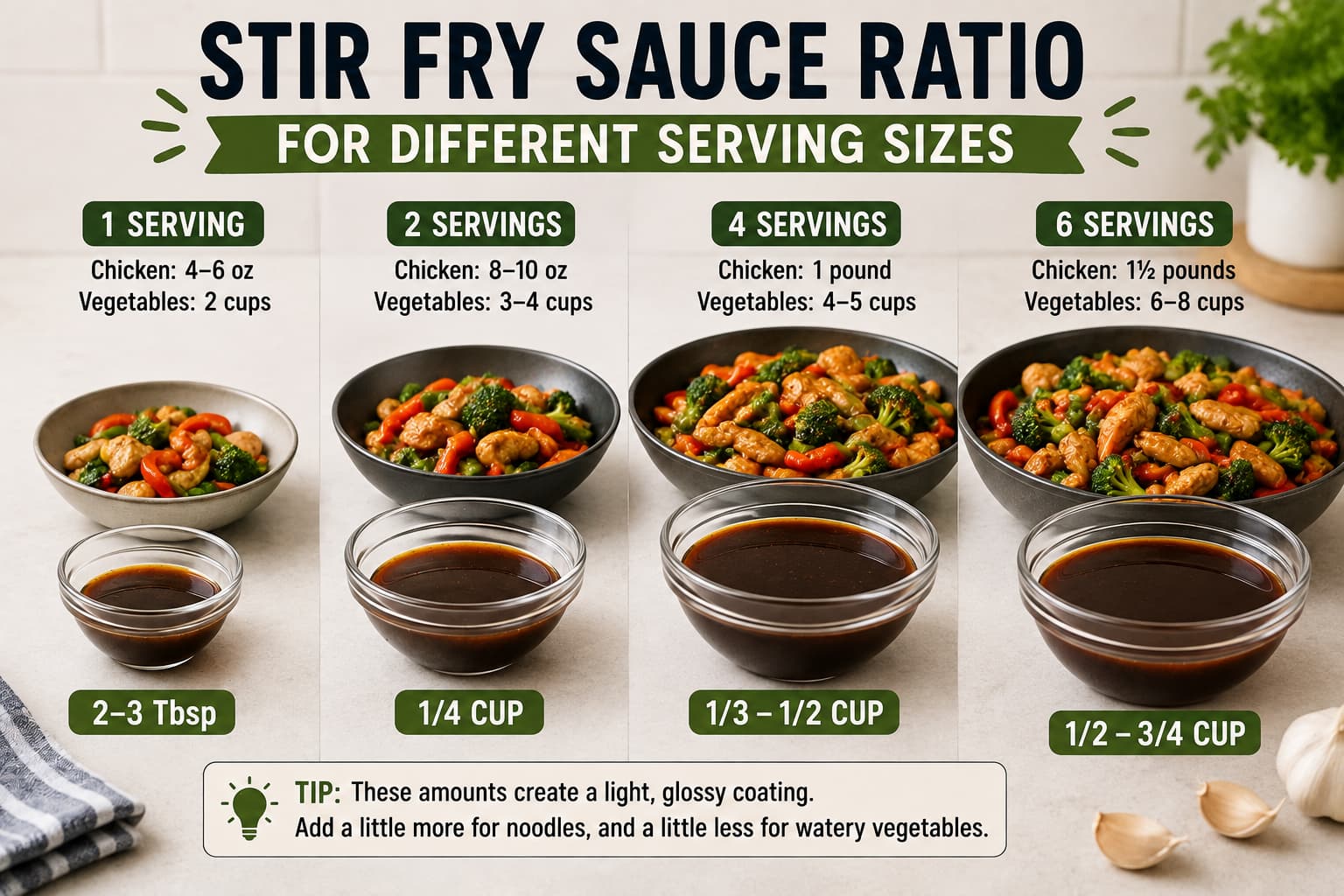
Now that you know why the amount of sauce matters, let’s look at the easiest way to determine how much stir fry sauce to use for different meal sizes. While recipes vary slightly, a simple ratio works for nearly every homemade chicken stir fry.
A good rule is to use enough sauce to lightly coat the ingredients instead of drowning them. The sauce should cling to the chicken and vegetables, creating a glossy finish without leaving a large puddle in the pan.
| Servings | Chicken | Vegetables | Recommended Stir Fry Sauce |
|---|---|---|---|
| 1 | 4–6 oz | 2 cups | 2–3 tablespoons |
| 2 | 8–10 oz | 3–4 cups | ¼ cup |
| 4 | 1 pound | 4–5 cups | ⅓–½ cup |
| 6 | 1½ pounds | 6–8 cups | ½–¾ cup |
These measurements provide enough sauce to evenly coat every ingredient while allowing the natural flavors of the chicken and vegetables to shine. If you’re serving your stir fry over rice, these amounts usually work perfectly because the rice absorbs some of the extra sauce.
However, noodle dishes often require a little more sauce. Noodles have a larger surface area and absorb liquid quickly, so increasing the sauce by 2 to 4 tablespoons usually produces better results.
Kitchen Secret: It’s much easier to add a little extra sauce near the end of cooking than it is to remove excess sauce once it’s in the pan. Start with the recommended amount and adjust only if needed.
Factors That Change How Much Stir Fry Sauce You Need
Although the basic ratio works well most of the time, several factors can change how much stir fry sauce your recipe requires.
- High-water vegetables: Zucchini, mushrooms, cabbage, and bok choy release moisture while cooking, reducing the amount of additional sauce needed.
- Dense vegetables: Broccoli, carrots, snap peas, and bell peppers don’t release as much liquid, so they usually benefit from the full recommended amount.
- Frozen vegetables: If they aren’t drained properly after thawing, they can release extra water and thin your sauce.
- Extra protein: More chicken, shrimp, or beef means more surface area that needs coating, so you’ll need additional sauce.
- Rice or noodles: Both absorb sauce, but noodles generally require slightly more than rice.
As you gain experience, you’ll naturally learn when your favorite ingredients require a small adjustment. The goal is always the same: every bite should have a balanced coating of flavorful sauce without becoming heavy or watery.
If you’re experimenting with different flavors, our Best Homemade Stir Fry Sauce Variations guide offers several options that all work well with these same sauce ratios.
How to Adjust Stir Fry Sauce for Different Ingredients
Even if you know how much stir fry sauce to use as a starting point, every stir fry is a little different. The ingredients you choose can affect how much liquid is released during cooking and how much sauce is needed to create the perfect coating. Learning to make small adjustments is the key to consistently delicious results.
Instead of following the exact same measurement every time, pay attention to what is happening in the pan. A few simple changes can make the difference between a restaurant-quality stir fry and one that is too dry or too watery.
When Cooking Mostly Vegetables
If your stir fry contains mostly vegetables with only a small amount of chicken, you may need slightly less sauce. Many vegetables naturally release water as they cook, especially mushrooms, zucchini, cabbage, and bok choy. Adding the full amount of sauce too early can leave excess liquid in the pan.
Start with about 80% of the recommended amount, then add a little more near the end if needed. This gives you better control over the final consistency.
When Making Protein-Heavy Stir Fry
Recipes packed with chicken, beef, shrimp, or tofu need a bit more sauce because each piece of protein should be lightly coated. A pan filled with protein has much more surface area than a vegetable-heavy stir fry.
For every additional half pound of protein, add about 2 to 3 tablespoons of stir fry sauce. This keeps the flavor balanced without overwhelming the dish.
Tip: Toss the cooked protein with the sauce for 30 to 60 seconds before adding the vegetables back into the pan. This helps the sauce cling evenly to every piece.
When Serving with Rice or Noodles
Rice absorbs extra sauce without becoming soggy, so the standard ratio usually works well. Noodles, however, soak up much more liquid during mixing.
If you’re preparing lo mein, rice noodles, or udon noodles, increase the sauce by about 2 to 4 tablespoons. The additional sauce prevents the noodles from tasting dry after a few minutes.
| Meal Type | Sauce Adjustment | Reason |
|---|---|---|
| Vegetable-heavy stir fry | Use slightly less | Vegetables release moisture |
| Chicken-heavy stir fry | Add 2–3 tablespoons | More protein needs coating |
| Served with rice | No change | Rice absorbs extra sauce naturally |
| Served with noodles | Add 2–4 tablespoons | Noodles absorb more liquid |
If you’re making recipes like Teriyaki Chicken Stir Fry or Honey Garlic Chicken Stir Fry, these simple adjustments help maintain the ideal balance between sweetness, saltiness, and texture.
Add the Sauce at the Right Time
Knowing how much stir fry sauce to use is only part of the equation. Timing matters just as much.
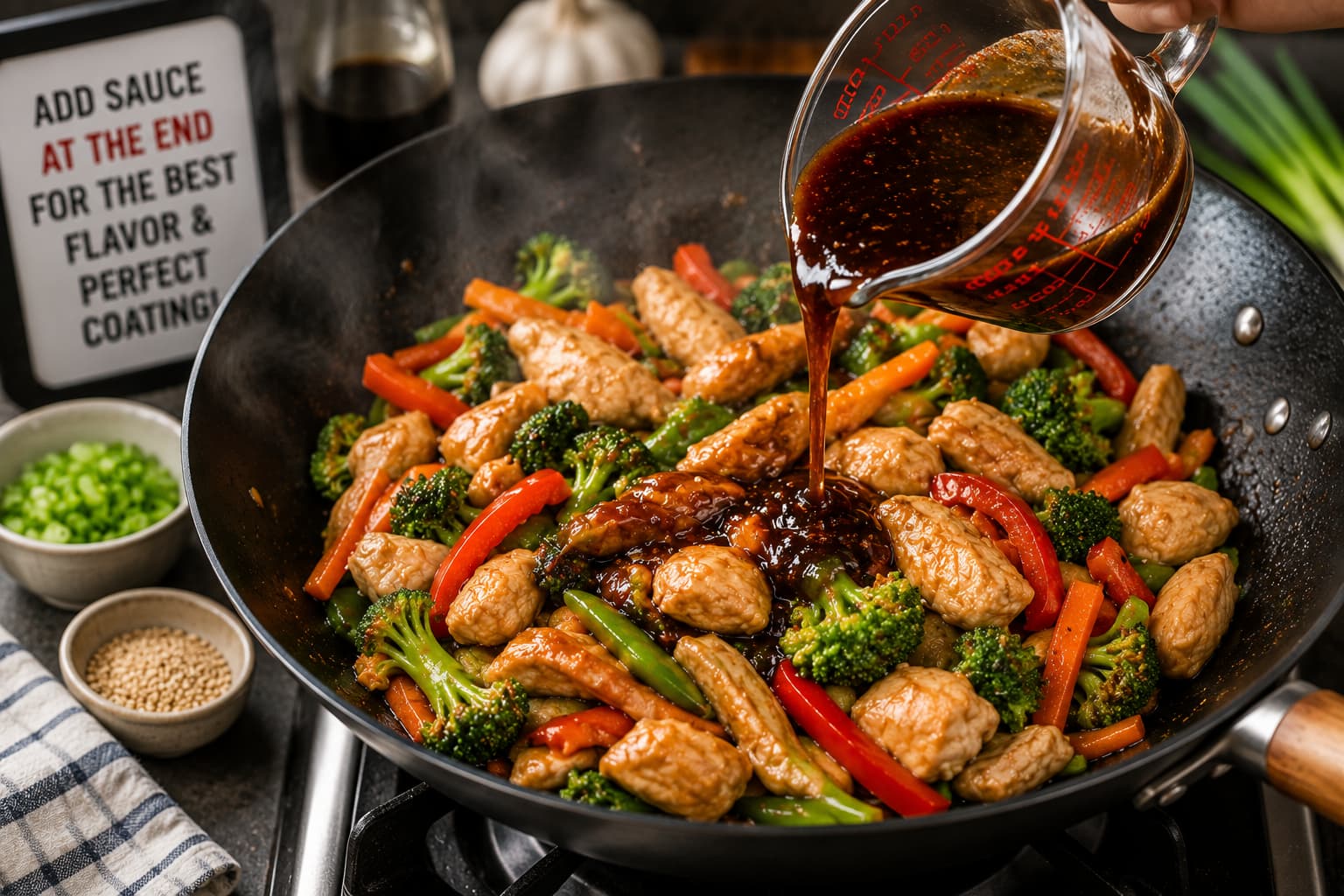
Add the sauce after the chicken is fully cooked and the vegetables are nearly tender. Pour it around the edges of the hot wok or skillet instead of directly onto the food. The heat quickly activates the starches in the sauce, allowing it to thicken evenly before coating the ingredients.
Once the sauce is added, stir continuously for about one to two minutes. The sauce should become glossy and lightly cling to the chicken and vegetables. If it thickens too much, add a tablespoon of water or low-sodium chicken broth to loosen it.
Avoid This Mistake: Don’t continue cooking the stir fry for several minutes after the sauce has thickened. Overcooking causes the sauce to reduce too much, making it sticky, overly salty, and less appealing.
If your sauce doesn’t reach the consistency you want, our guides on Why Is My Stir Fry Sauce Too Thin? and How to Make the Perfect Cornstarch Slurry explain exactly how to fix it without affecting the flavor.
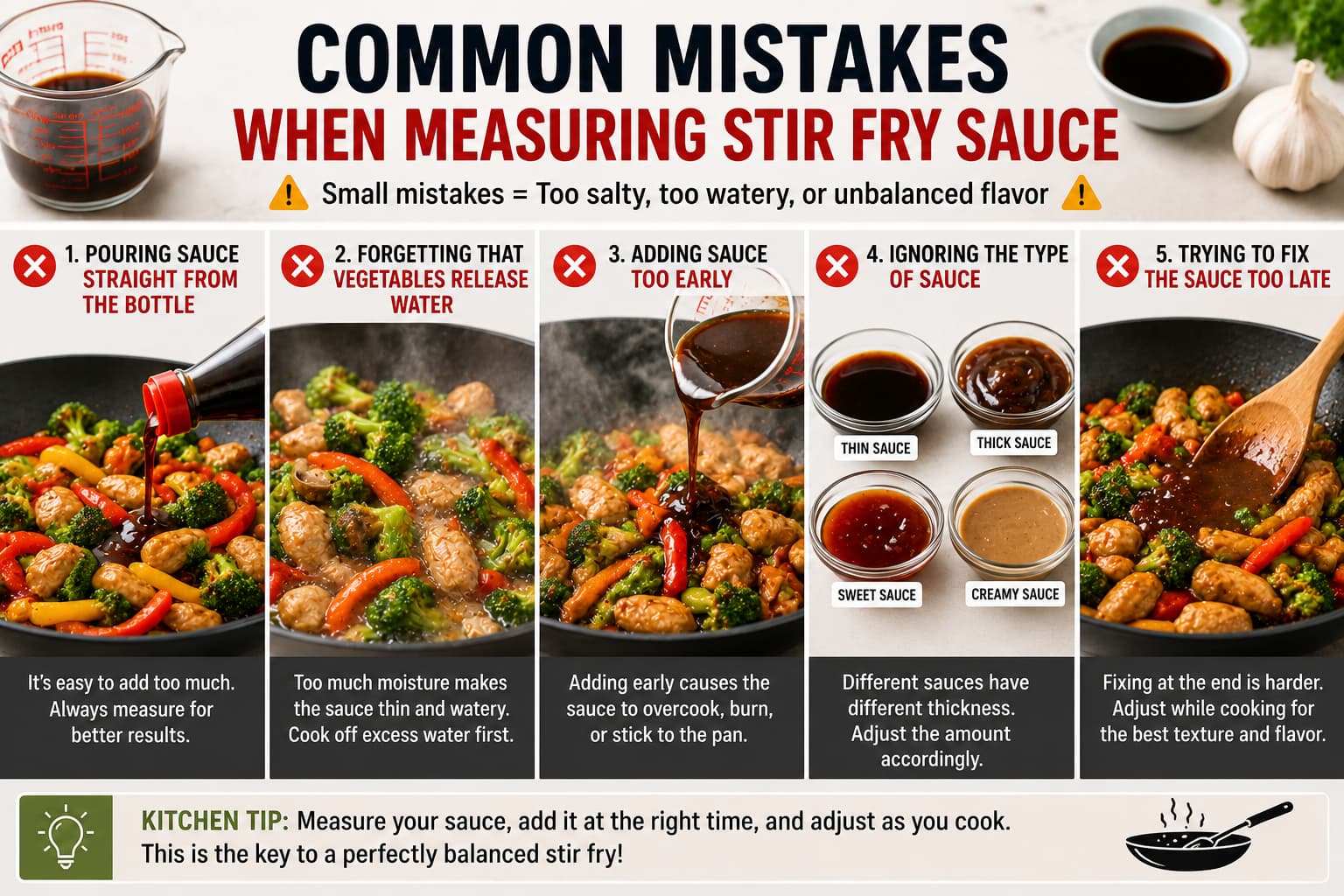
Common Mistakes When Measuring Stir Fry Sauce
Even experienced home cooks sometimes struggle with how much stir fry sauce to use. Fortunately, most problems come from a few common mistakes that are easy to avoid. Understanding these issues will help you achieve a perfectly balanced stir fry every time.
1. Pouring the Sauce Straight from the Bottle
One of the biggest mistakes is estimating instead of measuring. It may seem faster to pour sauce directly into the pan, but it’s surprisingly easy to add far more than your recipe needs.
Using a measuring cup or measuring spoons only takes a few seconds and gives you consistent results every time you cook. Once you’re familiar with the correct ratio, you’ll naturally become better at estimating.
2. Forgetting That Vegetables Release Water
Fresh vegetables don’t all behave the same way. Mushrooms, zucchini, cabbage, spinach, and bok choy release a significant amount of moisture while cooking. If you add a large amount of stir fry sauce before that liquid evaporates, the finished dish can become watery.
Cook high-moisture vegetables over high heat until much of their natural liquid has evaporated before adding your sauce.
Warning: Never try to fix a watery stir fry by simply adding more soy sauce. This usually makes the dish overly salty without improving the texture.
3. Adding Sauce Too Early
Stir fry cooking is designed to be quick. Adding sauce before the chicken is cooked or before the vegetables are nearly tender causes it to reduce for too long.
The result is a thick, sticky coating that may burn around the edges of the pan. Instead, add the sauce during the final one to two minutes of cooking so it has just enough time to thicken and coat the ingredients.
4. Ignoring the Type of Sauce
Not every stir fry sauce has the same consistency. Some homemade sauces are naturally thinner, while others contain more cornstarch, honey, or brown sugar and become thicker during cooking.
| Type of Sauce | Consistency | Adjustment Needed |
|---|---|---|
| Thin soy-based sauce | Light | May need slightly more |
| Cornstarch-thickened sauce | Medium | Use standard measurements |
| Honey or teriyaki sauce | Thick | Often use slightly less |
| Creamy stir fry sauce | Very thick | Add gradually while stirring |
If you’re trying different homemade sauces, always begin with the recommended amount and adjust only after you see how the sauce behaves in the pan.
5. Trying to Fix the Sauce Too Late
Sometimes cooks notice the sauce is too thick or too thin only after serving the meal. The best time to make adjustments is while everything is still cooking.
- If the sauce looks watery, let it simmer for another 30 to 60 seconds.
- If it becomes too thick, stir in one tablespoon of water or chicken broth at a time.
- If the flavor seems weak, add a small splash of prepared stir fry sauce instead of plain soy sauce.
Making small adjustments while the stir fry is still over the heat gives you much better control than trying to fix it after it’s finished.
Kitchen Secret: Professional chefs constantly watch the consistency of the sauce rather than relying only on measurements. As soon as the sauce forms a thin glossy coating on the ingredients, it’s ready to serve.
If you’re still having trouble achieving the perfect consistency, our guides on Why Is My Stir Fry Sauce Too Thick? and Common Stir Fry Sauce Mistakes explain the most common causes and simple solutions.
Expert Tips for Using the Perfect Amount of Stir Fry Sauce
Once you understand how much stir fry sauce to use, a few professional techniques can help you achieve even better results. These simple habits improve flavor, texture, and consistency without adding extra work to your cooking routine.
Measure Before You Start Cooking
Stir fry cooks very quickly, often in less than 10 minutes. Measuring your sauce before turning on the heat prevents rushed decisions and reduces the chance of accidentally adding too much.
Professional chefs prepare every ingredient in advance, including the sauce, because there isn’t enough time to stop and measure once the wok is hot.
Tip: Keep the prepared stir fry sauce in a small bowl beside the stove so it’s ready to pour in at exactly the right moment.
Taste Before Adding Extra Sauce
If your stir fry looks slightly dry, don’t immediately assume it needs more sauce. Give the ingredients a quick taste first.
Sometimes the coating is already sufficient, and adding more sauce will only increase the saltiness. If the flavor is balanced but the texture seems dry, adding one tablespoon of water or unsalted chicken broth may be a better solution.
Stir Constantly After Adding the Sauce
Once the sauce goes into the pan, continue stirring for one to two minutes. This distributes the sauce evenly and prevents thick spots from forming.
Continuous stirring also helps the cornstarch activate evenly, creating the glossy coating that makes homemade stir fry look restaurant quality.
Double the Sauce for Meal Prep—Not for Cooking
If you’re preparing several meals ahead of time, you might think doubling the sauce while cooking is the best approach. In reality, it’s usually better to cook with the normal amount and prepare extra sauce separately.
This keeps the vegetables crisp and prevents the stir fry from becoming soggy after refrigeration. When reheating, simply add a spoonful of the reserved sauce to refresh the flavors.
Meal Prep Tip: Store extra homemade stir fry sauce in an airtight container in the refrigerator for up to one week. Shake or stir well before using because some ingredients naturally separate during storage.
Storage and Leftover Tips
Using the correct amount of stir fry sauce doesn’t just improve the meal when it’s freshly cooked—it also helps leftovers stay flavorful. Stir fry made with too much sauce often becomes watery after refrigeration, while dishes with too little sauce can dry out during reheating.
Refrigerating Leftovers
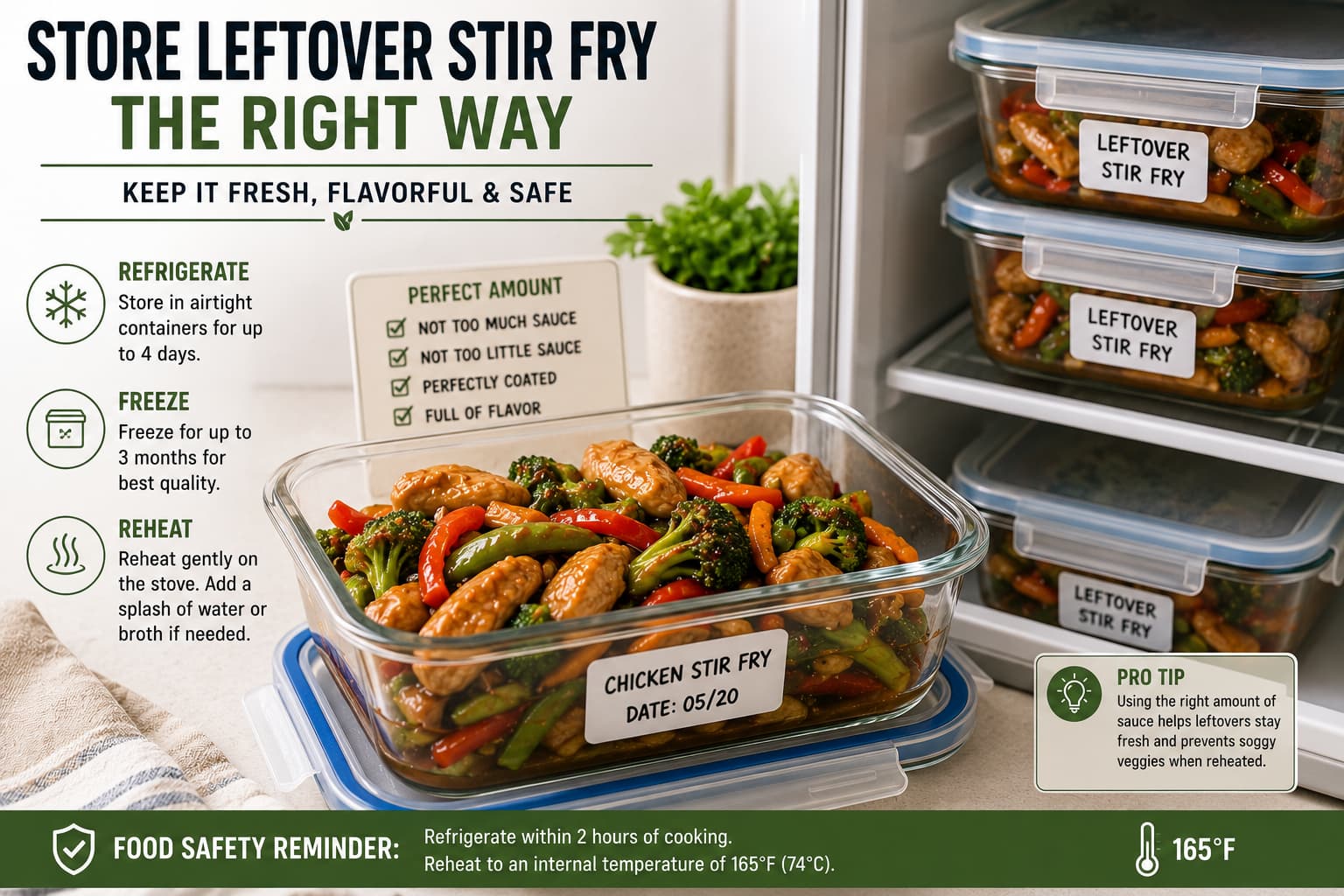
Allow the stir fry to cool for no more than two hours before transferring it to airtight containers. Store it in the refrigerator for up to four days.
Keeping the sauce balanced during cooking helps preserve the texture of both the chicken and vegetables throughout storage.
Freezing Stir Fry
Chicken stir fry freezes well, although vegetables with high water content may soften slightly after thawing. Freeze portions in airtight freezer-safe containers for up to three months.
For the best texture, thaw overnight in the refrigerator before reheating.
How to Reheat Without Drying Out the Sauce
Reheat leftovers gently in a skillet over medium heat. If the sauce has thickened during refrigeration, stir in one or two tablespoons of water or low-sodium chicken broth while warming the dish.
Avoid overheating in the microwave, which can cause both the chicken and vegetables to lose moisture.
Food Safety Reminder: Reheat leftover chicken stir fry until it reaches an internal temperature of 165°F (74°C). Do not repeatedly cool and reheat the same batch, as this can reduce both quality and food safety.
If you’d like to experiment with different homemade sauces for future meals, our Ultimate Chicken Stir Fry Sauce Guide and How to Thicken Stir Fry Sauce Without Cornstarch provide additional techniques for creating the perfect consistency.
Frequently Asked Questions
How much stir fry sauce should I use for one pound of chicken?
For one pound of chicken with about 4 to 5 cups of vegetables, use approximately ⅓ to ½ cup of stir fry sauce. This amount provides enough sauce to coat every ingredient without making the dish watery.
Can I add more stir fry sauce after cooking?
Yes. If your stir fry tastes dry, you can stir in a small amount of additional sauce during the last 30 seconds of cooking. Adding it while the pan is still hot helps the sauce coat the ingredients evenly.
Why does my stir fry become watery even when I use the right amount of sauce?
High-moisture vegetables such as mushrooms, zucchini, and cabbage release water during cooking. Frozen vegetables that haven’t been drained well can also thin the sauce. Cooking over high heat allows excess moisture to evaporate before adding the sauce.
Should I use more stir fry sauce for noodles than rice?
Yes. Noodles absorb more liquid than rice, so adding an extra 2 to 4 tablespoons of stir fry sauce usually produces a better-balanced dish.
Can I make stir fry with very little sauce?
Absolutely. If you prefer a lighter meal, you can reduce the amount of stir fry sauce slightly. Just make sure every piece of chicken and every vegetable is lightly coated so the dish still has balanced flavor.
How do I know when I’ve added the perfect amount of stir fry sauce?
The sauce should create a thin, glossy coating on the chicken and vegetables without collecting in the bottom of the pan. If you see a large pool of liquid, you’ve probably added more sauce than necessary.
Final Thoughts
Knowing how much stir fry sauce to use is one of the easiest ways to improve your homemade stir fry. The right amount creates a flavorful, glossy coating that enhances the chicken and vegetables without making the dish overly salty or watery.
As a general guideline, use about ¼ to ⅓ cup of stir fry sauce per pound of chicken and 4 to 5 cups of vegetables. From there, make small adjustments based on your ingredients, whether you’re serving the dish with rice or noodles, and your personal taste preferences.
Remember that successful stir fry cooking is about balance. Measuring the sauce, adding it at the right time, and watching its consistency as it cooks will help you achieve reliable, restaurant-quality results every time.
Whether you’re preparing a quick weeknight dinner or meal-prepping for the week ahead, mastering how much stir fry sauce to use will make every homemade stir fry more flavorful, better textured, and more enjoyable.
🍽️ You Might Also Like



📧 Save This Recipe For Later
Enter your email and we will send this recipe directly to your inbox.