
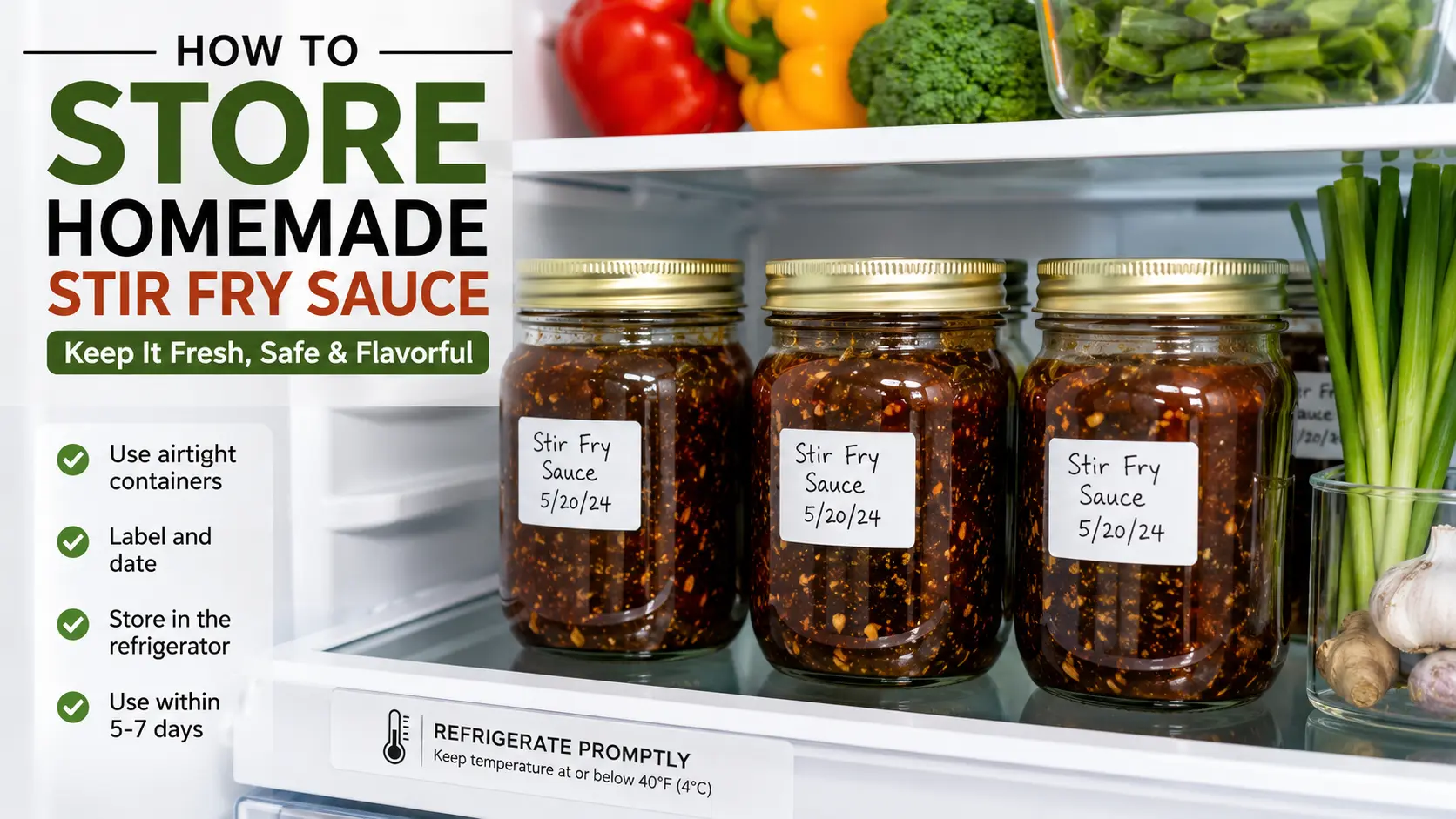
How to Store Homemade Stir Fry Sauce
How to Store Homemade Stir Fry Sauce
Knowing how to store homemade stir fry sauce properly helps you enjoy fresh, flavorful meals while reducing food waste. Whether you make a classic soy-based sauce, a honey garlic variation, or a spicy blend, proper storage keeps the ingredients tasting their best and minimizes the risk of spoilage. Homemade sauces don’t contain the preservatives found in many store-bought products, so following safe storage practices is especially important.
If you regularly prepare meals like Chicken Stir Fry or Garlic Chicken Stir Fry, making stir fry sauce in advance can save valuable time during busy weeknights. The key is understanding how long it stays fresh, the best containers to use, and how to recognize when it’s no longer safe to eat.
In this guide, you’ll learn exactly how to store homemade stir fry sauce, how refrigeration and freezing affect quality, common storage mistakes to avoid, and expert tips to keep every batch tasting fresh.
Quick Answer
To store homemade stir fry sauce, let it cool completely if cooked, then transfer it to a clean airtight glass jar or BPA-free food-safe container. Refrigerate it promptly and use it within 5 to 7 days for the best quality. For longer storage, freeze the sauce in portion-sized containers or freezer-safe bags for up to 3 months. Always discard the sauce if it develops an off smell, mold, unusual color, or signs of fermentation.
Table of Contents
- Why Proper Storage Matters
- Best Containers for Homemade Stir Fry Sauce
- How to Store Homemade Stir Fry Sauce in the Refrigerator
- Can You Freeze Homemade Stir Fry Sauce?
- How Long Does Homemade Stir Fry Sauce Last?
- How to Tell If Stir Fry Sauce Has Gone Bad
- Common Storage Mistakes
- Frequently Asked Questions
- Final Thoughts
Why Proper Storage Matters
Homemade stir fry sauce is made with fresh ingredients like soy sauce, garlic, ginger, sesame oil, rice vinegar, cornstarch, honey, or brown sugar. While many of these ingredients naturally have a long shelf life individually, combining them changes how they should be handled.
Fresh garlic, ginger, and other aromatics introduce moisture and natural microorganisms into the sauce. Without preservatives, improper storage can lead to bacterial growth, flavor deterioration, or separation much faster than commercial sauces.
Learning how to store homemade stir fry sauce correctly protects both food quality and food safety. Proper storage also allows you to meal prep multiple stir fry dinners ahead of time without sacrificing taste.
Tip: Label every container with the preparation date. Even if the sauce still looks fine, dating your batches helps you use older sauce first and prevents accidental over-storage.
Proper storage is especially useful if you like preparing different sauces in advance, such as Honey Garlic Stir Fry Sauce or experimenting with recipes from our Homemade Stir Fry Sauce Variations Guide. Using the right storage method ensures every batch stays fresh and ready whenever you need a quick weeknight dinner.
Best Containers for Storing Homemade Stir Fry Sauce
Choosing the right container is one of the easiest ways to store homemade stir fry sauce safely while preserving its fresh flavor. Even the best homemade sauce can lose quality quickly if it’s stored in the wrong type of container or exposed to excess air.
Whenever possible, use clean, food-safe containers with tight-fitting lids. Limiting air exposure slows oxidation, helps maintain flavor, and reduces the chance of contamination.
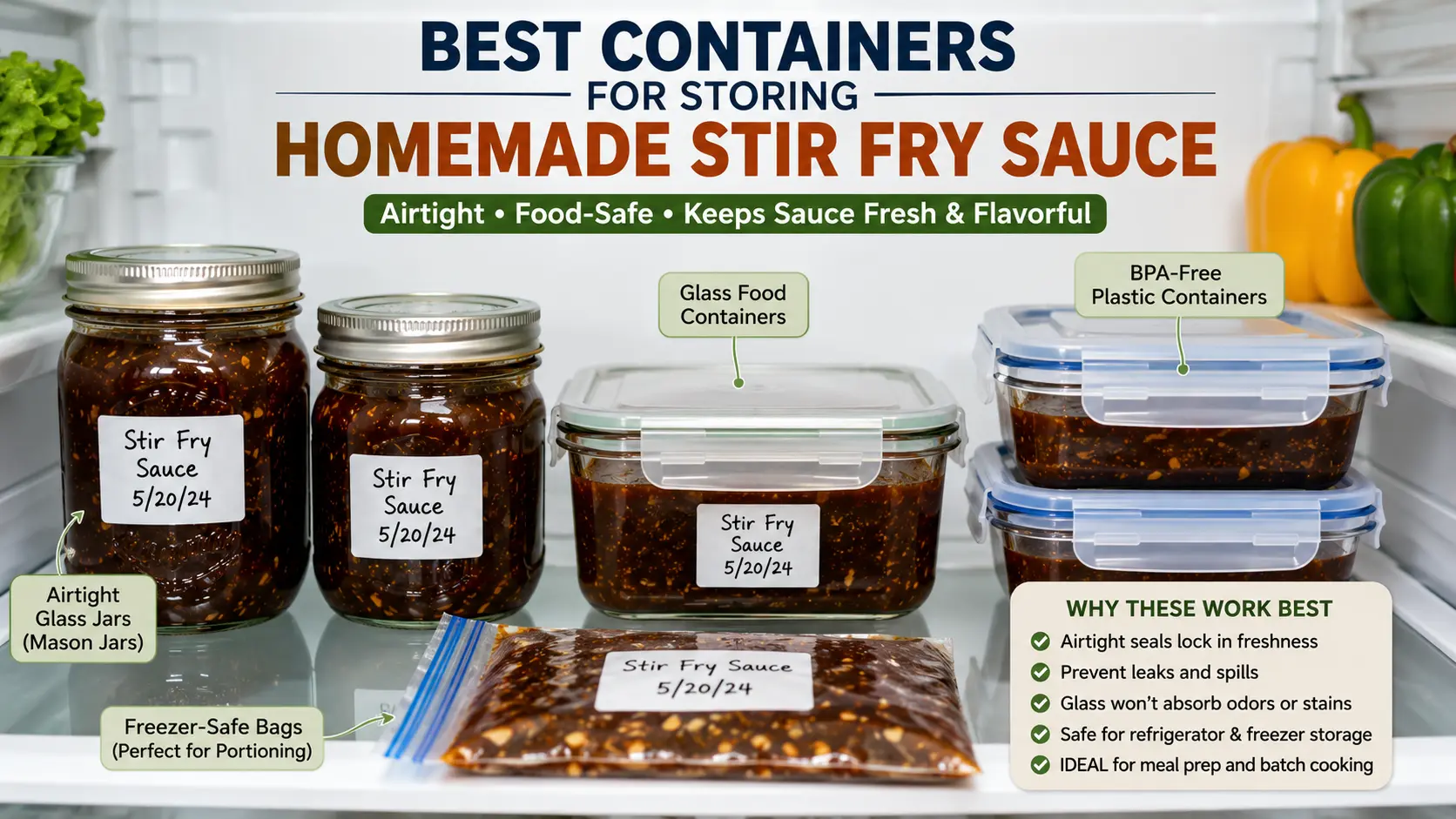
Glass Jars Are the Best Choice
Glass containers are generally the best option because they don’t absorb odors, stains, or flavors from ingredients like garlic, soy sauce, sesame oil, or ginger. They’re also easy to clean thoroughly between uses.
Mason jars or reusable glass food storage containers work especially well for homemade stir fry sauce. Their airtight lids help keep the sauce fresh while preventing refrigerator odors from affecting the flavor.
Kitchen Secret: Fill the container almost to the top while leaving a small amount of headspace. Less trapped air means slower oxidation, helping your homemade stir fry sauce stay fresher for longer.
Food-Grade Plastic Containers
High-quality BPA-free plastic containers are another practical option, particularly if you prepare multiple sauces for weekly meal prep. Choose containers designed specifically for food storage with secure, leak-proof lids.
Plastic is lightweight and convenient, but it may gradually absorb strong aromas from ingredients like garlic or sesame oil after repeated use. Replacing older containers periodically helps maintain food quality.
Freezer-Safe Bags for Portioning
If you’re making a large batch, freezer-safe bags are excellent for portioning individual servings. Lay the bags flat before freezing so they stack easily and thaw more quickly.
This method is particularly useful if you prepare different sauces for recipes like Teriyaki Chicken Stir Fry, Spicy Chicken Stir Fry, or Healthy Chicken Stir Fry.
| Container Type | Best For | Advantages |
|---|---|---|
| Glass Jar | Refrigerator storage | Non-reactive, reusable, easy to clean |
| Glass Food Container | Meal prep | Leak-resistant and durable |
| BPA-Free Plastic Container | Daily use | Lightweight and portable |
| Freezer Bag | Long-term freezing | Saves freezer space and stores individual portions |
How to Store Homemade Stir Fry Sauce in the Refrigerator
The refrigerator is the best place to store homemade stir fry sauce that you’ll use within the next several days. Proper refrigeration helps preserve flavor while slowing bacterial growth.
- Allow cooked sauce to cool to room temperature before refrigerating.
- Transfer the sauce into a clean airtight container.
- Seal the lid tightly.
- Label the container with the preparation date.
- Store it in the coldest part of the refrigerator rather than inside the door, where temperatures fluctuate more often.
If your sauce contains cornstarch, you may notice slight separation after refrigeration. This is completely normal. Simply stir or shake the sauce well before using it.
Warning: Never leave homemade stir fry sauce at room temperature for more than two hours. If the room temperature is above 90°F (32°C), refrigerate it within one hour to reduce the risk of bacterial growth.
If you’re unsure about the ideal sauce consistency before storage, our guide on How Much Stir Fry Sauce Should You Use? explains how to prepare the perfect amount for different recipes and serving sizes.
Can You Freeze Homemade Stir Fry Sauce?
Yes, you can absolutely store homemade stir fry sauce in the freezer if you want to keep it fresh for longer than a week. Freezing is one of the best ways to preserve both flavor and convenience, especially if you enjoy meal prepping or making large batches of sauce.
Most soy sauce-based stir fry sauces freeze very well because ingredients like soy sauce, vinegar, sesame oil, garlic, ginger, and sugar remain stable at freezing temperatures. While the texture may separate slightly after thawing, a quick stir or shake usually restores the sauce to its original consistency.
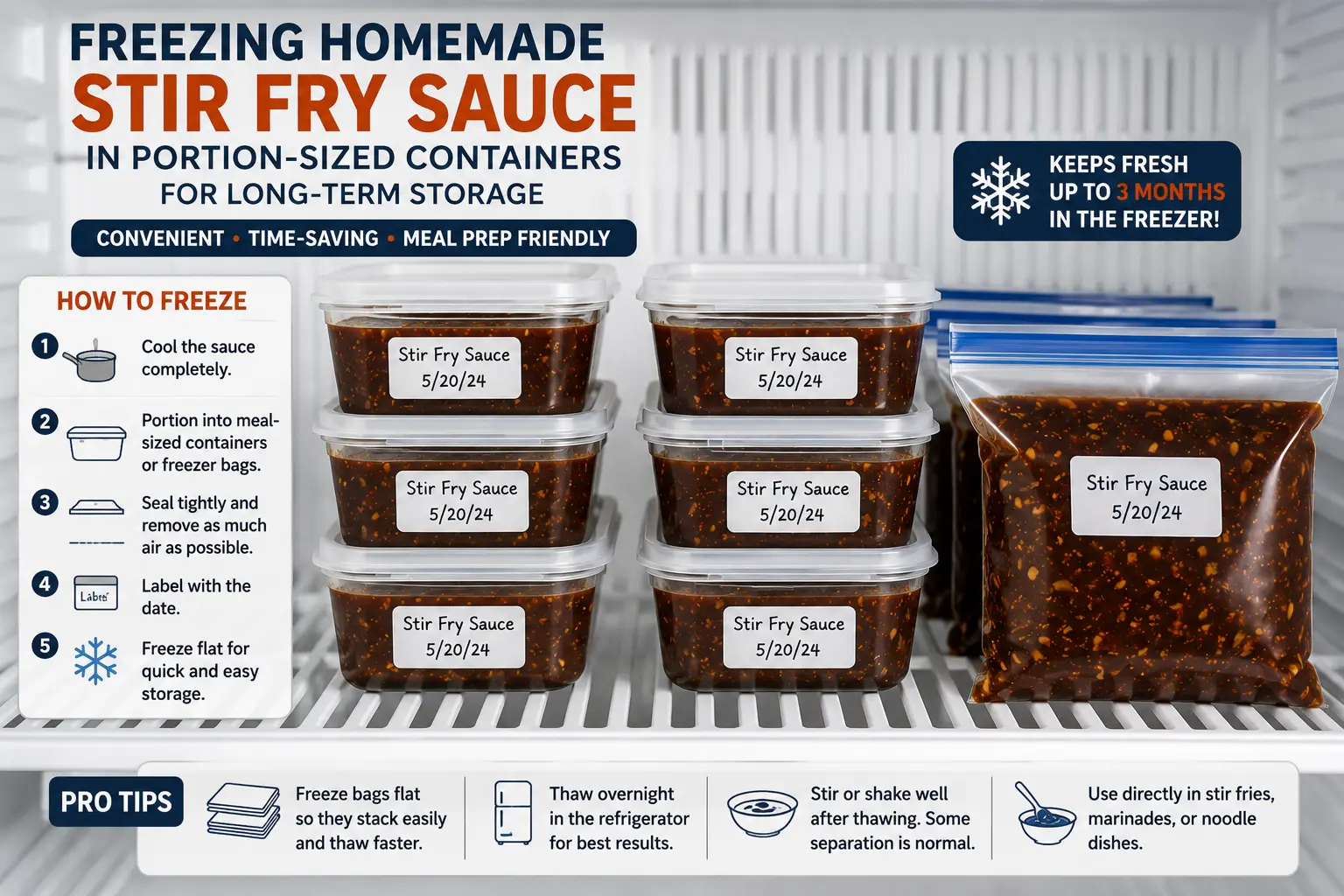
How to Freeze Stir Fry Sauce Correctly
Following a few simple steps helps maintain the quality of your sauce after thawing.
- Allow freshly cooked sauce to cool completely.
- Divide the sauce into meal-sized portions.
- Use freezer-safe containers or heavy-duty freezer bags.
- Leave about half an inch of space at the top because liquids expand when frozen.
- Label every container with the preparation date.
- Freeze immediately.
Smaller portions thaw much faster than one large container, making dinner preparation quicker on busy evenings.
Tip: Freeze enough sauce for one stir fry meal in each container. This prevents repeatedly thawing and refreezing the same batch, which can reduce both quality and food safety.
How Long Can Homemade Stir Fry Sauce Stay Frozen?
For the best flavor and texture, freeze homemade stir fry sauce for up to 3 months. Although frozen food remains safe longer when continuously frozen, the quality gradually declines over time.
If your sauce contains fresh herbs or citrus juice, those flavors may become slightly milder after freezing. Fortunately, the overall taste remains excellent for everyday cooking.
For a complete freezing guide, visit our article on Can You Freeze Homemade Stir Fry Sauce?, where you’ll find additional tips for freezing different sauce variations.
The Best Way to Thaw Frozen Stir Fry Sauce
The safest way to thaw frozen sauce is overnight in the refrigerator. Slow thawing helps preserve flavor while keeping the sauce at a safe temperature.
If you’re short on time, place the sealed container in a bowl of cold water until thawed. Avoid leaving frozen sauce on the kitchen counter because bacteria can multiply rapidly once parts of the sauce warm into the danger zone.
Kitchen Secret: After thawing, shake the container vigorously or whisk the sauce for about 30 seconds. This quickly recombines ingredients like sesame oil and cornstarch that naturally separate during freezing.
How Long Does Homemade Stir Fry Sauce Last?
One of the most common questions people ask after learning how to store homemade stir fry sauce is how long it actually stays fresh. The answer depends on how the sauce is stored and whether it has been frozen.
Fresh ingredients like garlic and ginger limit the shelf life compared to commercial sauces that contain preservatives. That’s why it’s important to prepare only what you’ll realistically use or freeze extra portions for later.
| Storage Method | Recommended Storage Time | Best Quality |
|---|---|---|
| Room Temperature | Maximum 2 hours | Use immediately |
| Refrigerator | 5–7 days | Excellent |
| Freezer | Up to 3 months | Very Good |
If you’re preparing sauces for recipes like Chicken Broccoli Stir Fry or Chicken Veggie Stir Fry, storing individual portions helps reduce waste while making weeknight meals much faster to prepare.
How to Tell If Homemade Stir Fry Sauce Has Gone Bad
Even when you store homemade stir fry sauce correctly, it won’t stay fresh forever. Knowing how to recognize spoilage is just as important as using the right storage method. Since homemade sauces don’t contain preservatives, you should always inspect the sauce before using it.
If you’re ever unsure whether a batch is still safe, it’s better to throw it away than risk foodborne illness. Fresh ingredients like garlic, ginger, and cornstarch can spoil faster than many people expect.
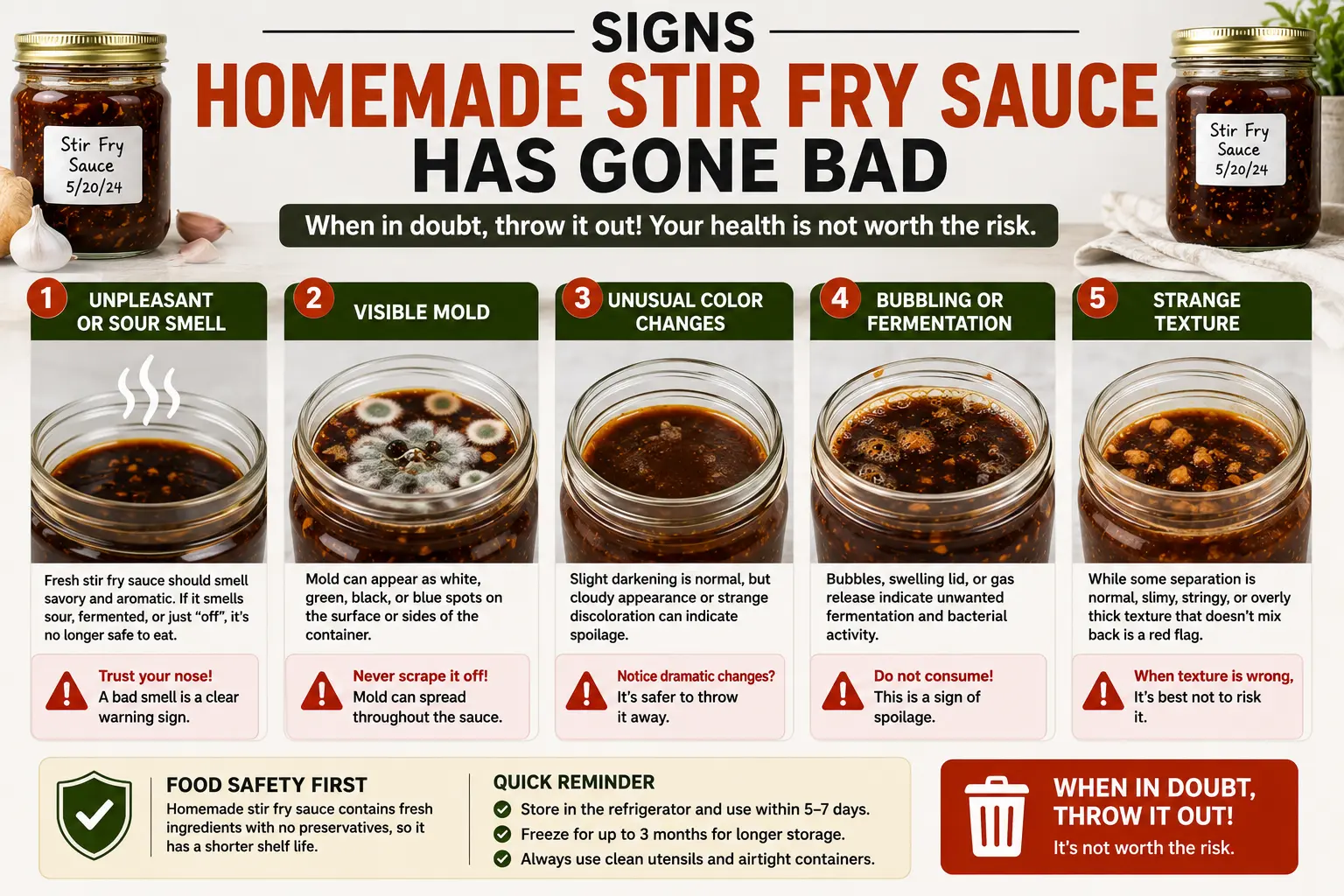
1. An Unpleasant or Sour Smell
Fresh stir fry sauce should smell savory, slightly sweet, and aromatic from ingredients like garlic, ginger, soy sauce, and sesame oil. If the sauce develops a sour, fermented, or unpleasant odor, it’s no longer safe to eat.
2. Visible Mold
Mold is one of the clearest signs that homemade stir fry sauce should be discarded immediately. Mold may appear as fuzzy white, green, black, or blue spots on the surface or around the inside edge of the container.
Warning: Never scrape mold off homemade stir fry sauce and use the remaining portion. Mold roots and harmful microorganisms may spread throughout the sauce even if they aren’t visible.
3. Unusual Color Changes
Slight darkening over several days can happen naturally because soy sauce oxidizes. However, dramatic color changes, cloudy patches, or unexpected discoloration often indicate spoilage.
4. Bubbling or Fermentation
If the container appears swollen or you notice bubbles forming without heating the sauce, unwanted fermentation may be occurring. This indicates microbial activity, and the sauce should be discarded.
5. Strange Texture
Some separation is completely normal, especially in sauces containing sesame oil or cornstarch. However, if the sauce becomes unusually thick, slimy, stringy, or develops large clumps that don’t disappear after stirring, it’s safest to throw it away.
Tip: Before using refrigerated sauce, give it a quick shake or stir. Natural separation is expected and doesn’t necessarily mean the sauce has spoiled.
Common Mistakes When Storing Homemade Stir Fry Sauce
Many people unknowingly shorten the shelf life of their sauce by making a few simple storage mistakes. Avoiding these common errors helps you store homemade stir fry sauce safely while maintaining its flavor and quality.
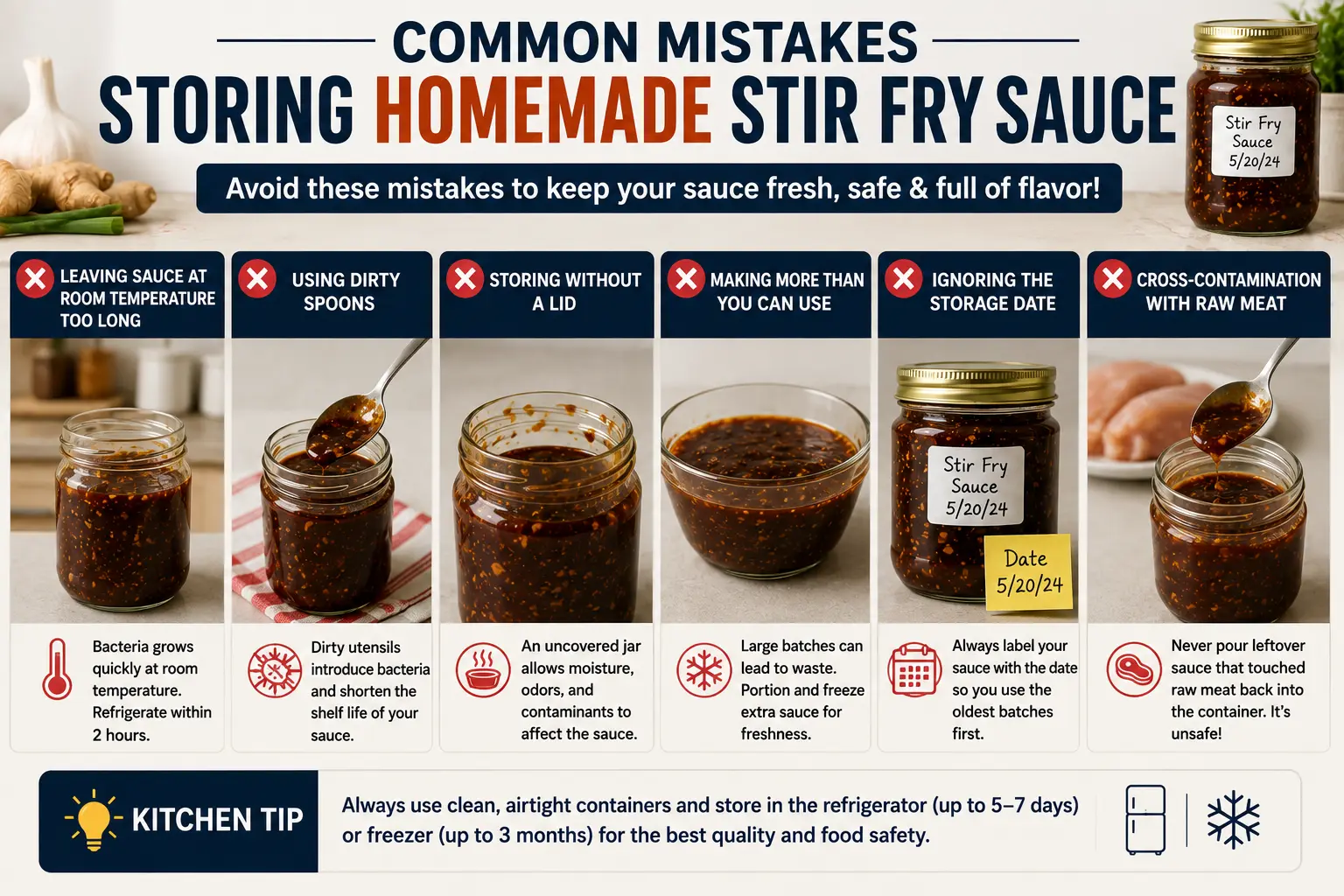
Leaving the Sauce at Room Temperature Too Long
One of the biggest mistakes is forgetting the sauce on the kitchen counter after cooking. Harmful bacteria grow rapidly between 40°F and 140°F (4°C and 60°C), so refrigerate the sauce as soon as it has cooled.
Using Dirty Spoons
Always use a clean spoon when serving homemade stir fry sauce. Double-dipping or using utensils that have touched raw meat can introduce bacteria into the container.
Storing the Sauce Without a Lid
An uncovered container allows moisture, refrigerator odors, and airborne contaminants to affect the sauce. Always seal the container tightly after each use.
Making More Than You Can Use
Preparing an extremely large batch may seem convenient, but much of it may go to waste if you don’t freeze extra portions. Instead, divide larger batches into refrigerator and freezer portions immediately.
Kitchen Secret: Meal-prep enthusiasts often freeze several small containers instead of one large one. This keeps every portion tasting fresher because only the amount needed for one meal is thawed.
Ignoring the Storage Date
Even if homemade stir fry sauce still looks good, always check the date before using it. Labeling containers helps ensure older batches are used first and reduces unnecessary food waste.
If you’re creating your own sauce from scratch, our guides on Easy Homemade Stir Fry Sauce and Common Stir Fry Sauce Mistakes can help you prepare better-tasting sauces that store well.
Storage Summary: Refrigerate homemade stir fry sauce in a clean airtight container for up to 5–7 days, or freeze individual portions for up to 3 months. Always label containers with the preparation date and discard the sauce immediately if you notice mold, a sour smell, fermentation, or unusual texture.
Expert Tips for Keeping Homemade Stir Fry Sauce Fresh Longer
Once you know how to store homemade stir fry sauce, a few simple habits can help preserve its flavor, texture, and quality even better. These expert tips are easy to follow and make a noticeable difference, especially if you prepare sauce regularly for weekly meal prep.
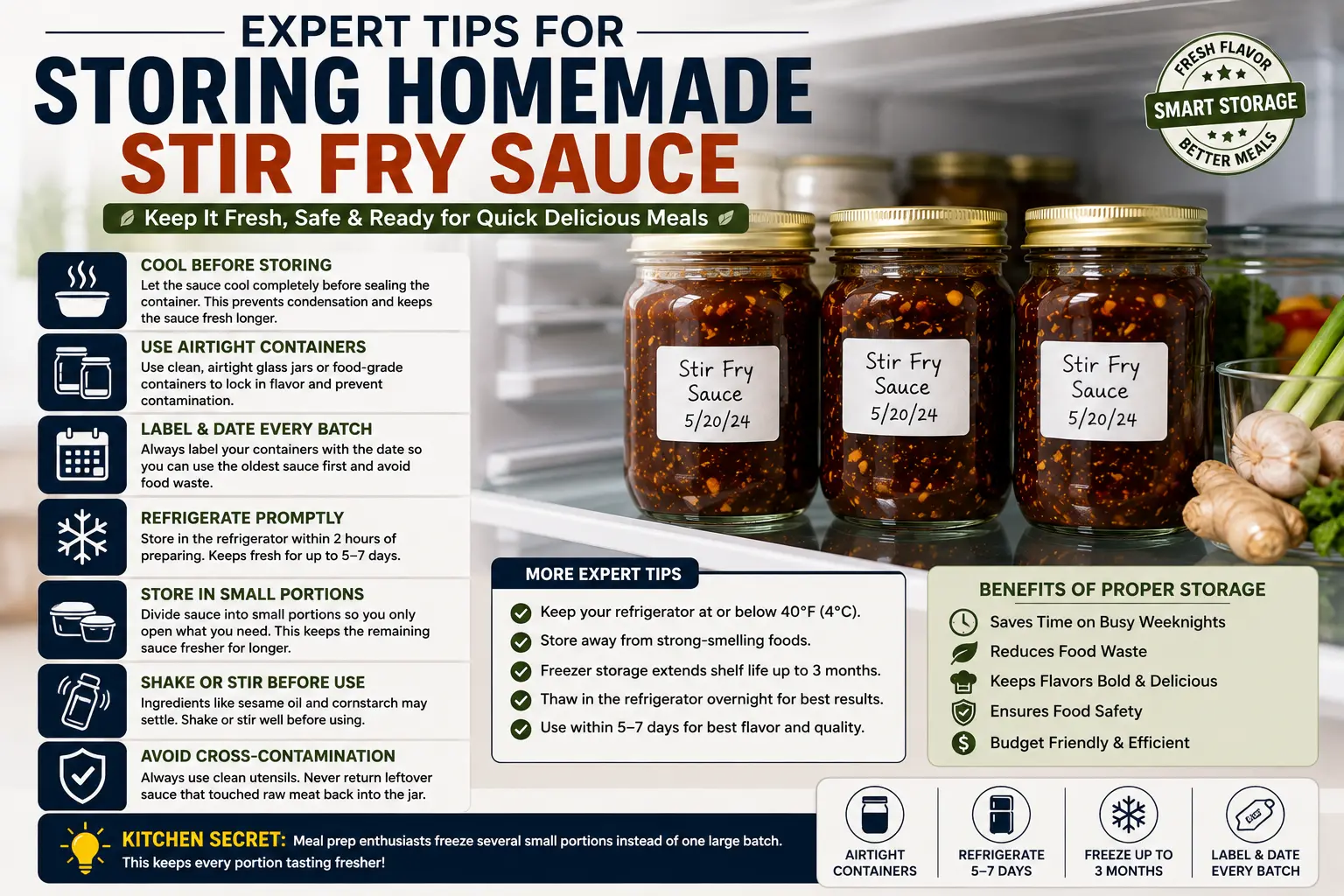
Cool the Sauce Before Sealing
If you’ve cooked your stir fry sauce, allow it to cool before placing the lid on the container. Sealing hot sauce traps steam inside, creating excess moisture that can shorten its shelf life and dilute the flavor.
Store Small Portions Instead of One Large Batch
Dividing homemade stir fry sauce into smaller containers reduces how often each portion is exposed to air. Since you’ll only open one container at a time, the remaining portions stay fresher for longer.
Keep Refrigeration Temperatures Consistent
Store the sauce toward the back of the refrigerator instead of the door. Every time the refrigerator door opens, the temperature changes slightly, which can reduce the sauce’s overall freshness over several days.
Kitchen Secret: Professional kitchens often prepare stir fry sauce in advance, but they always use dated containers and rotate older batches first. Following the same “first in, first out” method at home helps reduce waste while ensuring every meal uses the freshest sauce available.
Avoid Cross-Contamination
Never pour leftover sauce that has touched raw chicken, beef, pork, or seafood back into the storage container. Once the sauce comes into contact with raw proteins, bacteria can multiply quickly, making the remaining sauce unsafe for future use.
Shake Before Every Use
Ingredients such as sesame oil, cornstarch, garlic, and ginger naturally settle during storage. A quick shake or stir restores the sauce’s consistency without affecting its quality.
Prepare Only What You’ll Need
While freezing works well, making moderate batches often provides the freshest results. If you regularly cook recipes like Honey Garlic Chicken Stir Fry or Chicken Stir Fry, preparing enough sauce for one week’s meals is usually ideal.
Benefits of Proper Storage
- Keeps homemade stir fry sauce fresh longer.
- Reduces food waste.
- Saves time during meal prep.
- Maintains better flavor and texture.
- Improves food safety.
- Makes weeknight cooking faster.
Potential Drawbacks
- Requires refrigerator or freezer space.
- Homemade sauce has a shorter shelf life than store-bought versions.
- Some separation may occur during storage.
- Containers must be cleaned thoroughly between uses.
Quick Storage Checklist
Use this checklist every time you store homemade stir fry sauce to maximize freshness and food safety.
- ✔ Allow cooked sauce to cool before storing.
- ✔ Use clean airtight containers.
- ✔ Label each container with the preparation date.
- ✔ Refrigerate within two hours.
- ✔ Freeze extra portions you won’t use within a week.
- ✔ Always use clean utensils.
- ✔ Shake refrigerated sauce before cooking.
- ✔ Discard any sauce with mold, sour odor, or unusual texture.
Following these simple practices makes it easy to keep homemade stir fry sauce fresh, flavorful, and ready whenever you need a quick dinner. Combined with proper refrigeration and freezing techniques, they’ll help you get the most out of every batch you prepare.
If you’d like to improve your homemade sauces even further, explore our Ultimate Chicken Stir Fry Sauce Guide for additional flavor tips, consistency advice, and sauce variations.
Frequently Asked Questions
How long can you store homemade stir fry sauce in the refrigerator?
If you store homemade stir fry sauce in a clean airtight container and refrigerate it promptly, it will typically stay fresh for 5 to 7 days. For the best flavor and quality, use it as early as possible within that timeframe.
Can you freeze homemade stir fry sauce?
Yes. Homemade stir fry sauce freezes very well. Portion the sauce into freezer-safe containers or bags and freeze for up to 3 months. Thaw it overnight in the refrigerator and stir well before using.
Why does homemade stir fry sauce separate after refrigeration?
Separation is completely normal. Ingredients like sesame oil and cornstarch naturally settle during storage. Simply shake or stir the sauce until it becomes smooth again before adding it to your stir fry.
Can I use homemade stir fry sauce after one week?
It’s generally safest to use refrigerated homemade stir fry sauce within 5–7 days. After that, the risk of spoilage increases, even if the sauce still appears normal.
What is the best container for storing homemade stir fry sauce?
Airtight glass jars or glass food storage containers are the best choices. They don’t absorb odors or stains, are easy to clean, and help preserve the sauce’s fresh flavor.
How do I know if homemade stir fry sauce has spoiled?
Discard the sauce immediately if you notice mold, a sour or unpleasant smell, bubbling, unusual discoloration, or a slimy texture. When in doubt, throw it out rather than risk foodborne illness.
References
Final Thoughts
Learning how to store homemade stir fry sauce is one of the easiest ways to make home cooking more convenient while reducing food waste. A few simple habits—using airtight containers, refrigerating the sauce promptly, labeling each batch, and freezing extra portions—can significantly extend freshness without sacrificing flavor.
Whether you’re preparing sauce for a quick Chicken Stir Fry, a flavorful Garlic Chicken Stir Fry, or a healthier weeknight meal, proper storage ensures your homemade sauce is always ready when you need it.
By following the food safety practices and storage tips in this guide, you’ll confidently store homemade stir fry sauce, keep every batch tasting its best, and enjoy faster, easier stir fry dinners throughout the week.
🍽️ You Might Also Like



📧 Save This Recipe For Later
Enter your email and we will send this recipe directly to your inbox.