
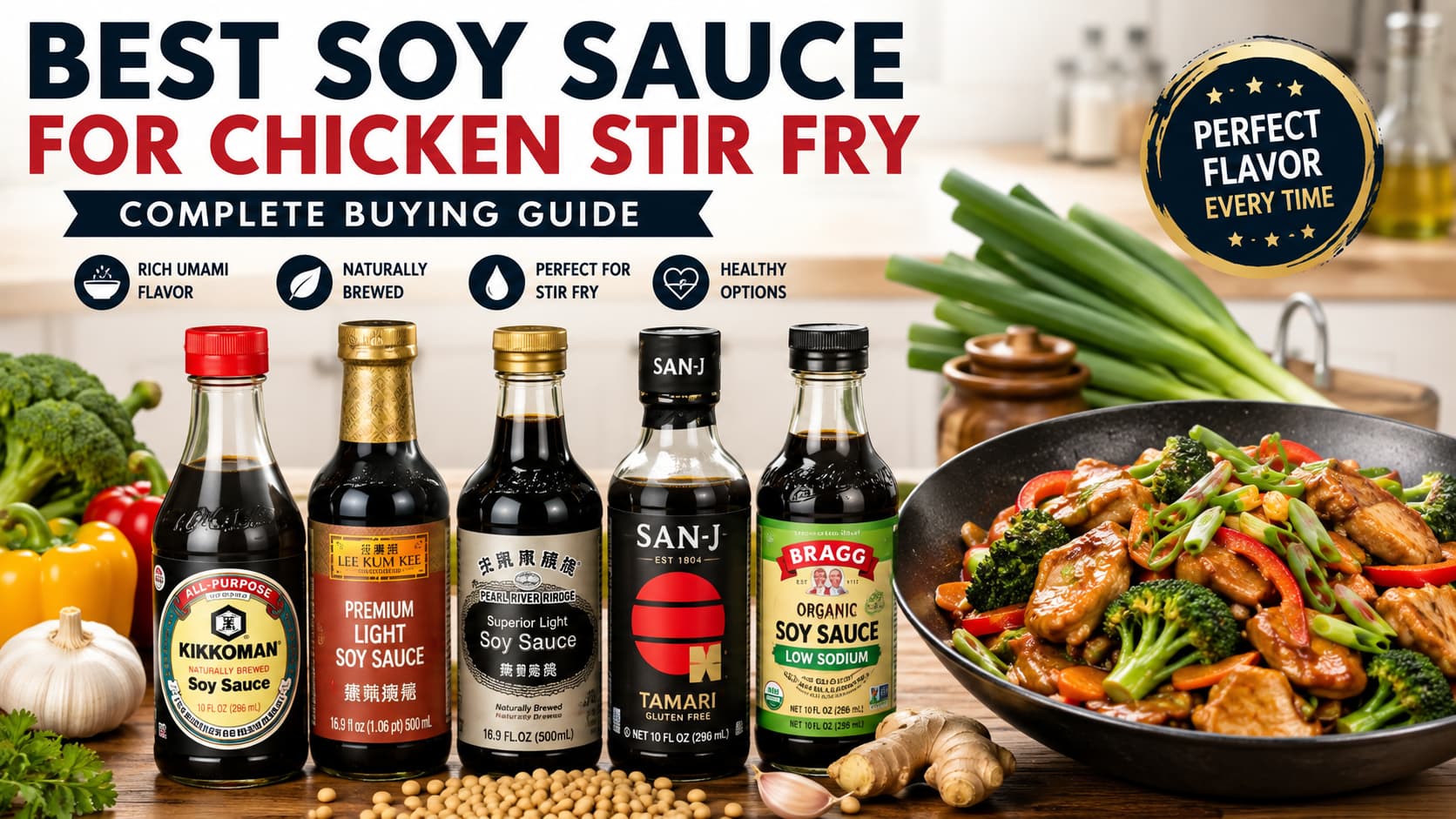
Best Soy Sauce for Chicken Stir Fry (Complete Buying Guide)
Best Soy Sauce for Chicken Stir Fry (Complete Buying Guide)
If you’ve ever wondered why restaurant chicken stir fry tastes richer, more balanced, and more flavorful than homemade versions, the answer often comes down to one ingredient: soy sauce. Choosing the best soy sauce for chicken stir fry isn’t just about buying the most expensive bottle. Different soy sauces vary in flavor, saltiness, sweetness, color, and fermentation methods, and each one affects the final dish differently.
Whether you’re making a quick weeknight dinner or trying to recreate authentic Asian-style stir fry at home, selecting the right soy sauce can dramatically improve your results. The best option depends on your cooking style, preferred flavor, sodium needs, and the type of stir fry you’re preparing.
In this complete buying guide, you’ll learn how different soy sauces compare, what features to look for before purchasing, which varieties work best for chicken stir fry, and common mistakes to avoid. By the end, you’ll know exactly which bottle belongs in your pantry.
Quick Answer
The best soy sauce for chicken stir fry is naturally brewed light soy sauce because it delivers balanced saltiness, deep umami flavor, and enhances chicken without overpowering fresh vegetables. For richer color and slight sweetness, many recipes combine light soy sauce with a small amount of dark soy sauce. If you prefer healthier meals, low-sodium soy sauce is an excellent alternative that lets other ingredients shine while reducing overall sodium intake.
- Choose naturally brewed soy sauce whenever possible.
- Light soy sauce is ideal for everyday chicken stir fry.
- Dark soy sauce is best used in small amounts for color and richness.
- Low-sodium varieties work well for healthier recipes.
- Avoid sauces containing excessive additives or artificial flavorings.
Table of Contents
Why Choosing the Right Soy Sauce Matters
Many people assume all soy sauces taste the same, but that’s far from true. Every bottle is made differently, and those differences directly influence the flavor, appearance, and overall quality of your chicken stir fry.
The best soy sauce for chicken stir fry should complement the natural flavor of chicken rather than dominate it. A well-balanced soy sauce enhances savory notes, helps caramelize the sauce during high-heat cooking, and creates the glossy finish that makes stir fry so appealing.
Premium soy sauces are naturally fermented over several months, allowing complex flavors to develop naturally. In contrast, chemically produced soy sauces often taste harsher, saltier, and less balanced.
Tip: Look for labels that say “Naturally Brewed” or “Traditionally Fermented.” These products usually provide deeper umami flavor and better overall quality for stir frying.
Another important factor is balance. Chicken has a relatively mild flavor, which means the sauce should enhance—not overpower—the meat. A quality soy sauce also pairs well with garlic, ginger, sesame oil, vegetables, and other common stir fry ingredients, creating layers of flavor instead of overwhelming saltiness.
If you’re planning to make different variations like Classic Chicken Stir Fry, Garlic Chicken Stir Fry, or Healthy Chicken Stir Fry, investing in the best soy sauce for chicken stir fry will improve every recipe you prepare.
Understanding the Different Types of Soy Sauce
Not every bottle labeled “soy sauce” is designed for the same purpose. Some are made to season food during cooking, while others are intended as dipping sauces or finishing sauces. Understanding these differences makes it much easier to choose the best soy sauce for chicken stir fry and avoid disappointing results.
Professional chefs often keep multiple soy sauces in their kitchens because each one contributes something unique. For most home cooks, however, learning the basic categories is enough to consistently make flavorful chicken stir fry.
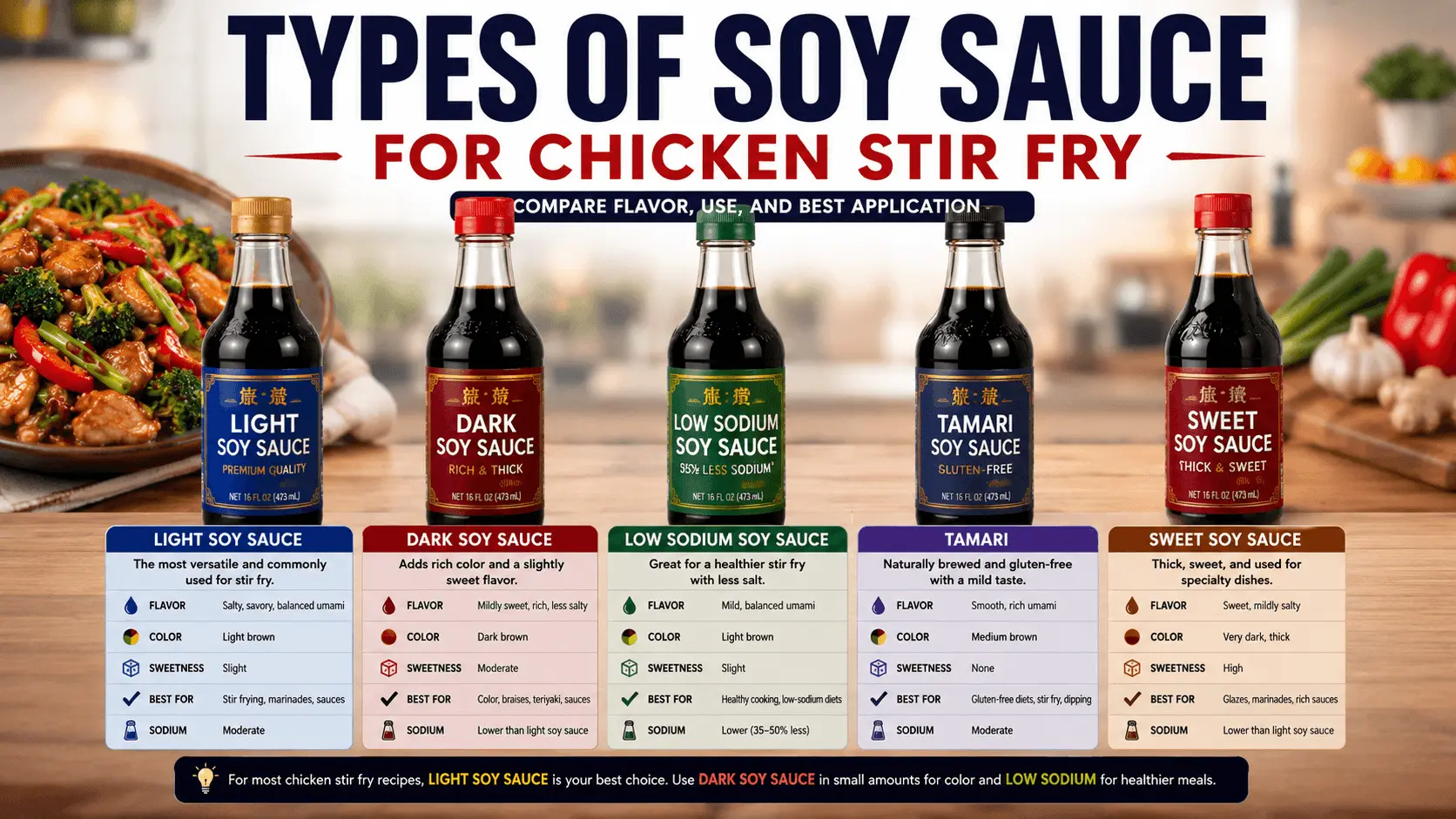
| Type | Flavor | Best For | Recommended for Stir Fry? |
|---|---|---|---|
| Light Soy Sauce | Salty, balanced, rich umami | Everyday cooking | ⭐⭐⭐⭐⭐ |
| Dark Soy Sauce | Slightly sweet, less salty | Color and richness | ⭐⭐⭐⭐ |
| Low-Sodium Soy Sauce | Milder saltiness | Health-conscious cooking | ⭐⭐⭐⭐⭐ |
| Tamari | Smooth, rich, gluten-free | Gluten-free recipes | ⭐⭐⭐⭐ |
| Sweet Soy Sauce | Very sweet and thick | Specialty dishes | ⭐⭐ |
While each variety has its place, naturally brewed light soy sauce remains the top recommendation for most chicken stir fry recipes because it provides the ideal balance of salt, umami, and aroma.
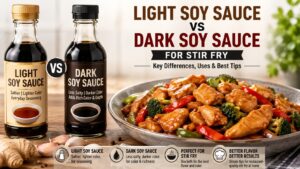
Light Soy Sauce
Light soy sauce is the foundation of most stir fry recipes. Despite its name, the word “light” refers to its color rather than its sodium content. It delivers clean, savory flavor while allowing garlic, ginger, vegetables, and chicken to remain the stars of the dish.
If you’re buying only one bottle, this is generally the best soy sauce for chicken stir fry. It blends easily into sauces, marinades, and finishing glazes without making the dish overly dark.
Dark Soy Sauce
Dark soy sauce is aged longer and usually contains molasses or caramel, giving it a thicker texture and deeper color. It isn’t typically used alone because its sweetness can overpower delicate ingredients.
Instead, many restaurant recipes combine mostly light soy sauce with a small splash of dark soy sauce to achieve the rich brown color associated with classic stir fry dishes.
Kitchen Secret: A ratio of about 4 parts light soy sauce to 1 part dark soy sauce creates excellent flavor and color for most chicken stir fry recipes without making the sauce overly sweet.
Low-Sodium Soy Sauce
If you’re trying to reduce salt intake without sacrificing flavor, low-sodium soy sauce is an excellent option. It typically contains about 35–50% less sodium than regular soy sauce while still delivering plenty of umami.
Many home cooks discover that using low-sodium soy sauce actually creates a more balanced stir fry because it allows the natural flavors of chicken and vegetables to stand out.
If you’re unsure whether reduced-sodium products are right for your cooking style, our guide to Low-Sodium Soy Sauce vs. Regular Soy Sauce explains the differences in greater detail.
Once you understand these varieties, choosing the best soy sauce for chicken stir fry becomes much easier, and you’ll be able to match the right soy sauce to every recipe you cook.
How to Choose the Best Soy Sauce for Chicken Stir Fry
Walking down the soy sauce aisle can be overwhelming. Some bottles advertise “premium,” others say “naturally brewed,” while some are labeled reduced sodium, organic, or gluten-free. Understanding what these labels actually mean will help you choose the best soy sauce for chicken stir fry instead of relying on marketing claims.
A quality soy sauce should enhance your stir fry with rich umami flavor, balanced saltiness, and a pleasant aroma. It should blend smoothly with garlic, ginger, sesame oil, and other ingredients without overpowering the dish.
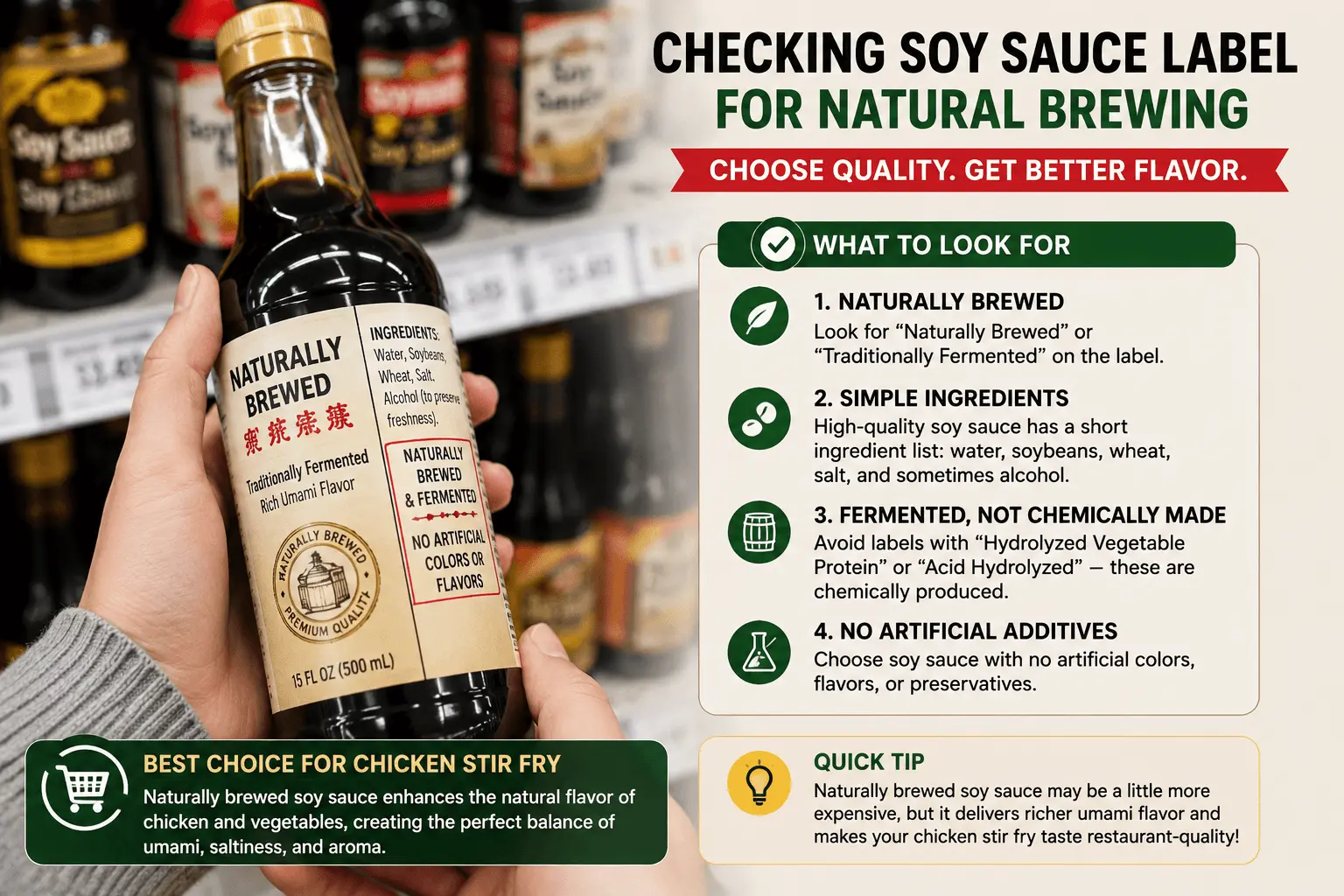
1. Choose Naturally Brewed Soy Sauce
The first thing to check is how the soy sauce is made. Naturally brewed soy sauce is fermented over several months, allowing complex flavors to develop naturally. This traditional process produces a smoother taste and deeper umami than chemically produced alternatives.
You can usually identify naturally brewed soy sauce by reading the label. Look for phrases such as “Naturally Brewed”, “Traditionally Fermented”, or “Fermented Soybeans.”
Tip: A shorter ingredient list is usually a good sign. High-quality soy sauce typically contains soybeans, wheat, water, salt, and fermenting cultures.
2. Consider Sodium Content
Salt is one of the biggest differences between soy sauce brands. Some products contain nearly twice as much sodium as others, which can significantly affect the flavor of your finished stir fry.
If your recipe also includes oyster sauce, hoisin sauce, or chicken broth, using a low-sodium soy sauce often creates a better balance. You can always add more seasoning later, but it’s difficult to fix an overly salty dish.
3. Avoid Excessive Additives
Many inexpensive soy sauces contain artificial colors, preservatives, flavor enhancers, or corn syrup. While these products are generally safe to consume, they often lack the clean, balanced flavor that naturally brewed soy sauce provides.
The best soy sauce for chicken stir fry doesn’t need a long list of additives to taste great. Simpler ingredients usually produce a more authentic flavor.
Warning: Some products labeled “soy sauce” are chemically hydrolyzed instead of naturally fermented. These can taste noticeably harsher and may leave an overly salty aftertaste in stir fry.
4. Think About Your Cooking Style
Your ideal soy sauce also depends on how you cook. If you frequently prepare healthy meals with plenty of vegetables, a low-sodium option may be the best fit. If you enjoy restaurant-style dishes with darker sauces, keeping both light and dark soy sauce in your pantry offers greater flexibility.
Home cooks who prepare recipes like Chicken Broccoli Stir Fry or Chicken Veggie Stir Fry often find that naturally brewed light soy sauce works beautifully across a wide variety of meals.
5. Buy the Right Bottle Size
Soy sauce has a long shelf life, but its flavor gradually declines after opening. If you only cook stir fry occasionally, purchasing a smaller bottle helps ensure you’re always using fresh soy sauce with its best flavor.
Families who prepare Asian-inspired meals several times a week may benefit from larger bottles, especially if light soy sauce is their everyday seasoning.
Taking a few extra minutes to compare labels and ingredients will help you confidently choose the best soy sauce for chicken stir fry, giving your homemade dishes the same rich, balanced flavor found in your favorite restaurants.
Best Types of Soy Sauce for Different Chicken Stir Fry Recipes
There isn’t one perfect soy sauce for every recipe. The best soy sauce for chicken stir fry depends on the ingredients you’re using, the flavor profile you want, and whether you’re aiming for a light, healthy meal or a rich restaurant-style dish.
Professional chefs often combine two or more soy sauces to achieve the perfect balance of saltiness, color, sweetness, and umami. Fortunately, home cooks can get excellent results by understanding which type works best in different situations.
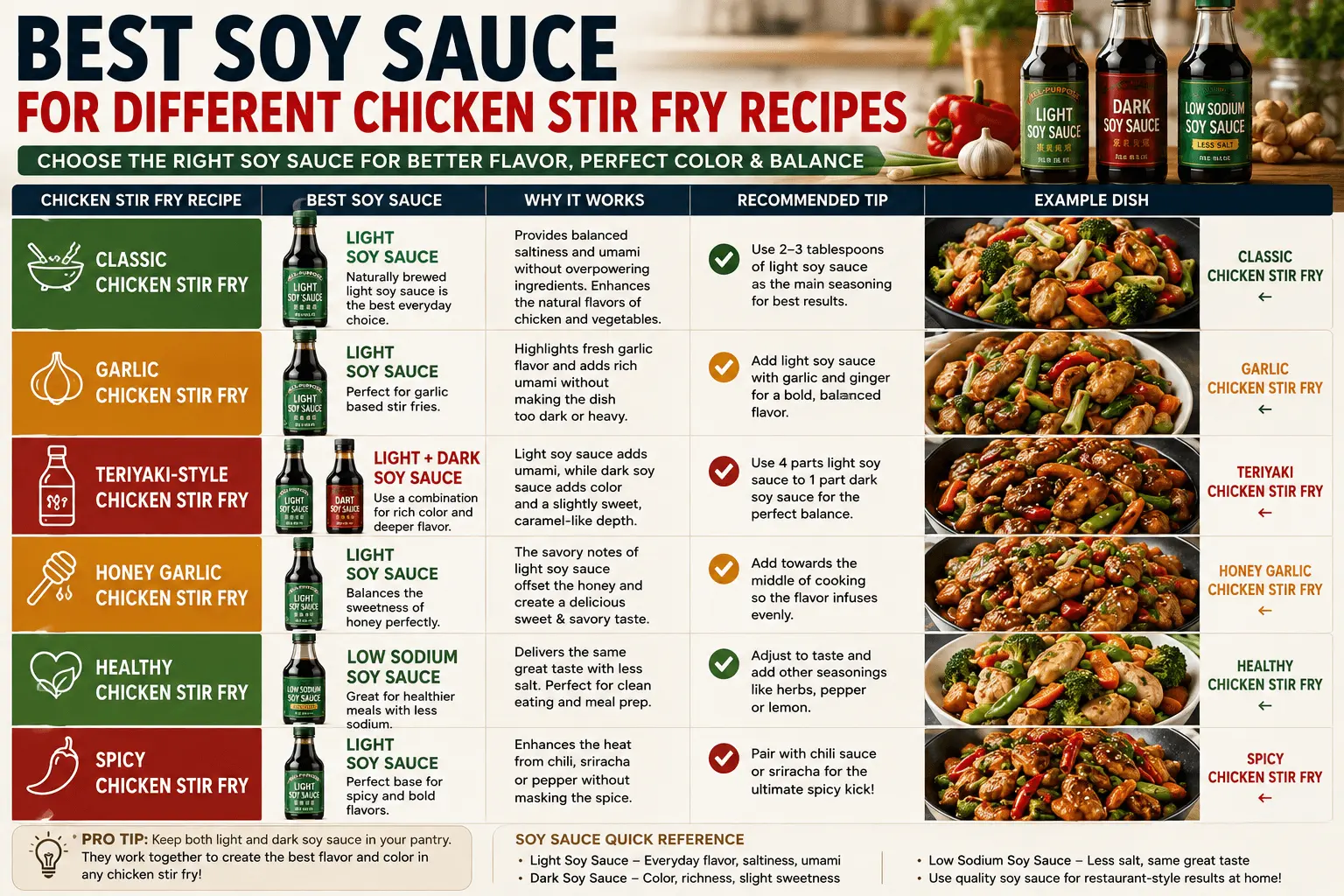
| Chicken Stir Fry Style | Recommended Soy Sauce | Why It Works |
|---|---|---|
| Classic Chicken Stir Fry | Light Soy Sauce | Balanced flavor and natural umami |
| Garlic Chicken Stir Fry | Light Soy Sauce | Enhances garlic without overpowering it |
| Teriyaki Chicken Stir Fry | Light + Dark Soy Sauce | Creates rich color and deeper flavor |
| Honey Garlic Chicken Stir Fry | Light Soy Sauce | Balances the sweetness of honey |
| Healthy Chicken Stir Fry | Low-Sodium Soy Sauce | Reduces sodium while keeping great flavor |
| Spicy Chicken Stir Fry | Light Soy Sauce | Supports spicy ingredients without masking them |
Classic Chicken Stir Fry
For a traditional chicken stir fry, naturally brewed light soy sauce remains the best soy sauce for chicken stir fry. It delivers clean umami flavor while allowing fresh vegetables and tender chicken to remain the focus of the dish.
If you’re making our Classic Chicken Stir Fry, light soy sauce provides all the seasoning you need without making the sauce too dark.
Garlic-Based Stir Fry
Garlic has a bold flavor that can easily become bitter if overpowered by heavy sauces. Light soy sauce complements fresh garlic beautifully, creating a balanced sauce that highlights both ingredients.
For recipes such as Garlic Chicken Stir Fry, avoid using too much dark soy sauce because it can hide the fresh garlic flavor.
Teriyaki-Style Chicken Stir Fry
Teriyaki recipes benefit from a combination of soy sauces. Light soy sauce provides the primary seasoning, while a small amount of dark soy sauce creates the glossy appearance and rich brown color commonly seen in restaurant dishes.
If you’re preparing Teriyaki Chicken Stir Fry, combining both varieties produces the most authentic results.
Chef’s Secret: Instead of replacing light soy sauce with dark soy sauce, add just one teaspoon of dark soy sauce near the end of cooking. This creates a beautiful color without making the sauce overly sweet.
Healthy Chicken Stir Fry
For lighter meals packed with vegetables, reduced-sodium soy sauce is often the best soy sauce for chicken stir fry. It provides excellent flavor while keeping sodium levels under control.
This is especially useful when preparing recipes like Healthy Chicken Stir Fry or vegetable-heavy dishes where the fresh ingredients should remain the star.
Sweet and Savory Stir Fry Recipes
Recipes that include honey, brown sugar, pineapple, or sweet chili sauce already contain plenty of sweetness. In these dishes, regular light soy sauce creates a better balance than sweet soy sauce.
For example, Honey Garlic Chicken Stir Fry develops a perfectly balanced flavor when naturally brewed light soy sauce offsets the sweetness of the honey.
Matching the soy sauce to your recipe is one of the easiest ways to improve flavor. Once you understand how each variety performs, choosing the best soy sauce for chicken stir fry becomes simple, no matter which version you’re cooking.
Common Mistakes When Buying Soy Sauce for Chicken Stir Fry
Even experienced home cooks sometimes choose the wrong soy sauce or use it incorrectly. These mistakes can lead to overly salty, bland, or unbalanced stir fry. Understanding what to avoid will help you consistently choose the best soy sauce for chicken stir fry and get better results every time.
Buying Based Only on Price
It can be tempting to grab the least expensive bottle on the shelf, but cheaper isn’t always better. Low-cost soy sauces are often chemically produced instead of naturally fermented. While they may save a few dollars, they usually lack the rich umami flavor and balanced taste that make homemade stir fry stand out.
Spending slightly more on a naturally brewed soy sauce often provides noticeably better flavor and lasts through many meals, making it a worthwhile investment.
Warning: Don’t assume the most expensive soy sauce is automatically the best. Read the ingredient list and choose products that are naturally brewed rather than relying on price alone.
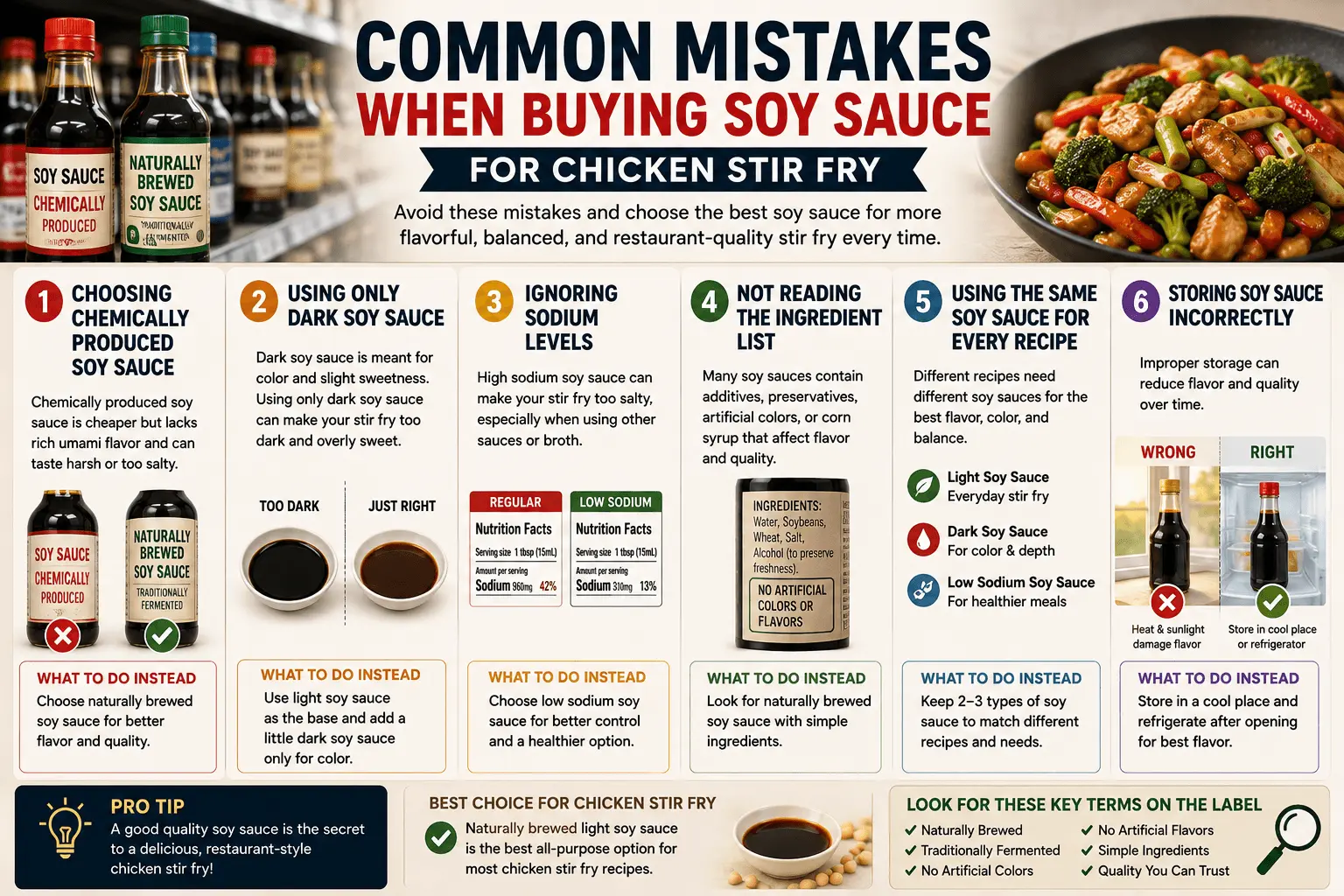
Using Only Dark Soy Sauce
Dark soy sauce has a rich color and mild sweetness, but it isn’t intended to replace light soy sauce in most stir fry recipes. Using only dark soy sauce can make chicken stir fry look overly dark while masking the fresh flavors of vegetables and aromatics.
Instead, use dark soy sauce as a complementary ingredient alongside light soy sauce for the best balance.
Ignoring Sodium Levels
Some soy sauces contain significantly more sodium than others. If your recipe also includes oyster sauce, hoisin sauce, or broth, using a regular soy sauce may make the finished dish too salty.
Choosing a reduced-sodium product gives you greater control over seasoning while still delivering plenty of savory flavor.
If you’re unsure which option fits your cooking style, read our comparison of Low-Sodium Soy Sauce vs. Regular Soy Sauce.
Not Reading the Ingredient List
Many shoppers never turn the bottle around to check the ingredients. However, this is one of the easiest ways to identify quality soy sauce.
The best soy sauce for chicken stir fry usually contains only a few simple ingredients, such as soybeans, wheat, water, salt, and fermenting cultures. Products filled with artificial colors, corn syrup, or excessive preservatives often deliver a less authentic flavor.
Using the Same Soy Sauce for Every Recipe
Different chicken stir fry recipes benefit from different soy sauces. A healthy vegetable stir fry may taste best with low-sodium soy sauce, while teriyaki-style dishes often benefit from combining light and dark soy sauce.
Having two varieties in your pantry gives you much more flexibility without requiring a large investment.
Tip: Many experienced home cooks keep one bottle of naturally brewed light soy sauce for everyday cooking and one bottle of dark soy sauce for adding color to special recipes.
Should You Keep More Than One Soy Sauce at Home?
If you regularly cook Asian-inspired meals, the answer is yes. Keeping multiple soy sauces allows you to match the seasoning to each recipe instead of forcing one product to do everything.
A simple pantry setup includes:
- Light soy sauce for everyday stir frying.
- Dark soy sauce for deeper color and richer sauces.
- Low-sodium soy sauce for healthier meals.
This combination gives you the flexibility to prepare everything from Spicy Chicken Stir Fry to Chicken Veggie Stir Fry while always using the best soy sauce for chicken stir fry based on the recipe.
If you don’t have soy sauce available, you can also explore our guides on Can You Make Stir Fry Without Soy Sauce? and Best Soy Sauce Substitutes for Stir Fry for practical alternatives.
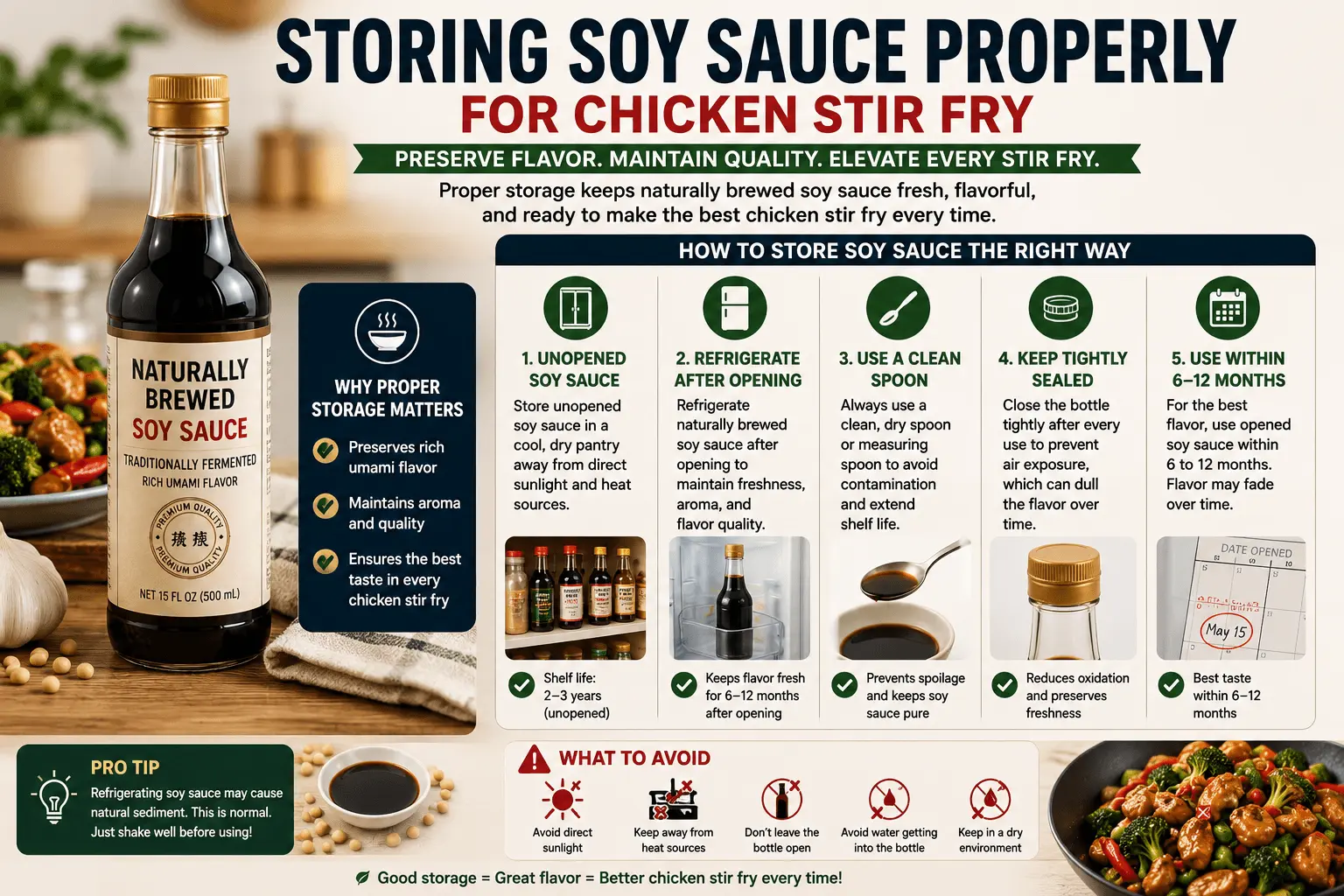
How to Store Soy Sauce for Maximum Freshness
Buying the best soy sauce for chicken stir fry is only half the battle. Proper storage helps preserve its aroma, flavor, and quality so every stir fry tastes as good as possible.
Storage Tips:
- Keep the bottle tightly sealed after every use.
- Store unopened soy sauce in a cool, dry pantry away from direct sunlight.
- After opening, refrigerate naturally brewed soy sauce to preserve its flavor.
- Always use a clean measuring spoon to avoid contamination.
- For the best flavor, use an opened bottle within 6 to 12 months.
Although soy sauce has a long shelf life due to its high salt content, oxidation slowly reduces its flavor after opening. Refrigeration helps maintain the rich umami taste that makes homemade chicken stir fry so delicious.
Frequently Asked Questions
What is the best soy sauce for chicken stir fry?
The best soy sauce for chicken stir fry is naturally brewed light soy sauce. It provides balanced saltiness, rich umami flavor, and blends perfectly with garlic, ginger, vegetables, and chicken.
Can I use dark soy sauce instead of light soy sauce?
Dark soy sauce is best used in small amounts for color and slight sweetness. Most stir fry recipes still rely on light soy sauce as the primary seasoning.
Is low-sodium soy sauce good for stir fry?
Yes. Low-sodium soy sauce is an excellent choice if you want to reduce sodium while maintaining plenty of savory flavor. It works especially well in vegetable-rich chicken stir fry recipes.
Does naturally brewed soy sauce taste better?
Generally, yes. Naturally brewed soy sauce develops more complex flavors through traditional fermentation, producing deeper umami and a smoother finish than chemically produced alternatives.
How long does soy sauce last after opening?
When refrigerated and tightly sealed, soy sauce stays safe for a long time. For the best flavor, try to use it within 6–12 months after opening.
Can I make chicken stir fry without soy sauce?
Absolutely. Coconut aminos, tamari, liquid aminos, and homemade stir fry sauces can all be good alternatives depending on your dietary needs and flavor preferences.
References
Final Thoughts
Choosing the best soy sauce for chicken stir fry doesn’t have to be complicated. For most home cooks, naturally brewed light soy sauce offers the ideal balance of umami, saltiness, and versatility. Adding a small amount of dark soy sauce can enhance color, while low-sodium soy sauce is an excellent option for healthier meals.
By understanding the differences between soy sauce varieties, reading ingredient labels, and matching the right soy sauce to each recipe, you’ll consistently prepare chicken stir fry with richer flavor and restaurant-quality results.
Whether you’re cooking a classic chicken stir fry, a healthy vegetable-packed meal, or a sweet and savory teriyaki version, the right soy sauce can make all the difference.
🍽️ You Might Also Like
📧 Save This Recipe For Later
Enter your email and we will send this recipe directly to your inbox.