
How to Cook Bok Choy for Chicken Stir Fry
How to Cook Bok Choy for Chicken Stir Fry
Bok choy is one of the best vegetables you can add to a homemade chicken stir fry. Its crisp white stalks stay pleasantly crunchy while the leafy green tops become tender in just a few minutes. Learning how to cook bok choy stir fry style helps you create a meal that tastes fresh, colorful, and restaurant-quality without complicated techniques.
Although bok choy cooks quickly, many home cooks accidentally overcook it, causing the leaves to wilt too much while the stems lose their crisp texture. Others add the entire vegetable to the pan at once, which often leads to uneven cooking. Fortunately, a few simple techniques can make a big difference.
In this guide, you’ll learn how to choose fresh bok choy, prepare it correctly, cook the stems and leaves at the right time, and avoid common mistakes. You’ll also discover practical tips that work whether you’re making a classic chicken stir fry or experimenting with your own favorite vegetables and sauces.
Quick Answer
To cook bok choy stir fry successfully, wash it thoroughly, separate the thick white stems from the leafy greens, and cook the stems first for about 2–3 minutes. Add the leaves during the final 1–2 minutes so they stay vibrant and tender. Cook everything over high heat while stirring frequently for the best texture and flavor.
Table of Contents
Why Bok Choy Is Perfect for Chicken Stir Fry
Bok choy has been a favorite ingredient in Asian cooking for generations because it cooks quickly while maintaining an enjoyable balance of textures. The thick white stalks remain crisp even under high heat, while the leafy tops soften just enough to absorb the flavors of your stir fry sauce.
Another reason many cooks love bok choy is its mild taste. Unlike stronger leafy greens, it complements chicken without overpowering the dish. Whether you’re using garlic, ginger, soy sauce, oyster sauce, or teriyaki sauce, bok choy blends naturally with almost every stir fry flavor combination.
It is also highly nutritious. Bok choy provides vitamin C, vitamin K, vitamin A, folate, calcium, and antioxidants while remaining very low in calories. This makes it an excellent choice for anyone preparing a balanced meal.
Tip: Baby bok choy cooks even faster than mature bok choy because its stems are smaller and more tender. Both varieties work well in chicken stir fry.
If you’re planning a complete vegetable combination, our Best Vegetables for Chicken Stir Fry guide can help you pair bok choy with other vegetables that cook well together.
| Feature | Bok Choy | Spinach | Cabbage |
|---|---|---|---|
| Texture | Crisp stems and tender leaves | Very soft | Crunchy |
| Cooking Time | 3–5 minutes | 1–2 minutes | 4–6 minutes |
| Best For | Chicken stir fry | Quick leafy dishes | Hearty stir fries |
Understanding these differences helps you decide when bok choy is the best choice for your meal. In the next section, you’ll learn how to select the freshest bok choy at the grocery store so your chicken stir fry starts with the highest-quality ingredients.
How to Choose Fresh Bok Choy for Chicken Stir Fry
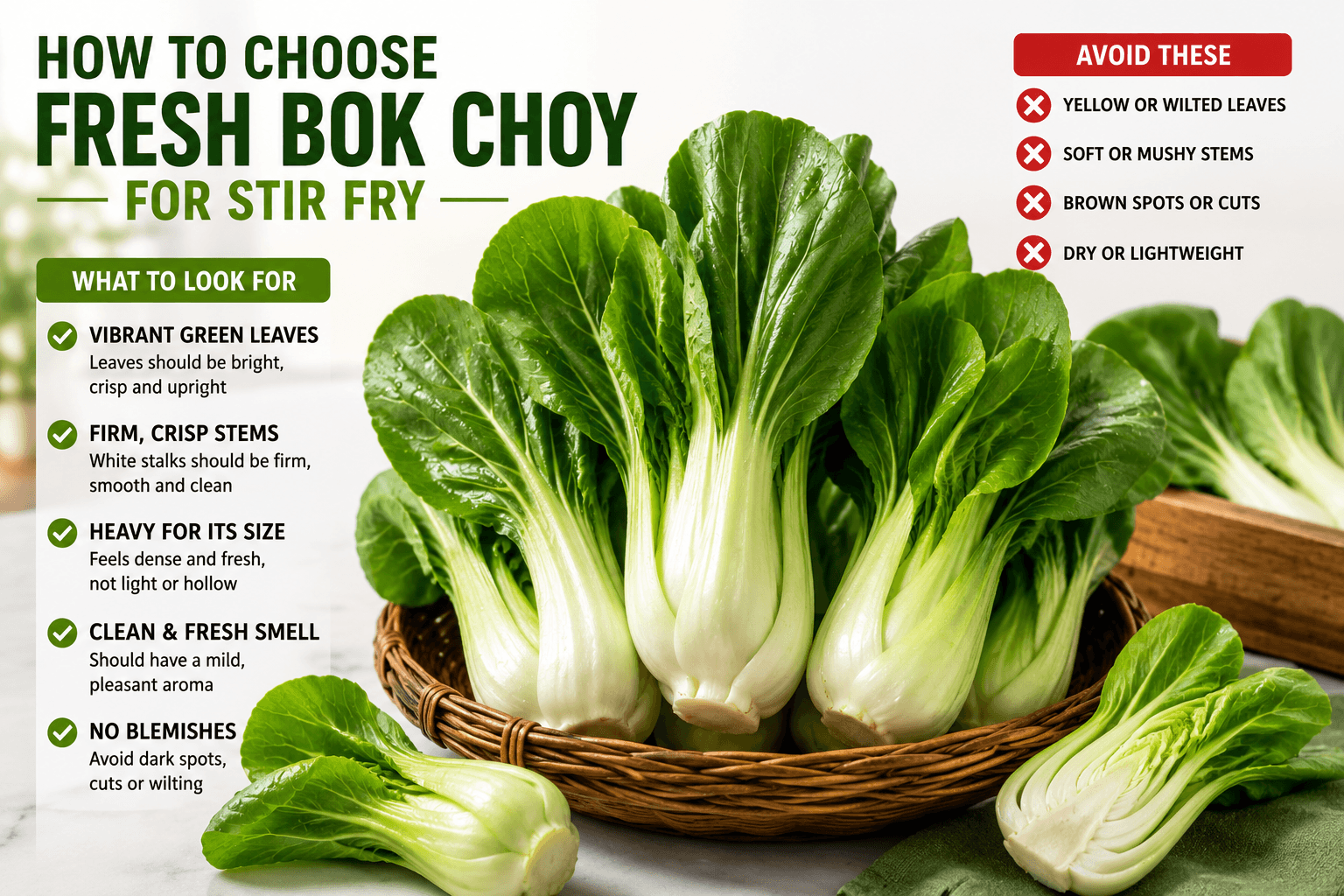
Choosing fresh vegetables is the first step to making a delicious chicken stir fry. Even the best cooking technique cannot fully improve bok choy that is old or wilted. Fortunately, fresh bok choy is easy to recognize once you know what to look for.
When shopping, look for bright green leaves that stand upright and feel crisp. The white stems should be firm, smooth, and free from brown spots or soft areas. Fresh bok choy should feel heavy for its size because it contains plenty of moisture, which helps it stay crisp during cooking.
Avoid bunches with yellowing leaves, slimy stems, or signs of wilting. These are common indicators that the vegetable is no longer at its freshest and may lose both flavor and texture during stir frying.
If you have the option, baby bok choy is an excellent choice for quick stir fries. Its smaller size means the stems cook faster while remaining naturally tender. Regular mature bok choy is equally delicious but usually benefits from separating the stems and leaves before cooking.
Tip: Buy bok choy as close as possible to the day you plan to cook it. Fresher vegetables produce a sweeter flavor and a much crispier texture.
Signs of Fresh Bok Choy
| Fresh Bok Choy | Avoid Buying |
|---|---|
| Bright green leaves | Yellow or brown leaves |
| Firm white stalks | Soft or mushy stems |
| Crisp texture | Wilted appearance |
| Clean, fresh smell | Sour or unpleasant odor |
| Heavy for its size | Dry and lightweight |
How to Prepare Bok Choy Before Cooking
Proper preparation is just as important as cooking. Bok choy naturally traps dirt and fine sand between its tightly packed stalks, so washing it carefully is essential. Skipping this step can leave grit in your finished stir fry.
Start by trimming about half an inch from the root end. Once the base is removed, gently separate each stalk and leaf. Rinse every piece individually under cool running water, paying special attention to the base where dirt often collects.
After washing, dry the bok choy thoroughly using paper towels or a salad spinner. Excess moisture can lower the temperature of the wok, causing the vegetables to steam instead of stir fry. A dry surface helps create better browning and keeps the vegetables crisp.
Next, separate the thick white stems from the leafy green tops. Since the stems require a little longer to cook, keeping them separate allows you to add each part at the perfect time.
Kitchen Secret: Professional chefs almost always cook bok choy stems and leaves separately. This simple technique ensures crisp stems and vibrant green leaves instead of overcooked vegetables.
How to Cut Bok Choy for Stir Fry
Small baby bok choy can often be cut in half lengthwise while leaving the leaves attached. Larger bok choy should be sliced into bite-sized pieces.
- Cut thick stems into 1 to 2-inch pieces.
- Leave larger leaves whole or cut them into wide strips.
- Keep stems and leaves in separate bowls until cooking.
- Prepare all vegetables before heating the wok since stir frying moves very quickly.
If you’re combining bok choy with other vegetables, it’s helpful to understand which vegetables need the most cooking time. Our guide on the correct order to add vegetables to stir fry explains the ideal sequence for perfectly cooked vegetables every time.
Proper preparation may only take a few extra minutes, but it dramatically improves the final dish. Once your bok choy is washed, dried, and cut correctly, you’re ready to cook it over high heat while keeping both the stems and leaves perfectly tender.
How to Cook Bok Choy for Chicken Stir Fry Step by Step
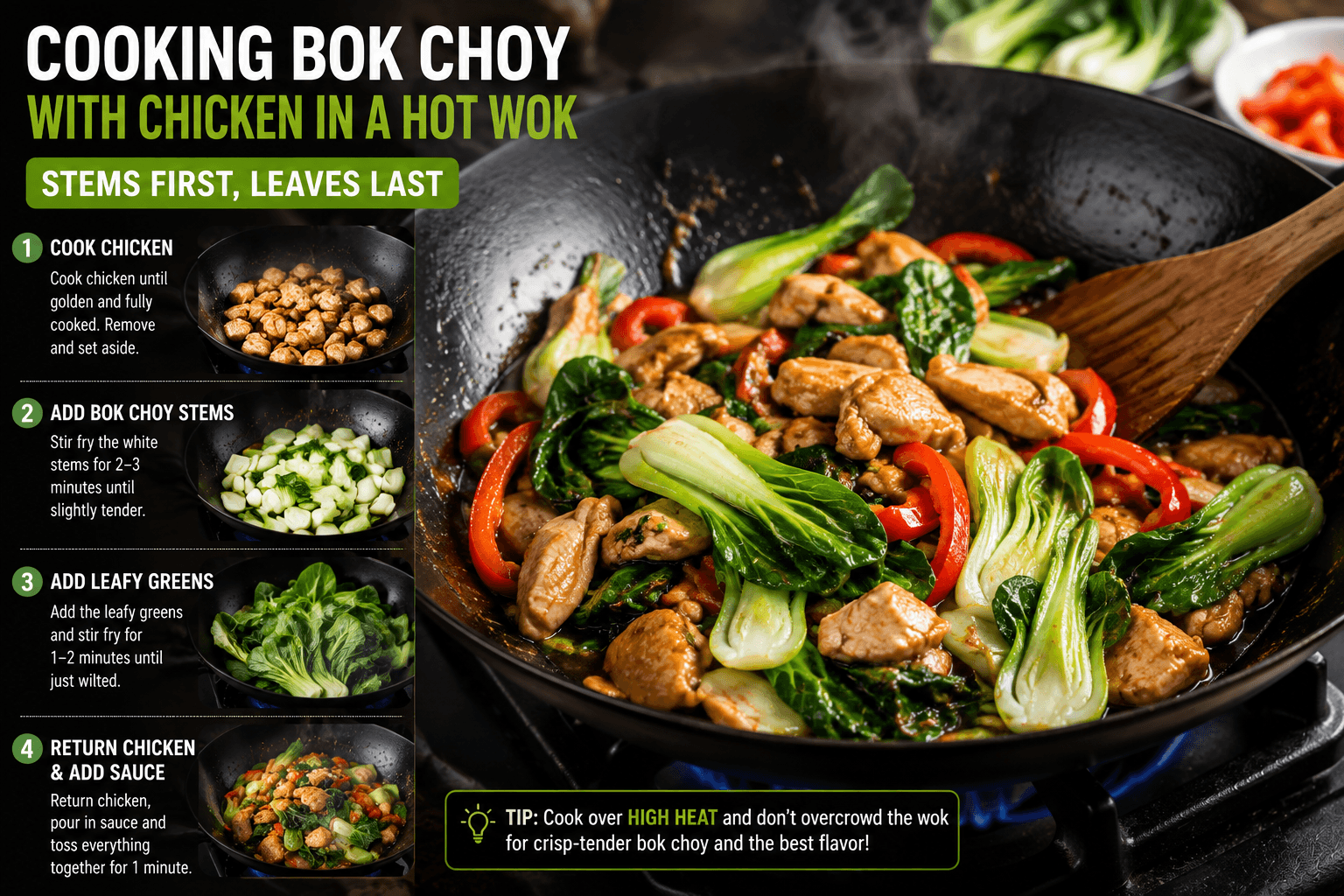
Now that your bok choy is cleaned and prepared, it’s time to cook it correctly. The secret to perfectly cooked bok choy is using high heat and adding the stems and leaves at different times. This simple method keeps the stalks crisp while allowing the leafy greens to become tender without turning mushy.
Before you begin, have every ingredient ready. Stir frying happens quickly, and once the wok is hot, there is very little time to stop and prepare vegetables.
Step 1: Heat the Wok Properly
Place your wok or large skillet over high heat until it becomes very hot. Add a small amount of high smoke-point oil, such as avocado oil, peanut oil, or canola oil. Swirl the oil so it lightly coats the cooking surface.
A properly heated wok helps vegetables cook quickly instead of steaming. The intense heat also creates the lightly browned flavor that makes stir fry taste like restaurant-quality food.
Step 2: Cook the Chicken First
If you’re making chicken stir fry, cook the chicken completely before adding the vegetables. Spread the chicken into a single layer and let it sear for a minute before stirring. Once the chicken is cooked through, remove it from the wok and set it aside.
This prevents the chicken from overcooking while the vegetables finish cooking.
If you need a complete recipe, our Classic Chicken Stir Fry shows how everything comes together into a complete meal.
Step 3: Add the Bok Choy Stems
Add the thick white bok choy stems to the hot wok first. Stir constantly for about 2 to 3 minutes. During this time, the stems become slightly tender while keeping their pleasant crunch.
You may hear a sizzling sound as the moisture evaporates quickly. This is exactly what you want because it means the vegetables are frying rather than steaming.
Kitchen Secret: Stir constantly but don’t overcrowd the wok. Too many vegetables lower the temperature and cause excess moisture, making the bok choy soft instead of crisp.
Step 4: Add the Leafy Greens
Once the stems have started to soften, add the green leafy tops. Continue tossing everything together for another 1 to 2 minutes.
The leaves cook much faster than the stems because they contain less structure. Overcooking them can cause them to lose their bright green color and become limp.
Step 5: Return the Chicken and Add the Sauce
Return the cooked chicken to the wok and pour in your stir fry sauce. Toss everything together for about one minute until the sauce lightly coats the chicken and vegetables.
Bok choy absorbs flavorful sauces without becoming heavy, making it an excellent vegetable for garlic, ginger, soy sauce, oyster sauce, teriyaki, and spicy stir fry recipes.
For another flavorful variation, try our Garlic Chicken Stir Fry or Teriyaki Chicken Stir Fry.
| Cooking Stage | Time | Purpose |
|---|---|---|
| Heat wok | 1–2 minutes | Create high cooking temperature |
| Cook chicken | 4–6 minutes | Cook completely before vegetables |
| Add bok choy stems | 2–3 minutes | Keep stems crisp-tender |
| Add leafy greens | 1–2 minutes | Prevent overcooking |
| Add sauce and combine | 1 minute | Coat ingredients evenly |
Tip: Serve the stir fry immediately after cooking. Bok choy has the best texture while it’s hot and freshly cooked, before the leaves begin to soften from residual heat.
Following these simple steps makes it easy to cook bok choy stir fry dishes with crisp vegetables, juicy chicken, and balanced flavor every time. In the next section, we’ll cover the most common mistakes that can ruin bok choy and how to avoid them.
Common Mistakes to Avoid When You Cook Bok Choy Stir Fry
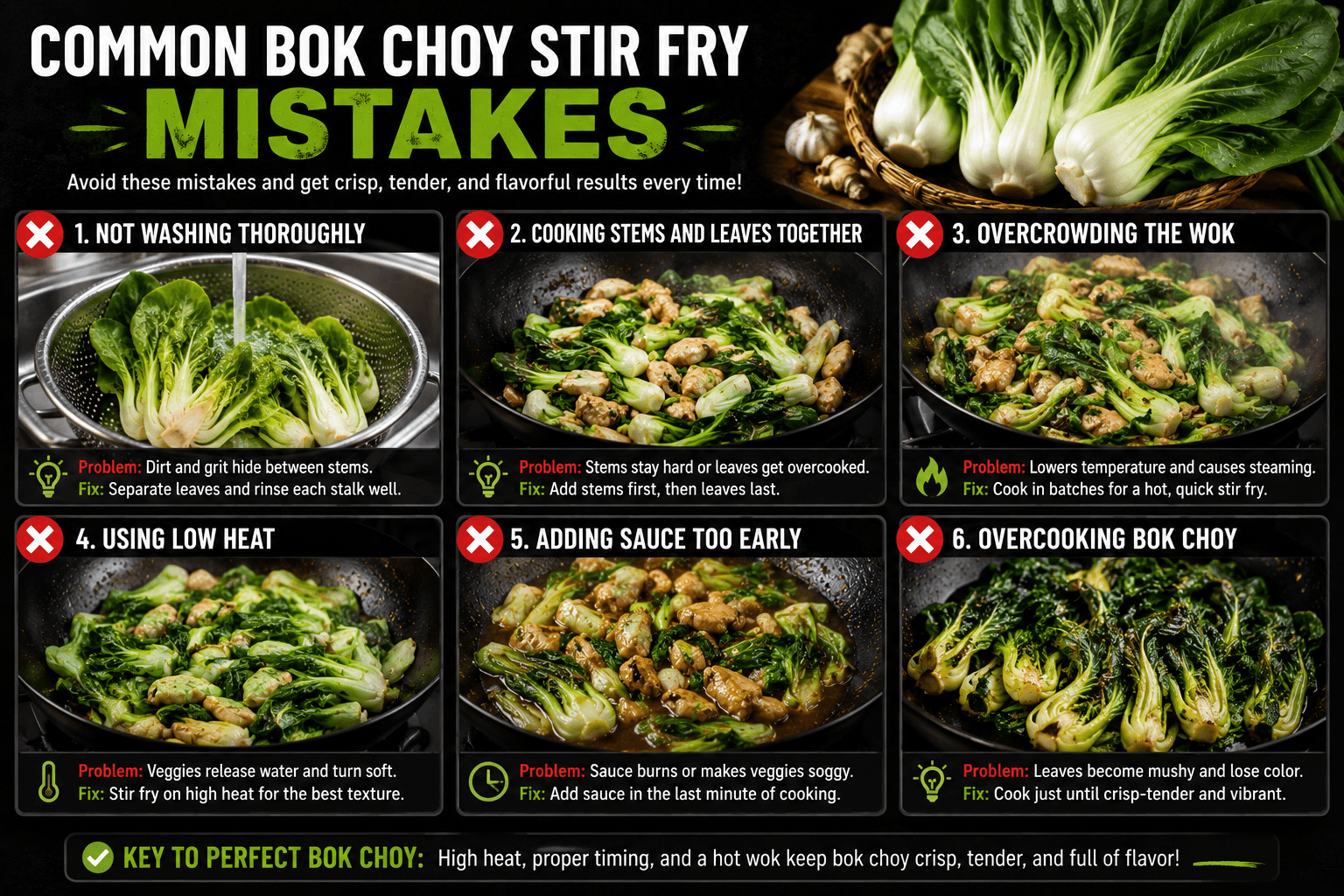
Even though bok choy is one of the easiest vegetables to cook, a few simple mistakes can affect its texture, flavor, and appearance. Understanding these common problems will help you consistently prepare crisp, vibrant vegetables that complement your chicken stir fry instead of becoming soft or watery.
1. Not Washing Bok Choy Thoroughly
Bok choy naturally grows close to the ground, allowing dirt and sand to collect between the tightly packed stems. Simply rinsing the outside is usually not enough.
Separate the stalks before washing and rinse each piece individually under cool running water. Taking an extra minute to clean the vegetable prevents unpleasant grit from ending up in your finished meal.
Warning: Dirt hidden near the base of the stems often remains even after a quick rinse. Always separate the stalks before washing.
2. Cooking the Stems and Leaves Together
This is probably the most common mistake people make when they cook bok choy stir fry. The thick white stems require more cooking time than the delicate green leaves.
If both are added at the same time, you’ll usually end up with either undercooked stems or overcooked leaves. Cooking them separately gives each part exactly the amount of heat it needs.
3. Overcrowding the Wok
Adding too many vegetables at once lowers the temperature of the wok. Instead of quickly stir frying, the vegetables release moisture and begin steaming.
Steamed bok choy becomes softer and loses much of the crisp texture that makes stir fry so enjoyable.
If you’re cooking a large batch, prepare it in two smaller batches rather than filling the pan completely.
4. Using Low Heat
High heat is one of the defining characteristics of a great stir fry. A properly heated wok quickly cooks the vegetables while preserving their color and texture.
Low temperatures extend the cooking time, causing the leaves to wilt excessively and the stems to become watery.
Kitchen Secret: Heat the wok before adding oil. Once the oil begins to shimmer, immediately start cooking for the best stir fry texture.
5. Adding Too Much Sauce Too Early
Many bottled stir fry sauces contain sugar, soy sauce, and starches. Adding them before the vegetables finish cooking creates excess moisture and may prevent proper browning.
Instead, cook the vegetables first, then add the sauce during the final minute so it lightly coats every ingredient.
6. Overcooking Bok Choy
Bok choy cooks surprisingly fast. Leaving it in the wok too long causes the leaves to lose their bright green color while the stems become soft instead of crisp.
The ideal texture is often described as crisp-tender—the stems should still have a slight bite while the leaves remain silky and vibrant.
| Mistake | Result | Better Approach |
|---|---|---|
| Skipping proper washing | Gritty vegetables | Separate and rinse each stalk |
| Cooking everything together | Uneven texture | Cook stems before leaves |
| Crowding the wok | Steamed vegetables | Cook in smaller batches |
| Low cooking temperature | Soft, watery bok choy | Use high heat throughout |
| Adding sauce too early | Vegetables become soggy | Add sauce during the final minute |
| Cooking too long | Wilted leaves | Cook only until crisp-tender |
If you’re interested in improving your vegetable cooking skills even further, our guides on Common Vegetable Stir Fry Mistakes and The Ultimate Stir Fry Vegetable Preparation Guide provide additional expert techniques that work with every type of stir-fried vegetable.
By avoiding these common mistakes, you’ll consistently produce chicken stir fry with bright green bok choy, crisp stems, tender leaves, and balanced flavor that rivals your favorite restaurant.
How to Store and Reheat Cooked Bok Choy Stir Fry
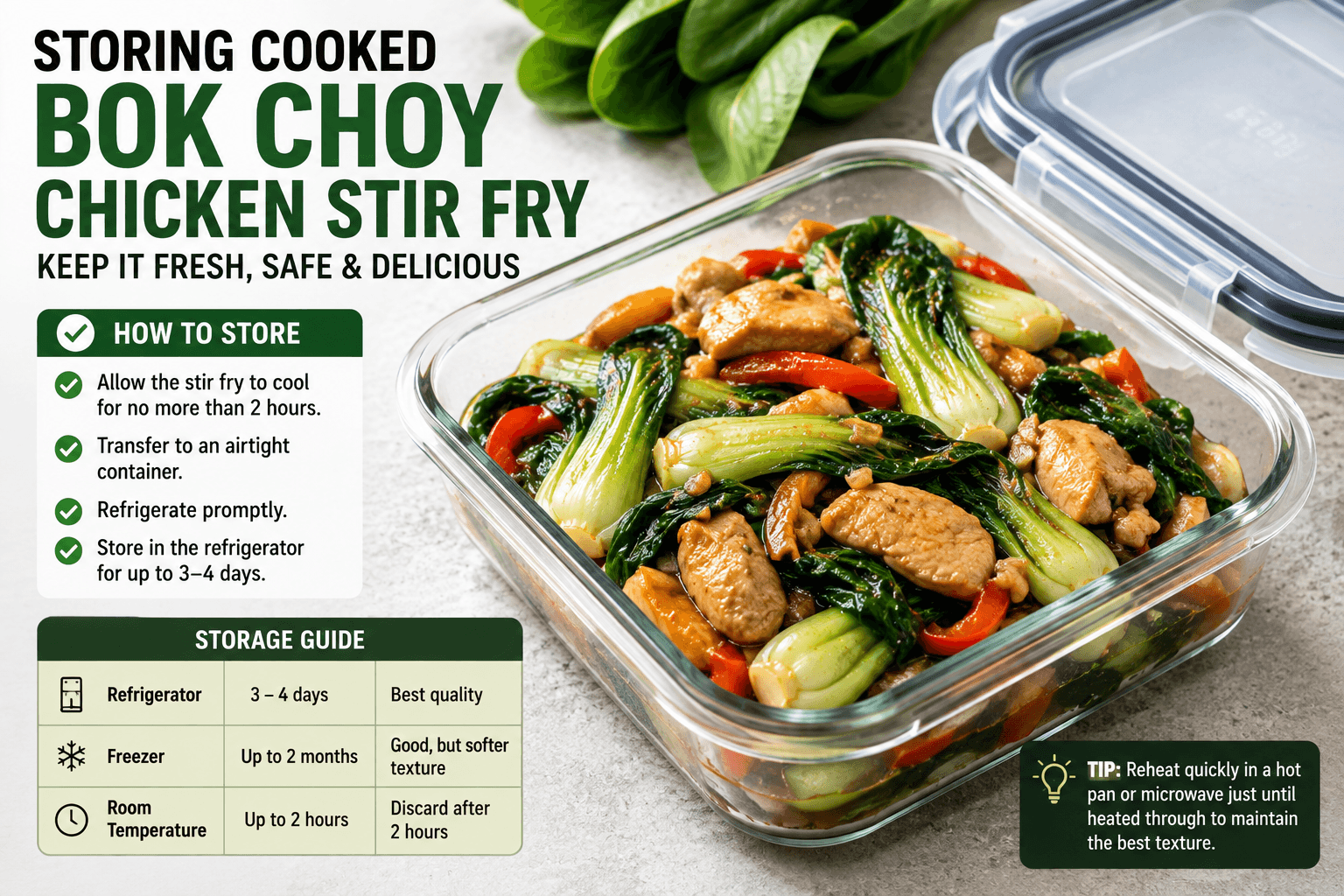
If you have leftovers, proper storage helps preserve the flavor, texture, and food safety of your chicken stir fry. While bok choy is best enjoyed immediately after cooking, it can still taste delicious the next day when stored and reheated correctly.
Allow the stir fry to cool for no more than two hours before transferring it to an airtight container. Once sealed, refrigerate it promptly to maintain freshness and reduce the risk of bacterial growth.
Storage Tip: Refrigerate cooked chicken and bok choy stir fry in an airtight container for up to 3–4 days. For the best texture, enjoy leftovers within the first two days.
Can You Freeze Bok Choy Stir Fry?
Yes, but freezing slightly changes the texture of bok choy. The vegetable contains a high amount of water, so the leaves become softer after thawing. While frozen leftovers remain safe to eat, they won’t have the same crisp texture as freshly cooked bok choy.
If you plan to freeze your meal, place it in a freezer-safe container or heavy-duty freezer bag after it has cooled completely. Remove as much air as possible before sealing.
| Storage Method | Recommended Time | Quality |
|---|---|---|
| Room Temperature | Up to 2 hours | Discard after this time |
| Refrigerator | 3–4 days | Excellent |
| Freezer | Up to 2 months | Good, but softer texture |
Best Ways to Reheat Bok Choy Stir Fry
The goal when reheating is to warm the food quickly without continuing to cook the vegetables. Excessive reheating can cause the bok choy leaves to become overly soft.
Reheat in a Wok or Skillet
This is the best method because it restores some of the original stir-fry texture.
- Heat the pan over medium-high heat.
- Add a teaspoon of oil if needed.
- Stir continuously for 2 to 3 minutes until heated through.
Reheat in the Microwave
For a faster option, microwave individual servings in 30-second intervals, stirring between each interval until evenly heated.
Tip: Avoid overheating. Warm the stir fry only until it reaches a safe serving temperature to help preserve the texture of the bok choy.
Expert Tips for Perfect Bok Choy Every Time
Small adjustments can make a noticeable difference in the quality of your chicken stir fry. These professional tips will help you consistently achieve crisp vegetables and balanced flavor.
- Prepare every ingredient before heating the wok.
- Always cook over high heat.
- Dry bok choy thoroughly after washing.
- Cook stems before leafy greens.
- Don’t overcrowd the pan.
- Add sauce during the final minute.
- Serve immediately for the freshest texture.
Kitchen Secret: If your wok starts releasing too much moisture, increase the heat instead of extending the cooking time. Higher heat evaporates excess liquid quickly and keeps the vegetables crisp.
What to Serve with Bok Choy Chicken Stir Fry
Bok choy pairs well with many classic stir fry ingredients. Its mild flavor complements both simple and bold sauces, making it one of the most versatile vegetables for homemade meals.
Popular serving ideas include:
- Steamed jasmine rice
- Brown rice
- Fried rice
- Rice noodles
- Lo mein noodles
- Quinoa for a higher-protein option
If you’d like to try different versions of chicken stir fry, these recipes offer excellent inspiration:
- Chicken Veggie Stir Fry
- Healthy Chicken Stir Fry
- Spicy Chicken Stir Fry
- Chicken Broccoli Stir Fry
- Chicken Mushroom Stir Fry
Mastering how to cook bok choy stir fry properly gives you a versatile vegetable that works beautifully in countless chicken stir fry recipes. With fresh ingredients, high heat, and proper timing, you’ll enjoy crisp-tender bok choy that adds flavor, color, and nutrition to every meal.
Frequently Asked Questions
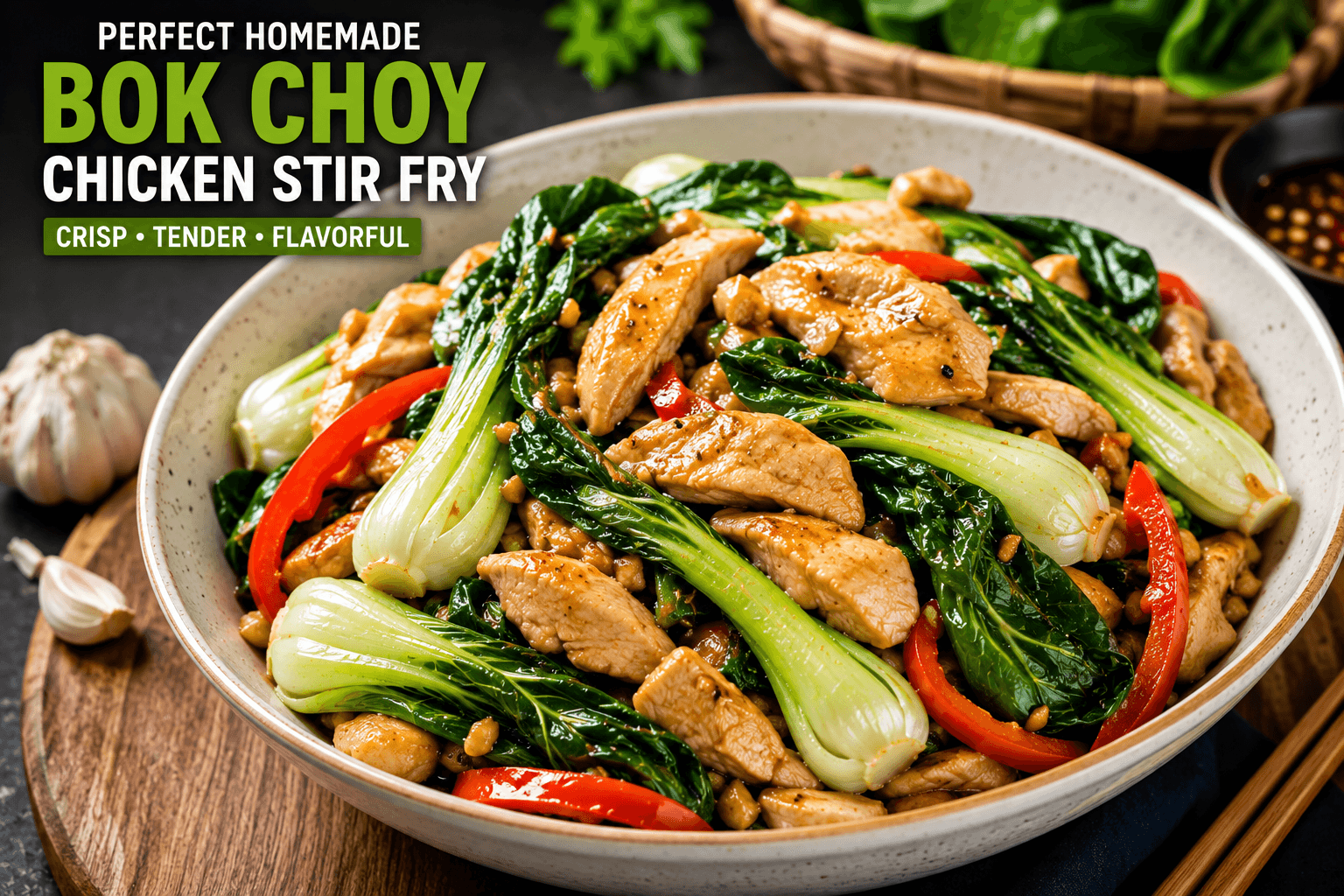
Should you cook bok choy stems and leaves separately?
Yes. The white stems are thicker and require about 2 to 3 minutes of cooking before adding the leafy greens. This method helps you cook bok choy stir fry with crisp stems and tender leaves instead of overcooked vegetables.
How long does bok choy take to cook in a stir fry?
Bok choy usually cooks in 3 to 5 minutes over high heat. Cook the stems first, then add the leaves during the last 1 to 2 minutes for the best texture.
Do I need to blanch bok choy before stir frying?
No. Fresh bok choy cooks quickly in a hot wok, so blanching is usually unnecessary. Washing it thoroughly and cooking it over high heat produces excellent results.
Can I use baby bok choy instead of regular bok choy?
Absolutely. Baby bok choy has smaller, more tender stems and cooks slightly faster than mature bok choy. It works wonderfully in chicken stir fry recipes.
Why is my bok choy watery?
Watery bok choy is usually caused by overcrowding the wok, cooking over low heat, or not drying the vegetable after washing. High heat and small batches help prevent excess moisture.
What sauces pair well with bok choy?
Bok choy pairs well with soy sauce, oyster sauce, garlic sauce, teriyaki sauce, hoisin sauce, sesame sauce, and spicy chili-based stir fry sauces.
References
Final Thoughts
Learning how to cook bok choy stir fry is one of the easiest ways to improve homemade chicken stir fry. By selecting fresh bok choy, washing it thoroughly, separating the stems from the leaves, and cooking each part at the proper time, you can achieve crisp-tender vegetables with excellent flavor and texture every time.
Remember to cook over high heat, avoid overcrowding the wok, and add your stir fry sauce during the final minute. These simple techniques help preserve the vibrant color and natural crunch that make bok choy such a popular stir fry vegetable.
Whether you’re preparing a quick weeknight dinner or experimenting with new vegetable combinations, mastering this technique will help you create healthier, more flavorful meals with confidence.
Rank Math SEO
- Focus Keyword: cook bok choy stir fry
- SEO Title: How to Cook Bok Choy for Chicken Stir Fry (Crisp & Tender Every Time)
- Slug: how-to-cook-bok-choy-for-chicken-stir-fry
- SEO URL: https://smartkitchenhome.com/how-to-cook-bok-choy-for-chicken-stir-fry
- Meta Description: Learn how to cook bok choy for chicken stir fry with expert tips for crisp stems, tender leaves, proper preparation, cooking times, and common mistakes to avoid.
- Social Title: How to Cook Bok Choy for Chicken Stir Fry Like a Pro
- Social Description: Discover the best way to prepare and cook bok choy for chicken stir fry. Learn expert techniques for perfect texture and flavor every time.
- Pinterest Title: How to Cook Bok Choy for Chicken Stir Fry | Easy Step-by-Step Guide
- Pinterest Description: Make perfect chicken stir fry with crisp-tender bok choy. Learn preparation, cooking order, timing, storage tips, and common mistakes to avoid.
- OG Title: How to Cook Bok Choy for Chicken Stir Fry
- OG Description: Master cooking bok choy for chicken stir fry with this complete guide covering preparation, cooking techniques, storage, and expert tips.
- Secondary Keywords: bok choy chicken stir fry, how to cook bok choy, stir fry vegetables, bok choy cooking tips, baby bok choy stir fry, chicken stir fry vegetables
- Semantic Keywords: leafy greens, wok cooking, high heat cooking, crisp vegetables, stir fry sauce, vegetable preparation, healthy stir fry, Asian vegetables, meal prep, fresh bok choy
- Schema Recommendation: Article + FAQPage + BreadcrumbList
Image SEO
| Image | Filename | Placement |
|---|---|---|
| Featured | how-to-cook-bok-choy-for-chicken-stir-fry-featured.png | Below H1 |
| Image 2 | how-to-choose-fresh-bok-choy-for-stir-fry.png | Choosing Fresh Bok Choy |
| Image 3 | cooking-bok-choy-with-chicken-in-hot-wok.png | Step-by-Step Cooking |
| Image 4 | common-bok-choy-stir-fry-mistakes.png | Common Mistakes |
| Image 5 | storing-cooked-bok-choy-in-airtight-container.png | Storage Section |
| Image 6 | perfect-homemade-bok-choy-chicken-stir-fry-ready-to-serve.png | FAQ Section |
🍽️ You Might Also Like



📧 Save This Recipe For Later
Enter your email and we will send this recipe directly to your inbox.