
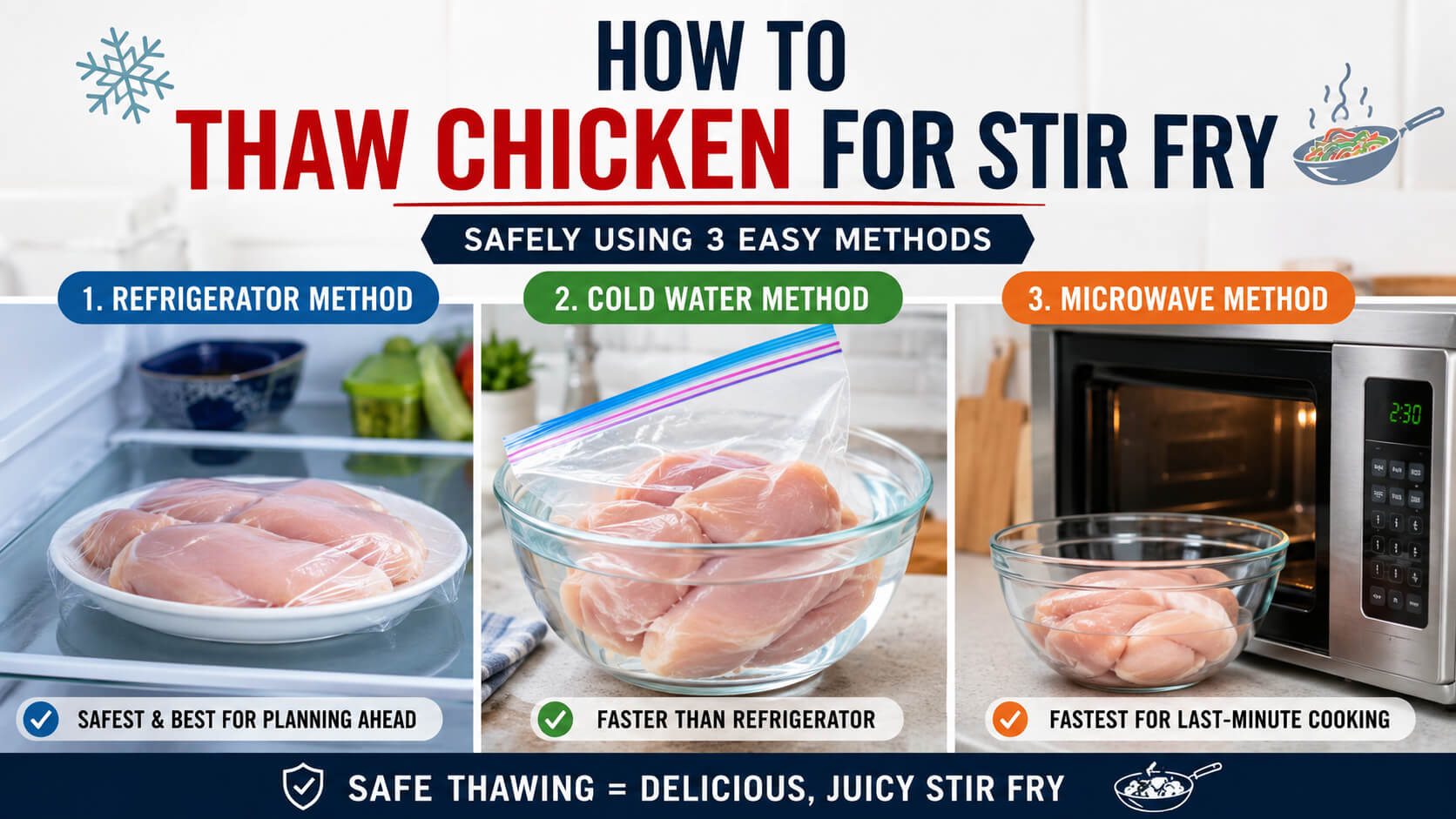
How to Thaw Chicken for Stir Fry Safely (Fast & Easy Methods)
How to Thaw Chicken for Stir Fry Safely (Fast & Easy Methods)
If you forgot to take chicken out of the freezer before dinner, you’re not alone. Learning how to thaw chicken for stir fry safely can save time while keeping your meal delicious and safe to eat. Because stir fry cooks quickly over high heat, properly thawed chicken cooks more evenly, browns better, and absorbs marinades more effectively.
Many people leave frozen chicken on the kitchen counter to thaw because it seems convenient. Unfortunately, this is one of the biggest food safety mistakes you can make. Harmful bacteria can multiply rapidly while the center of the chicken is still frozen, increasing the risk of foodborne illness.
The good news is that there are several safe and effective methods. Whether you have an entire day, an hour, or only a few minutes, there’s a thawing method that fits your schedule. In this guide, you’ll learn the safest techniques, common mistakes to avoid, and practical tips that help you prepare tender, juicy chicken for any stir fry recipe.
Quick Answer
The safest way to thaw chicken for stir fry is in the refrigerator overnight. If you’re short on time, place the sealed chicken in cold water and change the water every 30 minutes until thawed. For the fastest option, use the microwave’s defrost setting and cook the chicken immediately afterward. Never thaw chicken on the countertop because harmful bacteria can grow quickly.
Table of Contents
Why Properly Thawing Chicken Matters Before Stir Fry
Knowing how to thaw chicken for stir fry correctly isn’t just about convenience. Proper thawing directly affects food safety, cooking performance, texture, and flavor.
When chicken is thawed evenly, every piece cooks at approximately the same rate. This is especially important for stir fry because the cooking time is usually only a few minutes. If some pieces remain frozen while others are completely thawed, you’ll likely end up with dry edges and undercooked centers.
Proper thawing also helps marinades penetrate more evenly. Frozen ice crystals block the surface of the meat, preventing seasonings from absorbing properly. Fully thawed chicken develops better flavor and browns more beautifully in a hot wok or skillet.
Tip: Once your chicken is completely thawed, pat it dry with paper towels before seasoning. Removing excess moisture helps create better browning instead of steaming.
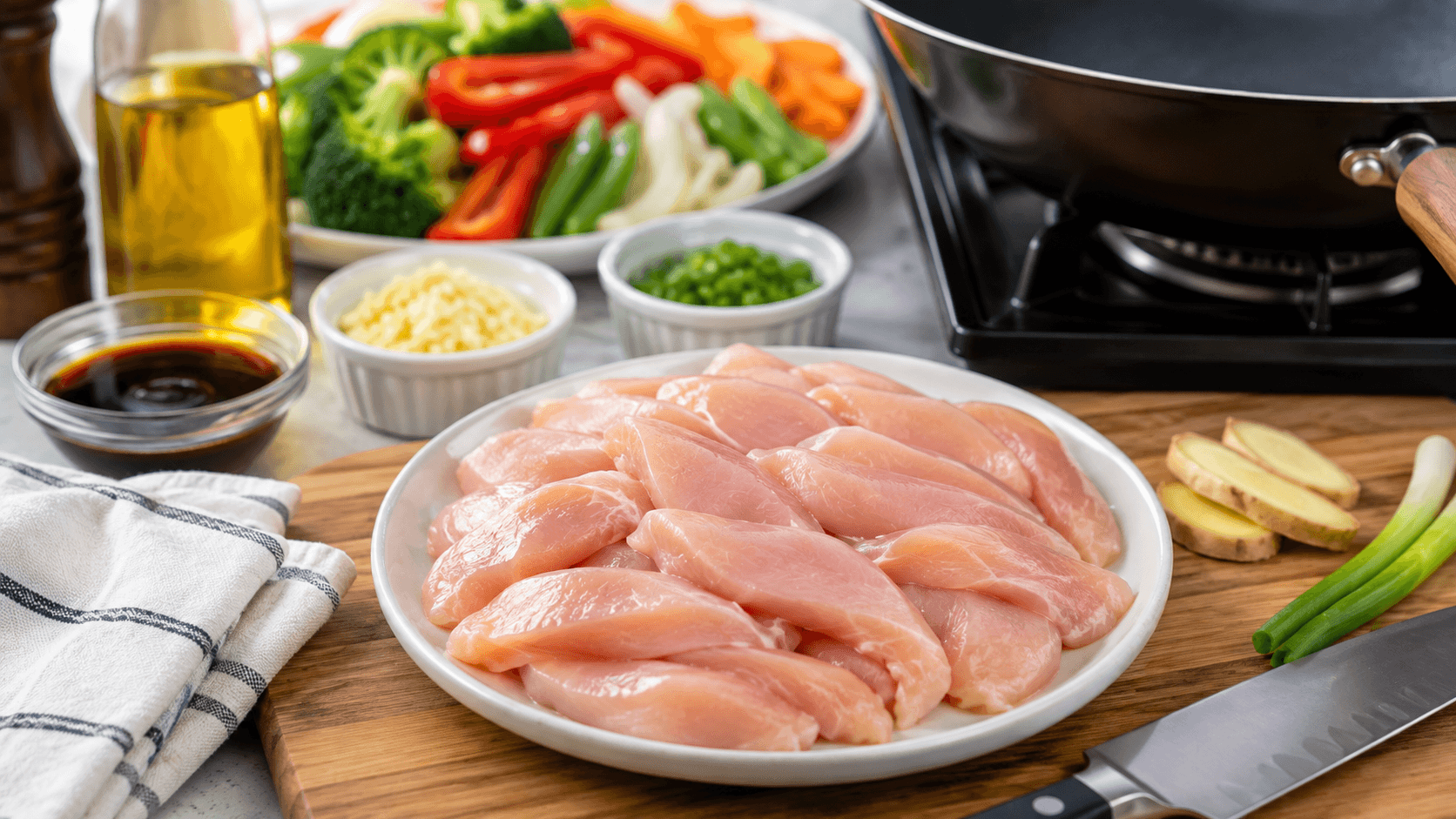
Best Ways to Thaw Chicken for Stir Fry
There are three USDA-recommended methods that safely thaw chicken:
- Refrigerator thawing
- Cold water thawing
- Microwave defrosting
Each method has advantages depending on how much time you have before cooking. Choosing the right technique ensures your chicken stays within safe temperatures while maintaining the best texture.
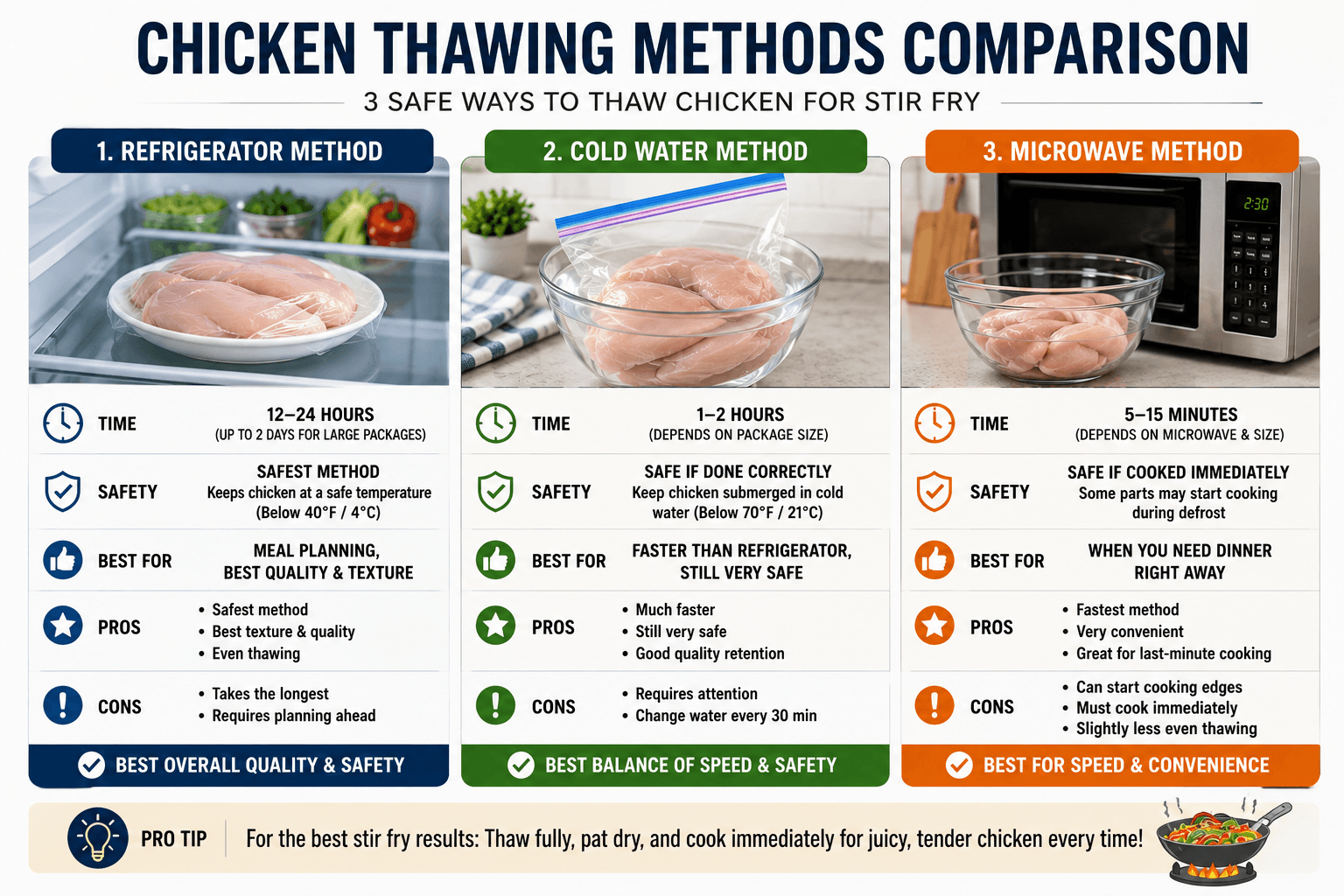
| Method | Approximate Time | Food Safety | Best For |
|---|---|---|---|
| Refrigerator | 12–24 hours | Excellent | Meal planning |
| Cold Water | 1–2 hours | Excellent | Last-minute dinners |
| Microwave | 5–15 minutes | Good* | Immediate cooking |
*Chicken thawed in the microwave should always be cooked immediately.
Method 1: Refrigerator Thawing (Safest Method)
If you have enough time, refrigerator thawing is the gold standard for anyone learning how to thaw chicken for stir fry. It keeps the chicken at a consistently safe temperature while preserving its texture and moisture.
How to Do It
- Leave the chicken in its original packaging or place it inside a leak-proof container.
- Set it on the lowest shelf of your refrigerator.
- Allow approximately 24 hours for every 4–5 pounds of chicken.
- Cook within one to two days after thawing.
For most stir fry recipes using one or two chicken breasts, overnight thawing is usually sufficient.
Kitchen Secret: Refrigerated thawing produces the most even texture, making it easier to slice thin strips for stir fry. Thin, uniform slices cook quickly and stay juicy.
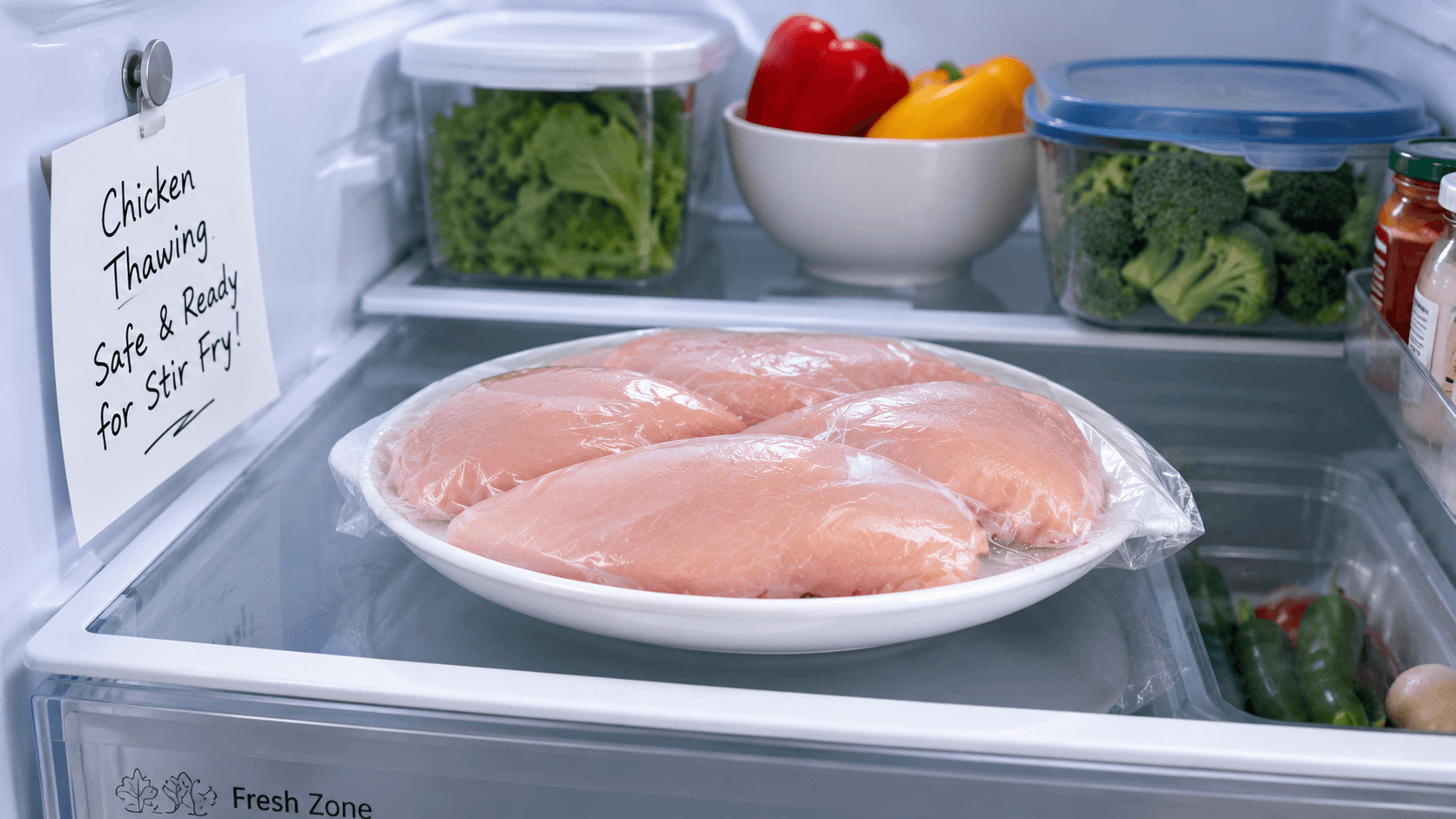
If you’re planning meals ahead, refrigerator thawing is also the easiest method because it requires almost no hands-on work. Simply transfer frozen chicken from the freezer to the refrigerator the night before cooking.
After thawing, consider reading our guide on how to cut chicken for stir fry to create evenly sized strips that cook quickly and stay tender.
Method 2: Cold Water Thawing (Fast and Safe)
If dinner is only a couple of hours away, cold water thawing is the best balance between speed and food safety. This technique works much faster than refrigerator thawing while keeping the chicken below unsafe temperatures.
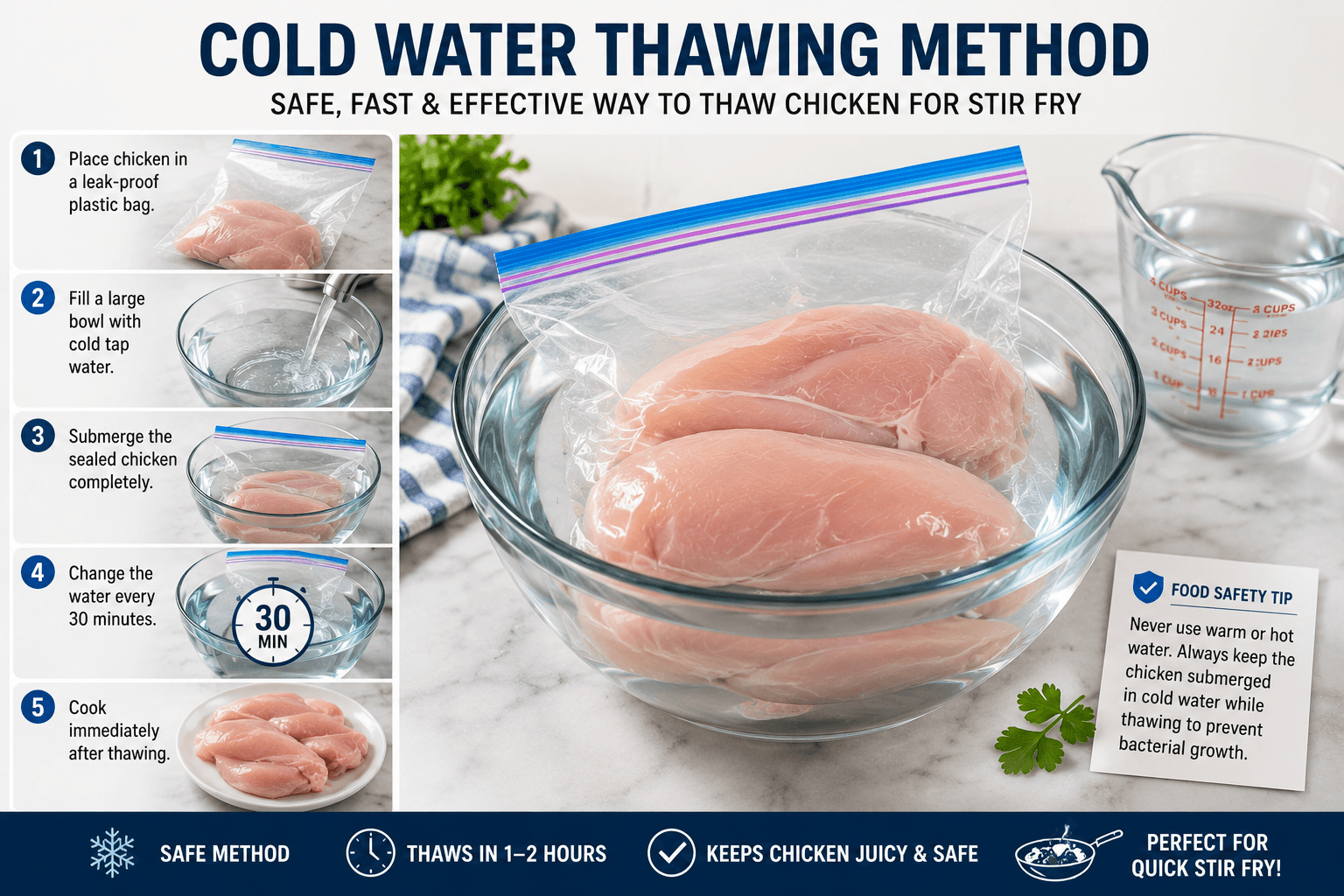
Step-by-Step Instructions
- Place the chicken in a completely sealed plastic bag.
- Fill a large bowl or sink with cold tap water.
- Submerge the sealed chicken completely.
- Replace the water every 30 minutes.
- Cook immediately after thawing.
Small chicken breasts usually thaw within an hour, while larger packages may take closer to two hours.
Warning: Never use warm or hot water. Higher temperatures encourage rapid bacterial growth on the surface of the chicken before the center finishes thawing.
Cold water thawing is especially useful when preparing weeknight dinners like:
Another advantage of this method is that it preserves much of the chicken’s natural moisture, helping you achieve juicy, flavorful stir fry without long waiting times.
Method 3: Microwave Defrosting (Fastest Option)
When you’re in a hurry, the microwave is the quickest way to thaw chicken for stir fry. While it isn’t the ideal method for preserving texture, it can safely thaw chicken in just a few minutes when used correctly.
Most modern microwaves include a defrost function that automatically adjusts the power level to thaw food without cooking it. Always refer to your microwave’s manual for the best settings.
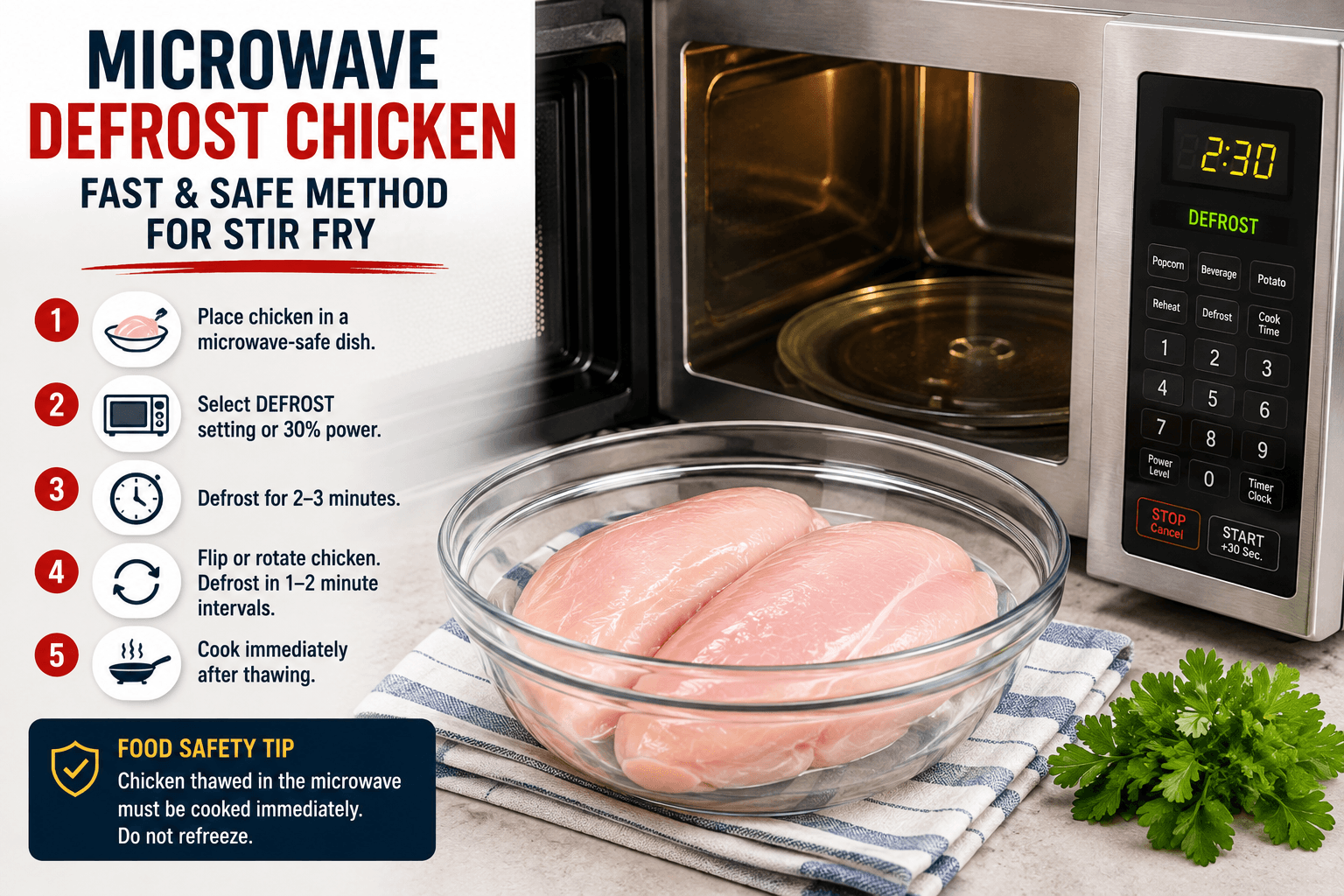
How to Defrost Chicken in the Microwave
- Remove the chicken from any foam tray or plastic wrap.
- Place it in a microwave-safe dish to catch any juices.
- Select the Defrost setting or use 30% power.
- Rotate or flip the chicken every couple of minutes.
- Stop the microwave as soon as the chicken is thawed.
- Cook immediately after thawing.
Microwave thawing may partially cook thinner edges while the center is still thawing. This is normal, but it means the chicken should never be returned to the refrigerator. Instead, move directly to cooking.
Important: Chicken thawed in the microwave must be cooked immediately because parts of the meat may enter the temperature danger zone during the defrost cycle.
Can You Cook Stir Fry with Frozen Chicken?
Technically, yes—but it isn’t recommended for the best results.
Cooking frozen chicken directly in a stir fry often causes several problems:
- The outside cooks much faster than the inside.
- Extra water released from the ice prevents proper browning.
- Vegetables become soggy while waiting for the chicken to finish cooking.
- Seasonings and marinades don’t stick as well.
- The overall texture becomes less tender.
For the highest-quality meal, it’s always better to thaw chicken for stir fry before cooking.
If you’re curious about cooking directly from frozen, read our complete guide on using frozen chicken for stir fry.
Benefits of Thawing First
- Even cooking
- Better browning
- Juicier texture
- Improved marinade absorption
- More consistent food safety
- Better vegetable texture
Cooking from Frozen
- Uneven cooking
- More liquid in the pan
- Reduced browning
- Longer cooking time
- Harder to season evenly
- Greater risk of overcooked edges
Which Thawing Method Is Best?
The best method depends entirely on your schedule.
| Situation | Recommended Method |
|---|---|
| Planning tomorrow’s dinner | Refrigerator |
| Dinner in 1–2 hours | Cold Water |
| Need dinner immediately | Microwave |
| Meal prep | Refrigerator |
| Best texture | Refrigerator |
| Fastest safe method | Cold Water |
Whenever possible, refrigerator thawing remains the best option because it produces the most consistent results while keeping food at a safe temperature throughout the process.
Common Mistakes When Thawing Chicken for Stir Fry
Even experienced home cooks sometimes make mistakes that affect both safety and quality.
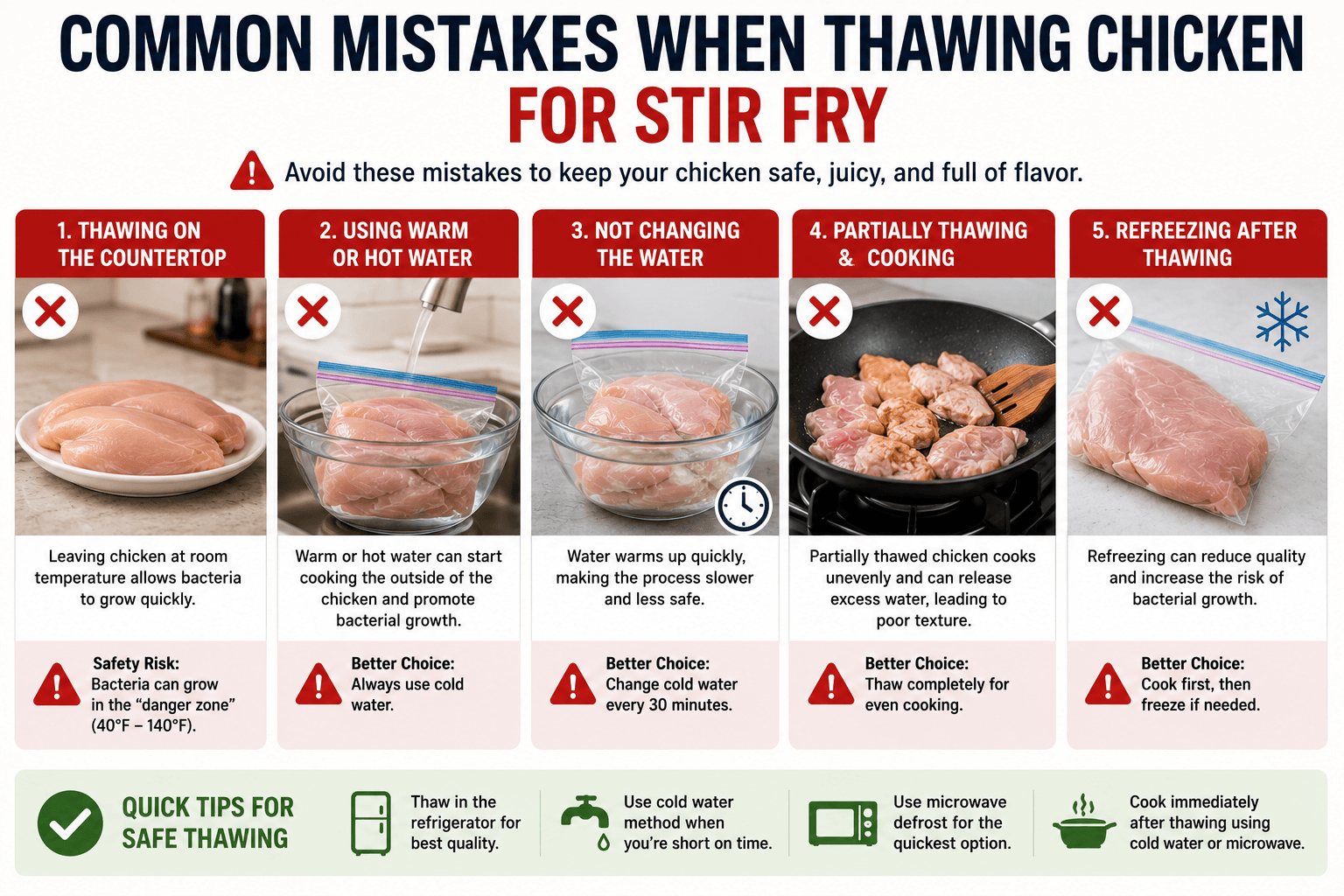
1. Leaving Chicken on the Counter
This is one of the most common food safety mistakes. The outer surface warms quickly while the center remains frozen, creating ideal conditions for bacteria to multiply.
2. Using Hot Water
Hot water speeds up bacterial growth and should never be used for thawing poultry.
3. Refreezing Improperly
Chicken thawed in the refrigerator may be safely refrozen before cooking, although some quality may be lost. Chicken thawed using cold water or the microwave should be cooked before freezing again.
4. Forgetting to Dry the Chicken
Moisture is the enemy of a good stir fry. Excess surface water causes steaming instead of searing.
Chef’s Secret: After thawing, pat the chicken dry and let it sit uncovered in the refrigerator for 20–30 minutes before cooking. This dries the surface slightly, creating beautiful browning in the wok.
5. Cutting Chicken Before It’s Fully Thawed
Partially frozen chicken is difficult to slice evenly unless you’re intentionally using the slightly frozen technique explained in our guide about how to slice frozen chicken for stir fry.
Should You Marinate Chicken Immediately After Thawing?
Yes. Once you’ve safely thawed your chicken, it’s the perfect time to marinate it.
Freshly thawed chicken absorbs marinades more evenly than frozen chicken. Even a quick 20 to 30-minute marinade can improve flavor and tenderness before stir frying.
If you’re using soy sauce, garlic, ginger, sesame oil, or cornstarch in your marinade, remember never to reuse raw chicken marinade unless it has been boiled thoroughly. Learn more in our guide about whether you can reuse chicken marinade safely.
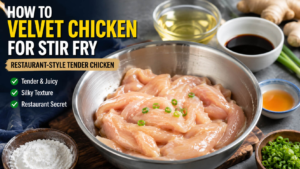
Tip: For incredibly tender stir fry, combine a small amount of cornstarch, soy sauce, and oil after thawing. This simple velveting technique protects the chicken from drying out during high-heat cooking.
Food Safety Tips for Thawed Chicken
- Wash your hands before and after handling raw chicken.
- Clean cutting boards, knives, and countertops immediately.
- Keep raw chicken separate from vegetables.
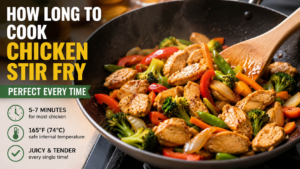
- Cook chicken to an internal temperature of 165°F (74°C).
- Use a food thermometer instead of guessing.
- Refrigerate leftovers within two hours.
Following these simple habits significantly reduces the risk of foodborne illness while improving the quality of your meals.
Storage After Thawing
- Refrigerator-thawed chicken: Use within 1–2 days.
- Cold-water thawed chicken: Cook immediately.
- Microwave-thawed chicken: Cook immediately.
- Cooked leftovers: Refrigerate up to 4 days.
- Freeze cooked stir fry for up to 3 months.
Continue to Part 3 for the FAQ, References, Final Thoughts, Author Box, Related Articles, and complete Rank Math SEO package.
Frequently Asked Questions
How long does it take to thaw chicken for stir fry in the refrigerator?
Small packages of boneless chicken breasts or thighs usually thaw within 12 to 24 hours in the refrigerator. Larger packages may take up to two days. Refrigerator thawing is the safest method because the chicken stays at a consistently safe temperature throughout the process.
Can I thaw chicken for stir fry on the kitchen counter?
No. You should never thaw chicken on the countertop. The outer layer can quickly reach the temperature danger zone (40°F–140°F), allowing harmful bacteria to multiply while the inside remains frozen. Always use the refrigerator, cold water, or microwave instead.
Is cold water thawing safe?
Yes. Cold water thawing is a USDA-approved method when the chicken is sealed in a leak-proof bag and the water is changed every 30 minutes. Once thawed, cook the chicken immediately for the best quality and safety.
Can I marinate chicken while it’s thawing?
It’s best to wait until the chicken is fully thawed. A marinade won’t penetrate frozen meat evenly, and the thawing process can dilute the flavors. Once thawed, marinate the chicken for at least 20 to 30 minutes before cooking.
Can I refreeze thawed chicken?
If the chicken was thawed in the refrigerator and has remained at a safe temperature, you can refreeze it before cooking. Chicken thawed using cold water or the microwave should be cooked before freezing again.
Do I need to wash chicken before stir frying?
No. Washing raw chicken is not recommended because it can spread bacteria around your sink and kitchen surfaces. Cooking the chicken to an internal temperature of 165°F (74°C) kills harmful bacteria safely.
Can I cook partially frozen chicken in a stir fry?
While it’s possible, it’s not ideal. Partially frozen chicken cooks unevenly and releases excess moisture, preventing proper browning. Fully thawing the chicken produces a juicier, more flavorful stir fry.
References
Final Thoughts
Learning how to thaw chicken for stir fry safely is one of the easiest ways to improve both the quality and safety of your meals. Whether you plan ahead with refrigerator thawing, need the speed of the cold-water method, or rely on the microwave in a pinch, choosing an approved thawing method helps ensure your chicken cooks evenly and stays juicy.
Proper thawing also makes slicing easier, improves marinade absorption, and creates the perfect surface for browning in a hot wok or skillet. Combined with safe food-handling practices, these simple techniques help you prepare restaurant-quality chicken stir fry at home with confidence.
🍽️ You Might Also Like

📧 Save This Recipe For Later
Enter your email and we will send this recipe directly to your inbox.