
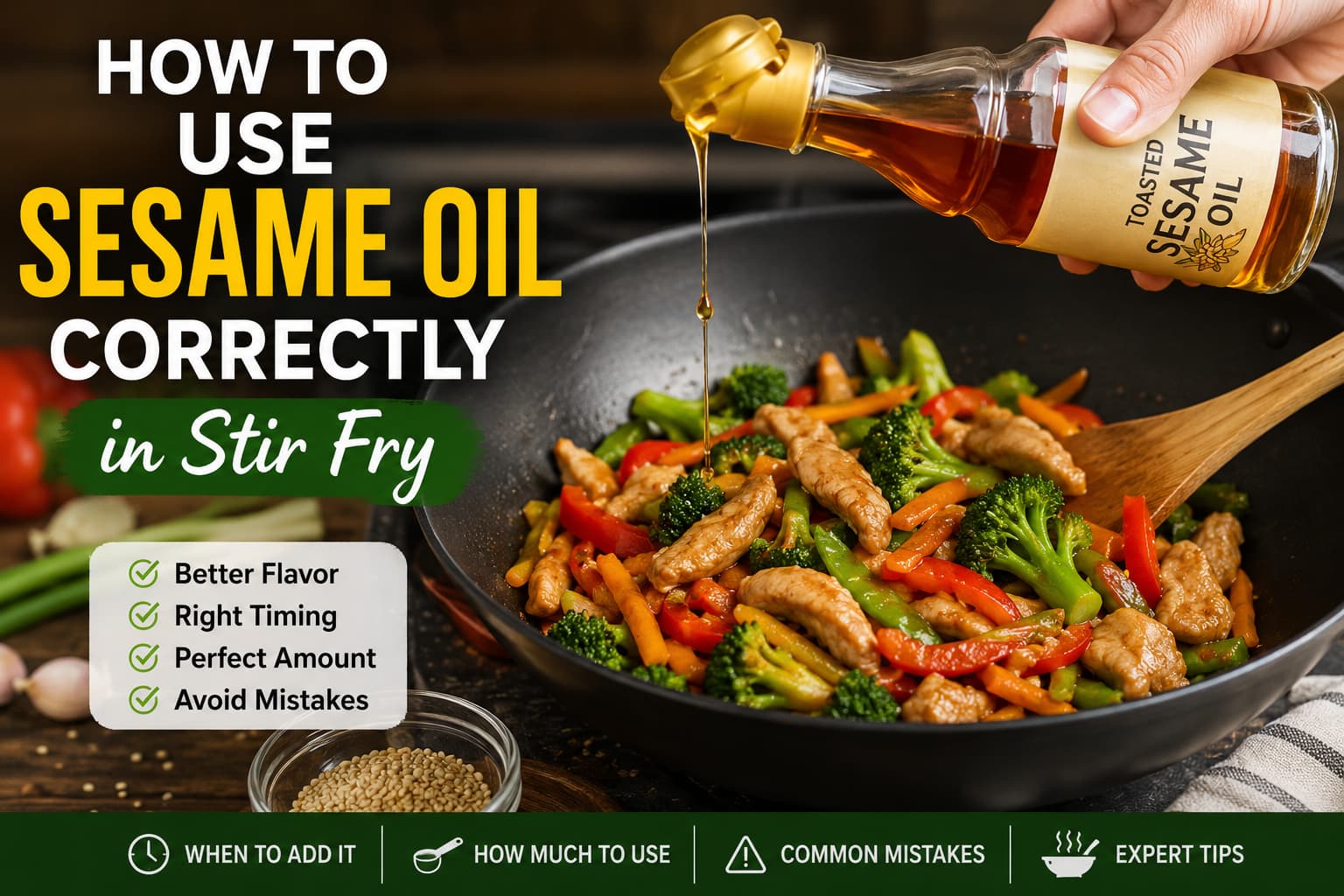
How to Use Sesame Oil Correctly in Stir Fry
How to Use Sesame Oil Correctly in Stir Fry
Learning how to use sesame oil in stir fry the right way can completely change the flavor of your homemade meals. Sesame oil is famous for its rich, nutty aroma and deep roasted taste, but many home cooks accidentally use it incorrectly. Adding it too early or cooking it over very high heat can destroy its delicate flavor and even create a slightly bitter taste.
The good news is that using sesame oil properly is simple once you understand when and how to add it. Whether you’re making a classic chicken stir fry, vegetable stir fry, or beef stir fry, a small amount of sesame oil added at the right time provides restaurant-quality flavor without overpowering the dish.
In this guide, you’ll learn exactly how to use sesame oil in stir fry, when to add it, how much to use, common mistakes to avoid, and how to get the best results every time.
Quick Answer
The best way to use sesame oil in stir fry is to add 1 to 2 teaspoons during the final minute of cooking or immediately after removing the pan from the heat. Toasted sesame oil is used as a finishing oil because its delicate roasted flavor can fade or burn when exposed to prolonged high heat. For cooking at high temperatures, use a neutral oil such as canola, avocado, or peanut oil first, then finish the dish with sesame oil for maximum aroma and flavor.
Table of Contents
Why Sesame Oil Matters in Stir Fry
Sesame oil is one of the signature ingredients found in many Asian-inspired stir fry dishes. Unlike neutral cooking oils that mainly prevent food from sticking, sesame oil contributes a distinctive roasted aroma that enhances the overall flavor of the meal. Even a small drizzle can make homemade stir fry taste more balanced and authentic.
One reason many cooks want to use sesame oil in stir fry is because it creates depth without requiring additional seasonings. The oil complements savory ingredients such as soy sauce, garlic, ginger, oyster sauce, and green onions, helping tie all the flavors together.
However, sesame oil should be viewed primarily as a flavor enhancer rather than the main cooking oil. Most toasted sesame oils have a relatively low tolerance for prolonged high heat, which means their complex aroma fades quickly if they’re added at the beginning of cooking.
Kitchen Tip: Think of toasted sesame oil like a finishing seasoning instead of a frying oil. Just a small drizzle at the end of cooking delivers the strongest aroma and the richest flavor.
If you’re making recipes like Chicken Stir Fry, Garlic Chicken Stir Fry, or Honey Garlic Chicken Stir Fry, adding sesame oil at the correct stage helps create the restaurant-quality finish that many people love.
Understanding the Different Types of Sesame Oil
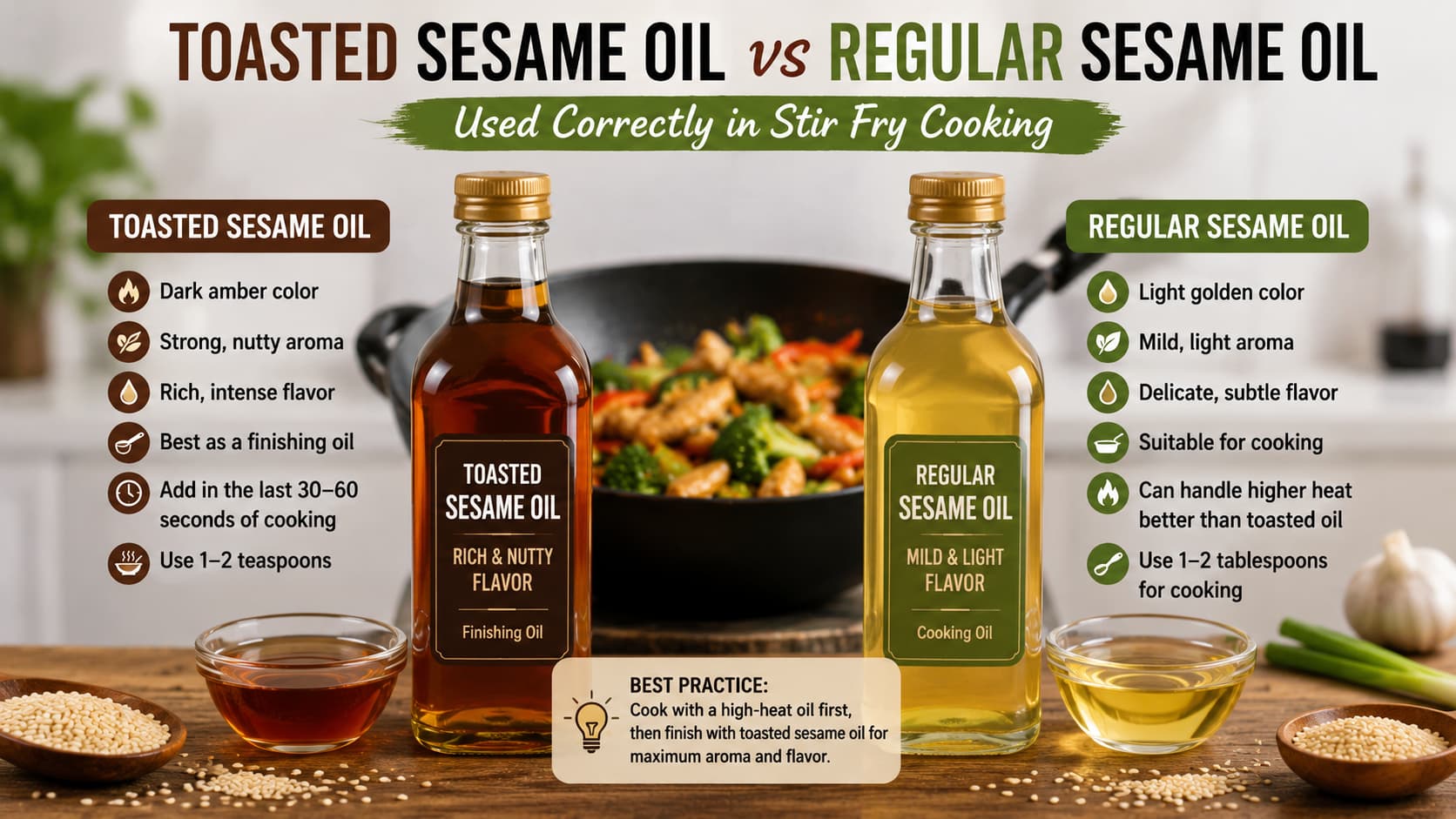
Before you use sesame oil in stir fry, it’s important to know that not all sesame oils are the same. Grocery stores commonly sell two varieties, and each serves a different purpose in the kitchen. Choosing the right one makes a noticeable difference in both flavor and cooking performance.
Toasted Sesame Oil
Toasted sesame oil is made from sesame seeds that have been roasted before the oil is extracted. This process creates the deep amber color and rich, nutty aroma that people associate with restaurant-style stir fry.
This is the type most recipes refer to when they recommend adding sesame oil. Because of its intense flavor, only a small amount is needed. Using too much can easily overpower the other ingredients.
- Dark brown or amber in color
- Strong roasted aroma
- Rich, nutty flavor
- Best used as a finishing oil
- Usually added at the end of cooking
Regular Sesame Oil
Regular sesame oil is made from raw, unroasted sesame seeds. It has a much lighter color and a milder flavor than toasted sesame oil. Since it isn’t heavily roasted, it can tolerate cooking temperatures better, although many cooks still prefer combining it with another high-heat oil.
- Light golden color
- Mild sesame flavor
- Less aromatic
- Suitable for sautéing and light frying
- Can be mixed with neutral cooking oils
| Feature | Toasted Sesame Oil | Regular Sesame Oil |
|---|---|---|
| Color | Dark amber | Light golden |
| Flavor | Strong and nutty | Mild and delicate |
| Best Use | Finishing dishes | Light cooking |
| Typical Amount | 1–2 teaspoons | 1–2 tablespoons if cooking |
| High-Heat Cooking | Not recommended | Better suited |
For most homemade stir fry recipes, toasted sesame oil delivers the classic flavor people expect. If you’re unsure which bottle you have, check the label carefully. Products labeled “toasted,” “roasted,” or “dark sesame oil” are intended mainly for finishing dishes rather than frying.
Chef’s Secret: Many restaurant kitchens cook the ingredients in a neutral oil such as peanut or avocado oil, then stir in toasted sesame oil just before serving. This preserves its rich aroma and prevents the delicate roasted flavor from disappearing during cooking.
If you’d like a more detailed comparison, read our guide on Toasted Sesame Oil vs. Regular Sesame Oil, where we explain exactly when each type should be used.
Understanding these differences is the first step to learning how to use sesame oil in stir fry successfully. Once you choose the correct variety, the next step is knowing exactly when to add it for the best flavor.
When to Add Sesame Oil for the Best Flavor
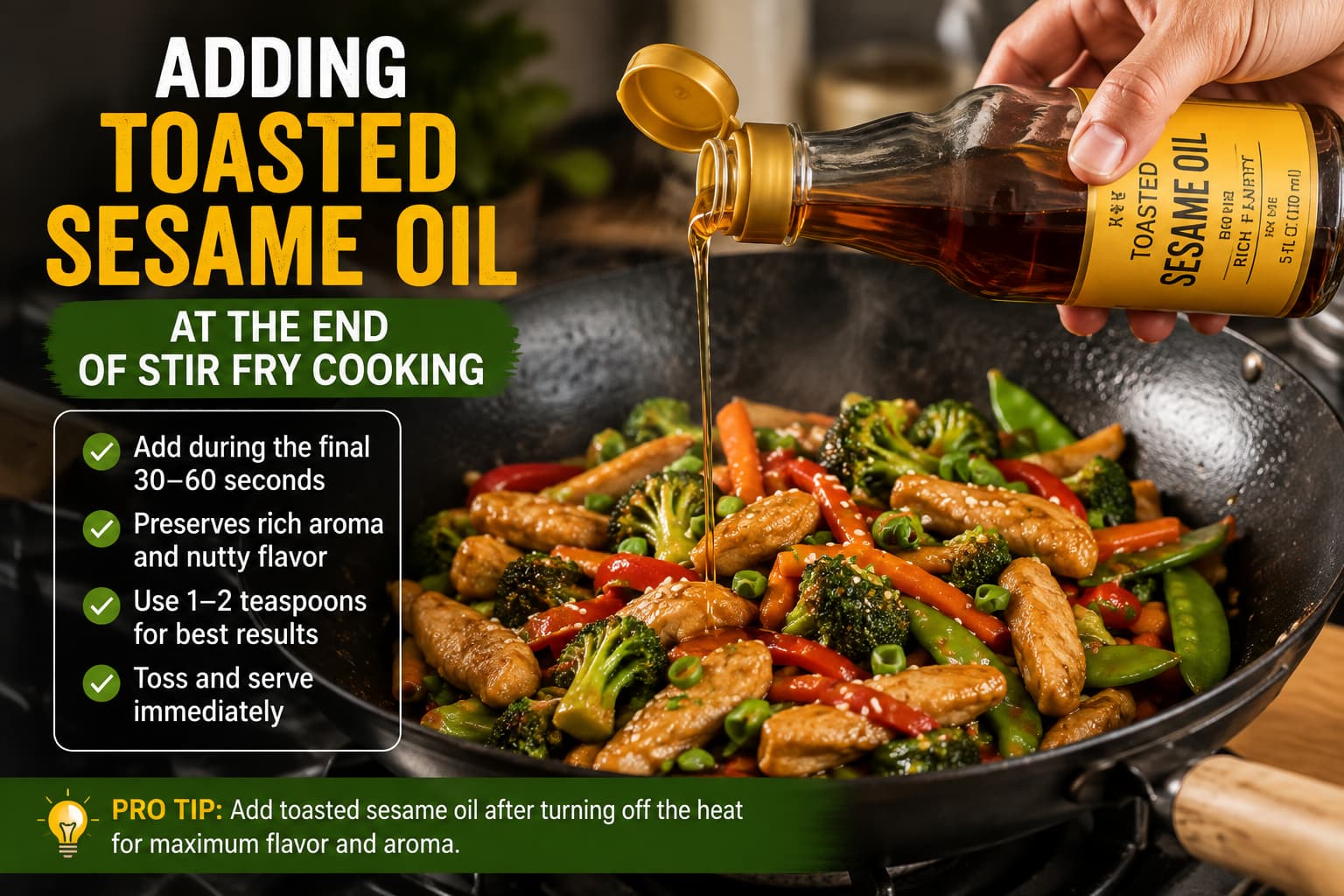
Knowing when to use sesame oil in stir fry is just as important as choosing the right type. Many home cooks mistakenly pour sesame oil into a hot wok at the beginning of cooking, but this is one of the biggest reasons stir fry lacks the rich aroma found in restaurant dishes.
Toasted sesame oil contains flavorful aromatic compounds that are sensitive to high heat. If it cooks for several minutes over a hot pan, much of that signature nutty flavor disappears. Instead of enhancing your stir fry, the oil becomes muted and may even develop a slightly bitter taste.
The best approach is to cook your protein and vegetables using a high smoke point oil, then finish the dish with sesame oil. This simple technique preserves the oil’s natural aroma and creates a fresher, more balanced flavor.
Add Sesame Oil During the Final Minute
The ideal time to use sesame oil in stir fry is during the last 30 to 60 seconds of cooking. Once your chicken, vegetables, and sauce are fully cooked, reduce the heat slightly and drizzle the sesame oil over the food. Toss everything together just long enough to coat the ingredients evenly.
This allows the oil to warm gently without exposing it to excessive heat. The result is a stir fry with a noticeable toasted sesame aroma that complements the other ingredients instead of disappearing during cooking.
Best Practice: Add toasted sesame oil after your stir fry sauce has thickened. This helps the oil coat the ingredients evenly and prevents its flavor from being diluted.
Can You Add Sesame Oil After Cooking?
Yes. In fact, many professional chefs prefer adding toasted sesame oil after removing the wok from the burner. The residual heat is enough to distribute the oil throughout the dish while preserving its delicate flavor.
If you’re preparing meals ahead of time, you can even drizzle a small amount over the finished stir fry immediately before serving. This freshens the aroma and gives leftovers a more vibrant taste.
Cooking Oil First, Sesame Oil Second
A common technique in Asian cooking is to use two different oils. Start with a neutral oil that can handle high temperatures, then finish with sesame oil for flavor.
| Cooking Stage | Recommended Oil | Purpose |
|---|---|---|
| Heating the wok | Avocado, peanut, or canola oil | High-heat cooking |
| Cooking chicken | Neutral oil | Even browning |
| Cooking vegetables | Neutral oil | Maintains crisp texture |
| Adding sauce | No additional oil | Combine flavors |
| Final 30–60 seconds | Toasted sesame oil | Adds aroma and rich flavor |
This method works especially well for recipes like Chicken Broccoli Stir Fry, Teriyaki Chicken Stir Fry, and Spicy Chicken Stir Fry, where the final drizzle of sesame oil enhances both the sauce and the vegetables.
Restaurant Secret: Some chefs add a few drops of toasted sesame oil just before plating instead of mixing it into the pan. This creates an even stronger aroma as soon as the dish reaches the table.
Once you know the right timing, the next step is learning exactly how much sesame oil to use. Even though it has incredible flavor, a little goes a long way.
How Much Sesame Oil Should You Use?
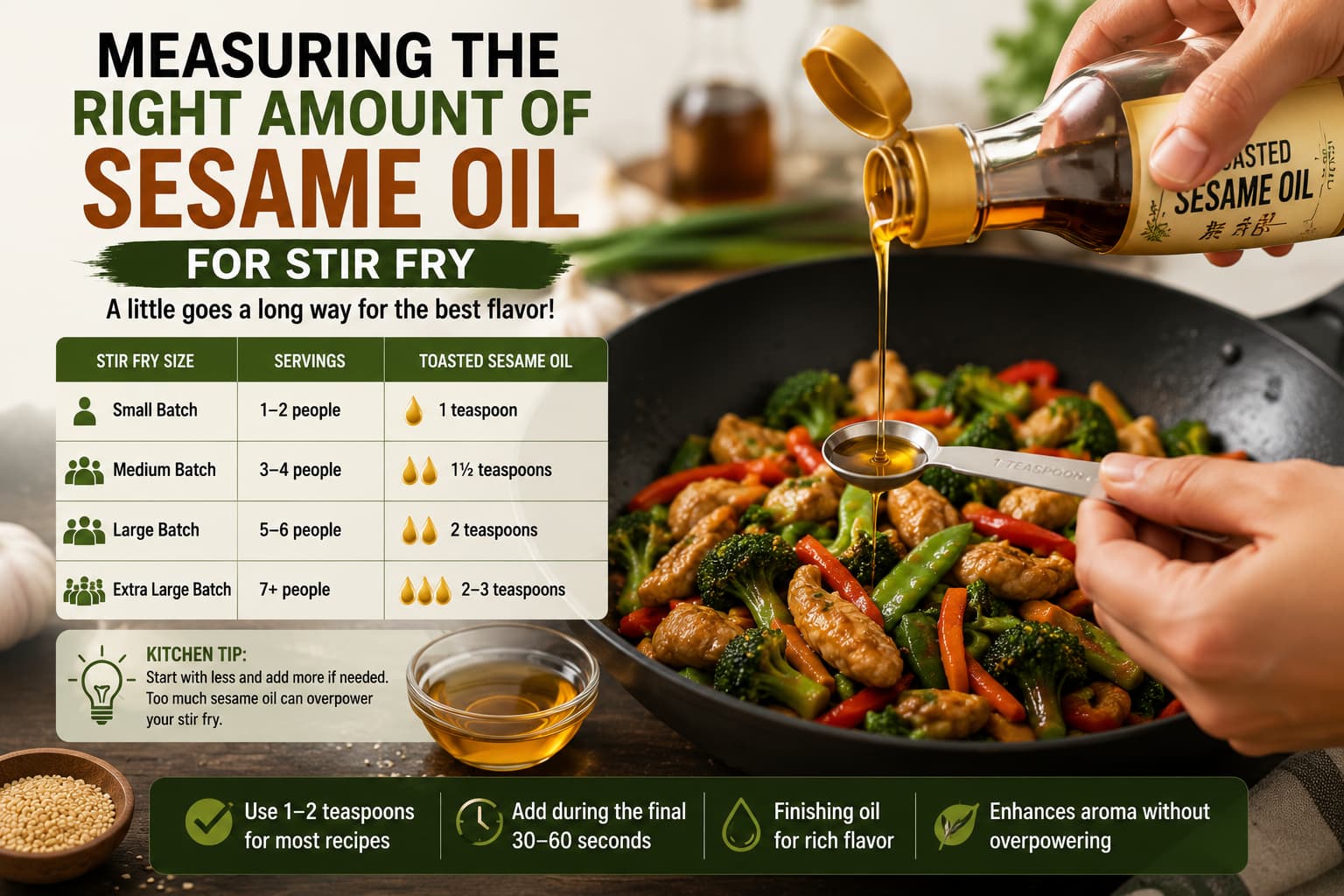
One of the easiest ways to improve homemade stir fry is learning the correct amount to use sesame oil in stir fry. Because toasted sesame oil has such a concentrated flavor, using too much can overwhelm the other ingredients. Instead of tasting balanced, the dish may become overly nutty or slightly bitter.
Unlike neutral cooking oils, sesame oil is considered a finishing ingredient. Think of it as a seasoning rather than the primary cooking fat. In most cases, just a teaspoon or two is enough to transform the flavor of an entire meal.
Recommended Amounts for Different Batch Sizes
The ideal amount depends on how much stir fry you’re preparing. Larger batches need a little more sesame oil, but it’s still best to add it gradually and taste before adding extra.
| Stir Fry Size | Recommended Sesame Oil | Servings |
|---|---|---|
| Small Batch | 1 teaspoon | 1–2 people |
| Medium Batch | 1½ teaspoons | 3–4 people |
| Large Batch | 2 teaspoons | 5–6 people |
| Extra Large Batch | 2–3 teaspoons | 7+ people |
If you’re unsure how much to add, start with less. You can always drizzle in another few drops after tasting, but it’s difficult to reduce the flavor once too much sesame oil has been mixed into the dish.
Kitchen Tip: Measure sesame oil with a teaspoon instead of pouring directly from the bottle. This simple habit helps prevent accidentally adding more than your recipe needs.
Balance Sesame Oil with Other Sauces
Sesame oil works best when it complements other savory ingredients instead of replacing them. Soy sauce provides saltiness, oyster sauce adds richness, garlic and ginger contribute freshness, while sesame oil ties everything together with its signature roasted aroma.
If your stir fry includes a flavorful homemade sauce, you usually won’t need more than 1 to 2 teaspoons of toasted sesame oil. The goal is to enhance the overall taste rather than make sesame the dominant flavor.
For example, if you’re making Chicken Veggie Stir Fry or Healthy Chicken Stir Fry, a light drizzle at the end adds depth while allowing the fresh vegetables and lean chicken to remain the stars of the dish.
Does More Sesame Oil Mean More Flavor?
Not necessarily. In fact, using too much is one of the most common mistakes beginners make when they first use sesame oil in stir fry. Because toasted sesame oil has such a powerful aroma, even one extra teaspoon can dramatically change the flavor profile.
Professional chefs often describe sesame oil as the “final touch.” Its purpose is to round out the flavors and add complexity, not dominate every bite. When used correctly, most people notice the dish tastes richer without immediately identifying sesame oil as the reason.
Chef’s Secret: Taste your stir fry before adding the final drizzle of sesame oil, then taste it again afterward. You’ll notice how just a small amount creates a deeper, more balanced flavor without making the dish taste oily.
Now that you know how much sesame oil to use, it’s equally important to understand the mistakes that can reduce its flavor or even ruin an otherwise delicious stir fry.
Common Mistakes When Using Sesame Oil in Stir Fry
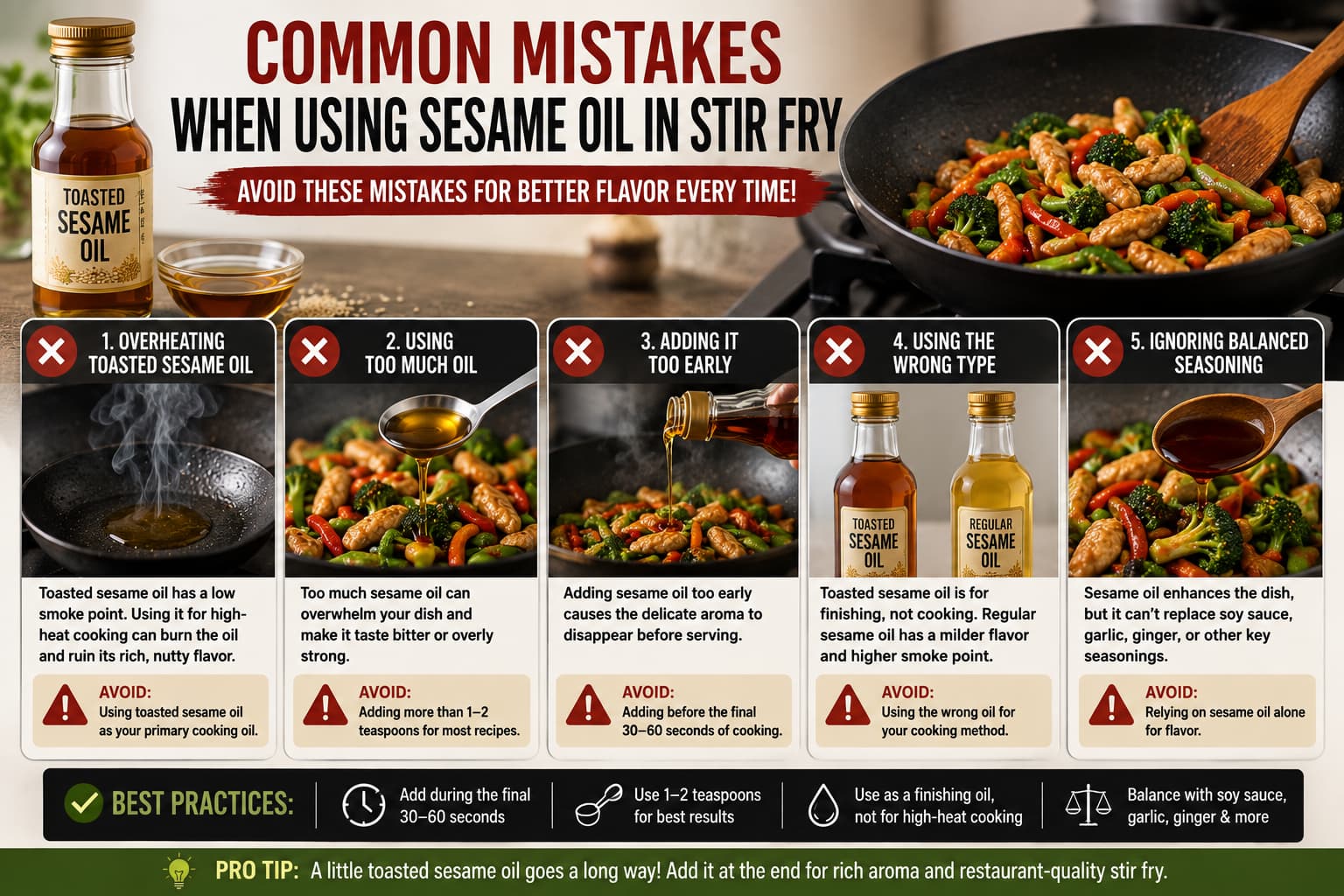
Even high-quality sesame oil won’t produce great results if it’s used incorrectly. Fortunately, most mistakes are easy to avoid once you understand how toasted sesame oil behaves during cooking. If you’re learning to use sesame oil in stir fry, avoiding the following errors will help you achieve better flavor, aroma, and overall balance.
1. Cooking with Toasted Sesame Oil Over High Heat
The biggest mistake is using toasted sesame oil as the primary cooking oil. Because it has a relatively low smoke point compared to oils like avocado or peanut oil, prolonged exposure to high heat causes its delicate roasted compounds to break down.
Instead of developing a rich nutty flavor, the oil can lose much of its aroma and may even develop a slightly burnt taste.
Avoid This: Never fill your wok with toasted sesame oil before adding the chicken or vegetables. Use a neutral high-heat oil for cooking, then add sesame oil at the end for the best flavor.
2. Adding Too Much Sesame Oil
Because toasted sesame oil is highly concentrated, a little goes a long way. Adding several tablespoons often overwhelms the entire dish, making it taste heavy instead of balanced.
Most family-sized stir fry recipes only need about 1 to 2 teaspoons. If you’re unsure, start with less and adjust after tasting.
3. Adding Sesame Oil Too Early
Timing matters just as much as quantity. When you use sesame oil in stir fry during the first few minutes of cooking, the high heat removes much of its signature aroma before the food reaches the table.
The best time to add toasted sesame oil is during the final minute of cooking or immediately after removing the pan from the heat.
4. Ignoring the Type of Sesame Oil
Many people don’t realize there are two common varieties of sesame oil. Toasted sesame oil is intended mainly as a finishing oil, while regular sesame oil has a milder flavor and can tolerate cooking heat better.
If you’ve ever wondered why one bottle tastes much stronger than another, it’s usually because one contains roasted sesame seeds while the other does not.
For a complete comparison, see our guide on Toasted Sesame Oil vs. Regular Sesame Oil.
5. Forgetting to Balance the Sauce
Sesame oil works best as part of a balanced stir fry sauce. It shouldn’t replace soy sauce, oyster sauce, garlic, ginger, or other seasonings. Instead, it enhances those ingredients and helps bring everything together.
If your sauce tastes flat, adding more sesame oil isn’t always the answer. Sometimes the dish simply needs additional soy sauce, aromatics, or a touch of sweetness.
To improve your sauces, you may also enjoy these guides:
- Best Soy Sauce for Chicken Stir Fry
- What Does Oyster Sauce Do in Stir Fry?
- Easy Homemade Stir Fry Sauce
- Common Stir Fry Sauce Mistakes
Best Practices
- Use toasted sesame oil as a finishing oil.
- Add it during the final minute of cooking.
- Measure the oil instead of pouring directly from the bottle.
- Pair it with soy sauce, garlic, ginger, and oyster sauce.
- Taste the dish before adding extra sesame oil.
Avoid These Mistakes
- Cooking with toasted sesame oil over high heat.
- Using several tablespoons in one batch.
- Adding sesame oil before cooking the chicken.
- Confusing regular sesame oil with toasted sesame oil.
- Trying to fix an unbalanced sauce by adding more sesame oil.
By avoiding these common mistakes, you’ll consistently use sesame oil in stir fry the right way and enjoy a richer aroma, deeper flavor, and restaurant-quality results at home. Next, we’ll look at the ingredients that pair best with sesame oil and how to build the most flavorful stir fry combinations.
Best Ingredients That Pair with Sesame Oil
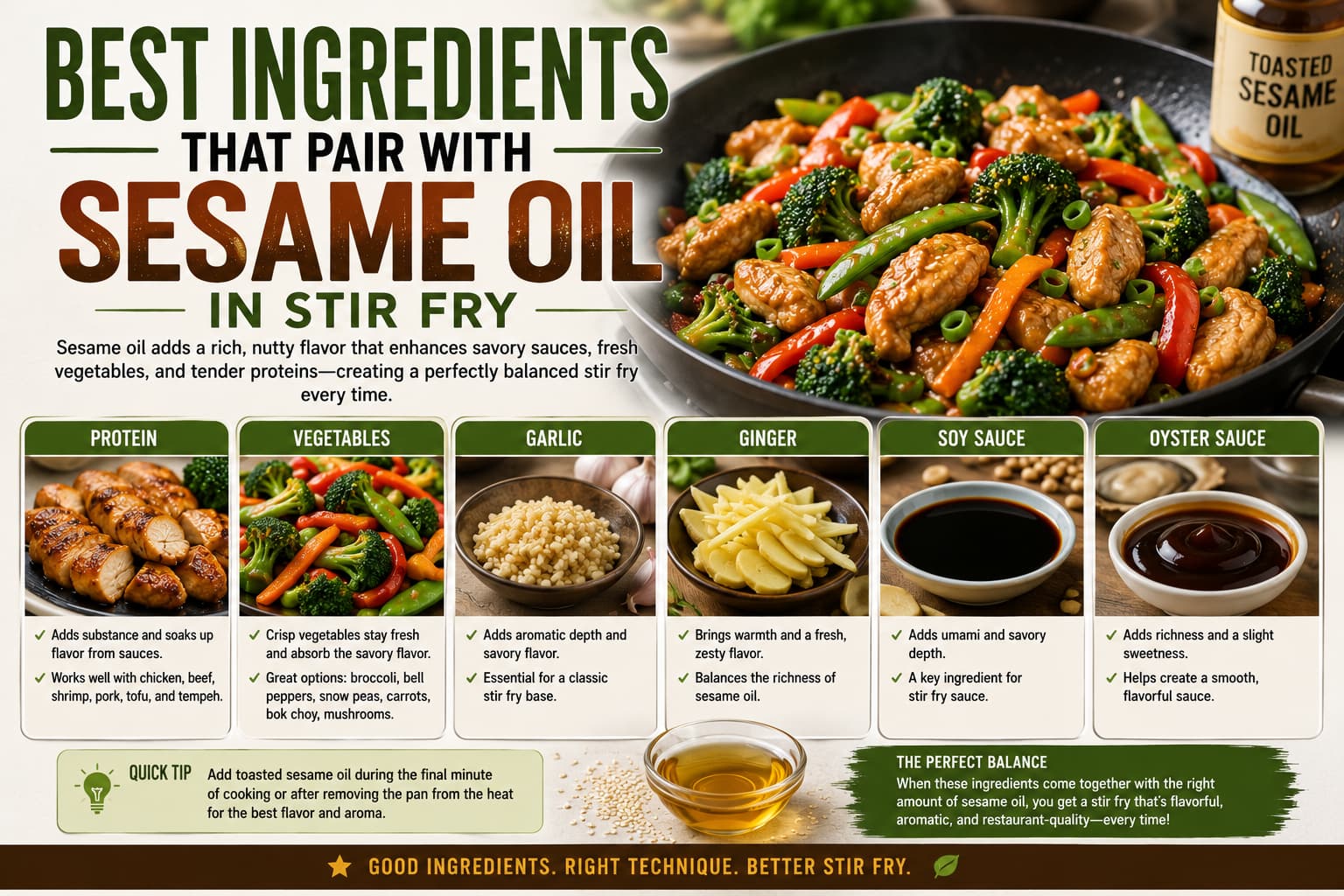
One of the reasons chefs love to use sesame oil in stir fry is its ability to bring other ingredients together. Rather than dominating the dish, toasted sesame oil enhances savory sauces, fresh vegetables, tender chicken, and aromatic seasonings. Choosing ingredients that naturally complement its nutty flavor creates a stir fry that’s balanced, flavorful, and satisfying.
Protein That Works Well with Sesame Oil
Sesame oil pairs beautifully with lean proteins because it adds richness without making the meal feel heavy. Chicken is the most popular choice, but it also works well with beef, shrimp, pork, tofu, and even tempeh for vegetarian meals.
- Chicken breast
- Chicken thighs
- Beef strips
- Shrimp
- Pork loin
- Firm tofu
- Tempeh
For easy meal ideas, try our Chicken Stir Fry, Honey Garlic Chicken Stir Fry, or Healthy Chicken Stir Fry. Each recipe benefits from a light drizzle of toasted sesame oil just before serving.
Vegetables That Complement Sesame Oil
Crisp vegetables absorb the flavor of sesame oil while maintaining their natural freshness. Mixing colorful vegetables also creates better texture and visual appeal.
| Vegetable | Why It Pairs Well |
|---|---|
| Broccoli | Absorbs savory sauces while staying crisp. |
| Bell peppers | Add natural sweetness and color. |
| Snow peas | Provide a fresh, crunchy texture. |
| Carrots | Balance the roasted sesame flavor with mild sweetness. |
| Mushrooms | Add earthy flavor and absorb sauces well. |
| Bok choy | Offers a tender texture and mild flavor. |
| Green onions | Enhance the final aroma and freshness. |
Kitchen Tip: Add sliced green onions and sesame seeds just before serving to complement the toasted sesame oil and give your stir fry a fresh, restaurant-style finish.
Flavor Partners That Enhance Sesame Oil
To successfully use sesame oil in stir fry, pair it with ingredients that build layers of flavor rather than compete with it. Garlic and ginger provide aromatic depth, soy sauce delivers umami, while oyster sauce adds richness and body. A small amount of honey or brown sugar can balance salty flavors, especially in homemade stir fry sauces.
If you’re making your own sauce, these guides can help you create even better flavor combinations:
Chef’s Secret: Sprinkle toasted sesame seeds over the finished dish after adding sesame oil. The combination boosts both aroma and texture without requiring extra oil.
When you combine quality ingredients with proper timing, it’s easy to use sesame oil in stir fry like a professional. A small drizzle at the end of cooking creates a richer aroma, enhances your sauce, and gives homemade stir fry the signature flavor many people associate with their favorite Asian restaurants.
By choosing the right type of sesame oil, adding it at the correct time, measuring it carefully, and pairing it with complementary ingredients, you’ll consistently prepare flavorful stir fry meals that taste fresh, balanced, and restaurant-quality.
Frequently Asked Questions
Can you use sesame oil in stir fry instead of regular cooking oil?
You can use sesame oil in stir fry, but toasted sesame oil should not replace your primary cooking oil. It’s best used as a finishing oil because prolonged high heat reduces its rich, nutty flavor. For the best results, cook with a neutral oil such as avocado, canola, or peanut oil, then drizzle toasted sesame oil over the finished dish.
When should I add sesame oil to stir fry?
The ideal time to use sesame oil in stir fry is during the final 30 to 60 seconds of cooking or immediately after removing the pan from the heat. This preserves its aroma and gives the dish a fresh, restaurant-quality flavor.
How much sesame oil should I use in stir fry?
Most stir fry recipes only need 1 to 2 teaspoons of toasted sesame oil. Because the flavor is concentrated, using too much can overpower the other ingredients. Start with a small amount and adjust to taste if needed.
Is toasted sesame oil better than regular sesame oil for stir fry?
For flavor, yes. Toasted sesame oil has a richer, nuttier taste that makes it the preferred finishing oil for stir fry. Regular sesame oil has a milder flavor and can be used for light cooking, but it won’t provide the same distinctive aroma.
Can I add sesame oil to stir fry sauce?
Absolutely. Many homemade stir fry sauces include a small amount of toasted sesame oil. Add it after the sauce has thickened or stir it in just before serving to preserve its flavor.
Does sesame oil need to be refrigerated after opening?
Most sesame oil can be stored in a cool, dark pantry if it’s used regularly. Refrigeration isn’t required, but it can help extend freshness, especially in warm climates or if you don’t use the oil often. Always keep the bottle tightly sealed and away from direct sunlight.
Storage Tip: Store sesame oil in a tightly sealed bottle away from heat and sunlight. Proper storage helps preserve its aroma and prevents the oil from becoming rancid before its expiration date.
Final Thoughts
Learning how to use sesame oil in stir fry is one of the easiest ways to improve homemade Asian-inspired meals. Although it’s a simple ingredient, adding it at the right time makes a significant difference in both aroma and flavor.
Remember that toasted sesame oil works best as a finishing oil rather than the primary cooking oil. Cook your protein and vegetables with a neutral high-heat oil, then drizzle 1 to 2 teaspoons of toasted sesame oil over the finished dish during the final minute of cooking. This simple technique preserves its rich, nutty flavor and gives your stir fry the same finishing touch used in many restaurant kitchens.
Whether you’re preparing a quick weeknight dinner or experimenting with your own homemade stir fry sauces, knowing how to use sesame oil in stir fry correctly will help you create meals that are more flavorful, balanced, and satisfying every time.
🍽️ You Might Also Like


📧 Save This Recipe For Later
Enter your email and we will send this recipe directly to your inbox.