
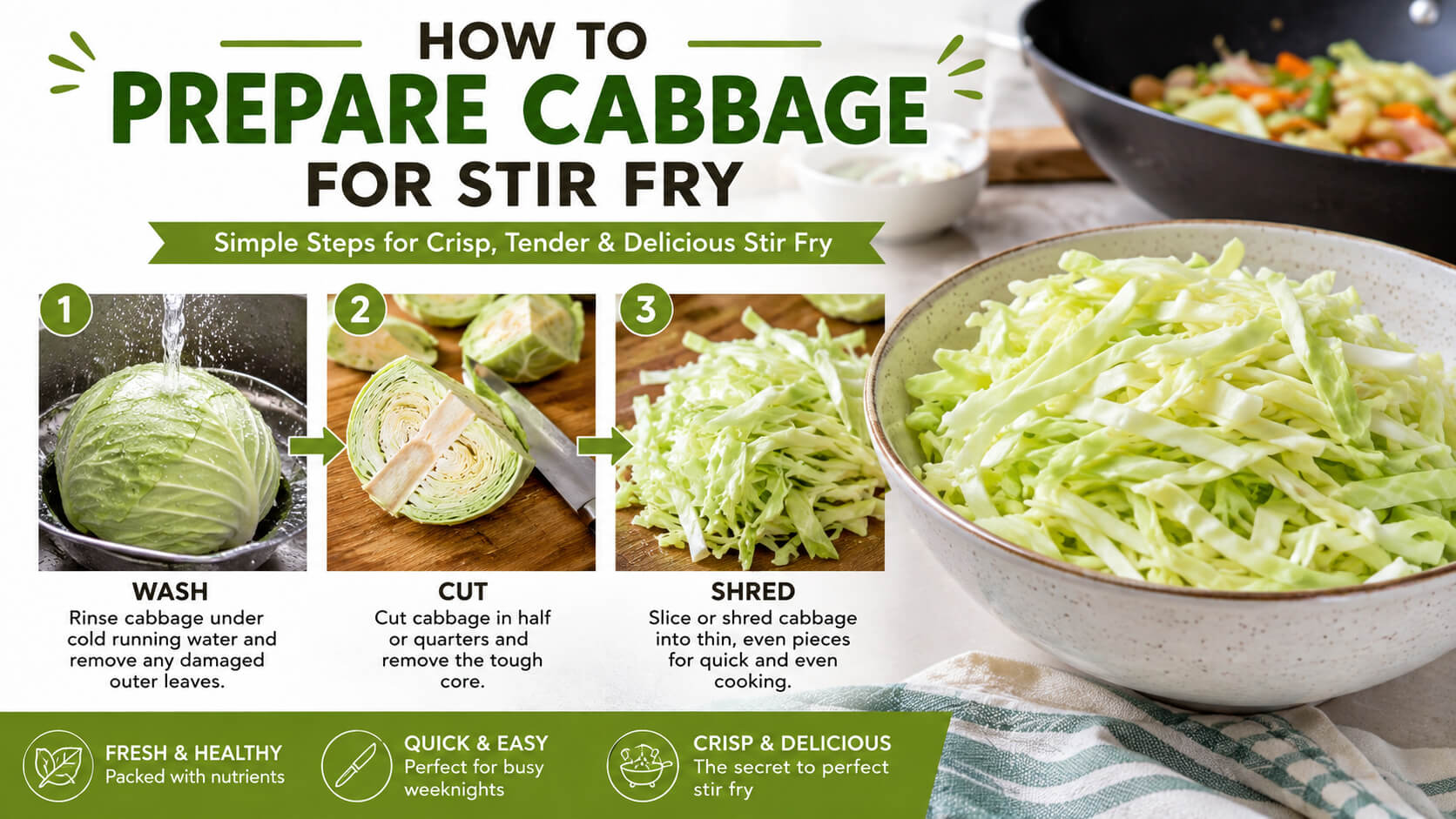
How to Prepare Cabbage for Stir Fry (Step-by-Step Guide)
How to Prepare Cabbage for Stir Fry (Step-by-Step Guide)
If you want your stir fry to have crisp, flavorful cabbage instead of soggy or unevenly cooked pieces, learning how to prepare cabbage for stir fry is one of the most important kitchen skills you can master. Proper preparation helps cabbage cook quickly, absorb sauce evenly, and maintain the perfect balance between tenderness and crunch.
Whether you’re making a classic chicken stir fry, a healthy vegetable stir fry, or an Asian-inspired weeknight dinner, preparing cabbage correctly makes a noticeable difference in both texture and flavor. From selecting the freshest head of cabbage to slicing it into uniform strips, each step contributes to a better final dish.
In this guide, you’ll learn exactly how to prepare cabbage for stir fry, which cabbage varieties work best, common preparation mistakes to avoid, and expert tips that help you achieve restaurant-quality stir fry every time.
Quick Answer
To prepare cabbage for stir fry, remove any damaged outer leaves, rinse the cabbage thoroughly, cut it into quarters, remove the tough core, and slice the leaves into thin, even strips about ¼ inch wide. Pat the cabbage dry before cooking to help it stir fry quickly without becoming watery. Add cabbage during the final few minutes of cooking so it stays crisp-tender instead of becoming soft and mushy.
Table of Contents
Why Proper Cabbage Preparation Matters
Many people think cabbage is one of the easiest vegetables to cook, but the truth is that preparation has a major impact on the final texture. Thick, uneven pieces cook at different speeds, while excess moisture can steam the cabbage instead of allowing it to fry properly.
Taking a few extra minutes to prepare cabbage for stir fry ensures every bite cooks evenly and blends perfectly with chicken, vegetables, and sauce.
Proper preparation also helps:
- Create evenly cooked cabbage with consistent texture.
- Reduce excess moisture that causes soggy stir fry.
- Allow sauces to coat every piece more evenly.
- Preserve the cabbage’s natural sweetness.
- Keep the vegetable slightly crisp instead of overcooked.
Tip: Uniform slices are one of the biggest secrets behind restaurant-quality stir fry. Similar-sized pieces cook at the same rate and look much more appealing in the finished dish.
If you’re planning a complete meal, pair properly prepared cabbage with our Chicken Cabbage Stir Fry recipe or learn additional vegetable techniques in our Ultimate Stir Fry Vegetable Preparation Guide.
Choose the Best Cabbage for Stir Fry
The first step to prepare cabbage for stir fry begins at the grocery store. Fresh cabbage delivers the best texture, flavor, and cooking performance.
Look for a cabbage that feels heavy for its size with tightly packed leaves. The outer leaves should be vibrant and crisp without brown spots, wilting, or signs of decay.
| Cabbage Quality | Best Choice | Avoid |
|---|---|---|
| Weight | Heavy and dense | Light or hollow feeling |
| Leaves | Firm and tightly packed | Loose or wilted |
| Color | Bright green or pale green | Yellow, brown, or black spots |
| Texture | Crisp | Soft or rubbery |
Green cabbage is the most common option for stir fry because it stays slightly crunchy after cooking and absorbs sauces beautifully. Napa cabbage is another excellent choice if you prefer a softer texture and a milder flavor.
Kitchen Secret: Chill cabbage in the refrigerator before slicing. Cold cabbage is firmer, making it easier to cut into thin, even strips that cook more consistently in a hot wok.
If you’re unsure which variety works best, compare their differences in our guide to Green Cabbage vs. Napa Cabbage for Stir Fry.
How to Prepare Cabbage for Stir Fry Step by Step
Once you’ve selected a fresh head of cabbage, it’s time to prepare cabbage for stir fry the right way. These simple steps help ensure even cooking, better flavor, and the crisp-tender texture that makes stir fry so satisfying.
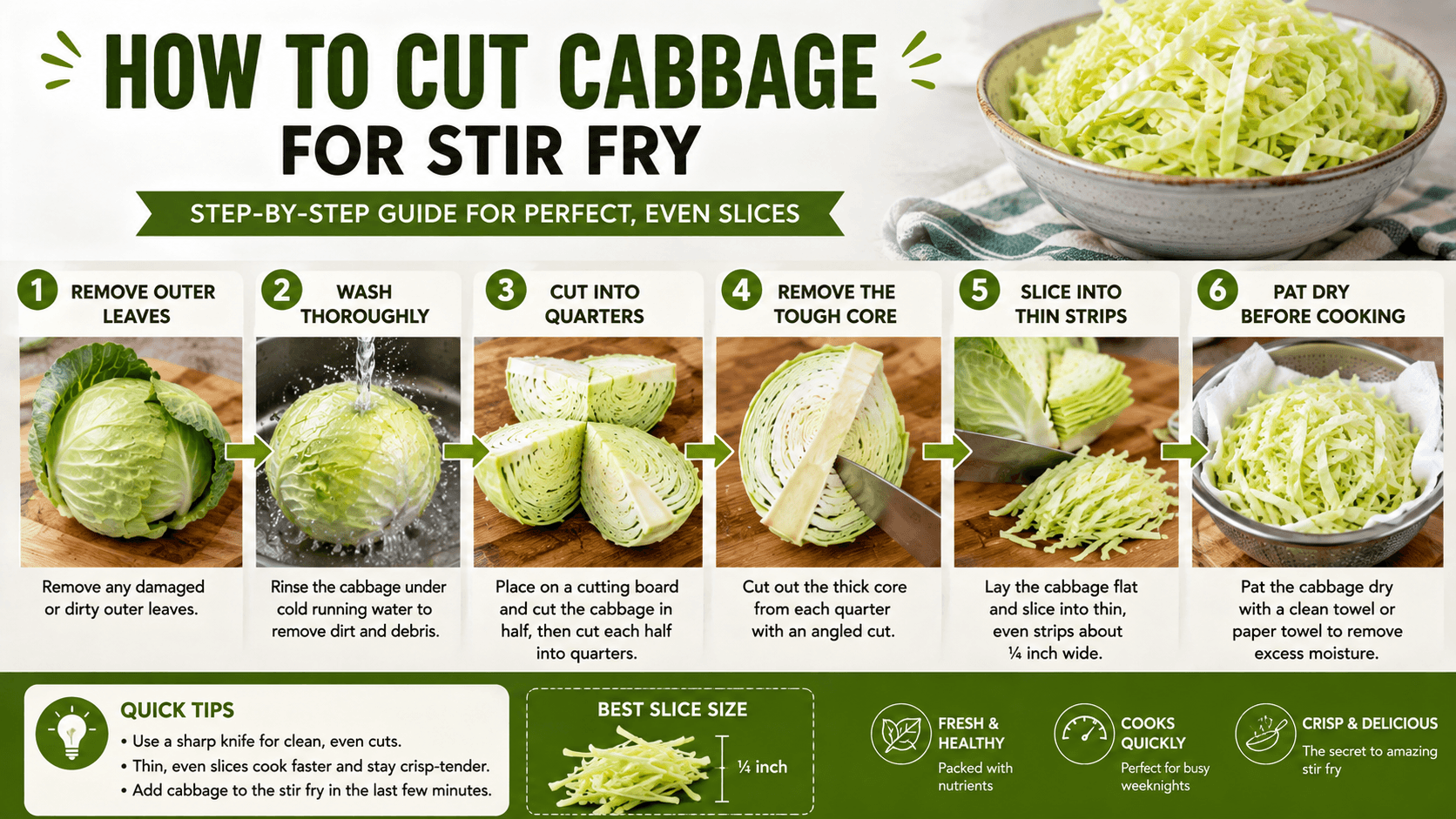
Step 1: Remove the Outer Leaves
Peel away one or two of the outer leaves, especially if they look damaged, dirty, or wilted. These leaves often collect dust during transportation and storage. Removing them exposes the fresh, crisp layers underneath.
If the outer leaves are perfectly fresh and clean, you may only need to remove the very first layer.
Step 2: Wash the Cabbage Thoroughly
Even though cabbage has tightly packed leaves, dirt and tiny insects can hide between them. Rinse the entire head under cool running water while gently turning it.
For extra cleaning, cut the cabbage into quarters first and rinse each section individually. Shake off excess water before moving to the next step.
Tip: Washing before slicing helps prevent dirt from spreading across the cut surfaces and keeps your cutting board cleaner.
Step 3: Cut the Cabbage into Quarters
Place the cabbage on a stable cutting board with the stem facing downward. Using a sharp chef’s knife, slice it in half through the core. Then cut each half into quarters.
Quartering makes the cabbage easier to handle and allows you to remove the tough core cleanly.
Step 4: Remove the Tough Core
The white core is much firmer than the leaves and takes significantly longer to cook. Hold each quarter upright and carefully cut away the triangular section of core with an angled slice.
Removing the core allows every piece of cabbage to cook evenly during stir frying.
Step 5: Slice into Thin, Uniform Strips
Lay each cabbage quarter flat on the cutting board. Slice across the leaves into strips approximately ¼ inch wide. Thin slices cook quickly, absorb sauces evenly, and stay pleasantly crisp.
Avoid thick chunks because they require more cooking time and can leave parts of the cabbage undercooked while others become too soft.
| Slice Thickness | Cooking Result |
|---|---|
| ⅛ inch | Very tender, cooks extremely quickly |
| ¼ inch | Best balance of tenderness and crunch |
| ½ inch or thicker | Longer cooking time and uneven texture |
Step 6: Dry the Cabbage Completely
After washing, excess moisture should be removed before cooking. Spread the sliced cabbage on clean kitchen towels or paper towels and gently pat it dry.
Dry cabbage sears better in a hot wok, while wet cabbage releases steam that can make your stir fry watery.
Warning: Never add dripping wet cabbage directly to a hot wok. The excess water lowers the pan temperature, reduces browning, and can leave your vegetables soft instead of crisp.
Now that you’ve learned how to prepare cabbage for stir fry, you’re ready to cook it with your favorite protein and vegetables. Proper preparation takes only a few minutes but dramatically improves the final texture and appearance of your meal.
If you’re building a complete dinner, try pairing your freshly prepared cabbage with our Chicken Stir Fry, Chicken Veggie Stir Fry, or Healthy Chicken Stir Fry for a quick and delicious weeknight meal.
Best Ways to Cut Cabbage for Stir Fry
Knowing how to prepare cabbage for stir fry also means choosing the right cutting style. While thin strips are the most common option, different cuts create different textures and work better in certain stir fry recipes.
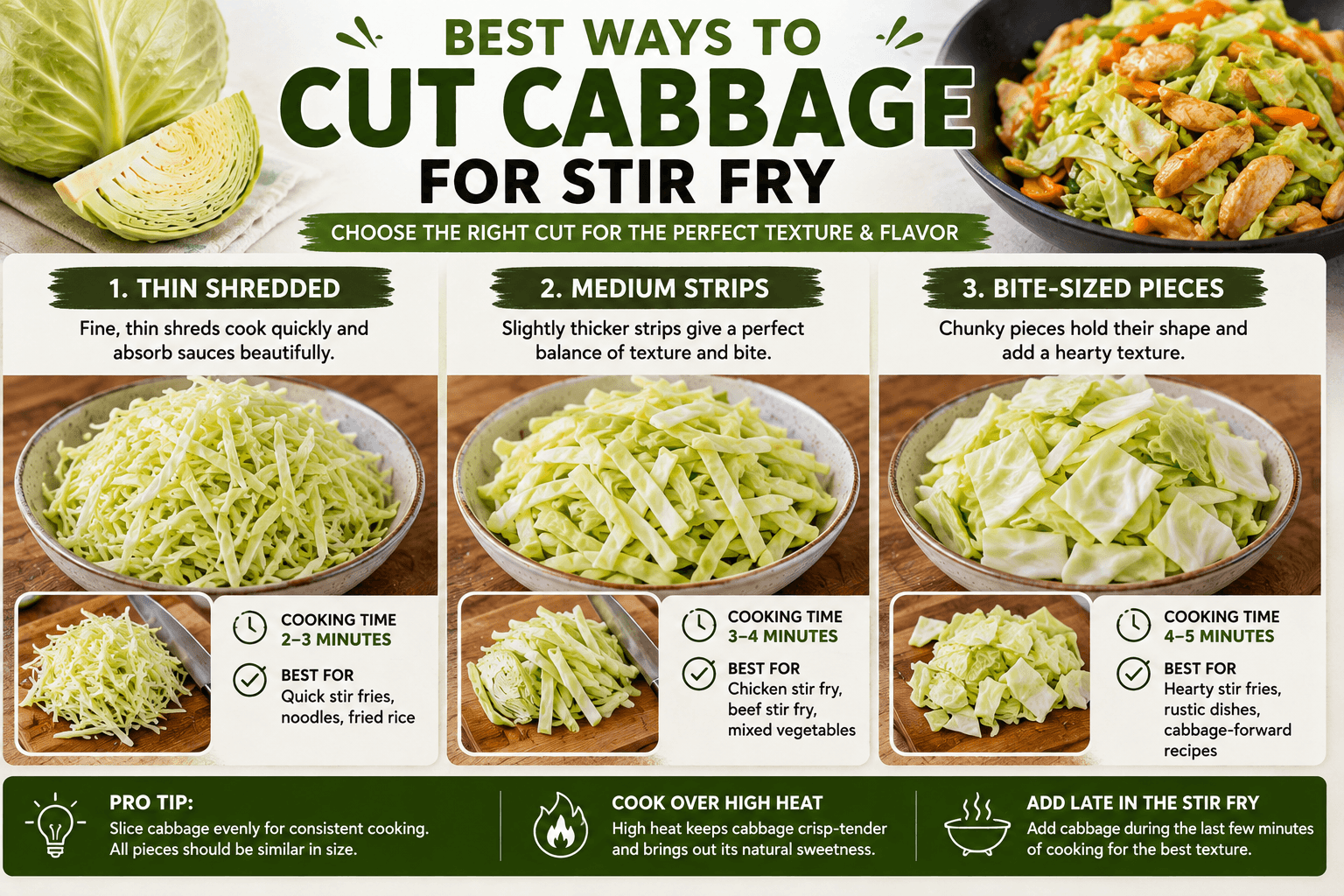
Your cutting method affects how quickly cabbage cooks, how well it absorbs sauce, and how it blends with other vegetables and proteins. Choosing the right size helps create a balanced dish with consistent texture.
Thin Shredded Cabbage
Thin shreds are the most popular choice for stir fry. They cook in just a few minutes while maintaining a pleasant crunch. Because the pieces have a large surface area, they also absorb sauces exceptionally well.
This cut works perfectly for dishes like chicken cabbage stir fry, garlic chicken stir fry, and vegetable stir fry recipes.
Medium Strips
Medium-width strips, about ½ inch wide, hold their shape better during cooking and provide a slightly heartier bite. They’re ideal when cabbage is one of the main vegetables rather than just a supporting ingredient.
Rough Chopped Pieces
Larger bite-sized pieces are suitable for rustic stir fries with chunky vegetables. However, they require a little more cooking time and may not absorb sauce as evenly as thinner slices.
| Cut Style | Best For | Cooking Time |
|---|---|---|
| Thin Shreds | Classic stir fry | 2–3 minutes |
| Medium Strips | Hearty vegetable dishes | 3–4 minutes |
| Chunky Pieces | Rustic stir fry recipes | 4–5 minutes |
Kitchen Secret: Slice cabbage across the leaf rather than lengthwise whenever possible. Cross-cutting creates shorter pieces that are easier to eat with chopsticks or a fork and cook more evenly.
When to Add Cabbage to a Stir Fry
Even if you perfectly prepare cabbage for stir fry, adding it at the wrong time can ruin its texture.
Cabbage cooks much faster than dense vegetables like carrots or broccoli but slightly slower than leafy greens such as spinach. For the best results, add cabbage after your protein has nearly finished cooking and after harder vegetables have already softened.
A typical cooking order looks like this:
- Cook the chicken or other protein.
- Add firm vegetables such as carrots and broccoli.
- Stir in cabbage.
- Add quick-cooking vegetables like bean sprouts or spinach.
- Pour in the stir fry sauce and toss everything together.
This sequence keeps every ingredient at its ideal texture instead of overcooking the cabbage.
Tip: Keep the heat high and stir constantly. High heat allows the cabbage to cook quickly while preserving its natural sweetness and crisp edges.
If you’d like to master vegetable timing, read our guide on The Correct Order to Add Vegetables to Stir Fry. It explains exactly when each vegetable should go into the wok for the best results.
Should You Blanch Cabbage Before Stir Fry?
For most recipes, the answer is no. Fresh cabbage cooks very quickly over high heat, so blanching is usually unnecessary.
However, blanching may be helpful if you’re preparing a very large batch of vegetables for meal prep or if you’re using particularly thick cabbage leaves. A quick 30-second blanch followed by an ice bath slightly softens the leaves while preserving their color.
For everyday cooking, freshly sliced cabbage placed directly into a hot wok delivers the best flavor, texture, and caramelization.
If you’re deciding between fresh and frozen vegetables for your next meal, our guide on Fresh vs. Frozen Vegetables for Stir Fry explains the advantages of each option.
Common Mistakes When Preparing Cabbage for Stir Fry
Even after learning how to prepare cabbage for stir fry, a few common mistakes can affect the final texture and flavor. Fortunately, they’re easy to avoid once you know what to watch for.
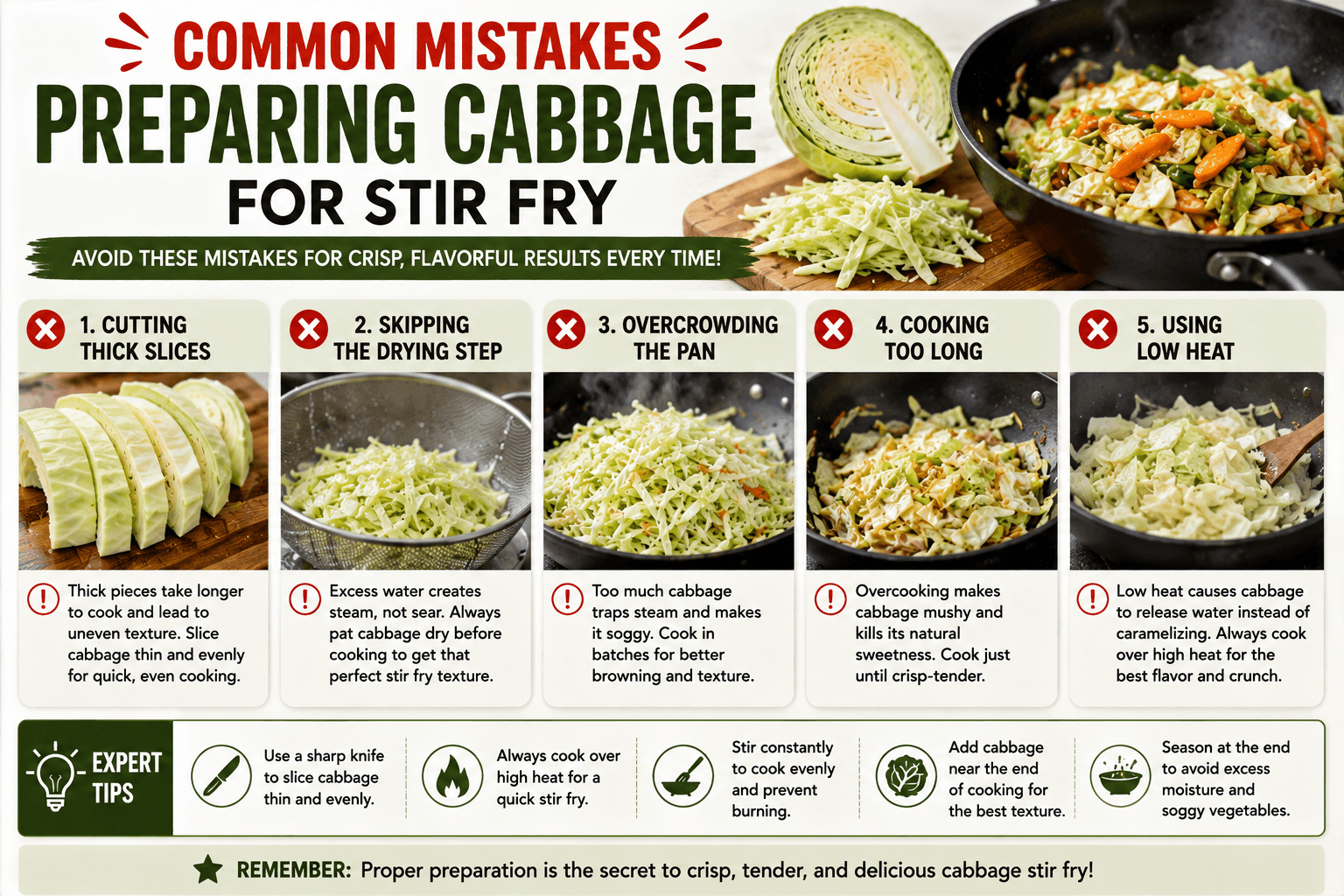
Cutting Uneven Pieces
One of the biggest mistakes is slicing cabbage into pieces of different sizes. Thin strips finish cooking much faster than thick chunks, leading to uneven texture throughout the stir fry.
Take a little extra time to make each slice as uniform as possible. Consistent pieces cook evenly and create a much more professional-looking dish.
Skipping the Drying Step
Many home cooks rinse cabbage and immediately add it to the wok. While washing is essential, excess water creates steam that lowers the pan’s temperature.
Instead of frying, the cabbage begins to boil, producing soft leaves and a watery sauce. Always pat the cabbage dry before cooking.
Warning: Moisture is the enemy of a great stir fry. Dry vegetables brown better, absorb sauce more effectively, and develop a richer flavor.
Overcrowding the Pan
Adding too much cabbage at once is another common mistake. A crowded wok traps steam, preventing proper browning and making the vegetables soggy.
If you’re cooking a large amount, prepare the cabbage in two smaller batches. The extra few minutes are worth it for better texture.
Cooking the Cabbage Too Long
Cabbage doesn’t need much time over high heat. Once it becomes translucent and slightly tender while still holding a bit of crunch, it’s done.
Cooking for several extra minutes causes the leaves to lose their structure and natural sweetness.
Using Low Heat
Stir fry depends on high heat to cook vegetables quickly. Low temperatures allow cabbage to slowly release moisture instead of developing light caramelization around the edges.
Preheat your wok or skillet thoroughly before adding oil and vegetables.
Tip: A properly heated wok should sizzle immediately when cabbage touches the surface. That quick sear helps lock in texture and flavor.
Expert Tips for Better Stir Fry Cabbage
If you regularly prepare cabbage for stir fry, these professional techniques can make your meals even better.
- Use a sharp chef’s knife to make clean, even cuts.
- Slice cabbage shortly before cooking for maximum freshness.
- Cook over high heat while stirring constantly.
- Season near the end of cooking to avoid excess moisture.
- Combine cabbage with vegetables that have similar cooking times.
- Avoid covering the pan while cooking.
- Taste before serving and adjust seasoning if needed.
Why Cabbage Is Great for Stir Fry
- Affordable year-round.
- Cooks quickly.
- Stays slightly crisp.
- Absorbs sauces well.
- Rich in fiber and vitamin C.
- Pairs with nearly any protein.
Potential Challenges
- Can become watery if not dried.
- Overcooks easily.
- Large heads require proper storage.
- Uneven cuts cook inconsistently.
- Needs high heat for the best texture.
If you’ve accidentally overcooked your vegetables, our guide on How to Fix Soggy Stir Fry Vegetables offers practical solutions to improve your meal.
For even more inspiration, try using your freshly prepared cabbage in recipes like Chicken Bell Pepper Stir Fry, Chicken Broccoli Stir Fry, or Chicken Zucchini Stir Fry.
How to Store Prepared Cabbage for Stir Fry
If you like to meal prep or save time during busy weeknights, you can prepare cabbage for stir fry in advance. Proper storage keeps the cabbage fresh, crisp, and ready to cook whenever you need it.
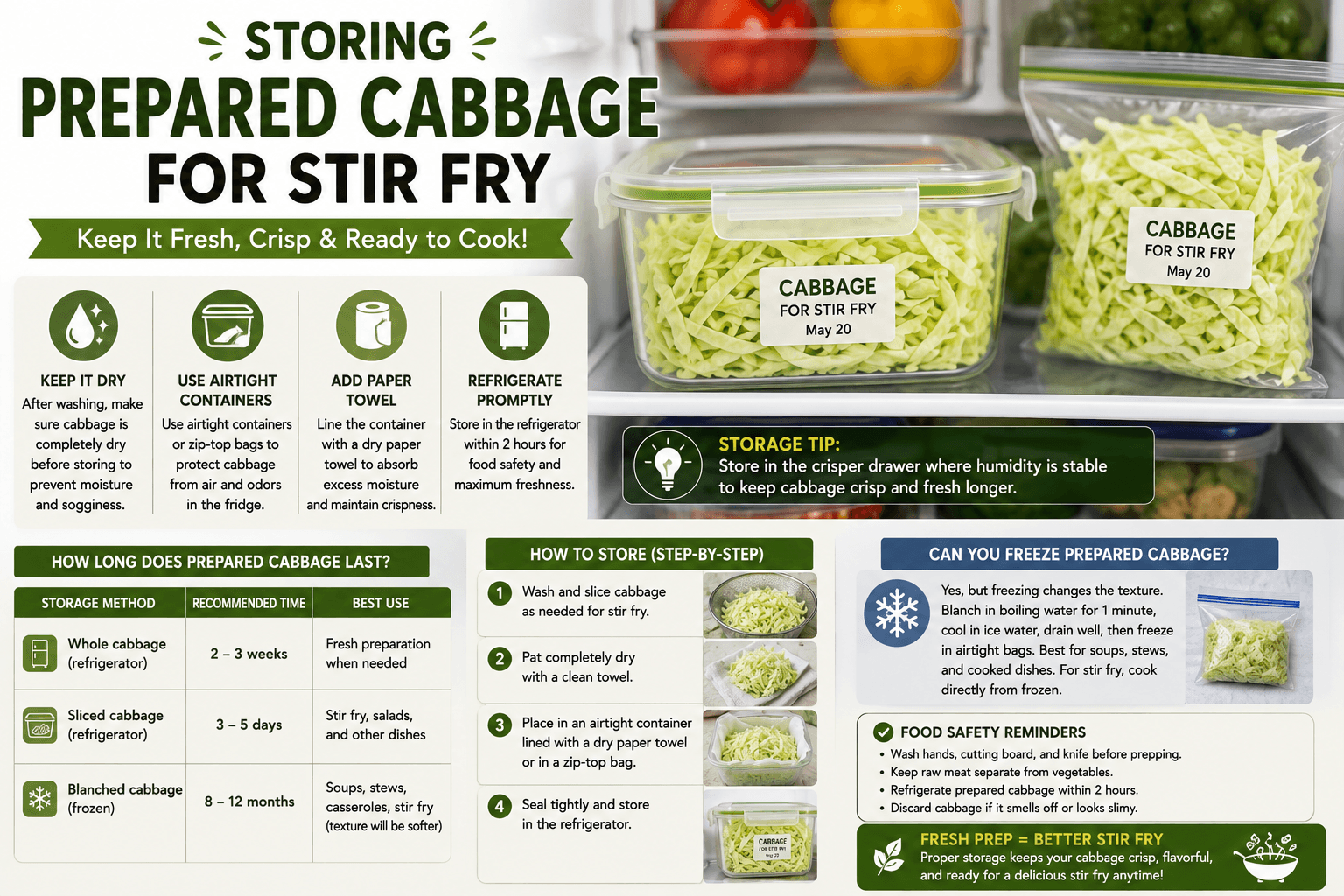
After washing, slicing, and drying the cabbage, place it in an airtight container or a resealable storage bag lined with a dry paper towel. The paper towel absorbs excess moisture and helps the cabbage stay crisp longer.
Store the container in the refrigerator, preferably in the crisper drawer where humidity levels are more stable.
Storage Tip: Properly prepared cabbage will usually stay fresh in the refrigerator for 3 to 5 days. For the best texture, use it as soon as possible rather than waiting until the last day.
Can You Freeze Prepared Cabbage?
Yes, but freezing changes the texture. While frozen cabbage works well in soups, stews, and casseroles, it becomes softer after thawing and won’t have the same crisp texture that’s ideal for stir fry.
If you plan to freeze cabbage, blanch it in boiling water for about one minute, immediately transfer it to an ice bath, drain thoroughly, and freeze it in airtight freezer bags.
When using frozen cabbage in stir fry, cook it directly from frozen instead of thawing it first. This helps reduce excess moisture.
| Storage Method | Recommended Time | Best Use |
|---|---|---|
| Whole cabbage (refrigerator) | 2–3 weeks | Fresh preparation |
| Sliced cabbage (refrigerator) | 3–5 days | Stir fry and salads |
| Frozen cabbage | 8–12 months | Cooked dishes and soups |
Food Safety Tips When Preparing Cabbage
Food safety is just as important as proper cutting techniques. Although cabbage is considered a low-risk vegetable, following a few simple practices helps keep your meals safe and fresh.
- Wash your hands before handling vegetables.
- Use a clean cutting board and knife.
- Keep raw meat separate from fresh vegetables.
- Refrigerate prepared cabbage within two hours.
- Discard cabbage that develops an unpleasant odor or slimy texture.
Food Safety Reminder: Never use the same cutting board for raw chicken and cabbage unless it has been thoroughly washed with hot, soapy water. This helps prevent cross-contamination.
Checklist: The Best Way to Prepare Cabbage for Stir Fry
Before you start cooking, use this quick checklist to make sure you’ve completed every important step.
- ✔ Choose a fresh, firm head of cabbage.
- ✔ Remove damaged outer leaves.
- ✔ Wash thoroughly under cool running water.
- ✔ Cut into quarters.
- ✔ Remove the tough core.
- ✔ Slice into thin, even strips.
- ✔ Pat completely dry.
- ✔ Preheat the wok before cooking.
- ✔ Add cabbage near the end of the stir fry.
- ✔ Cook over high heat for a crisp-tender finish.
Kitchen Secret: Preparing all of your vegetables before turning on the stove is known as mise en place. This simple habit makes stir frying faster, easier, and helps prevent overcooking because every ingredient is ready to go when the wok is hot.
Following this checklist every time you prepare cabbage for stir fry will help you achieve consistently delicious results, whether you’re making a quick weeknight dinner or preparing meals ahead for the week.
Final Thoughts
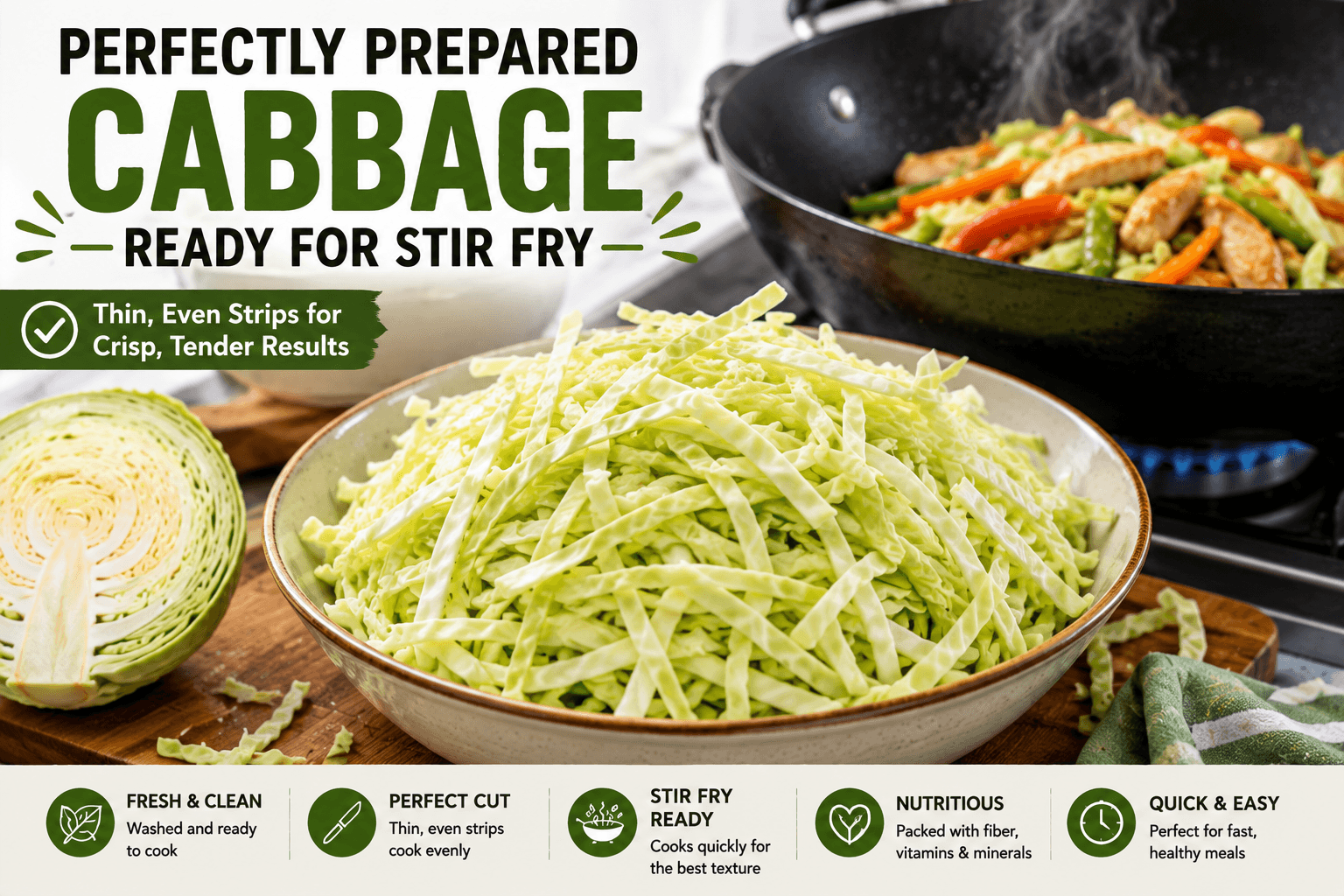
Learning how to prepare cabbage for stir fry is a simple skill that can dramatically improve the quality of your homemade meals. From choosing a fresh cabbage to slicing it into uniform strips and cooking it over high heat, every step contributes to a stir fry that’s crisp, flavorful, and evenly cooked.
Remember to remove the tough core, dry the cabbage thoroughly after washing, and add it to the wok near the end of cooking. These small details help preserve its natural sweetness while preventing soggy or overcooked vegetables.
Whether you’re preparing a quick weeknight dinner or meal-prepping vegetables for the week ahead, taking a few extra minutes to prepare cabbage for stir fry properly will consistently produce better results.
Once you’ve mastered this technique, you’ll be able to use cabbage confidently in countless stir fry recipes while enjoying the perfect balance of crunch, flavor, and freshness every time.
Frequently Asked Questions
Do I need to wash cabbage before preparing it for stir fry?
Yes. Always rinse cabbage under cool running water before slicing. Washing removes dirt and debris that may be trapped between the outer leaves.
How thin should I slice cabbage for stir fry?
For the best results, slice cabbage into strips about ¼ inch wide. Thin, even slices cook quickly and absorb stir fry sauce more evenly.
Can I prepare cabbage for stir fry ahead of time?
Absolutely. You can prepare cabbage for stir fry up to 3 to 5 days in advance when it’s stored in an airtight container in the refrigerator.
Should cabbage be cooked before adding it to a stir fry?
No. Fresh cabbage cooks very quickly in a hot wok, so it can be added directly to the stir fry without pre-cooking.
Why does my cabbage become soggy during stir fry?
Soggy cabbage is usually caused by excess moisture, overcrowding the pan, cooking over low heat, or overcooking. Drying the cabbage well and using high heat help maintain a crisp texture.
Which type of cabbage is best for stir fry?
Green cabbage is the most popular choice because it stays crisp and holds up well during cooking. Napa cabbage is also excellent if you prefer a softer, more delicate texture.
References
🍽️ You Might Also Like


📧 Save This Recipe For Later
Enter your email and we will send this recipe directly to your inbox.