
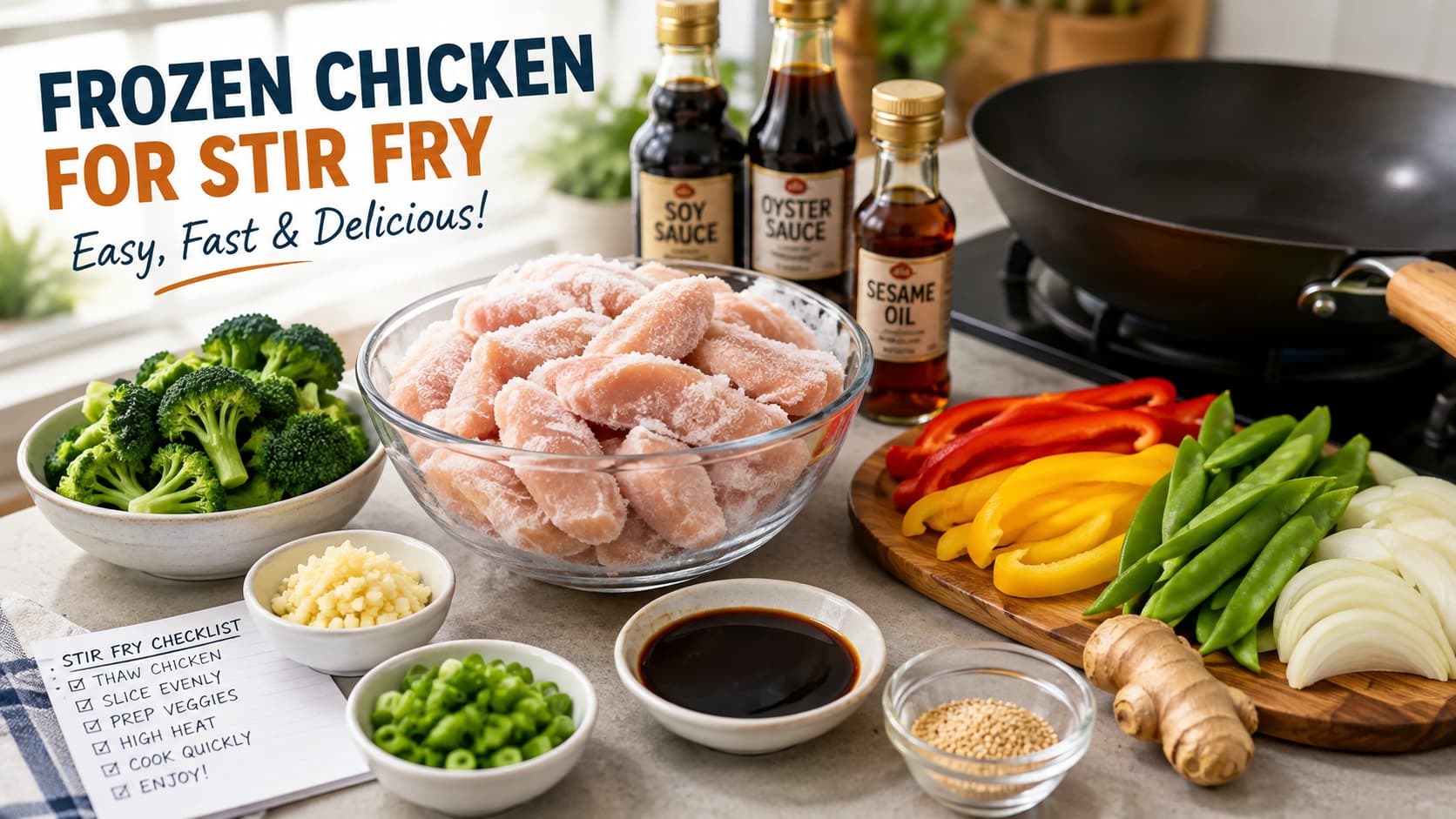
Can You Use Frozen Chicken for Stir Fry? (Pros, Cons & Best Method)
Can You Use Frozen Chicken for Stir Fry? (Pros, Cons & Best Method)
If you’ve forgotten to thaw your chicken before dinner, you’re not alone. Many home cooks open the freezer only to realize their chicken is still frozen when it’s time to make stir fry. That often leads to one important question: Can you use frozen chicken for stir fry?
The good news is that frozen chicken for stir fry can work well when it’s handled correctly. However, whether you should cook it straight from frozen or thaw it first depends on the type of stir fry you’re making, how quickly you need dinner on the table, and the texture you’re hoping to achieve.
Stir frying is one of the fastest cooking methods. Because it relies on high heat and short cooking times, small mistakes—such as adding icy chicken to a hot wok—can dramatically affect the final dish. Excess moisture, uneven cooking, and poor browning are all common problems when frozen chicken isn’t prepared properly.
In this guide, you’ll learn the advantages and disadvantages of using frozen chicken for stir fry, when it’s safe, the best thawing methods, expert tips for maintaining juicy meat, and common mistakes to avoid. By the end, you’ll know exactly which method produces the best stir fry every time.
Quick Answer
Yes, you can use frozen chicken for stir fry, but thawing it first usually produces better results. Properly thawed chicken cooks more evenly, browns faster, absorbs marinades better, and releases less water into the pan. If you’re short on time, partially thawing frozen chicken before slicing and cooking is a practical alternative, but avoid placing large frozen chicken pieces directly into a hot wok.
- ✔ Safe when handled correctly.
- ✔ Thawed chicken develops better flavor.
- ✔ Less water means better browning.
- ✔ Easier to slice into thin, even strips.
- ✔ Better texture in finished stir fry.
Table of Contents
Can You Use Frozen Chicken for Stir Fry?
Absolutely. Using frozen chicken for stir fry is completely safe as long as the chicken is handled according to food safety guidelines. The challenge isn’t safety—it’s quality.
Professional chefs almost always prefer thawed chicken because it browns beautifully, cooks evenly, and develops better flavor. Frozen chicken contains ice crystals that melt during cooking. That extra water cools the pan and creates steam instead of the intense dry heat needed for a proper stir fry.
When the pan temperature drops, vegetables soften instead of staying crisp, and chicken begins to boil rather than sear. This is why many homemade stir fries lack the caramelized flavor commonly found in restaurant versions.
Fortunately, a few preparation techniques can minimize these problems. Even partially thawing frozen chicken before cooking makes a noticeable difference.
Kitchen Tip: If you only have frozen chicken available, thaw it until it’s slightly firm rather than completely frozen. This makes slicing much easier while reducing excess moisture during cooking.
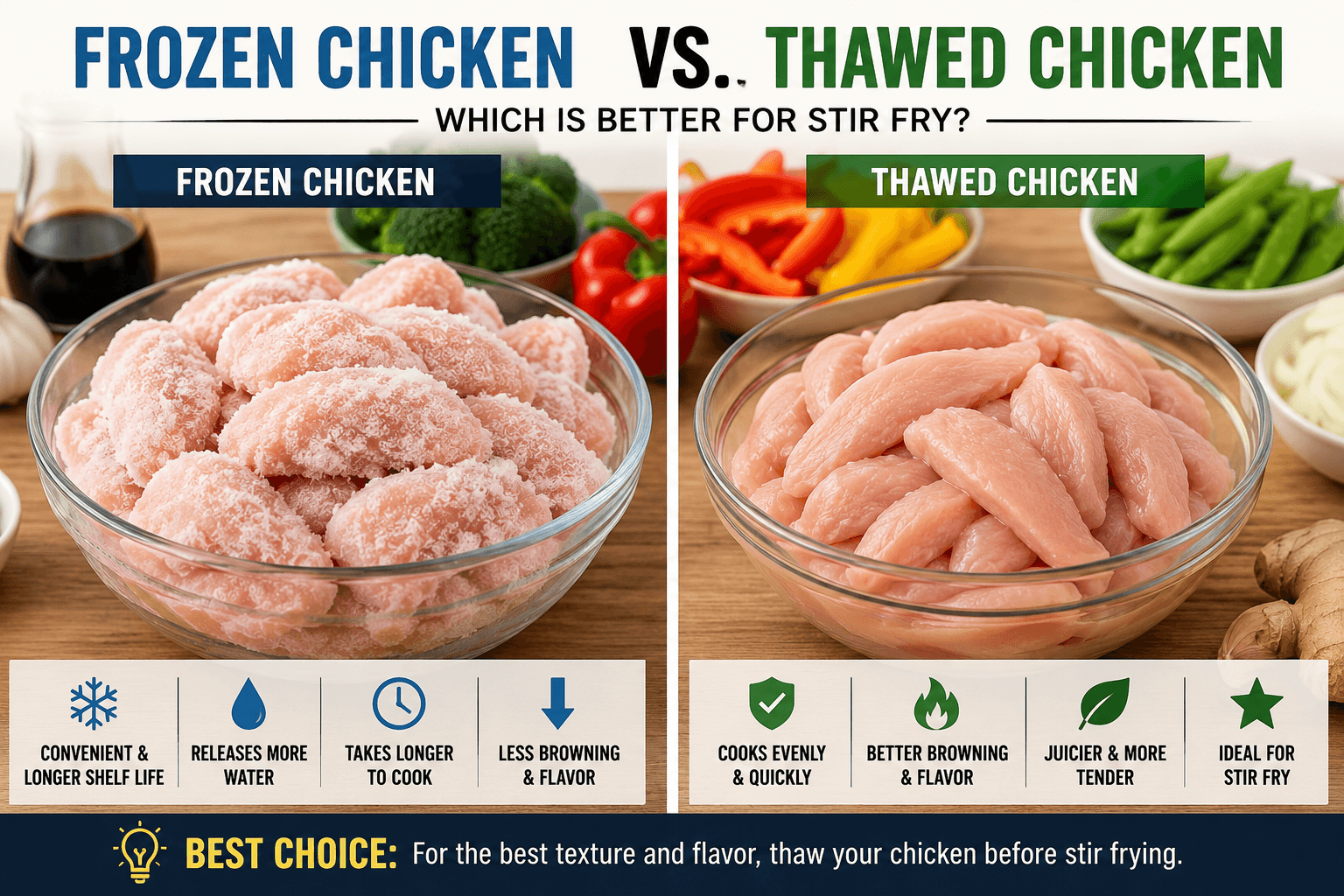
Pros and Cons of Using Frozen Chicken for Stir Fry
Every cooking method involves trade-offs. Understanding both the benefits and drawbacks helps you decide when frozen chicken for stir fry makes sense.
Pros
- Long freezer storage life.
- Convenient for busy weeknights.
- Always available for quick meals.
- Reduces food waste.
- Safe when thawed correctly.
- Often more economical when purchased in bulk.
Cons
- Releases excess moisture.
- Less browning during cooking.
- Can cook unevenly.
- Harder to season thoroughly.
- May produce rubbery texture if overcooked.
- Requires extra preparation time for best results.
For most home cooks, the convenience of frozen chicken outweighs the disadvantages, especially when proper thawing techniques are used.
| Method | Texture | Browning | Flavor | Recommended? |
|---|---|---|---|---|
| Fully thawed | Excellent | Excellent | Excellent | ⭐⭐⭐⭐⭐ |
| Partially thawed | Very Good | Good | Very Good | ⭐⭐⭐⭐☆ |
| Cooked directly frozen | Fair | Poor | Average | ⭐⭐☆☆☆ |
The Best Method for Using Frozen Chicken for Stir Fry
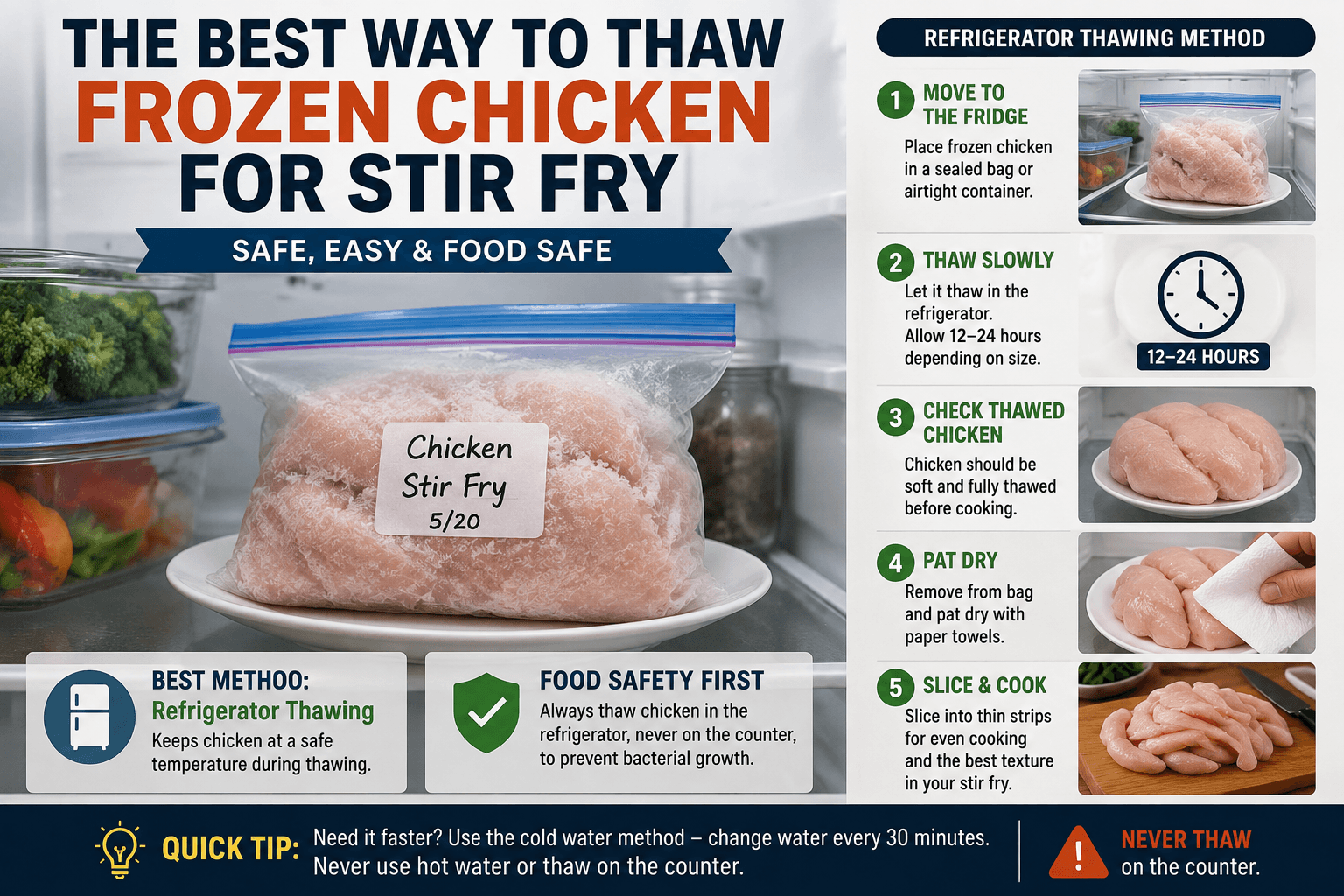
If your goal is juicy chicken with excellent browning, thawing is the clear winner. Food safety experts recommend refrigerator thawing because it keeps chicken below unsafe temperatures throughout the process.
Planning ahead may take longer, but the payoff is significant. Properly thawed chicken absorbs marinades more effectively, cooks evenly from edge to center, and produces the rich browned flavor that defines great stir fry.
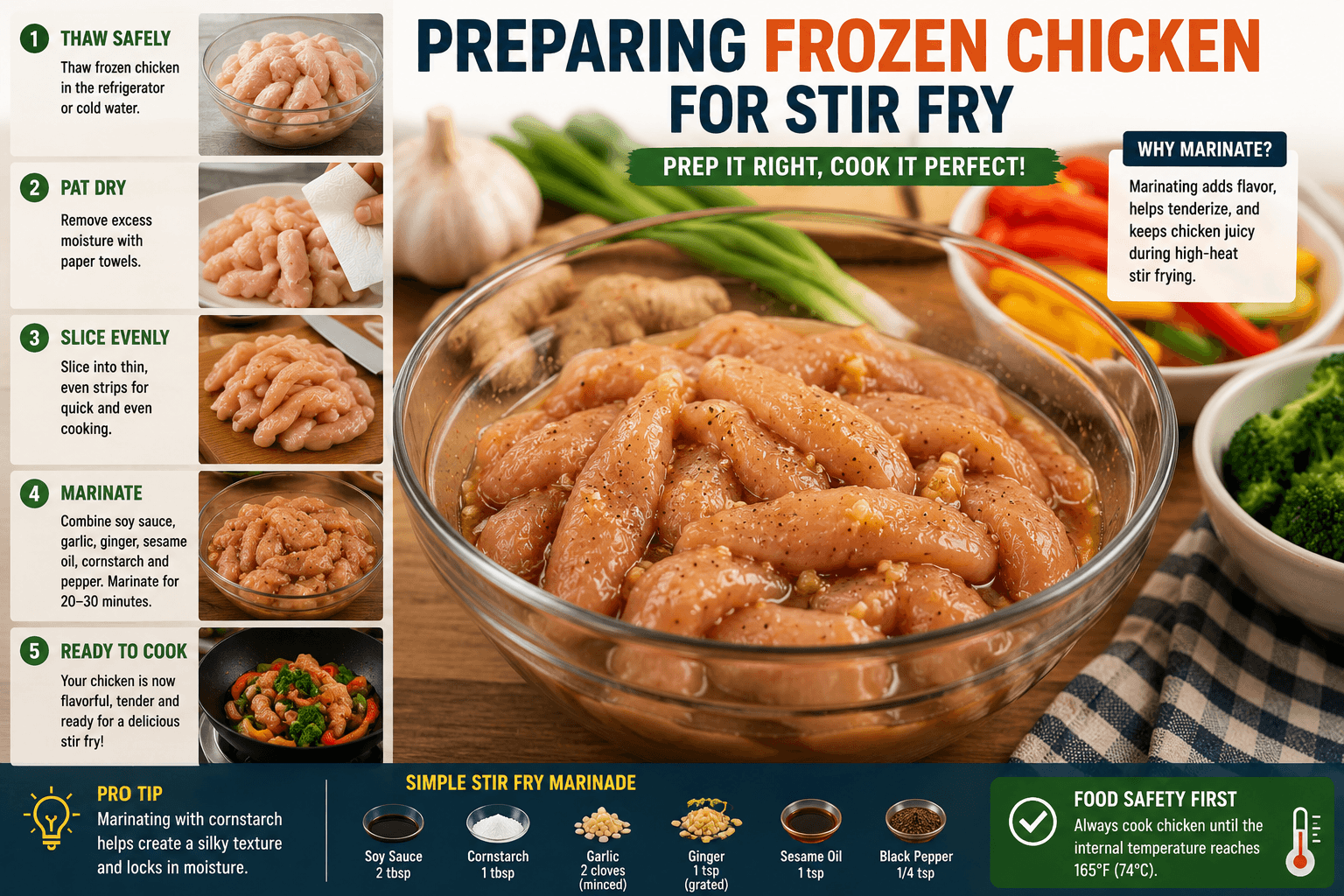
- Transfer frozen chicken from the freezer to the refrigerator 24 hours before cooking.
- Pat the chicken completely dry with paper towels.
- Slice into thin, uniform strips across the grain.
- Marinate if desired.
- Cook over high heat in small batches.
- Avoid overcrowding the pan.
If you’re in a hurry, cold-water thawing is the next best option. Place the sealed chicken in a bowl of cold water and replace the water every 30 minutes until thawed. This method is much faster than refrigerator thawing while still maintaining food safety when done correctly.
For a detailed guide, see our article on how to thaw chicken for stir fry.
Chef’s Secret: Restaurant stir fries stay juicy because the chicken is dried thoroughly before cooking. Removing surface moisture allows immediate browning instead of steaming.
Why Thawed Chicken Produces Better Stir Fry
There are several scientific reasons why thawed chicken consistently outperforms frozen chicken during stir frying. High-heat cooking depends on rapid moisture evaporation. When frozen meat enters the pan, melting ice absorbs heat that would otherwise brown the surface.
Instead of developing a flavorful golden crust, the chicken often simmers in its own liquid. The vegetables are affected too. Rather than remaining crisp and vibrant, they soften as the moisture fills the pan with steam.
Another advantage of thawed chicken is seasoning. Marinades penetrate thawed meat much more effectively because they aren’t blocked by frozen ice crystals. Ingredients such as soy sauce, garlic, ginger, sesame oil, and cornstarch coat the meat evenly, resulting in better flavor throughout every bite.
Texture also improves significantly. Because thawed chicken cooks more predictably, it’s easier to remove it from the heat at exactly the right internal temperature. That helps prevent dry, stringy meat while maintaining a juicy interior.
Whether you’re making a classic chicken stir fry, broccoli stir fry, mushroom stir fry, or vegetable stir fry, starting with properly thawed chicken gives you the best chance of achieving restaurant-quality results at home.
Food Safety Warning: Never thaw chicken on the kitchen counter. The outer surface can enter the temperature danger zone long before the center has thawed, increasing the risk of bacterial growth.
Can You Cook Frozen Chicken Without Thawing?
Technically, yes—you can cook frozen chicken for stir fry without thawing it first. However, this method is usually a last resort rather than the best approach. While it is safe when the chicken reaches an internal temperature of 165°F (74°C), the quality of the finished stir fry is often noticeably lower.
Unlike baking or slow cooking, stir frying depends on very high heat and quick cooking times. Frozen chicken works against that process because the ice inside the meat must melt before the chicken can begin to brown. During this stage, the pan loses heat, excess liquid collects in the wok, and the ingredients start steaming instead of stir frying.
If you decide to cook frozen chicken directly, choose small pieces instead of whole chicken breasts. Smaller pieces thaw and cook much faster, reducing the amount of moisture released into the pan.
Even then, expect the cooking process to take several minutes longer than usual. You’ll also need to stir more frequently and cook in smaller batches to maintain high heat.
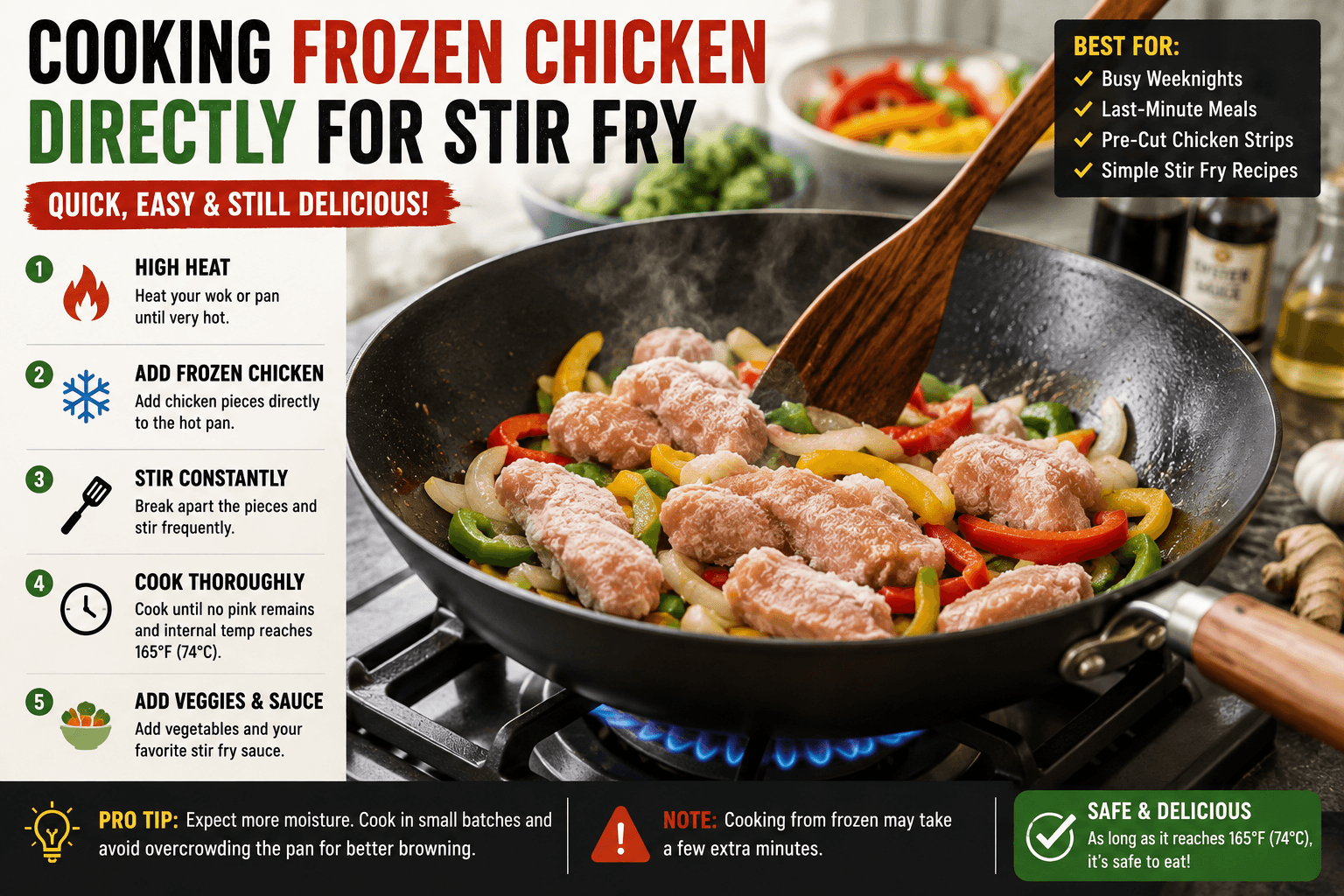
When Cooking Directly from Frozen Makes Sense
Although thawing is recommended, there are situations where using frozen chicken for stir fry without thawing is perfectly reasonable.
- You forgot to thaw the chicken.
- You need dinner ready quickly.
- The chicken is already cut into thin strips before freezing.
- You’re preparing a simple weeknight meal rather than restaurant-style stir fry.
- You plan to simmer the chicken briefly in sauce after stir frying.
If several of these situations apply, cooking from frozen can save dinner. Just understand that texture and browning won’t be quite as good as properly thawed chicken.
Quick Tip: Freeze chicken in thin stir fry strips instead of whole breasts. The next time you need frozen chicken for stir fry, the pieces will thaw and cook much faster.
How to Prepare Frozen Chicken for the Best Results
The preparation stage has a bigger impact on your stir fry than many people realize. Simply removing excess moisture before cooking can dramatically improve browning, texture, and flavor.
1. Slice Chicken Before Freezing Whenever Possible
If you regularly make stir fry, consider slicing fresh chicken into thin strips before freezing it. This small amount of meal prep saves considerable time later.
Thin strips thaw faster, cook evenly, and are much easier to portion. They also fit naturally into stir fry recipes without requiring additional cutting while frozen.
For a complete slicing guide, read How to Slice Frozen Chicken for Stir Fry.
2. Pat the Chicken Completely Dry
One of the biggest reasons homemade stir fry becomes watery is surface moisture. Whether you thawed your chicken overnight or used the cold-water method, always dry it thoroughly using paper towels.
Removing moisture helps the chicken brown immediately instead of steaming.
3. Marinate After Thawing
Frozen chicken doesn’t absorb marinades efficiently because ice crystals block the meat’s surface. Wait until the chicken has thawed before adding your marinade.
A simple stir fry marinade usually includes:
- Soy sauce
- Cornstarch
- Garlic
- Fresh ginger
- Sesame oil
- Black pepper
This combination adds flavor while helping the chicken stay tender during high-heat cooking.
For detailed instructions, visit How to Marinate Chicken for Stir Fry.
Should You Velvet Frozen Chicken for Stir Fry?
Absolutely. Velveting is one of the easiest ways to improve the texture of frozen chicken for stir fry after it has been thawed.
Velveting is a traditional Chinese cooking technique that coats chicken in a mixture of cornstarch, egg white or oil, and seasonings before cooking. The coating forms a protective layer that locks in moisture while creating an exceptionally tender texture.
Many restaurant stir fries use this method because it produces juicy chicken even during intense high-heat cooking.
Restaurant Secret: Velveting isn’t only for expensive restaurants. Home cooks can achieve similar results with pantry ingredients in just 20–30 minutes.
If you’re interested in mastering this technique, check out How to Velvet Chicken for Stir Fry.
Common Mistakes When Using Frozen Chicken for Stir Fry
Most problems with frozen chicken for stir fry come from preparation mistakes rather than the chicken itself. Avoiding these common errors will noticeably improve your results.
| Mistake | Why It’s a Problem | Better Solution |
|---|---|---|
| Cooking large frozen breasts | Uneven cooking | Slice into thin strips first |
| Skipping the drying step | Watery stir fry | Pat chicken dry thoroughly |
| Overcrowding the pan | Steaming instead of searing | Cook in small batches |
| Using low heat | No browning | Preheat wok until very hot |
| Adding vegetables too early | Vegetables become soggy | Cook chicken first, then vegetables |
| Marinating frozen meat | Poor flavor absorption | Marinate after thawing |
Another common mistake is repeatedly stirring the chicken as soon as it touches the pan. Allowing it to remain undisturbed for a short time encourages browning and creates better flavor.
If your chicken frequently releases lots of liquid while cooking, our guide on Why Chicken Releases Water During Stir Fry explains the causes and simple solutions.
Avoid This: Never rinse frozen chicken before cooking. Washing raw chicken can spread bacteria around your sink and kitchen surfaces without making the meat safer.
You can learn more in our article: Should You Wash Chicken Before Stir Fry?.
Food Safety Tips When Using Frozen Chicken for Stir Fry
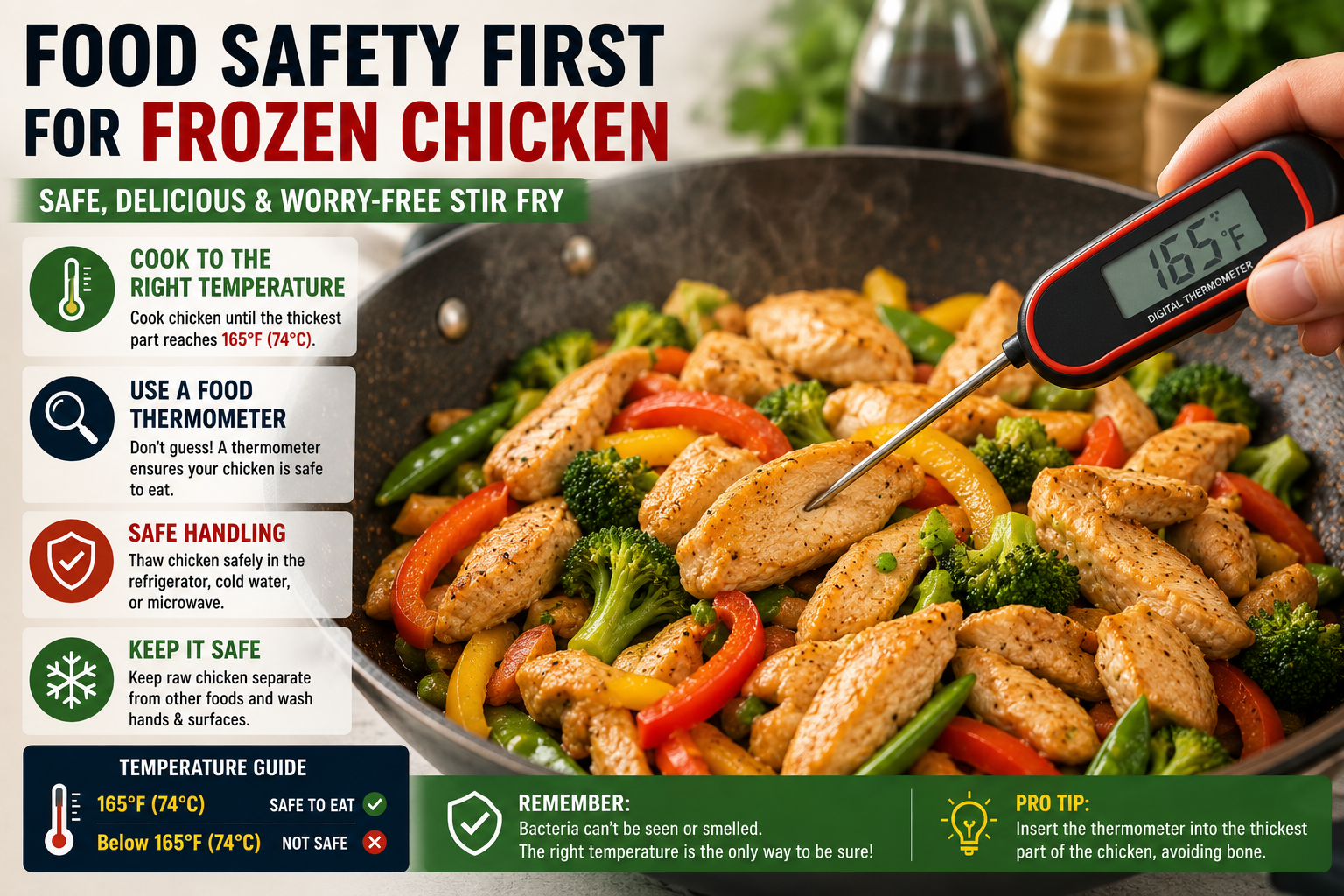
Food safety should always come first when preparing frozen chicken for stir fry. While frozen chicken is perfectly safe to eat, improper thawing or cooking can increase the risk of foodborne illness. Following a few simple guidelines helps ensure your meal is both delicious and safe.
Freezing prevents bacteria from multiplying, but it does not kill them. Once the chicken begins to thaw, bacteria can become active again if the meat is left at unsafe temperatures for too long. That’s why proper thawing methods are just as important as proper cooking.
Safe Ways to Thaw Frozen Chicken
- Refrigerator: The safest method. Place frozen chicken on a plate or tray in the refrigerator for about 24 hours.
- Cold Water: Seal the chicken in a leak-proof plastic bag and submerge it in cold water. Replace the water every 30 minutes until thawed.
- Microwave: Use the defrost setting only if you’ll cook the chicken immediately afterward.
Never thaw chicken in hot water or leave it on the kitchen counter for several hours. Both methods allow the outer layer of the meat to enter the temperature danger zone while the center remains frozen.
Food Safety Reminder: Cook chicken until the thickest part reaches an internal temperature of 165°F (74°C). Use an instant-read food thermometer instead of relying on appearance alone.
Storage Tips for Frozen Chicken
Proper storage is one of the easiest ways to maintain the quality of frozen chicken for stir fry. While frozen chicken remains safe for a long time when kept continuously frozen, its texture and flavor gradually decline if stored improperly.
Storage Guidelines
- Freeze chicken at 0°F (-18°C) or below.
- Wrap tightly to prevent freezer burn.
- Label each package with the freezing date.
- Freeze in meal-sized portions.
- Remove as much air as possible from freezer bags.
- Avoid repeated thawing and refreezing.
Many experienced meal preppers freeze chicken already sliced into stir fry strips. This saves time, speeds up thawing, and makes weeknight cooking much easier.
If you prepare chicken ahead of time, you may also find our guide on How to Store Raw Chicken for Meal Prep helpful.
Expert Tips for Better Frozen Chicken Stir Fry
Professional cooks use several techniques to maximize flavor and texture when working with frozen chicken. These small adjustments often make the difference between an average homemade stir fry and one that tastes like it came from your favorite restaurant.
Preheat the Wok Properly
Your wok or skillet should be fully heated before adding oil. A hot cooking surface immediately starts browning the chicken rather than allowing it to release excess moisture.
Cook in Small Batches
Overcrowding is one of the biggest reasons stir fry becomes watery. Adding too much chicken at once lowers the pan temperature dramatically.
Cook one layer of chicken at a time, remove it, then cook the next batch before combining everything at the end.
Choose High-Smoke-Point Oils
Use oils that tolerate high temperatures well, such as:
- Avocado oil
- Peanut oil
- Canola oil
- Vegetable oil
These oils help create the quick sear that stir frying requires.
Prepare Every Ingredient Before Cooking
Stir frying moves quickly. Slice vegetables, prepare sauces, and measure seasonings before turning on the stove. Once cooking begins, there’s little time to stop.
Chef’s Secret: Professional kitchens organize every ingredient before heating the wok. This technique, called “mise en place,” helps maintain consistent high heat and prevents overcooking.
Best Stir Fry Recipes to Make with Frozen Chicken
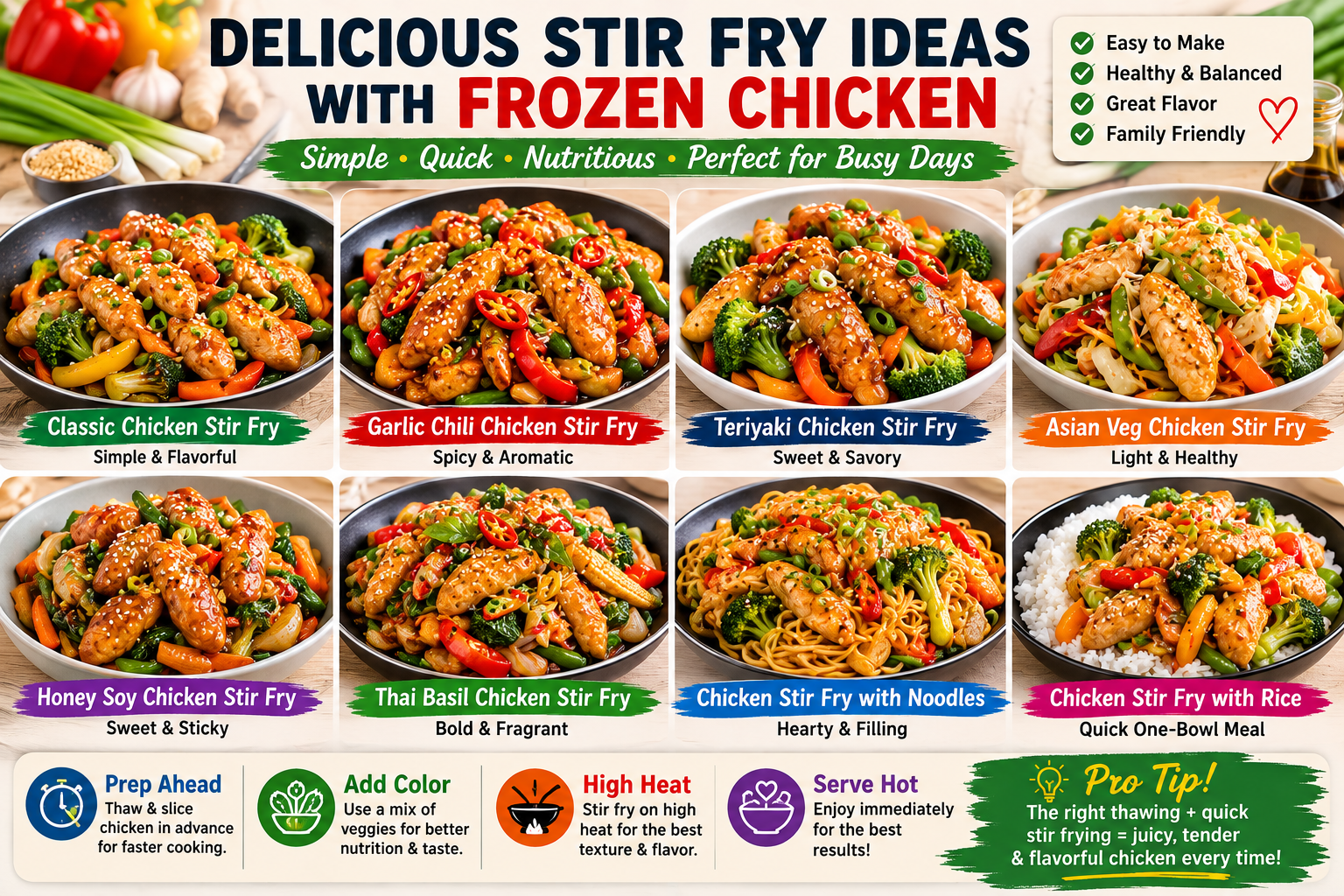
Once you’ve learned how to prepare frozen chicken for stir fry, you can use it in many different recipes. Properly thawed and prepared chicken works well with nearly any vegetable combination.
- Classic Chicken Stir Fry
- Chicken Broccoli Stir Fry
- Chicken Bell Pepper Stir Fry
- Chicken Mushroom Stir Fry
- Chicken Zucchini Stir Fry
- Chicken Cabbage Stir Fry
- Chicken Spinach Stir Fry
- Chicken Veggie Stir Fry
Each recipe benefits from the same preparation principles covered in this guide: thaw safely, dry thoroughly, cook over high heat, and avoid overcrowding the pan.
Frequently Asked Questions
Can I cook frozen chicken for stir fry without thawing?
Yes, but thawing first usually gives better texture, browning, and flavor. Cooking directly from frozen often releases more water into the pan.
Is frozen chicken as healthy as fresh chicken?
Yes. Frozen chicken retains nearly all of its nutritional value when frozen promptly and stored correctly.
Why does frozen chicken release so much water?
Ice crystals melt during cooking, creating excess moisture that cools the pan and prevents proper browning.
Can I marinate frozen chicken?
It’s best to thaw the chicken first. Marinades penetrate thawed meat much more effectively than frozen meat.
What’s the safest thawing method?
Refrigerator thawing is the safest option because it keeps chicken at a consistently safe temperature.
Can I refreeze thawed chicken?
If the chicken was thawed in the refrigerator and has remained below 40°F (4°C), it can usually be refrozen, although the texture may decline slightly.
References
Final Thoughts
Using frozen chicken for stir fry is a practical and convenient option for busy home cooks. While it’s possible to cook chicken directly from frozen, thawing it first consistently produces better texture, richer flavor, and the golden-brown sear that makes stir fry so satisfying.
By following proper food safety practices, removing excess moisture, cooking over high heat, and avoiding common mistakes, you can achieve delicious stir fry with frozen chicken any night of the week. Whether you’re preparing a quick family dinner or meal prepping for the week ahead, these simple techniques help ensure consistently excellent results.
🍽️ You Might Also Like

📧 Save This Recipe For Later
Enter your email and we will send this recipe directly to your inbox.