
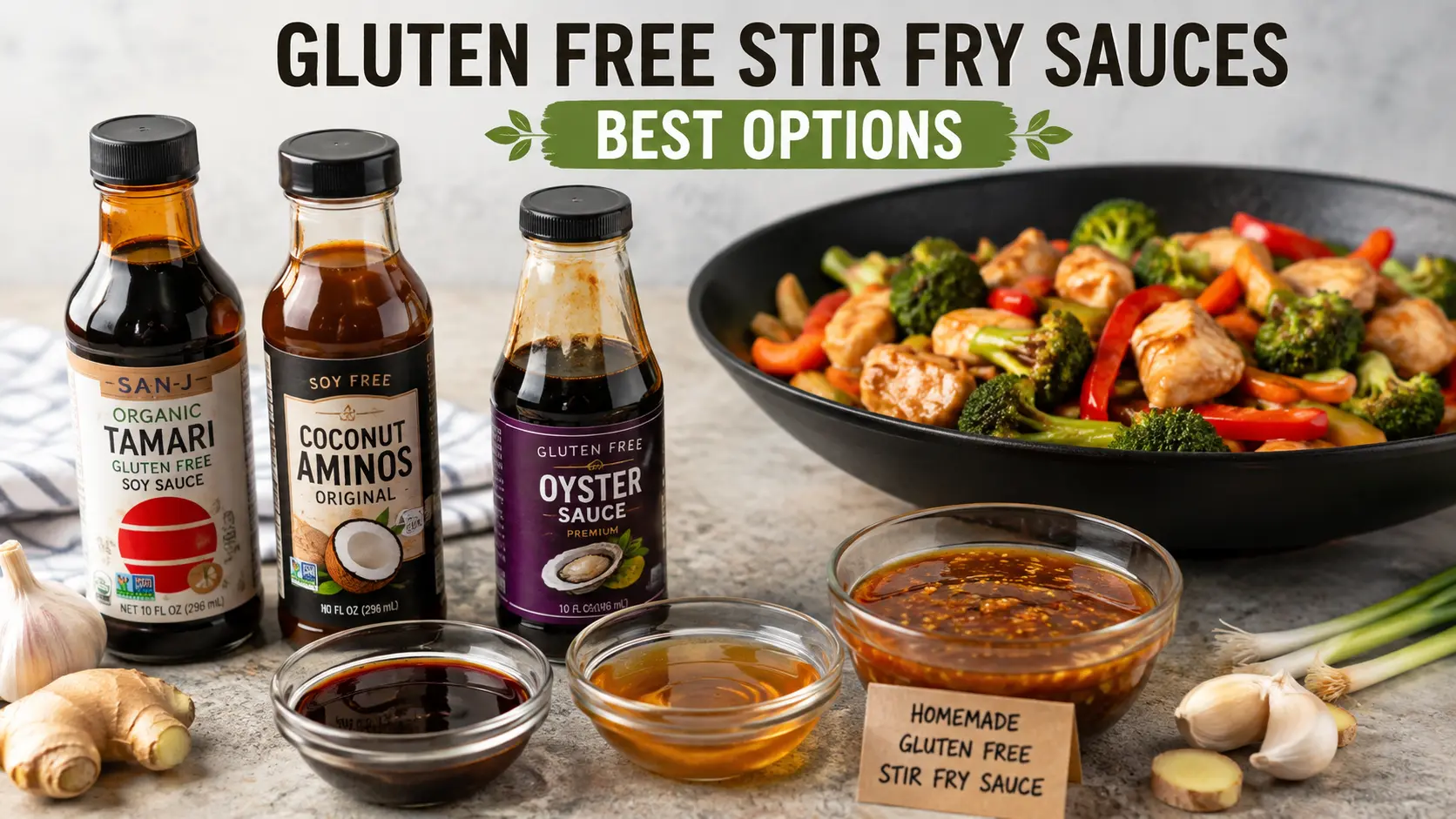
Gluten-Free Stir Fry Sauces (Best Options)
Gluten-Free Stir Fry Sauces (Best Options)
Finding delicious gluten free stir fry sauces can feel challenging because many traditional Asian-style sauces rely on regular soy sauce, which usually contains wheat. Fortunately, there are plenty of flavorful alternatives that deliver the same savory, sweet, and umami-rich taste without gluten. Whether you’re managing celiac disease, gluten sensitivity, or simply choosing a gluten-free lifestyle, selecting the right sauce allows you to enjoy restaurant-quality stir fry at home.
This guide explains the best gluten free stir fry sauces, what ingredients to look for, which ones to avoid, and how to choose the right option for different recipes. You’ll also learn practical shopping tips, common labeling mistakes, and simple ways to build flavorful stir fry meals while staying completely gluten free.
Quick Answer
Gluten free stir fry sauces are sauces made without wheat, barley, or rye ingredients. The best options typically use certified gluten-free tamari, coconut aminos, gluten-free oyster sauce, rice vinegar, garlic, ginger, sesame oil, and gluten-free cornstarch or arrowroot for thickening. Always read labels carefully because many traditional soy sauces and bottled stir fry sauces contain hidden wheat.
- Choose certified gluten-free tamari instead of regular soy sauce.
- Look for sauces clearly labeled “Gluten-Free.”
- Avoid products containing wheat, barley malt, or regular soy sauce.
- Check for cross-contamination warnings if you have celiac disease.
- Use fresh aromatics like garlic and ginger to maximize flavor.
Table of Contents
What Are Gluten-Free Stir Fry Sauces?
Gluten free stir fry sauces are specially made sauces that provide the rich, savory flavor associated with stir fry dishes without using gluten-containing ingredients. Instead of traditional soy sauce made with wheat, these sauces rely on alternatives such as gluten-free tamari or coconut aminos while combining other ingredients like garlic, ginger, sesame oil, vinegar, and natural sweeteners.
Many people assume every soy-based sauce is naturally gluten free, but that’s not true. Standard soy sauce is traditionally brewed using soybeans and wheat, making it unsuitable for people following a gluten-free diet. That’s why checking ingredient labels is one of the most important steps before buying any bottled stir fry sauce.
Modern grocery stores now offer numerous gluten free stir fry sauces, making it much easier to prepare quick weeknight meals without sacrificing flavor. Homemade versions are also simple because most recipes use pantry staples that are naturally gluten free.
Tip: For the best flavor, pair a gluten-free stir fry sauce with fresh garlic, grated ginger, and toasted sesame oil instead of relying entirely on bottled seasonings.
Why Gluten Matters in Stir Fry Sauces
For people with celiac disease, consuming even small amounts of gluten can damage the small intestine and lead to long-term health complications. Those with non-celiac gluten sensitivity may also experience digestive discomfort, headaches, fatigue, or other symptoms after eating gluten-containing foods.
Unfortunately, stir fry sauces are one of the easiest places for hidden gluten to appear. Wheat may be added directly to soy sauce, thickening agents, marinades, seasoning blends, or flavor enhancers used in bottled products.
Choosing certified gluten free stir fry sauces helps reduce this risk while still delivering the salty, sweet, tangy, and umami flavors that make stir fry dishes so satisfying.
Warning: Never assume a sauce is gluten free simply because it contains soy. Always check the ingredient list and look for a certified gluten-free label if you’re cooking for someone with celiac disease.
If you’re also exploring alternatives to traditional soy sauce, our guide on best soy sauce substitutes for stir fry explains several excellent gluten-free options. You can also learn when it’s possible to make stir fry without soy sauce while still creating rich, balanced flavor.
Best Gluten-Free Stir Fry Sauce Options
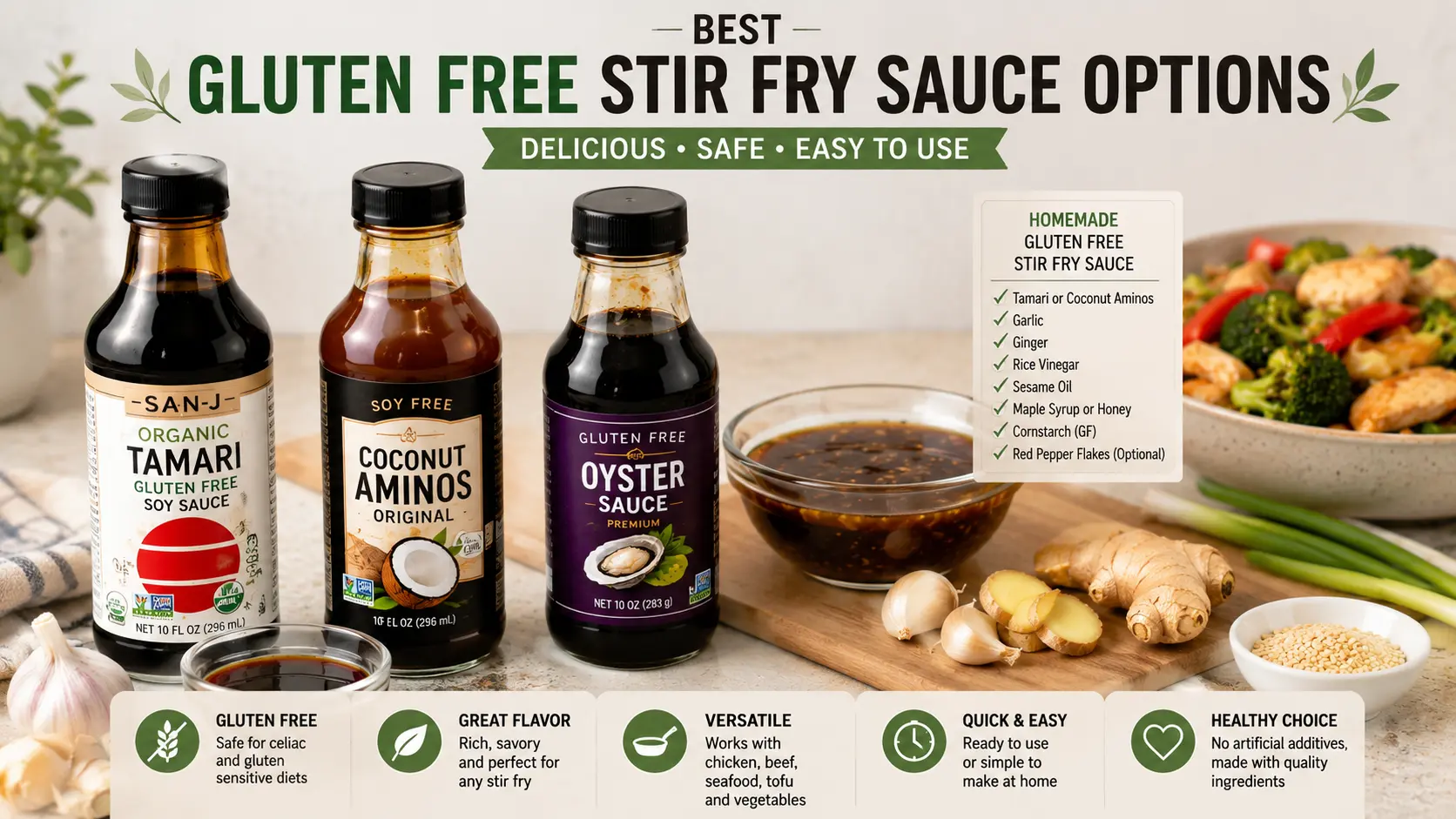
Not every sauce labeled “Asian-inspired” is safe for a gluten-free diet. The best gluten free stir fry sauces provide the same savory depth as traditional stir fry sauces while avoiding wheat-based ingredients. Some are ideal for everyday cooking, while others work better for specific recipes like teriyaki, spicy stir fry, or vegetable dishes.
Below are some of the most reliable choices that home cooks and professional chefs frequently use.
| Sauce Option | Flavor Profile | Best Uses | Gluten-Free? |
|---|---|---|---|
| Certified Gluten-Free Tamari | Rich, savory, umami | Classic stir fries | Yes |
| Coconut Aminos | Mild, slightly sweet | Chicken, vegetables | Yes |
| Gluten-Free Oyster Sauce | Deep, savory | Beef and vegetable stir fry | Yes (check label) |
| Homemade Stir Fry Sauce | Customizable | All recipes | Yes |
| Gluten-Free Teriyaki Sauce | Sweet and savory | Chicken and salmon | Yes |
1. Gluten-Free Tamari
Tamari is the closest substitute for traditional soy sauce and is one of the most popular ingredients used in gluten free stir fry sauces. It delivers a rich umami flavor without the wheat found in standard soy sauce. Because its taste is slightly smoother and less salty, many cooks actually prefer tamari for homemade stir fry recipes.
Always purchase tamari that is specifically labeled certified gluten-free, as not every brand follows the same manufacturing process.
2. Coconut Aminos
Coconut aminos are made from fermented coconut blossom sap rather than soybeans. They contain less sodium than many soy sauces and have a naturally sweeter flavor. This makes them an excellent option for chicken, shrimp, and vegetable stir fries.
If you enjoy lighter, naturally sweet sauces, coconut aminos are one of the easiest ways to prepare flavorful gluten free stir fry sauces without adding refined sugar.
3. Gluten-Free Oyster Sauce
Traditional oyster sauce sometimes contains wheat as a thickener, but several manufacturers now produce certified gluten-free versions. These sauces add exceptional depth and richness, especially when cooking broccoli beef, mushrooms, or mixed vegetable stir fry.
Kitchen Secret: Combining gluten-free tamari with a small amount of gluten-free oyster sauce creates a restaurant-style umami flavor that tastes much richer than using either ingredient alone.
4. Homemade Gluten-Free Stir Fry Sauce
Making your own sauce gives you complete control over every ingredient. Most homemade gluten free stir fry sauces include tamari or coconut aminos, garlic, fresh ginger, rice vinegar, sesame oil, and a gluten-free thickener like cornstarch or arrowroot.
Homemade sauces also allow you to adjust sweetness, sodium, spice level, and thickness depending on the meal you’re preparing.
Advantages
- Complete control over ingredients
- No hidden gluten sources
- Easy to adjust flavor
- Often lower in sodium
- Budget-friendly for frequent cooking
Disadvantages
- Requires measuring ingredients
- Shorter refrigerator shelf life
- May require specialty gluten-free products
- Takes a few extra minutes to prepare
Once you’ve selected your preferred sauce, you can use it in recipes like Chicken Stir Fry, Chicken Broccoli Stir Fry, or Healthy Chicken Stir Fry. These recipes can easily be adapted by replacing traditional soy sauce with one of the gluten-free options discussed above.
If you’re looking for even more flavor inspiration, our Ultimate Chicken Stir Fry Sauce Guide explains how different sauce combinations affect sweetness, saltiness, and overall balance.

How to Choose the Best Gluten Free Stir Fry Sauces
With so many products on grocery store shelves, choosing the right gluten free stir fry sauces can be confusing. Attractive packaging doesn’t always mean a product is truly gluten free, and some brands use ingredients that are difficult to recognize. Learning what to look for helps you shop with confidence while finding sauces that taste great.
Look for Certified Gluten-Free Labels
The easiest way to identify safe gluten free stir fry sauces is to look for an official gluten-free certification or a clearly printed “Gluten-Free” statement on the label. Certified products are manufactured according to strict standards that reduce the risk of cross-contamination.
This is especially important for individuals with celiac disease because even small amounts of gluten may trigger symptoms.
Shopping Tip: Don’t rely on the front label alone. Always read the complete ingredient list since product recipes can change over time.
Read the Ingredient List Carefully
Many sauces appear gluten free until you examine the ingredients. Regular soy sauce, wheat flour, malt vinegar, and certain seasoning blends are common sources of hidden gluten.
If you see unfamiliar ingredients, take a moment to verify whether they’re gluten free before purchasing the product.
Compare Sodium Levels
Some gluten free stir fry sauces contain considerably more sodium than others. If you’re watching your salt intake, compare the Nutrition Facts labels before buying.
Lower-sodium sauces can still provide excellent flavor when combined with fresh garlic, ginger, sesame oil, and a splash of rice vinegar.
Consider the Flavor Profile
Not every stir fry recipe requires the same type of sauce. Choosing the right flavor makes a noticeable difference in the finished meal.
| Flavor Style | Best Sauce Choice | Pairs Well With |
|---|---|---|
| Classic Umami | Gluten-Free Tamari | Chicken, Beef, Vegetables |
| Mild & Slightly Sweet | Coconut Aminos | Chicken, Shrimp, Tofu |
| Rich & Savory | Gluten-Free Oyster Sauce | Broccoli, Mushrooms, Beef |
| Sweet & Sticky | Gluten-Free Teriyaki Sauce | Chicken, Salmon |
| Custom Flavor | Homemade Sauce | Any Stir Fry |
Common Mistakes When Buying or Using Gluten-Free Stir Fry Sauces
Even experienced home cooks occasionally make mistakes when choosing or preparing gluten free stir fry sauces. Fortunately, these problems are easy to avoid once you know what to watch for.
Assuming Every Soy Sauce Is Gluten Free
This is one of the most common misconceptions. Traditional soy sauce usually contains wheat, making it unsuitable for a gluten-free diet. Instead, choose certified gluten-free tamari or another verified alternative.
Ignoring Cross-Contamination
Even if a sauce contains gluten-free ingredients, it may be processed in a facility that also handles wheat products. People with celiac disease should always check for certification or manufacturer information regarding shared equipment.
Warning: Cross-contamination can occur in your own kitchen too. Use clean utensils, measuring spoons, cutting boards, and cookware when preparing gluten-free meals.
Using Too Much Sauce
Adding excessive sauce can overpower the natural flavors of vegetables and protein while making the dish overly salty. A small amount of well-balanced sauce usually produces the best results.
Skipping Fresh Ingredients
Bottled sauces are convenient, but they taste even better when combined with freshly minced garlic, grated ginger, sliced green onions, or toasted sesame seeds. These simple additions make gluten free stir fry sauces taste fresher and more homemade.
Kitchen Secret: Add most of your sauce during the final few minutes of cooking. This helps the sauce coat the ingredients without reducing too much or becoming overly salty.
If you’re troubleshooting flavor issues, our guide to Common Stir Fry Sauce Mistakes explains how to fix sauces that are too salty, too sweet, too thick, or lacking flavor.
You can also try these sauces with recipes like Garlic Chicken Stir Fry, Spicy Chicken Stir Fry, or Honey Garlic Chicken Stir Fry for delicious gluten-free meals.
How to Store Gluten Free Stir Fry Sauces
Proper storage helps gluten free stir fry sauces stay fresh, flavorful, and safe to eat. Whether you buy bottled sauces or prepare your own at home, following a few simple storage practices preserves quality and reduces food waste.
Many homemade sauces contain fresh garlic, ginger, or other natural ingredients that have a shorter shelf life than commercially bottled products. Refrigeration is the best way to maintain freshness and prevent spoilage.
Refrigerating Homemade Sauce
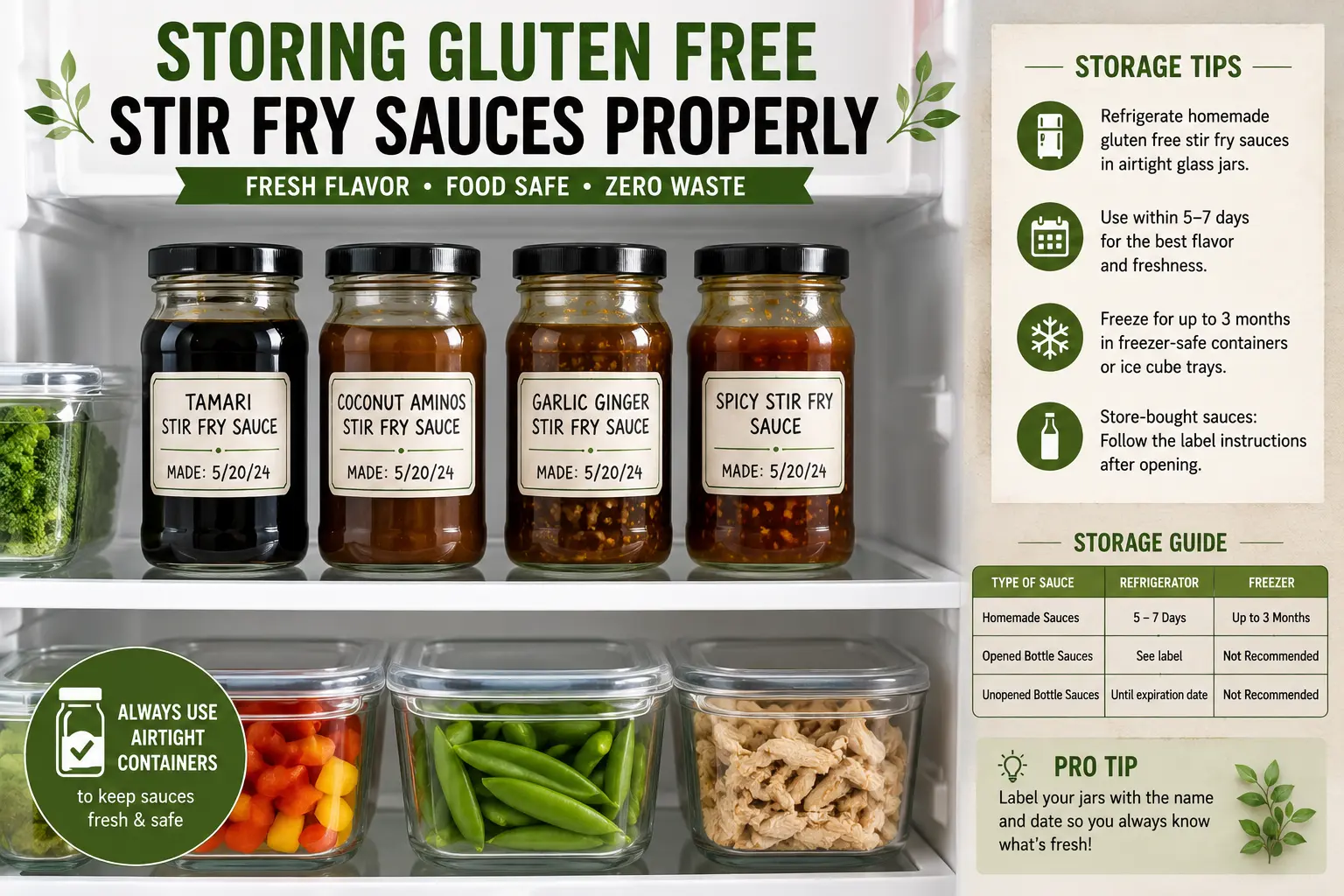
Transfer homemade gluten free stir fry sauces to a clean, airtight glass container as soon as the sauce has cooled. Glass jars help preserve flavor and prevent odors from being absorbed.
For the best quality, label the container with the preparation date so you know when it should be used.
Storage Tip: Homemade gluten free stir fry sauce is generally best used within 5 to 7 days when refrigerated in an airtight container.
Storing Store-Bought Sauces
Most unopened bottled sauces remain shelf stable until the printed expiration date. After opening, refrigerate the bottle if the manufacturer recommends doing so.
Keeping the lid tightly closed helps preserve freshness while reducing exposure to moisture and air.
Can You Freeze Gluten Free Stir Fry Sauces?
Yes. Most gluten free stir fry sauces freeze very well because they contain liquid ingredients rather than dairy products.
Divide the sauce into meal-sized portions before freezing. This makes it easier to thaw only what you need for a single dinner.
| Storage Method | Recommended Time | Best Container |
|---|---|---|
| Room Temperature (Unopened) | Until expiration date | Original bottle |
| Refrigerator (Homemade) | 5–7 days | Airtight glass jar |
| Refrigerator (Opened Bottle) | Follow label instructions | Original container |
| Freezer | Up to 3 months | Freezer-safe container |
Expert Tips for Better Gluten Free Stir Fry Sauces
Small adjustments can dramatically improve both homemade and store-bought gluten free stir fry sauces. These professional techniques help build deeper flavor while maintaining the perfect balance between sweet, salty, tangy, and savory notes.
Build Layers of Flavor
Instead of depending on a single ingredient, combine multiple flavor components. Tamari contributes umami, garlic adds richness, ginger provides freshness, sesame oil delivers nuttiness, and rice vinegar brightens the finished sauce.
Kitchen Secret: A small splash of gluten-free rice vinegar added at the end of cooking brightens the entire dish without making the sauce taste acidic.
Mix the Sauce Before Heating
If your sauce contains cornstarch or arrowroot, whisk everything together before adding it to the pan. This prevents lumps and ensures the thickener activates evenly during cooking.
Taste Before Serving
Vegetables naturally release moisture while cooking, which can slightly dilute the sauce. Before serving, taste the finished dish and adjust the seasoning if necessary with a small amount of tamari, sesame oil, or a squeeze of lime.
Use High Heat
Stir frying is designed for quick, high-temperature cooking. Cooking over medium or low heat can cause vegetables to become soft before the sauce thickens properly.
Pro Tip: Have your vegetables, protein, and sauce prepared before turning on the stove. Stir fry cooks quickly, leaving little time to measure ingredients once cooking begins.
Quick Checklist for Choosing the Best Gluten Free Stir Fry Sauces
- ✔ Look for a certified gluten-free label.
- ✔ Read the full ingredient list every time you buy.
- ✔ Choose tamari instead of regular soy sauce.
- ✔ Compare sodium levels if reducing salt intake.
- ✔ Avoid products containing wheat, barley, or malt.
- ✔ Store homemade sauces in airtight containers.
- ✔ Freeze extra sauce in meal-sized portions.
- ✔ Add fresh garlic and ginger for the best flavor.
By following these simple practices, you’ll consistently prepare flavorful meals using gluten free stir fry sauces that are both safe and delicious for the entire family.
Frequently Asked Questions
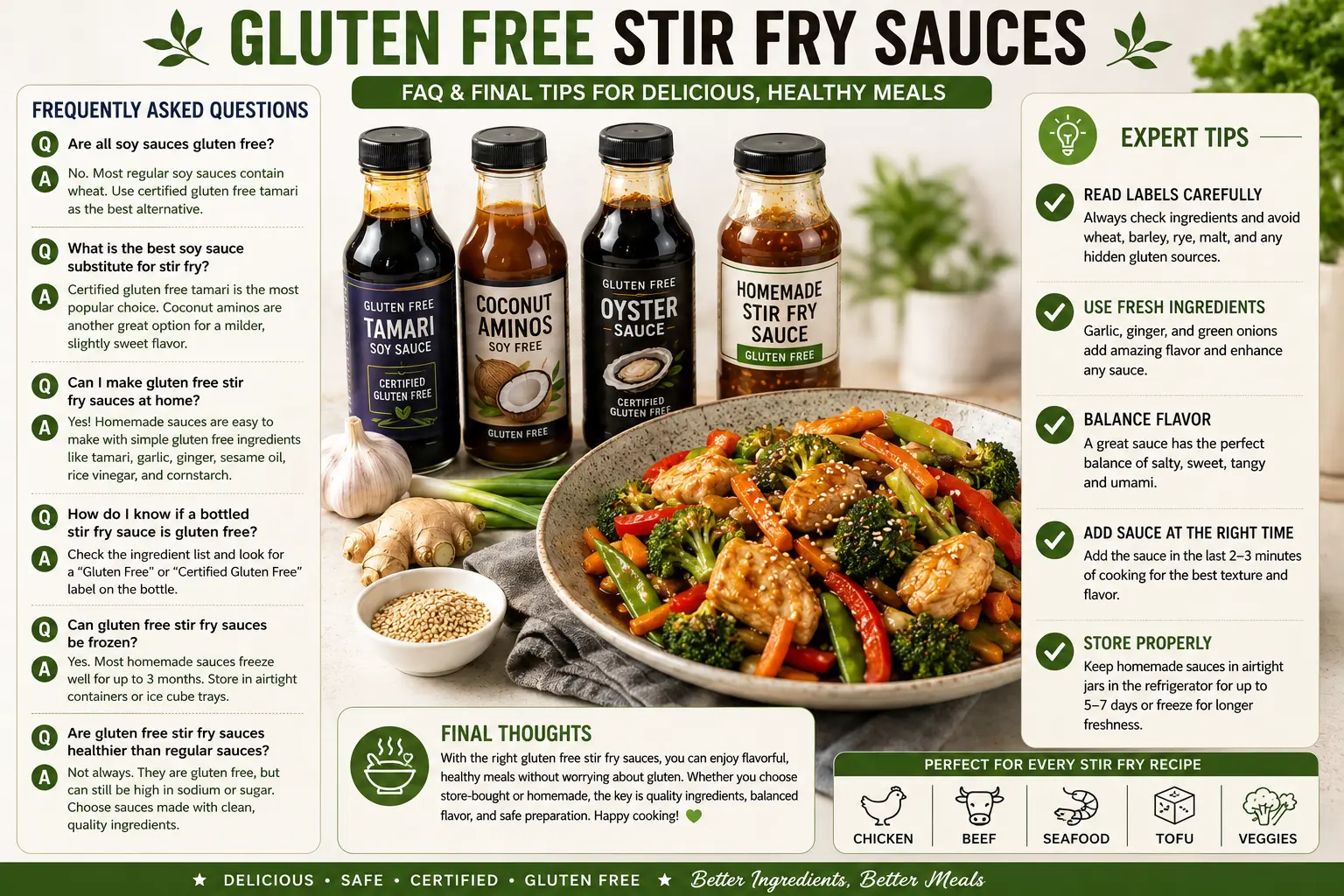
Are all soy sauces gluten free?
No. Most traditional soy sauces are made with wheat, making them unsuitable for a gluten-free diet. Certified gluten-free tamari is the closest alternative and is one of the best choices for gluten free stir fry sauces.
What is the best substitute for soy sauce in gluten free stir fry sauces?
Certified gluten-free tamari is the most popular substitute because it closely matches the flavor of traditional soy sauce. Coconut aminos are another excellent option if you prefer a milder, slightly sweeter taste.
Can I make gluten free stir fry sauces at home?
Absolutely. Homemade gluten free stir fry sauces are easy to prepare using gluten-free tamari or coconut aminos, garlic, ginger, sesame oil, rice vinegar, and a gluten-free thickener such as cornstarch or arrowroot.
How do I know if a bottled stir fry sauce is gluten free?
Read both the ingredient list and allergen statement carefully. Products labeled “Certified Gluten-Free” offer the highest level of confidence, particularly for individuals with celiac disease.
Can gluten free stir fry sauces be frozen?
Yes. Most homemade and many store-bought sauces freeze well for up to three months when stored in airtight freezer-safe containers. Thaw overnight in the refrigerator before using.
Are gluten free stir fry sauces healthier than regular sauces?
Not necessarily. Gluten-free products remove gluten but may still contain similar amounts of sodium or sugar. Compare nutrition labels and choose sauces made with simple, high-quality ingredients whenever possible.
Final Thoughts
Choosing the right gluten free stir fry sauces allows you to enjoy flavorful homemade meals without compromising your dietary needs. Whether you prefer certified gluten-free tamari, coconut aminos, a gluten-free oyster sauce, or your own homemade blend, there are plenty of delicious options available.
The most important step is reading ingredient labels carefully and selecting products that are clearly labeled gluten free. Combining quality sauces with fresh garlic, ginger, sesame oil, and crisp vegetables creates balanced stir fry dishes that taste every bit as satisfying as traditional versions.
As you become more familiar with different sauce options, you’ll be able to customize recipes to suit your family’s preferences while maintaining a safe gluten-free kitchen. With the right ingredients and a few expert techniques, preparing flavorful gluten free stir fry sauces becomes quick, simple, and enjoyable.
🍽️ You Might Also Like



📧 Save This Recipe For Later
Enter your email and we will send this recipe directly to your inbox.