
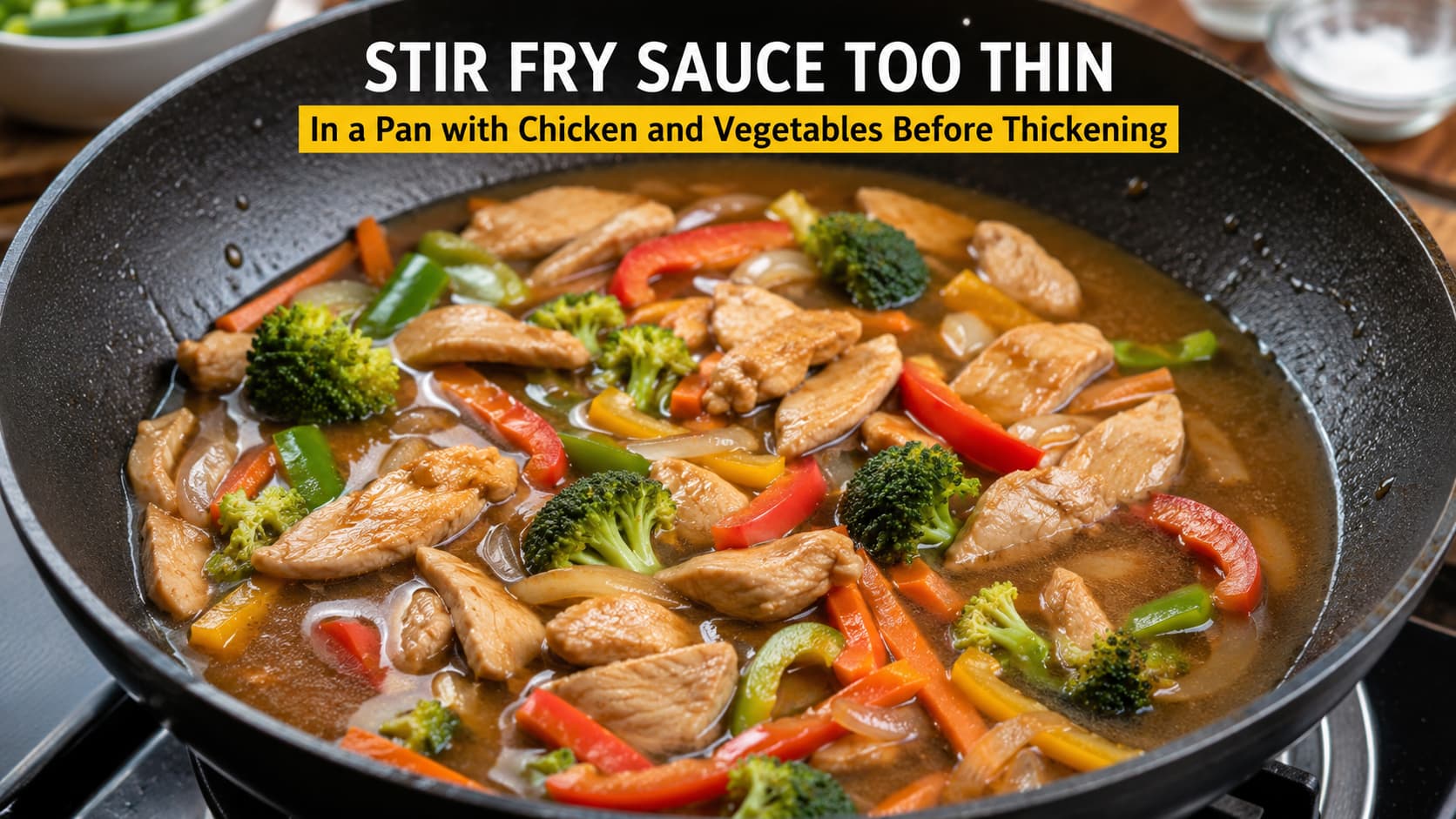
Why Is My Stir Fry Sauce Too Thin? (Easy Fixes)
Why Is My Stir Fry Sauce Too Thin? (Easy Fixes)
If your stir fry sauce too thin problem has left your meal watery instead of glossy and flavorful, you’re not alone. Many home cooks expect their sauce to coat the chicken and vegetables beautifully, only to end up with a thin liquid pooling at the bottom of the pan. Fortunately, this is one of the easiest stir fry problems to fix once you understand what caused it.
A great stir fry sauce should lightly cling to every piece of food without becoming heavy, sticky, or overly thick. Achieving that balance depends on using the right thickening method, the correct cooking temperature, and the proper sauce-to-ingredient ratio. Even experienced cooks occasionally end up with a sauce that’s thinner than expected.
The good news is that you usually don’t need to start over. In most cases, a few simple adjustments can transform a watery sauce into the rich, glossy finish that makes stir fry so satisfying.
Quick Answer
If your stir fry sauce too thin, continue simmering it for a few minutes to reduce excess liquid or add a properly mixed cornstarch slurry. Thin sauce is commonly caused by too much liquid, too little thickener, or vegetables releasing water during cooking. The best results come from adding the thickener at the end of cooking while stirring constantly until the sauce becomes glossy and coats the ingredients evenly.
Table of Contents
Why Is My Stir Fry Sauce Too Thin?
There isn’t just one reason why a stir fry sauce too thin problem happens. Instead, several small cooking mistakes often combine to prevent the sauce from thickening properly.
The most common cause is adding more liquid than the recipe requires. Soy sauce, chicken broth, water, rice vinegar, cooking wine, and other liquid ingredients all contribute to the final consistency. Even a small measurement error can noticeably thin the sauce.
Another frequent issue is underusing the thickening agent. Cornstarch works by absorbing liquid as it heats, creating the glossy texture associated with restaurant-style stir fries. If too little cornstarch is used—or if it isn’t fully activated by heat—the sauce remains watery.
Vegetables can also release surprising amounts of moisture while cooking. Mushrooms, zucchini, cabbage, frozen vegetables, and even broccoli naturally contain water that mixes into the sauce as they cook. Without adjusting the thickener, this extra moisture can dilute the entire dish.
Tip: If your stir fry contains vegetables with a high water content, expect the sauce to become thinner during cooking. Using slightly less added liquid or allowing the sauce to simmer for an extra minute often produces a much better consistency.
The Most Common Causes of a Stir Fry Sauce Too Thin
Understanding why your stir fry sauce too thin is the first step toward fixing it. While the solution is often simple, identifying the real cause helps you avoid making the same mistake the next time you cook. Most thin stir fry sauces happen because of one or more common issues during preparation or cooking.
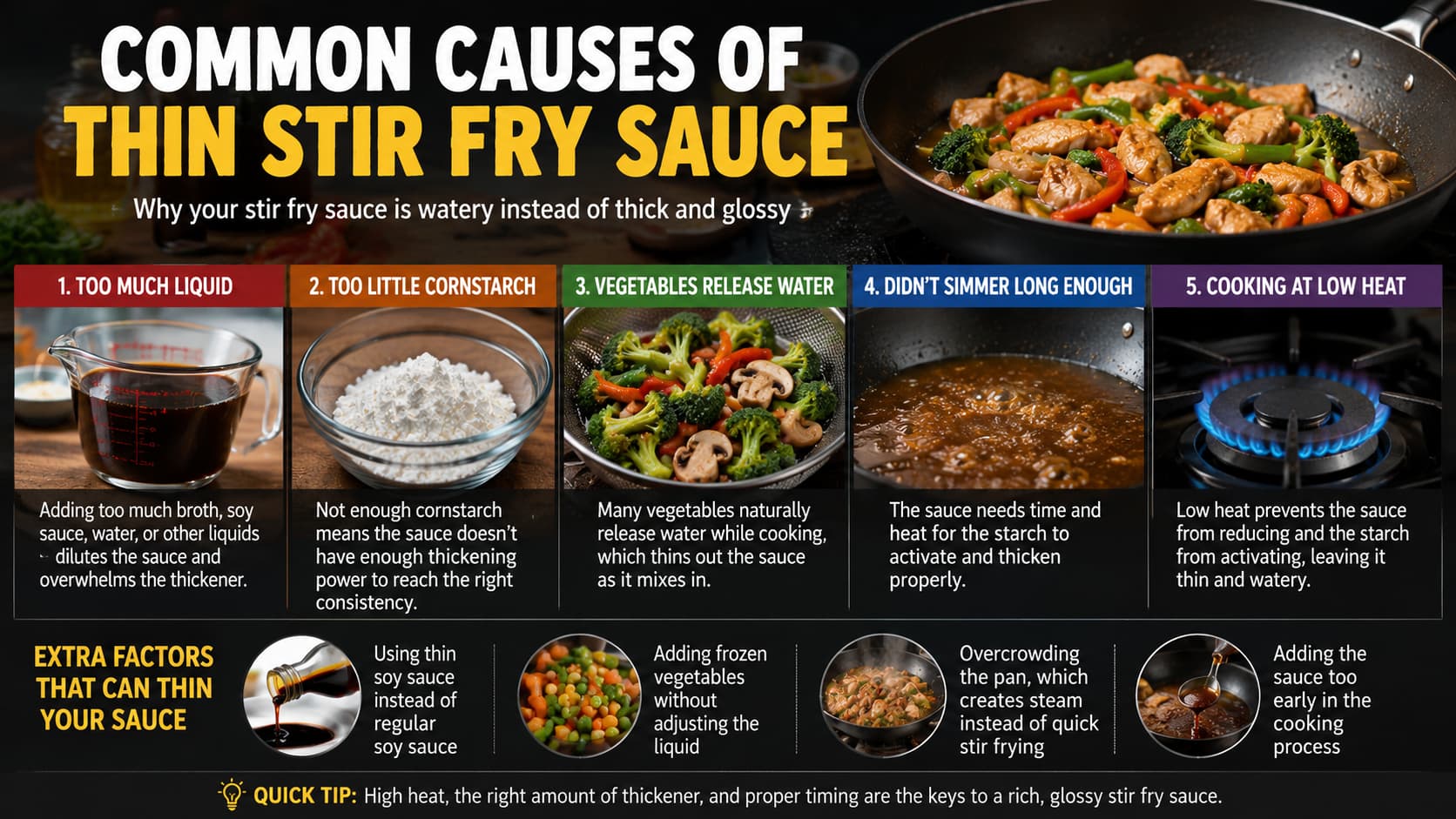
1. Too Much Liquid in the Sauce
The most common reason for a stir fry sauce too thin is simply using too much liquid. Every ingredient that pours into the pan adds to the total volume, including soy sauce, broth, water, rice vinegar, sesame oil, cooking wine, and other sauces.
If you accidentally increase even one liquid ingredient, the thickener may no longer be enough to create the smooth, glossy consistency you’re expecting. This is especially common when doubling a recipe but forgetting to adjust the cornstarch.
2. Not Enough Thickener
Cornstarch is the traditional thickener for stir fry sauces because it creates a silky coating without affecting the flavor. If you use too little cornstarch, the sauce simply won’t have enough starch to bind the liquid together.
A properly mixed slurry should always contain cold liquid before it’s added to the hot pan. Pouring dry cornstarch directly into hot sauce often creates lumps instead of a smooth finish.
If you’d like to master this technique, read our guide on How to Make the Perfect Cornstarch Slurry.
3. Vegetables Released Extra Water
Many vegetables naturally contain a large amount of moisture. Mushrooms, zucchini, cabbage, spinach, frozen vegetables, and bean sprouts all release water as they cook. That extra moisture mixes into the sauce and can quickly make it thinner than expected.
This doesn’t mean you should avoid these vegetables. Instead, cook them over high heat and avoid overcrowding the pan so excess moisture can evaporate more quickly.
Kitchen Secret: Restaurants use extremely high heat in a wok, allowing moisture to evaporate almost instantly. Home cooks can achieve similar results by cooking in smaller batches instead of filling the pan with too many ingredients.
4. The Sauce Didn’t Simmer Long Enough
Even with the correct ingredients, the sauce needs enough time to activate the thickener. Cornstarch begins thickening only after reaching a high enough temperature. If you remove the pan from the heat too soon, the sauce may still appear watery.
Allow the sauce to gently bubble while stirring continuously for about one to two minutes after adding the slurry. You’ll notice it becoming clearer, shinier, and slightly thicker as the starch fully activates.
5. Cooking at Low Heat
Low cooking temperatures can also contribute to a stir fry sauce too thin. Without enough heat, excess moisture remains trapped in the pan instead of evaporating. High heat is one of the defining characteristics of traditional stir frying because it cooks ingredients quickly while concentrating flavors.
If your burner isn’t very powerful, allow the sauce to simmer a little longer before serving. This gives extra liquid time to reduce naturally without changing the overall flavor.
| Cause | How It Affects the Sauce | Simple Solution |
|---|---|---|
| Too much liquid | Dilutes the thickener | Simmer longer or add more slurry |
| Too little cornstarch | Cannot bind enough liquid | Add a fresh cornstarch slurry |
| Watery vegetables | Release moisture while cooking | Cook over high heat in smaller batches |
| Not enough simmering | Thickener never activates fully | Cook another 1–2 minutes while stirring |
| Low cooking temperature | Liquid doesn’t reduce properly | Increase heat if possible |
Easy Ways to Fix a Stir Fry Sauce Too Thin
If you discover your stir fry sauce too thin while cooking, don’t worry. In most cases, you can fix it in just a few minutes without starting over. The key is choosing the right method based on why the sauce is watery in the first place. Whether the sauce contains too much liquid, not enough thickener, or excess moisture from vegetables, these simple techniques can help you achieve a rich, glossy finish.
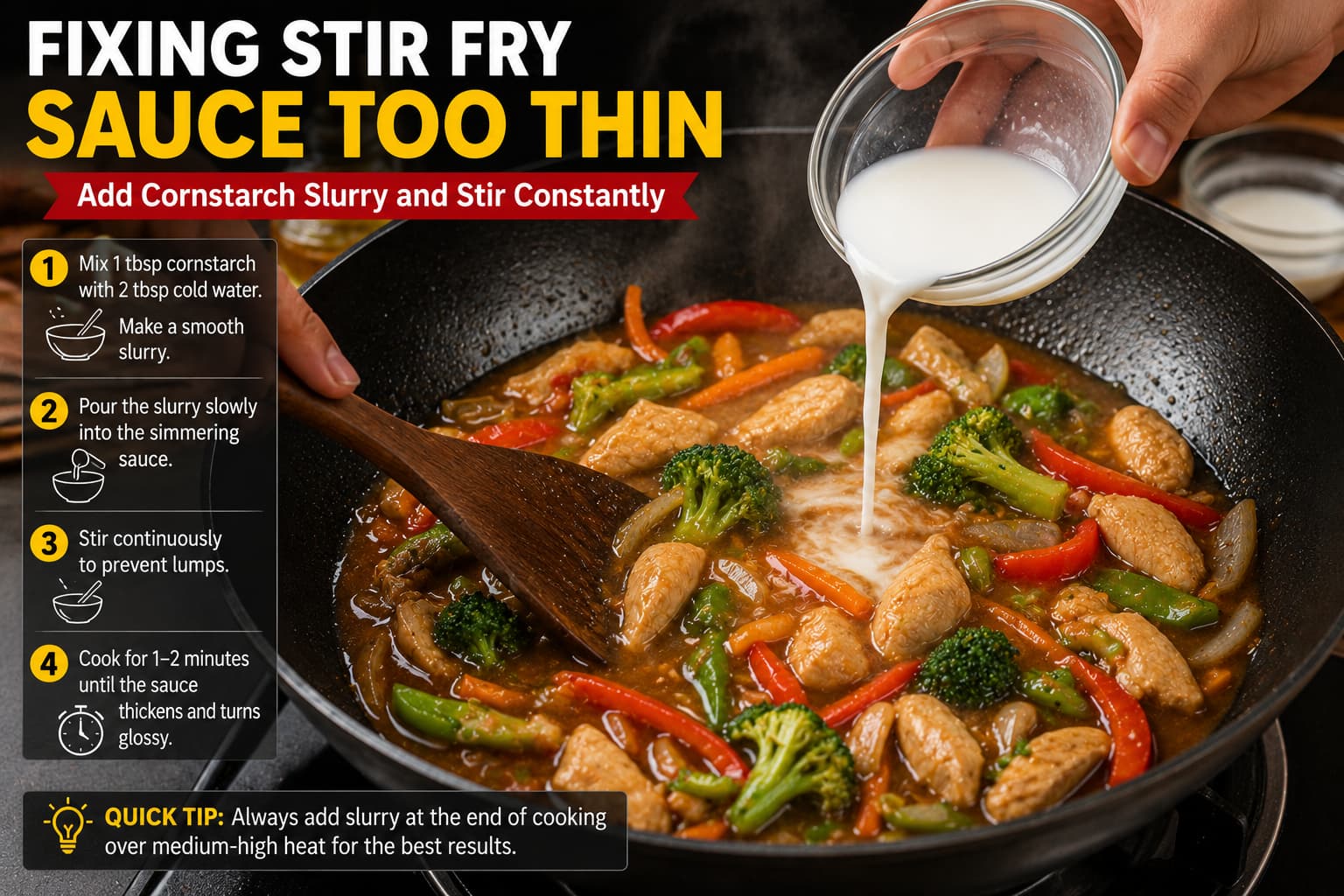
1. Add a Fresh Cornstarch Slurry
The quickest and most reliable solution for a stir fry sauce too thin is adding a fresh cornstarch slurry. Mix equal parts cornstarch and cold water until completely smooth, then slowly pour it into the simmering sauce while stirring continuously.
Allow the sauce to cook for another one to two minutes. As the starch heats, you’ll notice the sauce becoming thicker, shinier, and better able to coat the chicken and vegetables.
If you’re unsure about the correct ratio, our guide on How to Make the Perfect Cornstarch Slurry explains the process step by step.
Tip: Always add the slurry gradually. It’s much easier to thicken a sauce a little more than it is to fix a sauce that has become overly thick.
2. Let the Sauce Simmer Longer
If the sauce is only slightly thin, you may not need any additional ingredients at all. Simply let it simmer over medium-high heat while stirring occasionally. As water evaporates, the flavors become more concentrated and the sauce naturally thickens.
This method works especially well when vegetables have released extra moisture during cooking.
3. Remove Excess Liquid
Sometimes the pan contains much more liquid than expected. Instead of adding extra thickener, carefully spoon out a small amount of the excess liquid before continuing to simmer the remaining sauce.
This approach preserves the flavor balance and reduces the risk of creating a sauce that’s too heavy or gummy.
4. Add More Sauce Ingredients Carefully
If your stir fry contains plenty of meat and vegetables but only a small amount of watery sauce, you can prepare a second batch of properly balanced stir fry sauce and stir it into the pan. This refreshes the flavor while giving you another opportunity to achieve the correct consistency.
For a balanced homemade mixture, see our Easy Homemade Stir Fry Sauce guide.
Warning: Avoid adding dry cornstarch directly to the hot pan. It usually forms stubborn lumps that are difficult to dissolve and can leave the sauce with an unpleasant texture.
5. Use Alternative Thickeners When Needed
If you don’t have cornstarch available, you still have several options. Arrowroot powder, potato starch, and tapioca starch all work well in stir fry sauces when mixed with cold water before adding them to the pan.
If you’re avoiding cornstarch completely, our article on How to Thicken Stir Fry Sauce Without Cornstarch explains several effective alternatives and when to use each one.
| Fix | Best For | Difficulty |
|---|---|---|
| Add cornstarch slurry | Most watery sauces | Easy |
| Simmer longer | Slightly thin sauce | Easy |
| Remove excess liquid | Too much broth or water | Easy |
| Make additional sauce | Large batches of stir fry | Medium |
| Use alternative starches | Cornstarch-free cooking | Easy |
How to Prevent a Stir Fry Sauce Too Thin Every Time
While it’s easy to fix a stir fry sauce too thin, preventing the problem is even better. A few simple habits can help you achieve a perfectly balanced sauce every time you make stir fry. By controlling the amount of liquid, cooking over high heat, and adding the thickener correctly, you’ll consistently get a smooth, glossy sauce that coats every bite.
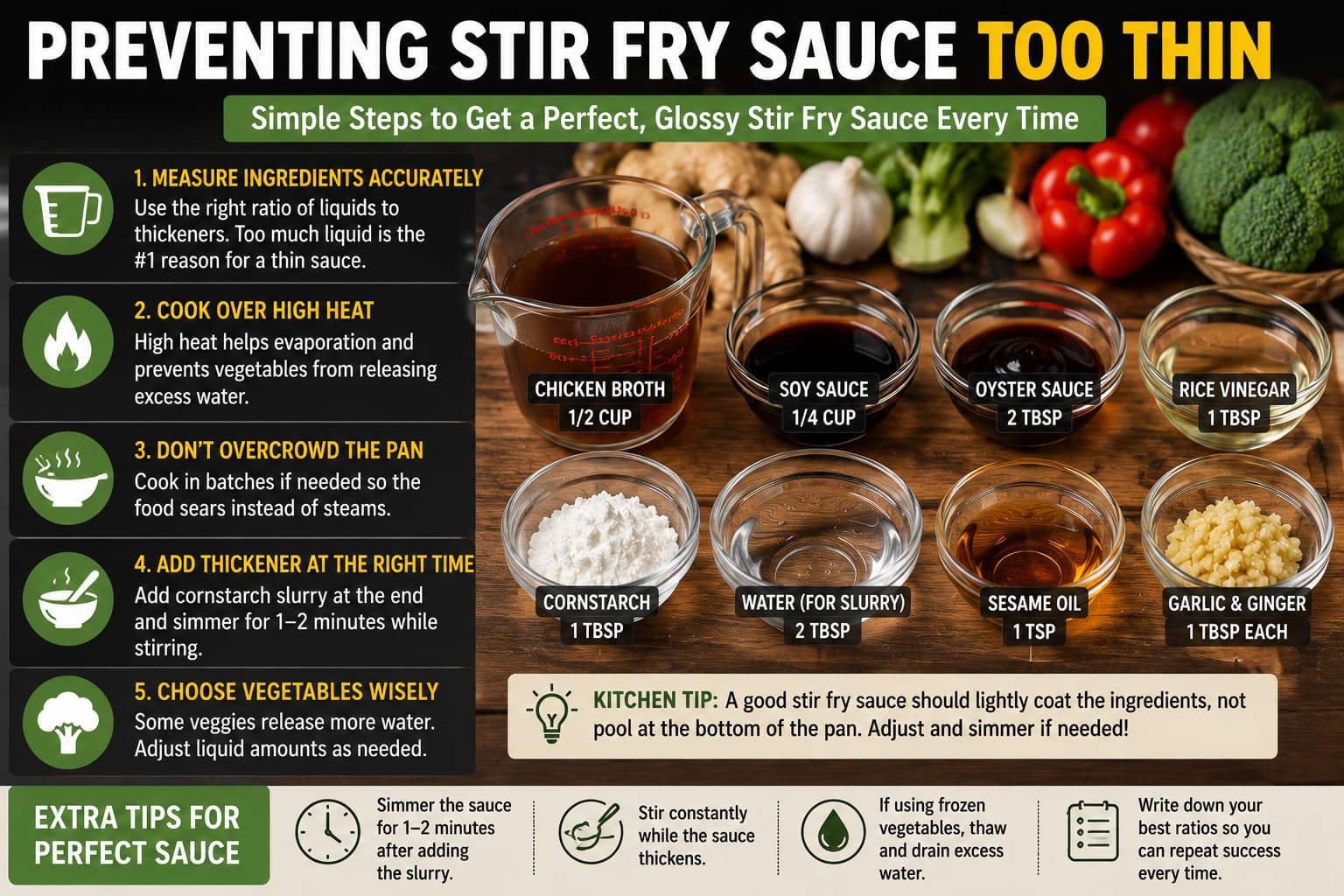
Measure Ingredients Instead of Guessing
One of the easiest ways to avoid a stir fry sauce too thin is to measure your ingredients accurately. Adding an extra splash of broth or soy sauce may not seem like much, but even small changes can affect the final consistency.
Using measuring spoons and cups helps maintain the proper balance between liquids and thickeners, especially when trying a new recipe.
Cook Over High Heat
Traditional stir frying relies on high heat to cook ingredients quickly while allowing excess moisture to evaporate. If the heat is too low, vegetables release water faster than it can evaporate, leaving the sauce watery.
Preheat your wok or skillet before adding oil, then cook the ingredients quickly while stirring frequently. This helps concentrate the flavors and creates a thicker, richer sauce.
Kitchen Secret: Professional chefs often cook meat and vegetables separately before combining them with the sauce. This reduces the amount of moisture released into the pan and helps the sauce maintain its ideal consistency.
Don’t Overcrowd the Pan
Adding too many ingredients at once lowers the pan’s temperature and traps steam. Instead of frying, the food begins to simmer in its own juices, which can quickly result in a stir fry sauce too thin.
If you’re making a large batch, cook the chicken and vegetables in smaller portions. Combine everything together only after each batch has been properly cooked.
Add the Thickener at the Right Time
Always add your cornstarch slurry near the end of cooking, after the chicken and vegetables are nearly done. This gives the sauce enough time to thicken without overcooking the ingredients.
Continue stirring for one to two minutes after adding the slurry. The sauce should become smooth, glossy, and lightly coat the back of a spoon.
Choose Vegetables Wisely
Some vegetables naturally release much more moisture than others. Mushrooms, zucchini, cabbage, spinach, and frozen vegetables can all dilute your sauce if they’re not cooked properly.
If you’re using several high-moisture vegetables together, consider slightly reducing the amount of broth or water in the sauce to compensate.
| Prevention Tip | Why It Works |
|---|---|
| Measure all liquid ingredients | Maintains the correct sauce ratio |
| Cook over high heat | Evaporates excess moisture quickly |
| Cook in small batches | Prevents steaming and watery vegetables |
| Add slurry at the end | Allows the starch to thicken properly |
| Adjust for watery vegetables | Balances extra moisture released during cooking |
Tip: If you’re experimenting with homemade sauces, write down the exact measurements that produced the best consistency. Keeping a simple kitchen notebook makes it much easier to recreate successful stir fry recipes.
Common Mistakes That Leave Stir Fry Sauce Too Thin
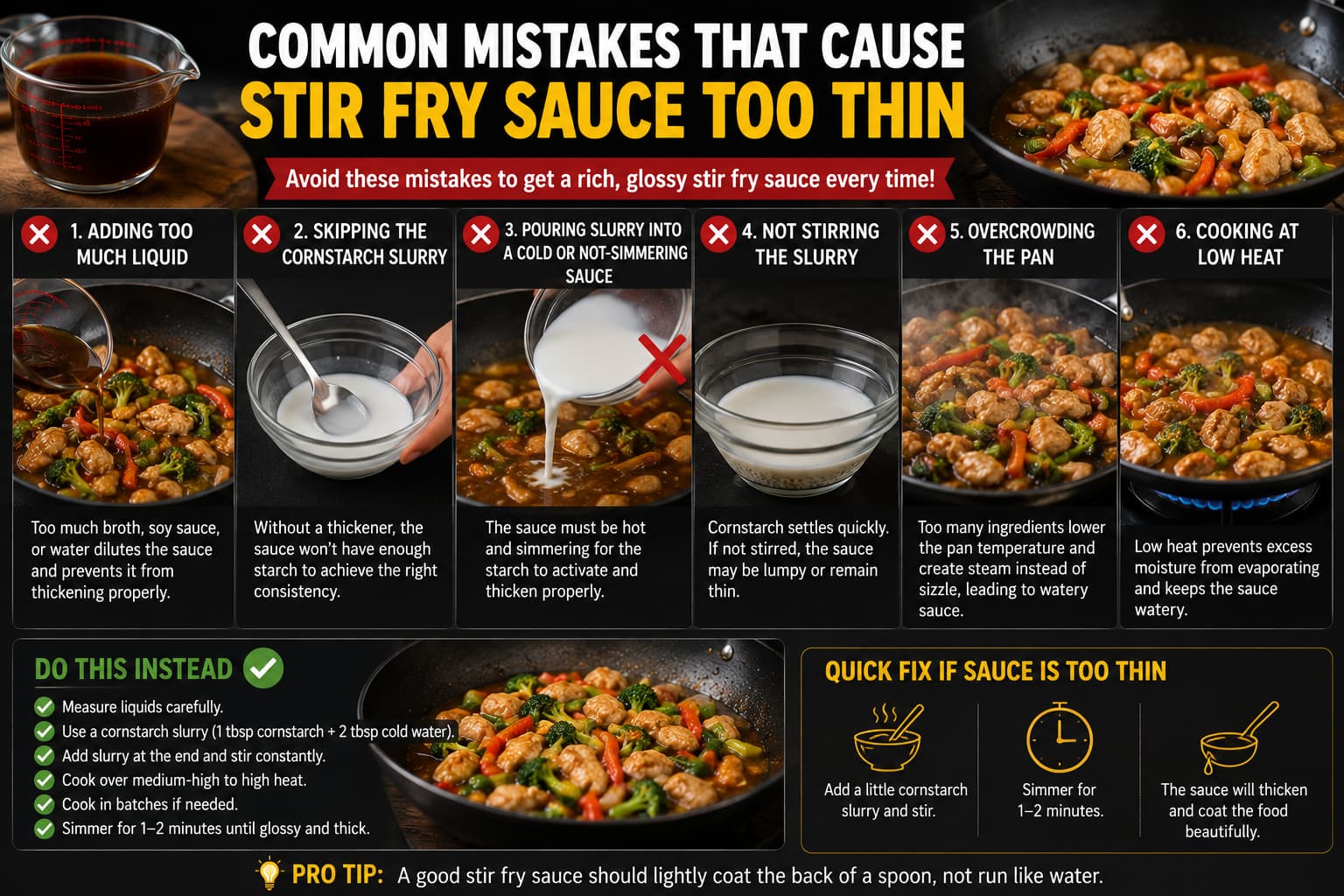
Even experienced home cooks occasionally end up with a stir fry sauce too thin. Most of the time, the problem isn’t the recipe itself—it’s a small mistake during preparation or cooking. By recognizing these common errors, you can consistently make a rich, glossy stir fry sauce that clings perfectly to every piece of chicken and every vegetable.
Adding Too Much Sauce at Once
Many people assume that more sauce automatically creates a better stir fry. In reality, adding excessive sauce often produces the opposite result. Instead of coating the ingredients, the sauce collects at the bottom of the pan, making the dish watery.
For most homemade chicken stir fries, the goal is to lightly coat the food rather than create a pool of sauce. If you’re unsure how much to use, read our guide on How Much Stir Fry Sauce Should You Use?.
Skipping the Cornstarch Slurry
Some cooks pour soy sauce and broth directly into the pan without adding a thickener. While this creates plenty of flavor, it rarely produces the silky texture associated with restaurant-style stir fry.
Unless you’re intentionally making a light broth-style dish, a properly prepared slurry is usually the easiest way to prevent a stir fry sauce too thin.
Pouring the Slurry Into a Cold Pan
A cornstarch slurry thickens only after it reaches a simmer. If you add it before the sauce is hot enough, the starch won’t activate properly and the sauce may remain thin.
Always wait until the sauce is gently bubbling before slowly stirring in the slurry.
Warning: Never add the entire slurry all at once. Adding too much thickener too quickly can create lumps or make the sauce overly thick. Pour it in gradually while stirring continuously.
Not Stirring the Slurry Before Using It
Cornstarch settles quickly at the bottom of the bowl. If the slurry sits for even a minute or two, the water rises to the top while the starch sinks underneath.
Always stir the slurry again immediately before pouring it into the hot sauce. This ensures the starch is evenly distributed and thickens the sauce consistently.
Using Frozen Vegetables Without Adjustments
Frozen vegetables are convenient, but they release more moisture than fresh vegetables as they thaw. If you don’t account for that extra liquid, your stir fry sauce too thin may become watery before it has a chance to thicken.
Cooking frozen vegetables over high heat or allowing them to thaw and drain before stir frying can significantly improve the final sauce consistency.
Ignoring Sauce Balance
A successful stir fry isn’t just about thickness—it’s also about balance. Adding extra cornstarch without considering the amount of liquid can produce a gummy texture, while too much broth or soy sauce can leave the sauce watery.
Following a balanced recipe is the easiest way to achieve consistent results. Our Ultimate Chicken Stir Fry Sauce Guide explains how each ingredient contributes to flavor and texture.
Best Practices
- Measure liquids accurately.
- Cook over medium-high to high heat.
- Mix a fresh cornstarch slurry with cold water.
- Add the slurry near the end of cooking.
- Stir continuously while the sauce thickens.
- Cook ingredients in smaller batches when needed.
Avoid These Mistakes
- Adding too much broth or water.
- Pouring dry cornstarch directly into the pan.
- Using low heat throughout cooking.
- Overcrowding the skillet or wok.
- Skipping the simmering step.
- Adding thickener before the sauce is hot.
Tip: If your sauce still seems slightly thin after thickening, let it rest for about a minute before serving. As it cools slightly, the starch continues to stabilize, often producing the perfect glossy consistency.
Can You Store and Reheat Stir Fry Sauce?
Yes. If you’ve fixed a stir fry sauce too thin, you can safely store any leftovers for later. Allow the stir fry to cool to room temperature before transferring it to an airtight container. Refrigerate it within two hours of cooking and use it within 3 to 4 days for the best quality.
When reheating, warm the stir fry gently in a skillet over medium heat while stirring occasionally. If the sauce becomes slightly thicker after refrigeration, simply add a tablespoon or two of water or chicken broth until it reaches your preferred consistency.
For longer storage, freeze the stir fry in freezer-safe containers for up to 3 months. Thaw overnight in the refrigerator before reheating.
Frequently Asked Questions
Why is my stir fry sauce too thin even after adding cornstarch?
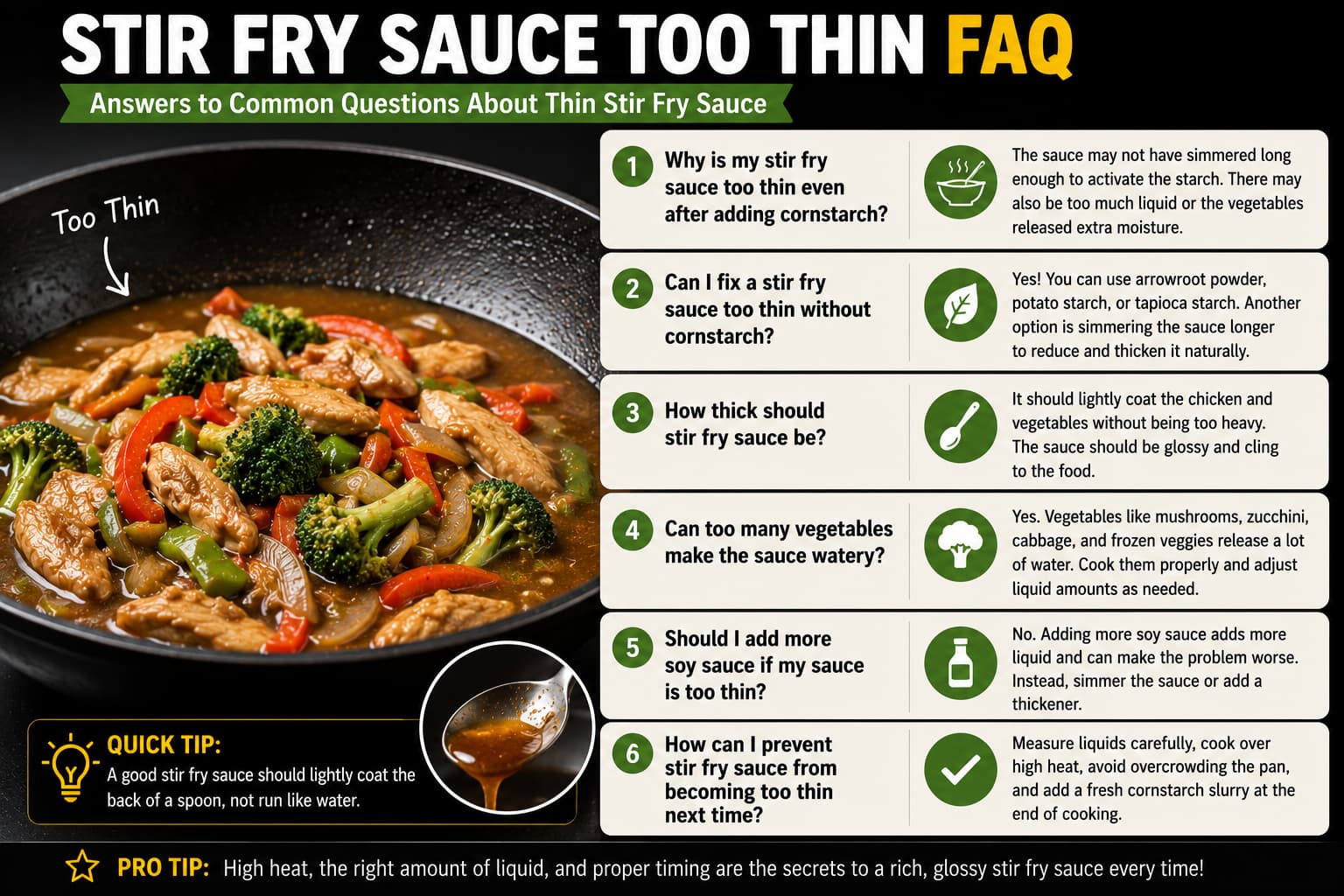
If your stir fry sauce too thin after adding cornstarch, the slurry may not have simmered long enough to activate. It can also happen if too much liquid was added or if the vegetables released a large amount of moisture during cooking.
Can I fix a stir fry sauce too thin without cornstarch?
Yes. You can use arrowroot powder, potato starch, or tapioca starch as alternatives. Another simple option is allowing the sauce to simmer longer so excess liquid evaporates naturally.
How thick should stir fry sauce be?
A good stir fry sauce should lightly coat the chicken and vegetables without becoming heavy or sticky. It should cling to the food while still flowing smoothly when stirred.
Can too many vegetables make the sauce watery?
Absolutely. Vegetables such as mushrooms, zucchini, cabbage, and frozen vegetable mixes release significant moisture during cooking, which can make a stir fry sauce too thin unless you compensate with additional simmering or thickener.
Should I add more soy sauce if my sauce is too thin?
No. Adding more soy sauce increases the amount of liquid and can make the problem worse. Instead, reduce the sauce by simmering or add a properly mixed thickener.
How can I prevent stir fry sauce from becoming too thin next time?
Measure your liquid ingredients carefully, cook over high heat, avoid overcrowding the pan, and add a fresh cornstarch slurry near the end of cooking. These simple techniques help create a consistently glossy stir fry sauce.
Final Thoughts
Dealing with a stir fry sauce too thin is a common cooking challenge, but it’s also one of the easiest to fix. Whether the problem is caused by too much liquid, not enough thickener, or vegetables releasing extra moisture, a few simple adjustments can quickly restore the rich, glossy texture that makes stir fry so enjoyable.
By understanding the most common causes, using a properly prepared cornstarch slurry, and cooking over the right temperature, you’ll consistently produce sauces that coat every piece of chicken and every vegetable beautifully. With a little practice, you’ll know exactly how to fix a thin sauce—and more importantly, how to prevent it from happening in the first place.
🍽️ You Might Also Like



📧 Save This Recipe For Later
Enter your email and we will send this recipe directly to your inbox.