
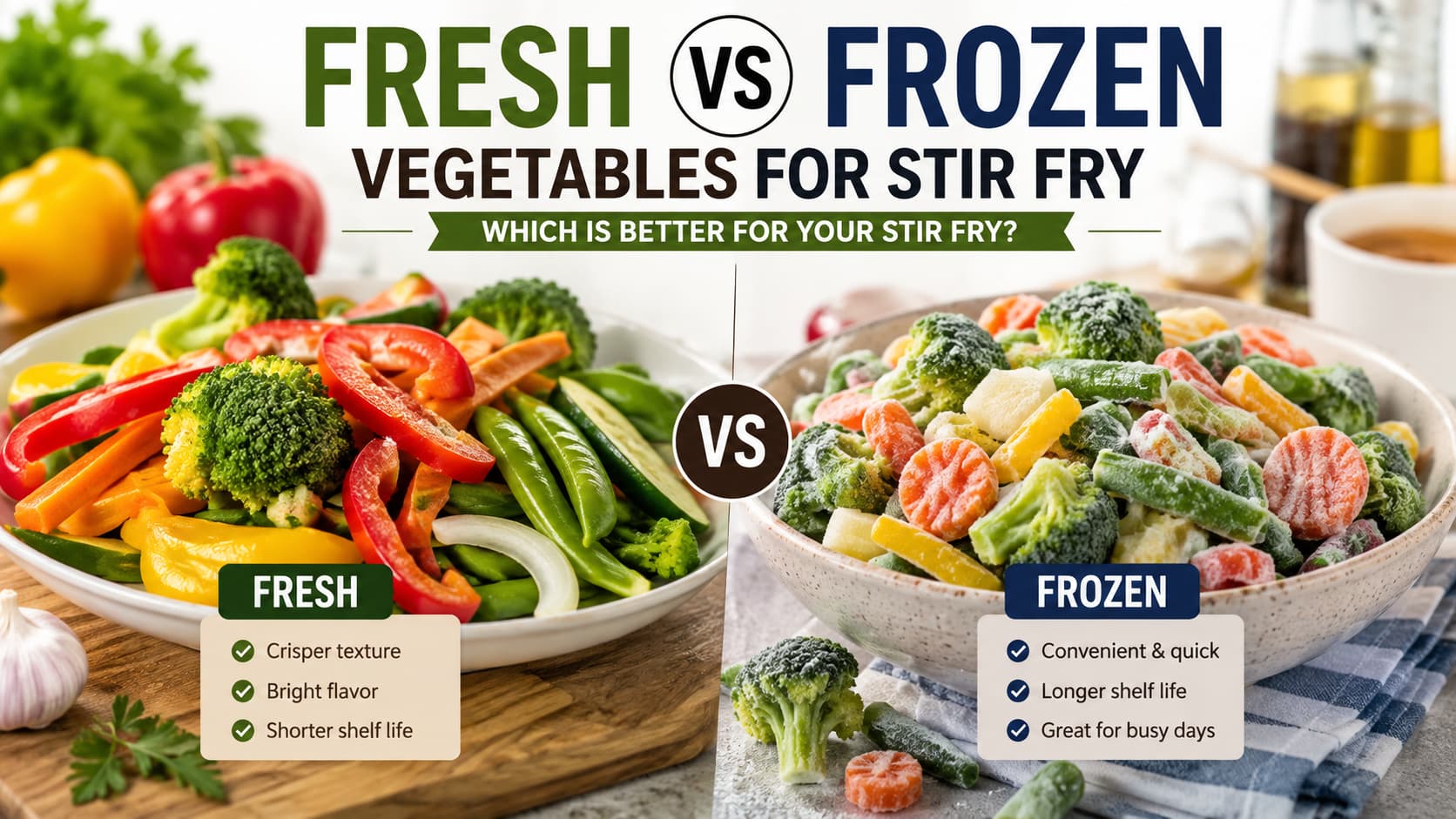
Fresh vs. Frozen Vegetables for Stir Fry
Fresh vs. Frozen Vegetables for Stir Fry: Which Is Better?
When planning a quick and healthy meal, one of the biggest questions home cooks ask is whether to use fresh or frozen vegetables. Both options can create a delicious stir fry, but they perform differently in terms of texture, flavor, cooking time, nutrition, and convenience. Understanding these differences can help you prepare better meals while reducing food waste and saving money.
In this guide, we’ll compare fresh vs frozen vegetables stir fry cooking in detail so you can confidently choose the best option for your recipe. Whether you’re making a simple weeknight dinner or preparing meals ahead of time, you’ll learn when fresh vegetables shine, when frozen vegetables are the smarter choice, and how to cook both successfully.
If you’re new to stir frying, you may also find our guides on Best Vegetables for Chicken Stir Fry and The Ultimate Stir Fry Vegetable Preparation Guide helpful before choosing your ingredients.
Quick Answer
Fresh vs frozen vegetables stir fry comes down to your priorities. Fresh vegetables usually deliver the best texture, vibrant color, and crisp-tender bite when cooked properly. Frozen vegetables offer excellent convenience, longer storage, less food waste, and nearly identical nutritional value because they’re typically frozen soon after harvest. For the best stir fry, use fresh vegetables when texture is most important and frozen vegetables when speed, convenience, and budget matter more.
Table of Contents
Fresh vs. Frozen Vegetables: What’s the Difference?
At first glance, fresh and frozen vegetables may seem completely different, but both can produce an excellent stir fry when used correctly. The biggest differences come from how they’re processed before they reach your kitchen.
Fresh vegetables are harvested, transported, displayed in stores, and eventually purchased by consumers. During that time, they slowly lose moisture and freshness. While high-quality fresh produce provides excellent texture and appearance, its quality depends heavily on how recently it was harvested and how well it has been stored.
Frozen vegetables follow a different path. Most are harvested at peak ripeness and quickly blanched before being flash-frozen. This process helps preserve nutrients, color, and flavor while dramatically extending shelf life. Although freezing changes the cell structure slightly, many frozen vegetables remain surprisingly nutritious and cook well in stir fry recipes.
The right choice often depends on the vegetables you’re cooking, your available time, and the style of stir fry you’re making. For example, recipes like our Chicken Veggie Stir Fry or Healthy Chicken Stir Fry work well with either fresh or frozen vegetables when cooked properly.
Why Fresh Vegetables Are Often the First Choice for Stir Fry
Fresh vegetables are the traditional choice for stir fry because they deliver the crisp texture, bright colors, and natural flavors that make this cooking method so popular. When vegetables are fresh and cooked over high heat for a short time, they stay tender-crisp instead of becoming soft or watery. This creates the satisfying bite that people expect from a great stir fry.
Another advantage of using fresh produce is variety. Grocery stores and farmers markets usually offer many seasonal vegetables, allowing you to mix different colors, shapes, and flavors. Fresh broccoli, bell peppers, carrots, snap peas, mushrooms, zucchini, onions, and cabbage all cook beautifully when prepared correctly.
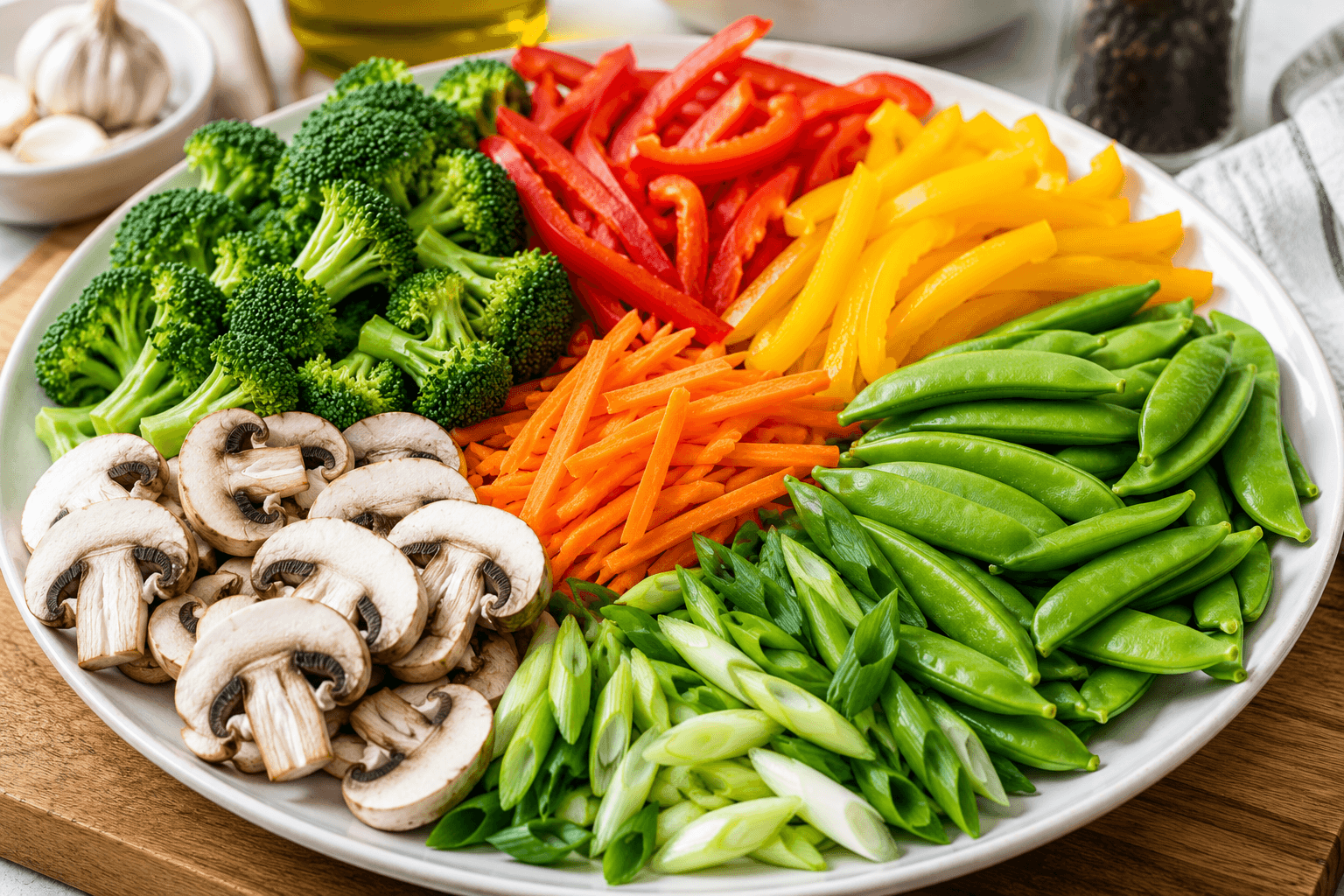
Advantages of Fresh Vegetables
- Excellent crisp-tender texture.
- Bright, natural colors after cooking.
- Better caramelization in a hot wok.
- Greater flexibility for cutting vegetables into uniform sizes.
- Ideal for recipes where presentation matters.
- Wide selection of seasonal produce.
Tip: Cut vegetables into similar-sized pieces so they cook evenly. Uniform slices prevent smaller pieces from overcooking while thicker vegetables are still becoming tender.
Potential Drawbacks of Fresh Vegetables
Although fresh vegetables produce excellent results, they also require more preparation. Washing, peeling, trimming, and slicing can add several minutes to meal preparation, especially on busy weeknights.
Fresh vegetables also have a relatively short shelf life. If they aren’t used quickly, they may wilt, lose moisture, or spoil before you have a chance to cook them. This can increase grocery costs due to unnecessary food waste.
Storage conditions also affect quality. Vegetables stored incorrectly may become soft, dry, or lose some of their natural sweetness. Learning proper storage techniques helps preserve freshness for longer. Our guide on How to Store Fresh Vegetables for Stir Fry Meal Prep explains the best storage methods for common stir fry vegetables.
Avoid this mistake: Don’t overcrowd your wok with fresh vegetables. Too many vegetables lower the cooking temperature, causing them to steam instead of stir fry. Cook in batches if necessary to maintain high heat.
Fresh vegetables are especially recommended when making dishes like Chicken Broccoli Stir Fry, Chicken Bell Pepper Stir Fry, or Chicken Zucchini Stir Fry, where crisp texture is one of the highlights of the finished meal.
Why Frozen Vegetables Are a Smart Choice for Stir Fry
Frozen vegetables have become increasingly popular for stir fry because they offer outstanding convenience without sacrificing much nutrition. Most frozen vegetables are harvested at peak ripeness and frozen within hours, helping preserve vitamins, minerals, and natural flavor. For busy families and meal preppers, they provide a quick way to prepare a healthy dinner without spending extra time washing and chopping vegetables.
One of the biggest advantages of using frozen vegetables is consistency. Every bag contains vegetables that are already cleaned, cut, and ready to cook. This makes weeknight cooking faster and reduces preparation time significantly.
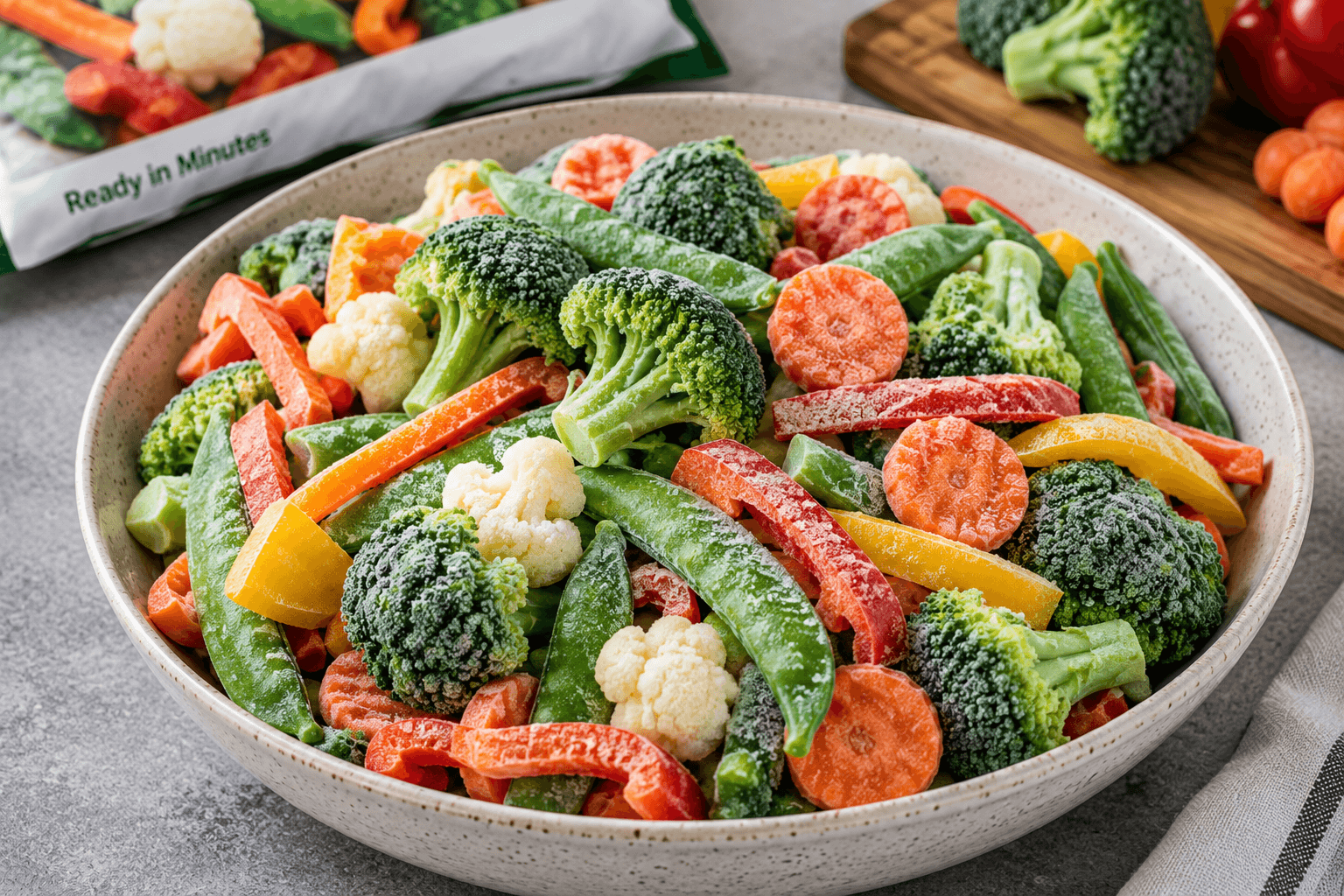
Benefits of Frozen Vegetables
- Ready to cook with little or no preparation.
- Long freezer storage reduces food waste.
- Available year-round regardless of season.
- Often more affordable than fresh produce out of season.
- Retain most vitamins and minerals through flash freezing.
- Ideal for quick weeknight meals and meal prep.
If you’re making an easy dinner like Chicken Stir Fry or Chicken Veggie Stir Fry, frozen vegetables can save valuable time while still producing a flavorful meal.
Kitchen Secret: Cook frozen vegetables directly from the freezer instead of thawing them first. Thawing releases excess moisture, making it harder to achieve the high heat needed for a crisp stir fry.
Potential Drawbacks of Frozen Vegetables
Although frozen vegetables are incredibly convenient, they don’t always produce the same crisp texture as fresh vegetables. Ice crystals formed during freezing break down some of the vegetable’s cell walls. As a result, vegetables such as zucchini, mushrooms, or bell peppers may become softer after cooking.
Frozen vegetables also release more moisture into the pan. If the heat isn’t high enough, the vegetables may steam instead of stir fry, preventing the light browning that adds extra flavor.
This doesn’t mean frozen vegetables should be avoided—it simply means the cooking method needs a slight adjustment. A very hot wok, cooking in small batches, and avoiding overcrowding will help evaporate excess moisture quickly.
Tip: Let your wok or skillet heat completely before adding frozen vegetables. High heat allows excess water to evaporate rapidly, helping the vegetables stay firmer and develop better flavor.
Which Vegetables Freeze Best?
Not every vegetable performs the same after freezing. Broccoli, carrots, green beans, peas, corn, and cauliflower generally maintain good texture in stir fry. More delicate vegetables, such as zucchini, spinach, and mushrooms, may soften more during cooking but can still work well when combined with firmer vegetables.
If you notice your vegetables becoming watery or losing their crispness, our guide on How to Fix Soggy Stir Fry Vegetables provides practical solutions to improve texture and prevent common cooking mistakes.
Fresh vs. Frozen Vegetables for Stir Fry: Side-by-Side Comparison
Choosing between fresh and frozen vegetables isn’t about deciding which one is always better. Instead, it’s about selecting the option that best fits your cooking goals. If you want maximum crunch and restaurant-quality presentation, fresh vegetables usually win. If convenience, budget, and reducing food waste are more important, frozen vegetables are an excellent alternative.
| Feature | Fresh Vegetables | Frozen Vegetables |
|---|---|---|
| Texture | Crisp and firm when cooked properly | Slightly softer after cooking |
| Flavor | Fresh, bright, and natural | Very good, though sometimes slightly milder |
| Nutrition | Excellent when recently harvested | Excellent due to flash freezing |
| Preparation Time | Requires washing and cutting | Ready to cook immediately |
| Shelf Life | Several days to one week | Several months in the freezer |
| Food Waste | Higher if not used quickly | Very low |
| Cost | Varies by season | Usually consistent year-round |
| Best For | Restaurant-style stir fry | Quick everyday meals |
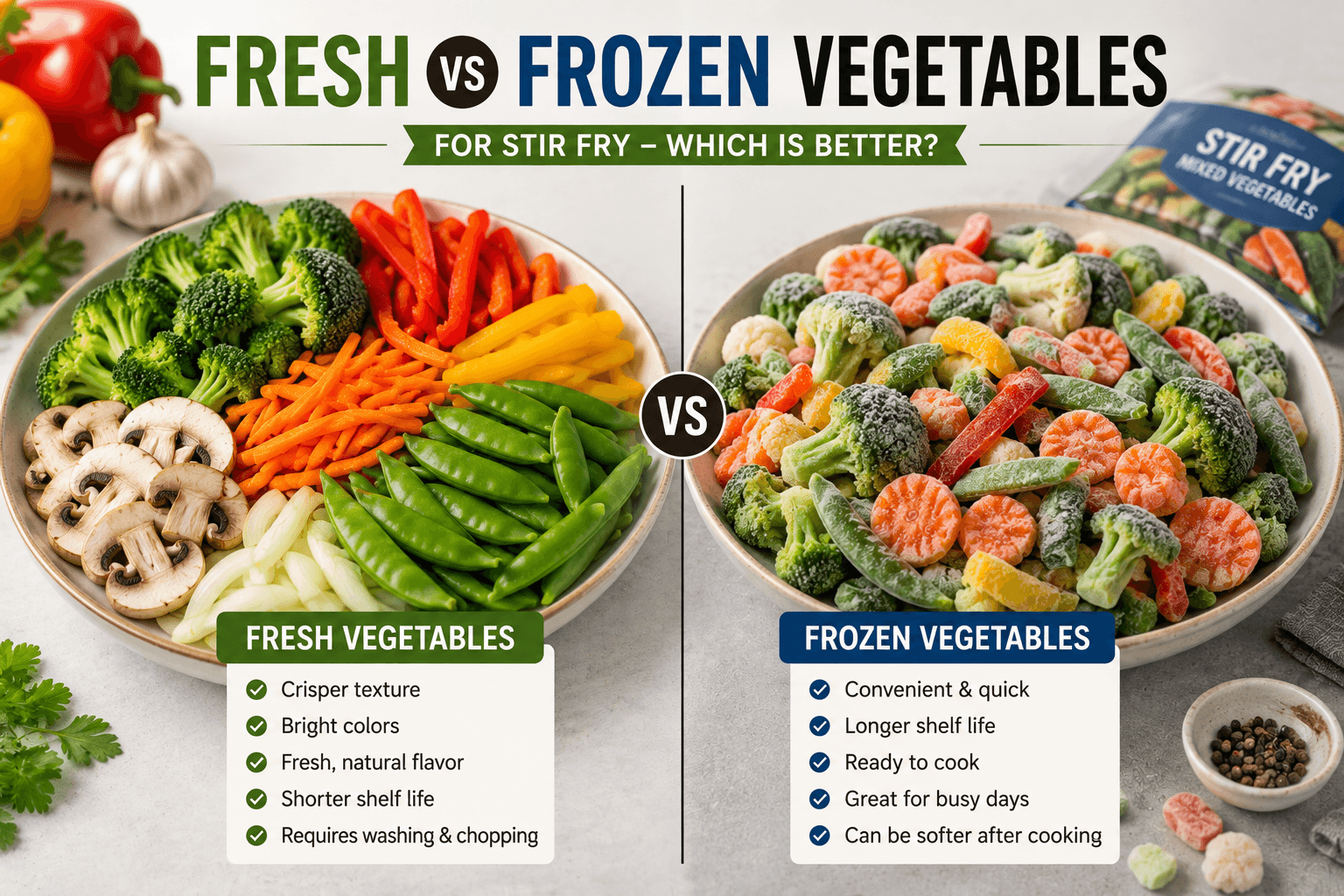
Which Should You Choose?
The answer depends on what matters most for your meal. If you’re cooking for guests or want the freshest possible texture, fresh vegetables are usually worth the extra preparation. Their natural crunch and vibrant appearance create a stir fry that closely resembles restaurant-quality dishes.
However, if you’re preparing dinner after a busy day, frozen vegetables offer incredible convenience. Because they’re already cleaned and chopped, you can focus on cooking instead of prep work. They’re also a smart choice for meal planning because you can keep several bags in the freezer without worrying about spoilage.
Choose Fresh Vegetables If You Want:
- Maximum crunch and texture.
- Bright, colorful presentation.
- Seasonal produce with peak flavor.
- Complete control over vegetable size and cuts.
- A restaurant-style stir fry.
Choose Frozen Vegetables If You Want:
- Fast weeknight cooking.
- Minimal food waste.
- Affordable vegetables all year.
- Convenient meal preparation.
- Long freezer storage.
Expert Secret: Many experienced home cooks combine fresh and frozen vegetables in the same stir fry. Use fresh vegetables for ingredients where texture matters most—such as bell peppers, zucchini, onions, or mushrooms—and add frozen broccoli, peas, carrots, or green beans for convenience. This approach provides an excellent balance of flavor, texture, and preparation time.
Regardless of which vegetables you choose, adding them at the correct time is essential for even cooking. Our guide on The Correct Order to Add Vegetables to Stir Fry explains how to layer vegetables based on cooking time for the best results.
Expert Tips for Cooking Fresh and Frozen Vegetables in Stir Fry
Whether you choose fresh or frozen vegetables, the cooking technique has the biggest impact on the final result. A few simple adjustments can help you achieve vegetables that are colorful, flavorful, and perfectly crisp-tender instead of soft or watery.
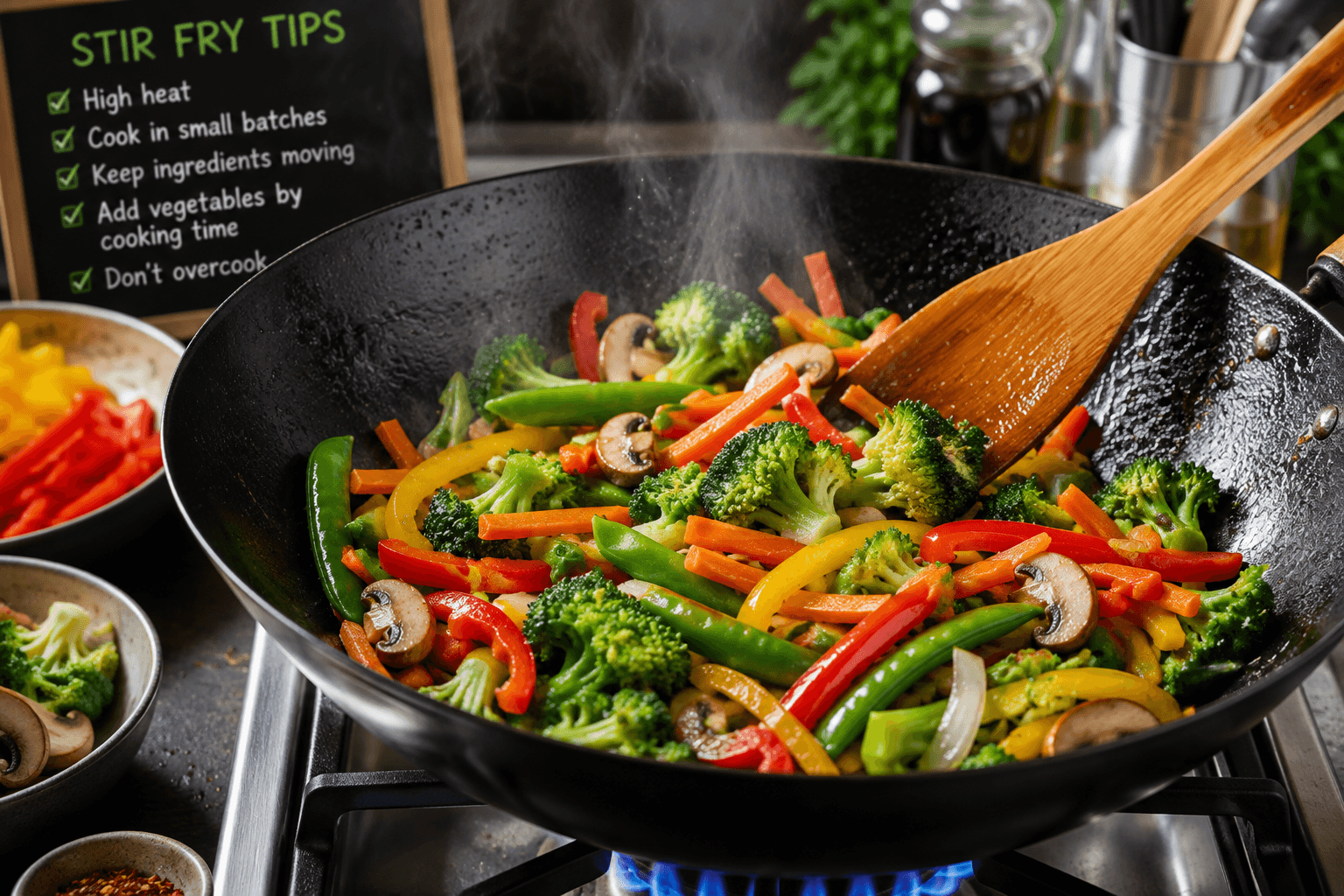
1. Preheat the Wok or Skillet
A properly heated wok is the foundation of a great stir fry. High heat quickly evaporates moisture and allows vegetables to sear instead of steam. Wait until the oil begins to shimmer before adding your ingredients.
2. Cook in Small Batches
Adding too many vegetables at once lowers the pan’s temperature. This causes excess moisture to build up, resulting in soggy vegetables. If you’re making a large batch, cook the vegetables in two or three smaller batches and combine everything at the end.
Tip: Keep the vegetables moving with a spatula or wok turner. Constant stirring ensures even cooking while preventing burning.
3. Add Vegetables Based on Cooking Time
Hard vegetables require more cooking time than delicate ones. Start with ingredients such as carrots and broccoli, then add medium-density vegetables like mushrooms and bell peppers. Finish with quick-cooking vegetables such as zucchini, cabbage, spinach, or bean sprouts.
Following the proper sequence helps every vegetable reach the ideal texture at the same time. For a complete breakdown, read our guide on The Correct Order to Add Vegetables to Stir Fry.
4. Don’t Overcook the Vegetables
One of the most common stir fry mistakes is cooking vegetables too long. Overcooked vegetables lose their vibrant color, become soft, and release excess moisture. Most vegetables only need a few minutes over high heat to become tender while maintaining a pleasant bite.
Common Mistake: Stir fry vegetables should be tender-crisp, not fully soft. Remove them from the heat while they still have a slight firmness because they’ll continue cooking briefly from the residual heat.
5. Season at the Right Time
Add stir fry sauces during the final minute of cooking. Adding sauce too early can increase moisture and prevent vegetables from browning properly. Toss everything together just long enough to coat the vegetables evenly.
Storing Leftover Stir Fry Vegetables
Whether you cook with fresh or frozen vegetables, proper storage keeps leftovers safe and flavorful. Cool the stir fry quickly, then transfer it to an airtight container before refrigerating.
Storage Guide:
- Refrigerate leftovers within 2 hours of cooking.
- Store in airtight containers for up to 4 days.
- Reheat over medium-high heat in a skillet instead of using a microwave whenever possible.
- Avoid freezing leftover stir fry multiple times because repeated freezing can negatively affect texture.
If your vegetables lose their crispness after reheating, don’t worry. Our article on How to Fix Soggy Stir Fry Vegetables shares several easy techniques for restoring better texture and improving leftover stir fry.
Learning these simple techniques will help you get excellent results whether you’re preparing a Chicken Cabbage Stir Fry, a Chicken Mushroom Stir Fry, or any of your favorite vegetable combinations.
Frequently Asked Questions
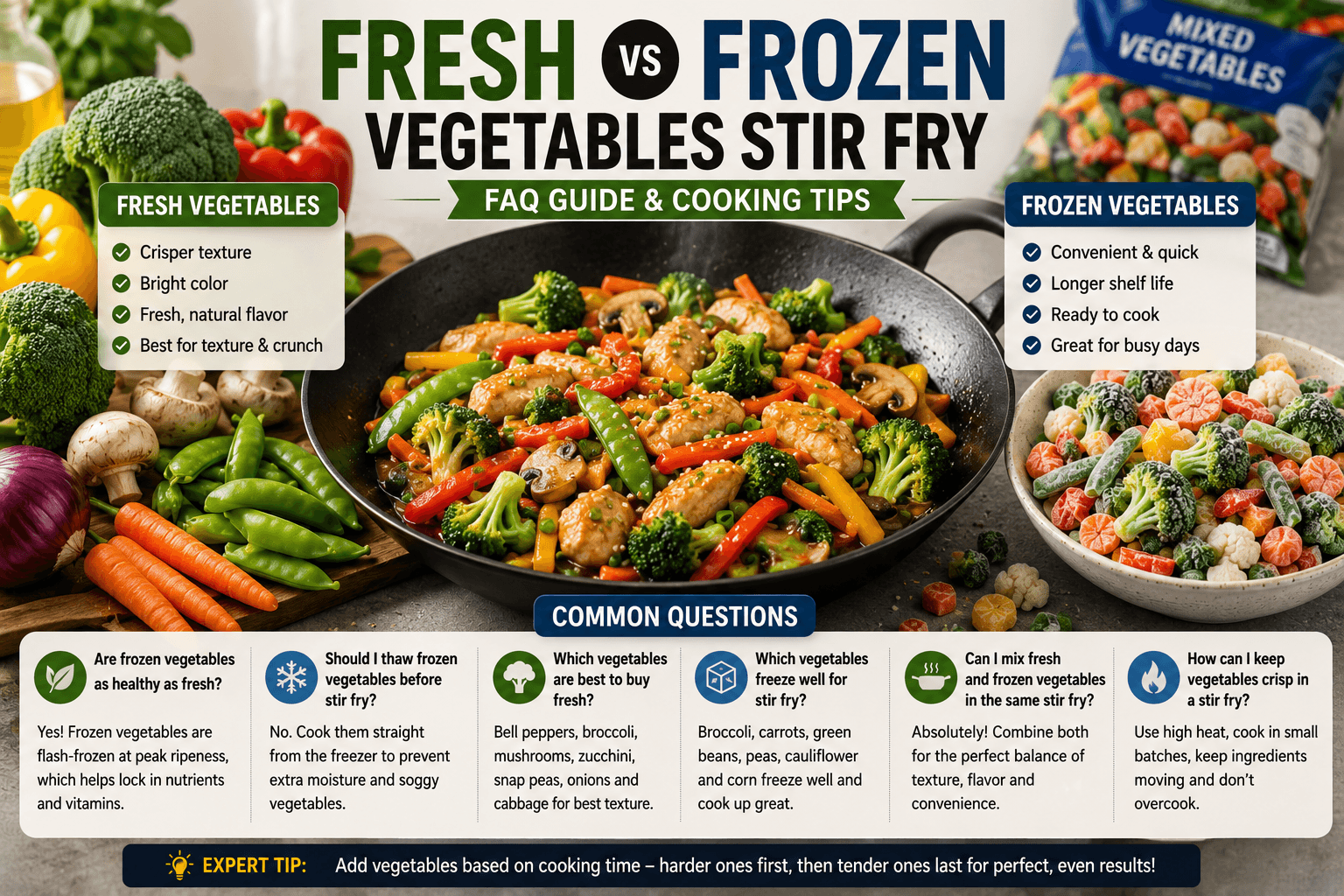
Are frozen vegetables as healthy as fresh vegetables for stir fry?
Yes. Frozen vegetables are typically harvested at peak ripeness and flash-frozen shortly afterward, helping preserve most vitamins and minerals. In many cases, they offer nutrition comparable to fresh vegetables, especially if fresh produce has spent several days in storage or transit.
Should I thaw frozen vegetables before making stir fry?
No. For the best fresh vs frozen vegetables stir fry results, cook frozen vegetables directly from the freezer. Thawing first releases excess moisture, making it more difficult to achieve crisp, lightly browned vegetables.
Which vegetables are best to buy fresh?
Bell peppers, zucchini, onions, mushrooms, cabbage, and snap peas generally have better texture when purchased fresh because they stay crisp during high-heat cooking.
Which vegetables freeze well for stir fry?
Broccoli, carrots, cauliflower, green beans, corn, and peas freeze exceptionally well and maintain good quality when cooked quickly over high heat.
Can I combine fresh and frozen vegetables in the same stir fry?
Absolutely. Many home cooks combine both types to balance convenience and texture. Add frozen vegetables first if they release extra moisture, then finish with fresh vegetables that cook quickly.
How can I keep vegetables crisp in a stir fry?
Use a very hot wok, avoid overcrowding the pan, cook in batches if necessary, and remove the vegetables from the heat while they are still tender-crisp.
References
Final Thoughts
When comparing fresh vs frozen vegetables stir fry, there isn’t a single winner for every situation. Fresh vegetables offer exceptional texture, vibrant color, and the classic crisp-tender bite that many people prefer. Frozen vegetables provide unmatched convenience, excellent nutrition, long storage life, and less food waste, making them perfect for busy weeknights.
The best choice depends on your priorities. If you’re cooking for presentation or want maximum crunch, fresh vegetables are usually the better option. If you’re looking for a fast, budget-friendly meal with minimal preparation, frozen vegetables are an excellent alternative. With proper stir-fry techniques, both can produce delicious, healthy meals that your family will enjoy.
As your confidence grows, don’t hesitate to combine fresh and frozen vegetables in the same recipe. This simple strategy lets you enjoy the strengths of both while creating flavorful homemade stir fries any day of the week.
🍽️ You Might Also Like


📧 Save This Recipe For Later
Enter your email and we will send this recipe directly to your inbox.