
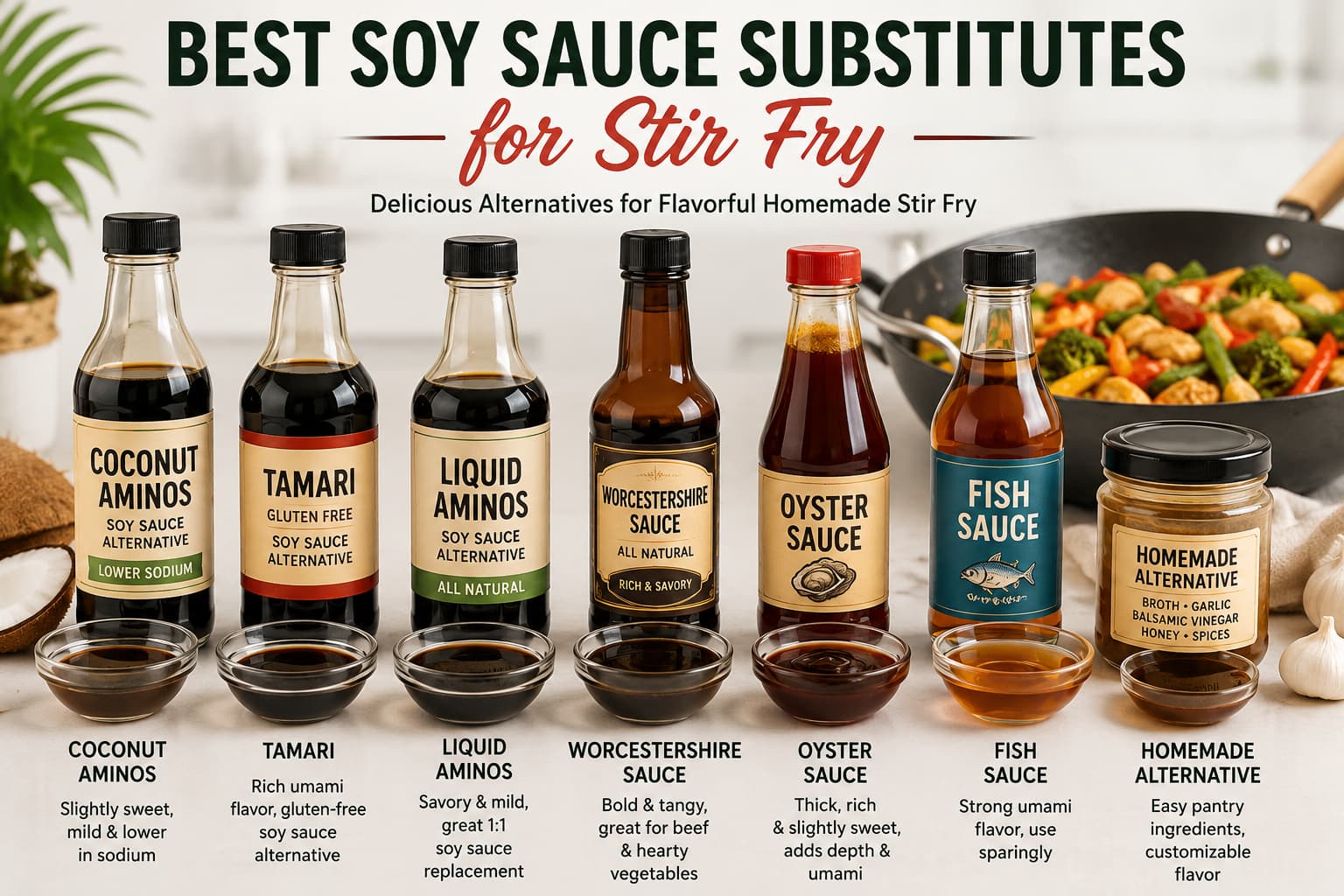
Best Soy Sauce Substitutes for Stir Fry
Best Soy Sauce Substitutes for Stir Fry
If you’re out of soy sauce or looking for a healthier, gluten-free, or lower-sodium alternative, there are plenty of excellent soy sauce substitutes stir fry cooks can use without sacrificing flavor. While soy sauce is one of the signature ingredients in traditional stir fry, it isn’t the only way to create a rich, savory sauce. Depending on your dietary needs and the ingredients you have on hand, substitutes like coconut aminos, tamari, liquid aminos, Worcestershire sauce, or even a simple homemade mixture can produce delicious results.
Choosing the right substitute depends on the type of stir fry you’re making. Chicken, beef, seafood, tofu, and vegetables each pair well with slightly different flavor profiles. Understanding how each alternative tastes and when to use it helps you build balanced sauces that still deliver the savory umami flavor stir fry is known for.
In this guide, you’ll learn which soy sauce substitutes stir fry recipes benefit from most, how each option compares to regular soy sauce, and how to choose the best replacement for your next homemade meal.
Quick Answer
The best soy sauce substitutes stir fry recipes include coconut aminos, tamari, liquid aminos, Worcestershire sauce, oyster sauce, fish sauce (used sparingly), and homemade soy sauce alternatives made with broth, vinegar, and seasonings. Coconut aminos are ideal for lower-sodium diets, tamari works well for gluten-free cooking, while liquid aminos provide a flavor very similar to traditional soy sauce. The best substitute depends on your dietary needs and the flavor profile you want for your stir fry.
Table of Contents
Why Use Soy Sauce Substitutes for Stir Fry?
Many home cooks assume soy sauce is essential for every stir fry, but that’s not always true. Modern cooking offers numerous alternatives that deliver similar savory depth while meeting different dietary preferences and nutritional goals. That’s why interest in soy sauce substitutes stir fry recipes continues to grow.
One of the biggest reasons people look for substitutes is reducing sodium. Traditional soy sauce contains a significant amount of salt, which may not fit every eating plan. Lower-sodium options like coconut aminos allow you to enjoy flavorful stir fry while controlling your sodium intake more effectively.
Food allergies and intolerances are another common reason. Many varieties of regular soy sauce contain wheat, making them unsuitable for people following a gluten-free diet. Alternatives such as tamari or certified gluten-free sauces provide similar flavor without the gluten.
Availability also matters. Running out of soy sauce while preparing dinner is common, and knowing several reliable replacements means you won’t have to postpone your meal. Many pantry staples can recreate the salty, savory, and slightly sweet balance found in classic stir fry sauces.
Tip: When replacing soy sauce, start with a slightly smaller amount than the recipe calls for. Taste the sauce before adding more because every substitute has a different salt level and flavor intensity.
Some cooks simply enjoy experimenting with new flavors. Ingredients like coconut aminos add subtle sweetness, while Worcestershire sauce contributes tangy complexity. These small changes can give familiar stir fry recipes an entirely new character.
If you’re looking for practical meal ideas, these recipes show how different sauces work with various ingredients:
The Best Soy Sauce Substitutes for Stir Fry
Not every replacement tastes exactly like soy sauce, but many alternatives provide the salty, savory, and umami-rich flavor that makes stir fry so satisfying. The best soy sauce substitutes stir fry recipes use depend on whether you’re looking for a healthier option, avoiding gluten, reducing sodium, or simply using ingredients already in your kitchen.
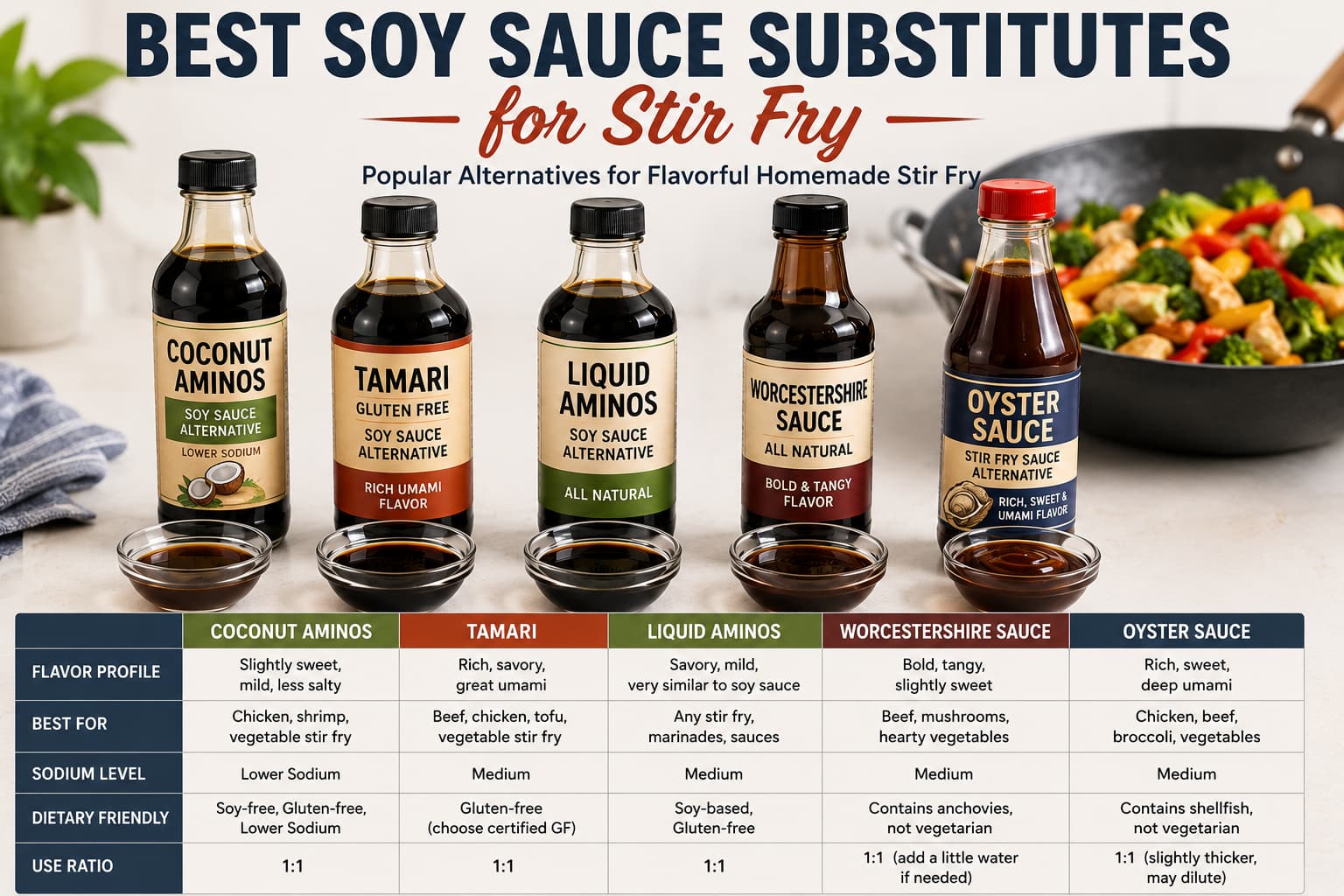
1. Coconut Aminos
Coconut aminos are one of the most popular soy sauce substitutes stir fry enthusiasts recommend. Despite the name, they don’t taste like coconut. Instead, they’re made from the fermented sap of coconut blossoms and contain a naturally mild sweetness with plenty of umami flavor.
Compared to regular soy sauce, coconut aminos contain significantly less sodium, making them a great choice for anyone watching their salt intake. Their sweeter flavor pairs especially well with chicken, shrimp, and vegetable stir fries.
Kitchen Secret: If using coconut aminos, add a small splash of rice vinegar or fresh lime juice near the end of cooking. The acidity balances the natural sweetness and creates a flavor closer to traditional stir fry sauce.
2. Tamari
Tamari is often considered the closest substitute to regular soy sauce. It’s traditionally made with little or no wheat, giving it a rich, smooth flavor that’s perfect for gluten-free cooking when labeled as certified gluten-free.
Because tamari has a deep umami taste without excessive sweetness, it works well in almost every type of stir fry, including beef, chicken, pork, tofu, and seafood recipes.
If you’re comparing different soy sauces before choosing a substitute, our guide to Light Soy Sauce vs. Dark Soy Sauce for Stir Fry explains how each affects flavor and color.
3. Liquid Aminos
Liquid aminos are another excellent option when searching for soy sauce substitutes stir fry recipes can use successfully. Made from soybeans, they offer a savory flavor that’s very similar to soy sauce but with a slightly milder finish.
Liquid aminos blend easily into marinades and stir fry sauces, making them a convenient one-to-one replacement in most recipes. They’re especially useful for quick weeknight dinners because no additional adjustments are usually necessary.
| Substitute | Flavor | Best For | Use Ratio |
|---|---|---|---|
| Coconut Aminos | Mild, slightly sweet | Low-sodium chicken and vegetable stir fry | 1:1 |
| Tamari | Rich umami | Gluten-free stir fry | 1:1 |
| Liquid Aminos | Savory and balanced | General stir fry cooking | 1:1 |
Each of these alternatives can produce outstanding results when used correctly. Rather than trying to copy soy sauce perfectly, focus on balancing saltiness, umami, sweetness, and acidity to create a flavorful stir fry sauce that complements your ingredients.
If you’re specifically looking for healthier options, our comparison of Low Sodium Soy Sauce vs. Regular Soy Sauce can help you decide which option best fits your cooking style and dietary needs.
More Soy Sauce Substitutes for Stir Fry
While coconut aminos, tamari, and liquid aminos are the closest replacements, several other ingredients can also work well depending on the type of stir fry you’re making. These soy sauce substitutes stir fry recipes often use can add unique flavors while still providing the savory depth that makes a stir fry taste complete.
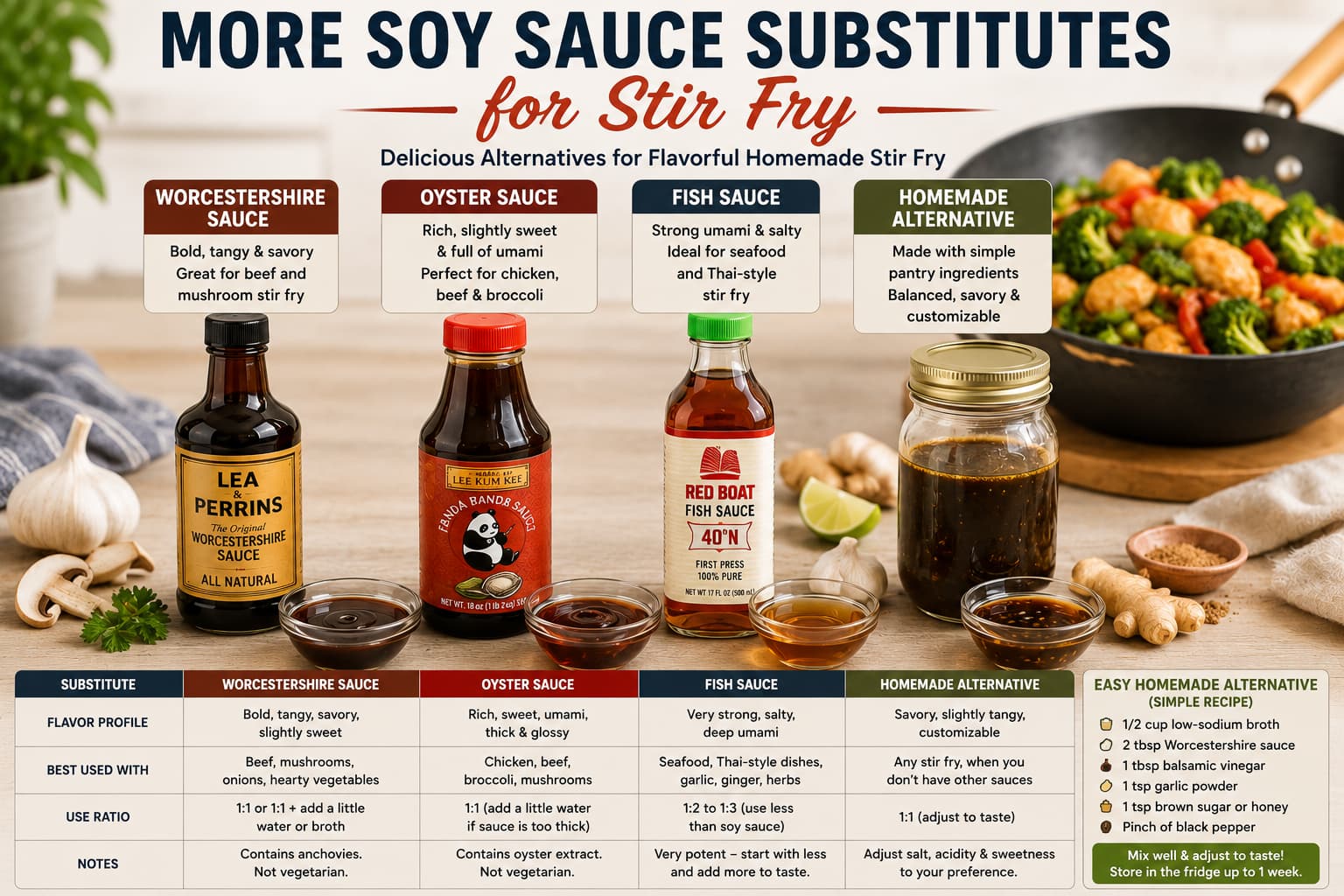
4. Worcestershire Sauce
Worcestershire sauce offers a bold combination of savory, tangy, and slightly sweet flavors. Although it doesn’t taste exactly like soy sauce, it can be an excellent substitute when used in moderation. Because it’s more complex and slightly acidic, many cooks combine it with a little water or broth before adding it to a stir fry sauce.
This option works particularly well with beef, mushrooms, onions, and hearty vegetables. However, because Worcestershire sauce contains anchovies, it isn’t suitable for vegetarian or vegan recipes.
5. Oyster Sauce
Oyster sauce is thicker and sweeter than soy sauce, but it’s packed with umami flavor. Instead of replacing soy sauce completely, many cooks use a combination of oyster sauce and water to create a balanced stir fry sauce.
Chicken, broccoli, mushrooms, and beef all pair exceptionally well with oyster sauce. Its glossy texture also helps coat ingredients beautifully, giving stir fry dishes a rich restaurant-style appearance.
If you’re unsure when to use oyster sauce instead of soy sauce, our guide to Hoisin Sauce vs. Oyster Sauce explains the differences and best uses for each sauce.
6. Fish Sauce
Fish sauce delivers intense umami flavor, but it’s much stronger and saltier than soy sauce. For that reason, it’s best used sparingly. Start with about half the amount of soy sauce called for in your recipe and taste before adding more.
Fish sauce works especially well in seafood stir fries, Thai-inspired dishes, and recipes featuring garlic, ginger, and fresh herbs.
Warning: Avoid using fish sauce as a direct one-to-one substitute. Its concentrated flavor can quickly overpower vegetables and delicate proteins if too much is added.
7. Homemade Soy Sauce Alternative
If your pantry is nearly empty, you can still make an effective substitute using common kitchen ingredients. A simple combination of low-sodium beef or vegetable broth, Worcestershire sauce, balsamic vinegar, garlic powder, and a small amount of molasses creates a surprisingly balanced sauce.
This homemade version won’t perfectly duplicate soy sauce, but it provides the salty, savory, and slightly sweet notes needed for a flavorful stir fry.
| Substitute | Strengths | Best Used With |
|---|---|---|
| Worcestershire Sauce | Tangy, savory, complex | Beef and mushroom stir fry |
| Oyster Sauce | Rich umami and glossy texture | Chicken, broccoli, beef |
| Fish Sauce | Very strong umami | Seafood and Thai-style stir fry |
| Homemade Alternative | Uses common pantry ingredients | Any quick weeknight stir fry |
If you want to prepare a completely soy-free meal, be sure to read our detailed guide on Can You Make Stir Fry Without Soy Sauce?. It explains how to build delicious stir fry sauces using alternative ingredients while maintaining excellent flavor and balance.
How to Choose the Right Soy Sauce Substitute for Stir Fry
With so many available options, choosing the best soy sauce substitutes stir fry recipes can feel overwhelming. The ideal replacement depends on your dietary preferences, the ingredients you’re cooking, and the flavor you want to achieve. Understanding the strengths of each substitute helps you build a balanced stir fry sauce every time.

Match the Substitute to Your Dietary Needs
Your first consideration should be any dietary restrictions. If you’re avoiding gluten, certified gluten-free tamari is one of the closest alternatives to regular soy sauce. Those reducing sodium often prefer coconut aminos because they naturally contain less salt while still providing plenty of savory flavor.
For people avoiding soy altogether, coconut aminos remain one of the most dependable soy sauce substitutes stir fry dishes can use without dramatically changing the taste.
Consider the Main Protein
Different proteins pair better with different substitutes. Coconut aminos complement chicken and shrimp thanks to their mild sweetness, while tamari works equally well with beef, pork, tofu, and vegetables. Oyster sauce shines in chicken and broccoli stir fries because it creates a rich, glossy coating.
Fish sauce is best reserved for seafood or Southeast Asian-inspired recipes where its bold umami flavor naturally fits the overall dish.
Balance Salt, Sweetness, and Umami
Great stir fry sauce is about balance rather than copying soy sauce exactly. If your substitute tastes sweeter than traditional soy sauce, add a splash of rice vinegar or fresh citrus juice. If it lacks depth, a little mushroom powder, sesame oil, or oyster sauce can increase the savory notes.
Kitchen Secret: Taste your sauce before adding it to the wok. Making small adjustments while the sauce is still in a bowl is much easier than trying to fix the flavor after it has coated all of the ingredients.
Adjust Quantities Carefully
Although many alternatives can replace soy sauce at a one-to-one ratio, not all should. Fish sauce is much stronger and should be used sparingly, while oyster sauce is thicker and often benefits from being diluted slightly with water or chicken broth.
If you’re using a homemade substitute, taste after each addition until the sauce reaches the right balance of savory, salty, and slightly sweet flavors.
| Your Goal | Best Substitute | Why It Works |
|---|---|---|
| Gluten-Free Cooking | Tamari | Rich umami flavor without wheat |
| Lower Sodium | Coconut Aminos | Milder taste with less sodium |
| Closest to Soy Sauce | Liquid Aminos | Very similar savory flavor |
| Rich Restaurant Flavor | Oyster Sauce | Creates glossy, umami-rich sauces |
| Soy-Free Cooking | Coconut Aminos | Made without soy while remaining flavorful |
If you’re planning to experiment with several stir fry sauces, our complete Ultimate Chicken Stir Fry Sauce Guide explains how different sauces affect flavor, texture, and overall cooking results.
Choosing the right substitute is less about finding a perfect copy of soy sauce and more about creating a delicious balance that complements your ingredients. Once you understand the strengths of each option, you’ll be able to prepare flavorful stir fries even when soy sauce isn’t available.
Common Mistakes When Using Soy Sauce Substitutes for Stir Fry
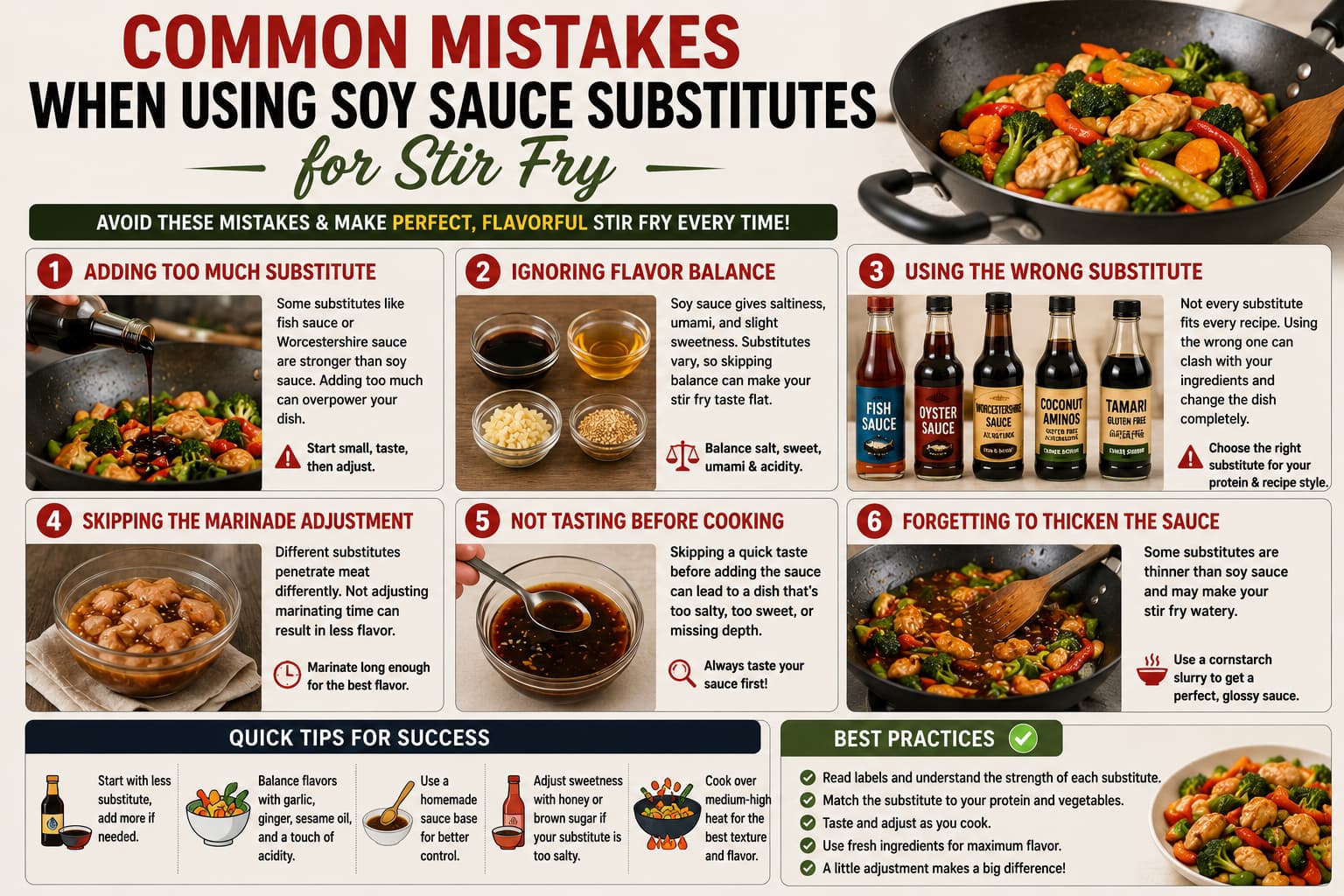
Even the best soy sauce substitutes stir fry recipes can disappoint if they’re not used correctly. Every substitute has its own level of saltiness, sweetness, and umami, so treating them exactly like regular soy sauce can affect the final flavor. Avoiding a few common mistakes will help you create a balanced, delicious stir fry every time.
Adding Too Much Substitute at Once
One of the biggest mistakes is pouring in the full amount without tasting first. Some alternatives, such as fish sauce and Worcestershire sauce, have stronger flavors than regular soy sauce. Adding too much can easily overpower fresh vegetables, chicken, or seafood.
Instead, begin with a smaller quantity, stir well, and taste before adding more. This simple habit gives you much better control over the final flavor.
Warning: It’s much easier to add more seasoning than to remove excess salt or overpowering flavors after the sauce has been mixed into the stir fry.
Ignoring the Flavor Balance
Soy sauce contributes much more than saltiness. It provides umami, depth, slight sweetness, and aroma. Some substitutes emphasize one characteristic more than another. Coconut aminos, for example, are naturally sweeter, while fish sauce delivers concentrated umami.
When using soy sauce substitutes stir fry dishes benefit from balancing flavors with ingredients such as rice vinegar, sesame oil, garlic, ginger, or a small amount of brown sugar if needed.
Using the Wrong Substitute for the Dish
Not every replacement fits every recipe. Oyster sauce is wonderful in chicken and broccoli stir fry but may feel too rich for light vegetable dishes. Fish sauce complements shrimp and Thai-inspired recipes but can dominate delicate vegetables if overused.
Matching the substitute to your ingredients produces a much more balanced and enjoyable meal.
Skipping the Marinade Adjustment
If you’re replacing soy sauce in a marinade, remember that different substitutes penetrate meat differently. Coconut aminos are milder and may require a slightly longer marinating time, while tamari provides a deeper flavor in a shorter period.
Allowing enough time for the marinade to work helps chicken, beef, and pork absorb more flavor before cooking.
Tip: Combine your chosen substitute with garlic, fresh ginger, sesame oil, and a little cornstarch to create a flavorful marinade that also helps produce a glossy stir fry sauce.
Not Thickening the Sauce When Needed
Some soy sauce alternatives are thinner than others. If your finished stir fry sauce seems watery, mix one teaspoon of cornstarch with one tablespoon of cold water before stirring it into the hot sauce. Within a minute or two, the sauce will become smooth and lightly glossy.
Best Practices
- Taste the sauce before adding more seasoning.
- Match the substitute to your protein and vegetables.
- Adjust sweetness, saltiness, and acidity as needed.
- Use fresh garlic and ginger for deeper flavor.
- Thicken thin sauces with a cornstarch slurry if necessary.
Mistakes to Avoid
- Adding too much fish sauce.
- Assuming every substitute has the same salt level.
- Ignoring sweetness differences.
- Over-seasoning before tasting.
- Choosing a substitute that doesn’t match the recipe style.
Mastering these simple techniques allows you to use soy sauce substitutes stir fry recipes confidently. Whether you’re cooking for dietary reasons or simply using what’s available in your pantry, small adjustments can make a significant difference in flavor and overall cooking results.
Storing Stir Fry Made with Soy Sauce Substitutes
Whether you use coconut aminos, tamari, liquid aminos, or another alternative, proper storage helps maintain both flavor and food safety. Most stir fries prepared with soy sauce substitutes stir fry recipes recommend can be stored just like traditional stir fry dishes.

Storage Tip: Allow the stir fry to cool slightly before transferring it to an airtight container. Refrigerate within two hours of cooking and enjoy it within 3–4 days for the best quality and food safety.
For longer storage, freeze portions in freezer-safe containers for up to three months. Thaw overnight in the refrigerator before reheating. Warm the stir fry in a skillet over medium heat until it reaches a safe serving temperature, adding a splash of broth or water if the sauce has thickened too much during storage.
Frequently Asked Questions
What is the best soy sauce substitute for stir fry?
Coconut aminos, tamari, and liquid aminos are among the best soy sauce substitutes stir fry recipes can use. Tamari provides the closest flavor to traditional soy sauce, while coconut aminos are excellent for lower-sodium and soy-free cooking.
Can I make stir fry without soy sauce?
Yes. You can create a flavorful stir fry using coconut aminos, oyster sauce, Worcestershire sauce, fish sauce, or a homemade combination of broth, vinegar, and seasonings. The key is balancing umami, saltiness, and sweetness.
Which soy sauce substitute is gluten-free?
Certified gluten-free tamari is the closest alternative to regular soy sauce. Coconut aminos are also naturally gluten-free and work well in most stir fry recipes.
Are coconut aminos healthier than soy sauce?
Coconut aminos generally contain less sodium than regular soy sauce, making them a popular option for people trying to reduce salt intake. However, the healthiest choice depends on your overall dietary needs and preferences.
Can I substitute Worcestershire sauce for soy sauce?
Yes, but use it carefully. Worcestershire sauce has a tangier and more complex flavor than soy sauce, so it works best in beef and mushroom stir fries or when combined with broth or water.
Which substitute tastes most like regular soy sauce?
Tamari and liquid aminos provide the closest flavor and are often used as one-to-one replacements in stir fry recipes.
Final Thoughts
Finding the best soy sauce substitutes stir fry recipes doesn’t have to be complicated. Whether you’re avoiding soy, reducing sodium, following a gluten-free diet, or simply ran out of soy sauce, there are several excellent alternatives that deliver rich umami flavor and satisfying results.
Coconut aminos are ideal for lower-sodium cooking, tamari is an excellent gluten-free option, and liquid aminos offer a taste very close to traditional soy sauce. Other ingredients like oyster sauce, Worcestershire sauce, fish sauce, and homemade blends can also produce delicious stir fries when used appropriately.
The secret is to taste as you cook, balance the flavors, and choose the substitute that best complements your ingredients. With a little practice, you’ll be able to prepare flavorful homemade stir fries without relying solely on traditional soy sauce.
References
🍽️ You Might Also Like




📧 Save This Recipe For Later
Enter your email and we will send this recipe directly to your inbox.