

Light Soy Sauce vs. Dark Soy Sauce for Stir Fry
Light Soy Sauce vs. Dark Soy Sauce for Stir Fry
Choosing the right soy sauce can completely change the flavor, color, and overall quality of your stir fry. When comparing light soy sauce vs dark soy sauce for stir fry, many home cooks assume they’re interchangeable because both contain soybeans, wheat, salt, and water. In reality, they serve very different purposes in Chinese cooking and other Asian cuisines. Understanding when to use each one will help you create restaurant-quality chicken, beef, shrimp, and vegetable stir fries with balanced flavor and appealing color.
If you’ve ever wondered why your homemade stir fry tastes saltier than expected or looks much darker than restaurant versions, the type of soy sauce you used may be the reason. While both varieties are naturally brewed, light soy sauce is primarily used for seasoning, whereas dark soy sauce is often added for richer color and a subtle touch of sweetness. Knowing how they work together can significantly improve your cooking results.
Quick Answer
Light soy sauce vs dark soy sauce for stir fry: Light soy sauce is thinner, saltier, and adds the main savory flavor to stir fry dishes. Dark soy sauce is thicker, less salty, slightly sweet, and is mainly used to deepen color and add richness. For most chicken stir fries, use light soy sauce as the primary seasoning and add a small amount of dark soy sauce only when you want a darker, richer-looking sauce.
Table of Contents
What Is the Difference Between Light and Dark Soy Sauce?
The biggest difference in the light soy sauce vs dark soy sauce for stir fry debate is how each sauce contributes to the finished dish. Although both begin with a similar fermentation process, they are aged differently and have unique characteristics that affect taste, texture, and appearance.
Light soy sauce is the everyday seasoning used in many stir fry recipes. It has a thin consistency, a clean salty flavor, and plenty of umami that enhances meat and vegetables without overpowering them. Because of its balanced taste, it forms the foundation of countless homemade stir fry sauces.
Dark soy sauce is aged longer and usually contains molasses or caramel for a deeper color and a mild sweetness. Instead of providing the primary seasoning, it gives sauces a glossy finish and the rich brown color commonly seen in Chinese restaurant dishes.
| Feature | Light Soy Sauce | Dark Soy Sauce |
|---|---|---|
| Color | Light brown | Dark brown |
| Texture | Thin | Thicker |
| Saltiness | Higher | Lower |
| Sweetness | Very little | Mild |
| Main Purpose | Seasoning | Color and richness |
Tip: If you’re making a simple weeknight stir fry, light soy sauce alone is usually enough. Add dark soy sauce only when you want a richer color or a deeper, slightly sweeter finish.
Many classic recipes actually combine both varieties because they complement each other. Light soy sauce delivers the savory flavor, while dark soy sauce improves the appearance without making the dish excessively salty. This balance is one of the secrets behind many restaurant-style stir fry sauces.
If you’re looking for the best bottle to keep in your pantry, our guide to the best soy sauce for chicken stir fry explains which options work best for different cooking styles and recipes.
Light Soy Sauce vs. Dark Soy Sauce Comparison
When deciding between light soy sauce vs dark soy sauce for stir fry, it helps to compare how each one performs in real cooking situations. Although both are made from fermented soybeans, their flavor, consistency, and purpose are quite different. Choosing the right one depends on the type of stir fry you’re preparing and the final result you want.
Light soy sauce is the workhorse of most stir fry recipes. It seasons the meat, vegetables, and sauce while adding the savory umami flavor people expect from Asian cuisine. Because it has a thinner consistency, it blends easily with ingredients like garlic, ginger, sesame oil, oyster sauce, and cornstarch.

Dark soy sauce, on the other hand, is less about seasoning and more about appearance. A small splash transforms a pale stir fry into a rich, glossy dish that looks similar to restaurant-quality Chinese food. Because it contains less salt and a touch of sweetness, it rounds out the sauce without overpowering the other ingredients.
| Category | Light Soy Sauce | Dark Soy Sauce |
|---|---|---|
| Primary Role | Main seasoning | Adds color and richness |
| Flavor | Salty, clean, umami-rich | Mild, slightly sweet |
| Consistency | Thin | Thick and syrup-like |
| Best For | Daily stir fry cooking | Restaurant-style finish |
| Typical Amount | 1–3 tablespoons | ½–1 teaspoon |
| Can Replace the Other? | Usually yes, with adjustments | Not recommended by itself |
Kitchen Secret: Many Chinese restaurants use both sauces together instead of choosing one over the other. Light soy sauce provides most of the seasoning, while a small amount of dark soy sauce creates the deep caramel-brown color that makes stir fry look more appetizing.
How Each Soy Sauce Affects Chicken Stir Fry
Chicken has a naturally mild flavor, making it an excellent ingredient for understanding the differences in the light soy sauce vs dark soy sauce for stir fry comparison.
- Light soy sauce keeps chicken tasting fresh, savory, and balanced without making the sauce overly heavy.
- Dark soy sauce gives chicken a richer appearance and a slightly sweeter finish while creating a glossy coating.
- Using both together produces the classic restaurant-style flavor, color, and texture that many people try to recreate at home.
If you’re preparing recipes like Chicken Stir Fry or Chicken Veggie Stir Fry, light soy sauce should be your primary seasoning. Adding just a teaspoon of dark soy sauce near the end of cooking can enhance the overall appearance without making the dish taste overly sweet or overpowering the fresh vegetables.
Avoid This Mistake: Replacing light soy sauce entirely with dark soy sauce can make your stir fry overly dark and leave it lacking the bright, savory flavor that defines a well-balanced stir fry sauce.
Which Soy Sauce Is Best for Stir Fry?
If you’re trying to decide light soy sauce vs dark soy sauce for stir fry, the answer is simple for most home cooks: light soy sauce is the better everyday choice. It provides the salty, savory umami flavor that forms the base of nearly every classic stir fry sauce. Whether you’re cooking chicken, beef, pork, shrimp, tofu, or vegetables, light soy sauce delivers balanced seasoning without overpowering the other ingredients.

Dark soy sauce should be viewed as a supporting ingredient rather than the main seasoning. Its thicker texture and deeper color help create the glossy finish commonly seen in restaurant stir fries, but using too much can mask the fresh flavors of the vegetables and protein.
When to Use Light Soy Sauce
Light soy sauce works well in almost every stir fry because it enhances ingredients without making the dish too heavy. It’s especially useful when cooking recipes that rely on fresh vegetables and quick cooking times.
- Chicken stir fry
- Chicken and broccoli stir fry
- Garlic chicken stir fry
- Shrimp stir fry
- Vegetable stir fry
- Healthy stir fry recipes
- Quick weeknight meals
Because of its clean flavor, light soy sauce also blends well with garlic, fresh ginger, rice vinegar, sesame oil, chili paste, oyster sauce, and homemade stir fry sauces.
Tip: Marinating chicken in light soy sauce for 15–30 minutes before cooking helps season the meat evenly while keeping the overall flavor balanced.
When to Use Dark Soy Sauce
Dark soy sauce shines when appearance is just as important as flavor. It gives sauces a rich mahogany color and a glossy coating that makes stir fry look more appetizing. Since it’s less salty than light soy sauce, it should be added in small amounts after the primary seasoning has already been established.
- Restaurant-style Chinese stir fry
- Beef stir fry
- Noodle stir fry
- Fried rice
- Braised dishes
- Recipes needing a darker sauce
| If You Want… | Best Choice |
|---|---|
| Classic savory flavor | Light soy sauce |
| Beautiful dark color | Dark soy sauce |
| Restaurant-style stir fry | Use both together |
| Healthier everyday cooking | Light soy sauce (or low-sodium version) |
| Rich glossy sauce | Add a small amount of dark soy sauce |
The Best Option for Most Home Cooks
For the majority of recipes, the winner in the light soy sauce vs dark soy sauce for stir fry comparison is light soy sauce. It provides the essential seasoning needed for delicious stir fry, while dark soy sauce can be treated as an optional finishing ingredient rather than a requirement.
If you’re making recipes like Garlic Chicken Stir Fry, Chicken Broccoli Stir Fry, or Healthy Chicken Stir Fry, start with light soy sauce and adjust only if you want a darker, richer-looking sauce.
Expert Secret: Professional chefs often finish a stir fry with just a teaspoon of dark soy sauce during the final minute of cooking. This keeps the vegetables vibrant while giving the sauce its signature glossy appearance.
If you’re still unsure which bottle to buy, our guide to low-sodium soy sauce vs. regular soy sauce explains how sodium levels can affect both flavor and nutrition, helping you choose the best option for your cooking style.
Can You Use Light and Dark Soy Sauce Together?
Absolutely. In fact, many authentic Chinese stir fry recipes combine both sauces because each one contributes something different. When considering light soy sauce vs dark soy sauce for stir fry, it isn’t always about choosing one over the other. Using them together creates a more balanced sauce with rich flavor, appealing color, and the glossy finish found in many restaurant-quality dishes.

Light soy sauce should always make up the majority of the soy sauce in your recipe because it provides the primary seasoning. Dark soy sauce is typically added in a much smaller amount to enhance the color and add subtle depth without overpowering the dish.
A Good Starting Ratio
If you’re making a stir fry for four servings, this simple ratio works well for most recipes:
| Ingredient | Recommended Amount | Purpose |
|---|---|---|
| Light soy sauce | 2 tablespoons | Main savory seasoning |
| Dark soy sauce | 1 teaspoon | Color and richness |
| Oyster sauce (optional) | 1 tablespoon | Extra umami |
| Sesame oil | 1 teaspoon | Aroma |
| Cornstarch slurry | As needed | Thickens the sauce |
This combination creates a sauce that’s flavorful without being overly salty or too dark. You can always adjust the ratio slightly based on your personal preference or the ingredients you’re cooking.
Kitchen Secret: Add dark soy sauce during the final minute of cooking rather than at the beginning. This helps preserve the bright color of vegetables while still giving the finished stir fry a rich, glossy appearance.
Which Stir Fry Recipes Benefit Most?
Using both soy sauces works especially well in recipes that have a thicker sauce or a longer cooking time. The combination enhances both appearance and flavor without requiring additional ingredients.
- Chicken and broccoli stir fry
- Teriyaki chicken stir fry
- Honey garlic chicken stir fry
- Beef and vegetable stir fry
- Chicken noodle stir fry
- Mixed vegetable stir fry
If you’re preparing Teriyaki Chicken Stir Fry or Honey Garlic Chicken Stir Fry, a small amount of dark soy sauce complements the naturally sweet flavors while helping the sauce cling to the chicken.
When Should You Skip Dark Soy Sauce?
Although dark soy sauce is useful, it isn’t always necessary. Some stir fries taste better with only light soy sauce, especially when the goal is to highlight fresh vegetables, herbs, or delicate proteins.
- Low-calorie stir fries
- Fresh vegetable stir fry
- Shrimp stir fry
- Quick chicken stir fry
- Recipes with naturally colorful vegetables
Tip: If your stir fry already contains oyster sauce, hoisin sauce, or teriyaki sauce, you may only need light soy sauce. Adding too many dark sauces can make the flavor overly rich and hide the freshness of the ingredients.
What If You Only Have One Soy Sauce?
Don’t worry if your pantry contains only one variety. Light soy sauce alone can produce an excellent stir fry with balanced flavor. If you only have dark soy sauce, use it sparingly and consider reducing the amount slightly to avoid an overly dark, mildly sweet sauce.
For more alternatives, check out our guides on the best soy sauce substitutes for stir fry and whether you can make stir fry without soy sauce. These resources explain how to maintain great flavor even when traditional soy sauce isn’t available.
Common Mistakes to Avoid When Using Soy Sauce in Stir Fry
Even after understanding the differences between light soy sauce vs dark soy sauce for stir fry, a few common mistakes can keep your homemade meals from tasting as good as they should. Fortunately, these problems are easy to avoid once you know what to watch for. Small adjustments can make a big difference in flavor, texture, and appearance.
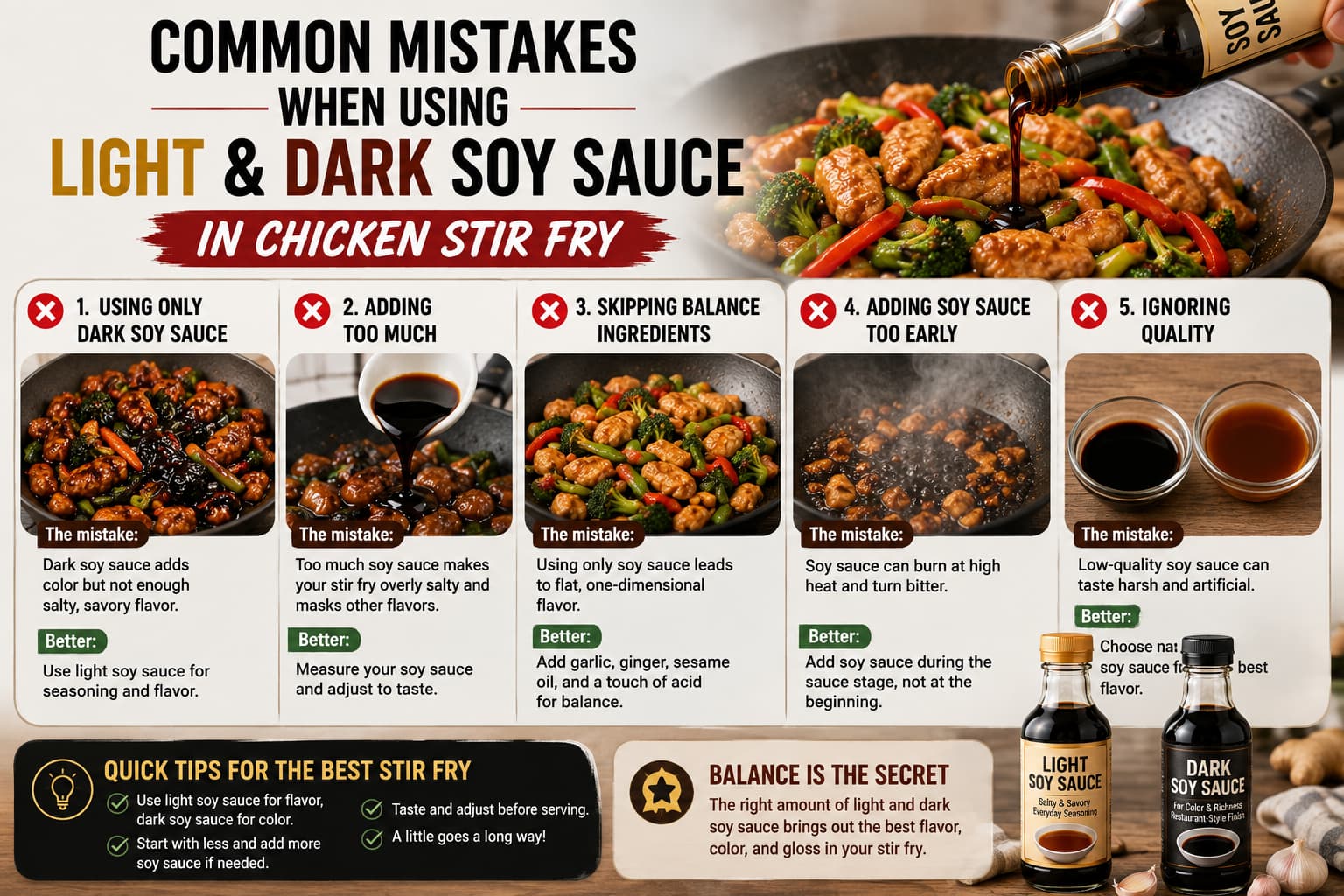
1. Using Only Dark Soy Sauce
One of the most common mistakes is replacing light soy sauce completely with dark soy sauce. While dark soy sauce gives food an attractive deep brown color, it doesn’t provide the same clean, savory seasoning. The result is often a stir fry that looks appealing but tastes flat or slightly sweet.
Warning: Dark soy sauce is designed to complement light soy sauce, not replace it. For balanced flavor, use light soy sauce as the primary seasoning.
2. Adding Too Much Soy Sauce
More soy sauce doesn’t always mean more flavor. Excess soy sauce can overpower fresh vegetables, mask the natural taste of chicken or beef, and make the entire dish overly salty.
Instead of pouring directly from the bottle into the wok, measure the soy sauce before cooking. This helps maintain consistency every time you prepare a stir fry.
3. Forgetting to Balance the Sauce
A great stir fry sauce contains more than soy sauce alone. Garlic, ginger, sesame oil, rice vinegar, oyster sauce, and a cornstarch slurry all work together to create a smooth, balanced flavor.
| Common Mistake | Result | Better Approach |
|---|---|---|
| Too much light soy sauce | Overly salty stir fry | Measure carefully |
| Only dark soy sauce | Dark color but weak seasoning | Use mostly light soy sauce |
| No thickener | Watery sauce | Add a cornstarch slurry |
| Skipping aromatics | Flat flavor | Cook with garlic and ginger |
| Adding soy sauce too early | Can burn in a very hot wok | Add during sauce stage |
4. Ignoring Sodium Content
Traditional soy sauce contains a significant amount of sodium. If you’re trying to reduce salt intake, choose a low-sodium version instead of simply using less sauce. This helps preserve the signature umami flavor while lowering sodium levels.
Tip: Taste the sauce before serving. If it already tastes balanced, avoid adding extra soy sauce at the table, as it can easily overpower the dish.
5. Using Low-Quality Soy Sauce
Not all soy sauces are made the same. Naturally brewed soy sauce typically develops a deeper, more complex flavor than chemically produced varieties. Reading the ingredient list can help you choose a better-quality product.
Look for labels that mention naturally brewed or traditionally fermented soy sauce. These products usually provide richer umami flavor and require less seasoning overall.
Expert Secret: A high-quality naturally brewed light soy sauce often delivers enough flavor that you need less overall sauce, allowing the fresh taste of vegetables and protein to stand out.
Final Recommendation
For most home kitchens, the easiest way to achieve consistent results is to keep both bottles on hand. Use light soy sauce for seasoning nearly every stir fry, then add a small amount of dark soy sauce only when you want deeper color and a restaurant-style finish. This simple approach gives you the flexibility to prepare everything from quick vegetable stir fries to rich chicken and beef dishes.
If you’d like to experiment with different flavor combinations, our guides to Easy Homemade Stir Fry Sauce, Best Store-Bought Stir Fry Sauces, and The Ultimate Chicken Stir Fry Sauce Guide provide additional ideas for building flavorful sauces with confidence.
Final Thoughts
Understanding light soy sauce vs dark soy sauce for stir fry makes it much easier to create flavorful, restaurant-quality meals at home. Although the two sauces look similar on the grocery store shelf, they play very different roles in the kitchen.

For most recipes, light soy sauce should be your primary choice. Its clean, savory umami flavor seasons chicken, beef, seafood, tofu, and vegetables without overpowering their natural taste. It’s the foundation of countless stir fry sauces and the bottle you’ll reach for most often.
Dark soy sauce, meanwhile, is best used as a finishing ingredient. Just a small amount adds a beautiful deep brown color, subtle sweetness, and the glossy appearance commonly seen in Chinese restaurant dishes. Because it’s less salty than light soy sauce, it enhances the overall presentation without replacing the need for proper seasoning.
Light Soy Sauce
- Excellent everyday seasoning
- Rich umami flavor
- Works with nearly every stir fry recipe
- Perfect for marinades and sauces
- Keeps vegetables tasting fresh
Dark Soy Sauce
- Shouldn’t be used as the only seasoning
- Can make dishes too dark if overused
- Mild sweetness may not suit every recipe
- Best used in small amounts
- Mainly improves color rather than flavor
For the best results, keep both bottles in your pantry. Use light soy sauce to build flavor and add a teaspoon of dark soy sauce whenever you want a richer color and glossy finish. This simple combination works beautifully for everything from quick weeknight dinners to restaurant-style chicken stir fry.
Frequently Asked Questions
Can I substitute dark soy sauce for light soy sauce in stir fry?
You can, but it isn’t ideal. Dark soy sauce adds color and mild sweetness but doesn’t provide the same clean, savory flavor as light soy sauce. If using only dark soy sauce, reduce the amount to avoid overpowering the dish.
Is light soy sauce saltier than dark soy sauce?
Yes. Light soy sauce generally contains more salt and is intended to be the primary seasoning in stir fry recipes. Dark soy sauce is less salty and is mainly used to improve color and richness.
Why do Chinese restaurants use both soy sauces?
Many restaurants combine the two because light soy sauce provides the savory flavor while dark soy sauce creates the rich brown color and glossy finish associated with authentic stir fry dishes.
Which soy sauce is best for chicken stir fry?
Light soy sauce is usually the best choice for chicken stir fry. Adding a small amount of dark soy sauce is optional if you want a darker sauce and a more traditional restaurant-style appearance.
Can I make stir fry with only light soy sauce?
Absolutely. Most homemade stir fry recipes use only light soy sauce and still produce excellent flavor. Dark soy sauce simply adds extra color and depth when desired.
Does dark soy sauce make food sweeter?
Yes. Dark soy sauce often contains molasses or caramel, giving it a subtle sweetness that complements savory dishes without making them taste like dessert.
References
🍽️ You Might Also Like


📧 Save This Recipe For Later
Enter your email and we will send this recipe directly to your inbox.