
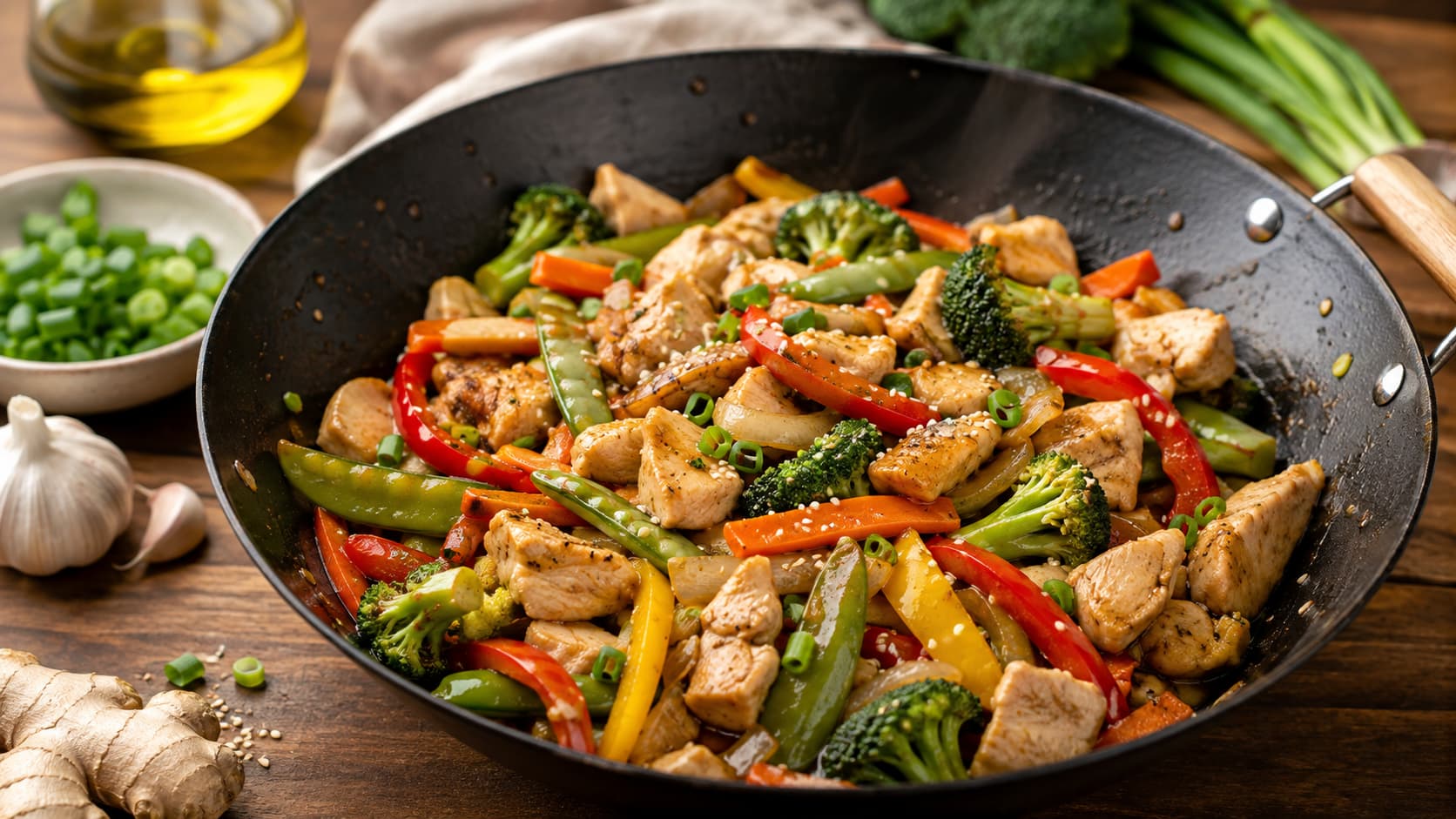
Can You Make Stir Fry Without Soy Sauce?
Can You Make Stir Fry Without Soy Sauce?
If you’ve ever opened your pantry, reached for the soy sauce, and realized the bottle was empty, you may have wondered, can you make stir fry without soy sauce? The answer is yes—and in many cases, your meal can be just as flavorful. While soy sauce is a classic ingredient in many Asian-inspired stir fry dishes, it isn’t the only way to create a rich, savory sauce. Whether you’re avoiding soy because of allergies, following a low-sodium diet, eating gluten-free, or simply looking for new flavors, there are plenty of delicious alternatives.
The secret to making a great stir fry without soy sauce is understanding what soy sauce contributes to the dish. It provides saltiness, umami, color, and depth. By replacing those qualities with other ingredients, you can create a balanced stir fry that tastes every bit as satisfying. In this guide, you’ll learn why soy sauce isn’t essential, which substitutes work best, and how to build a flavorful stir fry sauce from scratch.
Quick Answer
Yes, you can absolutely make stir fry without soy sauce. Replace soy sauce with flavorful alternatives such as coconut aminos, tamari (if avoiding traditional soy sauce), liquid aminos, oyster sauce, Worcestershire sauce, homemade broth-based sauces, or combinations of garlic, ginger, vinegar, sesame oil, and spices. The key is balancing salty, savory, sweet, and acidic flavors so your stir fry remains rich, delicious, and well-rounded.
Table of Contents
Why Soy Sauce Is Common in Stir Fry
For generations, soy sauce has been one of the most popular ingredients used in stir fry cooking. Its deep savory flavor enhances vegetables, chicken, beef, shrimp, tofu, and countless other ingredients. Because it naturally contains umami compounds created during fermentation, it helps make simple meals taste richer and more satisfying.
In addition to flavor, soy sauce contributes a beautiful caramel color when cooked over high heat. Combined with garlic, ginger, and aromatics, it creates the familiar taste many people associate with classic chicken stir fry.
Tip: Soy sauce isn’t the only source of umami. Mushrooms, tomato paste, broth, Worcestershire sauce, fish sauce, nutritional yeast, and certain vinegars can all help create a rich, savory stir fry.
If you’re interested in traditional stir fry techniques, our Chicken Stir Fry guide explains how different sauces work together to build flavor.
Can You Really Make Stir Fry Without Soy Sauce?
Absolutely. In fact, many home cooks are surprised by how delicious a stir fry without soy sauce can be. The biggest misconception is that soy sauce is the only ingredient capable of producing authentic stir fry flavor. In reality, what matters most is balancing several taste elements instead of depending on one bottle.
A great stir fry combines:
- Savory (umami)
- Saltiness
- A touch of sweetness
- Fresh aromatics like garlic and ginger
- A small amount of acidity for balance
When these elements work together, your finished dish tastes complete even without traditional soy sauce.
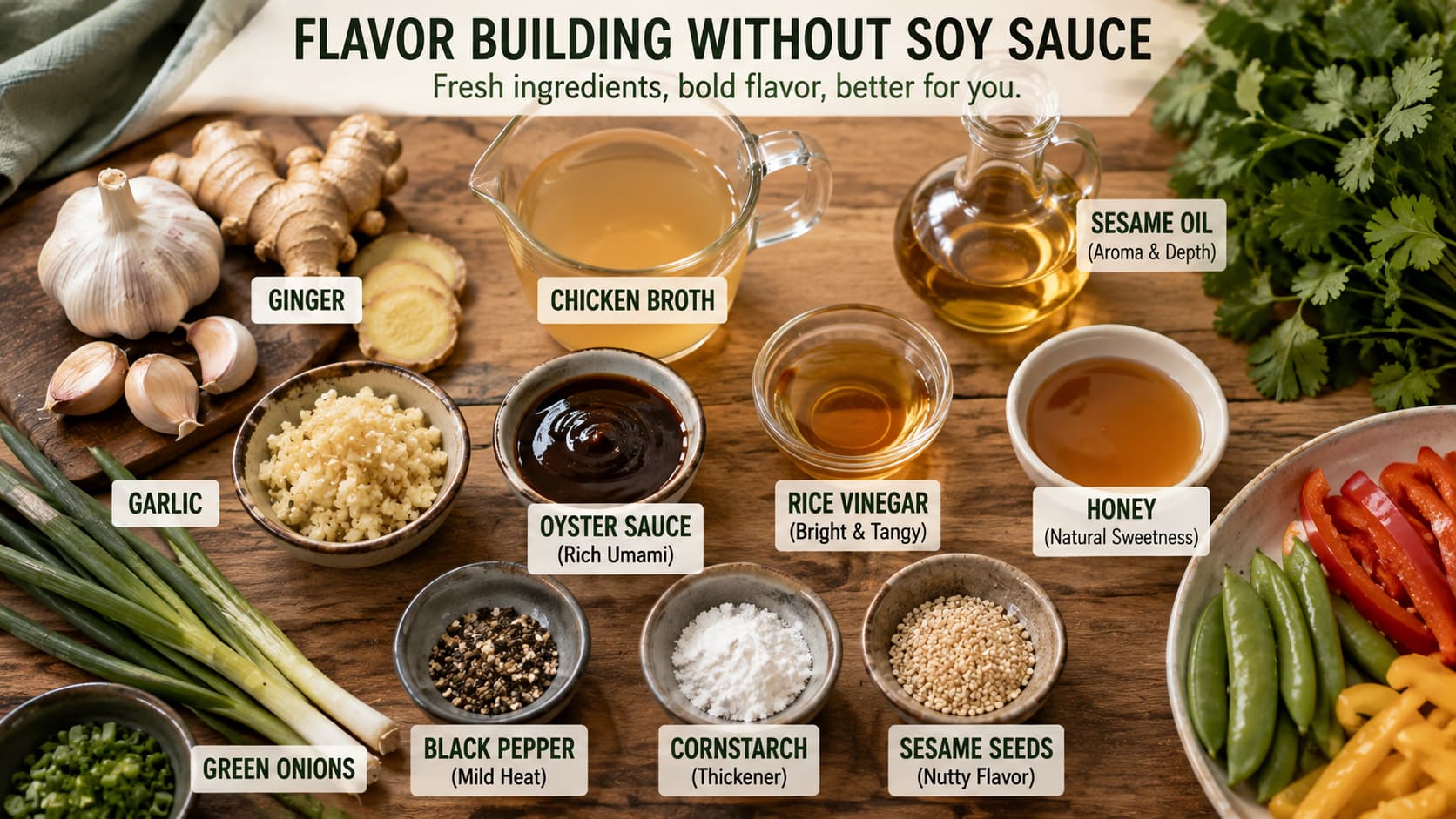
For example, a combination of chicken broth, garlic, ginger, sesame oil, rice vinegar, and a small amount of oyster sauce creates a flavorful base that complements chicken and vegetables beautifully. You can also customize the flavor depending on your dietary needs or personal preferences.
If you’re looking for healthier options, our Healthy Chicken Stir Fry shows how fresh ingredients naturally create bold flavor without relying on excessive sodium.
Benefits of Making Stir Fry Without Soy Sauce
There are several reasons people intentionally prepare stir fry without soy sauce. For some, it’s a dietary necessity. For others, it’s simply an opportunity to explore new flavors.
- Lower sodium meals.
- Suitable for people with soy allergies.
- Easy to adapt for gluten-free diets using appropriate substitutes.
- Allows more control over the final flavor profile.
- Encourages creativity with herbs, spices, and homemade sauces.
Kitchen Secret: Professional cooks rarely rely on a single ingredient for flavor. Instead, they layer aromatics, acids, fats, and umami-rich ingredients to create a balanced sauce that tastes more complex than soy sauce alone.
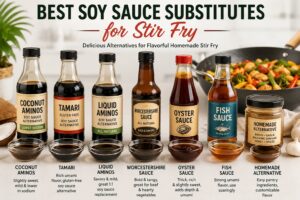
The Best Soy Sauce Substitutes for Stir Fry
If you’re making a stir fry without soy sauce, choosing the right substitute depends on why you’re avoiding soy sauce in the first place. Some alternatives closely mimic its savory flavor, while others create a completely different—but equally delicious—taste. The goal is to replace the saltiness and umami that soy sauce normally provides without overpowering the other ingredients.
Fortunately, there are several excellent options available at most grocery stores, and you can even make a flavorful stir fry sauce using ingredients you may already have at home.

| Substitute | Best For | Flavor Profile |
|---|---|---|
| Coconut Aminos | Soy-free & gluten-free diets | Mild, slightly sweet, savory |
| Oyster Sauce | Chicken, beef, and vegetable stir fry | Rich, savory, slightly sweet |
| Worcestershire Sauce | Extra umami flavor | Tangy, savory, complex |
| Liquid Aminos | General soy sauce replacement | Salty and savory |
| Homemade Broth Sauce | Low-sodium cooking | Fresh, customizable flavor |
Coconut Aminos
Coconut aminos is one of the most popular choices for making a stir fry without soy sauce. Despite its name, it doesn’t taste like coconut. Instead, it’s made from fermented coconut blossom sap and offers a mild, naturally sweet flavor with much less sodium than traditional soy sauce.
It works especially well in chicken, shrimp, and vegetable stir fries because it blends easily with garlic, ginger, sesame oil, and rice vinegar.
Oyster Sauce
Oyster sauce is another excellent option if you aren’t avoiding shellfish. It delivers deep umami flavor and creates a glossy finish that coats meat and vegetables beautifully. Since oyster sauce is thicker than soy sauce, you may want to thin it slightly with chicken broth or water before adding it to the pan.
If you’d like to learn more about using oyster sauce effectively, check out our guide on The Ultimate Chicken Stir Fry Sauce Guide.
Tip: Oyster sauce already contains plenty of flavor, so taste your stir fry before adding extra salt. A little usually goes a long way.
Homemade Stir Fry Sauce Without Soy Sauce
If you prefer complete control over the ingredients, making your own sauce is one of the easiest ways to prepare a flavorful stir fry without soy sauce. A homemade sauce lets you adjust the sodium level, sweetness, and acidity to match your taste.
A balanced homemade sauce often includes:
- Chicken or vegetable broth
- Fresh garlic
- Fresh ginger
- Sesame oil
- Rice vinegar
- Cornstarch for thickening
- A small amount of honey or brown sugar for balance
These ingredients create layers of flavor that complement fresh vegetables and proteins without needing traditional soy sauce.
Kitchen Secret: Add the sauce during the final minute of cooking. This allows it to coat every ingredient evenly without reducing too much or becoming overly thick.
If you enjoy experimenting with different flavor combinations, our guide to the best soy sauce substitutes for stir fry explores even more replacement options for different dietary needs and cooking styles.
How to Build Big Flavor Without Soy Sauce
Making a delicious stir fry without soy sauce isn’t about finding one perfect replacement—it’s about combining ingredients that work together. Professional chefs build flavor in layers, allowing every ingredient to contribute something unique. When you understand this approach, you can create stir fries that taste balanced and satisfying without depending on soy sauce.
Think of your stir fry as a combination of five key flavor elements: savory, salty, aromatic, sweet, and acidic. When all five are present, the finished dish tastes complete.

Start with Aromatics
Garlic and fresh ginger are the foundation of many great stir fry recipes. Cooking them briefly in hot oil releases their natural oils and creates an incredible aroma before any vegetables or meat are added.
Green onions, shallots, and even finely chopped onions also add sweetness and depth. These ingredients help compensate for the missing richness that soy sauce normally provides.
Choose an Umami-Rich Ingredient
Every stir fry without soy sauce still needs umami, often called the fifth taste. Umami makes food taste rich, savory, and satisfying.
Excellent sources of umami include:
- Oyster sauce
- Mushrooms
- Mushroom powder
- Tomato paste (in small amounts)
- Chicken or beef broth
- Parmesan rind in homemade broth
- Nutritional yeast
Even using just one or two of these ingredients can dramatically improve the flavor of your stir fry.
Kitchen Secret: Mushrooms naturally contain glutamates, the same compounds responsible for the savory taste found in fermented soy sauce. Finely chopped mushrooms almost disappear into the sauce while boosting its depth of flavor.
Balance Sweetness and Acidity
A small amount of sweetness balances savory ingredients and prevents the sauce from tasting flat. Honey, maple syrup, or brown sugar are common choices, but only a small amount is needed.
Adding a splash of rice vinegar or fresh lime juice at the end brightens the entire dish and helps the flavors stand out.
This combination creates a more complex taste than relying on salt alone.
Don’t Forget Healthy Fats
Sesame oil is one of the easiest ways to give a stir fry without soy sauce an authentic stir fry aroma. Because toasted sesame oil has a strong flavor, it’s usually added near the end of cooking rather than at the beginning.
You can also use:
- Avocado oil
- Peanut oil
- Canola oil
- Light olive oil
These oils tolerate the high heat needed for stir frying while allowing the fresh ingredients to shine.
Common Mistakes to Avoid
Even though making a stir fry without soy sauce is simple, a few common mistakes can leave the final dish tasting bland or watery.
- Adding too much substitute sauce at once.
- Skipping garlic and ginger.
- Using low heat instead of high heat.
- Overcrowding the pan.
- Adding the sauce too early.
- Not tasting and adjusting the seasoning before serving.
Warning: Many soy sauce substitutes already contain salt. Always taste your sauce before adding extra salt, especially when using oyster sauce, Worcestershire sauce, or packaged broth.
If you’re interested in creating healthier versions of classic stir fry dishes, our Low Sodium Soy Sauce vs. Regular Soy Sauce guide explains how sodium levels affect both flavor and nutrition.
Best Ingredients for a Stir Fry Without Soy Sauce
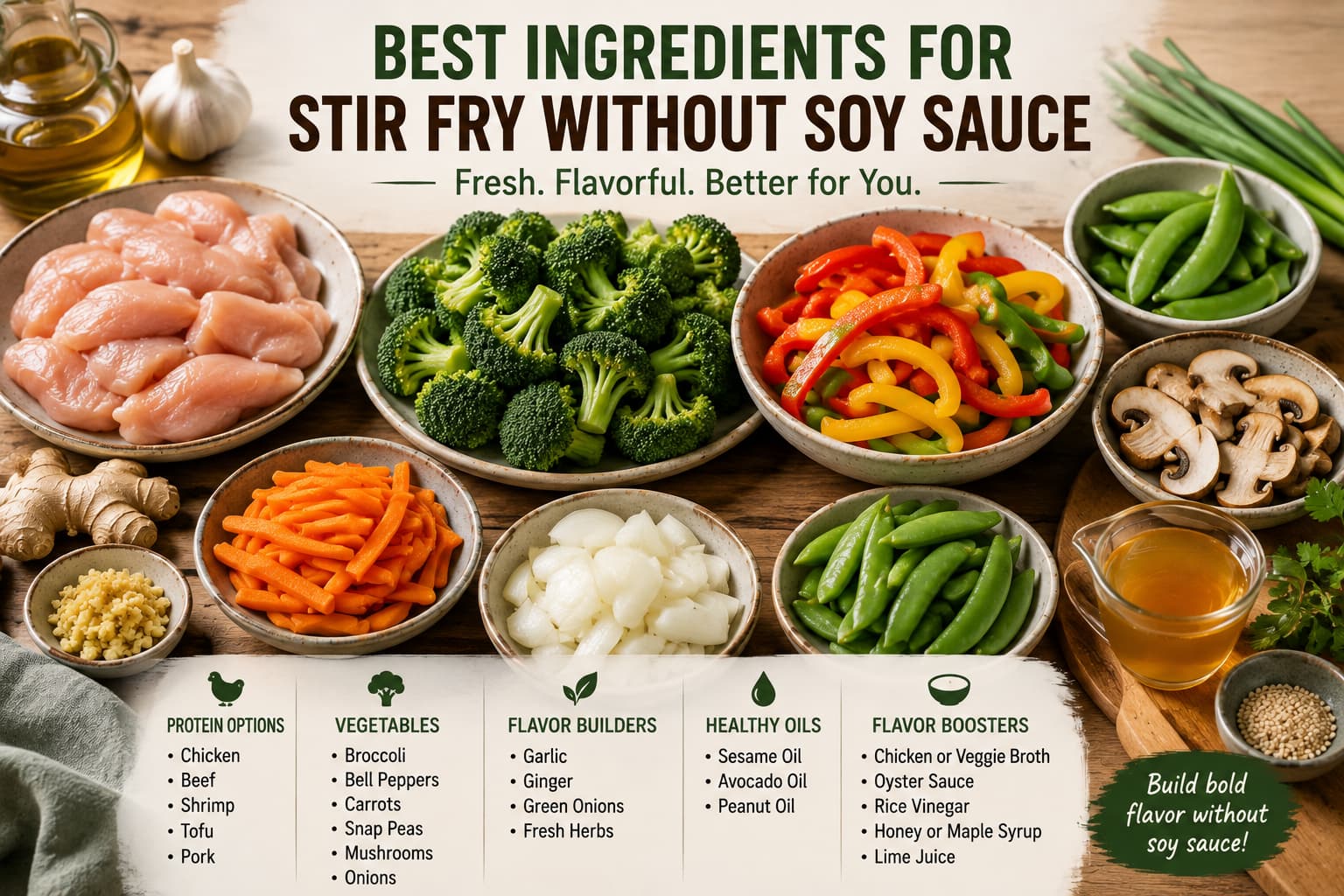
One of the biggest advantages of making a stir fry without soy sauce is its flexibility. Almost any protein or vegetable can work well as long as it’s paired with a balanced sauce and cooked over high heat. Fresh ingredients provide natural flavor, allowing the seasonings to enhance rather than overpower the dish.
Best Proteins
Lean proteins absorb homemade sauces beautifully, making them excellent choices for a stir fry without soy sauce. Slice meat into thin, even pieces so it cooks quickly and stays tender.
- Chicken breast
- Chicken thighs
- Beef sirloin
- Shrimp
- Pork tenderloin
- Tofu
- Tempeh
If you’re looking for easy meal ideas, try our Chicken Veggie Stir Fry or Chicken Broccoli Stir Fry. Both recipes can easily be adapted by replacing soy sauce with one of the alternatives discussed earlier.
Best Vegetables
Colorful vegetables not only improve nutrition but also add natural sweetness and texture. Mixing several vegetables creates a more balanced stir fry and helps every bite taste different.
- Broccoli florets
- Bell peppers
- Carrots
- Snow peas
- Snap peas
- Mushrooms
- Baby corn
- Bok choy
- Zucchini
- Onions
To maintain their crisp-tender texture, cook harder vegetables first, followed by softer vegetables that require less time.
Tip: Cut vegetables into similar-sized pieces so they cook evenly. Uniform pieces also make the finished stir fry look more appealing.
Adapting Stir Fry for Different Dietary Needs
Another benefit of preparing a stir fry without soy sauce is how easily it can fit different dietary preferences. With a few simple ingredient swaps, you can customize the meal for your family’s needs without sacrificing flavor.
Low-Sodium
If you’re reducing sodium, use unsalted chicken or vegetable broth as the base of your sauce. Fresh garlic, ginger, herbs, black pepper, and a squeeze of citrus provide plenty of flavor without relying on salt.
You can also read our comparison of Low Sodium Soy Sauce vs. Regular Soy Sauce to understand how different products affect overall sodium intake.
Gluten-Free
Many traditional soy sauces contain wheat, making them unsuitable for people with gluten intolerance or celiac disease. Fortunately, there are several gluten-free alternatives available, including coconut aminos and certified gluten-free sauces.
Our guide to Gluten-Free Stir Fry Sauces explains which options work best for different recipes.
Low-Carb and Keto
A stir fry without soy sauce can also fit a low-carb or ketogenic lifestyle. Skip sugary sauces and use healthy fats, broth, garlic, ginger, sesame oil, and low-carb vegetables such as broccoli, zucchini, mushrooms, cabbage, and spinach.
For more ideas, explore our Low-Carb Keto Stir Fry Sauce Guide.
Pros
- Easy to customize for different diets.
- Can reduce sodium intake.
- Suitable for people avoiding soy.
- Encourages fresh, whole ingredients.
- Creates unique flavor combinations.
Cons
- May require additional seasoning.
- Some substitutes are more expensive.
- Flavor differs from traditional soy sauce.
- Requires balancing multiple ingredients.
How to Store and Reheat Stir Fry Without Soy Sauce
A freshly cooked stir fry without soy sauce always delivers the best flavor and texture, but leftovers can still taste excellent when stored properly. Following safe food storage practices helps maintain quality while reducing food waste.
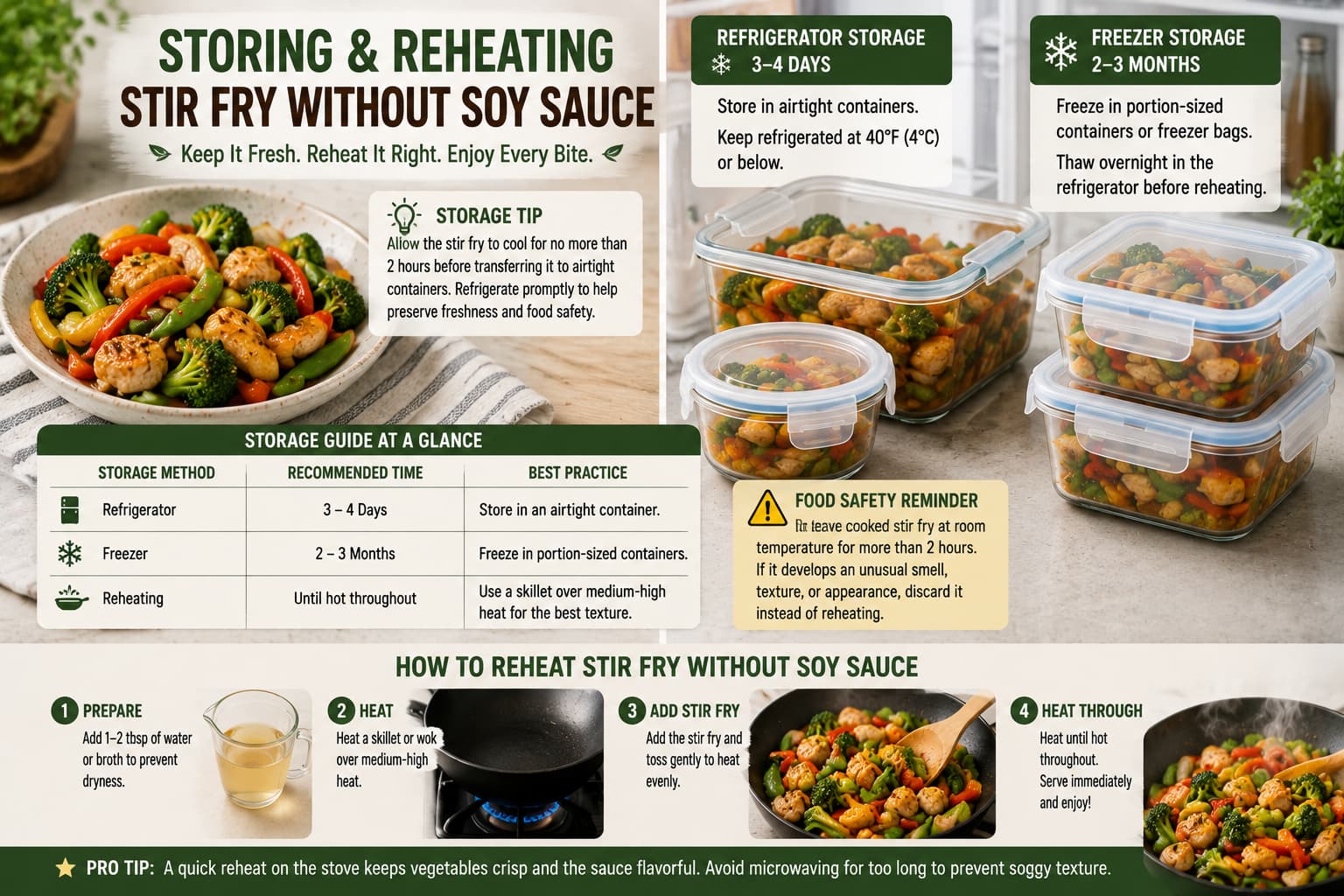
Storage Tip: Allow the stir fry to cool for no more than two hours before transferring it to airtight containers. Refrigerate promptly to help preserve freshness and food safety.
| Storage Method | Recommended Time | Best Practice |
|---|---|---|
| Refrigerator | 3–4 days | Store in an airtight container. |
| Freezer | 2–3 months | Freeze in portion-sized containers. |
| Reheating | Until hot throughout | Use a skillet over medium-high heat for the best texture. |
When reheating, avoid overcooking the vegetables. A quick toss in a hot skillet warms the food evenly while helping vegetables stay crisp. If the sauce has thickened during storage, add a tablespoon or two of water or broth to loosen it.
Warning: Do not leave cooked stir fry at room temperature for more than two hours. If it develops an unusual smell, texture, or appearance, discard it instead of reheating.
Expert Tips for the Best Stir Fry Without Soy Sauce
Making a flavorful stir fry without soy sauce becomes much easier when you follow a few professional cooking techniques. These small adjustments can make a noticeable difference in both taste and texture.
- Preheat the wok or skillet before adding oil.
- Cook ingredients in batches instead of overcrowding the pan.
- Slice meat thinly against the grain for maximum tenderness.
- Prepare all ingredients before turning on the heat.
- Add delicate vegetables during the final few minutes of cooking.
- Taste the sauce before serving and adjust acidity, sweetness, or salt if needed.
- Finish with a drizzle of toasted sesame oil for extra aroma.
Kitchen Secret: A squeeze of fresh lime juice or a sprinkle of chopped green onions just before serving brightens the entire dish and gives a homemade stir fry a fresh, restaurant-quality finish.
If you’re looking for more inspiration, these chicken stir fry recipes are easy to customize with soy sauce alternatives:
- Garlic Chicken Stir Fry
- Chicken Mushroom Stir Fry
- Spicy Chicken Stir Fry
- Honey Garlic Chicken Stir Fry
Frequently Asked Questions
Can you make stir fry without soy sauce and still get good flavor?
Yes. A stir fry without soy sauce can be just as flavorful by combining ingredients like garlic, ginger, broth, sesame oil, coconut aminos, oyster sauce, rice vinegar, and fresh herbs. The key is balancing savory, salty, sweet, and acidic flavors.
What is the best substitute for soy sauce in stir fry?
Coconut aminos is one of the most popular soy-free substitutes because it provides a mild savory flavor with less sodium. Oyster sauce, Worcestershire sauce, liquid aminos, and homemade broth-based sauces are also excellent choices depending on your dietary needs.
Will stir fry taste different without soy sauce?
Yes, the flavor will be different, but not necessarily worse. A well-balanced stir fry without soy sauce can be just as delicious while offering a lighter, fresher taste that allows the vegetables and protein to stand out.
Is stir fry without soy sauce healthier?
It can be. Many soy sauce alternatives contain less sodium, and making your own sauce allows you to control the amount of salt, sugar, and other ingredients used in the recipe.
Can I make a gluten-free stir fry without soy sauce?
Absolutely. Using gluten-free alternatives such as coconut aminos or certified gluten-free sauces makes it easy to prepare a flavorful stir fry that fits a gluten-free lifestyle.
What vegetables work best in a stir fry without soy sauce?
Broccoli, bell peppers, carrots, mushrooms, snap peas, snow peas, onions, zucchini, and bok choy all work well because they add natural sweetness, texture, and color to the finished dish.
Final Thoughts
If you’ve been wondering whether you can make a stir fry without soy sauce, the answer is a confident yes. While soy sauce is a traditional ingredient in many stir fry recipes, it’s far from the only way to create a rich, satisfying meal. By combining fresh aromatics, flavorful broths, healthy oils, and umami-rich ingredients, you can prepare a stir fry that’s every bit as delicious.
Whether you’re avoiding soy because of allergies, reducing sodium, following a gluten-free diet, or simply experimenting with new flavors, there are plenty of excellent alternatives available. The most important step is learning how to balance savory, sweet, salty, and acidic ingredients so every bite is full of flavor.
With a little practice, making a homemade stir fry without soy sauce becomes just as easy as using traditional soy sauce—and it opens the door to countless new flavor combinations you may end up enjoying even more.
🍽️ You Might Also Like



📧 Save This Recipe For Later
Enter your email and we will send this recipe directly to your inbox.