
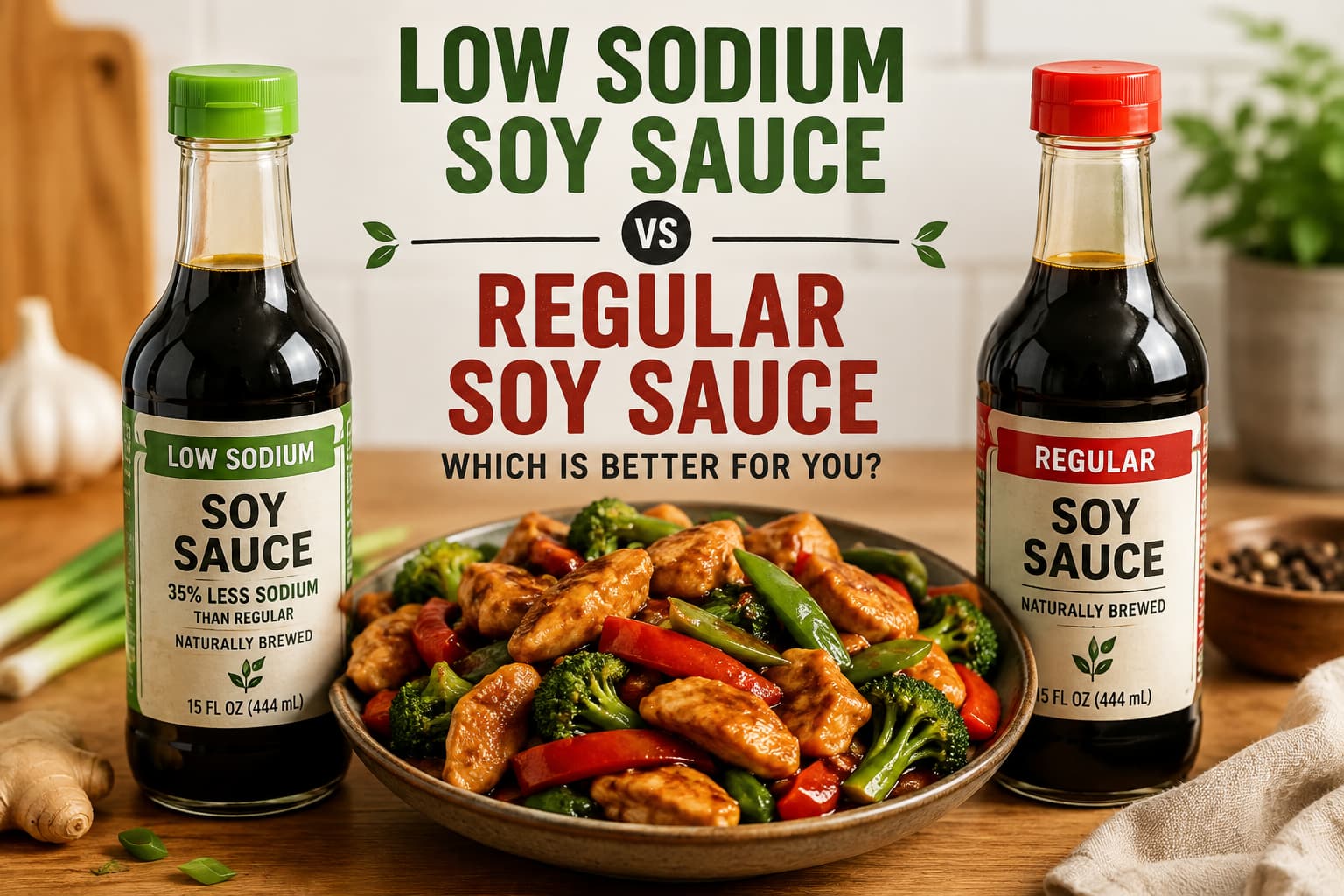
Low-Sodium Soy Sauce vs. Regular Soy Sauce
Low-Sodium Soy Sauce vs. Regular Soy Sauce: Which Is Better for Your Cooking?
Soy sauce is one of the most important ingredients in stir-fry cooking, marinades, dipping sauces, and countless Asian-inspired recipes. When shopping at the grocery store, however, you’ll often see two similar-looking options on the shelf: regular soy sauce and low-sodium soy sauce. While both add savory umami flavor, they are not exactly the same. Understanding low sodium soy sauce vs regular can help you choose the right bottle for your cooking style, dietary needs, and favorite recipes.
Many home cooks assume low-sodium soy sauce is simply a healthier version of regular soy sauce. In reality, the differences go beyond sodium content. Flavor intensity, saltiness, balance, and even the way each sauce performs in marinades and stir-fries can vary. Choosing the wrong one may leave your food tasting either too salty or lacking the bold flavor you’re expecting.
Whether you’re preparing a quick weeknight dinner or perfecting a restaurant-quality stir-fry, knowing when to use each type of soy sauce makes a noticeable difference. If you’re still deciding which soy sauce to buy, you may also find our guide on the best soy sauce for chicken stir fry helpful before selecting a bottle.
Quick Answer
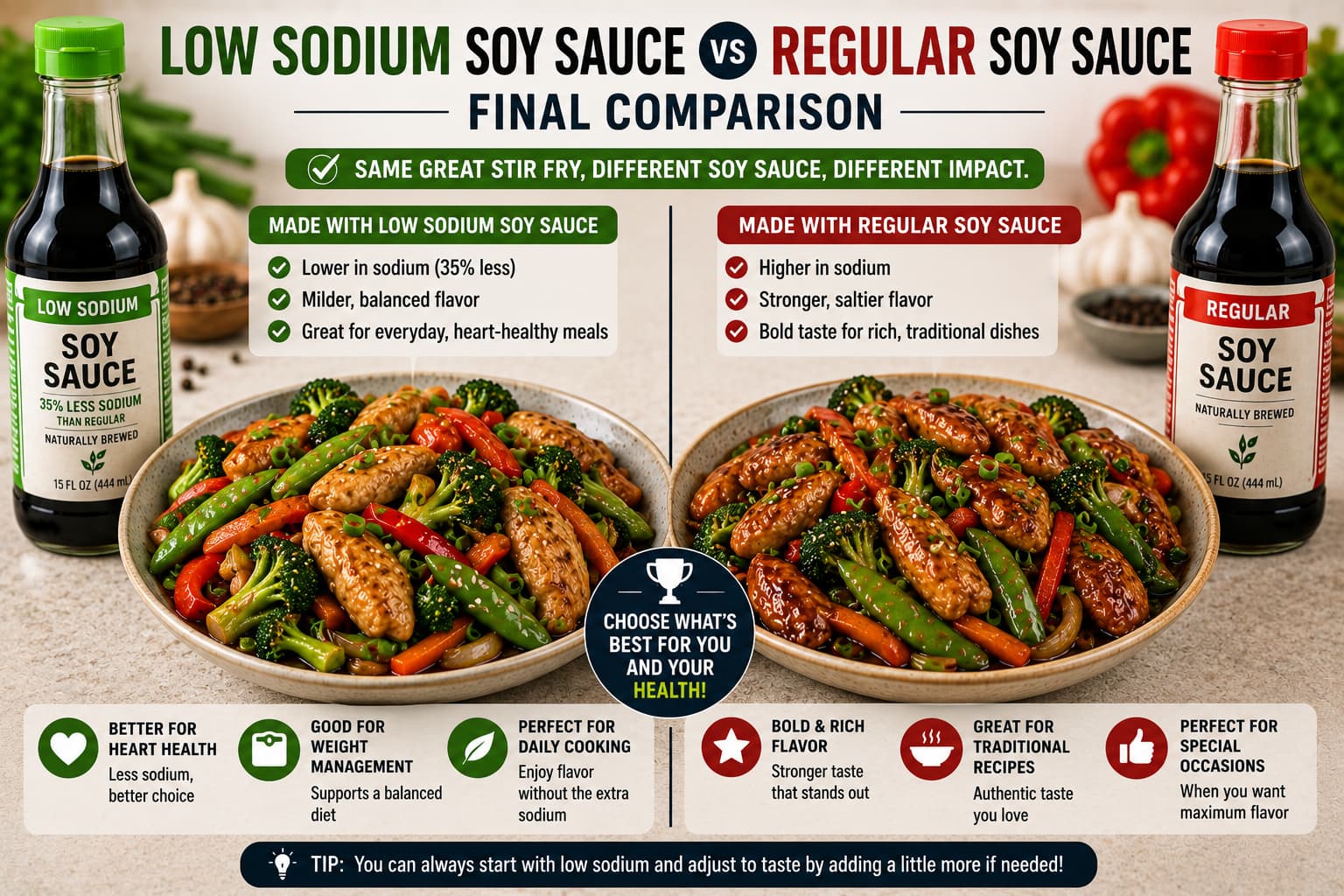
Low sodium soy sauce vs regular comes down to salt content and flavor balance. Low-sodium soy sauce typically contains about 35–50% less sodium than regular soy sauce while still delivering rich umami flavor. Regular soy sauce provides a stronger salty taste and is often preferred for traditional recipes, whereas low-sodium soy sauce is an excellent choice for people watching their sodium intake or wanting greater control over seasoning during cooking.
| Feature | Low-Sodium Soy Sauce | Regular Soy Sauce |
|---|---|---|
| Sodium | About 35–50% less | Higher sodium |
| Saltiness | Milder | Stronger |
| Umami Flavor | Balanced | Bold and intense |
| Best For | Health-conscious cooking | Traditional recipes |
| Seasoning Control | Easier to adjust | Requires more careful seasoning |
Table of Contents
- What Is the Difference Between Low-Sodium Soy Sauce and Regular Soy Sauce?
- How Sodium Levels Compare
- Flavor Differences You Should Know
- Which Soy Sauce Is Healthier?
- Best Uses for Each Type of Soy Sauce
- Can You Substitute One for the Other?
- Buying Tips
- Common Mistakes to Avoid
- Storage and Shelf Life
- Frequently Asked Questions
- Final Thoughts
What Is the Difference Between Low-Sodium Soy Sauce and Regular Soy Sauce?
The biggest distinction in low sodium soy sauce vs regular is exactly what the name suggests—sodium content. Manufacturers reduce the amount of salt during production while keeping much of the fermented soybean flavor intact. As a result, low-sodium soy sauce tastes less salty but still offers the savory depth that makes soy sauce such an essential ingredient.
Regular soy sauce contains more salt, which naturally enhances flavor and acts as a preservative. Its bold taste works well in recipes where soy sauce is meant to be a dominant seasoning. Low-sodium varieties, on the other hand, allow the natural flavors of vegetables, chicken, beef, seafood, and aromatics like garlic and ginger to shine through without becoming overly salty.
Kitchen Tip: If you enjoy making homemade stir-fries frequently, keeping both regular and low-sodium soy sauce in your pantry gives you more flexibility. You can choose the one that best matches your recipe and your preferred level of saltiness.
How Sodium Levels Compare
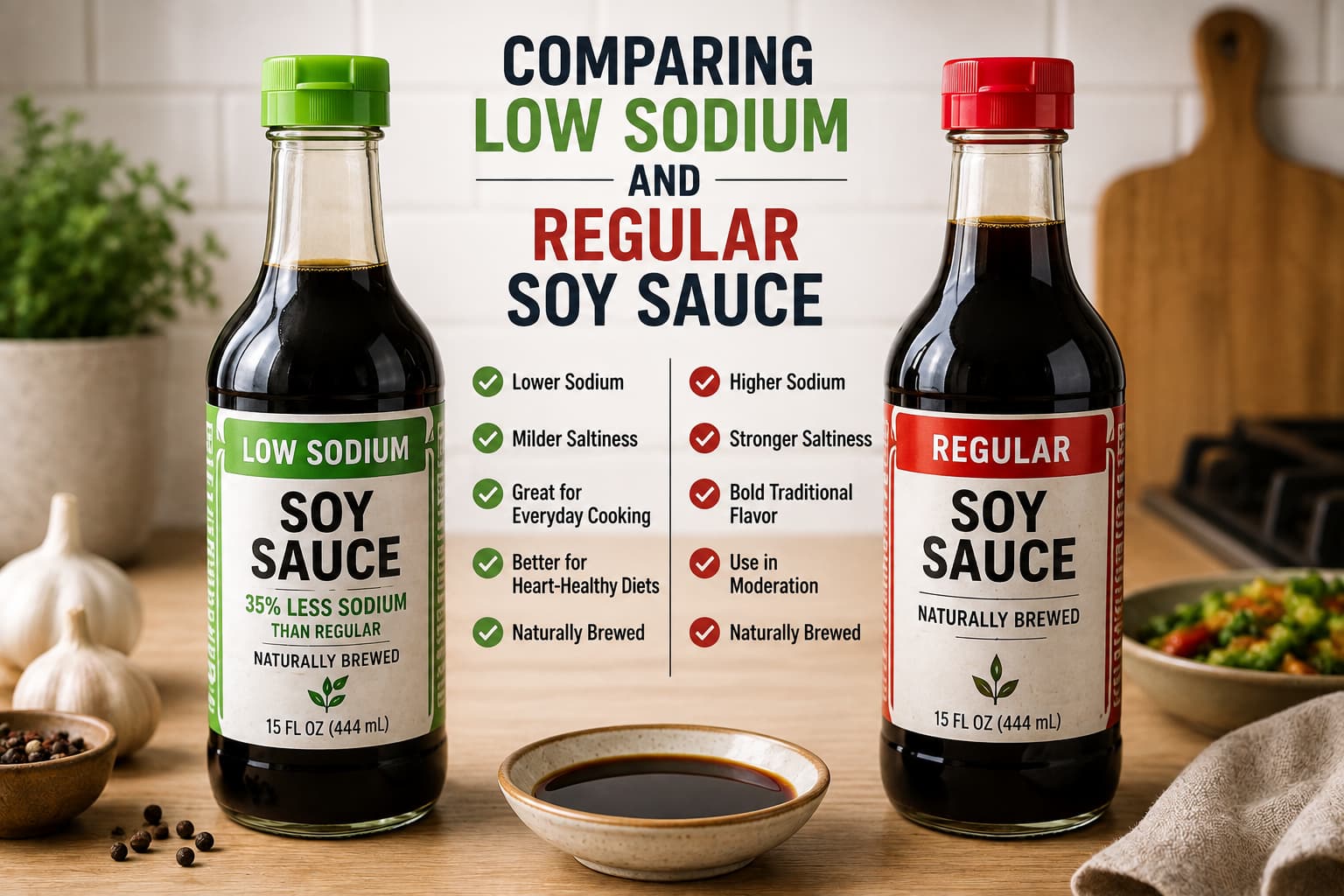
When comparing low sodium soy sauce vs regular, the sodium content is the most noticeable difference. While exact amounts vary by brand, low-sodium soy sauce generally contains about 35% to 50% less sodium than regular soy sauce. That reduction can make a significant difference if you cook with soy sauce several times a week or are trying to lower your overall salt intake.
For example, one tablespoon of regular soy sauce often contains between 850 and 1,000 milligrams of sodium. In contrast, a tablespoon of low-sodium soy sauce usually contains around 500 to 600 milligrams. Although that’s still a considerable amount of sodium, it gives you more flexibility when seasoning dishes with other salty ingredients like oyster sauce, hoisin sauce, or chicken broth.
| Comparison | Low-Sodium Soy Sauce | Regular Soy Sauce |
|---|---|---|
| Average Sodium per Tablespoon | 500–600 mg | 850–1,000 mg |
| Saltiness | Moderate | High |
| Best for Daily Cooking | Excellent | Use in moderation |
| Easy to Control Seasoning | Yes | Less forgiving |
| Recommended for Low-Sodium Diets | Yes | No |
Remember that soy sauce is rarely the only source of sodium in a meal. Stir-fry sauces often include ingredients such as oyster sauce, teriyaki sauce, fish sauce, or bouillon, all of which contribute additional salt. Choosing low-sodium soy sauce helps balance these flavors without making the finished dish overly salty.
Expert Secret: Many professional chefs prefer cooking with low-sodium soy sauce because it allows them to build flavor gradually. They can always add more seasoning at the end, but it’s nearly impossible to fix a sauce that has become too salty.
Does Lower Sodium Mean Less Flavor?
One of the biggest misconceptions in the low sodium soy sauce vs regular debate is that reducing sodium also removes flavor. Fortunately, that’s not true. Most high-quality low-sodium soy sauces are naturally brewed, allowing them to retain the rich umami taste created during fermentation.
The main difference is that the savory soybean flavor becomes more noticeable because it’s no longer overshadowed by intense saltiness. Many people are surprised to discover that low-sodium soy sauce actually tastes more balanced, especially in recipes that contain fresh vegetables, garlic, ginger, sesame oil, and other aromatic ingredients.
Regular soy sauce, on the other hand, delivers an immediate salty punch that works well in recipes where bold seasoning is desired. It can also provide a slightly stronger finish when used as a dipping sauce for dumplings, sushi, or spring rolls.

When Low-Sodium Soy Sauce Shines
- Healthy chicken stir-fries with plenty of vegetables.
- Meal prep recipes where sodium can build up over several servings.
- Marinades that already contain salty ingredients.
- Homemade sauces where you want complete control over seasoning.
- Recipes for anyone following a heart-conscious eating plan.
If you’re looking for healthier dinner ideas, our Healthy Chicken Stir Fry is an excellent example of using low-sodium soy sauce to create bold flavor without excessive salt.
Cooking Tip: Taste your sauce near the end of cooking instead of seasoning early. This is especially important when using low-sodium soy sauce because the sauce naturally concentrates as it reduces.
Flavor Differences: Low-Sodium Soy Sauce vs. Regular Soy Sauce
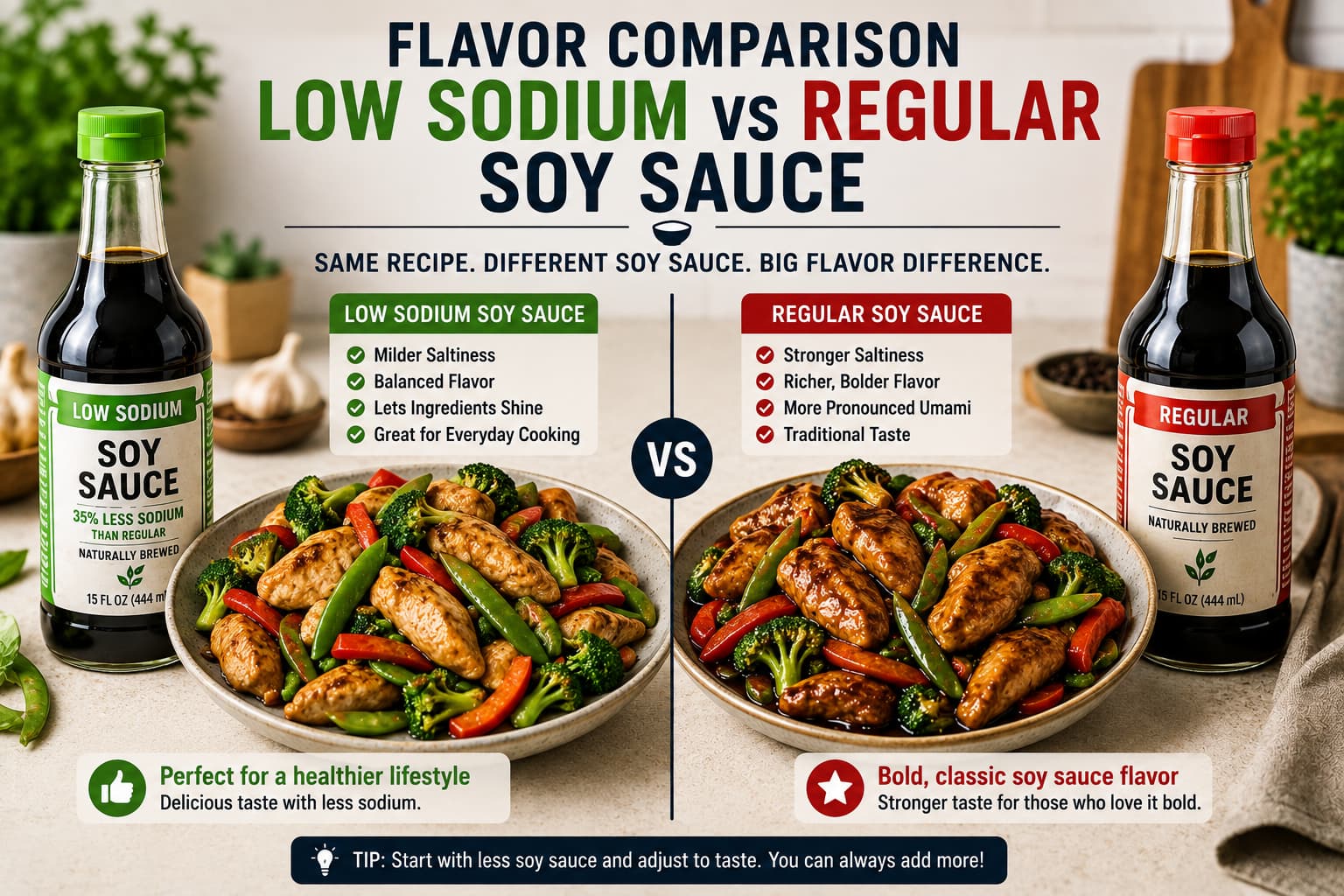
Beyond sodium levels, the most important factor in low sodium soy sauce vs regular is how each one affects the overall flavor of your food. Both are made from fermented soybeans, wheat, water, and salt, but the difference in salt concentration changes the way your taste buds experience the sauce.
Regular soy sauce has a bold, salty flavor that immediately stands out. It adds a strong savory kick and is often used in traditional Asian recipes where soy sauce is one of the primary seasonings. Because of its higher sodium content, even a small amount can dramatically change the taste of a dish.
Low-sodium soy sauce, however, has a gentler profile. Instead of leading with saltiness, it allows the fermented soybean flavor and natural umami notes to become more noticeable. This creates a more balanced taste that complements ingredients rather than overpowering them.
| Flavor Characteristic | Low-Sodium Soy Sauce | Regular Soy Sauce |
|---|---|---|
| Saltiness | Mild to moderate | Strong |
| Umami Flavor | Well-balanced | Rich and intense |
| Soybean Flavor | More noticeable | Slightly masked by salt |
| Overall Balance | Smooth | Bold |
| Risk of Over-Seasoning | Low | Higher |
If you’re cooking for children or family members who prefer lighter flavors, low-sodium soy sauce often creates a more enjoyable balance. Regular soy sauce is better suited for recipes that rely on a deeper, more robust seasoning.
Which Works Better in Stir-Fries?
For many home cooks, the answer to low sodium soy sauce vs regular depends on what they’re making. Stir-fries cook quickly over high heat, and sauces become more concentrated as moisture evaporates. That means a sauce that tastes perfectly seasoned before cooking may become much saltier once it coats the ingredients.
This is one reason many experienced cooks reach for low-sodium soy sauce when making stir-fries. It provides enough savory flavor while leaving room to adjust the seasoning at the end of cooking if necessary.
Low-Sodium Soy Sauce Is Great For:
- Chicken and vegetable stir-fries.
- Shrimp and seafood stir-fries.
- Meal-prep recipes.
- Light sauces with garlic, ginger, and sesame oil.
- Recipes that include oyster sauce or teriyaki sauce.
Regular Soy Sauce Is Great For:
- Traditional Asian recipes.
- Quick dipping sauces.
- Simple fried rice.
- Marinades with only a few ingredients.
- Recipes where soy sauce is the primary seasoning.
If you enjoy experimenting with different sauces, you may also like our guide to Light Soy Sauce vs. Dark Soy Sauce for Stir-Fry, which explains when each variety delivers the best results.
Cooking Tip: Add soy sauce around the edges of a hot wok instead of pouring it directly over the food. The brief contact with the hot surface caramelizes some of the sauce, creating a deeper aroma and richer flavor.
Can You Substitute One for the Other?
Yes, in most recipes you can substitute one for the other, but a few adjustments will help maintain the intended flavor.
- If replacing regular soy sauce with low-sodium soy sauce, you may need to add a small extra splash after tasting the finished dish.
- If replacing low-sodium soy sauce with regular soy sauce, start with about three-quarters of the amount called for in the recipe, then adjust as needed.
- Always taste before adding extra salt because soy sauce continues to season the dish as it cooks.
Common Mistake: Don’t assume that using more low-sodium soy sauce is always better. Although it contains less sodium than regular soy sauce, it still contributes a significant amount of salt. Taste your food before adding additional soy sauce.
Which Soy Sauce Is Healthier?
When discussing low sodium soy sauce vs regular, many people immediately assume that low-sodium soy sauce is the healthier option. In many situations, that’s true, but the complete answer depends on your overall eating habits, health goals, and how much soy sauce you typically use.
The biggest nutritional advantage of low-sodium soy sauce is its reduced salt content. Most people consume far more sodium than recommended, often without realizing it. Choosing a lower-sodium alternative is one simple way to reduce overall sodium intake while still enjoying the rich umami flavor that soy sauce provides.
However, both products are made using similar ingredients and provide nearly identical calories, carbohydrates, and protein. The primary nutritional difference is the amount of sodium per serving.
| Nutritional Factor | Low-Sodium Soy Sauce | Regular Soy Sauce |
|---|---|---|
| Calories | Very low | Very low |
| Protein | Small amount | Small amount |
| Carbohydrates | Minimal | Minimal |
| Sodium | Lower | Higher |
| Best Choice for Heart-Healthy Eating | Yes | Use in moderation |
If you’re preparing meals at home several times each week, using low-sodium soy sauce can help reduce sodium without dramatically changing the flavor of your favorite dishes.
Expert Secret: Lowering sodium doesn’t have to mean sacrificing flavor. Ingredients like fresh garlic, ginger, green onions, sesame oil, rice vinegar, and toasted sesame seeds naturally enhance umami, making low-sodium soy sauce taste just as satisfying in many recipes.
Who Should Choose Low-Sodium Soy Sauce?
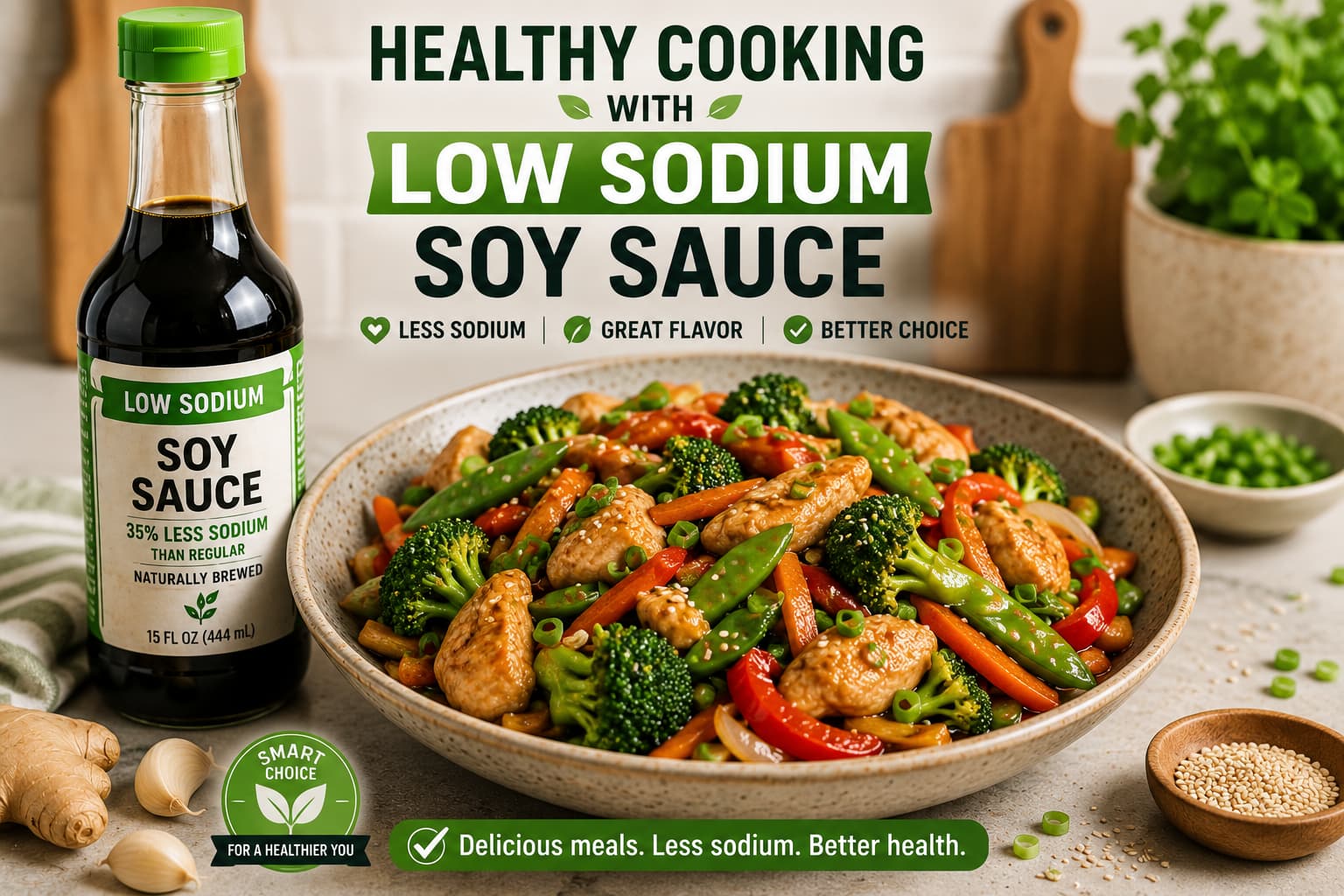
The choice between low sodium soy sauce vs regular often comes down to your cooking style and dietary preferences rather than one product being universally better.
Low-Sodium Soy Sauce Is Ideal For:
- People limiting their sodium intake.
- Families preparing homemade meals several times a week.
- Anyone who likes to adjust seasoning gradually.
- Recipes containing multiple salty sauces.
- Meal prep where sodium can add up across multiple servings.
If healthy weeknight dinners are part of your routine, our Healthy Chicken Stir Fry demonstrates how low-sodium soy sauce can deliver plenty of flavor while keeping sodium under better control.
Regular Soy Sauce Is Best For:
- Traditional Asian recipes.
- Quick marinades.
- Dipping sauces.
- Recipes where bold seasoning is preferred.
- Occasional cooking where sodium isn’t a primary concern.
Advantages of Low-Sodium Soy Sauce
- Contains significantly less sodium.
- Easier to control seasoning.
- Allows natural food flavors to stand out.
- Excellent for everyday cooking.
- Pairs well with fresh vegetables.
Advantages of Regular Soy Sauce
- Stronger traditional flavor.
- Excellent for dipping sauces.
- Requires smaller quantities.
- Creates a bold savory finish.
- Preferred in many authentic recipes.
Kitchen Tip: Many home cooks keep both varieties in the pantry. Use low-sodium soy sauce for everyday meals and regular soy sauce when you want a richer, saltier finish or are following a traditional recipe.
If you’re looking for even more ways to customize your stir-fry sauces, our guides on Best Soy Sauce Substitutes for Stir-Fry and Low-Carb & Keto Stir-Fry Sauce Guide offer excellent alternatives for different dietary needs.
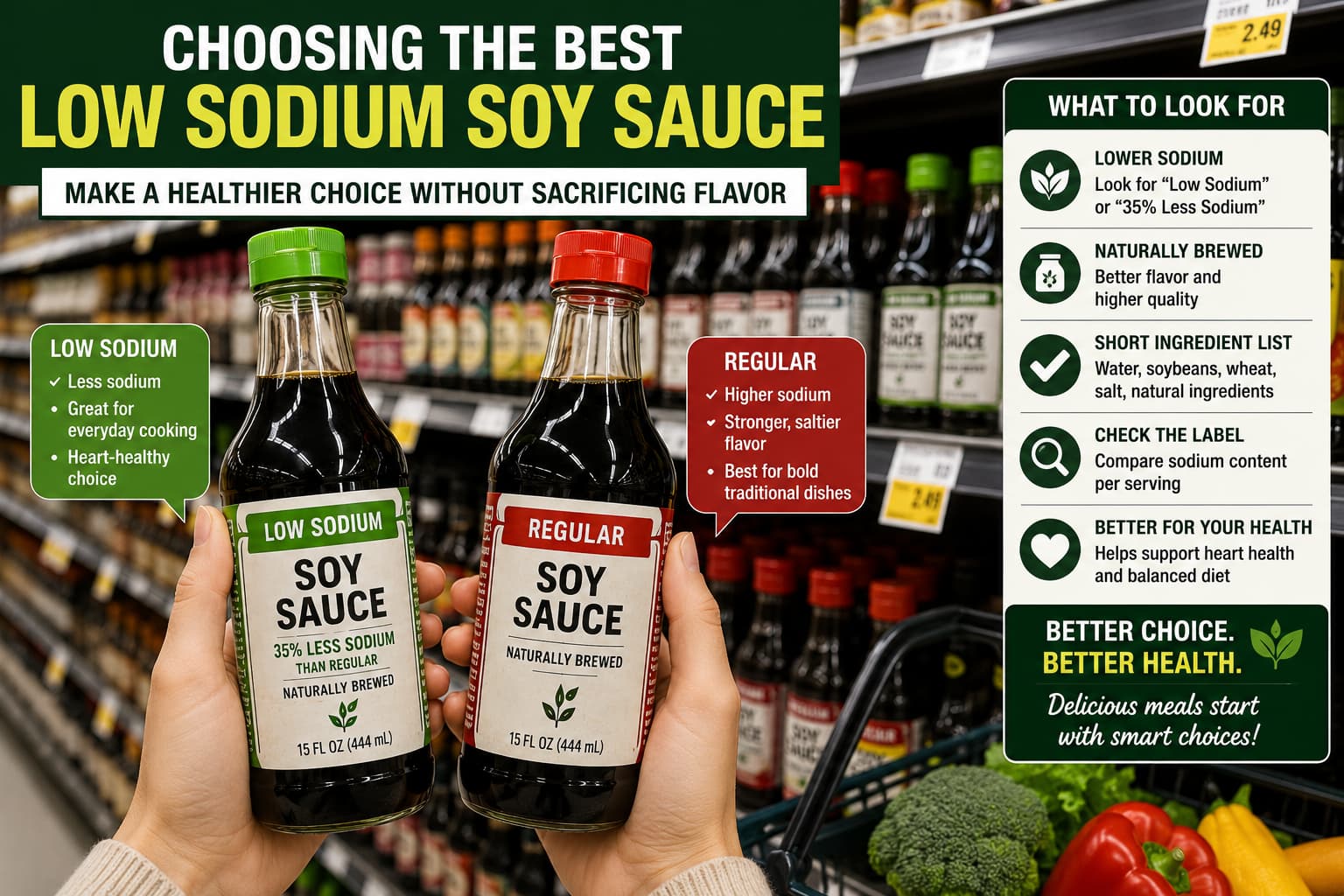
How to Choose the Best Soy Sauce
After comparing low sodium soy sauce vs regular, the next step is knowing what to look for when buying a bottle. Not all soy sauces are made the same. Some are naturally brewed through fermentation, while others are chemically produced to speed up manufacturing. The brewing process has a major impact on flavor, aroma, and overall quality.
Whenever possible, choose a naturally brewed soy sauce. It develops a richer umami flavor through fermentation, giving your stir-fries, marinades, and dipping sauces a more complex taste. Whether you choose a regular or low-sodium version, natural brewing is usually a sign of better quality.
| What to Look For | Why It Matters |
|---|---|
| Naturally Brewed | Produces deeper, more balanced flavor. |
| Low-Sodium Label | Helps reduce overall salt intake. |
| Simple Ingredient List | Fewer unnecessary additives. |
| Trusted Brand | More consistent quality and taste. |
| Fresh Bottle | Better aroma and flavor. |
If you’re unsure which bottle to purchase, our complete guide to the best soy sauce for chicken stir fry compares popular options and explains which varieties work best for different recipes.
Common Mistakes to Avoid
Understanding low sodium soy sauce vs regular is only part of the equation. Even experienced home cooks sometimes make simple mistakes that affect the final flavor of their meals.
1. Adding Too Much Soy Sauce Too Early
As stir-fry sauces reduce over high heat, the flavors become more concentrated. Adding too much soy sauce at the beginning can leave the finished dish much saltier than expected.
2. Assuming Low-Sodium Means Sodium-Free
Low-sodium soy sauce still contains a substantial amount of sodium. Always measure rather than pouring directly from the bottle.
3. Ignoring Other Salty Ingredients
Oyster sauce, teriyaki sauce, fish sauce, bouillon, and even some spice blends contribute additional sodium. Adjust your soy sauce accordingly.
4. Buying Based Only on Price
Higher-quality naturally brewed soy sauces generally provide better flavor, meaning you often need less to season your food.
5. Forgetting to Taste Before Serving
The best cooks always taste their dish just before serving. This final check helps you decide whether it needs more soy sauce, a splash of rice vinegar, or a little sweetness to achieve the perfect balance.
How to Store Soy Sauce Properly
Proper storage helps preserve both flavor and quality regardless of whether you choose low-sodium or regular soy sauce.
- Store unopened bottles in a cool, dry pantry away from direct sunlight.
- Refrigerate after opening to maintain the freshest flavor.
- Always close the cap tightly after each use.
- Avoid storing the bottle near the stove where heat can affect quality.
- Check the expiration date and discard the sauce if it develops an unusual smell, color, or taste.
Because low-sodium soy sauce contains less salt, refrigeration after opening is especially helpful for preserving its flavor over time.
Storage Tip: If you cook stir-fries frequently, keep a small bottle in the refrigerator for daily use and store a larger unopened bottle in the pantry until needed. This helps maintain freshness while reducing waste.
If you’re experimenting with different sauces, you may also enjoy reading Can You Make Stir-Fry Without Soy Sauce? or our Ultimate Chicken Stir-Fry Sauce Guide for additional ideas and flavor combinations.
Frequently Asked Questions
Is low-sodium soy sauce healthier than regular soy sauce?
For most people, yes. In the low sodium soy sauce vs regular comparison, low-sodium soy sauce contains approximately 35–50% less sodium, making it a better choice for those looking to reduce their salt intake while still enjoying rich umami flavor.
Can I replace regular soy sauce with low-sodium soy sauce?
Absolutely. Low-sodium soy sauce works as a direct substitute in nearly all recipes. Taste the dish near the end of cooking and add a small amount if you prefer a stronger soy sauce flavor.
Will low-sodium soy sauce make my stir-fry taste bland?
No. Quality low-sodium soy sauce still delivers excellent umami flavor. Ingredients like garlic, ginger, sesame oil, and green onions help create a flavorful stir-fry without relying solely on salt.
Which soy sauce is better for chicken stir-fry?
Both varieties work well. If you’re making everyday meals, low-sodium soy sauce provides better control over seasoning. Regular soy sauce is ideal when you want a richer, saltier flavor. Try it in our Chicken Stir Fry or Chicken Broccoli Stir Fry recipes.
Does low-sodium soy sauce contain less umami?
No. Naturally brewed low-sodium soy sauce retains the fermented soybean flavor responsible for umami. The reduced salt simply allows those flavors to become more noticeable.
Should soy sauce be refrigerated after opening?
Yes. Refrigeration helps preserve flavor and quality after opening. Although soy sauce has a long shelf life, storing it in the refrigerator keeps it tasting fresher for longer.
Final Thoughts
Choosing between low sodium soy sauce vs regular ultimately depends on your cooking style, personal taste, and dietary goals. If you’re looking to reduce sodium without sacrificing the savory depth that soy sauce brings to your meals, low-sodium soy sauce is an excellent everyday option. It allows you to build flavor gradually and gives you greater control over seasoning.
Regular soy sauce remains a fantastic choice for traditional recipes, dipping sauces, and dishes where a bold, salty finish is desired. Many experienced home cooks keep both varieties on hand so they can select the best one for each recipe.
Whether you’re preparing a healthy chicken stir-fry, experimenting with homemade sauces, or recreating your favorite takeout dishes, understanding the differences between these two soy sauces will help you cook with more confidence and achieve better results every time.
🍽️ You Might Also Like


📧 Save This Recipe For Later
Enter your email and we will send this recipe directly to your inbox.