
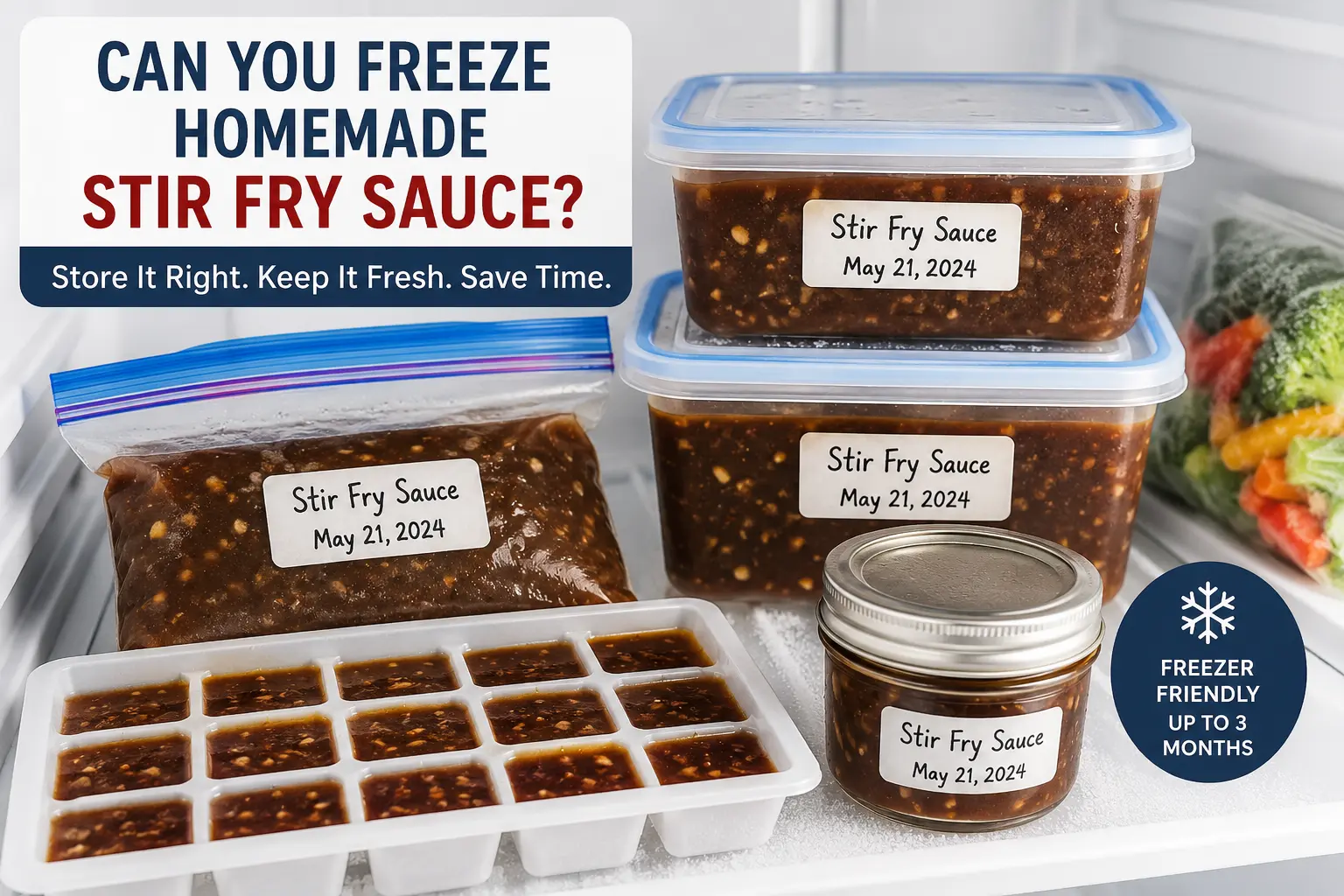
Can You Freeze Homemade Stir Fry Sauce?
Can You Freeze Homemade Stir Fry Sauce?
If you’ve made a fresh batch of stir fry sauce and have leftovers, you may be wondering whether it’s safe to freeze it for later. The good news is that you can freeze homemade stir fry sauce, and doing so is one of the easiest ways to reduce food waste while keeping a flavorful sauce ready for quick weeknight meals.
Most homemade stir fry sauces are made with ingredients like soy sauce, garlic, ginger, sesame oil, vinegar, honey, brown sugar, and cornstarch. These ingredients generally freeze well when stored properly. However, knowing the right freezing method helps preserve the sauce’s flavor, texture, and overall quality.
In this guide, you’ll learn when it’s best to freeze homemade stir fry sauce, how long it lasts in the freezer, the best containers to use, how to thaw it safely, and common mistakes to avoid. You’ll also discover practical storage tips that make meal prep easier and keep your homemade sauce tasting fresh every time.
Quick Answer
Yes, you can freeze homemade stir fry sauce. Most homemade sauces stay at their best for up to 3 months when stored in airtight freezer-safe containers or freezer bags. Leave a little space for expansion, label the container with the date, thaw it overnight in the refrigerator, and whisk the sauce well before using if any ingredients have separated.
Table of Contents
Can You Freeze Homemade Stir Fry Sauce?
Absolutely. If you’re looking for the easiest way to freeze homemade stir fry sauce, you’ll be happy to know that most homemade recipes freeze exceptionally well. Since the sauce usually contains pantry staples rather than delicate dairy products, freezing has very little impact on food safety when done correctly.
Freezing homemade sauce is especially useful if you enjoy meal prepping or regularly make larger batches. Instead of preparing a fresh sauce every time you cook, you can simply thaw a portion whenever you’re making chicken, beef, shrimp, tofu, or vegetable stir fry.
Some sauces may separate slightly after thawing because ingredients like cornstarch and sesame oil naturally react to freezing. Fortunately, this is completely normal. A quick whisk or gentle heating while stirring usually restores a smooth consistency.
Tip: Divide your homemade stir fry sauce into small meal-sized portions before freezing. This allows you to thaw only what you need while keeping the remaining sauce safely frozen.
If you’re preparing sauce specifically for future meals, you may also enjoy our Easy Homemade Stir Fry Sauce, which works perfectly for freezer meal prep and everyday cooking.
Why Freezing Is a Great Option
Choosing to freeze homemade stir fry sauce offers several practical advantages beyond simply extending its shelf life. It helps save time during busy weekdays, reduces food waste, and ensures you always have a flavorful sauce available whenever you need it.
Instead of measuring soy sauce, garlic, ginger, and seasonings every time you cook, you can keep several portions frozen and ready to use. This makes homemade stir fry nearly as convenient as using bottled sauce while giving you complete control over the ingredients.
Freezing also helps preserve the fresh flavors of homemade sauces better than storing them in the refrigerator for extended periods. When frozen soon after preparation, the ingredients retain much of their original taste and aroma.
Whether you’re making Chicken Stir Fry, Garlic Chicken Stir Fry, or Healthy Chicken Stir Fry, having frozen homemade sauce on hand can significantly shorten your meal preparation time.
Which Homemade Stir Fry Sauces Freeze Best?
Not every sauce freezes exactly the same, but most recipes made with common stir fry ingredients hold up remarkably well. If your goal is to freeze homemade stir fry sauce without sacrificing quality, it helps to understand which ingredients are naturally freezer-friendly and which may require a little extra attention after thawing.
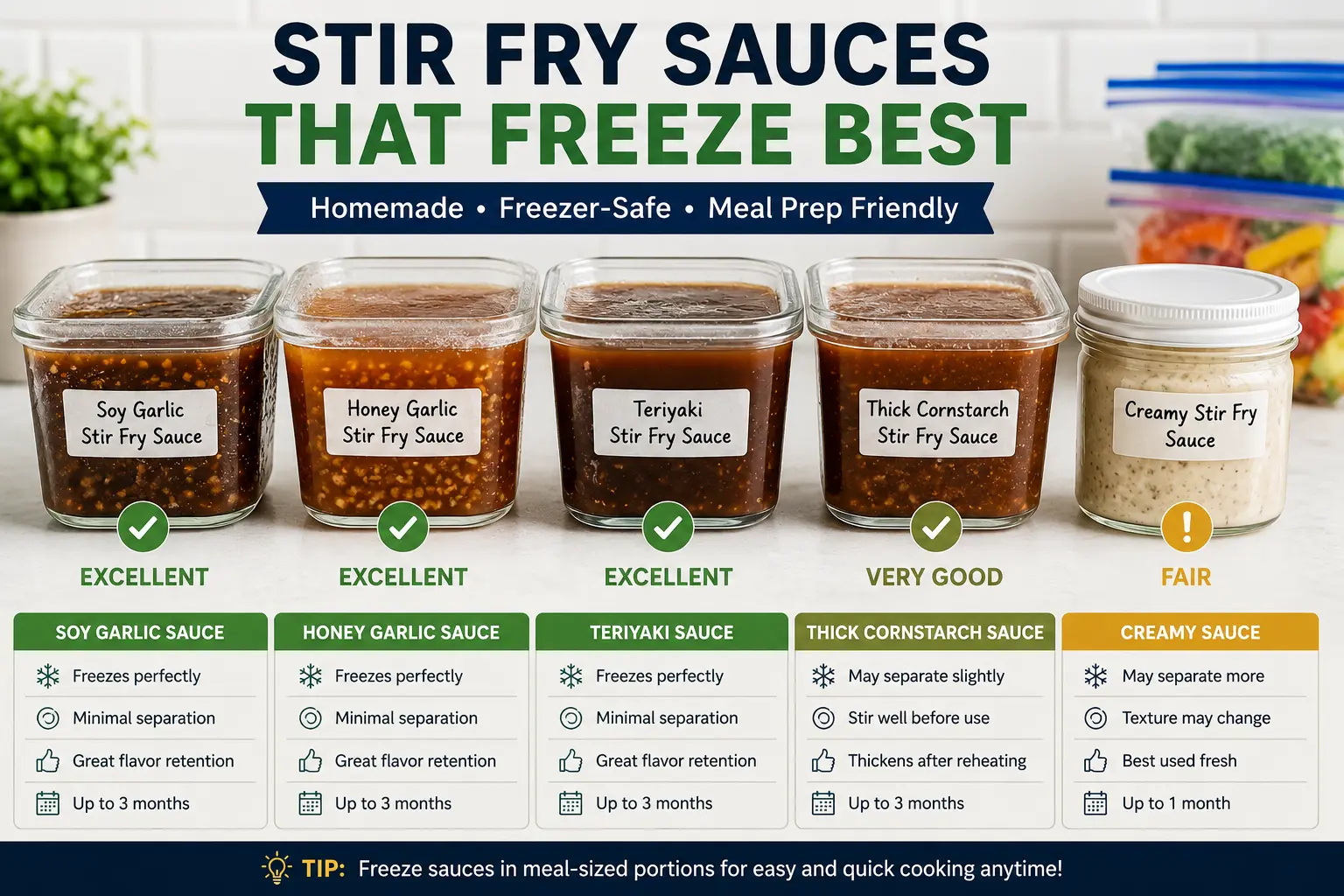
Classic stir fry sauces based on soy sauce, garlic, ginger, rice vinegar, sesame oil, brown sugar, honey, and cornstarch generally maintain their flavor for months in the freezer. Since these ingredients are stable during freezing, they’re excellent choices for batch cooking and meal prep.
On the other hand, sauces containing dairy products such as cream or milk may separate after freezing. Fresh herbs can also lose some of their vibrant color and texture. While these ingredients remain safe to eat, the finished sauce may not look quite as fresh as it did before freezing.
| Sauce Type | Freezes Well? | Notes |
|---|---|---|
| Soy sauce-based stir fry sauce | ✔ Excellent | Minimal texture changes after thawing. |
| Honey garlic stir fry sauce | ✔ Excellent | Stir well before using. |
| Teriyaki-style sauce | ✔ Excellent | May slightly thicken after thawing. |
| Cornstarch-thickened sauce | ✔ Very Good | Whisk while reheating if separated. |
| Cream-based sauces | ⚠ Fair | Can separate and become grainy. |
Kitchen Secret: If you’re making stir fry sauce specifically for freezing, slightly reduce the amount of cornstarch. You can always thicken the sauce while cooking after it has thawed, giving you better control over the final consistency.
If you enjoy experimenting with different flavors, our guide to Best Homemade Stir Fry Sauce Variations includes several freezer-friendly options that are perfect for meal prepping.
How to Freeze Homemade Stir Fry Sauce Properly
The way you package your sauce plays a major role in maintaining its quality. While it’s easy to freeze homemade stir fry sauce, following a few simple storage practices helps prevent freezer burn, unwanted odors, and ingredient separation.
1. Let the Sauce Cool Completely
Never place hot stir fry sauce directly into the freezer. Allow it to cool to room temperature first, then refrigerate briefly if needed. Cooling prevents condensation from forming inside the container, which can create unwanted ice crystals.
2. Choose Freezer-Safe Containers
Glass jars labeled freezer-safe, BPA-free plastic containers, and heavy-duty freezer bags all work well. Many people prefer silicone freezer trays because they create perfectly portioned cubes that can be transferred to freezer bags after freezing.
3. Leave Room for Expansion
Liquids expand as they freeze. Leave about half an inch of empty space at the top of each container to prevent cracking or leaking.
4. Label Every Container
Write both the preparation date and the sauce name. This makes it much easier to rotate older batches first and avoid keeping sauces beyond their best quality period.
Meal Prep Tip: Freeze homemade stir fry sauce in single-meal portions. One container or freezer cube can be quickly thawed whenever you’re preparing vegetables, chicken, shrimp, beef, or tofu.
For even more storage advice, check out our guide on How to Store Homemade Stir Fry Sauce, where we cover refrigeration, containers, and shelf life in greater detail.
How to Thaw Frozen Stir Fry Sauce
Once you freeze homemade stir fry sauce, thawing it correctly is just as important as freezing it. Proper thawing helps preserve the sauce’s flavor, texture, and consistency while keeping it safe to eat.
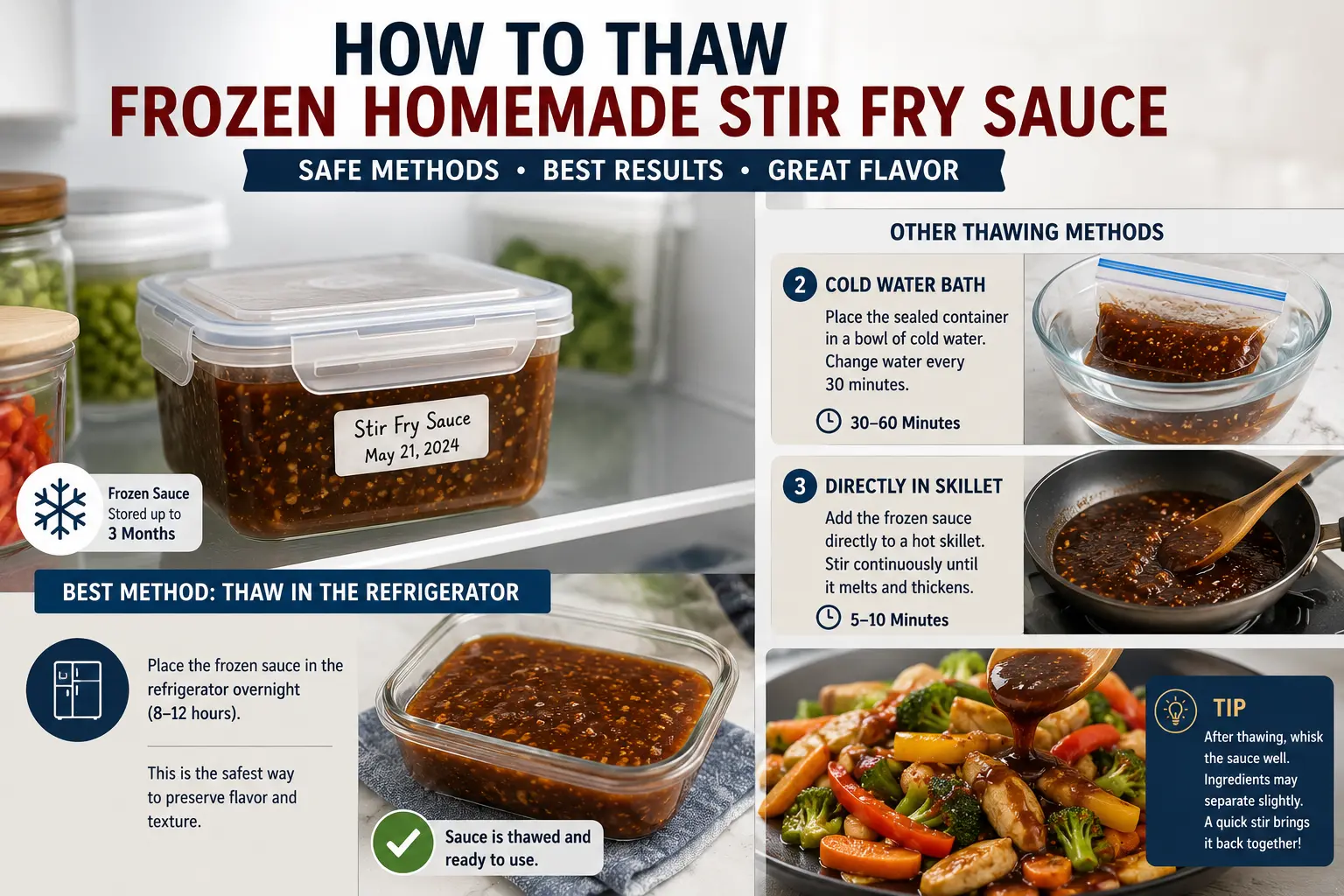
The safest method is to transfer the frozen sauce from the freezer to the refrigerator the night before you plan to cook. Slow thawing allows the ingredients to return to their normal consistency without significant separation.
If you need the sauce sooner, place the sealed freezer container or bag in a bowl of cold water. Change the water every 30 minutes until the sauce has thawed. Avoid using hot water because rapid temperature changes can affect texture and may encourage uneven warming.
After thawing, give the sauce a good whisk or stir before using it. Ingredients like sesame oil and cornstarch may naturally separate during freezing, but they usually blend back together after stirring and gentle heating.
| Thawing Method | Approximate Time | Recommended? |
|---|---|---|
| Refrigerator | 8–12 hours | ✔ Best method |
| Cold water bath | 30–60 minutes | ✔ Good for faster thawing |
| Directly in skillet | 5–10 minutes | ✔ Works for small portions |
| Hot water | Not recommended | ✘ May affect texture |
| Room temperature | Not recommended | ✘ Food safety concern |
Tip: If your thawed sauce seems thicker than expected, add one or two tablespoons of water or low-sodium chicken broth while heating. Stir continuously until the sauce becomes smooth again.
Once thawed, use the sauce within two to three days and avoid freezing it again. Repeated freezing and thawing can reduce both flavor and overall quality.
Common Mistakes When You Freeze Homemade Stir Fry Sauce
Although it’s simple to freeze homemade stir fry sauce, a few common mistakes can shorten its storage life or affect its quality. Avoiding these issues will help your sauce taste nearly as fresh as the day you made it.
Freezing Large Containers
Many people freeze an entire batch in one large container. While this works, it means you must thaw everything at once. Freezing meal-sized portions is much more convenient and reduces waste.
Not Removing Excess Air
Too much air inside freezer bags or containers can lead to freezer burn. Press excess air out of freezer bags before sealing them tightly.
Forgetting to Label the Sauce
Homemade sauces can look very similar after freezing. Always write the preparation date and sauce name on each container so you know exactly what you’re using.
Overfilling Containers
Liquids expand as they freeze. Filling containers to the very top can cause lids to pop open or glass jars to crack.
Warning: Never refreeze homemade stir fry sauce after it has completely thawed. Repeated freezing can reduce flavor, change the texture, and increase food safety risks if the sauce has been left at unsafe temperatures.
If you’re preparing stir fry regularly, learning about Common Stir Fry Sauce Mistakes can help you avoid other issues that affect flavor, consistency, and cooking performance.
How Long Does Frozen Homemade Stir Fry Sauce Last?
When you freeze homemade stir fry sauce correctly, it stays safe to eat for much longer than refrigerated sauce. While freezing doesn’t completely stop food from aging, it significantly slows the process and helps preserve both flavor and quality.
For the best taste, use frozen homemade stir fry sauce within 3 months. Although it may remain safe beyond that time if continuously frozen at 0°F (-18°C) or below, the flavor, aroma, and texture gradually begin to decline.
Keeping the sauce in airtight, freezer-safe containers helps prevent freezer burn and protects it from absorbing odors from other frozen foods. Proper labeling also ensures you always use the oldest batch first.
| Storage Method | Best Quality | Notes |
|---|---|---|
| Room Temperature | Not recommended | Discard after 2 hours. |
| Refrigerator | 5–7 days | Store in an airtight container. |
| Freezer | Up to 3 months | Best flavor and texture. |
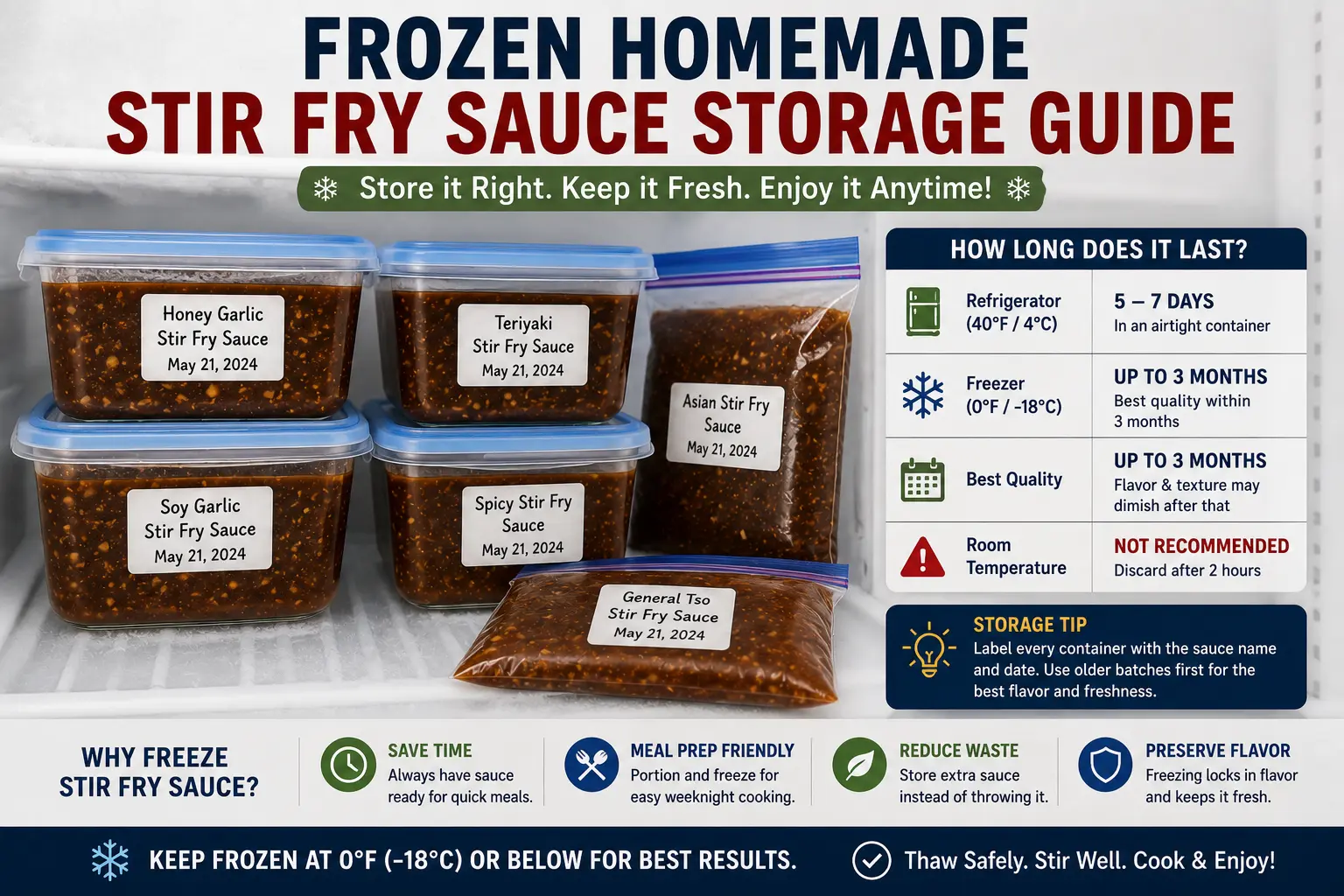
Storage Tip: Label every container with both the preparation date and the “use by” month. This simple habit makes freezer organization much easier and helps maintain the best quality.
Signs Frozen Stir Fry Sauce Has Gone Bad
Even though freezing extends shelf life, it’s still important to inspect the sauce before using it. If the sauce has been stored improperly or kept too long, it may lose quality or become unsafe to eat.
Before cooking, check the appearance, smell, and texture. A small amount of ingredient separation is completely normal after freezing, but unpleasant odors or visible spoilage are not.
Discard the Sauce If You Notice:
- A sour, fermented, or unpleasant smell.
- Visible mold or unusual discoloration.
- A slimy or stringy texture after thawing.
- Leaking or damaged freezer packaging.
- The sauce remained at room temperature for more than two hours before freezing.
Food Safety Reminder: When in doubt, throw it out. Never taste homemade stir fry sauce to determine whether it has spoiled.
Best Containers to Freeze Homemade Stir Fry Sauce
The container you choose can make a noticeable difference when you freeze homemade stir fry sauce. Good packaging minimizes freezer burn, prevents leaks, and makes thawing more convenient.
Many home cooks prefer freezing sauce in several small portions rather than one large container. Smaller portions thaw faster and allow you to use only the amount needed for each meal.
Best Options
- Freezer-safe glass containers
- BPA-free plastic containers
- Heavy-duty freezer bags
- Silicone freezer cube trays
Avoid
- Thin disposable food containers
- Non-freezer-safe glass jars
- Containers with damaged lids
- Overfilled storage containers
If you’re preparing multiple stir fry meals ahead of time, our Ultimate Chicken Stir Fry Sauce Guide includes additional sauce preparation tips that pair perfectly with freezer meal planning.
Expert Tips for Freezing Homemade Stir Fry Sauce
Learning how to freeze homemade stir fry sauce is simple, but a few professional techniques can help preserve the best possible flavor and texture. Whether you’re preparing one batch or stocking your freezer for several weeks, these tips will help your sauce taste fresh every time.
Freeze the Sauce as Soon as It Cools
Freshly made stir fry sauce has the best flavor. After it cools completely, transfer it to freezer-safe containers and freeze it promptly. The less time it spends in the refrigerator before freezing, the better its overall quality will be after thawing.
Instead of freezing one large container, divide the sauce into meal-sized portions. This allows you to thaw only what you need and keeps the remaining sauce safely frozen.
Remove Excess Air
If you’re using freezer bags, gently press out as much air as possible before sealing. Less trapped air helps reduce freezer burn and protects the flavor of your homemade stir fry sauce.
Stir Well After Thawing
Some separation is completely normal because ingredients like sesame oil and cornstarch naturally settle during freezing. A quick whisk while gently heating usually restores the sauce’s smooth consistency.
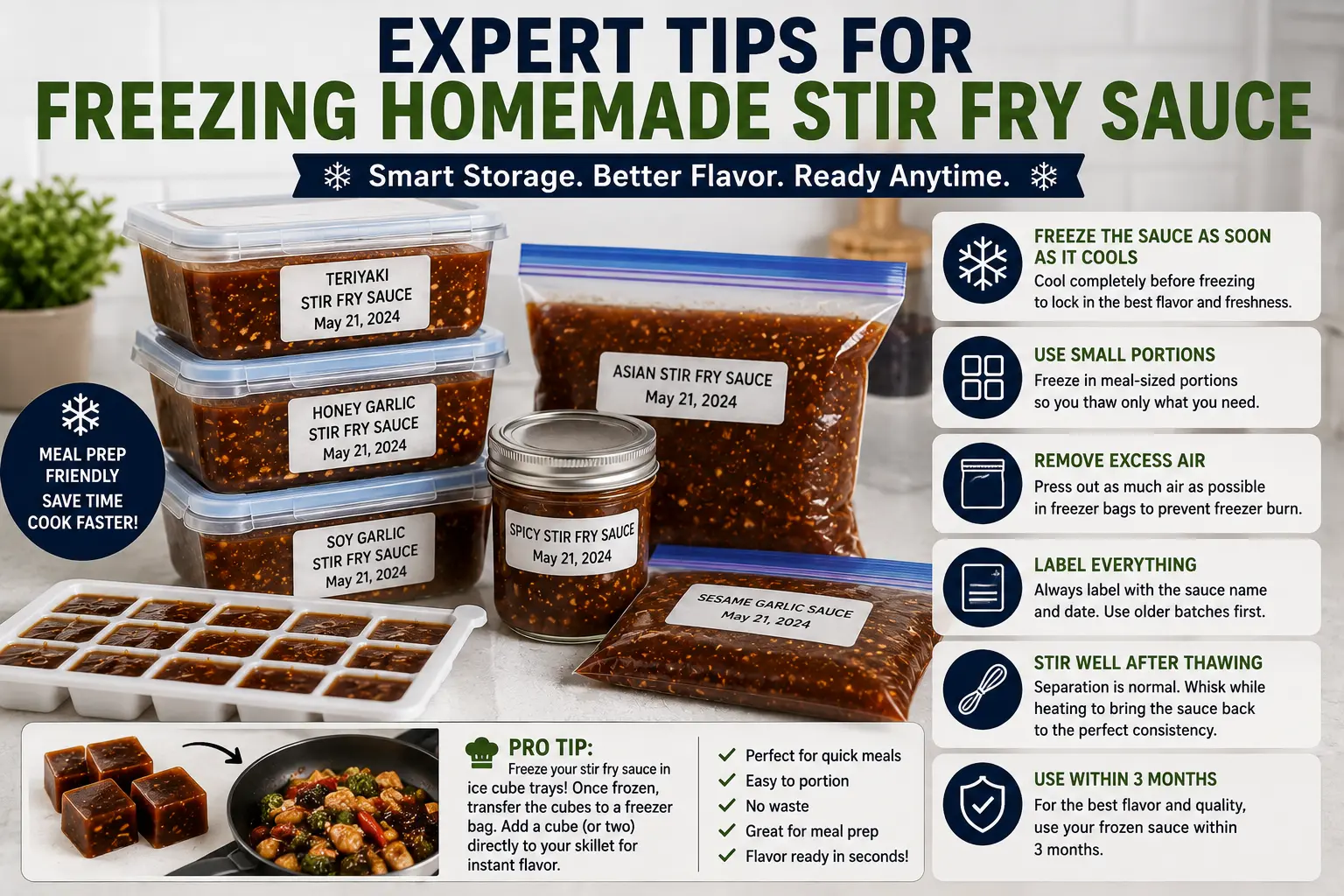
Expert Secret: Freeze homemade stir fry sauce in silicone ice cube trays. Once frozen, transfer the cubes to a freezer bag. Each cube can be added directly to a hot skillet, making weeknight cooking even faster.
Can You Freeze Stir Fry Sauce With Cooked Chicken or Vegetables?
Yes, but there are a few differences compared to freezing the sauce by itself. While you can freeze complete stir fry meals, vegetables often become softer after thawing, and cooked chicken may lose a little moisture during reheating.
If your goal is maximum freshness, it’s usually better to freeze homemade stir fry sauce separately and cook fresh vegetables and protein when you’re ready to prepare the meal. This approach delivers the best texture while still saving significant preparation time.
If you do freeze a complete stir fry meal, cool it quickly, divide it into individual portions, and freeze it within two hours of cooking.
Meal Prep Tip: Freeze the sauce separately from uncooked sliced chicken and vegetables. When it’s time to cook, thaw the sauce overnight and prepare a fresh stir fry in just a few minutes.
This method works especially well with recipes like Chicken Veggie Stir Fry, Chicken Broccoli Stir Fry, Spicy Chicken Stir Fry, Teriyaki Chicken Stir Fry, and Honey Garlic Chicken Stir Fry.
For additional guidance on choosing the right amount of sauce for every meal, see our article on How Much Stir Fry Sauce Should You Use?. It explains how proper sauce portions improve both flavor and consistency while reducing leftovers.
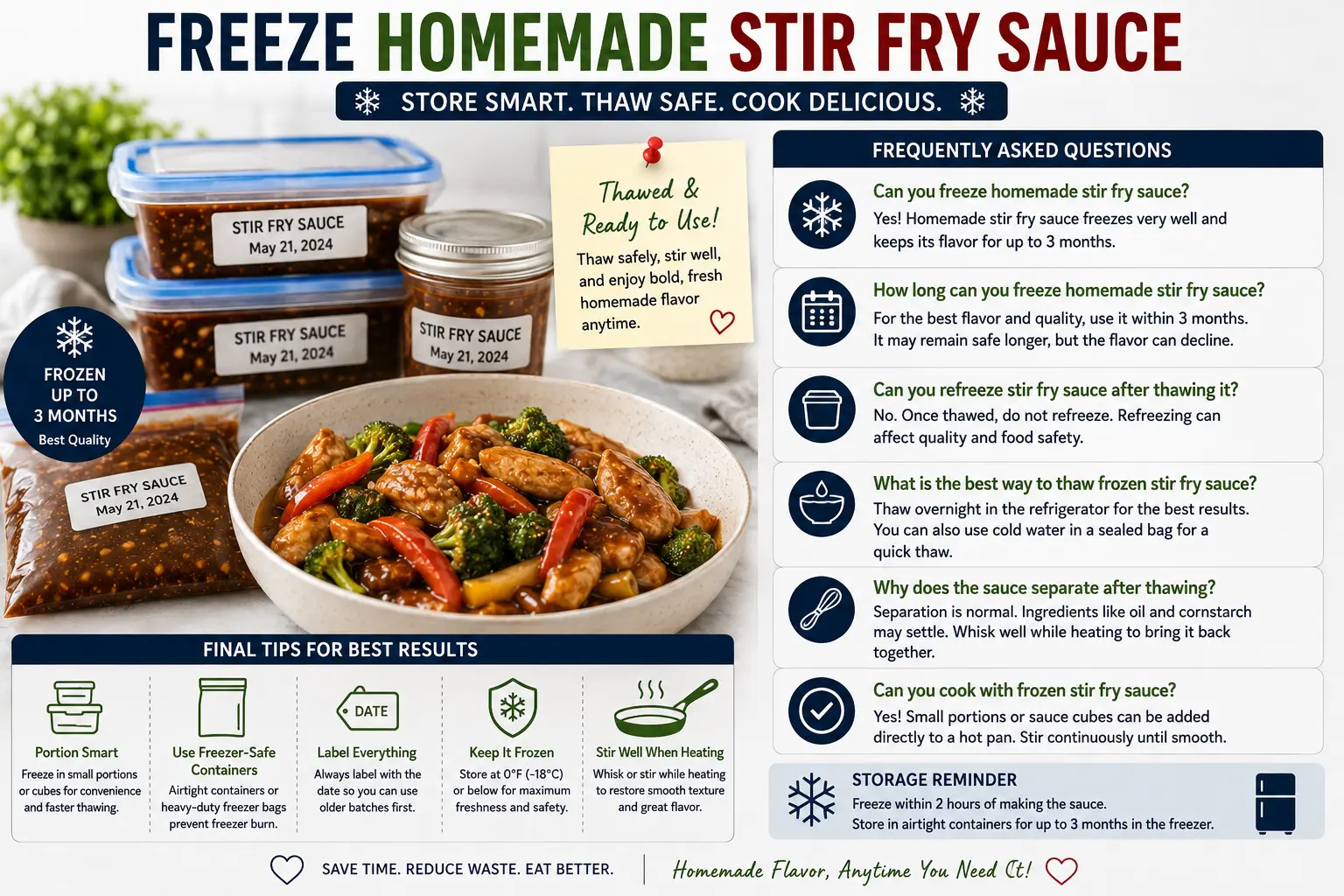
Frequently Asked Questions
Can you freeze homemade stir fry sauce with cornstarch?
Yes. You can freeze homemade stir fry sauce that contains cornstarch. After thawing, the sauce may separate slightly or become a little thinner, but whisking it while gently reheating usually restores a smooth consistency.
How long can you freeze homemade stir fry sauce?
For the best flavor and texture, use frozen homemade stir fry sauce within 3 months. If it remains continuously frozen, it may stay safe longer, but its quality gradually declines over time.
Can you refreeze homemade stir fry sauce after thawing?
No. Once the sauce has completely thawed, it should not be frozen again. Refreezing can reduce quality and may increase food safety risks if the sauce has been left at unsafe temperatures.
What is the best container to freeze homemade stir fry sauce?
Freezer-safe glass containers, BPA-free plastic containers, heavy-duty freezer bags, and silicone freezer trays are all excellent choices. Whichever container you use, leave a little room for expansion as the sauce freezes.
Can you cook with frozen stir fry sauce without thawing it first?
Yes. Small frozen portions or freezer cubes can often be added directly to a hot skillet. Stir continuously while the sauce melts so it heats evenly and regains its smooth texture.
Does freezing change the taste of homemade stir fry sauce?
Not significantly. When you freeze homemade stir fry sauce correctly and use it within three months, most people notice very little difference in flavor. Proper storage helps preserve the sauce’s freshness.
References
Final Thoughts
If you’ve ever wondered whether you can freeze homemade stir fry sauce, the answer is a confident yes. Freezing is one of the easiest ways to preserve homemade sauce, reduce food waste, and make weeknight cooking faster. By cooling the sauce before freezing, using airtight freezer-safe containers, labeling each portion, and thawing it safely, you can enjoy fresh-tasting stir fry sauce whenever you need it.
Preparing larger batches and freezing individual portions also makes meal prep much more convenient. Whether you’re cooking chicken, beef, shrimp, tofu, or vegetables, having homemade stir fry sauce ready in the freezer saves time without sacrificing flavor.
🍽️ You Might Also Like



📧 Save This Recipe For Later
Enter your email and we will send this recipe directly to your inbox.