
Chicken Breast vs. Chicken Thigh for Stir Fry (Which Is Better?)
Chicken Breast vs. Chicken Thigh for Stir Fry (Which Is Better?)
If you’ve ever stood in the grocery store wondering whether to buy chicken breast or chicken thighs for your next stir fry, you’re not alone. Choosing the right cut can make a noticeable difference in flavor, texture, cooking time, and even how forgiving your meal is if you accidentally cook it a little too long.
Many home cooks automatically reach for boneless, skinless chicken breasts because they’re lean and widely available. Others swear by chicken thighs because they stay juicy and develop a richer flavor in a hot wok. The truth is that both cuts can produce an excellent stir fry when they’re prepared correctly.
Understanding the strengths and weaknesses of each option helps you choose the best chicken for your cooking style, dietary goals, and favorite stir fry recipes. Whether you’re making a quick weeknight dinner, meal prepping lunches, or recreating restaurant-quality Chinese stir fry at home, selecting the right cut is an important first step.
In this complete comparison, you’ll learn how chicken breast and chicken thighs differ in tenderness, taste, nutrition, cooking performance, marinades, food safety, cost, and the types of stir fry recipes where each one shines.
Quick Answer
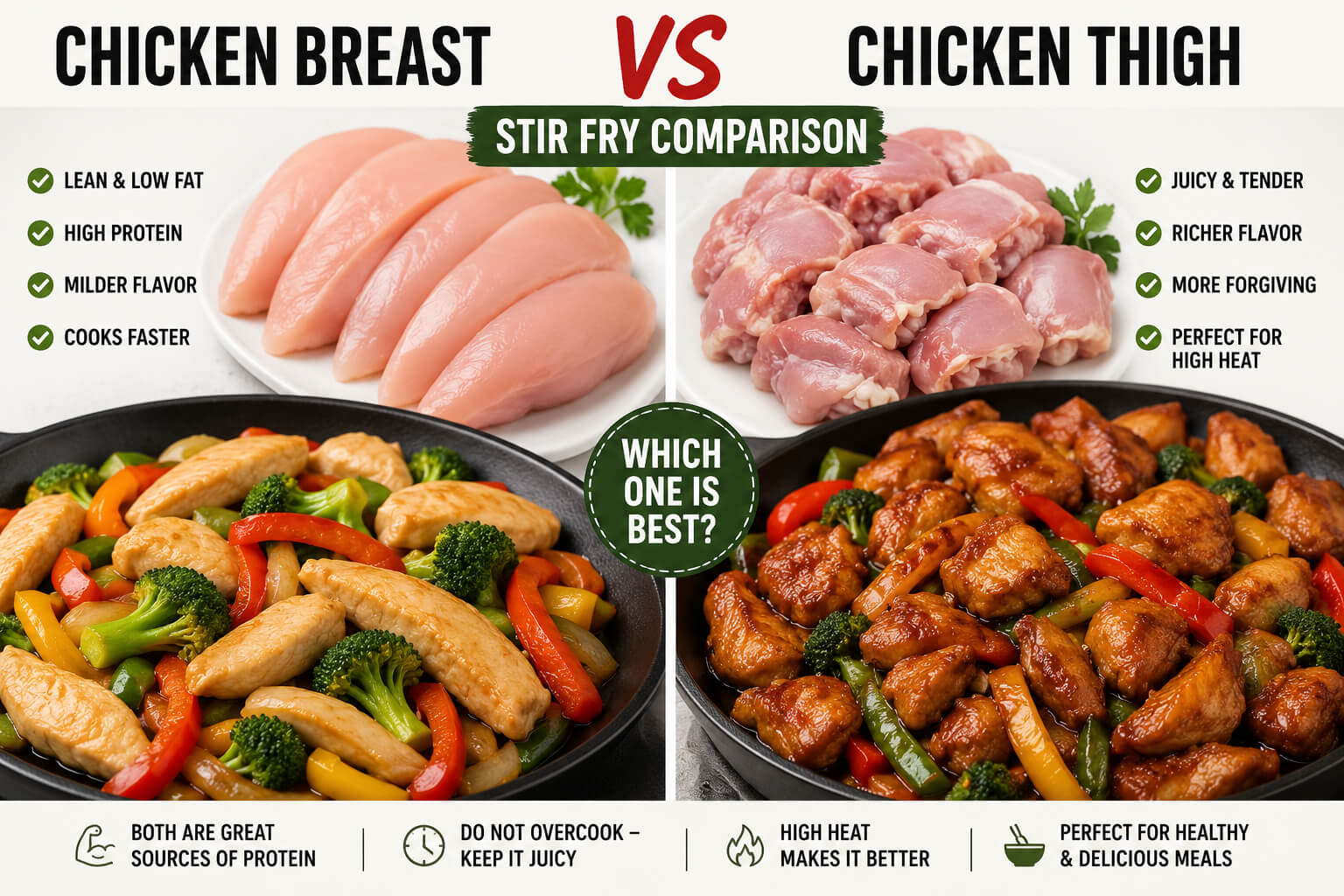
When comparing chicken breast vs chicken thigh stir fry, neither cut is universally better—it depends on your priorities. Chicken breast is leaner, cooks quickly, and works well in healthy stir fry recipes. Chicken thighs contain more fat, making them naturally juicier, more flavorful, and less likely to dry out during high-heat cooking.
- Choose chicken breast if you want a lean, high-protein meal with fewer calories.
- Choose chicken thighs if you want maximum tenderness, richer flavor, and more forgiving cooking.
- For beginners, chicken thighs are usually easier to cook successfully.
- For healthy meal prep, chicken breast is often the better choice.
Table of Contents
- Chicken Breast vs. Chicken Thigh: Quick Comparison
- Understanding the Differences
- Flavor Comparison
- Texture and Tenderness
- Which Cut Stays Juicier?
- Nutrition Comparison
- Best Choice for Healthy Stir Fry
- Cooking Performance
- Common Mistakes
- Pros and Cons
- Frequently Asked Questions
- References
- Final Thoughts
Chicken Breast vs. Chicken Thigh Stir Fry: Side-by-Side Comparison
The easiest way to compare both cuts is to evaluate the qualities that matter most during stir frying. Since stir fry cooking relies on intense heat and quick cooking times, moisture retention and slicing technique are just as important as flavor.
| Feature | Chicken Breast | Chicken Thigh |
|---|---|---|
| Flavor | Mild | Rich and savory |
| Tenderness | Can dry out | Naturally tender |
| Juiciness | Medium | Excellent |
| Cooking Speed | Very fast | Fast |
| Forgiveness | Low | High |
| Protein | Higher | High |
| Fat Content | Low | Moderate |
| Calories | Lower | Higher |
| Meal Prep | Excellent | Excellent |
| Best For | Healthy stir fry | Restaurant-style stir fry |
As you can see, there isn’t a single winner in every category. Instead, the better choice depends on the type of stir fry you’re making and the results you’re hoping to achieve.
Understanding the Difference Between Chicken Breast and Chicken Thigh
Before deciding which cut belongs in your wok, it’s helpful to understand why these two pieces of chicken behave so differently during cooking.
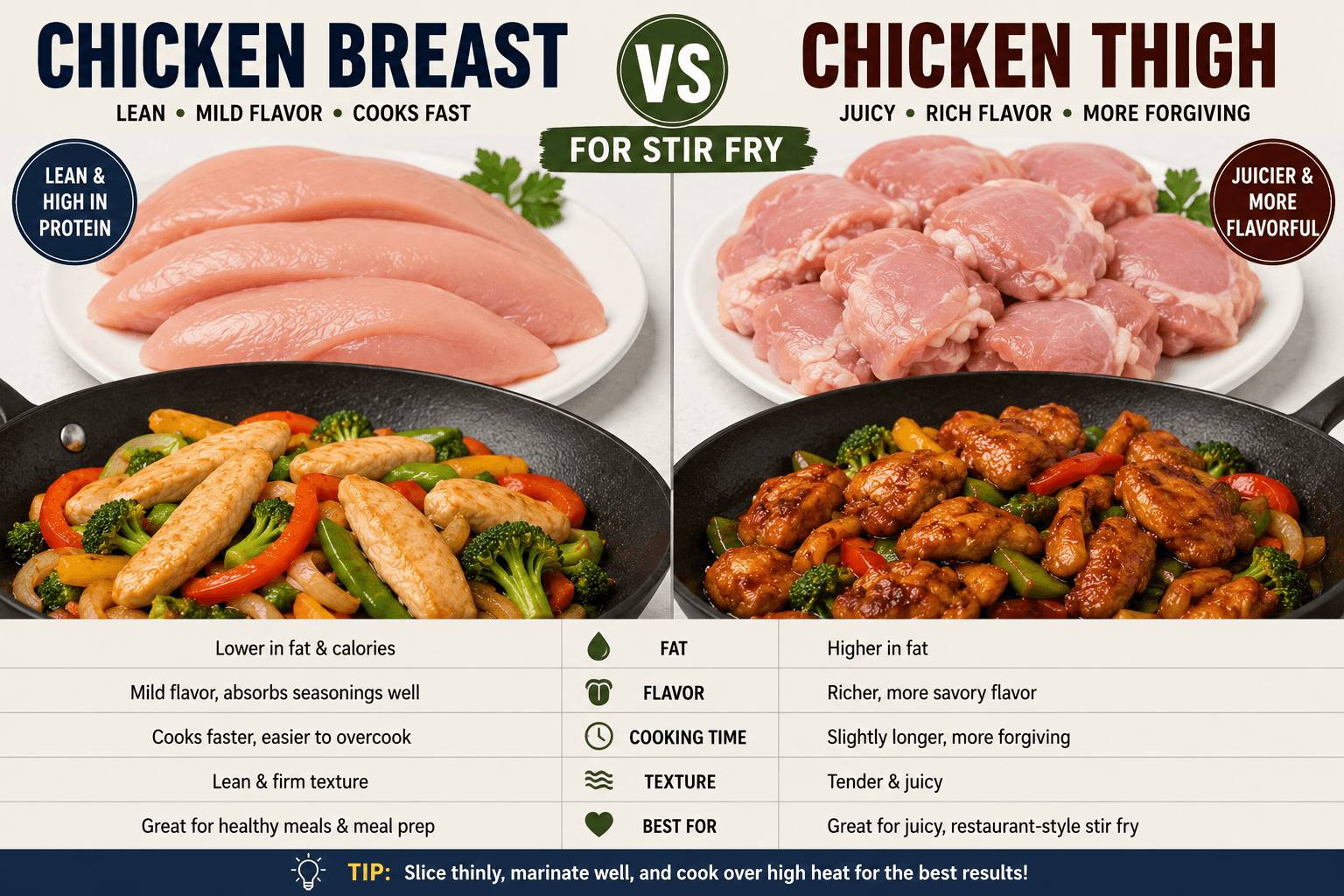
Chicken breast comes from the bird’s chest muscles. Because chickens don’t use these muscles very much, the meat is naturally lean with very little fat. That lean structure gives breast meat its clean flavor and high protein content, but it also means moisture escapes quickly if it’s overcooked.
Chicken thighs come from the upper leg, which is an active muscle. These muscles contain more connective tissue and more intramuscular fat, both of which contribute to richer flavor and greater juiciness. During stir frying, the fat melts gradually, helping keep the meat moist even under high heat.
This structural difference explains why experienced stir fry cooks often prefer thighs when preparing restaurant-style dishes with bold sauces and intense wok heat.
Restaurants frequently use boneless chicken thighs because the extra fat helps protect the meat from drying out during extremely hot wok cooking. This creates the juicy texture many people associate with takeout stir fry.
Flavor Comparison
Flavor is often the biggest deciding factor in the chicken breast vs chicken thigh stir fry debate.
Chicken breast has a clean, mild taste that easily absorbs marinades, sauces, and seasonings. Because the meat itself isn’t very rich, ingredients like garlic, ginger, soy sauce, oyster sauce, sesame oil, and chili paste become the dominant flavors.
This makes chicken breast especially useful when you want vegetables and sauces to be the stars of the dish.
Chicken thighs naturally deliver a deeper chicken flavor. Their higher fat content creates more richness, allowing even simple stir fry sauces to taste fuller and more satisfying.
If you’re making recipes with soy sauce, black pepper, hoisin sauce, teriyaki sauce, or spicy garlic sauces, chicken thighs often create a more restaurant-quality result because the meat contributes additional flavor instead of simply carrying the sauce.
If your stir fry includes delicate vegetables like snow peas, bok choy, or zucchini, chicken breast keeps the overall flavor lighter. If you’re using mushrooms, broccoli, peppers, onions, or rich sauces, chicken thighs complement those ingredients beautifully.
Texture and Tenderness
Texture is another area where these cuts perform differently.
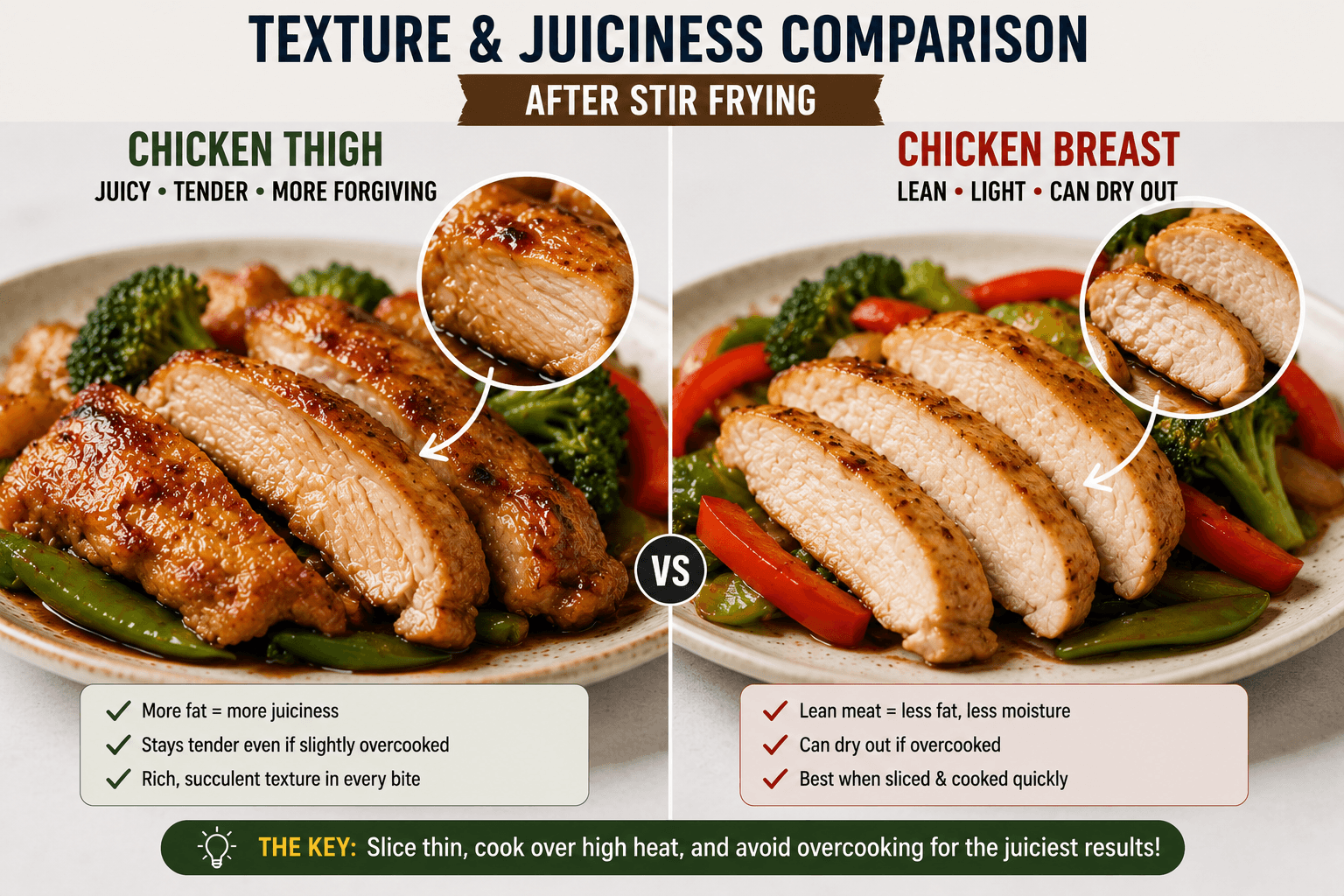
Properly cooked chicken breast should be tender and moist. However, because it contains very little fat, there’s only a small window between perfectly cooked and dry.
Just one or two extra minutes over high heat can cause breast meat to become firm, stringy, and noticeably less juicy.
Chicken thighs are much more forgiving. Their natural fat and connective tissue keep the meat soft even if your cooking time varies slightly. This makes thighs an excellent choice for beginner cooks who are still learning how to control wok temperatures.
Another advantage is that chicken thighs stay tender even after refrigeration, making leftovers especially enjoyable for meal prep.
If tenderness is your top priority, chicken thighs usually come out ahead.
However, techniques such as proper slicing, marinating, and velveting can significantly improve the tenderness of chicken breast as well.
Learning how to cut chicken for stir fry and using the right preparation method can dramatically improve the final texture regardless of which cut you choose.
Which Cut Stays Juicier During Stir Fry?
When people ask about chicken breast vs chicken thigh stir fry, they’re usually concerned about dryness.
Because stir frying uses high temperatures and quick cooking times, moisture retention becomes extremely important.
Chicken thighs clearly have the advantage here. Their fat melts during cooking, naturally basting the meat from within. Even if your wok gets exceptionally hot, thighs remain moist much longer than chicken breast.
Chicken breast requires more attention. Thin slices cook rapidly, and leaving them in the pan even briefly after they’re fully cooked can cause noticeable moisture loss.
Fortunately, several professional techniques greatly improve chicken breast.
- Slice evenly.
- Cut against the grain.
- Marinate before cooking.
- Velvet the chicken.
- Avoid overcrowding the pan.
- Cook in small batches.
- Remove immediately once cooked.
If you’re using chicken breast regularly, learning how to velvet chicken for stir fry is one of the best ways to achieve juicy, restaurant-quality results every time.
The biggest reason chicken breast becomes dry isn’t the cut itself—it’s overcooking. Most stir fry chicken only needs a few minutes over high heat before it’s ready.
Nutrition Comparison: Chicken Breast vs. Chicken Thigh
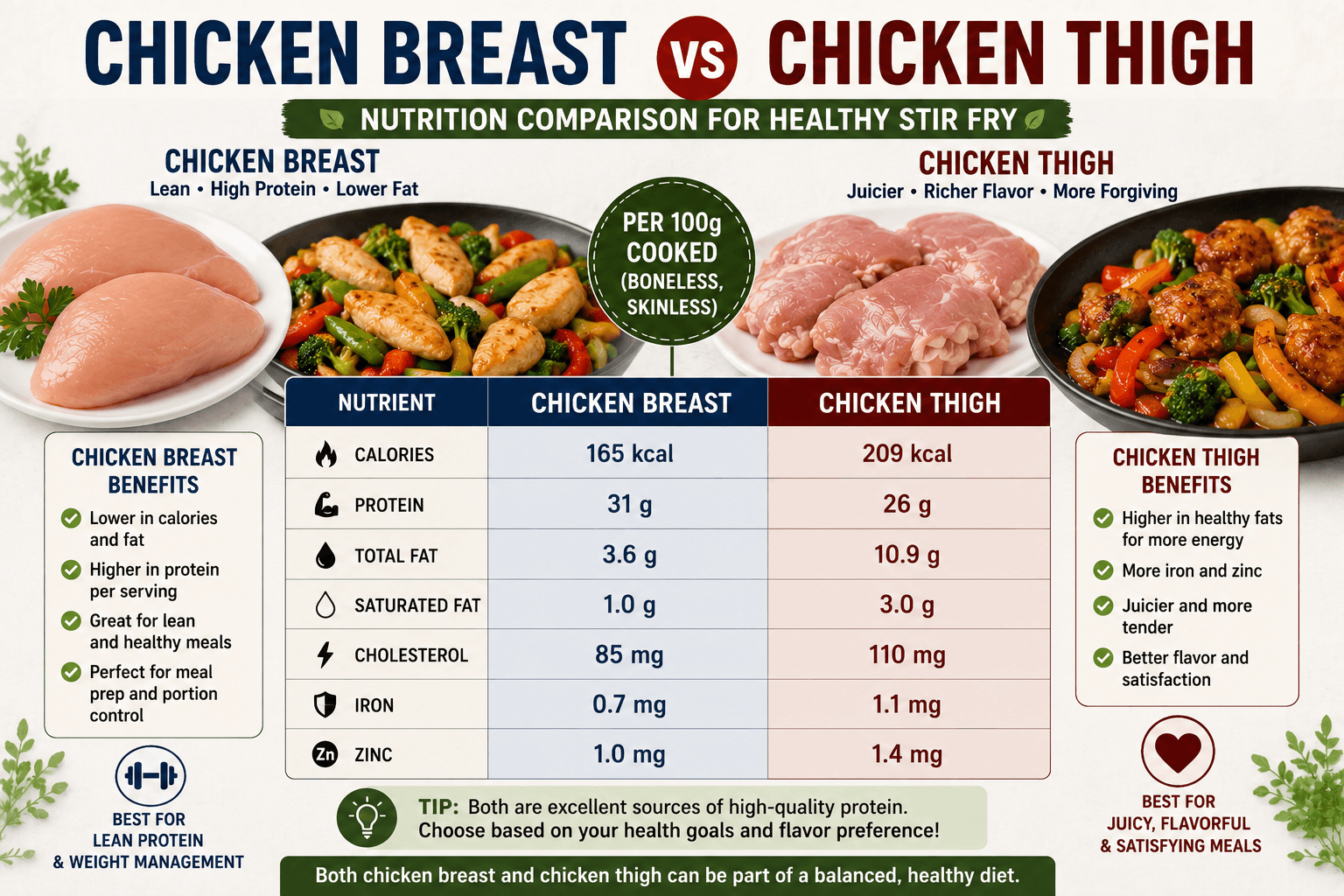
If you’re choosing between these two cuts based on health goals, understanding the nutritional differences is just as important as comparing flavor and texture. Both chicken breast and chicken thighs are excellent sources of high-quality protein, vitamins, and minerals, but they differ in calories and fat content.
Skinless chicken breast is one of the leanest protein options available. It’s especially popular among people following weight-loss plans, high-protein diets, or lower-fat eating patterns.
Chicken thighs contain more fat, which contributes to their richer flavor and juicier texture. While they have more calories than breast meat, they also provide satisfying flavor that many home cooks prefer.
| Nutrient (Approx. 100g Cooked) | Chicken Breast | Chicken Thigh |
|---|---|---|
| Calories | 165 | 209 |
| Protein | 31 g | 26 g |
| Total Fat | 3.6 g | 10.9 g |
| Saturated Fat | 1 g | 3 g |
| Iron | Lower | Slightly Higher |
| Zinc | Moderate | Higher |
| Vitamin B12 | Moderate | Higher |
Although chicken breast contains fewer calories, chicken thighs still fit perfectly into a balanced diet when eaten in appropriate portions.
If you’re counting calories, choose chicken breast. If you’re trying to maximize satisfaction while still eating nutritious meals, boneless skinless chicken thighs are also an excellent option.
Which Is Better for Healthy Stir Fry?
The answer depends on what “healthy” means for your lifestyle.
If your goal is reducing calories while increasing lean protein intake, chicken breast is the clear winner. It provides more protein per calorie and works especially well with plenty of colorful vegetables such as broccoli, carrots, snap peas, bell peppers, mushrooms, and cabbage.
On the other hand, healthy eating isn’t only about reducing fat. Foods that are satisfying can help people stick with healthy eating habits over time. Chicken thighs provide more richness and can make homemade stir fry feel more indulgent without relying on heavy sauces.
Many nutrition professionals encourage focusing on the overall balance of the meal rather than a single ingredient. Filling your stir fry with vegetables, using moderate amounts of oil, and controlling sodium often have a greater impact than choosing breast versus thigh.
If you’re looking for lighter dinner ideas, our Healthy Chicken Stir Fry recipe is designed specifically for balanced nutrition while still delivering excellent flavor.
Cooking Performance in a Wok
Traditional stir fry cooking uses extremely high heat. That environment affects chicken breast and chicken thighs differently.
Chicken breast cooks very quickly because it’s lean. Thin slices often finish cooking in just a few minutes. While this is convenient for busy weeknights, it also means timing is critical.
Chicken thighs tolerate high heat much better. Their natural fat helps protect the meat, making it easier to achieve a juicy interior while developing beautiful caramelization on the outside.
If you’re using a carbon steel wok over high heat, thighs usually deliver the closest results to restaurant stir fry.
| Cooking Factor | Chicken Breast | Chicken Thigh |
|---|---|---|
| High Heat Tolerance | Moderate | Excellent |
| Risk of Drying Out | High | Low |
| Browning | Good | Excellent |
| Sauce Absorption | Excellent | Very Good |
| Beginner Friendly | Moderate | Excellent |
Always preheat your wok before adding oil. Cooking chicken in a properly heated wok creates better browning while reducing sticking, regardless of whether you’re using breast or thigh meat.
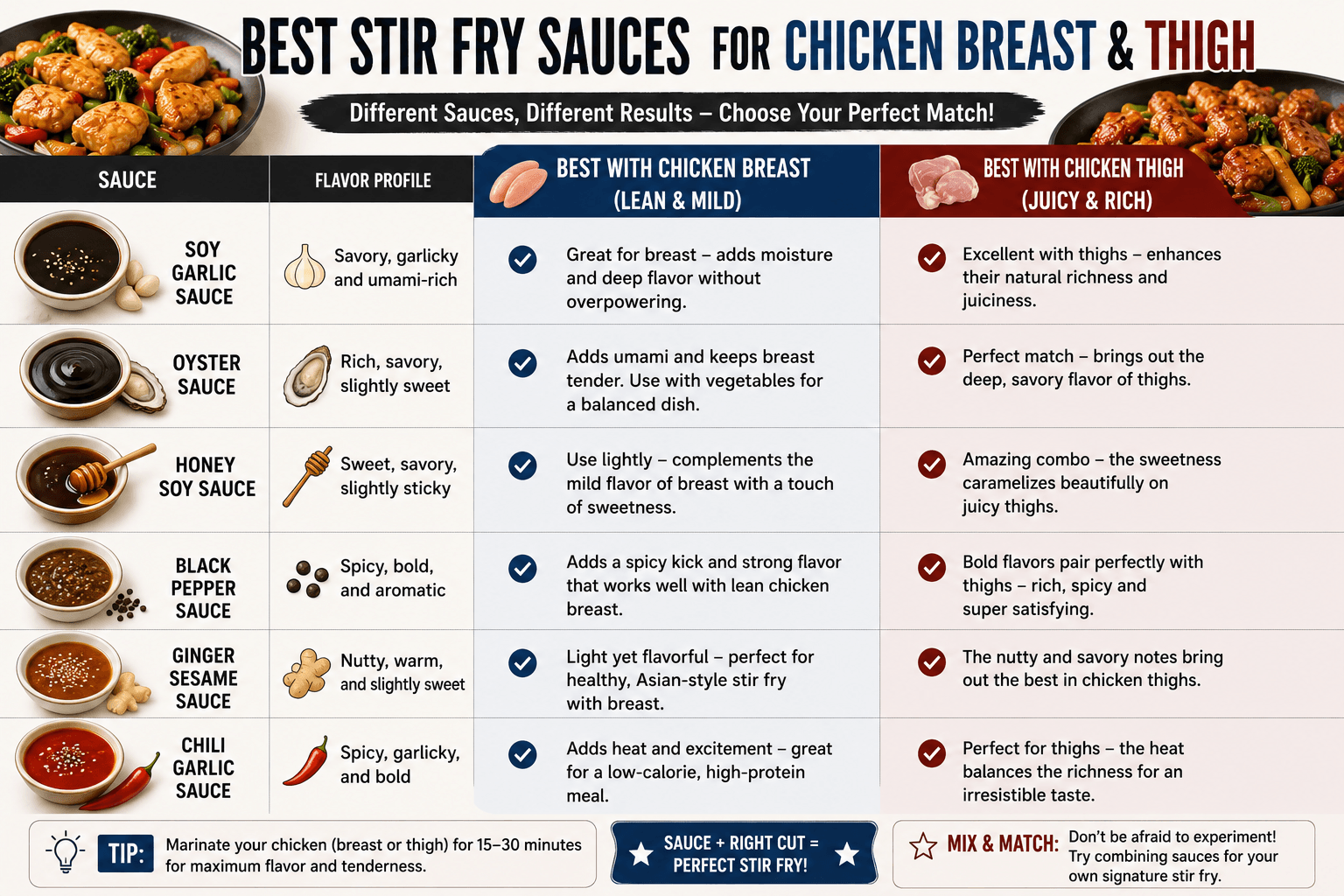
Best Sauces for Each Cut
The sauce you choose can influence which cut performs best.
Chicken Breast Works Best With
- Garlic sauce
- Lemon garlic sauce
- Light soy sauce
- Honey garlic sauce
- Ginger sauce
- Sesame sauce
Chicken Thigh Works Best With
- Teriyaki sauce
- Black pepper sauce
- Oyster sauce
- Hoisin sauce
- Sweet chili sauce
- Spicy garlic sauce
If you enjoy experimenting with different flavors, you’ll find plenty of inspiration in our Garlic Chicken Stir Fry, Honey Garlic Chicken Stir Fry, and Teriyaki Chicken Stir Fry recipes.
Which Vegetables Pair Best With Each Cut?
Both cuts pair well with vegetables, but certain combinations work particularly well.
Great Pairings for Chicken Breast
- Broccoli
- Snow peas
- Zucchini
- Baby corn
- Carrots
- Green beans
Great Pairings for Chicken Thigh
- Mushrooms
- Bell peppers
- Onions
- Bok choy
- Cabbage
- Sugar snap peas
For example, our Chicken Broccoli Stir Fry is especially popular with chicken breast, while the rich flavors in Chicken Mushroom Stir Fry pair beautifully with juicy chicken thighs.
Common Mistakes When Choosing Chicken for Stir Fry
- Choosing thick pieces that cook unevenly.
- Skipping the marinade.
- Not slicing against the grain.
- Cooking straight from the refrigerator.
- Overcrowding the wok.
- Using low heat.
- Overcooking chicken breast.
- Leaving cooked chicken sitting in the hot pan.
Many of these issues can be avoided by following our complete guides on how to marinate chicken for stir fry, how long to cook chicken stir fry, and how to prevent dry chicken stir fry.
Chicken Breast Pros
- Very lean
- Highest protein
- Lower calories
- Cooks quickly
- Great for meal prep
- Absorbs marinades well
Chicken Breast Cons
- Can dry out easily
- Requires careful cooking
- Milder flavor
- Less forgiving for beginners
Chicken Thigh Pros
- Very juicy
- Rich flavor
- Restaurant-style texture
- Hard to overcook
- Excellent for bold sauces
Chicken Thigh Cons
- More calories
- Higher fat content
- Slightly longer trimming time
Storage and Meal Prep Tips
Whether you choose chicken breast or chicken thighs, proper storage is essential for maintaining quality, flavor, and food safety. Since stir fry is a popular meal prep option, knowing how each cut performs after refrigeration and freezing can help you decide which one best fits your routine.
Chicken thighs generally retain their moisture better after reheating because of their higher fat content. Chicken breast can still reheat well, but it benefits from gentle reheating to prevent it from drying out.
- Refrigerate cooked stir fry within 2 hours of cooking.
- Store in an airtight container for up to 4 days.
- Freeze for up to 3 months for the best quality.
- Reheat until the internal temperature reaches 165°F (74°C).
- Add a splash of water or extra stir fry sauce before reheating to restore moisture.
If you frequently prepare meals in advance, chicken breast offers excellent lean protein for healthy lunches, while chicken thighs remain especially juicy after reheating.

Which Chicken Should You Choose?
There isn’t a universal winner in the chicken breast vs chicken thigh stir fry debate because each cut excels in different situations.
Choose chicken breast if you:
- Prefer lean, high-protein meals.
- Are following a lower-calorie diet.
- Want a lighter stir fry with fresh vegetables.
- Enjoy meal prepping healthy lunches.
Choose chicken thighs if you:
- Want maximum juiciness.
- Prefer restaurant-style stir fry.
- Love rich sauces and bold flavors.
- Are new to stir fry cooking and want more forgiving results.
Many experienced home cooks keep both cuts on hand and choose the one that best matches the recipe they’re making.
Frequently Asked Questions
Is chicken breast or chicken thigh better for stir fry?
Chicken thighs are generally better for juicy, flavorful stir fry because they contain more fat and remain tender during high-heat cooking. Chicken breast is the better choice if you want a leaner, lower-calorie meal.
Why do restaurants often use chicken thighs?
Many restaurants prefer boneless chicken thighs because they stay moist under extremely high wok heat and develop a richer flavor than chicken breast.
Can I substitute chicken breast for chicken thighs?
Yes. Both cuts work well in stir fry recipes. If using chicken breast, slice it thinly, marinate it, and avoid overcooking for the best texture.
Does chicken breast cook faster than chicken thighs?
Yes. Thin slices of chicken breast usually cook slightly faster because they contain less fat. Always cook chicken until it reaches an internal temperature of 165°F (74°C).
Which cut is healthier?
Chicken breast is lower in calories and fat while providing slightly more protein. Chicken thighs contain more healthy fats and additional flavor, making both nutritious options depending on your dietary goals.
Should I velvet chicken breast before stir frying?
Yes. Velveting is one of the best ways to improve the tenderness and juiciness of chicken breast, especially when cooking over high heat.
References
Final Thoughts
When comparing chicken breast vs chicken thigh stir fry, the best choice depends on your priorities rather than a single “correct” answer. Chicken breast delivers lean protein, fewer calories, and works exceptionally well in healthy stir fry recipes. Chicken thighs offer richer flavor, superior juiciness, and a forgiving cooking experience that closely resembles restaurant-style stir fry.
No matter which cut you choose, proper slicing, marinating, cooking over high heat, and avoiding overcooking will have a greater impact on your final dish than the cut itself. By mastering these simple techniques, you can consistently prepare delicious homemade chicken stir fry that’s packed with flavor and perfectly cooked every time.
🍽️ You Might Also Like



📧 Save This Recipe For Later
Enter your email and we will send this recipe directly to your inbox.