
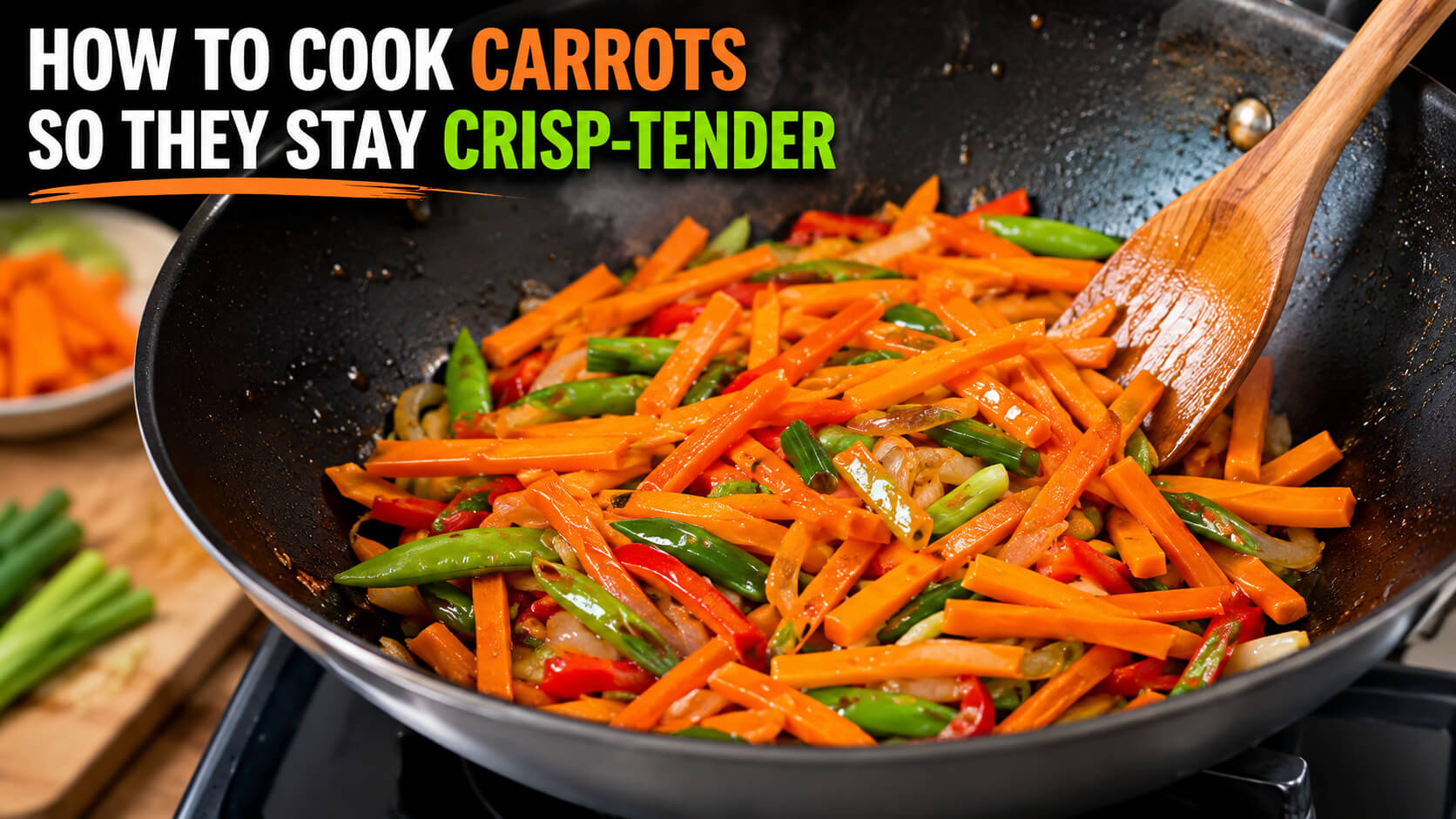
How to Cook Carrots So They Stay Crisp-Tender
How to Cook Carrots So They Stay Crisp-Tender
Carrots are one of the most popular vegetables used in homemade stir fry because they add natural sweetness, vibrant color, and a satisfying crunch. However, many home cooks struggle to cook carrots for stir fry without ending up with vegetables that are either rock hard or disappointingly soft. Achieving that perfect crisp-tender texture isn’t difficult, but it does require the right preparation, cooking technique, and timing.
If you’ve ever wondered why restaurant stir fry carrots always seem perfectly cooked while yours turn mushy or remain undercooked, the difference usually comes down to how the carrots are sliced, when they’re added to the wok, and how much heat is used. Small adjustments can make a dramatic difference in the final dish.
In this guide, you’ll learn exactly how to cook carrots for stir fry so they stay crisp-tender every time. We’ll cover the best carrot varieties, ideal cutting methods, proper cooking times, and common mistakes to avoid. By the end, you’ll have the confidence to prepare carrots that complement any chicken or vegetable stir fry.
Quick Answer
To cook carrots for stir fry, slice them into thin, even pieces about 1/8 inch thick and cook them over high heat for 3 to 5 minutes. Add carrots early in the cooking process because they take longer to soften than most vegetables. They should become tender enough to bite easily while still retaining a slight crunch. Avoid overcrowding the pan or overcooking, as both can make carrots soft instead of crisp-tender.
Table of Contents
Why Crisp-Tender Carrots Matter
The goal of any great stir fry is to create vegetables that are cooked through while still maintaining their natural texture. Carrots are naturally firm because they contain dense fibers and less water than vegetables like zucchini or bell peppers. This means they require slightly more cooking time but should never become soft enough to fall apart.
When you properly cook carrots for stir fry, they provide a pleasant contrast to juicy chicken and tender vegetables. Their slight crunch also helps the dish feel fresh and colorful instead of heavy or overcooked.
Another advantage of keeping carrots crisp-tender is that they retain more of their natural sweetness and appealing bright orange color. Overcooked carrots often become dull, watery, and less flavorful, reducing the overall quality of the meal.
Tip: Crisp-tender means the carrot is fully heated through and easy to bite, but still has a gentle snap in the center instead of feeling soft or mushy.
Choosing the Best Carrots for Stir Fry
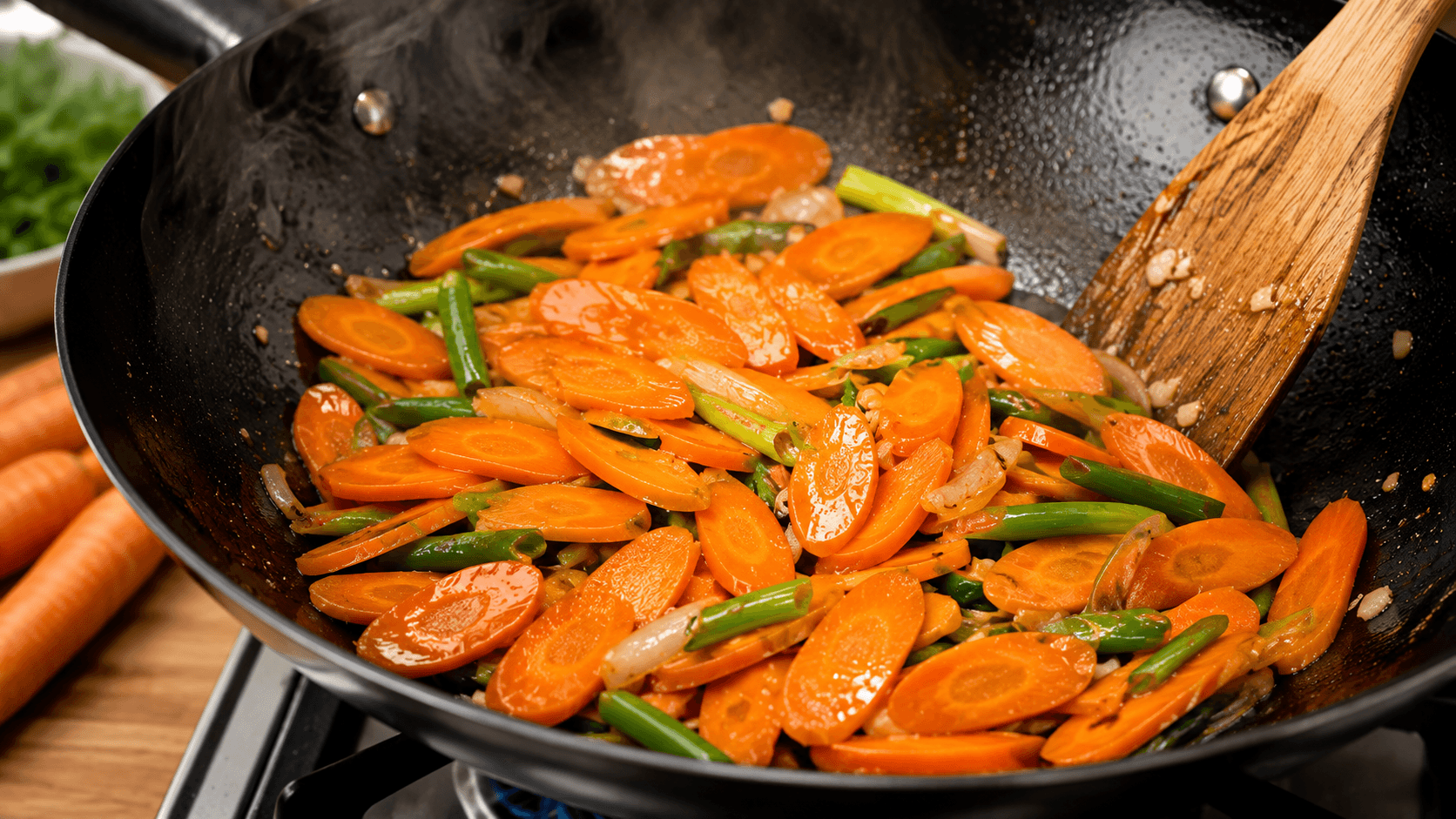
Not all carrots cook exactly the same. Fresh whole carrots are generally the best choice because they have a firm texture, balanced sweetness, and hold up well during high-heat cooking. They also allow you to slice them to the perfect thickness for even cooking.
Baby carrots are convenient, but they’re usually thicker and contain more moisture, meaning they often require extra slicing before they’re suitable for stir frying. Pre-shredded carrots cook very quickly but can become soft in just a minute or two, making them better suited for salads than classic stir fry.
Whenever possible, choose carrots that are firm, smooth, and brightly colored with no soft spots or cracks. Fresh carrots deliver the best texture and make it much easier to cook carrots for stir fry successfully.
If you’re planning a complete meal, these carrots pair perfectly with our Chicken Stir Fry recipe or the colorful Chicken Veggie Stir Fry, where crisp vegetables are the star of the dish.
How to Prepare Carrots Before Cooking
Proper preparation is one of the biggest secrets to perfectly cooked carrots. Even the best cooking technique cannot compensate for carrots that are unevenly cut or poorly prepared. Spending a few extra minutes before heating the wok will help you cook carrots for stir fry evenly and consistently.
Start by washing the carrots thoroughly under cool running water to remove any dirt or debris. If you’re using mature carrots with a rough exterior, peel them using a vegetable peeler. Young carrots with smooth, thin skins can simply be scrubbed clean if you prefer to keep the peel for extra fiber and nutrients.
Trim off both ends before slicing. This not only improves appearance but also removes the toughest parts of the carrot that often cook unevenly.
Another important step is drying the carrots completely after washing. Excess moisture can lower the temperature of your wok, causing the vegetables to steam instead of stir fry. Dry carrots develop better color, retain a firmer texture, and cook much more evenly.
Kitchen Secret: Dry vegetables are one of the biggest differences between restaurant-quality stir fry and homemade stir fry. Pat sliced carrots dry with paper towels before adding them to the wok for better browning and a crisp-tender texture.
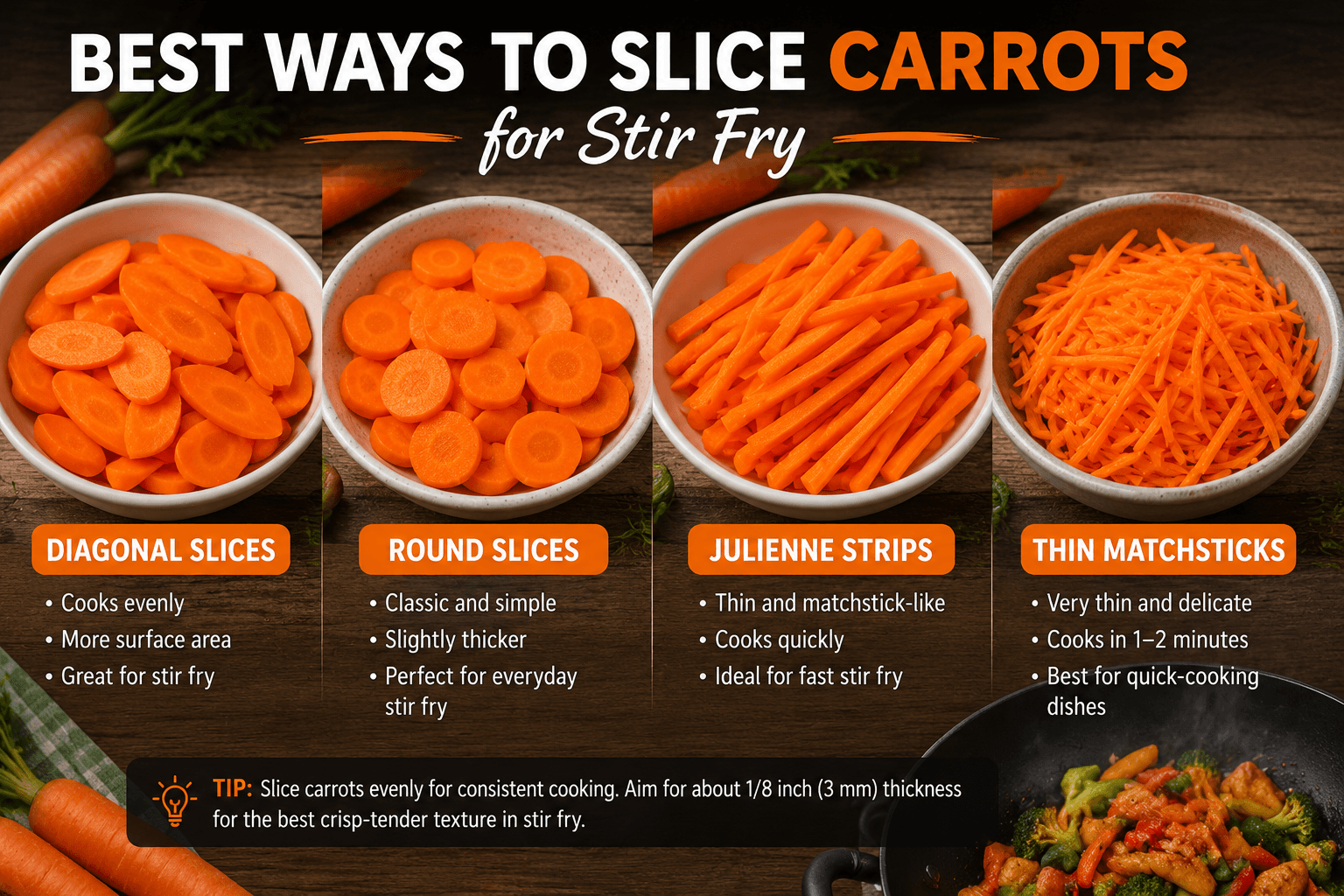
The Best Ways to Slice Carrots for Stir Fry
How you slice carrots has a major impact on cooking time. Thick carrot chunks stay hard in the center, while paper-thin slices may become soft before the rest of the vegetables finish cooking.
The ideal thickness is about 1/8 inch (3 mm). At this thickness, carrots soften quickly while still maintaining their signature crunch.
Several cutting styles work well depending on the type of stir fry you’re making.
| Cut Style | Best For | Cooking Time |
|---|---|---|
| Thin Rounds | Everyday stir fry | 3–5 minutes |
| Diagonal Slices | Restaurant-style dishes | 3–5 minutes |
| Julienne Strips | Quick-cooking stir fry | 2–3 minutes |
| Thin Matchsticks | Fast vegetable mixes | 2–3 minutes |
Diagonal slices are especially popular because they create more surface area, allowing carrots to cook evenly while absorbing more sauce. They also give homemade stir fry a professional appearance.
If you’re combining carrots with vegetables that cook quickly, such as bell peppers or zucchini, thinner slices help everything finish cooking at nearly the same time.
Should You Blanch Carrots Before Stir Fry?
Many home cooks wonder whether blanching carrots first is necessary. In most cases, the answer is no. If the carrots are sliced thinly and cooked over high heat, they will become perfectly crisp-tender without any pre-cooking.
However, blanching can be helpful when using very thick carrot slices or preparing large batches for meal prep. A quick blanch of one to two minutes in boiling water, followed by an ice bath, partially cooks the carrots while preserving their bright orange color.
This technique also shortens stir fry cooking time and makes it easier to finish all of the vegetables together.
Tip: Skip blanching for most weeknight stir fries. Thin, evenly sliced carrots cook beautifully in the wok and develop better flavor because they spend more time in direct contact with high heat.
If you’re still building your vegetable preparation skills, you may also find these helpful guides:
- The Ultimate Stir Fry Vegetable Preparation Guide
- The Correct Order to Add Vegetables to Stir Fry
- Best Vegetables for Chicken Stir Fry
How to Cook Carrots for Stir Fry
Now that your carrots are properly prepared, it’s time to cook them. This is where many home cooks either undercook the carrots, leaving them unpleasantly hard, or overcook them until they’re soft and lifeless. The goal is to cook carrots for stir fry so they’re tender enough to bite easily while still keeping a slight crunch.
The secret is using a very hot wok or large skillet. Stir frying relies on high heat and quick cooking. A hot cooking surface sears the outside of the carrots while allowing the inside to soften gradually. If the pan isn’t hot enough, the carrots release moisture and begin steaming instead of frying.
Before adding any vegetables, heat the wok until it’s almost smoking. Add a small amount of high smoke point oil such as avocado oil, peanut oil, or canola oil. Swirl the oil to coat the cooking surface evenly.
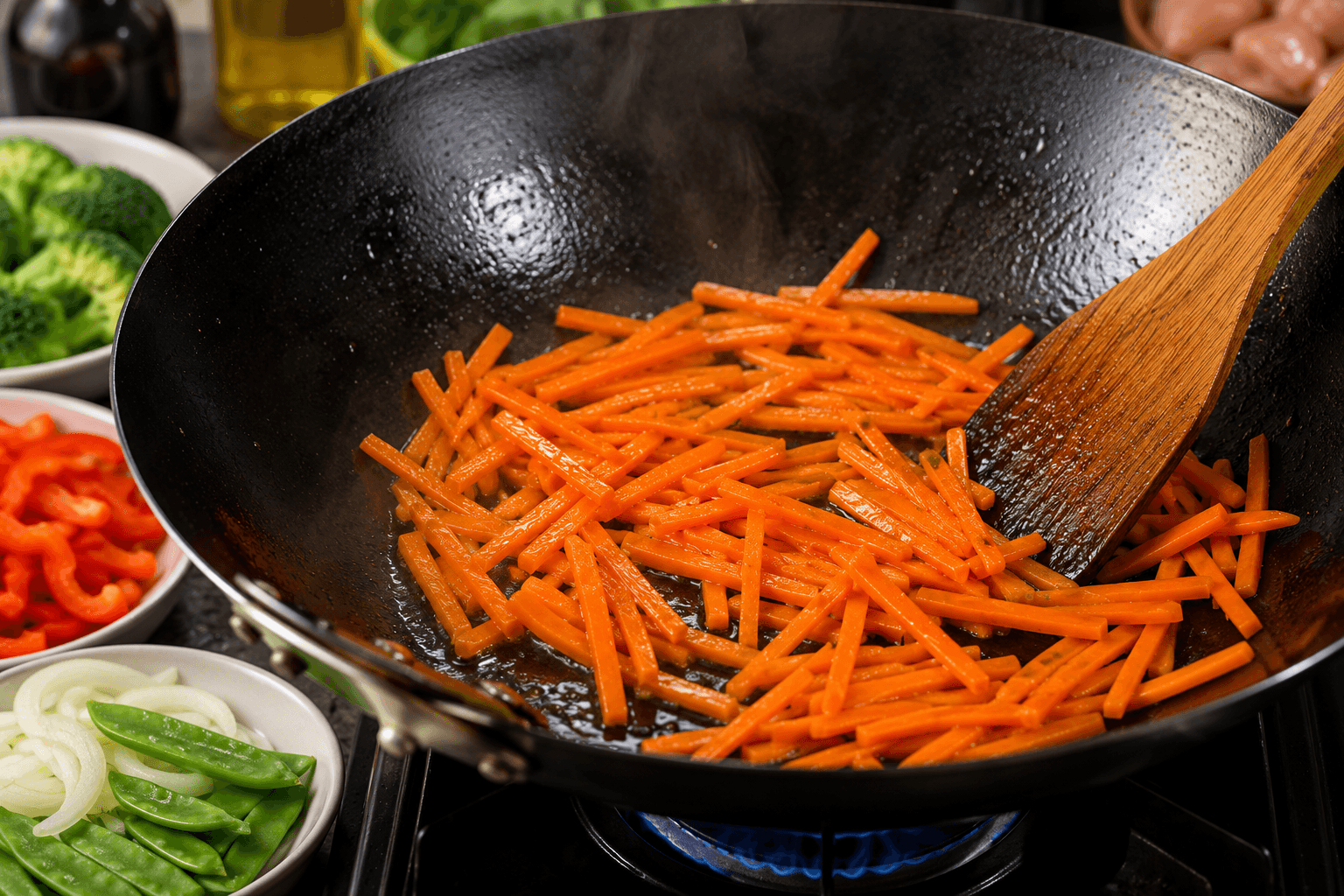
Add the carrots first because they require more cooking time than many other stir fry vegetables. Stir continuously so every slice cooks evenly and develops light browning without burning.
Kitchen Secret: Restaurant chefs rarely leave vegetables sitting still. Constant stirring keeps carrots cooking evenly while preventing hot spots that can burn the edges before the centers become tender.
| Carrot Thickness | Approximate Cooking Time | Texture |
|---|---|---|
| Julienne strips | 2–3 minutes | Crisp with light tenderness |
| 1/8-inch slices | 3–5 minutes | Ideal crisp-tender texture |
| 1/4-inch slices | 5–6 minutes | Tender with slight firmness |
| Large chunks | 6–8 minutes | Often unevenly cooked |
If you’re cooking a mixed vegetable stir fry, carrots should almost always go into the wok before vegetables like zucchini, cabbage, spinach, or bell peppers. Their longer cooking time allows every vegetable to finish at approximately the same moment.
When Should You Add Carrots to a Stir Fry?
Timing is just as important as temperature. Since carrots are one of the firmest vegetables commonly used in stir fry, they should usually be added near the beginning of the cooking process.
A simple cooking order looks like this:
- Heat the wok until very hot.
- Cook the chicken until nearly done and remove it from the pan.
- Add carrots and cook for about 2 to 3 minutes.
- Add firmer vegetables such as broccoli.
- Add medium-texture vegetables like mushrooms or onions.
- Add quick-cooking vegetables such as bell peppers, zucchini, snow peas, or cabbage.
- Return the chicken, add the sauce, and stir everything together for the final minute.
This sequence prevents delicate vegetables from becoming overcooked while giving carrots enough time to reach the perfect crisp-tender texture.
Tip: If your carrots are sliced extra thin, reduce their cooking time slightly so they don’t lose their natural crunch before the sauce is added.
Following the proper vegetable order is one of the easiest ways to consistently cook carrots for stir fry without sacrificing the texture of the other ingredients. It’s also the same method used in many professional restaurant kitchens.
For practical examples, try this technique in our Chicken Broccoli Stir Fry, Chicken Bell Pepper Stir Fry, or Chicken Cabbage Stir Fry, where timing plays a key role in achieving perfectly cooked vegetables.
Common Mistakes That Make Carrots Too Hard or Too Soft
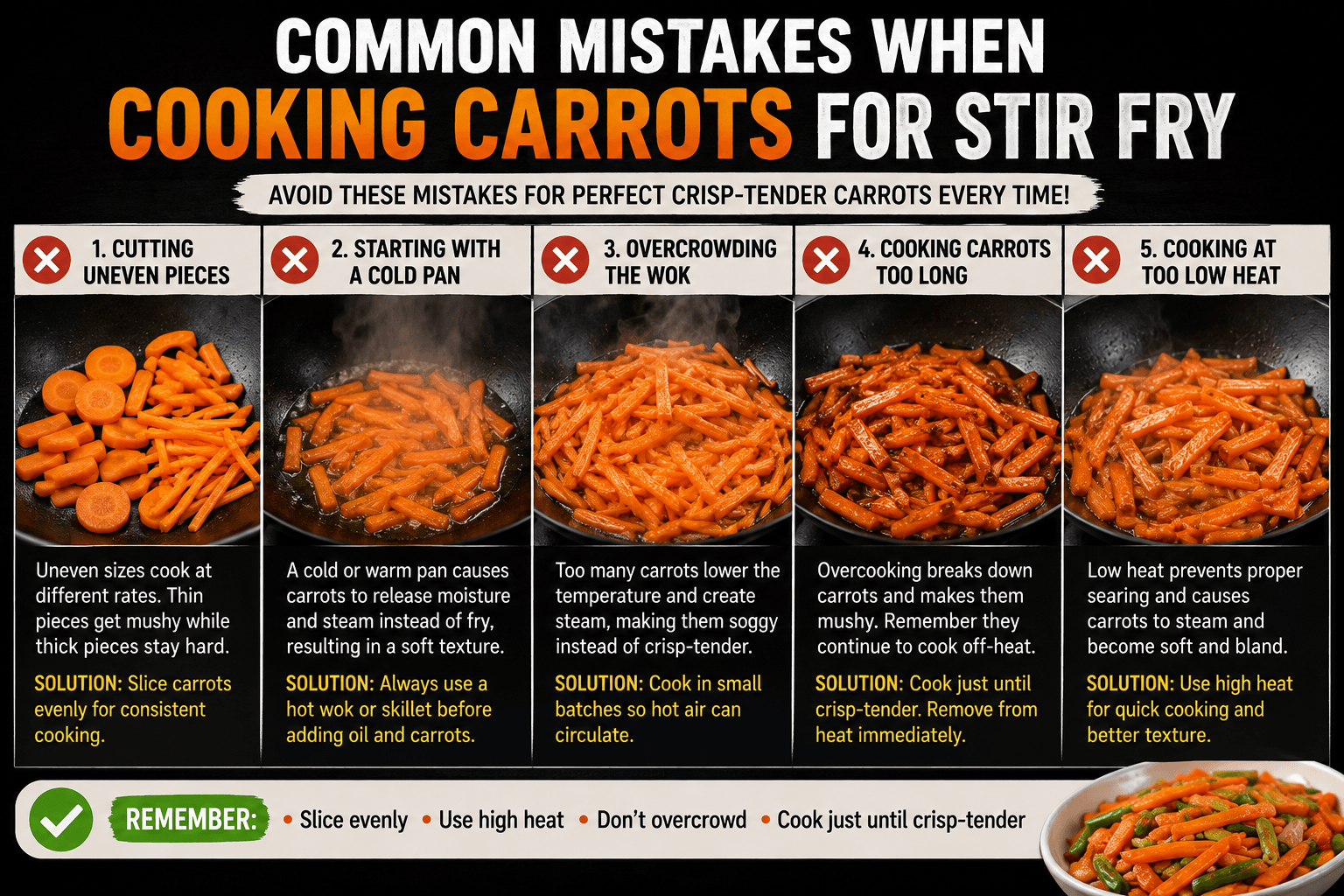
Even with fresh carrots and a hot wok, a few common mistakes can prevent you from achieving the perfect crisp-tender texture. Fortunately, they’re easy to avoid once you know what to watch for. Learning these techniques will help you consistently cook carrots for stir fry like a pro.
1. Cutting Uneven Pieces
Carrot slices that vary in thickness cook at different speeds. Thin pieces become soft while thicker slices remain undercooked. Using a sharp knife and taking a little extra time to create evenly sized slices ensures consistent cooking.
2. Starting with a Cold Pan
A stir fry should always begin with a fully heated wok or skillet. If the pan isn’t hot enough, carrots slowly release moisture and begin steaming instead of quickly browning. This results in vegetables that taste bland and have a softer texture.
3. Overcrowding the Wok
Adding too many vegetables at once lowers the pan’s temperature. Instead of frying, the carrots steam in their own moisture, making them soggy. If you’re preparing a large batch, cook the vegetables in two smaller batches for the best results.
Warning: Overcrowding is one of the biggest reasons homemade stir fry vegetables lose their crisp texture. Give the carrots enough room so hot air and direct heat can circulate around every slice.
4. Cooking Carrots Too Long
Carrots continue to soften slightly after they’re removed from the heat. If you wait until they feel completely soft in the pan, they’ll likely become overcooked by the time dinner reaches the table.
Instead, remove them when they’re just tender enough to bite while still offering slight resistance in the center.
How to Tell When Carrots Are Perfectly Cooked
Unlike meat, carrots don’t have a target internal temperature. Instead, the best way to judge doneness is by texture.
Properly cooked stir fry carrots should have these characteristics:
- Bright orange color.
- Slightly softened exterior.
- Gentle resistance when bitten.
- No hard raw center.
- Not floppy or mushy.
A simple fork or knife test works well. The utensil should slide into the carrot with light resistance—not effortlessly.
| Texture | Meaning | Recommended Action |
|---|---|---|
| Very firm | Undercooked | Cook 1–2 minutes longer |
| Light resistance | Perfect crisp-tender | Remove from heat |
| Very soft | Overcooked | Reduce cooking time next batch |
Checking the texture during the final minute of cooking is much more reliable than relying solely on a timer. Every stove, wok, and carrot thickness is slightly different.
Tip: Taste one carrot slice during cooking. It’s the quickest and most accurate way to know whether you’ve reached the ideal crisp-tender texture.
Should You Cover the Pan?
Generally, no. Traditional stir frying uses high heat with the pan uncovered. Covering traps steam, which softens vegetables much faster and reduces the slight crunch that makes stir fry so enjoyable.
If you’re using especially thick carrot slices, covering the pan for 30 to 60 seconds can help soften the centers. However, uncover the pan immediately afterward so excess moisture evaporates and the carrots continue to fry rather than steam.
For most recipes, an uncovered wok produces the best flavor, color, and texture.
If your vegetables often turn out soft instead of crisp, check out our guides on How to Fix Soggy Stir Fry Vegetables and Common Vegetable Stir Fry Mistakes for more troubleshooting tips.
How to Store and Reheat Cooked Stir Fry Carrots
Even when you perfectly cook carrots for stir fry, you may have leftovers. Proper storage helps preserve their texture, flavor, and food safety. While reheated carrots won’t be quite as crisp as freshly cooked ones, the right methods can keep them surprisingly close.
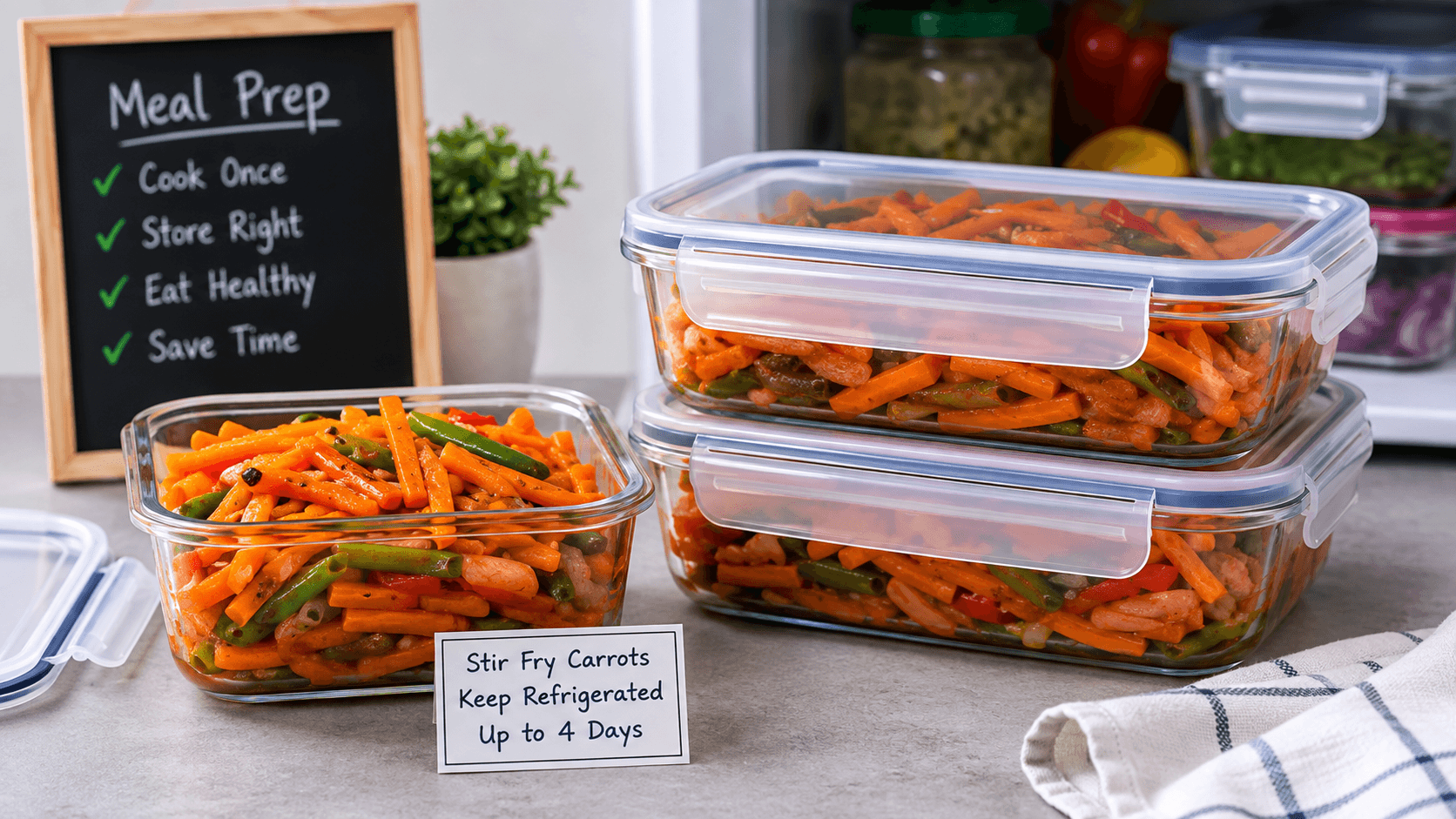
Allow the stir fry to cool for no more than two hours before transferring it to airtight containers. Refrigerate promptly to help maintain freshness and reduce the risk of bacterial growth.
Storage Tip: Store cooked stir fry carrots in an airtight container in the refrigerator for up to 4 days. For the best texture, avoid leaving the vegetables uncovered, as they can dry out and lose their natural sweetness.
| Storage Method | Recommended Time | Best Practice |
|---|---|---|
| Refrigerator | Up to 4 days | Use an airtight container |
| Freezer | Up to 2 months | Freeze in meal-sized portions |
| Room Temperature | Maximum 2 hours | Refrigerate promptly |
If freezing leftovers, remember that carrots naturally soften slightly after thawing because ice crystals break down some of their cell structure. They’re still excellent in stir fry but may lose a bit of their original crunch.
The Best Way to Reheat Stir Fry Carrots
The reheating method has a significant impact on texture. Microwaving is convenient, but it can make carrots softer because it generates steam inside the container.
For the best results, reheat stir fry in a hot skillet or wok over medium-high heat for two to three minutes. This quickly warms the vegetables while helping them retain some of their original crispness.
If using a microwave, heat the stir fry in short 30-second intervals, stirring between each round to avoid overheating.
Tip: Add a teaspoon of water or a splash of stir fry sauce only if the vegetables seem dry. Too much liquid will soften the carrots unnecessarily.
Can You Meal Prep Carrots for Stir Fry?
Absolutely. Carrots are one of the best vegetables for meal prep because they’re naturally firm and stay fresh longer than many other vegetables.
You can wash, peel, and slice carrots several days before cooking. Store the prepared slices in an airtight container lined with a dry paper towel to absorb excess moisture.
Prepared carrots typically stay fresh in the refrigerator for three to five days, making weeknight dinners much quicker to prepare.
Kitchen Secret: Slice several carrots at once and store them in portion-sized containers. Having vegetables already prepared makes it much easier to cook carrots for stir fry in just a few minutes after work.
Fresh vs. Frozen Carrots for Stir Fry
Fresh carrots generally provide the best texture because they contain less surface moisture and maintain their structure during high-heat cooking. Frozen carrots are convenient but are partially cooked before freezing, so they soften more quickly in the wok.
| Fresh Carrots | Frozen Carrots |
|---|---|
| Best crisp-tender texture | Softer after cooking |
| Excellent for high-heat stir fry | Cook faster |
| Long refrigerator life | Convenient freezer storage |
| Maximum natural sweetness | Slightly milder flavor |
If frozen carrots are your only option, cook them directly from frozen and reduce the cooking time slightly. Avoid thawing first, as this releases additional moisture that can make the stir fry watery.
To learn more about choosing vegetables, read our guide on Fresh vs. Frozen Vegetables for Stir Fry. You can also try your perfectly cooked carrots in our Healthy Chicken Stir Fry, Garlic Chicken Stir Fry, or Chicken Zucchini Stir Fry.
Frequently Asked Questions
How long should I cook carrots for stir fry?
Most thinly sliced carrots need about 3 to 5 minutes over high heat. The exact time depends on the thickness of the slices and the temperature of your wok. The goal is to cook carrots for stir fry until they’re crisp-tender—easy to bite but still slightly firm.
Can carrots be too hard in stir fry?
Yes. If carrots are cut too thick or not cooked long enough, they’ll remain unpleasantly hard. Slice them evenly, about 1/8 inch thick, and cook them before adding faster-cooking vegetables.
Should I blanch carrots before stir frying?
Usually no. Thinly sliced carrots cook perfectly in a hot wok without blanching. Blanching is only helpful for very thick slices or when preparing large batches for meal prep.
Why did my stir fry carrots become mushy?
Mushy carrots are usually caused by overcooking, overcrowding the pan, or cooking at too low a temperature. High heat and quick cooking help preserve their crisp-tender texture.
Can I prepare carrots ahead of time?
Absolutely. Wash, peel, and slice carrots up to five days in advance. Store them in an airtight container in the refrigerator until you’re ready to cook.
What’s the best oil for cooking carrots in a stir fry?
Choose oils with a high smoke point, such as avocado oil, peanut oil, or canola oil. These oils perform well at the high temperatures needed for stir frying.
Final Thoughts
Learning how to cook carrots for stir fry is a simple skill that can dramatically improve the quality of your homemade meals. By choosing fresh carrots, slicing them evenly, using high heat, and adding them at the right time, you’ll consistently achieve the ideal crisp-tender texture that’s common in restaurant-quality stir fry.
Remember that preparation is just as important as cooking. Dry the carrots thoroughly, avoid overcrowding the pan, and taste them during the final minute of cooking rather than relying only on a timer. These small adjustments make a noticeable difference in flavor, texture, and appearance.
Once you’ve mastered these techniques, you’ll be able to confidently add perfectly cooked carrots to everything from classic chicken stir fry to colorful vegetable dishes. With a little practice, crisp-tender carrots will become one of the highlights of every stir fry you make.
References
🍽️ You Might Also Like



📧 Save This Recipe For Later
Enter your email and we will send this recipe directly to your inbox.