
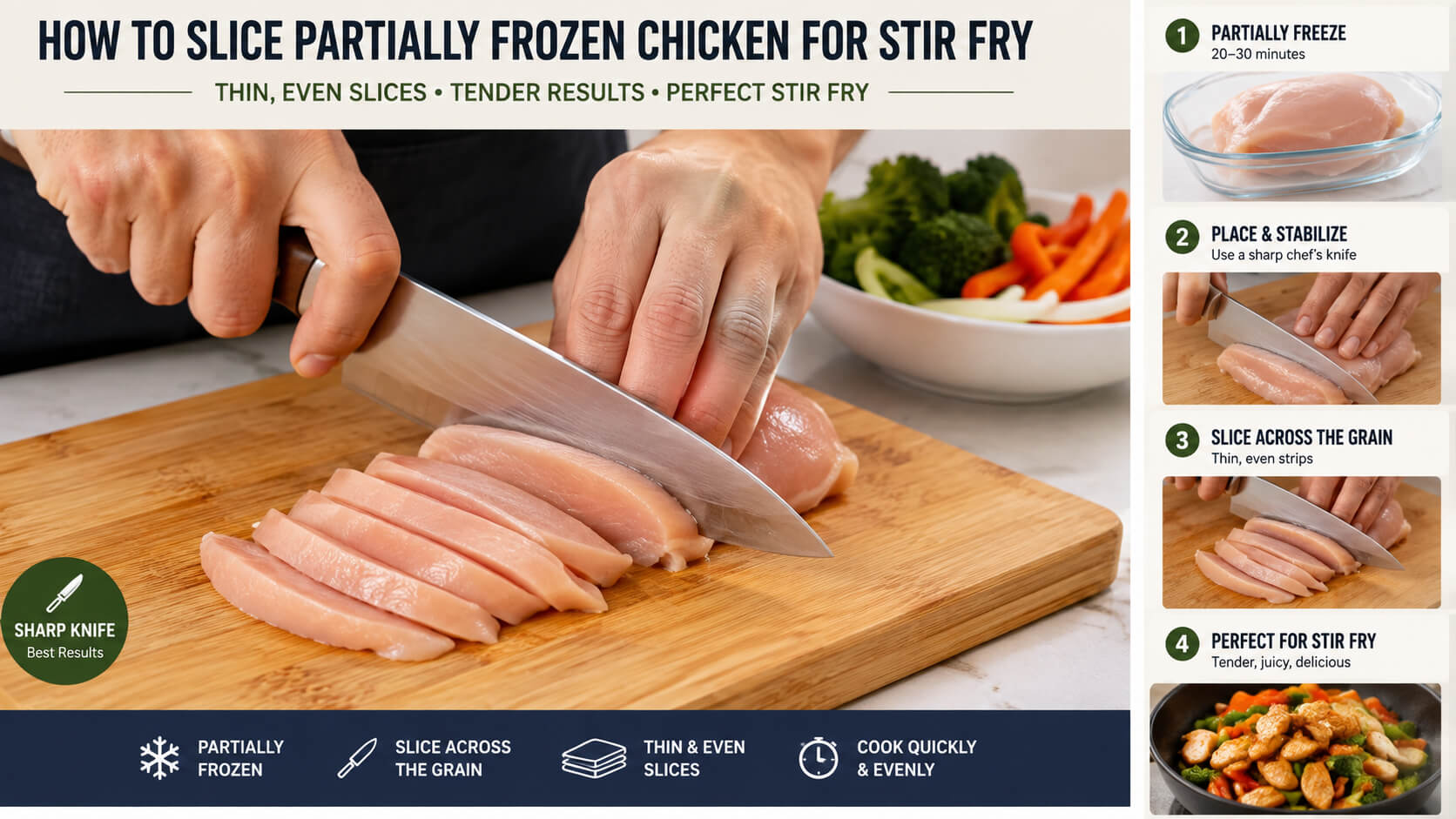
How to Slice Partially Frozen Chicken for Stir Fry
How to Slice Partially Frozen Chicken for Stir Fry
If you’ve ever struggled to cut raw chicken into thin, even slices, you’re not alone. Soft, fully thawed chicken tends to slide around on the cutting board, making it difficult to create the uniform strips that cook quickly and evenly in a stir fry. Fortunately, professional chefs use a simple trick: partially freezing the chicken before slicing.
Learning how to slice frozen chicken stir fry style doesn’t mean cutting a rock-solid frozen chicken breast. Instead, it means slicing chicken while it is slightly firm from the freezer. This gives you greater control, cleaner cuts, and consistent pieces that absorb marinades evenly and cook at the same rate.
Whether you’re preparing chicken breast, tenderloins, or thighs, this technique helps create restaurant-quality stir fry at home. In this guide, you’ll learn exactly how long to partially freeze chicken, the safest way to slice it, common mistakes to avoid, and expert tips for getting perfectly thin slices every time.
Quick Answer
The best way to slice frozen chicken stir fry style is to chill the chicken in the freezer for about 20–30 minutes until it becomes firm but not completely frozen. Place it on a stable cutting board and use a sharp chef’s knife to cut thin slices across the grain, about ⅛ to ¼ inch thick. Uniform slices cook faster, stay juicy, and create tender restaurant-style stir fry chicken.
- Partially freeze for 20–30 minutes.
- Use a sharp chef’s knife.
- Slice across the grain.
- Keep slices ⅛–¼ inch thick.
- Cook immediately or refrigerate safely.
Table of Contents
Why Partially Freeze Chicken Before Slicing?
The biggest advantage of using the slice frozen chicken stir fry technique is control. Fresh chicken is naturally slippery because of its moisture content, making it difficult to produce thin, consistent slices. Even experienced home cooks often end up with uneven pieces that cook at different speeds.
When chicken is chilled until slightly firm, the meat becomes much easier to handle. The knife passes through cleanly instead of dragging or tearing the fibers. As a result, every slice looks cleaner and cooks more evenly.
Uniform chicken strips are especially important for stir fry because cooking happens over high heat in just a few minutes. Thick pieces may remain undercooked while thinner pieces dry out. Consistent slices solve both problems.
| Fully Thawed Chicken | Partially Frozen Chicken |
|---|---|
| Soft and slippery | Firm and stable |
| Uneven slicing | Clean, thin slices |
| Higher risk of tearing | Smooth knife cuts |
| Uneven cooking | Even cooking throughout |
| Harder for beginners | Much easier to control |
Chef’s Secret: Professional restaurant kitchens frequently chill chicken before prep because slightly firm meat produces cleaner cuts, better presentation, and more consistent cooking results.
How Long Should You Freeze Chicken Before Slicing?
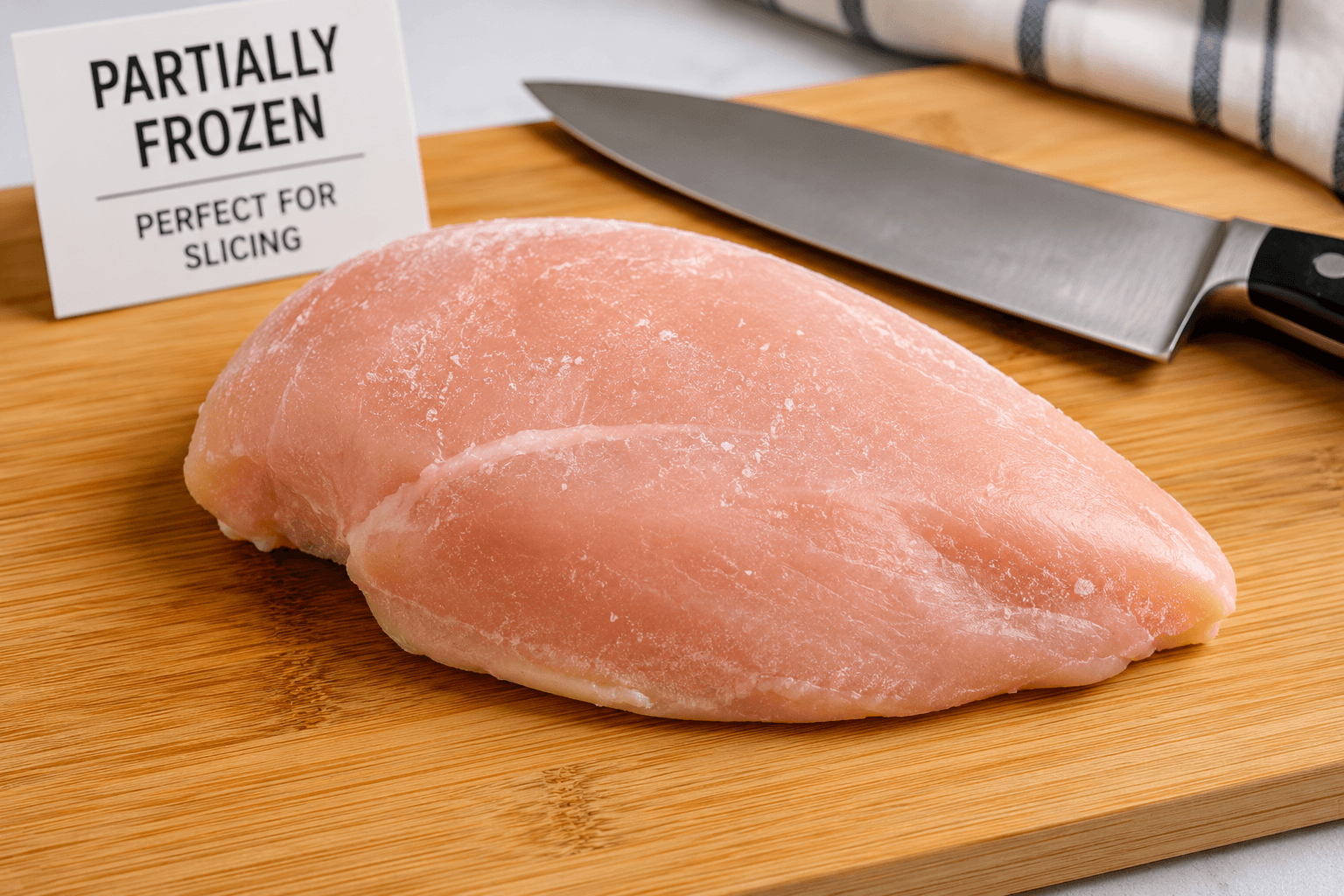
The ideal freezing time depends on the size and thickness of the chicken. Your goal isn’t to freeze it solid. Instead, you want the outside to feel firm while the center remains easy to cut with a sharp knife.
For most boneless, skinless chicken breasts, placing them in the freezer for 20 to 30 minutes works well. Larger pieces may need slightly longer, while thinner cutlets may only need 15 to 20 minutes.
You’ll know the chicken is ready when it feels noticeably firmer than refrigerated chicken but still allows the knife to pass through without excessive force. If the blade struggles to cut, the chicken has become too frozen and should rest at room temperature for several minutes before slicing.
Another benefit of the slice frozen chicken stir fry method is improved consistency. Firm meat allows you to maintain the same thickness from the first slice to the last, which helps every piece finish cooking at nearly the same time.
In the next section, you’ll learn the exact step-by-step method professional chefs use to slice partially frozen chicken safely and efficiently.
Step-by-Step Guide to Slice Partially Frozen Chicken for Stir Fry
Once your chicken has reached the ideal firmness, it’s time to slice it correctly. Using the proper technique will help you create thin, even strips that cook quickly, absorb marinades more effectively, and stay tender throughout the cooking process.
This method works well for chicken breasts, tenderloins, and boneless chicken thighs. The key is working with a sharp knife and taking your time instead of rushing through the process.
Step 1: Prepare Your Workspace
Start with a clean, non-slip cutting board placed on a stable countertop. A damp kitchen towel underneath the board can help prevent movement while slicing.
Use a sharp chef’s knife or slicing knife. A dull blade requires more pressure, increasing the chance of uneven cuts or accidental slips.
Tip: Sharpen your knife before preparing chicken. A sharp knife is actually much safer because it cuts smoothly instead of forcing you to push harder.
Step 2: Check That the Chicken Is Partially Frozen
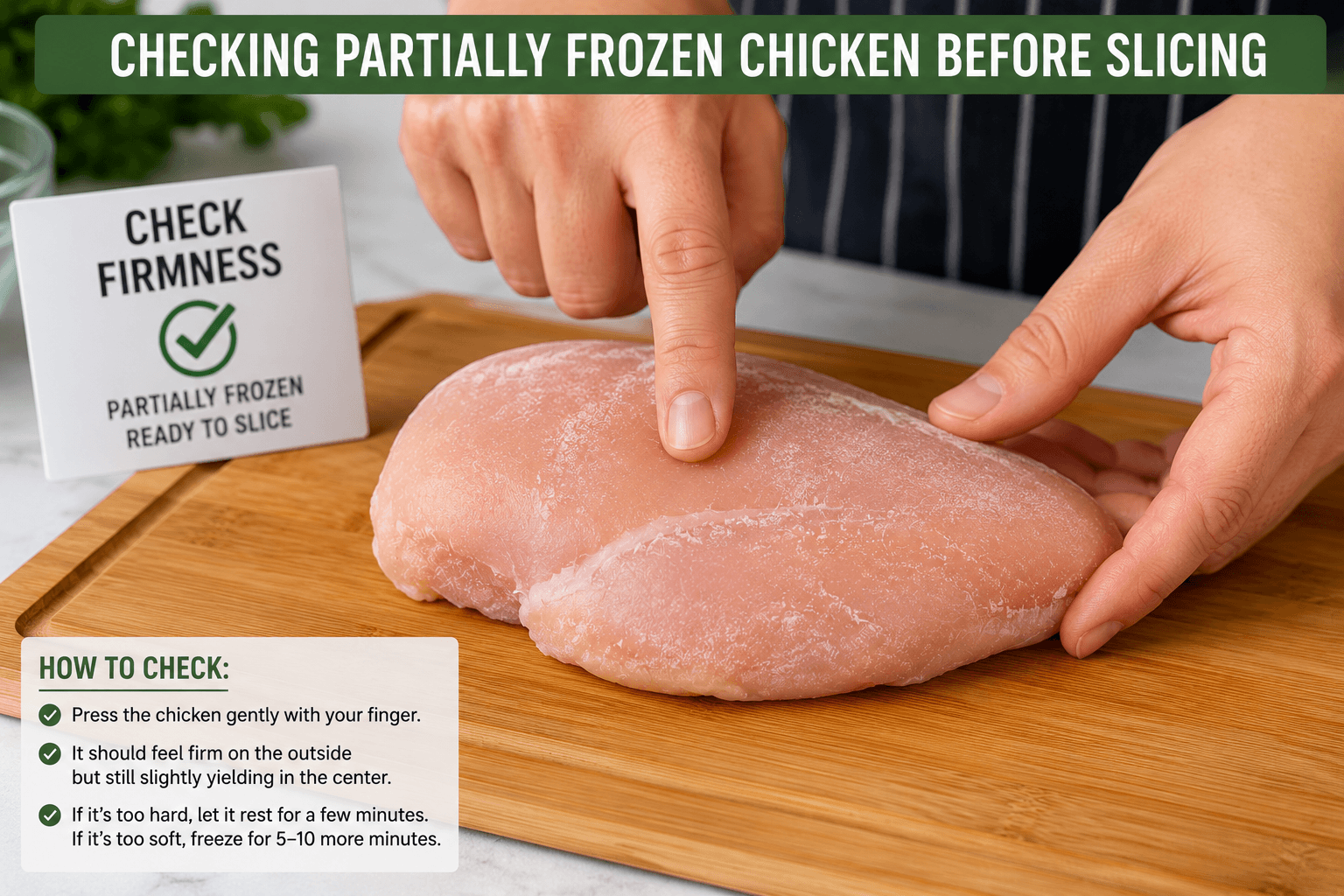
Before making the first cut, gently press the chicken with your finger. It should feel firm around the edges while still yielding slightly in the center.
If it’s still soft and floppy, return it to the freezer for another 5 to 10 minutes. If it’s rock hard, let it rest at room temperature for several minutes until it softens slightly.
Step 3: Identify the Direction of the Grain
One of the biggest secrets to tender stir fry chicken is slicing across the grain.
The grain refers to the direction of the muscle fibers running through the chicken breast. Instead of cutting parallel to these fibers, slice across them.
Cutting across the grain shortens the muscle fibers, making every bite noticeably more tender after cooking.
Kitchen Secret: Even perfectly cooked chicken can seem chewy if it’s sliced with the grain. Cutting across the grain is one of the easiest ways to improve texture without changing your recipe.
Step 4: Slice Thin, Even Strips
Hold the chicken securely with your non-cutting hand, keeping your fingertips curled safely away from the blade.
Using smooth, controlled strokes, cut strips approximately ⅛ to ¼ inch thick. Try to keep every slice as uniform as possible.
Consistent thickness ensures every piece reaches the proper internal temperature at nearly the same time, preventing dry or undercooked pieces.
| Slice Thickness | Best Use | Cooking Result |
|---|---|---|
| ⅛ inch | Quick stir fry | Very tender and fast cooking |
| 3/16 inch | Most recipes | Excellent balance of tenderness |
| ¼ inch | Heartier vegetable stir fries | Slightly meatier texture |
| Over ½ inch | Not recommended | Cooks unevenly and may dry out |
Step 5: Continue Until All Chicken Is Uniform
Repeat the same slicing motion across the entire chicken breast, maintaining consistent thickness from beginning to end.
If you’re preparing several chicken breasts, keep the remaining pieces refrigerated while working to maintain food safety.
After slicing, the chicken is ready for seasoning, marinating, or velveting before cooking.
Why Thin, Even Chicken Slices Matter
Many home cooks focus only on seasoning or sauce, but properly sliced chicken has just as much impact on the final dish.
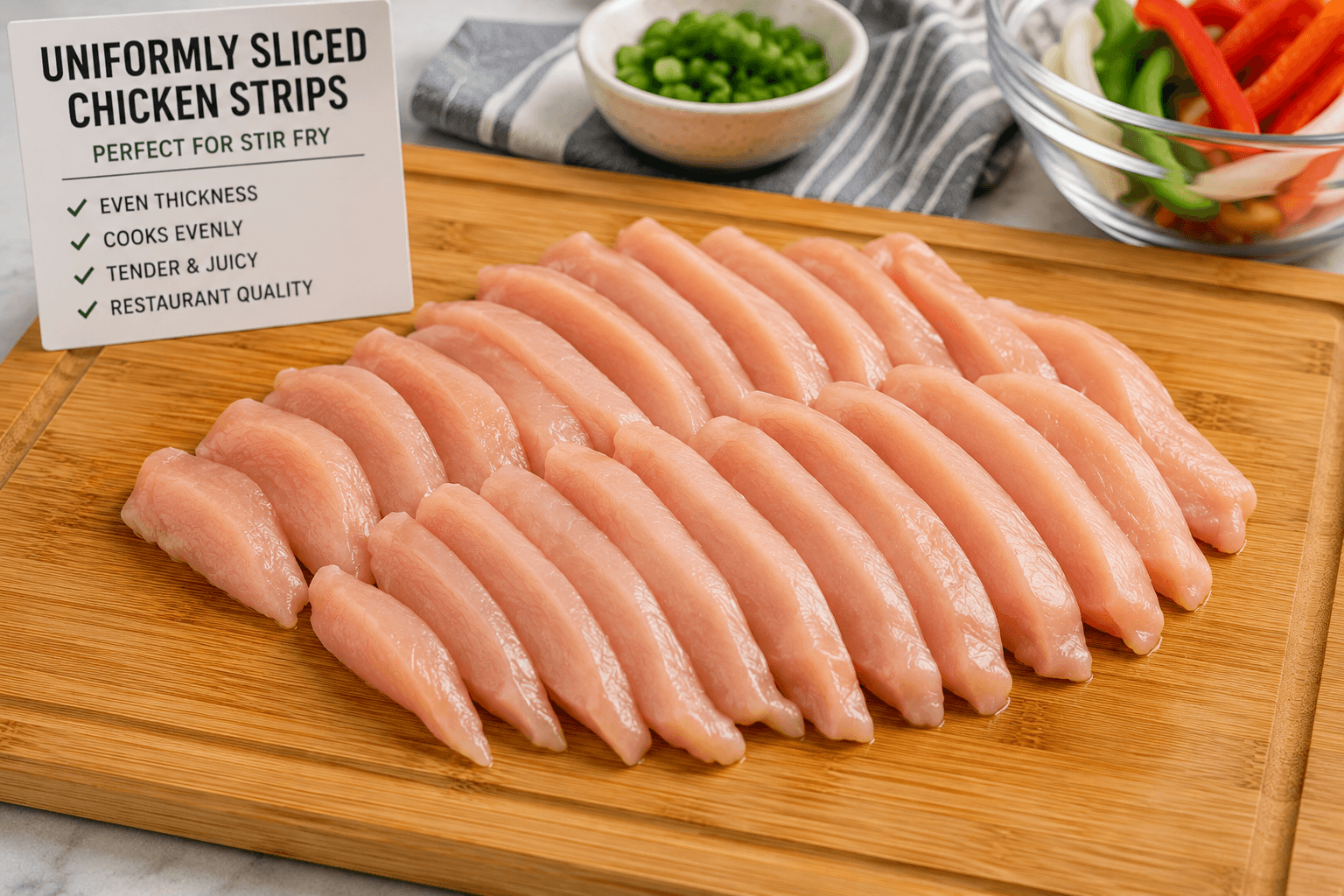
Using the slice frozen chicken stir fry technique creates pieces that cook evenly, brown more consistently, and absorb marinades more efficiently. Because every strip is nearly identical in size, the chicken finishes cooking at the same time instead of leaving some pieces dry while others remain undercooked.
Thin slices also expose more surface area to the hot pan, allowing them to develop better browning without overcooking the interior. This creates the juicy, tender texture commonly associated with restaurant-quality stir fry.
In addition, evenly sliced chicken mixes more naturally with vegetables, making every bite balanced and easier to eat with chopsticks or a fork.
Common Mistakes When Slicing Partially Frozen Chicken
Even though the slice frozen chicken stir fry technique is simple, a few common mistakes can make slicing more difficult and affect the texture of your finished stir fry. Understanding these problems ahead of time will help you achieve consistent, restaurant-quality results every time.
1. Freezing the Chicken Solid
The biggest mistake is leaving the chicken in the freezer too long. Completely frozen chicken is difficult to cut safely and requires excessive force, increasing the risk of slipping with the knife.
Instead, freeze the chicken only until it becomes slightly firm. The knife should still glide through the center with steady pressure.
Warning: Never try to force a knife through rock-hard frozen chicken. Allow it to thaw slightly before slicing to reduce the risk of injury.
2. Using a Dull Knife
A dull knife crushes the meat instead of slicing it cleanly. This creates ragged edges, uneven strips, and makes preparation much harder.
A sharp chef’s knife requires less effort and produces cleaner cuts that look more professional.
3. Cutting With the Grain
Many cooks overlook the direction of the muscle fibers. Slicing with the grain leaves long fibers intact, making cooked chicken noticeably chewier.
Always identify the grain before making your first cut and slice across it whenever possible.
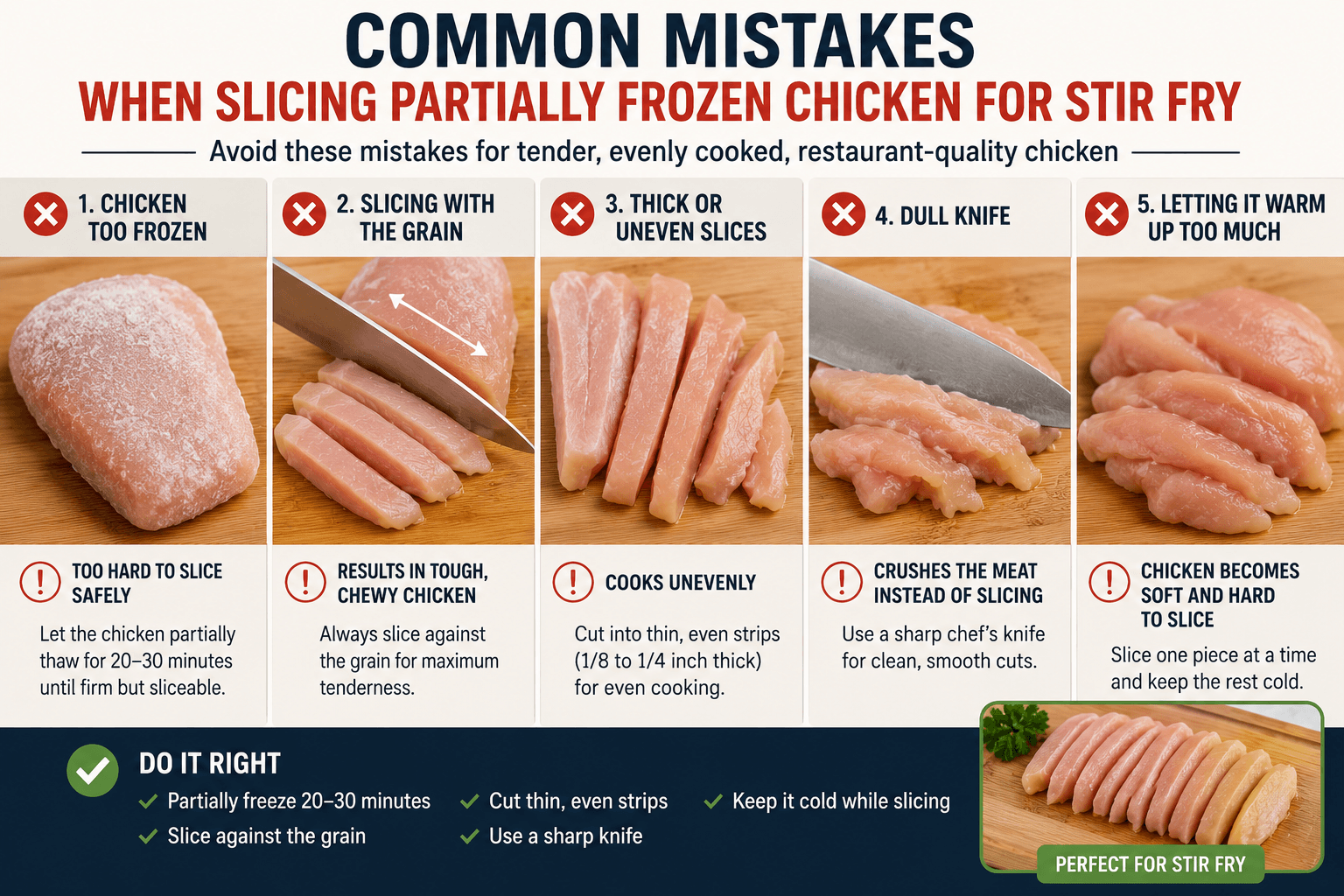
4. Making Uneven Slices
If some pieces are twice as thick as others, they won’t cook evenly. Thin pieces may dry out before thicker pieces reach a safe internal temperature.
Taking an extra few seconds to maintain consistent thickness produces much better results during stir frying.
5. Letting the Chicken Warm Up Too Much
Partially frozen chicken becomes soft surprisingly quickly, especially in a warm kitchen.
If slicing several chicken breasts, keep the remaining pieces refrigerated while working so they stay firm.
Tip: Professional kitchens often slice one chicken breast at a time instead of leaving all the meat on the counter.
Expert Tips for Restaurant-Quality Chicken Slices
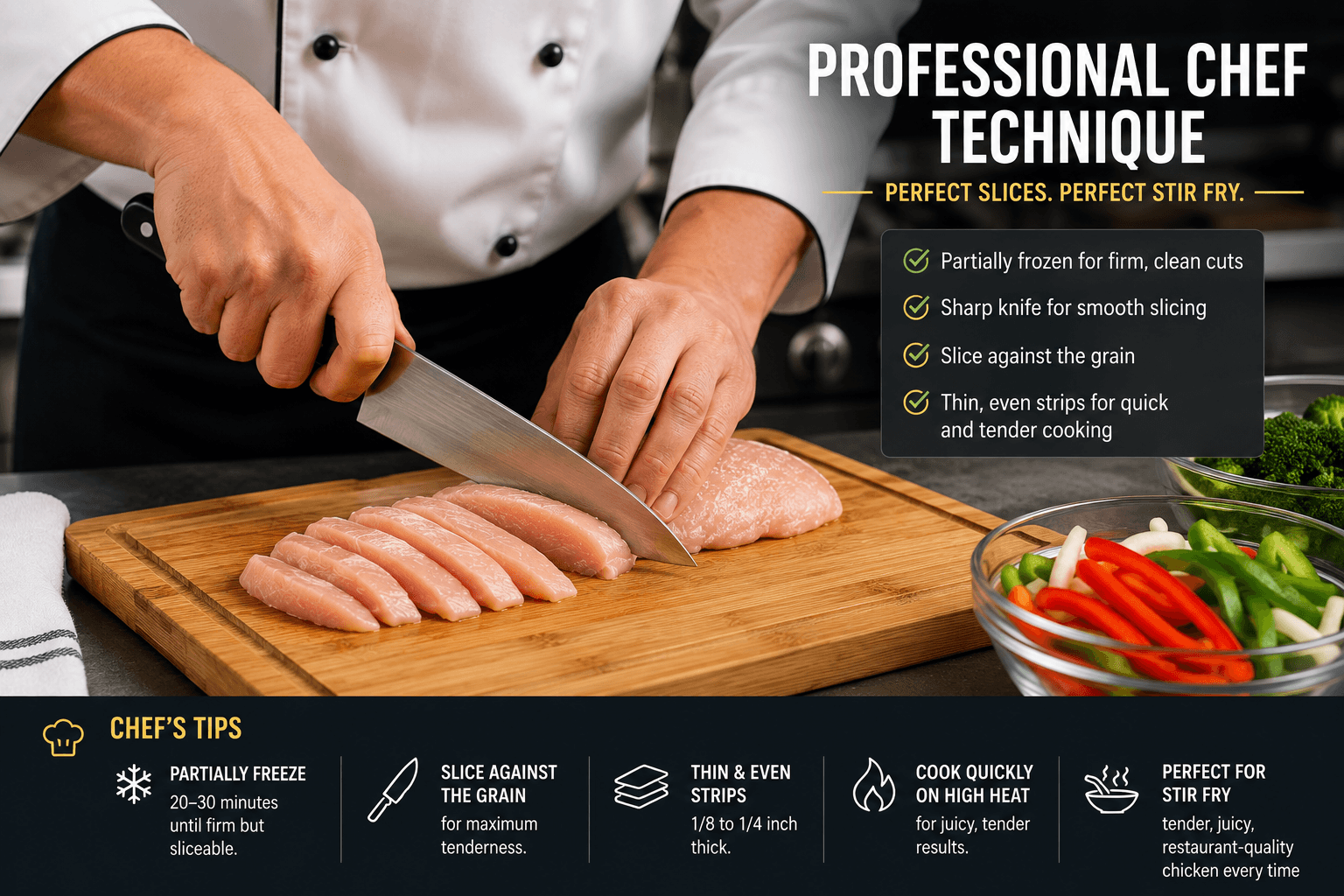
Professional chefs rely on a few simple habits to produce consistently tender stir fry chicken. These techniques take only a few extra minutes but make a noticeable difference in both appearance and texture.
- Freeze chicken for 20–30 minutes before slicing.
- Use a large, sharp chef’s knife instead of a serrated knife.
- Slice across the grain whenever possible.
- Keep slices between ⅛ and ¼ inch thick.
- Pat the chicken dry before slicing to improve grip.
- Work with one chicken breast at a time.
- Marinate or velvet the chicken immediately after slicing.
- Cook in small batches to prevent overcrowding.
Chef’s Secret: Restaurants often combine partially frozen slicing with a quick velveting marinade. This combination creates exceptionally tender chicken that stays juicy even over high stir fry heat.
Advantages
- Cleaner, more precise slices
- Safer and easier knife control
- More even cooking
- Better marinade absorption
- Restaurant-style presentation
- Tender texture after cooking
Disadvantages
- Requires planning ahead
- Can become too hard if over-frozen
- Needs a sharp knife
- Chicken must still be handled safely
Storage and Food Safety
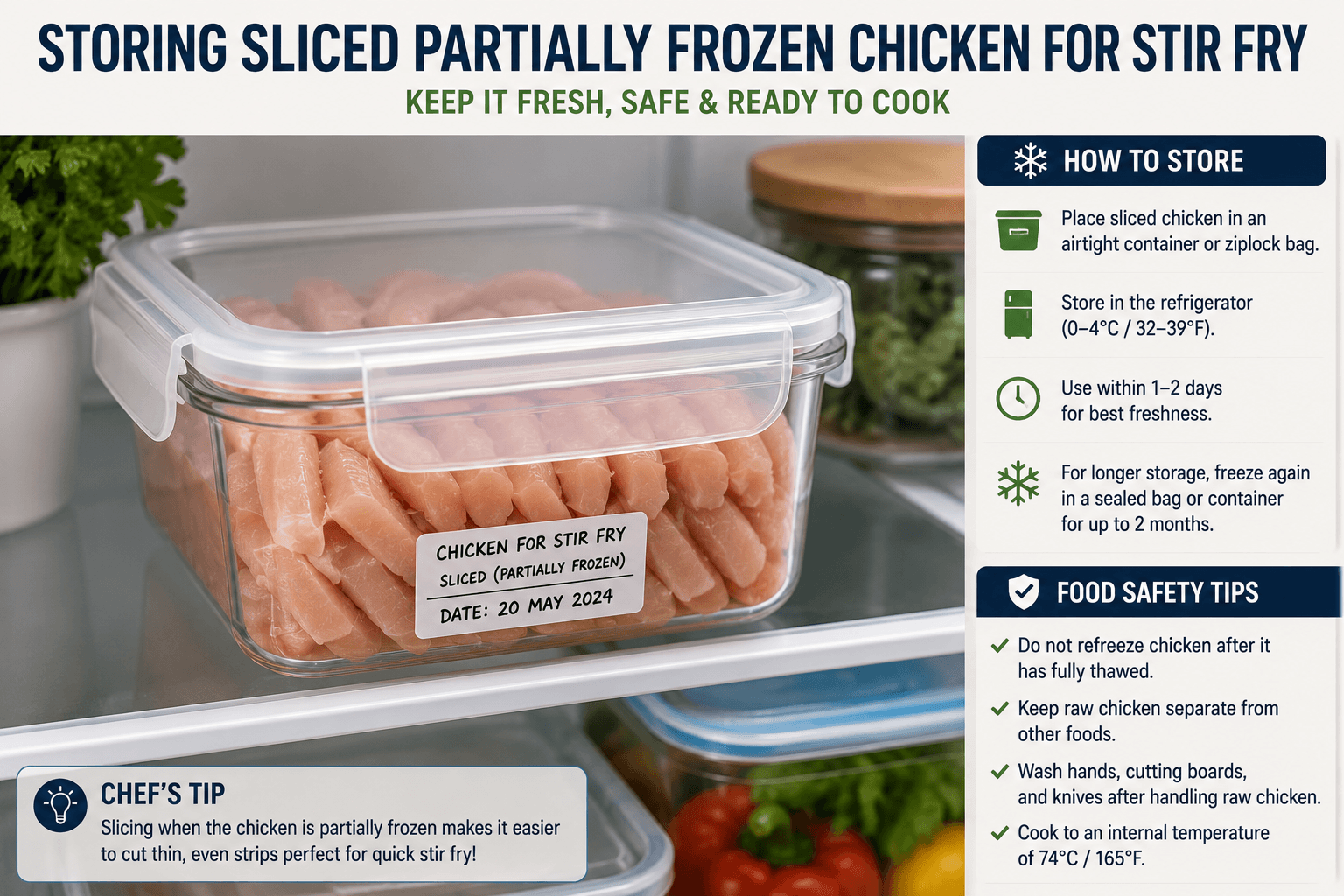
Once you’ve finished using the slice frozen chicken stir fry method, proper storage is essential for maintaining freshness and preventing foodborne illness.
If you’re cooking immediately, keep the sliced chicken refrigerated while preparing your vegetables and sauce.
For meal prep, transfer the sliced chicken to an airtight container or resealable freezer bag. Label it with the date before storing.
Refrigerator: Store raw sliced chicken for up to 1–2 days at or below 40°F (4°C).
Freezer: Freeze sliced chicken for up to 9 months for the best quality.
After Thawing: Never refreeze raw chicken that has completely thawed unless it has been cooked first.
Always sanitize your cutting board, knife, countertops, and hands after handling raw poultry to prevent cross-contamination with ready-to-eat foods.
When cooking, ensure every piece reaches an internal temperature of 165°F (74°C) using a food thermometer.
Frequently Asked Questions
Can you slice chicken straight from the freezer?
No. Completely frozen chicken is too hard to cut safely. For the best slice frozen chicken stir fry results, allow the chicken to thaw slightly until it is firm but still easy to slice with a sharp knife.
How long should I partially freeze chicken before slicing?
Most boneless, skinless chicken breasts only need 20–30 minutes in the freezer. Larger pieces may require up to 40 minutes, while thinner cutlets may be ready in about 15–20 minutes.
Should I slice chicken before or after marinating?
Slice the chicken first. Thin, even strips expose more surface area, allowing the marinade to coat every piece evenly and penetrate more effectively.
What knife is best for slicing chicken for stir fry?
A sharp 8-inch chef’s knife or slicing knife works best. Avoid dull knives because they crush the meat instead of making clean cuts.
How thick should stir fry chicken slices be?
For most stir fry recipes, slices between ⅛ inch and ¼ inch thick provide the ideal balance of tenderness, quick cooking, and even browning.
Why do restaurants have such tender stir fry chicken?
Restaurants combine several techniques, including slicing partially frozen chicken across the grain, cutting uniformly, velveting the meat, and cooking quickly over very high heat.
Final Thoughts
Mastering the slice frozen chicken stir fry technique is one of the easiest ways to improve homemade stir fry. By chilling chicken until it’s slightly firm, slicing it across the grain, and keeping every strip the same thickness, you’ll create chicken that cooks evenly, absorbs marinades better, and stays tender throughout the cooking process.
Although it only adds about 20 to 30 minutes of preparation time, partially freezing chicken can dramatically improve both the appearance and texture of your finished meal. Combined with proper marinating, high-heat cooking, and good food safety practices, this simple technique helps you achieve restaurant-quality stir fry at home every time.
🍽️ You Might Also Like




📧 Save This Recipe For Later
Enter your email and we will send this recipe directly to your inbox.