
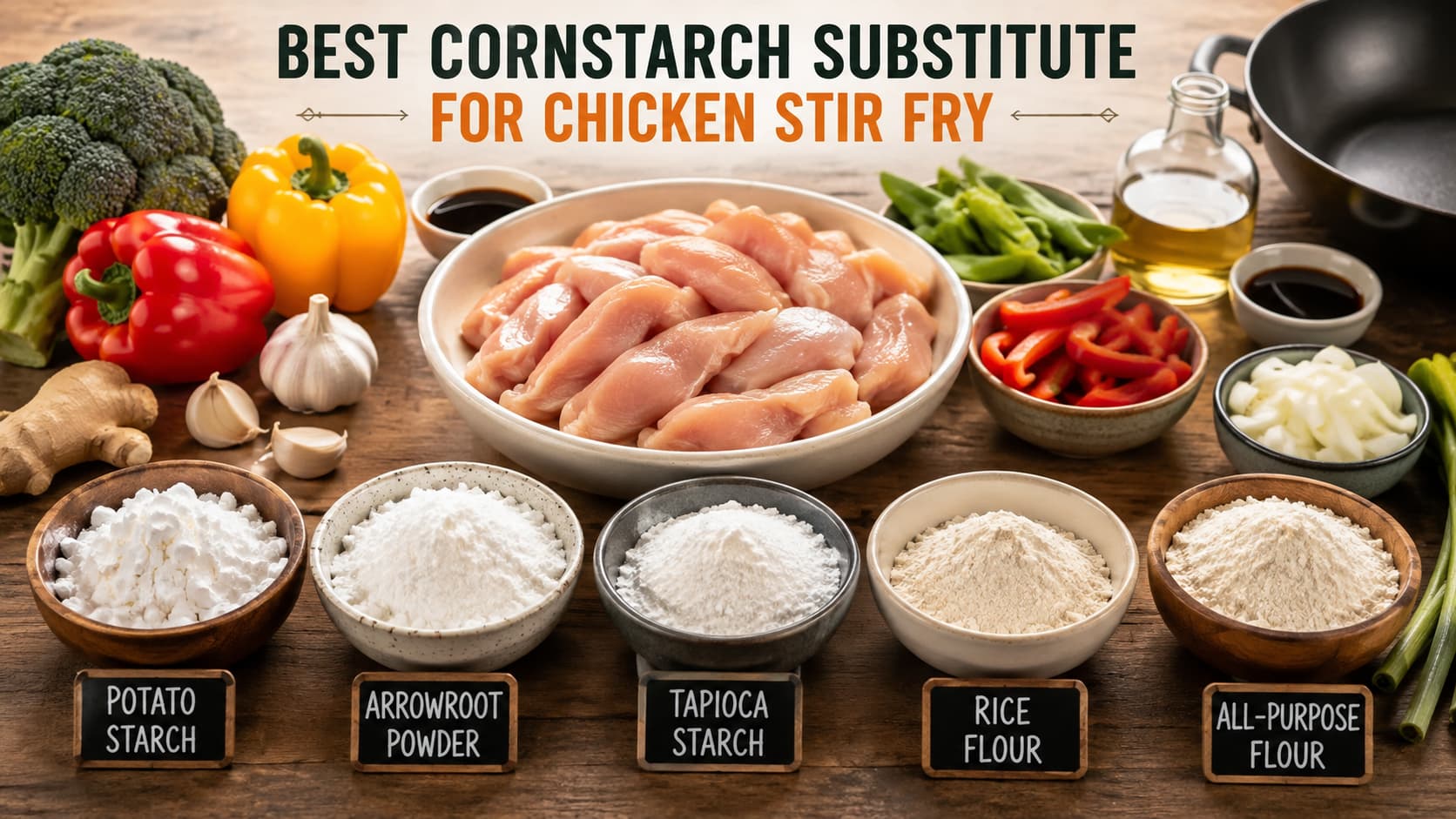
Best Cornstarch Substitute for Chicken Stir Fry
Best Cornstarch Substitute for Chicken Stir Fry
If you’ve started making chicken stir fry only to realize you’re out of cornstarch, don’t worry. Finding the best cornstarch substitute stir fry option is easier than most home cooks think. Several common pantry ingredients can replace cornstarch while still producing tender chicken, glossy sauces, and excellent texture.
Cornstarch is widely used in stir fry because it serves two important purposes. It creates a protective coating during velveting, helping chicken stay juicy, and it thickens sauces so they cling to every piece of meat and vegetable. Fortunately, many substitutes can perform one or both of these jobs with only minor adjustments.
The ideal replacement depends on what you’re making. Potato starch produces results very close to cornstarch, arrowroot creates a clear glossy sauce, tapioca starch offers excellent thickening power, while all-purpose flour works well when specialty starches aren’t available. Knowing when to use each substitute helps you avoid watery sauces, gummy textures, or dry chicken.
In this guide, you’ll learn the best cornstarch substitute stir fry options, when each one works best, how to substitute the correct amount, and which alternatives deliver the closest results for tender chicken and restaurant-quality stir fry.
Quick Answer
The best cornstarch substitute stir fry is potato starch because it closely matches cornstarch’s ability to tenderize chicken and thicken stir fry sauces. Arrowroot powder, tapioca starch, rice flour, and all-purpose flour are also effective alternatives depending on your recipe.
- Potato starch: Best overall substitute with nearly identical performance.
- Arrowroot powder: Produces smooth, glossy sauces and works well for gluten-free cooking.
- Tapioca starch: Excellent thickener that creates a slightly silky texture.
- Rice flour: Provides a light coating and mild thickening.
- All-purpose flour: Easy pantry substitute when nothing else is available.
Choosing the right cornstarch substitute stir fry depends on whether you’re coating the chicken, thickening the sauce, or doing both.
Table of Contents
Why Is Cornstarch Used in Stir Fry?
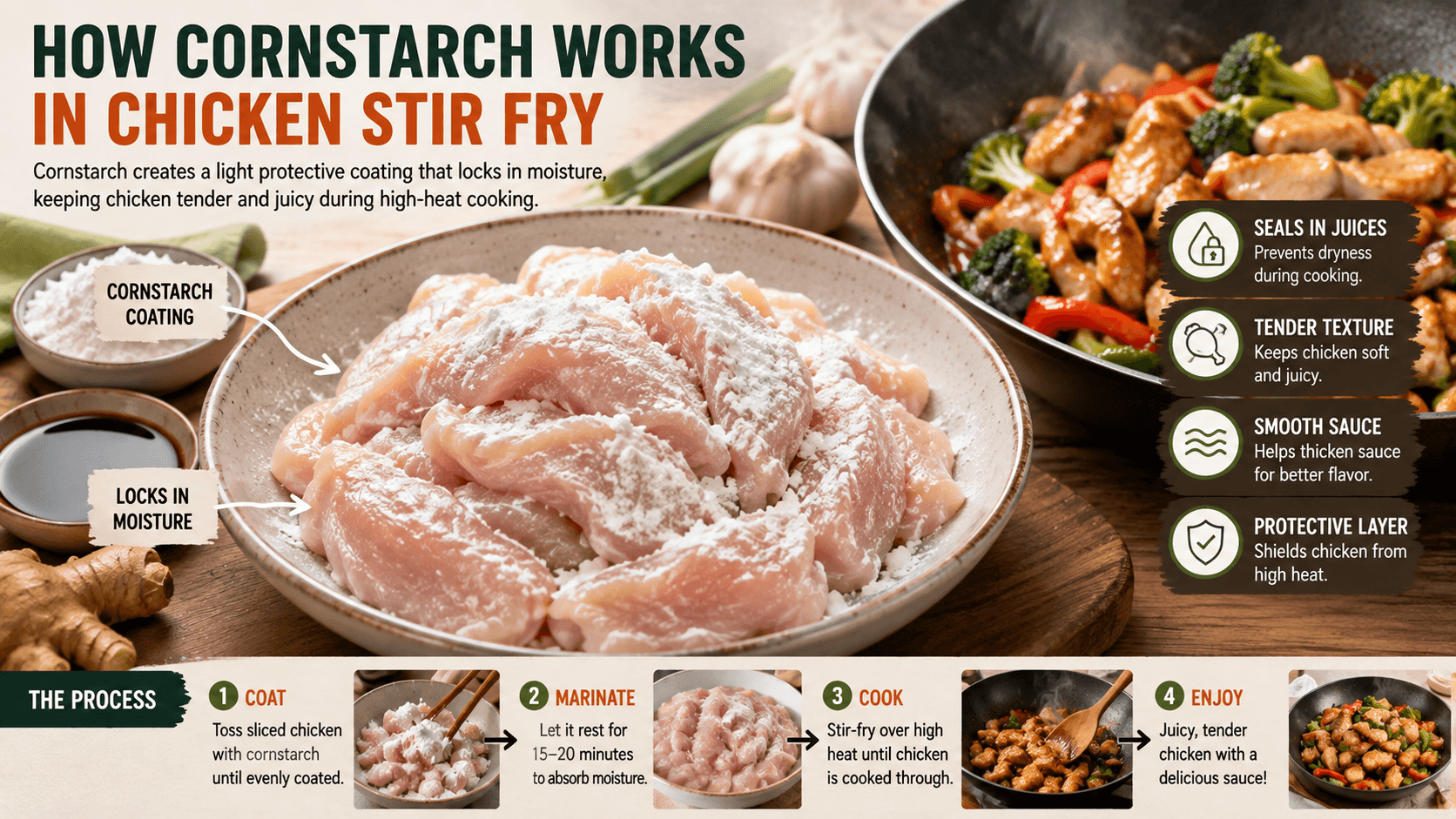
Cornstarch is one of the most important ingredients in many chicken stir fry recipes because it improves both the texture of the chicken and the consistency of the sauce. Before looking for the best cornstarch substitute stir fry, it helps to understand exactly what cornstarch does during cooking.
When mixed with chicken, cornstarch creates a thin protective coating that locks in moisture. As the chicken cooks over high heat, this coating reduces moisture loss, resulting in tender, juicy pieces instead of dry or chewy meat. This technique is commonly known as velveting chicken for stir fry, and it’s one of the secrets behind restaurant-quality stir fry.
Cornstarch also acts as an excellent thickening agent. When combined with liquid and heated, the starch granules absorb moisture and create a smooth, glossy sauce that coats every bite of chicken and vegetables without becoming heavy.
If you’re preparing a homemade sauce, you may also want to read our guide to easy homemade stir fry sauce to learn how starch affects sauce consistency.
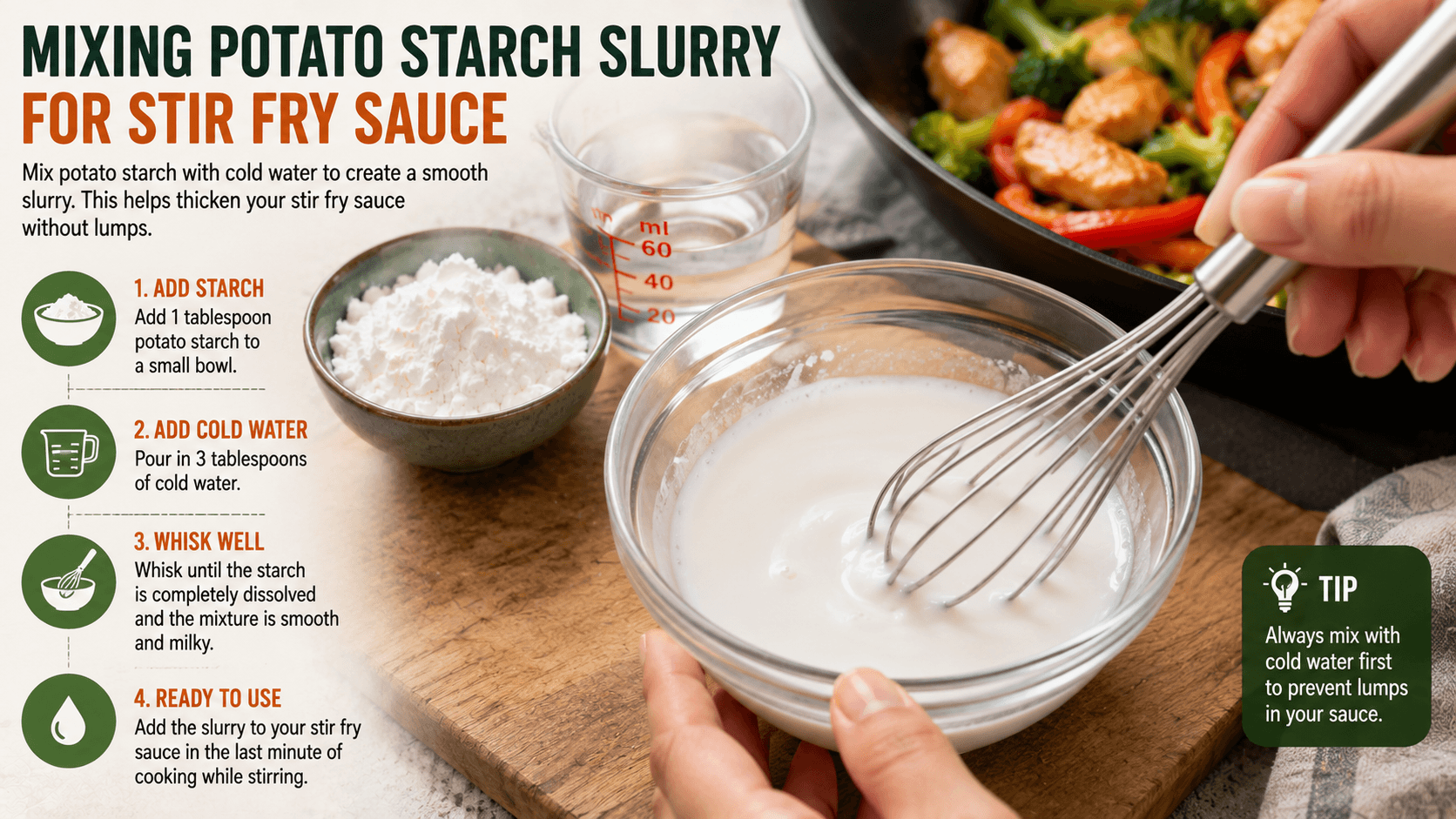
Tip: Always mix any starch with cold water before adding it to a hot pan. This simple step prevents lumps and creates a silky, evenly thickened stir fry sauce.
Best Cornstarch Substitute for Stir Fry
The best cornstarch substitute stir fry depends on your goal. Some ingredients closely mimic cornstarch during velveting, while others excel at thickening sauces. Here are the most reliable alternatives.
1. Potato Starch
Potato starch is widely considered the closest replacement for cornstarch. It creates a light coating around the chicken, retains moisture well, and thickens sauces without altering the flavor.
- Excellent for velveting chicken
- Produces a glossy sauce
- Neutral taste
- Use a 1:1 substitution ratio
2. Arrowroot Powder
Arrowroot powder is another outstanding gluten-free option. It produces a clear, shiny sauce and works especially well in recipes that include delicate vegetables.
- Gluten-free
- Smooth texture
- Works well for light sauces
- Use equal amounts as cornstarch
3. Tapioca Starch
Tapioca starch thickens quickly and creates a silky texture. It performs well in stir fry sauces, although using too much may produce a slightly stretchy consistency.
- Strong thickening ability
- Glossy appearance
- Best used in moderate amounts
Kitchen Secret: Potato starch is the preferred substitute in many Asian kitchens because it delivers tender chicken and a glossy sauce that closely resembles traditional cornstarch-based stir fry.
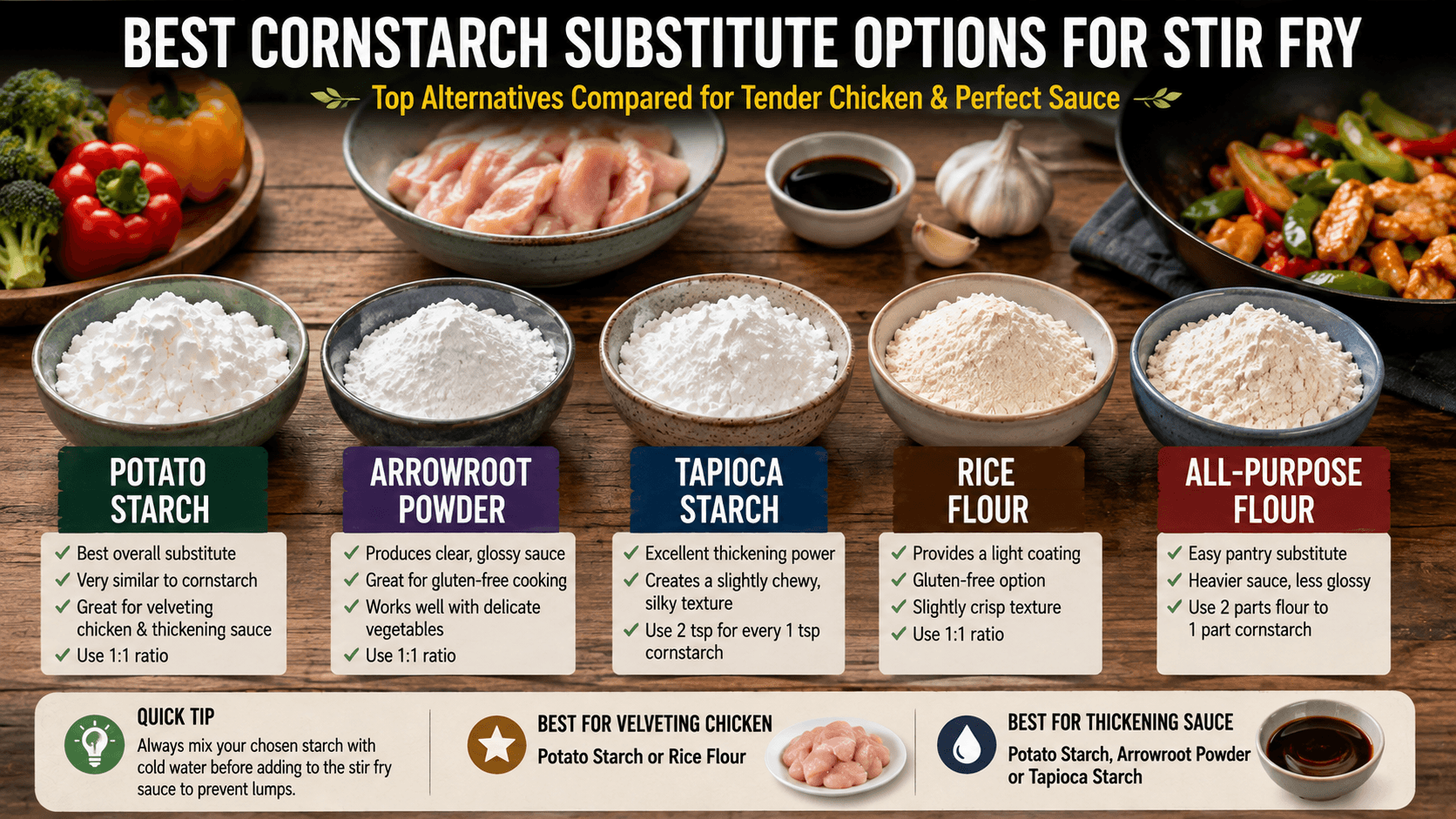
Cornstarch Substitute Stir Fry Comparison Table
Not every substitute performs the same way. Some are better for coating chicken during velveting, while others excel at thickening sauces. The table below compares the most popular alternatives so you can choose the right one for your recipe.
| Substitute | Best For | Substitution Ratio | Texture | Gluten-Free |
|---|---|---|---|---|
| Potato Starch | Velveting & Sauce Thickening | 1:1 | Very smooth and glossy | Yes |
| Arrowroot Powder | Light Sauces | 1:1 | Clear, silky finish | Yes |
| Tapioca Starch | Sauce Thickening | 2 tsp for every 1 tsp cornstarch | Slightly chewy if overused | Yes |
| Rice Flour | Chicken Coating | 1:1 | Light, slightly crisp | Yes |
| All-Purpose Flour | General Thickening | 2:1 | Heavier, less glossy | No |
If your goal is the closest restaurant-style result, potato starch remains the best cornstarch substitute stir fry. However, every option above can produce delicious results when used correctly.
How to Choose the Right Substitute
The best replacement depends on what role cornstarch plays in your recipe. Ask yourself these simple questions before choosing a substitute.
Are You Velveting the Chicken?
If you’re coating sliced chicken before cooking, choose a starch that creates a thin protective layer and locks in moisture. Potato starch is the closest match, while rice flour also works well for lighter coatings.
For more information, see our complete guide on how to marinate chicken for stir fry, where proper starch selection is part of the marinating process.
Are You Thickening the Sauce?
If you’re only thickening the sauce, arrowroot powder and tapioca starch are excellent options because they create a glossy finish without adding noticeable flavor.
Do You Need a Gluten-Free Option?
Potato starch, arrowroot powder, tapioca starch, and rice flour are naturally gluten-free. If you’re cooking for someone with gluten sensitivity, avoid using regular all-purpose flour unless you choose a certified gluten-free flour blend.
Tip: No matter which substitute you choose, whisk it with cold water before adding it to the hot wok. This creates a smooth slurry that blends evenly into the sauce.
Best Substitute for Velveting Chicken
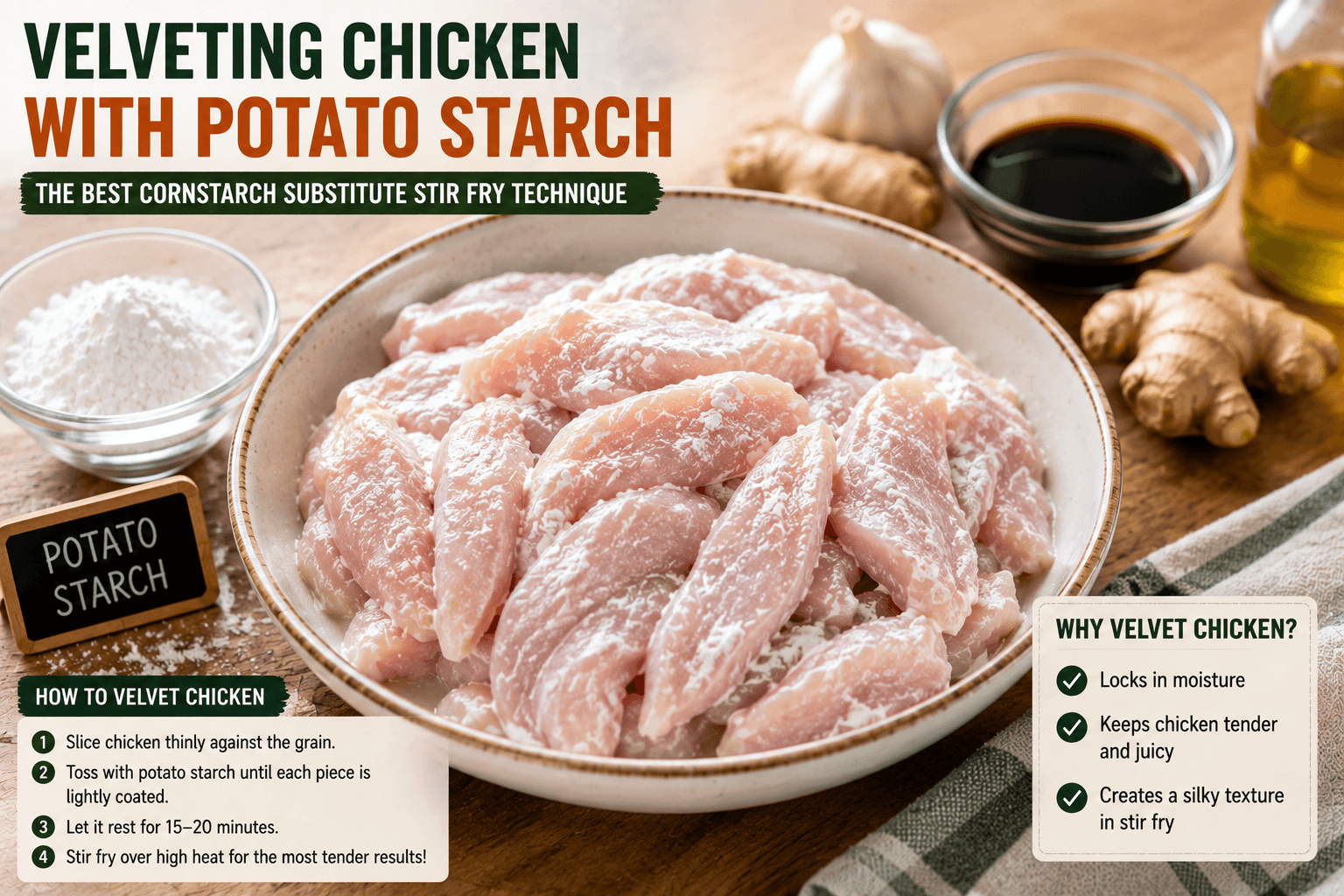
Velveting is one of the most effective techniques for producing tender, juicy chicken in a stir fry. Although cornstarch is the traditional ingredient, several substitutes work almost as well.
Potato starch is the closest replacement because it forms a delicate coating that seals in moisture while allowing the chicken to brown beautifully over high heat.
Rice flour is another excellent choice if you prefer a slightly lighter texture. It won’t create quite the same silky finish as potato starch, but it still protects the chicken from drying out.
If you’re looking for even more ways to improve texture, check out our guide on the best chicken marinade ingredients for stir fry.
Kitchen Secret: Combine potato starch with a small amount of baking soda in your marinade for exceptionally tender chicken. This combination is commonly used in restaurant kitchens to achieve a soft, velvety texture.
Best Substitute for Thickening Stir Fry Sauce
A great stir fry sauce should lightly coat every piece of chicken and every vegetable without becoming overly thick or watery. If you don’t have cornstarch, several alternatives can still create that smooth restaurant-style finish.
For most recipes, potato starch remains the best cornstarch substitute stir fry because it thickens quickly, creates a glossy appearance, and has a neutral flavor that doesn’t overpower the sauce.
Arrowroot powder is another excellent choice, especially for lighter sauces made with chicken broth, garlic, ginger, soy sauce, or citrus. It creates a clear, shiny finish and continues to look appealing after serving.
Tapioca starch also thickens efficiently, although using too much can create a slightly stretchy consistency. Measure carefully for the best texture.
If all you have is all-purpose flour, it can still work. However, flour produces a cloudier sauce and requires a larger quantity to achieve the same thickness as cornstarch.
| Goal | Best Substitute | Why It Works |
|---|---|---|
| Glossy sauce | Potato starch | Closest match to cornstarch |
| Clear sauce | Arrowroot powder | Produces a smooth, transparent finish |
| Strong thickening | Tapioca starch | Excellent thickening power |
| Pantry emergency | All-purpose flour | Readily available in most kitchens |
Tip: Add your starch slurry during the final minute of cooking while stirring continuously. This prevents lumps and keeps vegetables crisp instead of overcooking them.
Common Mistakes When Replacing Cornstarch
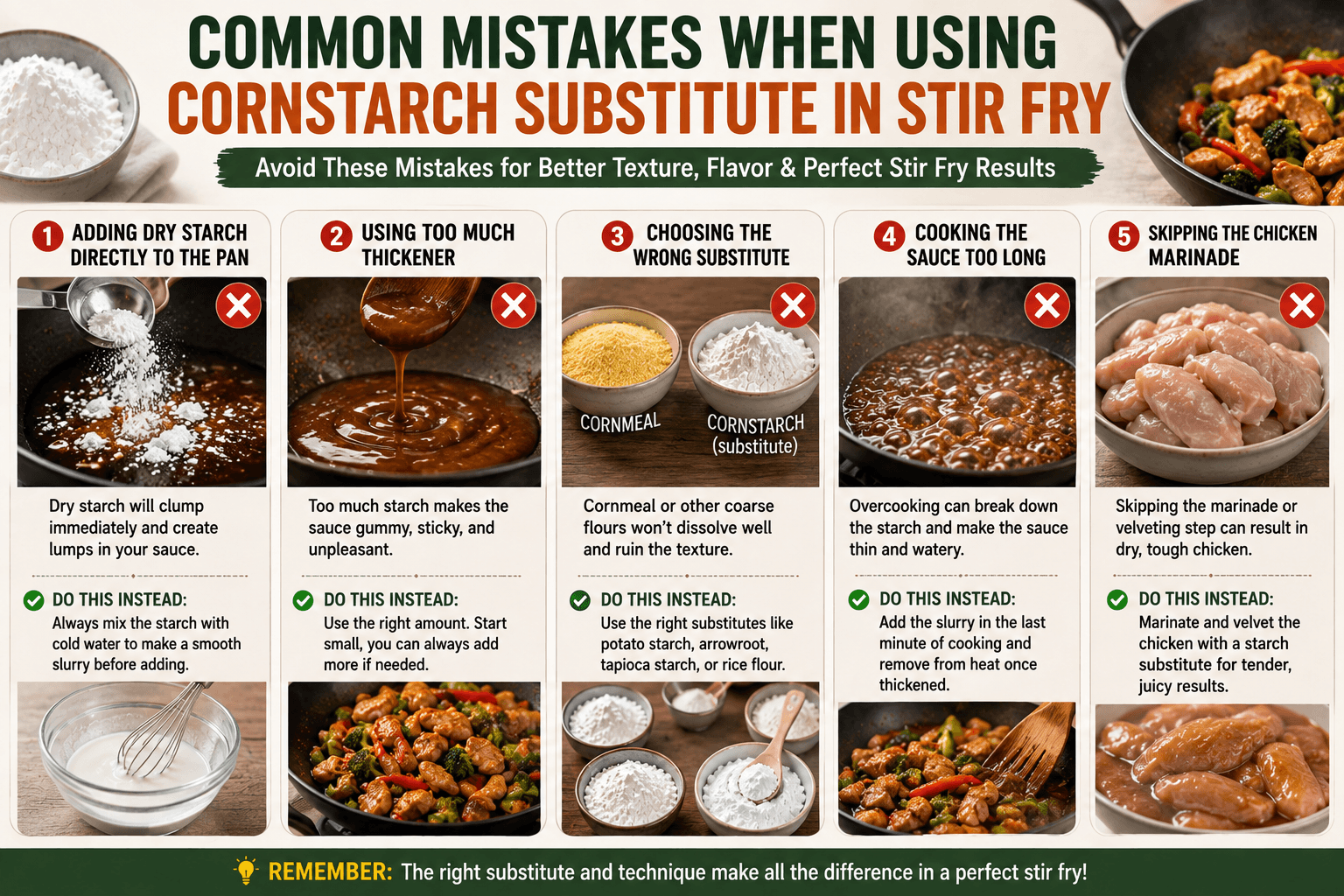
Even the best cornstarch substitute stir fry can produce disappointing results if it’s used incorrectly. Avoid these common mistakes for consistently delicious stir fries.
Adding Dry Starch Directly to the Pan
Dry starch instantly forms stubborn lumps when sprinkled into hot liquid. Always whisk your substitute with cold water first to create a smooth slurry.
Using Too Much Thickener
More starch doesn’t mean a better sauce. Excess starch can produce a gummy or glue-like texture that overwhelms the dish instead of lightly coating the ingredients.
Choosing the Wrong Substitute
Different starches behave differently. Flour works well in a pinch but won’t produce the same silky finish as potato starch or arrowroot powder.
Cooking the Sauce Too Long
Many starches begin breaking down after prolonged boiling. Once the sauce reaches the desired consistency, remove the wok from the heat rather than continuing to simmer.
Skipping the Chicken Marinade
Even the best thickener can’t replace proper preparation. A balanced marinade containing oil, soy sauce, and starch helps chicken stay juicy throughout cooking.
Learn more in our guides to how to season chicken for stir fry and how to fix tough chicken stir fry.
Warning: Never confuse cornstarch with cornmeal. Cornmeal has a coarse texture and will not properly velvet chicken or thicken stir fry sauces.
Pros and Cons of Using Cornstarch Substitutes
Pros
- Easy to replace with common pantry ingredients.
- Several gluten-free alternatives are available.
- Potato starch delivers results nearly identical to cornstarch.
- Arrowroot creates exceptionally glossy sauces.
- Rice flour provides a light coating for chicken.
Cons
- Some substitutes require different measurement ratios.
- Flour produces a heavier sauce.
- Tapioca starch may become stretchy if overused.
- Not every substitute works equally well for velveting.
- Incorrect mixing can cause lumps.
Storage Tips for Leftover Stir Fry
Allow leftover stir fry to cool slightly before refrigerating it in an airtight container. Refrigerate within two hours of cooking and enjoy within 3 to 4 days. Reheat gently over medium heat with a splash of water or chicken broth to loosen the sauce. Freezing is possible, although sauces thickened with some starches may separate slightly after thawing. Stir well while reheating to restore the texture.
Whether you use cornstarch or another thickener, proper storage helps preserve the flavor and texture of your homemade chicken stir fry.
Frequently Asked Questions
What is the best cornstarch substitute for stir fry?
Potato starch is the best cornstarch substitute stir fry because it closely matches cornstarch’s ability to keep chicken tender while creating a smooth, glossy sauce. It can usually be substituted in a 1:1 ratio.
Can I use flour instead of cornstarch in stir fry?
Yes. All-purpose flour works when cornstarch isn’t available, but you’ll typically need about twice as much flour. The finished sauce will be thicker, slightly cloudier, and less glossy than one made with cornstarch.
Is arrowroot better than cornstarch for stir fry?
Arrowroot powder is an excellent gluten-free alternative. It creates a clear, silky sauce and works especially well in lighter stir fries, although it can become thinner if cooked for an extended period over high heat.
Can I velvet chicken without cornstarch?
Absolutely. Potato starch, rice flour, or tapioca starch can all be used to velvet chicken successfully. These alternatives help seal in moisture and produce tender, juicy chicken during high-heat cooking.
What is the healthiest cornstarch substitute for stir fry?
Arrowroot powder and potato starch are both minimally processed starches that work well in stir fry. If you’re looking to reduce refined ingredients, you can also lightly coat the chicken with rice flour, although the texture will be slightly different.
Can I use baking powder instead of cornstarch?
No. Baking powder is a leavening agent, not a thickener. It cannot replace cornstarch for velveting chicken or thickening stir fry sauce.
References
Final Thoughts
Finding the right cornstarch substitute stir fry doesn’t mean sacrificing flavor or texture. While cornstarch remains a classic choice, ingredients like potato starch, arrowroot powder, tapioca starch, rice flour, and even all-purpose flour can all produce excellent results when used correctly.
For the closest match, potato starch stands out as the best overall replacement because it helps keep chicken tender while creating the glossy sauce that’s characteristic of a great stir fry. Arrowroot powder is ideal for gluten-free cooking, while flour serves as a practical pantry backup.
Understanding how each substitute behaves allows you to confidently adapt your recipes whenever cornstarch isn’t available. With the right technique, your homemade chicken stir fry can still taste every bit as delicious as your favorite restaurant version.
🍽️ You Might Also Like



📧 Save This Recipe For Later
Enter your email and we will send this recipe directly to your inbox.