
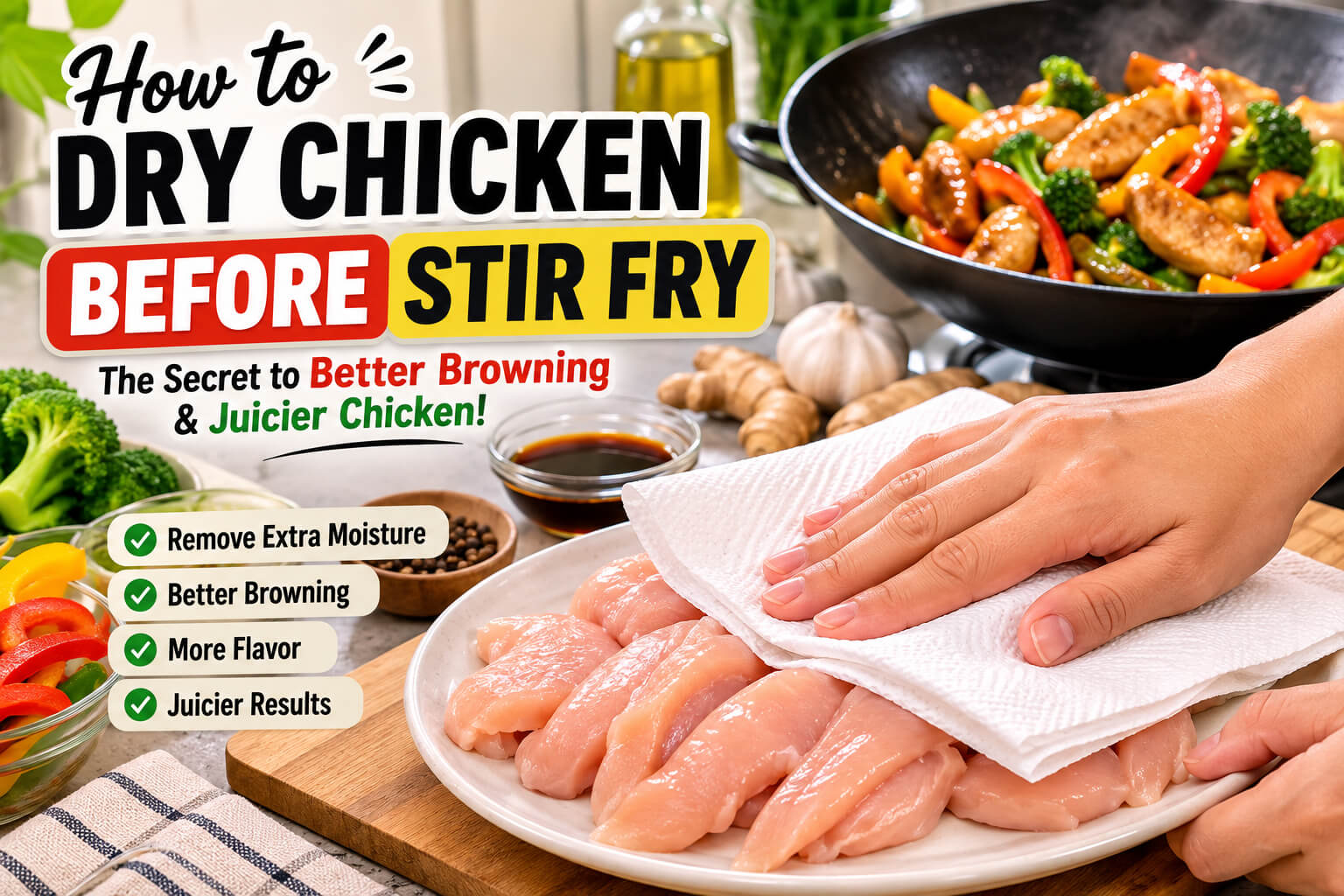
How to Dry Chicken Before Stir Fry for Better Browning
How to Dry Chicken Before Stir Fry for Better Browning
If your homemade chicken stir fry never develops the rich golden color you see in restaurant dishes, the problem may not be your pan, oil, or seasoning. In many cases, the real issue is excess moisture on the chicken. Learning how to dry chicken before stir fry is one of the easiest ways to improve browning, flavor, and texture without buying new cookware or changing your recipe.
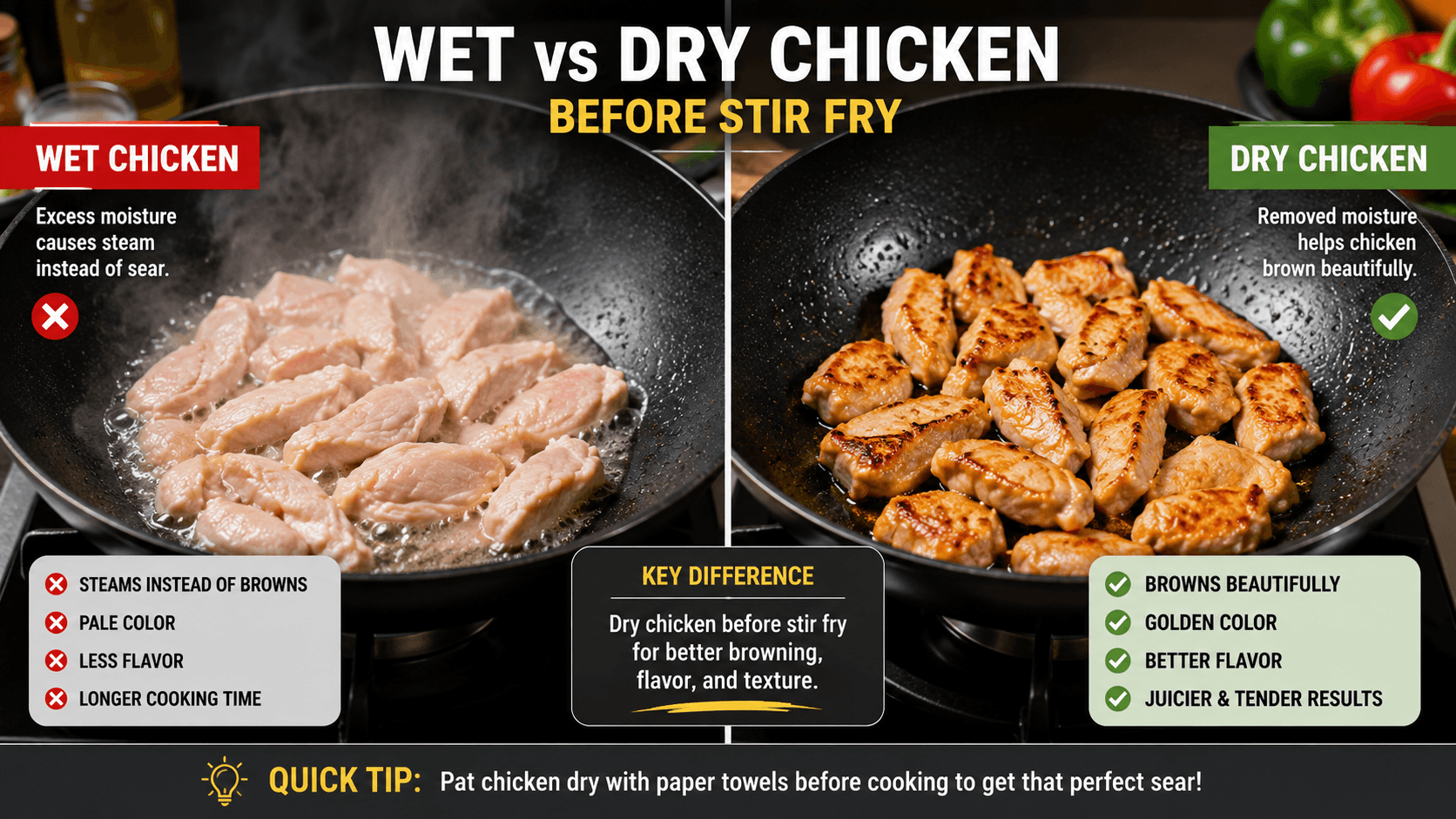
Surface moisture is the biggest enemy of a good sear. When wet chicken touches a hot wok or skillet, the water must evaporate before browning can begin. Instead of creating a flavorful crust, the chicken steams in its own liquid, producing pale meat with less caramelization. That’s why professional chefs always remove excess moisture before cooking.
Whether you’re making a simple chicken stir fry, garlic chicken, honey garlic chicken, or chicken and broccoli stir fry, taking one or two extra minutes to dry chicken before stir fry can completely change the final result. The chicken browns faster, develops deeper flavor, and stays juicier because it spends less time cooking.
This guide explains exactly why drying chicken matters, how to do it correctly, which mistakes to avoid, and how professional kitchens consistently achieve beautifully browned chicken. You’ll also learn when to dry marinated chicken, whether paper towels or air drying works better, and how this simple preparation step fits into a complete stir fry workflow.
By the end of this guide, you’ll understand why experienced cooks never skip this step and how you can use the same technique to produce restaurant-quality stir fry at home.
Quick Answer
The best way to dry chicken before stir fry is to gently pat every piece dry with clean paper towels immediately before cooking. Removing excess surface moisture helps the chicken brown quickly instead of steaming, allowing it to develop a flavorful golden crust through the Maillard reaction. If the chicken has been marinated, let the excess marinade drip off first, then lightly pat away the remaining moisture without removing all of the seasoning.
- Slice the chicken into even pieces.
- Pat every piece dry with paper towels.
- Do not rinse raw chicken.
- Heat your wok or skillet before adding oil.
- Cook in small batches to prevent steaming.
- Add sauce only after the chicken has browned.
Quick Navigation
Why You Should Dry Chicken Before Stir Fry
Many home cooks focus on marinades, sauces, and seasonings while overlooking one of the most important preparation steps. Taking the time to dry chicken before stir fry has a greater impact on browning than almost any spice blend or cooking sauce.
Raw chicken naturally contains surface moisture from packaging, thawing, or marinating. As soon as that moisture reaches a hot pan, it begins turning into steam. Before browning can occur, all of this water must evaporate. During that time, the chicken cannot develop the rich caramelized exterior associated with restaurant-quality stir fry.
When the surface is dry, the chicken immediately reaches a higher temperature. This allows proteins and natural sugars to brown much faster, producing deeper flavor, improved color, and a slightly crisp exterior while helping the inside remain juicy.
Another advantage is better pan performance. Less moisture means the wok stays hotter throughout cooking, making it easier to cook vegetables quickly without turning the entire dish watery.
Drying chicken also reduces sticking. Excess moisture often causes proteins to bond with the pan before a proper crust forms. Removing that moisture helps the chicken release naturally once it has browned.
Professional kitchens rarely skip this step because it consistently produces better results regardless of whether they’re cooking chicken breast, thighs, or tenderloins.
Kitchen Tip: Drying chicken removes only surface moisture. It does not dry out the inside of the meat. In fact, faster browning usually helps retain more natural juices.
The Science Behind Better Browning
To understand why it’s important to dry chicken before stir fry, it helps to know what actually creates the rich golden color on cooked meat.
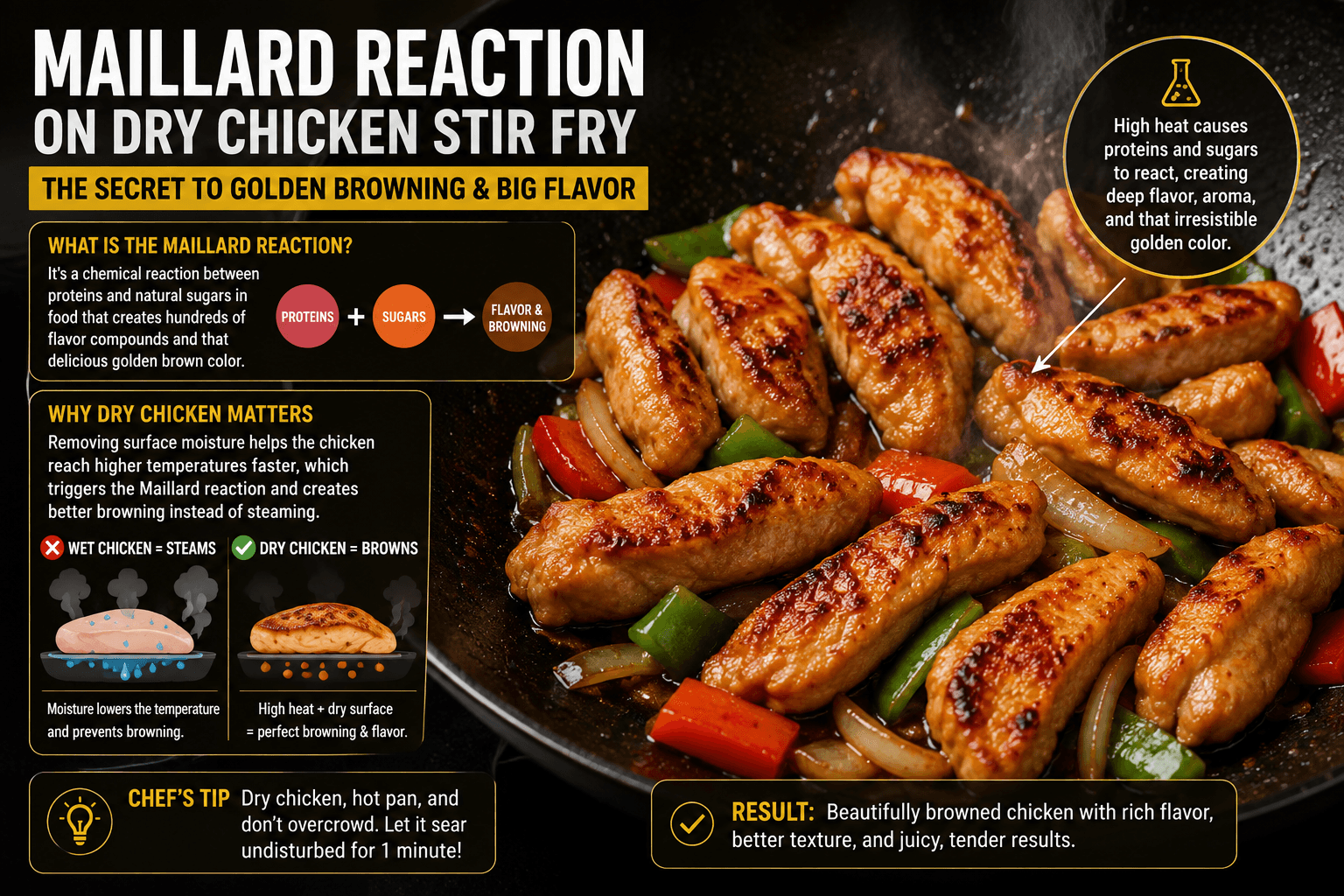
The process responsible for browning is called the Maillard reaction. It occurs when proteins and natural sugars on the surface of food reach temperatures well above the boiling point of water. This reaction creates hundreds of new flavor compounds that give browned chicken its savory aroma and rich taste.
Water interferes with this process because moisture limits the surface temperature. As long as water is evaporating, the outside of the chicken stays close to 212°F (100°C). Browning requires significantly higher temperatures, so excess moisture delays the Maillard reaction.
That’s why wet chicken often looks gray or pale during the first several minutes of cooking. Instead of browning, it’s essentially boiling in its own liquid.
When you dry chicken before stir fry, much less energy is spent evaporating water. The chicken surface heats quickly, allowing browning to begin almost immediately after it touches the pan.
This faster browning improves flavor while reducing overall cooking time. Less time over high heat also helps the inside stay tender and juicy, especially when cooking lean chicken breast.
Professional chefs combine this simple preparation step with very high cooking temperatures, minimal crowding, and quick stirring techniques to create the signature texture found in restaurant stir fry dishes.
Chef’s Secret: Restaurant-quality stir fry isn’t just about using a wok. Dry chicken, high heat, proper timing, and cooking in batches are the four techniques that create exceptional browning and flavor.
How to Dry Chicken Before Stir Fry Step by Step
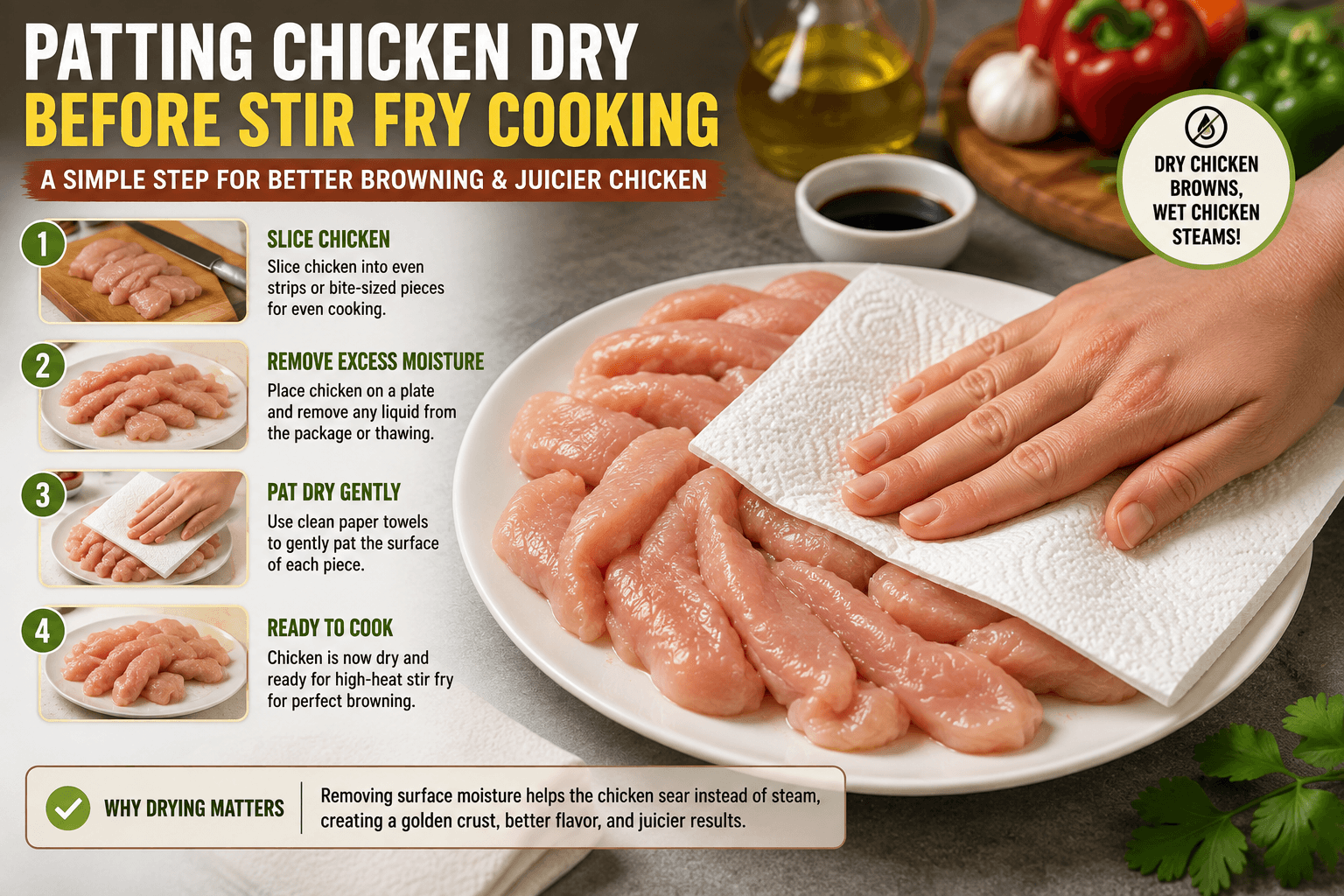
Knowing that you should dry chicken before stir fry is only part of the process. Doing it correctly ensures the chicken browns evenly while remaining tender and juicy inside. Fortunately, the process takes only a few minutes and requires very little equipment.
The key is to remove only the excess surface moisture without squeezing juices out of the meat. Chicken naturally contains moisture inside the muscle fibers, and that’s what keeps it juicy during cooking. Your goal is simply to eliminate the water sitting on the outside.
Step 1: Slice the Chicken First
Begin by slicing the chicken into evenly sized strips or bite-sized pieces. Uniform pieces cook at the same rate and are easier to dry thoroughly. Slicing before drying also exposes more surface area, allowing paper towels to absorb moisture from every piece instead of only the outside of a whole chicken breast.
If you’re preparing chicken breast, slice across the grain into thin strips about ¼ inch thick. Chicken thighs can be cut slightly thicker because they remain tender even with longer cooking times.
Step 2: Remove Packaging Moisture
Fresh chicken often contains liquid from the package. Frozen chicken that has been thawed may have even more moisture. Place the sliced chicken on a clean plate or cutting board lined with paper towels to absorb the excess liquid before cooking.
This initial drying step prevents unnecessary moisture from entering the wok and gives you a better starting point for browning.
Step 3: Pat the Chicken Dry
Lay another clean paper towel over the chicken and gently press. Avoid rubbing or squeezing the meat. Pressing lightly removes moisture without damaging the texture.
Lift the paper towel and repeat if necessary until the surface no longer appears shiny or wet.
Tip: Use multiple paper towels for large batches. Once a towel becomes saturated, it stops absorbing moisture effectively.
Step 4: Dry Marinated Chicken Correctly
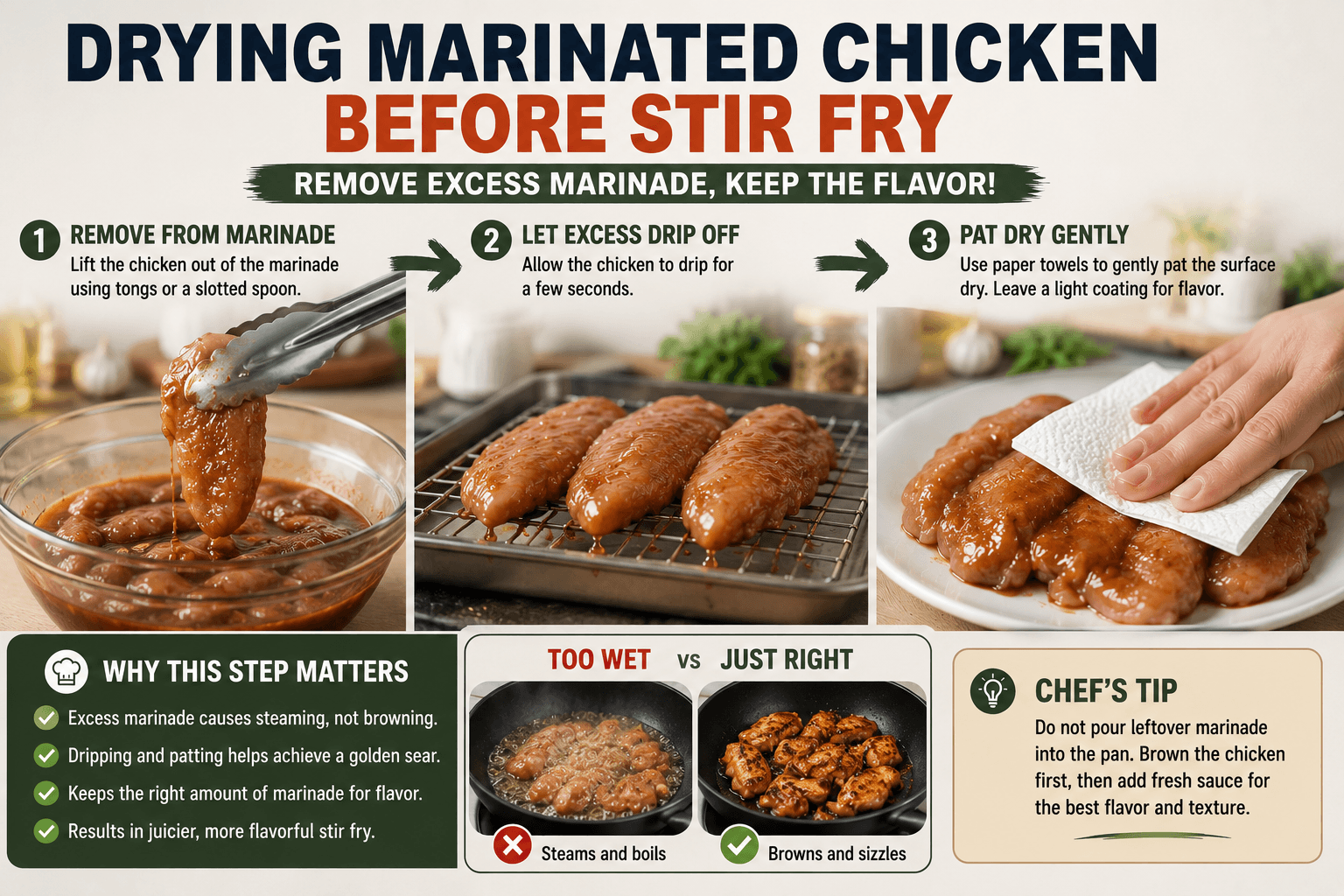
If you’ve marinated the chicken, don’t pour the entire bowl directly into the pan. Instead, lift the chicken pieces out using tongs or a slotted spoon. Allow excess marinade to drip away naturally for several seconds.
Next, lightly pat the outside with paper towels. Leave behind a thin coating of marinade because it still contributes flavor, but remove enough liquid to encourage browning.
This is especially important when using soy sauce-based marinades, which contain a significant amount of water.
Step 5: Cook Immediately
After you dry chicken before stir fry, don’t let it sit on the counter. Moisture naturally begins collecting on the surface again as the chicken rests. Transfer it directly into your preheated wok or skillet while it’s still dry.
Paper Towels vs. Air Drying: Which Method Works Better?
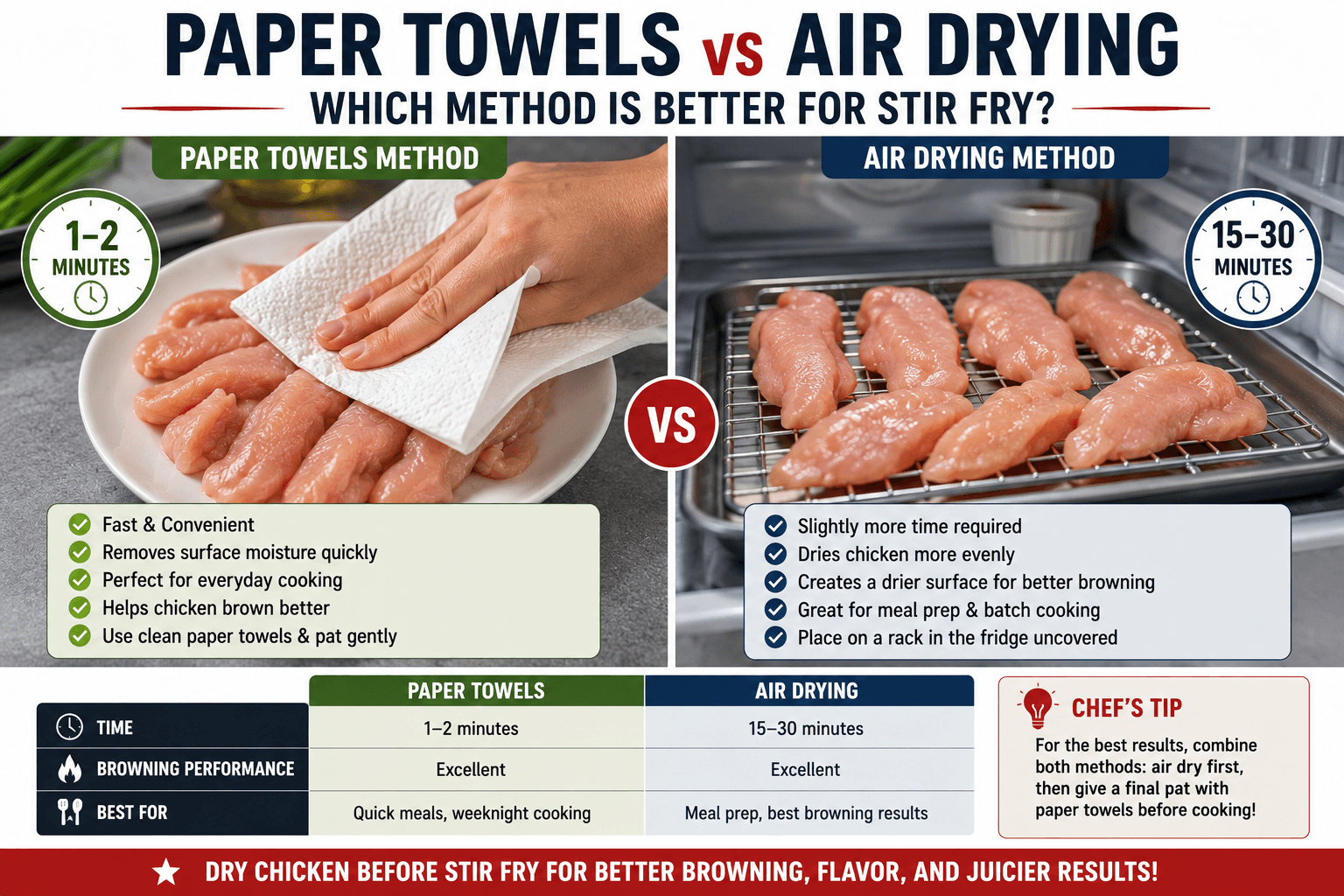
There are two popular ways to dry chicken before stir fry: using paper towels or allowing the chicken to air dry in the refrigerator. Both methods work, but each has advantages depending on your cooking schedule.
For everyday cooking, paper towels are the quickest and most practical option. They absorb surface moisture within seconds, making them ideal when you’re preparing dinner on a busy weeknight.
Air drying takes longer but can produce an even drier surface. This technique is often used by professional kitchens when preparing chicken ahead of time.
| Method | Time Required | Browning Performance | Best For |
|---|---|---|---|
| Paper Towels | 1–2 minutes | Excellent | Daily cooking |
| Air Drying | 15–30 minutes | Excellent | Meal prep |
| Kitchen Towels | 2–3 minutes | Good | Large batches |
If you have extra time, place the chicken on a wire rack over a baking tray and refrigerate it uncovered for about 20 minutes. Cool circulating air removes even more surface moisture, producing excellent browning once the chicken reaches the pan.
However, for most home cooks, paper towels remain the simplest, safest, and fastest solution.
Advantages of Paper Towels
- Very fast
- Highly absorbent
- Disposable and sanitary
- Ideal for weeknight cooking
- Works with fresh or marinated chicken
Disadvantages
- Creates disposable waste
- Requires several towels for large batches
- Less effective if towels become saturated
Whichever method you choose, the important part is making sure the chicken reaches the pan as dry as possible. The difference in browning becomes noticeable within the first minute of cooking.
Chef’s Secret: Many restaurants combine both methods. Chicken is first air-dried in the refrigerator, then given one final pat with paper towels just before entering the wok. This creates an exceptionally dry surface that browns quickly even during high-volume service.
Another benefit of removing excess moisture is that sauces cling more evenly after the chicken has browned. Instead of becoming diluted by water released during cooking, sauces form a glossy coating around each piece of chicken. This results in richer flavor, better appearance, and a stir fry that tastes closer to what you’d expect from your favorite restaurant.
Once you’ve mastered this simple preparation step, you’ll notice improvements not only in classic chicken stir fry but also in recipes such as garlic chicken stir fry, chicken broccoli stir fry, honey garlic chicken, teriyaki chicken stir fry, and spicy chicken stir fry.
Should You Dry Marinated Chicken Before Stir Fry?
One of the most common questions home cooks ask is whether they should dry chicken before stir fry after marinating it. The answer depends on the type of marinade you’re using, but in most cases, the answer is yes—at least partially.
A good marinade adds flavor and helps tenderize the meat, but it also leaves moisture on the surface of the chicken. That extra liquid can prevent proper browning when the chicken hits a hot wok. If the surface is dripping with marinade, the chicken is more likely to steam than sear.
The goal is not to remove all of the marinade. Instead, you want to remove only the excess liquid while leaving behind a thin coating that continues to provide flavor during cooking.
Thin Marinades
Soy sauce-based marinades, teriyaki marinades, and citrus marinades contain a high percentage of liquid. After marinating, lift the chicken out using tongs or a slotted spoon and allow the excess marinade to drip away for several seconds. Then gently pat the outside dry with paper towels.
This method preserves flavor while allowing the chicken to brown much faster.
Velveting Marinades
If you’re using the Chinese velveting technique with cornstarch, egg white, or baking soda, avoid aggressively drying the chicken. The thin coating created during velveting is designed to protect the meat during cooking and should remain intact.
Instead, simply let excess liquid drain naturally before adding the chicken to the wok.
Chef’s Secret: Professional chefs rarely pour leftover marinade directly into the wok. They brown the chicken first, then add fresh sauce later. This keeps the pan hot and prevents steaming.
Common Mistakes That Prevent Good Browning
Even if you remember to dry chicken before stir fry, a few common cooking mistakes can still prevent the rich golden color you’re looking for. Understanding these problems makes it much easier to produce consistent results every time.
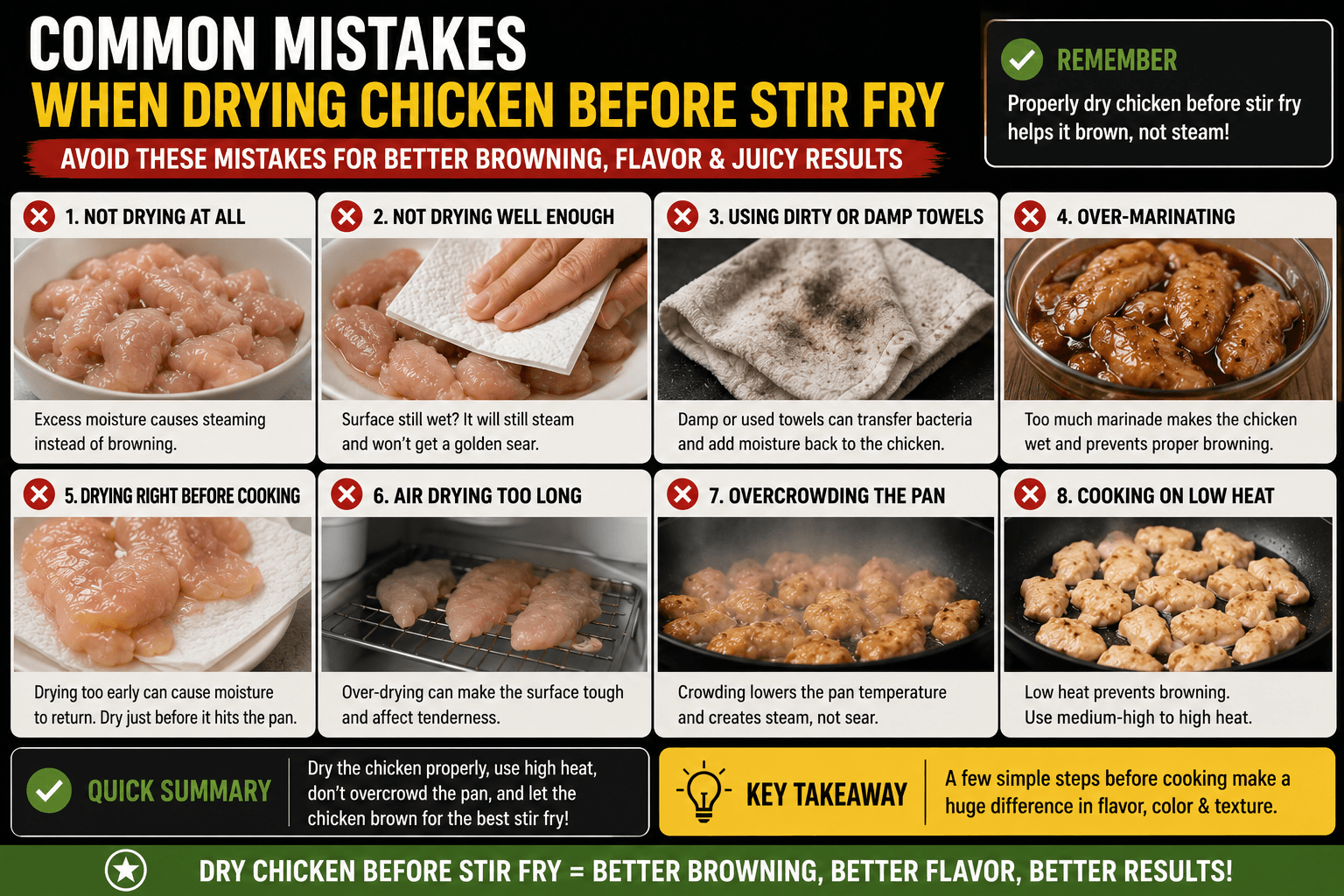
1. Overcrowding the Pan
The most common mistake is placing too much chicken into the wok at once. Every piece releases a small amount of moisture during cooking. When dozens of pieces are packed tightly together, that moisture becomes trapped and quickly turns into steam.
Instead of browning, the chicken boils in its own liquid.
Cook in two or three smaller batches if necessary. Although this takes a few extra minutes, the improvement in flavor and texture is worth it.
2. Starting With a Cold Pan
Even perfectly dried chicken cannot brown properly if the pan isn’t hot enough. Always preheat your wok or skillet before adding oil.
A properly heated pan should cause the oil to shimmer and spread easily across the cooking surface.
3. Stirring Too Soon
Many home cooks begin stirring immediately after adding the chicken. This interrupts the searing process before a crust has time to develop.
Allow the chicken to remain undisturbed for about one minute before flipping or stirring.
4. Adding Vegetables Too Early
Vegetables naturally contain water. Adding them before the chicken browns introduces steam too early, slowing caramelization.
Brown the chicken first, then remove it if necessary while cooking the vegetables.
5. Adding Sauce Before Browning
Most stir fry sauces contain soy sauce, stock, water, sugar, and other liquids. Adding them too early instantly lowers the pan temperature and stops browning.
Always allow the chicken to develop a rich golden crust before introducing sauce.
Warning: Wet chicken, overcrowding, and low heat are the three biggest reasons homemade stir fry fails to achieve restaurant-style browning.
Professional Chef Tips for Restaurant-Quality Stir Fry
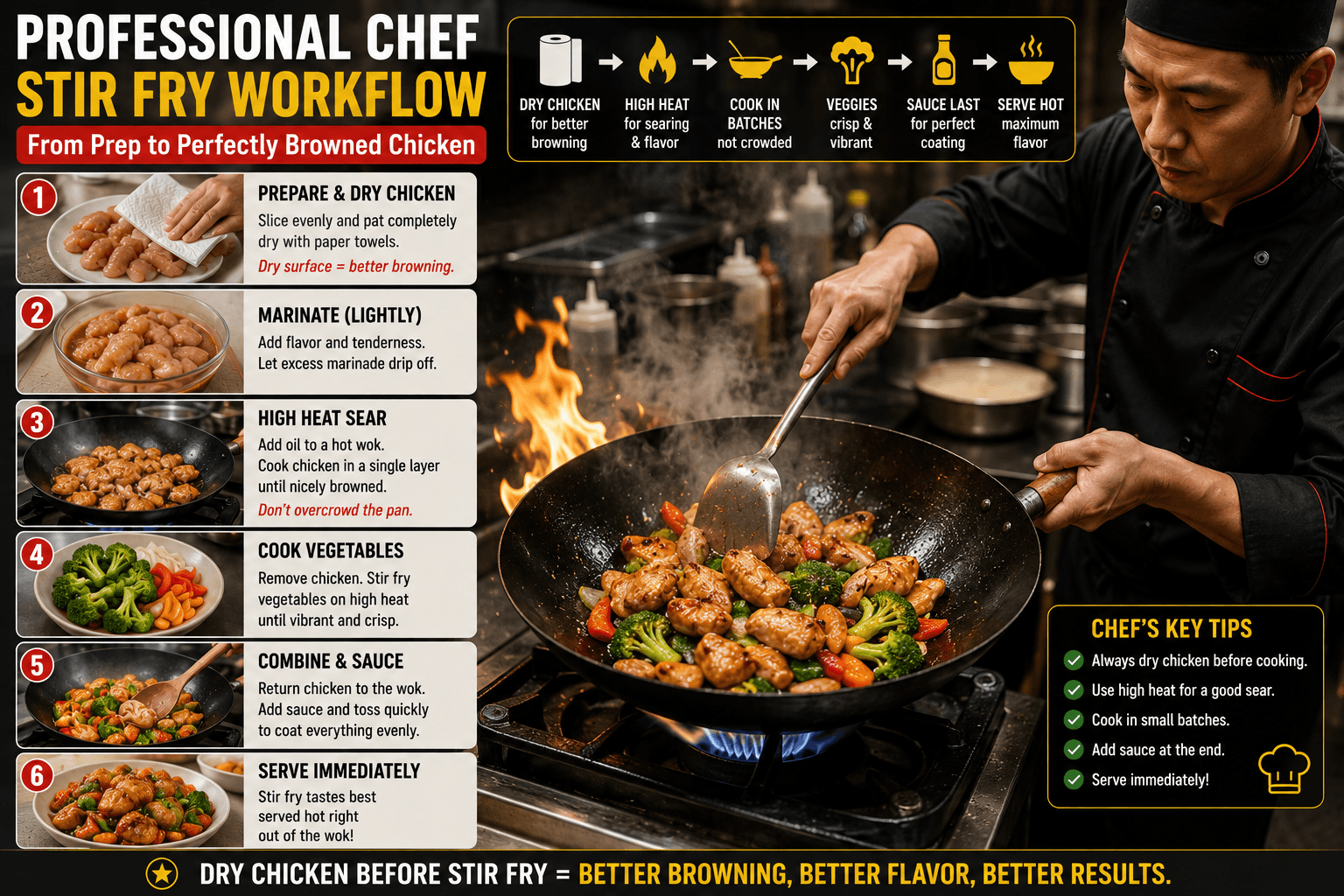
Restaurant kitchens prepare hundreds of stir fry dishes every day, yet they consistently achieve beautifully browned chicken. Their success comes from following a simple sequence of steps rather than relying on expensive equipment.
- Slice the chicken into uniform pieces.
- Pat the chicken completely dry.
- Heat the wok until extremely hot.
- Add a small amount of high smoke point oil.
- Cook the chicken in small batches.
- Leave the chicken untouched for the first minute.
- Cook vegetables separately if necessary.
- Add sauce only after browning has developed.
- Return all ingredients to the wok for the final toss.
These small details work together to maximize browning while keeping the chicken juicy.
Expert Tip: If your wok begins filling with liquid, don’t increase the heat immediately. Instead, reduce the amount of chicken in the pan. Overcrowding is usually the real problem.
Quick Browning Checklist
| Checklist | Done? |
|---|---|
| Chicken sliced evenly | ✔ |
| Surface moisture removed | ✔ |
| Wok fully preheated | ✔ |
| Cooked in small batches | ✔ |
| Chicken browned before sauce | ✔ |
| Internal temperature reached 165°F (74°C) | ✔ |
Following this checklist every time you dry chicken before stir fry will help you achieve consistently flavorful, golden-brown chicken with a juicy interior and restaurant-quality texture.
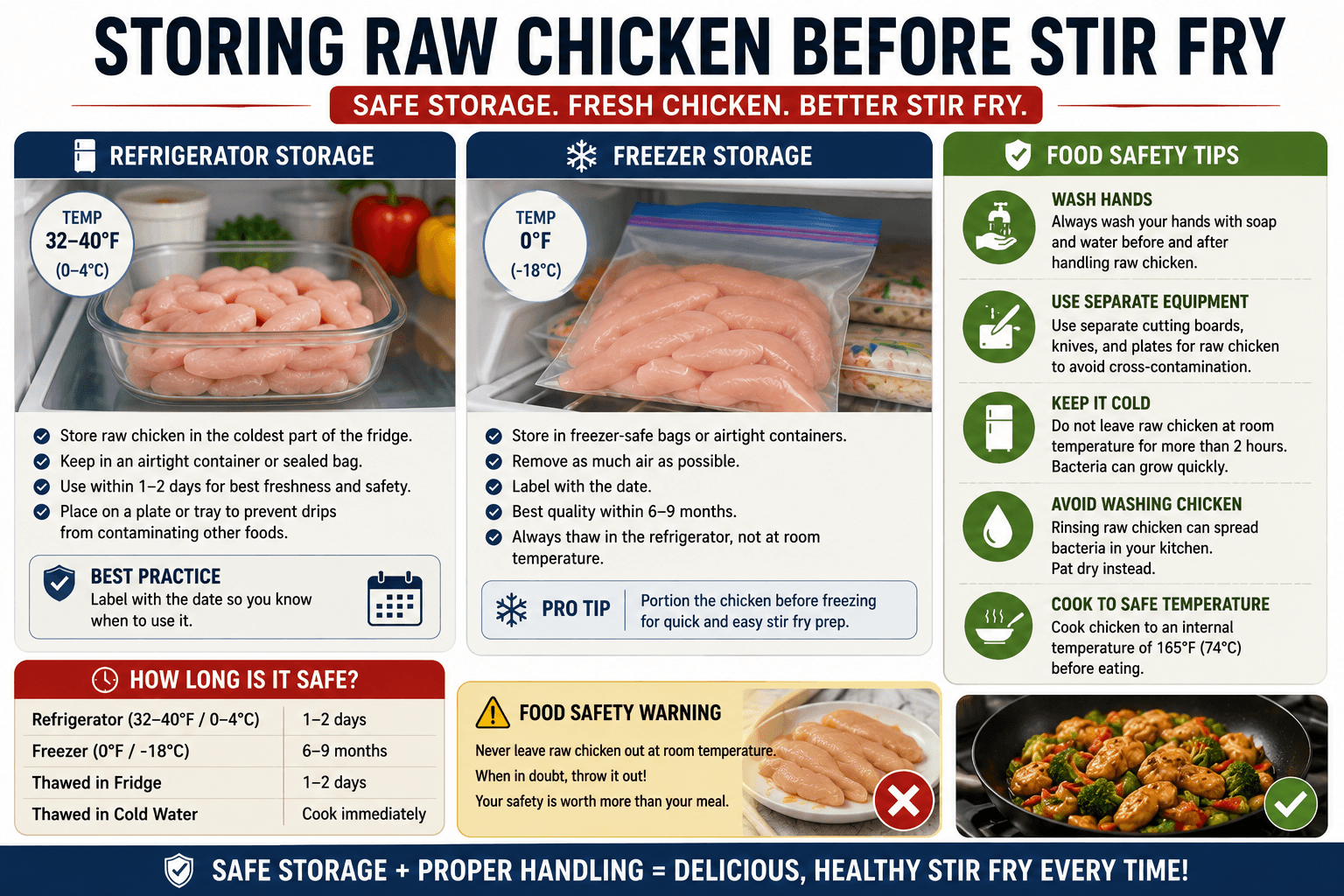
Storage & Food Safety
Knowing how to dry chicken before stir fry improves browning, but safe handling is just as important as proper cooking technique. Raw chicken naturally contains bacteria that can spread through cross-contamination if it isn’t handled correctly. Following a few simple food safety practices helps protect both the quality of your meal and your family’s health.
Storing Raw Chicken
- Keep raw chicken refrigerated at 40°F (4°C) or below.
- Store it on the lowest shelf to prevent juices from dripping onto other foods.
- Cook fresh chicken within 1–2 days of purchase.
- If you won’t use it within two days, freeze it immediately.
Freezing Chicken
- Freeze chicken in airtight freezer bags or vacuum-sealed packaging.
- Label packages with the freezing date.
- For best quality, use frozen chicken within 9 months.
- Always thaw frozen chicken in the refrigerator, never on the kitchen counter.
After Marinating
- Marinate chicken inside the refrigerator.
- Discard used marinade unless it has been fully boiled.
- If you’re planning to dry chicken before stir fry, allow excess marinade to drip off before lightly patting the surface dry.
Food Safety Reminders
- Do not rinse raw chicken. Washing poultry can spread bacteria around your sink and kitchen surfaces.
- Wash your hands with soap and warm water after handling raw chicken.
- Use separate cutting boards for raw meat and vegetables whenever possible.
- Sanitize knives, countertops, and utensils after preparing raw poultry.
- Cook chicken to an internal temperature of 165°F (74°C) using a digital meat thermometer.
Frequently Asked Questions
Should I always dry chicken before stir fry?
Yes. Taking a minute to dry chicken before stir fry removes excess surface moisture, helping the chicken brown instead of steam. This creates better flavor, improved texture, and a more attractive golden color.
Can I use a kitchen towel instead of paper towels?
Yes, but use a freshly washed towel that has not been used for other kitchen tasks. Paper towels remain the safest and most convenient option because they are disposable and reduce the risk of cross-contamination.
Should I dry chicken after marinating?
Lightly pat away excess marinade while leaving a thin coating for flavor. Removing too much liquid helps the chicken brown more quickly without sacrificing taste.
Will drying chicken make it less juicy?
No. Drying removes only surface moisture. The juices inside the meat remain intact, and faster browning often helps the chicken stay more tender by reducing cooking time.
Can I air dry chicken instead of using paper towels?
Yes. Air drying the chicken uncovered in the refrigerator for 15–30 minutes can produce excellent browning, although paper towels are much faster for everyday cooking.
Why does my chicken still release water after drying it?
Some moisture naturally comes from inside the chicken as it cooks. However, excessive liquid usually means the pan was overcrowded, the heat was too low, or the chicken wasn’t dried thoroughly before cooking.
Is drying chicken necessary for every stir fry recipe?
It’s highly recommended for nearly every recipe. Whether you’re making garlic chicken stir fry, honey garlic chicken, teriyaki chicken, or chicken broccoli stir fry, drying the chicken helps improve browning and overall flavor.
Can I prepare and dry chicken ahead of time?
Yes. Slice the chicken, refrigerate it in an airtight container, and pat it dry again just before cooking if any moisture has collected on the surface.
References
Final Thoughts
Learning how to dry chicken before stir fry is one of the simplest upgrades you can make to your cooking routine. It requires no special equipment, takes only a minute or two, and consistently produces better browning, deeper flavor, and a juicier finished dish.
Instead of allowing surface moisture to create steam inside the pan, drying the chicken helps it reach the temperatures needed for the Maillard reaction. The result is beautifully browned chicken with a rich savory flavor that’s much closer to what you would expect from a professional restaurant.
Combine this technique with high heat, a properly preheated wok, cooking in small batches, and adding sauce only after browning, and you’ll dramatically improve every chicken stir fry recipe you make. Whether you’re preparing a quick weeknight dinner or meal prepping for the week ahead, this small preparation step can make a noticeable difference.
The next time you cook, remember to dry chicken before stir fry. It’s a simple habit that delivers consistently better results and helps every stir fry look and taste its best.
🍽️ You Might Also Like
📧 Save This Recipe For Later
Enter your email and we will send this recipe directly to your inbox.